Tag: tariff order

  • Madras HC TRAI-Star case: All parties keep options open

    Madras HC TRAI-Star case: All parties keep options open

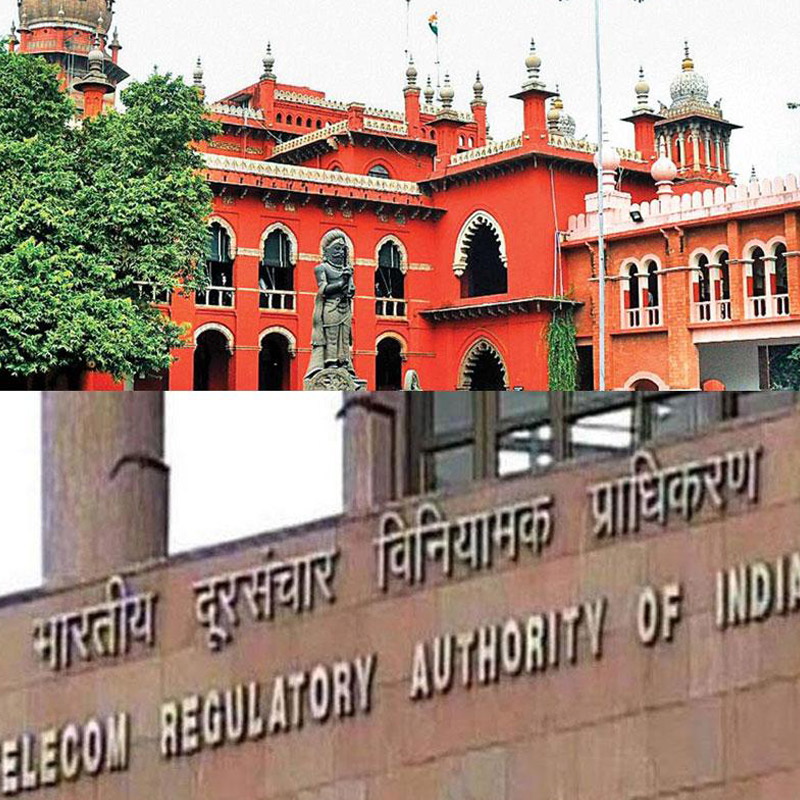
    MUMBAI: Even as till late evening yesterday all those connected with the case filed by Star India and Vijay TV against regulator TRAI in Madras High Court kept waiting for the full text of the court order, options for future course of action were kept open, including whether the high court should be asked to clarify on some observations.

    As the high court, by keeping its final verdict on hold, has given two weeks time to petitioners to consider appealing in the Supreme Court, which is already in summer vacation mode with just the vacation bench active, TRAI also cannot go ahead and get its tariff order implemented immediately.

    Justice MM Sundresh, who was assigned to hear the Star TV and Vijay TV vs. TRAI case after another bench had given a split verdict, concurred with the view of Madras HC chief justice Indira Banerjee who, through an order dated 3 March 2018, had held that the TRAI Act confers upon the regulator sufficient jurisdiction to notify the said tariff order and interconnection regulation.

    However, the judge also, reportedly, struck down some other aspects of the tariff order, including an important part that capped at 15 per cent the discounts that could be offered by TV channels.  

    That all stakeholders in this court drama are keeping their cards close to the chest can be gauged from the fact the only organisation to come out with an official statement welcoming the Madras HC order, AIDCF (All India Digital Cable Federation), too had nothing to offer on a time frame for implementation of TRAI tariff order. Efforts made to elicit responses from Star India, TRAI, Indian Broadcasting Foundation or even individual media industry players drew a blank. The common refrain was: we haven’t read the actual order, so can’t comment.

    Still, after talking to various people in the industry a possible scenario that emerges hinges around petitioners going back to the Madras HC seeking clarifications on some of the observations of the court, which may take some time. After those clarifications come through, it would be decided whether to exercise the option of appealing in the Supreme Court, especially because a major pivot of the case is the copyright of TV channels over the content it generates and whether TRAI has any jurisdiction over such copyright issues.

    With the present TRAI Chairman RS Sharma’s tenure ending in a few months time, he would ideally like to see the tariff order, issued during his tenure, implemented before his superannuation.

    Also Read:

    Third Madras high court judge gives TRAI tariff order thumbs up

    Madras HC gives split verdict in Star India versus TRAI case
    MSOs move Madras HC seeking relief on inter-connect pacts

    Orders reserved by Madras HC on TRAI jurisdiction case

  • TRAI-Star case back to Madras HC with SC rider

    TRAI-Star case back to Madras HC with SC rider

    NEW DELHI: The Supreme Court (SC) today referred the case relating to the Telecom Regulatory Authority of India (TRAI) and Star India involving the proposed tariff regulations back to the Madras high court (HC) with a rider that the judgement should be delivered within a month.

    TRAI had filed a review petition in the SC after the Madras HC delivered a split verdict on the case on 2 March 2018.

    The Madras HC judges, while agreeing that various tariff-related points (such as capping the discount offered by broadcasters and maximum retail price [MRP]) in the TRAI’s proposed tariff regulations were arbitrary, could not arrive at a consensus whether the regulator had overstepped to regulate business models related to copyrights over content.

    The Madras HC had further said that another judge would hear the issues. It was hearing the case as petitioners Star India and Vijay TV had filed a case against the 2016 tariff regulations and the SC had directed the HC to dispose of the case within a certain time frame. While striking down certain aspects of the tariff guidelines (MRP and discounting limits), issued by the TRAI late in 2016 and upholding the petitioners’ plea, the two-judge bench of the high court referred to another yet-to-be-decided judge the issue of jurisdiction of the TRAI on matters such as copyright over content.

    “The reason for putting a cap of 15 per cent to the discount on the MRP of a bouquet disclosed in to the impugned tariff order is that, as per data available with the TRAI, some bouquets are being offered by the distributors of television channels at a discount of up to 80-90 per cent of the sum of a-la-carte rates of pay channels constituting those bouquets. Such high discounts force the subscribers to take bouquets only and thus reduce subscriber choice. This, in my view, cannot be a reason to restrict the discount,” the judgement observed at one point.

    The lengthy verdict (over 140 pages) of the two-judge bench of the HC, which had been hearing a case filed by Star TV and associate Vijay TV challenging the TRAI’s tariff guidelines on various grounds of copyright and whether the regulator had the jurisdiction to make regulatory guidelines, was delivered after the hearings got over several months back and the verdict was kept in abeyance.

    Also Read:

    SC could take up TRAI-Star case on tariff regulations

    Madras HC gives split verdict in Star India versus TRAI case
  • SC could take up TRAI-Star case on tariff regulations

    SC could take up TRAI-Star case on tariff regulations

    MUMBAI: The Star India-TRAI (Telecom Regulatory Authority of India) case, which attracted a split verdict in the Madras High Court (HC) recently, took another turn today with the Supreme Court (SC) while adjourning case till Monday showed inclination to dispose of the case itself.

    As per reports emanating from the SC, the broadcast carriage regulator TRAI will likely file in SC a transfer petition by Monday when the apex court will look into the case for possible listing for likely hearing in July 2018.

    The Madras HC judges, while agreeing that various tariff related points (like capping discounting offered by broadcasters and MRP, for example) in TRAI’s proposed tariff regulations were arbitrary, could not arrive at a consensus whether the regulator had overstepped to regulate business models related to copyrights over content.

    The Madras HC had further said that another judge would hear the issues. It was hearing the case as petitioners Star India and Vijay TV had filed a case against the 2016 tariff regulations and the SC had directed the HC to dispose of the case within a certain time frame.

    As hearings continued in the HC, other industry bodies like AIDCF and a couple of companies joined the issue with high profile lawyers arguing the case for and against the petition.

    Also Read :

    Madras HC gives split verdict in Star India versus TRAI case
    MSOs move Madras HC seeking relief on inter-connect pacts

    Orders reserved by Madras HC on TRAI jurisdiction case

  • Madras HC gives split verdict in Star India versus TRAI case
    Madras HC gives split verdict in Star India versus TRAI case
    NEW DELHI: While parts of the country took a break on a moderately warm day after playing Holi, the Madras High Court delivered a split verdict in a case involving Star India and the Telecom Regulatory Authority of India (TRAI), apart from several other private and government organisations. This effectively means that the Supreme Court will again have to take a stand on whether the regulator’s proposed tariff order relating to broadcast and cable sectors could be implemented or remains in suspended animation.

    While striking down certain aspects of the tariff guidelines (maximum retail price and discounting limits), issued by TRAI late 2016, and upholding the petitioner’s plea, the two-judge bench of the high court referred to another yet-to-be-decided judge the issue of jurisdiction of TRAI on matters such as copyright over content.

    Now that the high court has delivered a fractured verdict, raising fears of a status quo and non-implementation of the TRAI tariff guidelines in certain sections of the cable distribution industry, the Supreme Court could likely early next week take a view whether TRAI can go ahead and implement the regulations or further judicial clarity is needed.

    “The reason for putting cap of 15 per cent to the discount on the MRP of a bouquet disclosed in to the impugned Tariff Order is that, as per data available with TRAI, some bouquets are being offered by the distributors of television channels at a discount of up to 80-90 per cent of the sum of a-la-carte rates of pay channels constituting those bouquets. Such high discounts force the subscribers to take bouquets only and thus reduce subscriber choice. This, in my view, cannot be a reason to restrict the discount,” the judgement observed at one point.

    The lengthy verdict (over 140 pages) of the two-judge bench of the high court, which had been hearing a case filed by Star TV and associate Vijay TV challenging tariff guidelines of TRAI on various grounds of copyright and whether the regulator has the jurisdiction to make regulatory guidelines, was delivered after the hearings got over several months back and the verdict was kept in abeyance.

    While stakeholders refused to comment on the verdict officially, saying the fine prints of the lengthy order need to be studied over the weekend, TRAI could not be reached for its version on the Madras HC verdict.

    However, an industry observer opined that considering the high court’s observations on MRP and discounts relating to TV channels, implementing the remaining part of TRAI’s proposed tariff and inter-connect guidelines would make less sense as both the issues frowned down upon by the high court form an integral part of the overall regulations.

    The tariff issue has been in the courts since late 2016. The Delhi High Court too is hearing a similar matter involving TRAI’s proposed tariff guidelines. In this case the petitioners are DTH operators Tata Sky and Airtel Digital.

    ALSO READ:

    MSOs move Madras HC seeking relief on inter-connect pacts

    Orders reserved by Madras HC on TRAI jurisdiction case

    SC stays new TRAI tariff, asks Madras HC to complete hearing in four weeks


  • DAS inter-connect regime: TRAI mulling distribution fee, data sharing

    DAS inter-connect regime: TRAI mulling distribution fee, data sharing

    MUMBAI: Indian broadcast regulator TRAI may propose a percentage of the total number of TV channels that a consumer subscribes (based on their maximum retail price as proposed recently in draft tariff regulations) as distribution or facilitation fee.

    The regulator, which is likely to soon come out with its recommendations on interconnection framework for broadcasting TV services distributed through digital addressable systems, may also propose an additional fee for every 25 TV channels subscribed to by a consumer beyond 100 channels.

    The percentage of distribution fee may be between 15-20 per cent of the total cost of TV channels subscribed by a consumer. These would form part of revenue sharing formula between broadcasters and distribution platforms and LCOs.

    Who’ll pay the distribution fee and the additional cost for every 25 channels distributed beyond 100 TV channels to a consumer? It’s still not clear, but most probably the consumer. These additional costs will be exclusive of government taxes.

    Few days back, TRAI had come out with draft guidelines on tariff and regulations relating to quality of services and had, in its wisdom, tried to safeguard the interest of each stakeholder for the overall development of the broadcast and cable industry, including higher ARPUs if consumers subscribed to stand-alone premium channels where no price caps were mandated.

    The Telecom Regulatory Authority of India (TRAI) had issued an amended version of its Interconnection Regulations, 2004 in 2012 with an aim to keep pace with the evolving TV eco-system in India and introduction of digital addressable system (DAS). The 2012 regulations had laid down certain revenue sharing formula that envisaged the following:

    — (a) the charges collected from the subscription of channels of basic service tier, free to air channel and bouquet of free to air channels shall be shared in the ratio of 55:45 between multi-system operator and local cable operator respectively.

    —(b) the charges collected from the subscription of channels or bouquet of channels or channels and bouquet of channels other than those specified under clause (a) shall be shared in the ratio of 65:35 between multi-system operator and local cable operator, respectively

    Trying to update its inter-connect guidelines in 2016, the regulator is also mulling, with an aim to bring about more transparency in the system, that all agreements between broadcasters and MSOs and MSOs and LCOs should be uploaded in an encrypted format on a server that can be accessed via passwords by stakeholders.

    Though this particular move has been resisted by some stakeholders, TRAI is of the opinion that such a move on data sharing could pave way for elimination of opaqueness in agreements between broadcasters and distribution platforms.

    “The question that then arises is who should develop an IMS (integrated management system), which can be used by all service providers and ensure its proper functioning. It could be either an industry-led body, which operates as per the guidelines prescribed by the regulator or a private entity willing to offer such services in lieu of fee for each interconnection request, or any other option as suggested by the stakeholders,” TRAI had asked stakeholders earlier this year for feedback in its consultation paper on interconnect issues.

    ALSO READ:

    TRAI releases draft tariff & consumer DAS regulations

    Offer Premium channels as a la carte, don’t bundle: TRAI


  • DAS inter-connect regime: TRAI mulling distribution fee, data sharing

    DAS inter-connect regime: TRAI mulling distribution fee, data sharing

    MUMBAI: Indian broadcast regulator TRAI may propose a percentage of the total number of TV channels that a consumer subscribes (based on their maximum retail price as proposed recently in draft tariff regulations) as distribution or facilitation fee.

    The regulator, which is likely to soon come out with its recommendations on interconnection framework for broadcasting TV services distributed through digital addressable systems, may also propose an additional fee for every 25 TV channels subscribed to by a consumer beyond 100 channels.

    The percentage of distribution fee may be between 15-20 per cent of the total cost of TV channels subscribed by a consumer. These would form part of revenue sharing formula between broadcasters and distribution platforms and LCOs.

    Who’ll pay the distribution fee and the additional cost for every 25 channels distributed beyond 100 TV channels to a consumer? It’s still not clear, but most probably the consumer. These additional costs will be exclusive of government taxes.

    Few days back, TRAI had come out with draft guidelines on tariff and regulations relating to quality of services and had, in its wisdom, tried to safeguard the interest of each stakeholder for the overall development of the broadcast and cable industry, including higher ARPUs if consumers subscribed to stand-alone premium channels where no price caps were mandated.

    The Telecom Regulatory Authority of India (TRAI) had issued an amended version of its Interconnection Regulations, 2004 in 2012 with an aim to keep pace with the evolving TV eco-system in India and introduction of digital addressable system (DAS). The 2012 regulations had laid down certain revenue sharing formula that envisaged the following:

    — (a) the charges collected from the subscription of channels of basic service tier, free to air channel and bouquet of free to air channels shall be shared in the ratio of 55:45 between multi-system operator and local cable operator respectively.

    —(b) the charges collected from the subscription of channels or bouquet of channels or channels and bouquet of channels other than those specified under clause (a) shall be shared in the ratio of 65:35 between multi-system operator and local cable operator, respectively

    Trying to update its inter-connect guidelines in 2016, the regulator is also mulling, with an aim to bring about more transparency in the system, that all agreements between broadcasters and MSOs and MSOs and LCOs should be uploaded in an encrypted format on a server that can be accessed via passwords by stakeholders.

    Though this particular move has been resisted by some stakeholders, TRAI is of the opinion that such a move on data sharing could pave way for elimination of opaqueness in agreements between broadcasters and distribution platforms.

    “The question that then arises is who should develop an IMS (integrated management system), which can be used by all service providers and ensure its proper functioning. It could be either an industry-led body, which operates as per the guidelines prescribed by the regulator or a private entity willing to offer such services in lieu of fee for each interconnection request, or any other option as suggested by the stakeholders,” TRAI had asked stakeholders earlier this year for feedback in its consultation paper on interconnect issues.

    ALSO READ:

    TRAI releases draft tariff & consumer DAS regulations

    Offer Premium channels as a la carte, don’t bundle: TRAI


  • TRAI issues separate tariff for commercial subscribers under DAS & non-DAS areas

    TRAI issues separate tariff for commercial subscribers under DAS & non-DAS areas

    NEW DELHI: The Telecom Regulatory Authority of India (TRAI) today issued separate tariff orders for commercial subscribers under digital addressable systems (DAS) and non-DAS areas.


    TRAI described a “commercial subscriber” as one “who causes the signals of TV channels to be heard or seen by any person for a specific sum of money to be paid by such person.” 


    The definition is contained in two Tariff Amendment Orders (TAO) relating to TV services for commercial subscribers, one applicable for TV services being provided through analogue cable TV systems (Non-CAS areas) and the other one applicable for TV services being provided through Digital Addressable cable TV systems were notified today.


    The amendments are to the Telecommunication (Broadcasting and Cable) Services (Second) tariff (Twelfth Amendment) order & the Telecommunication (Broadcasting and Cable) Services (Fourth) (Addressable Systems) Tariff (Fourth Amendment) order.


    For definition of ordinary subscriber, the notification simply says anyone who is not a commercial subscriber under its definition is an ordinary subscriber. 


    Total forbearance has been prescribed both at the wholesale and retail level with respect to tariffs for commercial subscribers and broadcasters have the option to enter into tripartite agreements with the Distribution Platform Operators (DPOs) and the commercial subscribers, if so desired.


    The order says that a broadcaster will offer all its pay channels, for commercial subscribers on a-la-carte basis to distributors of TV channels, and may specify separate a-la-carte rate for each pay channel.


    This is provided the broadcaster may also offer all its pay channels as part of bouquet consisting of pay channels or both pay and free to air (FTA) channels and specify the rate for each such bouquet of channels offered by it; and a broadcaster may enter into a tripartite agreement with the distributors of TV channels and the commercial subscribers for supply of signals of TV channels to the commercial subscribers.


    Broadcasters have been mandated to offer their channels or bouquet of channels for commercial subscribers on non-discriminatory terms and conditions. 


    Broadcasters have also been mandated to file their tripartite agreements, if such agreement is done with commercial subscribers, with TRAI within 30 days of entering into such agreement.


    TV signals to commercial subscribers have to be provided by DPOs only in accordance with policy guidelines for up-linking and down-linking of television channels.


    Following directions by the Telecom Disputes Settlement and Arbitration Tribunal (TDSAT) on 9 March that there was need for a fresh look at tariff orders, TRAI had issued a new paper on “Tariff issues related to Commercial Subscribers.” Stakeholders had been asked to give their comments by 31 July and counter-comments by 7 August and had then held an Open House on 18 August.


    The case in TDSAT had been filed by Indian Broadcasting Foundation (IBF) and others last year. The tariff orders challenged by IBF were issued on 16 July last year following the Supreme Court’s order of 16 April, 2014.


    TRAI said in a press release that it “expected that with the coming into force of these changes in the regulatory framework for commercial subscribers, distribution of TV services to commercial subscribers would be streamlined and would be available to them at competitive rates. It is also envisaged that it would balance the interests of all the stakeholders in the value chain and bring in complete transparency in the business transactions.”


    In the consultation paper, TRAI had asked commercial subscribers whether there is need to define and differentiate between domestic and commercial subscribers for provision of TV signals and the basis for such classification. TRAI wanted to know how it can be ensured that TV signal feed is not misused for commercial purposes wherein the signal has been provided for non-commercial purpose.


    It had also asked if there is a need to have a different tariff framework for commercial subscribers (both at wholesale and retail levels) and what should be the suggested tariff framework for commercial subscribers (both at wholesale and retail levels).

  • TRAI asked to re-notify broadcasters in light of SC judgment rejecting tariff orders

    TRAI asked to re-notify broadcasters in light of SC judgment rejecting tariff orders

    NEW DELHI: The Telecom Regulatory Authority of India (TRAI) has been urged to re-notify its letter to pay broadcasters dated 23 July, requesting the rates for their respective pay TV channels with prescribed MRP as well, along with the duration of advertisements shown.


    In a letter to TRAI chairman R S Sharma, Home Cable Networks (P) Ltd head Vikki Chodhary said, “Needless to say, the exercise needs to be conducted keeping in view the interest of the consumers at large and to also ensure a level playing field on non-discriminatory terms with parity in conducting this business.”  


    The regulator had asked broadcasters on 23 July to revise their wholesale tariffs, even though it had noted that the Supreme Court had declined to stay the order of the Telecom Disputes Settlement and Appellate Tribunal (TDSAT) setting aside the amendments in two tariff orders, which had sought to put an inflation-linked hike of 27.5 per cent on addressable and non-addressable systems.


    The very next day – 24 July – the Supreme Court stayed implementation of this letter in view of appeal by Indian Broadcasting Foundation (IBF) and others challenging the order by TDSAT on Chaudhary’s petition relating to tariff.


    While dismissing the appeal challenging TDSAT’s order, the Supreme Court on 4 August asked TRAI to come up with new tariffs as early as possible.


    The Court also said the multi-system operators (MSOs) will not insist on a refund of their payments to broadcasters but will wait for the new tariff orders.


    Thus, the apex Court held intact the 28 April order of the Tribunal holding as ‘untenable’ the Telecommunication (Broadcasting & Cable) Services (Second) Tariff (Eleventh Amendment) Order, 2014’ and ‘The Telecommunication (Broadcasting & Cable) Services (Second) Tariff (Thirteenth Amendment) Order, 2014’.


    In his letter to Sharma, Chaudhary has drawn TRAI’s attention to observations by TDSAT that the regulator “will be well advised to have a fresh look at the various tariff orders in a holistic manner and come out with a comprehensive tariff order in supersession of all the earlier tariff orders… While doing so, it may consider all the agreements and relevant data available with it. It may consider differentiating between content, which is of a monopolistic nature as against that the like of which is shown by other channels also. It may also consider classifying the content into premium and basic tiers.”


  • TRAI open house: Broadcasters root for tariff distinction between subscribers

    TRAI open house: Broadcasters root for tariff distinction between subscribers

    MUMBAI: With an aim to get the broadcasters’ viewpoint on tariff issues related to commercial subscribers, the Telecom Regulatory Authority of India (TRAI) held an open house discussion in Delhi on 18 August.


    While welcoming the open house initiative held under TRAI chairman Ram Sewak Sharma, the Indian Broadcasting Foundation (IBF) member channels discussed issues including differentiation between domestic and commercial subscribers for provision of TV signals, the criteria for drawing distinction between ordinary subscribers and commercial subscribers, tariff framework both at wholesale and retail levels, transparency and accountability in value chain to effectively minimise disputes and conflicts among stakeholders and engagement of broadcasters in the determination of retail tariffs for commercial subscribers.


    IBF president and Star India CEO Uday Shankar said, “It is inconceivable that any sector regulator would actually equate five star hotels and commercial establishments with domestic consumers as far as tariffs are concerned. But that’s exactly what TRAI has done with rates for pay TV channels. I am not sure what exactly the regulator is trying to achieve with the present dispensation, i.e. five star hotels availing TV content at subsidised rates especially when they charge a leg and arm for a room, a meal or even a bottle of water? It appears to be a case of misguided regulatory zeal. I hope better sense prevails and the regulator does what is in the interest of its primary stakeholders, i.e. broadcasters and distribution platforms and not five star and four star hotels.”


    IBF secretary general Girish Srivastava added, “In keeping with the priorities of the current government of improving ease of doing business in India, such fixation is not warranted and forbearance should be the way forward. We believe that the regulator will factor that putting a ceiling on tariff will not help in promoting and protecting the interests of the ordinary consumers but will serve as an aberration to the growth story of the sector. Broadcasters have been unvarying and undeviating on this front and the regulator will hopefully keep this in mind before deciding on a regulation.”


    According to Multiscreen Media Limited general counsel Ashok Nambissan, commercial and residential subscribers are two completely different categories. “The residential subscriber consumes television content for his or her own use whereas the commercial subscriber provides television content for his customers to propagate the business of his establishment. Tariff regulation in today’s age is an anomaly: in any event it should not exist for commercial subscribers as a category whether at the wholesale or retail level and should be left to the market,” he said.


    Zee Entertainment president – legal & regulatory A. Mohan opined, “All along it has been TRAI’s consistent stand that there is a distinction between ordinary and commercial subscribers and the same has been recognised by various judicial forums such as the Hon’ble TDSAT and the Hon’ble Supreme Court of India.  This stand of TRAI is also reflected in various tariff orders of TRAI, except the last one, that the tariff applicable to commercial subscribers is under forbearance. Since the commercial establishments will use the television services for commercial exploitation, whether directly or indirectly, the tariff applicable for ordinary subscriber, which is frozen since the year 2004 (which is a subsidised tariff) cannot be applied to commercial subscribers.”


    Star India president – legal & regulatory Deepak Jacob said, “The Supreme Court has time and again in sectors such as oil and gas and power, clearly upheld the principles of differential tariffs for commercial and domestic subscribers. The rationale of differentiation is based on an understanding of motive and purpose i.e. commercial establishments have a clear profit motive and that the end usage is for a valuable benefit that accrues to and is built in to the charges paid by the consumer. It is also important that the regulator respects the mandate of Parliament and acts in accordance with laws laid down by the legislature by ensuring that the TRAI regulations/tariff orders are not in derogation of or repugnant to the provisions of Copyright Act, which is the principle legislation that governs content owners including broadcasters. The Copyright Act unequivocally provides for a separate dispensation in so far as commercial establishments are concerned and hence we hope that the regulator keeps the same in mind while formulating the new tariff regime.”


    BBC India COO Naveen Jhunjhunwala added, “We strongly advocate a distinction between ordinary and commercial subscribers as far as tariff is concerned since the place of viewing the TV signal and type of usage of TV signals is inherently different in both these categories. Having a global presence, we have seen that the regulators have left determination of tariffs to forbearance thereby ensuring dynamic competition.  With Government focus on making India an easier place to do business, leaving things to market forces will ensure growth and be in line with international scenario.” 

  • TRAI plans open house before finalising tariff recos for commercial subs

    TRAI plans open house before finalising tariff recos for commercial subs

    NEW DELHI: The Telecom Regulatory Authority of India (TRAI) will be holding an Open House meeting relating to tariff issues for commercial subscribers on 18 August.


    Following directions by the Telecom Disputes Settlement and Arbitration Tribunal (TDSAT) earlier this year that there was need for a fresh look at tariff orders, TRAI had issued a new paper on “Tariff issues related to Commercial Subscribers” exactly a month earlier. Stakeholders were asked to give their comments by 31 July and counter-comments by 7 August.


    The Open House is the final stage before TRAI makes recommendations on the issue.


    In the paper, TRAI asked commercial subscribers whether there is need to define and differentiate between domestic subscribers and commercial subscribers for provision of TV signals and the basis for such classification.


    The regulator had also asked if there was a need to enable engagement of broadcasters in the determination of retail tariffs for commercial subscribers on a case-to-case basis.


    TRAI wanted to know how it can be ensured that TV signal feed is not misused for commercial purposes wherein the signal has been provided for non-commercial purpose.


    It has asked if there was a need to have a different tariff framework for commercial subscribers (both at wholesale and retail levels) and what should be the suggested tariff framework for commercial subscribers (both at wholesale and retail levels).


    Following the Supreme Court’s order of 16 April, 2014, TRAI had notified the Telecommunication (Broadcasting and Cable) Services (Second) tariff (Twelfth Amendment) order & the Telecommunication (Broadcasting and Cable) Services (Fourth) (Addressable Systems) Tariff (Fourth Amendment) order on 16 July, 2014.


    These two tariff amendment orders prescribing the tariff framework for commercial subscribers were challenged before TDSAT, which in its order of 9 March, 2015 had set aside these Tariff Amendment Orders. TRAI was asked to examine the issue afresh and come out with a new tariff dispensation for commercial subscribers within six months from the date of its order.