Tag: tariff order

  • ZEEL CMO Prathyusha Agarwal on TRAI tariff order, channel pricing and content strategy

    ZEEL CMO Prathyusha Agarwal on TRAI tariff order, channel pricing and content strategy

    MUMBAI: Just 10 days away from D-Day, Zee Entertainment Enterprises Ltd (ZEEL) has embarked on a mission to educate and enlighten consumers about the new Telecom Regulatory Authority of India (TRAI) tariff order and how it will benefit them.

    Till now, packs focused on family viewing and bundled channels keeping everyone in mind. Now, it has launched a new multimedia multi-stakeholder communication initiative ‘Channels Ka Chunaav 2019’.

    Talking to media, ZEEL CMO Prathyusha Agarwal said rather than looking at it as a multimedia campaign their approach is in the form of a behavioural change. While in terms of choosing channels broadcast sector had a very low involvement from consumers, the scenario is going to change soon as TRAI has put the power in the hands of consumers. Over a period of time, consumers will gradually start to evaluate what they are paying for. Explaining the structural change across the value chain, Agarwal spoke about ZEEL’s initiatives as well as the new regime’s impact on the industry.

    On the new behavioural change program

    We did a lot of work. We have done price modelling and consumer research in terms of path-to-purchase. The biggest worry is if they will end up compromising someone’s need in the family because budget remains the same. Is that a reality? Not necessarily true. Because once they start doing the exercise, they will realise that they are able to reallocate to the ones which they want. The entire behavioural insight focuses on the variety of needs of each family member and how to meet that demand.

    The other one we have realised while doing this is that TV is seen as a family asset. So, when they are titrating it, the optimisation happens on the person fulfilling the needs of the family and hence the pricing of the bouquet is based on which is optimised for everyday entertainment needs. This is the monthly fee someone is willing to shell out that has been optimised for the everyday needs of everybody in the family. This is the ZEE approach and the behavioural campaign.

    On readiness of DPOs

    The DTH guys have systems in place and DTH consumers are already equipped with this. In terms of LCOs, it’s not as if every LCO is unprepared. I met an LCO who had his own app which he would look at for collecting payments and what he is giving to consumers. I met another LCO who did not have a clue. People who are already attuned to viewers’ demand will be the first movers and gainers. The rest of the mass majority will follow after that. Those who haven’t taken technological support are still empowering their salesmen.

    On protests from LCOs

    Every time there’s a change, there will be protests. First, they will ignore things, and then they will be listening and gearing up for action. I don’t think anybody is not wanting to do. Moreover, many times education and understanding help in a big way. Things will fall into place in the 29th-5th cycle when they go to collect money. By 25-26th of this month, they have to take the call.

    On the change of pricing model

    Currently, based on the pricing modelling that has been done, our pricing has been put by ZEEL which we believe is the right demand-led pricing. This is the channel which has a certain love from its viewers hence certain pricing has been fixed. It will get titrated because it was never an open market pricing. Earlier it was always a fixed bundle or fixed fee which is never a true representation of value.

    On the change in subscription cost for consumers

    The narrative is about reallocation, not increase. There might be or might not be an increase. India is a country where we always have a habit of trading up for what we want and trading down what we don’t need. So that is going to play out even in this sector. They will reallocate their monthly budget. If it does not fall in their budget they are going to shell that incremental money for what they really love. For consumers paying Rs 350, it’s going to be in the budget. Among those paying Rs 200, a little bit of reallocation and titration will happen.

    On whether channel price will be relooked if SC strikes down 15 per cent cap

    In TV ecosystem, now subscription pricing becomes an open market variable and hence you need to be ready not just when regulator intervenes but you have to be thinking about it at a conscious variable and hence be geared for it. Your consumer understanding of what is demand-led pricing will keep you in a good state in the long run. Obviously what the regulator is saying will make you go back and look at pricing. But even otherwise, we are really looking at it as the first pricing that has gone out. There is a behavioural change and there is a certain feedback loop that will happen from consumers saying what I am willing to pay for you. That will take six months to settle down. We will do continuous research.

    Impact on advertising revenue

    It’s a virtuous cycle. Brands which have the strength, pull and reach are going to actually benefit because the reach will keep going up. Because consumers will pick and choose, the reach will keep galloping and hence advertising revenues will go up. Where the product is not good, obviously you will not anyway get advertising revenues for it because there’s no reach. If it’s an open market, your offering and its quality will make you stand in a good state in both places. Till now there’s an artificial not knowing whether your product is doing well or not from the subscription side, now it will get opened up.

    Content strategy

    You never had random content being pushed doing well. When they don’t work, we shut those channels. So any good broadcaster who is committed to good content offering has always evaluated if it is performing well. You had the reach numbers to tell you if it’s catching eyes or not. It isn’t as if because of the new regime people will start evaluating their content. The good thing is there will be feedback on what is being pulled or consumed which will refine your strategy.
  • TRAI tariff issue back in Supreme Court

    TRAI tariff issue back in Supreme Court

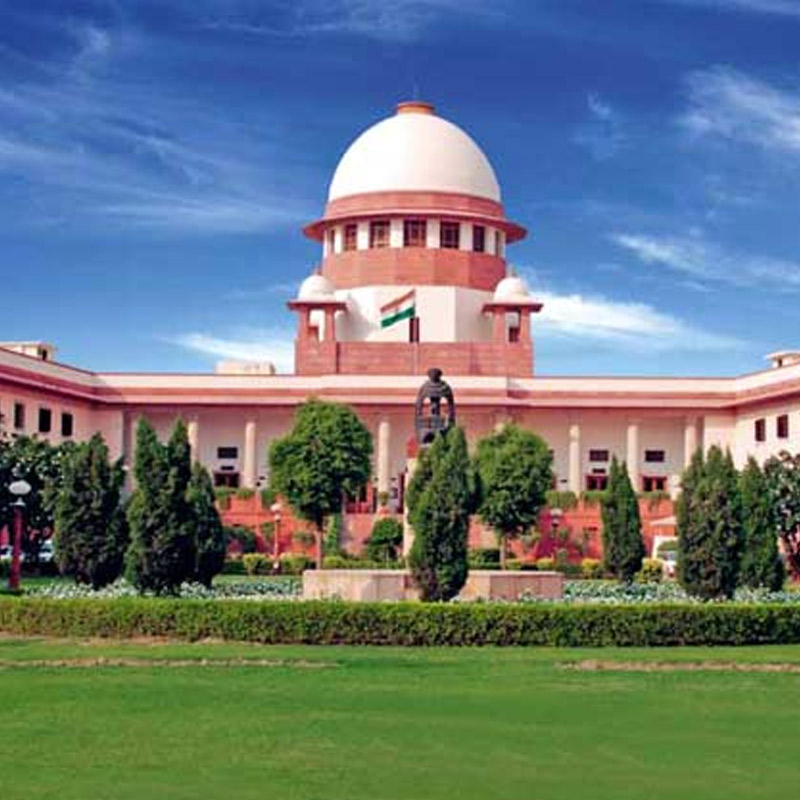
    NEW DELHI: The twists and turns in the case of a new tariff regime being sought to be implemented by broadcast and telecoms regulator TRAI continues. It has filed a petition in the Supreme Court on the issue of 15 per cent cap on discount on a bouquet price of TV channels to consumers that had been set aside by Madras High Court while upholding TRAI’s right to regulate the broadcast sector.

    On a matter that’s complicated, TRAI’s petition, in layman’s language, exhorts the Supreme Court to set aside that portion of the high court judgement that frowns on the 15 per cent cap on discounts on bouquet prices of TV channels.   

    The Madras High Court, while upholding most of the TRAI tariff order — issued middle of 2016 and challenged by Star India and Vijay TV later that year on grounds of overstepping of jurisdiction — had struck down as arbitrary almost 18 months later the 15 per cent cap on bouquet prices.

    With the case finally disposed of by the Supreme Court earlier this year, upholding the high court’s views, TRAI had issued a notification stating that India’s broadcast and cable industry stakeholders implement its tariff regime in phases and report on compliance.

    As the final compliance deadline nears the end of the year, the new twist in the tariff tale — nudged by an appeal of Chandigarh-headquartered MSO Fastway in disputes tribunal TDSAT — may add to the ambiguity and result in further delays in signing of contracts between TV channels and distribution platforms.

    A hearing of the fresh TRAI petition is likely early next week. Keep tuned in for soap-opera type twists in the script.

  • Comment: Is there light at the end of the tunnel for broadcasters?

    Comment: Is there light at the end of the tunnel for broadcasters?

    The period between August 2017 and September 2018 will be remembered by the Indian broadcasting sector for more reasons than one. Interestingly, the main protagonists seem to be common – Star India and the Supreme Court of India – and this combination has worked well to lay down a roadmap for the sector. Only time will tell whether it is for the good or bad!

    Before we go further, let’s fact check the status of the Indian broadcasting sector.  According to Ministry of Information & Broadcasting that as on 31 October 2018 there are 866 permitted TV channels in India.

    As per FICCI-EY Report, “Re-Imagining India’s M&E Sector” the broadcasting industry “grew from Rs 594 billion to Rs 660 billion in 2017, a growth of 11.2 per cent”. This includes the advertising revenue of Rs 267 billion comprising 40 per cent of revenues and the distribution revenue of Rs 393 billion comprising 60 per cent of total revenues. The broadcasting sector generates millions of jobs directly and indirectly, contributes to economic growth with a rate almost twice the GDP and provides an immeasurable ancillary contribution by serving a platform for the growth of several other industries.

    This proves that television in India – even in the age of digital media explosion – remains a mass medium and plethora of stakeholders from content creators, broadcasters, teleport operators, satellite operators, advertisers, distributors and a larger television audience viewing audience are involved in one way or other.

    Is it time to nationalise sports?

    Let’s now examine some of the stunning reverses suffered by the broadcasters before the judiciary in this period.

    First amongst them is the judgement delivered by the Supreme Court in 2017 in the Sports Broadcasting Signals (Mandatory Sharing with Prasar Bharati) Act, 2007 which involved Star India and Prasar Bharati.

    In a long-drawn battle of more than ten years, the Supreme Court finally confirmed the Delhi High Court’s finding when it adjudicated that the original intent of the act was to achieve twin purposes of making available a live feed of a sporting event of national importance to economically weaker section of the society and consequently, the same should be made available on a free or no cost basis. 

    The Supreme Court whilst allowing the sporting events of national events to be shared mandatorily with Prasar Bharati ruled that the public broadcaster cannot utilise it on a notified channel which has to be compulsorily carried by private distribution platforms. Although the ruling of the Supreme Court was not followed by letter and spirit by Prasar Bharati, it put the onus on sports broadcasters to take legal action against erring private commercial platforms carried “live” sports feeds. Rather than encrypt Doordarshan’s feed, the Ministry ordered the distribution platform operators to run a ticker stating that “the match/game can be viewed in free-to-air mode on DD Sports Channel, on DD Free Dish and DD’s terrestrial network”. 

    Whilst the Supreme Court put away any confusion on the Sports Act and a private commercial sporting event like IPL anyway ought not to be considered as sporting events of national importance, Smriti Irani who was piloting the I&B Ministry in April 2018 had other ideas.

    During her time in Shastri Bhawan it seemed Star India was wrong when it fiercely bid to acquire long-term exclusive media rights for the Indian Premier League along with BCCI international and domestic matches for an approximate value of Rs 16,350 crore and Rs 6,150 crore respectively.

    2017 was the first year for Star India after it acquired rights for the IPL and the Ministry inexplicably made them sweat out before granting temporary live uplinking permission for live broadcast of the IPL matches on their channels till the very last moment. This was nothing else but to arm-twist Star India to share all the live matches of Indian Premier League with Doordarshan for free, even though IPL, which is a privately-owned club cricket league and can no way be considered as a sporting event of national importance.  In the end, Star India had no other option but to give something to the power that be and they gave in to share with Prasar Bharati the inaugural, the playoffs held on weekends and the last four matches of IPL, with a deferred live feed of at least 60 minutes. No surprise, Smriti Irani claimed victory for bringing IPL for the first time ever on Doordarshan.

    Not getting the “live” feed of IPL matches and unable to make legislative moves to amend the judgement of the Supreme Court as she did not find support amongst her ministerial colleagues the Irani-led Ministry issued a notice mandating all sports channels broadcasting live sports of “national importance” to display a ticker stating the same match was also available on DD’s free-to-air platform squirming sports broadcasters. Not only are the rights holders required to give live sports content free to DD as per the Sports Act, but they are also required to run a marketing campaign for Doordarshan to drive audiences away from themselves to go somewhere else to watch it!

    Now, if the broadcasters believed that the Supreme Court’s decision on the Sports Act in August 2017 had finally settled the issue, unfortunately, it was not to be. On 24 October the Ministry released a notice seeking feedback/comments on draft Sports Broadcasting Signals (Mandatory) sharing with Prasar Bharati (Amendment) Bill, 2018.  The ministry wants to amend Section 3(1) of the Sports Act to ensure mandatory sharing of the signals of such sporting events with “other networks, where it is mandatory to show the Doordarshan channels as per the Cable Television Networks (Regulation) Act, 1995”. 

    Here's a suggestion : rather than doing it in a piecemeal manner in forcing sports broadcasters to share more sporting events why doesn’t the government nationalise at one go so there is clarity on sports broadcasting?  This will also make Doordarshan the only sports broadcaster in the country and thus can ring-fence them from competition from private sports broadcasters!

    Changing landscape?

    However, the biggest one of all is the Supreme Court judgement on 30 October dismissing the plea of Star India challenging the jurisdiction of TRAI in regulating the broadcasting sector through Tariff Orders.

    The Supreme Court judgement has far-reaching consequences for the broadcast industry since it settled the long pending debate of who is the regulator of the Indian broadcasting sector.  Star India had challenged TRAI’s jurisdiction to frame the tariff order arguing that the exploitation of intellectual property (IP) rights are covered under Copyright Act.  The Supreme Court whilst refusing to entertain Star India’s challenge by 2:1 majority held that (1) the Copyright Act had nothing to do with the inter se relationship between the broadcaster and the distributor in the activity of broadcast and (2) it also does not deal with the price of a channel that an end consumer pays to the broadcaster.

    Whilst the Supreme Court empowered the end-consumer through its order but the implementation is not going to be smooth.  Although TRAI proposed to bring DTH, cable TV, HITS, IPTV operators under unified quality of service framework way back in 2015, poor implementation at the ground level means, the cable operators have still not put in place any consumer redressal mechanisms nor will they issue any bill or invoice.  Worse still, many distribution platform operators (DPOs) have not even fulfilled technical requirements under the DAS mandate or installed subscriber management systems to inform the authorities how many subscribers they service in their areas of operation even though the new tariff order is going to become effective from 1 January 2019.

    According to industry experts, although the new Tariff Order is expected to benefit the consumer as he can now pick and choose his channels rather than being saddled with hundreds of them but the cost of monthly cable bill may go up.  In other words, a new concept of ‘pay less for less, pay more for more’ is going to be a reality for Indian broadcast consumers.

    The moot question is after the Supreme Court empowering the consumer vis-à-vis broadcasters, has TRAI empowered the consumer vis-à-vis DPOs?  The quality of service (QoS) by the DPOs has always been a bone of contention because of its implementation on the ground by the licensor, MIB or its authorised officers at the district level or by the regulator, TRAI.

    Even after the implementation of the Digital Addressable System (DAS), the analogue transmission is still transmitted in many parts of the country and the cable operators have not yet fulfilled the technical requirements to meet the DAS mandates.  Even today in many parts of the country kutcha bill is the norm and no sign of any kind of customer care.  When it is brought to the notice of the policymakers they don’t want to see the reality.

    Although TRAI notified the Telecommunication (Broadcasting and Cable) Services Standards of Quality of Service and Consumer Protection (Addressable Systems) Regulations, 2017 the experience so far shows it will be a tall order to implement on the ground on issues such as establishment of customer care centre, website, consumer care channel and publication of manual of practice, etc.

    As a result, there will never be an end to the disputes amongst stakeholders which is the bane of the Indian broadcasting sector and where is the possibility of changing landscape?

  • TRAI to meet telecom players next month to fix 2019 agenda

    TRAI to meet telecom players next month to fix 2019 agenda

    MUMBAI: To fix the agenda to be taken up in next calendar year, Telecom Regulatory Authority of India (TRAI) is expected to meet telecom industry players next month. The discussion, which is now an annual feature, is likely to involve a wider set of players in the telecom sector this time including operators, infrastructure providers and others.

    “The meeting will take place next month. We will talk to them and ask them about the items they think should be taken up in the next calendar year,” TRAI chairman RS Sharma said on Monday on the sidelines of an interactive session on ‘New Regulatory Framework for Broadcasting and Cable Services’, according to a PTI report.

    As Sharma noted, this time it would not be limited to telecom service providers alone but a broader consultation to figure out the new areas to be deliberated next year.

    While the regulatory body launched a consultation to explore the regulatory framework for OTT apps like WhatsApp, Facebook and Google Duo that provide calling and messaging services similar to that by telcos, he also added that TRAI will be able to finalise its views on the issue of a regulatory framework for OTT players in the coming 5-6 months.

    Supreme Court recently dismissed a petition challenging TRAI’s March 2017 regulations and tariff order paving the way for implementation of the order for the broadcast sector. Sharma while addressing the interactive session said the new comprehensive framework for the sector entailing tariffs, service quality and interconnect aspects, is aimed at “growth”.

    “It is not aimed at hurting players but ensuring growth of the sector in an orderly manner and keeps the interest of stakeholders in mind,” Sharma said.

    Local cable operators and multi system operators raised concerns on issues ranging from operationalising the new norms to ‘a la carte rates’. He urged players to give the new framework a fighting chance along with cautioning that technological changes, which improve service quality and enhance capacity, can also be disruptive.

  • Star India publishes RIO as per TRAI tariff order

    Star India publishes RIO as per TRAI tariff order

    MUMBAI: After Supreme Court of India gave the verdict in favour of Telecom Regulatory authority of India (TRAI) in the tariff order case, the petitioner Star India has published its reference interconnect offer (RIO) in accordance with the Tariff Order and Interconnect Regulations 2017.

    As per the new rate card, the popular channels of the broadcaster including Star Plus, Star Jalsha, Maa TV, Asianet, Star Sports have been priced at Rs 19. Except for few HD channels, most of the channels under the category have been also priced at Rs 19.

    Star India is also offering 28 bouquets with 4 different variations to cater to the diverse consumer segments based on their consumption. The variations of the bouquets are base, premium, HD-base, HD premium. While the base bouquet offers the best of entertainment, sports and movies channels in the customer’s language of choice, the premium bouquet includes English language offerings and channels with a differentiated content proposition on the top of Base offering.

    The base and premium bouquets for SD channels in Hindi, Bengali and Marathi have been priced at Rs 49 and Rs 79 per month respectively while base and premium bouquets in other languages are priced at Rs 39 and Rs 69 respectively.

    The base and premium HD bouquets in Hindi, Marathi, and Bengali have been priced at Rs 85 and Rs 120 per month. For other languages, the base and premium bouquets are priced at Rs 75 and Rs 110 a month.

    The network has also revealed the name of four channels under sports and movies categories which will be launched by 31 December. The soon-to-be launched channels are Star Sports 1 Telugu, Star Sports 1 Kannada, Star Gold Thrills, Star Gold Thrills HD.

    Recently, the two-judge bench of the apex court with Justices Rohinton Fali Nariman and Navin Sinha dismissed Star India’s appeal against Telecom Regulatory Authority of India’s (TRAI) recent tariff order. The principal area of the argument by the broadcaster was that the pricing of the content cannot be regulated by TRAI as it comes under the Copyright Act. The verdict has clearly pronounced that the as TRAI Act is in public interest, it should prevail over the Copyright Act.

    As the tug-of-war was going on for a while, all the other major broadcasters already published their RIOs in late August and early September.

  • SC upholds TRAI Act over Copyright Act in tariff order case

    SC upholds TRAI Act over Copyright Act in tariff order case

    MUMBAI: The two-judge bench of the apex court with Justices Rohinton Fali Nariman and Navin Sinha dismissed the Star India’s appeal against Telecom Regulatory Authority of India’s (TRAI) recent tariff order. The principal area of the argument by the broadcaster was that the pricing of the content cannot be regulated by TRAI as it comes under the Copyright act. The verdict has clearly pronounced that the as TRAI Act is in public interest, it should prevail over the Copyright Act.

    “The best way in which both statutes can be harmonised is to state that the TRAI Act, being a statute conceived in public interest, which is to serve the interest of both broadcasters and consumers, must prevail, to the extent of any inconsistency, over the Copyright Act which is an act which protects the property rights of broadcasters. We are, therefore, of the view that, to the extent royalties/compensation payable to the broadcasters under the Copyright Act are regulated in public interest by TRAI under the TRAI Act, the former shall give way to the latter,” the Supreme Court order said.

    The 123-page judgment read that a copyright is meant to protect an owner’s work (original or re-broadcasted) and isn’t concerned with the interest of the end user or consumer and hence does not fall under the purview of the Copyright Act. It is the TRAI Act that needs to focus on the consumers’ interest.

    The Supreme Court added that the Copyright Act will operate within its own sphere giving broadcasters full flexibility to change royalty or compensation. On the other hand, TRAI does not, in substance, impinge upon these acts. It even observed that broadcasters have freedom to provide their own choice of content and arrange their own pricing as long as they aren’t discriminatory or force subscribers to choose either bouquets or a-la-carte.

    In the Supreme Court order, it was also noted that one of the functions of the authority, is to “facilitate competition and promote efficiency in the operation of telecommunication services (which includes broadcasting services) so as to facilitate growth in such services.”

    The tariff order has been the subject matter of extensive discussions between TRAI, all stakeholders and consumers. The order read further that the focus of TRAI has always been to provide a level playing field to both broadcaster and subscriber.

    Though the impending ruling led to lack of clarity, all the major broadcasters published their Reference Interconnect Offers along with the line of the order. As Star India was the petitioner, it did not publish its RIO.

    “The SC order has empowered consumers across the nation. While the overall media and entertainment landscape has been evolving rapidly, it is for the first time in 26 years that such a strong and positive step has been taken to eradicate the lack of transparency in the cable and broadcast value chain,” ZEE and Essel Group chairman Subhash Chandra commented.

    “This is the watershed moment we have all been waiting for. We feel that the new framework will bring in much needed transparency, parity, promote exercising of choice for the consumer and ensure orderly growth of the sector. The onus is now on all service providers to put their best foot forward and keep consumer interest in mind by complying with the required initial timelines and activities at the earliest,” AIDCF president Rajan Gupta said.

    While along the same line TRAI chairman RS Sharma said it is a big win for consumers as per a PTI report, the verdict undoubtedly has far-reaching impact in broadcast industry.

    Earlier in the Madras High Court, division bench consisting of Justice M Sundar J and Chief Justice Indira Banerjee gave a spilt verdict. While M Sundar’s ruling was in favour of Star India, a third judge upheld the tariff order except certain riders.

  • Trai vs. Star case: next SC hearing on Sept. 18

    Trai vs. Star case: next SC hearing on Sept. 18

    MUMBAI: The Supreme Court has deferred the hearing of Star India’s petition against TRAI tariff and inter-connect order to 18 September 2018 due to insufficient time. This is the fourth time in this month that the hearing has been deferred. Despite the impending ruling, several broadcasters have already published their RIOs.

    Zee Entertainment Enterprises Ltd (ZEEL) was first out of the blocks in publishing the RIO, declaring the MRP and nature of channels in connection with its tariff order , which had a 31 August deadline. The Punit Goenka-led company was followed by TV18 Broadcast Limited ( TV18), Sony Pictures Networks India Private Limited (SPNI), who adhered to the regulator’s directive on September 4. Later, Disney India, Turner India International, Sun TV Networks have also published their RIOs in compliance with the order.

    All the broadcaster have stuck to a maximum 15 per cent MRP discount to distributors. Earlier, Madras High Court chief justice did not uphold TRAI’s proposal of allowing highest 15 per cent cap on discounts despite giving the go-ahead to all other proposals. As any clarification did not come from TRAI, all the broadcasters are adhering to the order to avoid any further confusion.

    The TRAI tariff orders, first contested in Madras High Court by the petitioners, were cleared by the Chennai court with certain riders after hearings that continued almost over 16 months in front of two benches of the court.

    Though the petitioners were unable for comments, a legal eagle explained that the very fact the Supreme Court has allotted a day for hearing the petition of Star India and Vijay TV, which basically revolves around copyright and why the regulator doesn’t have jurisdiction over such issues, highlights the fact that the judge doesn’t want to take a decision in a hurry.

    After the Madras HC had given a thumb up to TRAI tariff order, and both the petitioners and the defendant (TRAI) had filed caveats in the Supreme Court, the regulator had bowled a googly saying that its tariff order would come into effect from 3 July 2018 () as all judicial compliances had been completed.

    “Having complied with  the  judicial  mandates  in  the  matter,  the Telecommunication (Broadcasting and Cable) Services (Eighth) (Addressable Systems)  Tariff   Order, 2017 and  the Telecommunication (Broadcasting and Cable) Interconnection (Addressable Systems) Regulations, 2017 as upheld by the Hon’ble Madras High  Court and the Telecommunication (Broadcasting and Cable) Services Standards  of   Quality  of  Service and  Consumer  Protection (Addressable Systems) Regulations, 2017 come into effect from 3rd July 2018,” the regulator had said in a statement pointing out that all timelines mentioned in the original order should be adhered to immediately.

    According to TRAI, implementation of the new regulatory framework will “bring in transparency”, enable provisioning of affordable broadcasting and cable TV services for the consumer and, at the same time, “would lead to an orderly growth of the sector”.

  • SC adjourns Star India’s petition on TRAI tariff order to 13 September

    SC adjourns Star India’s petition on TRAI tariff order to 13 September

    MUMBAI:  The Supreme Court has deferred the hearing of Star India’s petition against TRAI tariff and inter-connect order to 13 September 2018 due to insufficient time. This is the third time in this month that the hearing has been deferred. Despite the impeding ruling, several broadcasters have already published their RIOs.

    Zee Entertainment Enterprises Ltd (ZEEL) was first out of the blocks in publishing the RIO, declaring the MRP and nature of channels in connection with its tariff order, which had a 31 August deadline. The Punit Goenka-led company was followed by TV18 Broadcast Limited ( TV18), Sony Pictures Networks India Private Limited (SPNI), who adhered to the regulator’s directive on September 4. Later, Disney India, Turner India International, Sun TV Networks have also published their RIOs in compliance with the order. 

    All the broadcaster have stuck to a maximum 15 per cent MRP discount to distributors. Earlier, Madras High Court chief justice did not uphold TRAI’s proposal of allowing highest 15 per cent cap on discounts despite giving the go-ahead to all other proposals. As any clarification did not come from TRAI, all the broadcasters are adhering to the order to avoid any further confusion. 

    The TRAI tariff orders, first contested in Madras High Court by the petitioners, were cleared by the Chennai court with certain riders after hearings that continued almost over 16 months in front of two benches of the court.
    Though the petitioners were unable for comments, a legal eagle explained that the very fact the Supreme Court has allotted a day for hearing the petition of Star India and Vijay TV, which basically revolves around copyright and why the regulator doesn’t have jurisdiction over such issues, highlights the fact that the judge doesn’t want to take a decision in a hurry.

    After the Madras HC had given a thumb up to TRAI tariff order, and both the petitioners and the defendant (TRAI) had filed caveats in the Supreme Court, the regulator had bowled a googly saying that its tariff order would come into effect from 3 July 2018 as all judicial compliances had been completed.

    “Having complied with  the  judicial  mandates  in  the  matter,  the Telecommunication (Broadcasting and Cable) Services (Eighth) (Addressable Systems)  Tariff   Order, 2017 and  the Telecommunication (Broadcasting and Cable) Interconnection (Addressable Systems) Regulations, 2017 as upheld by the Hon’ble Madras High  Court and the Telecommunication (Broadcasting and Cable) Services Standards  of   Quality  of  Service and  Consumer  Protection (Addressable Systems) Regulations, 2017 come into effect from 3rd July 2018,” the regulator had said in a statement pointing out that all timelines mentioned in the original order should be adhered to immediately.

    According to TRAI, implementation of the new regulatory framework will “bring in transparency”, enable provisioning of affordable broadcasting and cable TV services for the  consumer and, at the  same time, “would lead to an orderly growth of the sector”

  • SC adjourns Star India’s petition on TRAI tariff order to 12 September

    SC adjourns Star India’s petition on TRAI tariff order to 12 September

    MUMBAI: The Supreme Court has deferred the hearing of Star India’s petition against TRAI tariff and inter-connect order to 12 September 2018 due to unavailability of time.  Last week also, the hearing was deferred to 11 September for the same reason.

    Zee Entertainment Enterprises Ltd (ZEEL) was first out of the blocks in publishing the RIO, declaring the MRP and nature of channels in connection with its tariff order, which had a 31 August deadline. The Punit Goenka-led company was followed by TV18 Broadcast Limited ( TV18), Sony Pictures Networks India Private Limited (SPNI), who adhered to the regulator’s directive on September 4. Later, Disney India, Turner International India, Sun TV Networks have also published their RIOs in compliance with the order. 

    All the broadcaster have stuck to a maximum 15 per cent MRP discount to distributors. Earlier, Madras High Court chief justice did not uphold TRAI’s proposal of allowing highest 15 per cent cap on discounts despite giving the go-ahead to all other proposals. As any clarification did not come from TRAI, all the broadcasters are adhering to the order to avoid any further confusion. 

    The TRAI tariff orders, first contested in Madras High Court by the petitioners, were cleared by the Chennai court with certain riders after hearings that continued almost over 16 months in front of two benches of the court.

    Though the petitioners were unable for comments, a legal eagle explained that the very fact the Supreme Court has allotted a day for hearing the petition of Star India and Vijay TV, which basically revolves around copyright and why the regulator doesn’t have jurisdiction over such issues, highlights the fact that the judge doesn’t want to take a decision in a hurry.

    After the Madras HC had given a thumb up to TRAI tariff order, and both the petitioners and the defendant (TRAI) had filed caveats in the Supreme Court, the regulator had bowled a googly saying that its tariff order would come into effect from 3 July 2018 as all judicial compliances had been completed.

    “Having complied with  the  judicial  mandates  in  the  matter,  the Telecommunication (Broadcasting and Cable) Services (Eighth) (Addressable Systems)  Tariff   Order, 2017 and  the Telecommunication (Broadcasting and Cable) Interconnection (Addressable Systems) Regulations, 2017 as upheld by the Hon’ble Madras High  Court and the Telecommunication (Broadcasting and Cable) Services Standards  of   Quality  of  Service and  Consumer  Protection (Addressable Systems) Regulations, 2017 come into effect from 3rd July 2018,” the regulator had said in a statement pointing out that all timelines mentioned in the original order should be adhered to immediately.

    According to TRAI, implementation of the new regulatory framework will “bring in transparency”, enable provisioning of affordable broadcasting and cable TV services for the  consumer and, at the  same time, “would lead to an orderly growth of the sector”.

  • turner india reveals new channel pricing

    turner india reveals new channel pricing

    NEW DELHI: The Supreme Court today listed for 28 August the special leave petition filed by Star India and Vijay TV against a tariff and inter-connect orders of regulator TRAI that had been given a go-ahead by the Madras High Court.

    The TRAI tariff orders, first contested in Madras High Court by the petitioners, were cleared by the Chennai court with certain riders after hearings that continued almost over 16 months in front of two benches of the court.

    Though the petitioners were  unavailable for comments, a legal eagle explained that the very fact the Supreme Court has allotted a day for hearing the petition of Star India and Vijay TV, which basically revolves around copyright and why the regulator doesn’t have jurisdiction over such issues, highlights the fact that the judge doesn’t want to take a decision in a hurry.

    The next date of hearing of the case in the apex court on 28 August 2018 is few days before the deadline kicks in for filing of new inter-connect agreements by stakeholders of the Indian broadcast industry.

    After the Madras HC had given a thumb up to TRAI tariff order, and both the petitioners and the defendant (TRAI) had filed caveats in the Supreme Court, the regulator had bowled a googly saying that its tariff order would come into effect from 3 July 2018 as all judicial compliances had been completed. 

    “Having complied with the judicial mandates in the matter,  the Telecommunication (Broadcasting and Cable) Services (Eighth) (Addressable Systems) Tariff Order, 2017 and the Telecommunication (Broadcasting and Cable) Interconnection (Addressable Systems) Regulations, 2017 as upheld by the Hon'ble Madras High  Court and the Telecommunication (Broadcasting and Cable) Services Standards  of   Quality  of  Service and  Consumer  Protection (Addressable Systems) Regulations, 2017 come into effect from 3rd July 2018,” the regulator had said in a statement pointing out that all timelines mentioned in the original order should be adhered to immediately.

    According to TRAI, implementation of the new regulatory framework will “bring in transparency”, enable provisioning of affordable broadcasting and cable TV services for the consumer and, at the same time, “would lead to an orderly growth of the sector”.

    Keep tuned in for another episode of this legal saga, which started to air sometime in 2016.