Tag: tariff order

  • Dish TV’s Jawahar Goel says cable bills won’t increase in new TRAI tariff regime

    Dish TV’s Jawahar Goel says cable bills won’t increase in new TRAI tariff regime

    MUMBAI: Managing director of Dish TV Jawahar Goel, on Wednesday, allayed fears of consumers, saying there was no question of cable and DTH prices increasing due to the TRAI tariff order. According to him, there has been a reduction in the bills of consumers who have moved to the new regime.

    “There have been rumours that cable bills will go up by 5-6 times. There is absolutely no truth to this. Bills of those subscribers (Dish TV or other DPOs) that have migrated to the new regime have in fact reduced. If you drop channels that you don’t watch, then your bill will further reduce. There is no question of bills increasing,” he stated.

    Goel drew a parallel with the telecom business to suggest that a radical change of this nature is bound to benefit the consumers.

    “Earlier in the telecom business, call rate was Rs 16 per minute. Today it isn’t even 10 paisa per minute. In the new tariff regime, you will only pay for channels you opt for,” he said.

    The Dish TV promoter also hit out at those spreading rumours with regards to the new tariff order.

    “Consumers should not fall for rumours and speculation. Those who feel threatened due to the new regulation are the ones fuelling these rumours and trying to mislead the consumers,” Goel highlighted.

    On Tuesday, Dish TV reported profit after tax (PAT) of Rs 152.69 crore for the quarter ended 31 December 2018 (Q3 2019, quarter under review) as compared to  loss of Rs 168.29 crore in the corresponding year ago quarter and a profit of Rs 19.73 crore in the immediate trailing quarter Q2 2109.  These PAT numbers were boosted by certain income tax adjustments of prior years.

    Dish TV and Videocon d2h were merged on March 22 2018 and hence Q1 2019 was the first full reporting quarter for the merged entity.

    Subscription revenue declined 2.1 percent q-o-q in Q3 2018 to Rs 141.26 crore as compared to Rs 1,453.6 crore in Q3 2018. Advertisement revenue for the quarter under review increased 26.2 percent y-o-y to Rs 30 crore from Rs 23.8 crore.

    “I am glad that all opposition to the tariff order has now finally been put to rest. We continue to strongly believe that the regulation should minimise discriminatory pricing by ensuring a level playing field between cable and DTH platforms and should be beneficial for the entire industry thus leading to higher earnings going forward,” Goel said.
  • TRAI expects DPOs to declare special schemes for multiple TV connection households

    TRAI expects DPOs to declare special schemes for multiple TV connection households

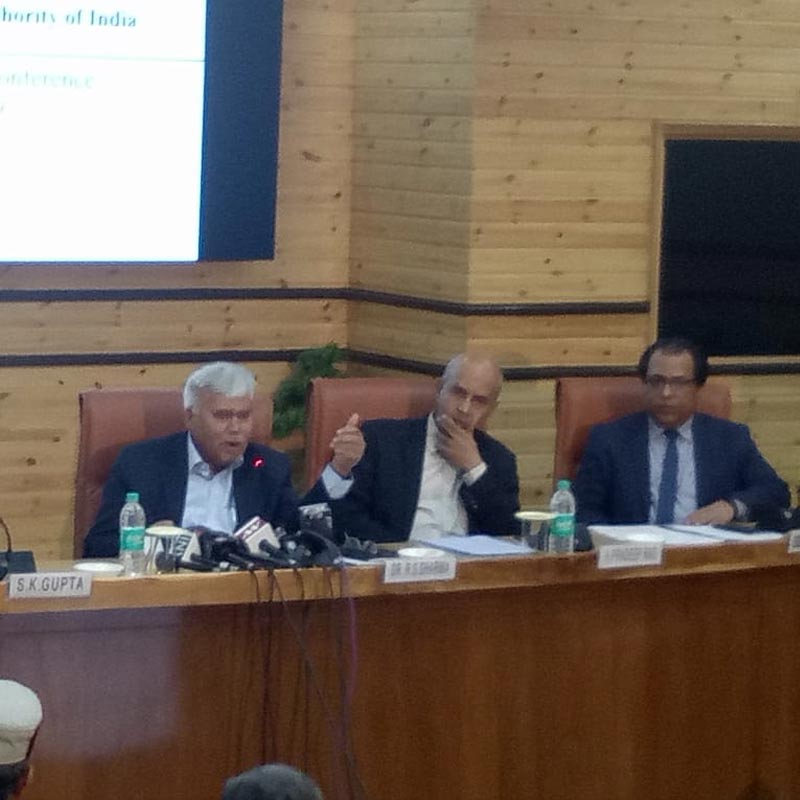
    MUMBAI: After Telecom Regulatory Authority of India’s new tariff regime empowering citizens to choose channels, came into effect from 1 February, consumers as well as distribution platform operators (DPOs) are facing several issues. To address such concerns, the authority held a press conference at TRAI headquarters in New Delhi.

    One topic discussed was the presence of multiple TV households. These subscribers prefer a cheaper scheme for the second TV. To keep it same under new regime, TRAI has sought details of special schemes for provision of second or subsequent connection. The regulatory body expects that DPOs will declare special schemes for multiple connections within a TV home in a day or so. TRAI said it is keeping an eye on the development and will intervene if required.

    While TRAI has always promoted the view that the new order will put power in the hands of consumers, there have been speculations that it will actually increase the monthly pay TV bill. Recently, ratings agency Crisil also published a report on price hike along the same line. TRAI refuted the report saying it is not based on focused analysis and research.

    “The report is based on choosing top rated channels on all India basis and considers only one weekly report dated 25th January 2019, from TV Rating Agency, BARC. The selection of channels by subscribers is primarily driven by language, genre, region and culture. The report fails to appreciate that even among top three channels, that is Sun TV, Zee Anmol and Star Maa, the language is Tamil, Hindi and Telugu respectively,” TRAI commented.

    TRAI has claimed so based on the logic that it is unlikely to expect one family to choose Tamil, Hindi and Telugu channel simultaneously. The regulatory body added that this is more glaring in the scenario where TV channels of Hindi, Tamil, Telugu, Bangla, Malayalam and English have been considered together.

    Apart from lashing out at the report for “misleading subscribers”, TRAI added the preliminary data analysis reflects actual savings by subscribers to the tune 10 to 15  per cent  in metro towns and between 5 to 10 per cent in non-metro (DAS 3 and DAS 4) areas.

    TRAI has again assured that subscribers availing pre-paid services will face no disruption, if there is a credit balance available in the subscriber’s wallet/ account.

    “The authority received information that while migrating consumers, one large service provider has caused blackout on the TV screen of a few-thousand subscribers. Taking a serious view, the authority has issued show cause notice to that service provider,” it added. DPOs were strictly told to cause no disruption in services. 

  • New TRAI’s tariff regime unlikely to reduce TV bills for most subscribers: Report

    New TRAI’s tariff regime unlikely to reduce TV bills for most subscribers: Report

    MUMBAI: The network capacity fee (NCF) and channel prices announced by broadcasters and distributors as per the Telecom Regulatory Authority of India’s (TRAI) new guidelines could increase the monthly bill of most subscribers of television channels as per the CRISIL report.

    TRAI’s new regulatory framework for broadcasting and cable services industry is intended to usher in transparency and uniformity, and will afford far greater freedom of choice to viewers.

    More than 90 per cent of TV viewers flip 50 or fewer channels, and the new rules will let them subscribe to what they want and not be saddled with channels they are not interested in.

    The regime, which came into effect on 1 February 2019, will benefit popular channels and hasten adoption of over-the-top (OTT); or content providers who stream media over the internet, such as Netflix and Hotstar) platforms, and will be a mixed bag for viewers and distributors.

    Ratings senior director Sachin Gupta said, “Our analysis of the impact of the regulations indicates a varied impact on monthly TV bills. Based on current pricing, the monthly TV bill can go up by 25 per cent from Rs 230-240 to ~Rs 300 per month for viewers who opt for the top 10 channels, but will come down for those who opt upto top 5 channels.”

    The new regime could drive consolidation in the broadcasting industry because content will clearly be the king and key differentiator. Subscription revenues of broadcasters would rise ~40 per cent to Rs 94 per subscriber per month compared with Rs 60-70 now. With viewers likely to opt for popular channels, large broadcasters will have greater pricing power. Conversely, broadcasters with less-popular channels will find it tough to piggyback on packages, and the least popular ones will hardly have a business case and could go off air.

    For distributors (DTH and cable operators), the new regulations are a mixed bag. While content cost will become a pass-through, protecting them from fluctuations, they may lose out on the benefits of value-added services such as bundling content across broadcasters, customisation, and placement revenue.

    Currently, most distributors are charging NCF at the cap rate of Rs 130 per month. Similarly, broadcasters have priced subscription for the most popular pay channels at the cap rate of Rs 19 per month.

    But these are early days and the situation may evolve with prices charged by broadcasters and distributors declining depending on market forces, viewership and competitive intensity.

    Ratings director Nitesh Jain “In all this, OTT platforms could emerge as the big beneficiary because many viewers could shift because of rising subscription bills. And low data tariffs also encourages viewership on OTT platforms.”

  • Siti Networks in Kolkata to migrate pay channels to new TRAI tariff scheme in phased manner

    Siti Networks in Kolkata to migrate pay channels to new TRAI tariff scheme in phased manner

    MUMBAI: Essel group promoted multi-system operator (MSO) Siti Network has planned to migrate Pay TV channels in Kolkata in a phased manner to get non-compliant subscribers to transition to the new TRAI tariff regime. While around 80 per cent of the MSO's 14 lakh subscribers were still to pick their pay channels from an a-la-carte list.

    According to a report from The Telegraph, the MSO will start the process before the grace period given by Calcutta High Court in a recent order.

    “About 20 per cent of our customers have filled in forms online or offline, specifying the channels they want to watch. We have shifted most of them to the channels of their choice. We will now start shifting the others who have not exercised their choices to the new system by withdrawing their pay channels. They will continue to get the free-to-air channels,” Siti Cable director Suresh Sethia said.

    If there is chaos after the migration, the company might start moving some of the subscribers to combinations closest to their current packs. According to the report, another MSO is expected to move subscribers to a combination of channels that can be accommodated within the pricing brackets they are currently in.

    “Since most pay channels are now priced higher than they were in the previous system, they will obviously miss out on some, if not several. The only way out is for them to register their choices immediately,” an official was quoted by The Telegraph.

    Earlier Telecom Regulatory Authority of India (TRAI) extended the deadline for consumer migration to new plans till January 31. Despite the additional month, several MSOs complained that the majority of subscribers had not responded to the grace period making transition very difficult.

    80 cable operators from the city also filed a petition against the order in Calcutta High Court and initially got a stay too. But the high court vacated the stay.

  • Tata Sky vs TRAI: DTH operator concludes arguments; Delhi High Court lists case for 8 February

    Tata Sky vs TRAI: DTH operator concludes arguments; Delhi High Court lists case for 8 February

    MUMBAI: The next hearing of the direct-to-home operator Tata Sky’s ongoing legal battle, in which Discovery,  Bharti Telemedia-owned Airtel Digital TV and Sun Direct are a part, with the Telecom Regulatory Authority of India(TRAI) and its new tariff regime, has been scheduled for 8 February.

    On Monday, after senior lawyer Kapil Sibal, representing Tata Sky, concluded his arguments including legal submissions, Discovery India Communication’s counsel Gopal Jain laid the foundation for his arguments, which are expected to be concluded during the next hearing.

    The regulator informed the court that the new tariff order has already been implemented from 1 February.

    Earlier the TRAI had offered an extension till 31 January to the distribution platform operators (DPOs) for implementation.

    On 24 January, the Harit Nagpal-led company finally unveiled the new pricing of channels and packs after it was served a show-cause notice by the TRAI.

    TRAI's show-cause notice said, "Tata Sky has failed to provide options to its 17.7 million subscribers in compliance with the new framework to exercise their choices for TV channels. Tata Sky has put its subscribers in a situation of great difficulty despite no fault of theirs by not complying with the provisions of the new regulations and the tariff order.”

    Despite the delay in announcing channel prices, Tata Sky MD and CEO Nagpal is confident that his team can complete the tricky task of implementing the new norms within a relatively short span of time.

    “Tata Sky has always been compliant to regulatory requirements. We have gone live with our modes of communication across the Tata Sky website, Tata Sky mobile app and also equipped the dealers that subscribers can reach out to. We were confident that we would be able to complete the task in 1 week’s time. Hence we used this time to a seamless and smooth transition for all our subscribers. We have ensured that choosing channels and packs is as easy as 1, 2, 3 for any subscriber,” the veteran executive said.

    On 29 January, Calcutta High Court stayed the cable switchover till 18 February. The court’s directive was a result of 80 cable operators from the city filing a petition against the TRAI mandate. However, the high court later vacated the stay.

    The petitioners’ lawyer Debabrata Saha Roy argued that the revenue-sharing model under the new regime will significantly reduce the cable operators’ share to just nine per cent. With 80% will go into the broadcasters’ kitty, MSOs stand to get just 11 per cent, thus making it an unsustainable business proposition for operators.

    In 2017, Bharti Telemedia, Tata Sky and Discovery Communication India had filed petitions against TRAI, challenging its tariff order and the interconnect regulations.

    Unlike the position adopted by Star India wherein it questioned the regulatory powers of TRAI, the matter in the Delhi HC questions the regulator’s power to wipe out deals that operators enter into to fix commissions and rates for customers.

  • Calcutta HC vacates stay on TRAI tariff order, hands LCOs time till 8 February

    Calcutta HC vacates stay on TRAI tariff order, hands LCOs time till 8 February

    MUMBAI: In a major development, the Calcutta High Court, which has jurisdiction over West Bengal and the Union Territory of the Andaman and Nicobar Islands, on Thursday vacated the stay imposed by it on the implementation of the tariff order till February 18.

    Local cable operators (LCOs) have now been given time till 8 February to negotiate contracts with multi-system operators (MSOs). Thereon, revenue share within the distribution value chain will be split in line with the TRAI’s tariff order.

    On Wednesday, the court had asked the TRAI to submit a report on the matter on 13 February, which is when the next hearing was due to take place. The court’s directive was a result of 80 cable operators filing a petition against the TRAI mandate.

    However, realizing the urgency of the situation, the regulator's lawyers, on Wednesday itself, filed an application to vacate the stay. 

    In its application, TRAI had argued that the court had been misled by the petitioners, and placed the Supreme Court judgment in the court. 

    The petitioners’ lawyer Debabrata Saha Roy argued that the revenue-sharing model under the new regime will significantly reduce the cable operators’ share to just nine per cent. 

    With 80% will go into the broadcasters’ kitty, MSOs stand to get just 11 per cent, thus making it an unsustainable business proposition for operators.

    Earlier the regulator had offered an extension till 31 January to the distribution platform operators (DPOs) for implementation.  


  • TRAI to DTH operators: Honour commitment on long-duration packs

    TRAI to DTH operators: Honour commitment on long-duration packs

    MUMBAI: Telecom Regulatory Authority of India (TRAI) on Wednesday asked DTH operators to honour pre-paid commitment on ongoing long-duration packs of consumers (if they want). TRAI chairman RS Sharma also reiterated that there would be no change in the February 1 deadline for consumer migration to its new tariff regime.

    According to a report by news agency PTI, Sharma statted that if a DTH subscriber with a long duration pack wants to choose new channels mid-way, then the balance amount should be adjusted by operator. He also expressed his confidence with regards to a smooth switchover without any inconvenience to viewers on the concerned day.

    The new regulatory framework by TRAI for broadcasting sector is set to overhaul the entire ecosystem. For the first time ever, consumers will be able to choose channels or packages for pay TV on their own. While the new regime puts power in the hands of consumers, many stakeholders remain sceptics about its impact.

    Moreover, the TRAI continues to face legal hurdles. While the verdict of a petition made by Tata Sky challenging the order is still pending in the Delhi High Court, Calcutta High Court on Tuesday stayed the implementation of the tariff order till 18 February.

  • Sun Network’s R Mahesh Kumar says TRAI tariff order will have positive impact on subscription revenue

    Sun Network’s R Mahesh Kumar says TRAI tariff order will have positive impact on subscription revenue

    MUMBAI: With the new tariff order of the Telecom Regulatory Authority of India (TRAI) coming into effect from 1 February 2019, Sun TV Network president R Mahesh Kumar believes subscription revenue will be positively impacted with the radical change.

    "We have to wait and see how it pans out. I think it will have a positive impact on subscription revenue," news agency PTI quoted him as saying.

    Mahesh Kumar is also of the opinion that the distribution landscape in south India will witness major impact due to the new norms.

    “Analog connection in Tamil Nadu, one of our major market, is still at 35-40 percent," he further added.

    The behemoth network is set to roll out it's latest offering – Sun Bangla – on 3 February. The network is expected to invest close to Rs 150 crore into the GEC channel in the first year.

    "Sun Bangla will start airing from February 3 and we hope to garner sizeable market in the Rs 1200 crore Bengali general entertainment category channels," Sun Group CFO S L Narayanan had said during a post-earnings conference call.

    The Sun Network also has a Marathi channel in the pipeline.

  • TRAI optimistic about onboarding 90% consumers by tariff order deadline

    TRAI optimistic about onboarding 90% consumers by tariff order deadline

    MUMBAI: Before the 1 February deadline of consumer migration to new plans in line with the Telecom Regulatory Authority of India’s (TRAI) tariff order, chairman RS Sharma seems confident of onboarding 90 per cent consumers to the new regime.

    According to news agency PTI report, Sharma has noted a trend in the past few days of a sudden surge in the recording of customer preferences by service providers. Seeing the positive response from consumers, TRAI chairman thinks the desired figure of 100 per cent onboarding will be reached soon.

    “Looking at the trend, we feel, we will be able to reach the figure of over 90 per cent by January 31 there may be 10 per cent cases where people may be travelling or not present at home,” he said.

    For smooth implementation, as well as consumer awareness, the regulatory body has come out with advertisements and created YouTube videos. It is also holding regular meetings with broadcasters, direct to home (DTH) operators and multi system operators (MSO) to review the customer choice collection progress.

    “We are reviewing it on a day-to-day basis. We are also looking into apps of various DTH operators to see how customer-friendly they are for recording of viewer choices,” Sharma stated.

    The new regulatory framework puts power in hands of consumers to choose the channels they want to watch through a-la-carte and broadcaster or DPO packages as well. 

    Many industry experts have speculated that it will raise the monthly cable bill. Sharma feels that the monthly bills of those customers who only select the channels they watch will certainly go down. He also advised that viewers should not unnecessarily hoard channels as they can addchannels to cart whenever they wish.

    “Many a times, people buy goods they don't need today but think they will need tomorrow. Tomorrow, if they want to watch a channel they can buy it… why should they hoard the channel because it is a costly hoarding as they have to pay for it too,” he said.

    The regulator on 24 January said that 40 per cent of consumers have exercised their options of selecting TV channels under the new tariff order. 

    On the same day, TRAI published a cautionary note writing to all broadcasters and DPOs, asking them to comply by the new regulatory framework within the stipulated time.

  • Tata Sky vs TRAI: Case, argued partly by DTH operator, adjourned to 30 January

    Tata Sky vs TRAI: Case, argued partly by DTH operator, adjourned to 30 January

    MUMBAI: The next instalment of direct-to-home operator Tata Sky’s ongoing legal tussle with the TRAI and its new tariff regime, in which Bharti Telemedia-owned Airtel Digital TV and Sun Direct are a part, will play out in two days time after the Delhi High Court adjourned the matter to 30 January with arguments being inconclusive.

    The matter was argued partly by Rajiv Nayar on behalf of the DTH operator on Monday.

    On Thursday, the Harit Nagpal-led company finally unveiled the new pricing of channels and packs after it was served a show-cause notice by the TRAI.

    TRAI's show-cause notice said, "Tata Sky has failed to provide options to its 17.7 million subscribers in compliance with the new framework to exercise their choices for TV channels. Tata Sky has put its subscribers in a situation of great difficulty despite no fault of theirs by not complying with the provisions of the new regulations and the tariff order.”

    Despite the delay in announcing channel prices, Tata Sky MD and CEO Nagpal is confident that his team can complete the tricky task of implementing the new norms within a relatively short span of time.

    “Tata Sky has always been compliant to regulatory requirements. We have gone live with our modes of communication across the Tata Sky website, Tata Sky mobile app and also equipped the dealers that subscribers can reach out to. We were confident that we would be able to complete the task in 1 week’s time. hence we used this time to create a seamless and smooth transition for all our subscribers. We have ensured that choosing channels and packs is as easy as 1, 2, 3 for any subscriber,” the veteran executive said.

    In a press release issued by the TRAI on Thursday, it had singled out one DTH operator for not providing options to its subscribers to exercise their choices. The press note also mentioned that the said DTH operator had assured in writing that it would comply with the new regulatory framework.

    In 2017, Bharti Telemedia, Tata Sky and Discovery Communication India had filed petitions against TRAI, challenging its tariff order and the interconnect regulations.

    Unlike the position adopted by Star India wherein it questioned the regulatory powers of TRAI, the matter in the Delhi HC questions the regulator’s power to wipe out deals that operators enter into to fix commissions and rates for customers.