Tag: Tamil

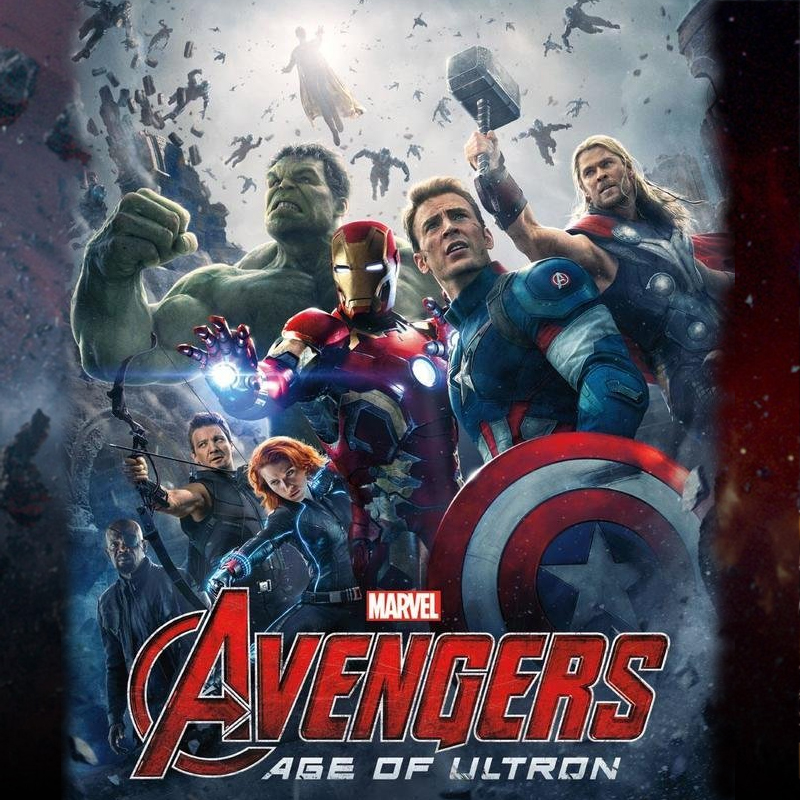
  • The Avengers mops up Rs 140 mn in first weekend

    The Avengers mops up Rs 140 mn in first weekend

    MUMBAI: Marvel Studios and UTV Movies’ The Avengers that released theatrically in India on 27 April has notched up Rs 140 million in its first weekend.

    “The film‘s net box office collections stood at Rs 140 million in the first three days,” UTV said.

    The film released in 800 screens in 3D, IMAX and 2D and in four languages – English, Hindi, Tamil and Telugu. UTV claims this is the widest release ever for a Hollywood movie in India.

    Said UTV Motion Pictures CEO Siddharth Roy Kapur, “The Avengers has notched up what could be the top two or three weekend collections in the history of Hollywood movies in In¬dia, despite releasing alongside another big Hindi film. This is a great example of how the box office for Hollywood movies in India can be maximised using aggressive marketing and distribution strategies we would adopt for a big ticket Hindi movie release.”

  • UTV to remake Delhi Belly in Tamil

    UTV to remake Delhi Belly in Tamil

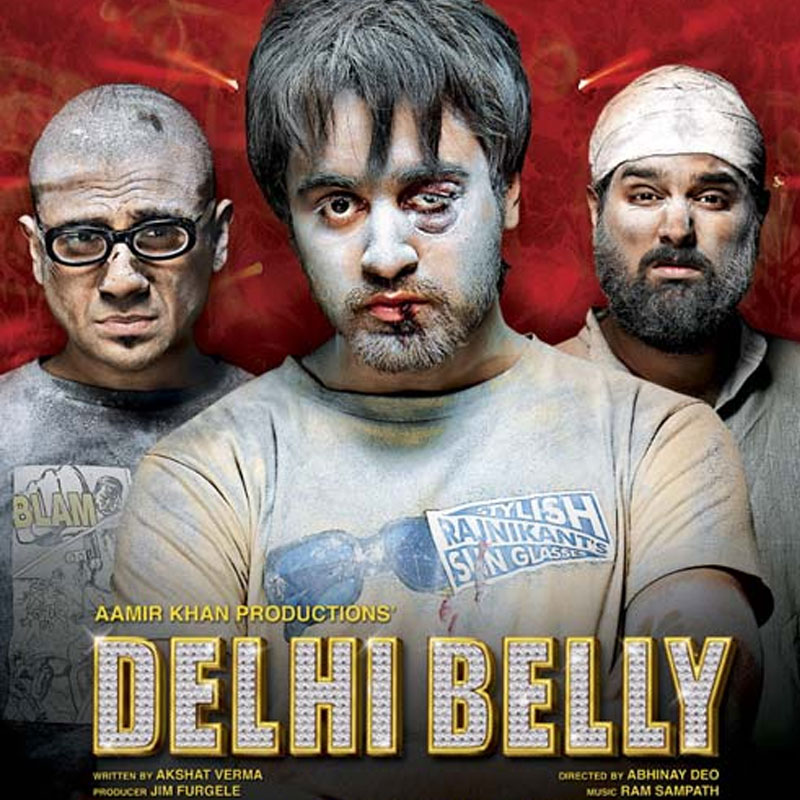
    MUMBAI: After a lot of dilly dally, UTV Motion Pictures has finally decided to remake Delhi Belly in Tamil.

    In the yet to be titled Tamil version, Imran Khan‘s role will be played by Arya, while Santhanam will play Kunaal Roy Kapur‘s role and Premji Vir Das‘s role. Hansika and Anjali will play the roles of the air hostess and journalist respectively. Nasser will essay the role originally played by Vijay Raaz. The film will also have several known stars in other pivotal roles.

    Remarked UTV Motion Pictures CEO Siddharth Roy Kapur, “Delhi Belly will work superbly well with Tamil audiences and we are thrilled with the exceptionally adapted screenplay that a team of young writers has developed. We have brought on actors who are youthful and popular, along with a very skilled director at the helm, and we are confident that the great content of Delhi Belly will act as a bridge for cinema loving audiences across languages.”

    The film, to be directed by R Kannan, is slated for a Pongal release in January 2013.

  • Titanic rakes in Rs 61 mn in opening wekend

    Titanic rakes in Rs 61 mn in opening wekend

    MUMBAI: The 3D version of James Cameron‘s epic love story Titanic has earned Rs 61 million from 213 screens in the opening weekend.

    The film also enjoyed a good opening in the international market by earning $35.5m from 5,579 screens in 84 countries this weekend, Fox Studios, the disttributor of the film, said. The film has done good business not only in the major metros but also in the smaller markets.

    The release of the 3D version of the film in English, Hindi, Tamil and Telugu is in commemoration of the 100th anniversary of the sinking of the Titanic.

    “Titanic 3D‘s phenomenal success has set a new benchmark not just in 3D technology, but for re-releases in India and international markets. The figures further reaffirm the passion and excitement which Titanic, one of the most celebrated films in cinema history, has enjoyed in India over the years,” said Fox Star Studios India CEO Vijay Singh.

    Titanic, a love story with the 1912 sinking of the ship as its backdrop, was released in 1997. Then, it had made around $1.843-billion worldwide.

  • Bijoy Nambiar to direct two films back-to-back

    Bijoy Nambiar to direct two films back-to-back

    MUMBAI: With the critical acclaim of his debut film Shaitaan behind him, Bijoy Nambiar has decided to direct two films back-to-back.


    The first film, titled David, was initially planned to be made in Hindi. It has three leading men and women and hence required many prominent faces.


    Apart from South stars Vikram and Jeeva, the director was not successful in signing on any Bollywood actor for the film, and is hence being forced to make it in Tamil. And that was apparently the reason why Vivek Oberoi was taken on board, apart from Tabu.


    The second project will go on the floors once the director completes David. The film will feature Shahid Kapoor in the lead, though he has not yet signed on the dotted line.

  • Santosh Sivan’s Urumi to screen at Busan fest

    Santosh Sivan’s Urumi to screen at Busan fest

    MUMBAI: Santosh Sivan‘s Prithviraj-Genelia D’souza starrer Urumi has been selected to be screened at the Busan International Film Festival that commences from 6 October.


    The film will be screened in ‘A Window to Asian Cinema‘ category.


    Urumi will have two versions for screening – a standard three-hour theatrical version and a 90-minute English version made for the international market.


    Urumi is the second most expensive Malayalam film ever made with a budget of about Rs 200 million and has been dubbed into Tamil, Telugu and English.
     
    The film, spread between the second and third visits of Vasco da Gama to India, chronicles a varied version of how da Gama could have met a bloody death in AD 1524.


    It is set in the backdrop of the fierce warrior clans of Northern Kerala in the 16th century and focuses on Chirakkal Kelu Nayanar (Prithviraj) – a man whose target and mission is to resist or kill Dom Vasco da Gama, the Viceroy of the Portuguese empire in India.


    This is the second time that a film by Sivan will be screened at the festival, the first being his 2005 film Navarasa.


    The film has been titled Pathinaindham Nootrandu Uraivaal in Tamil while the English version has been named Vasco Da Gama. The Hindi title is being finalised.


    The film has been titled Pathinaindham Nootrandu Uraivaal in Tamil while the English version has been named Vasco Da Gama. The Hindi title is being finalised.

  • RA.One to have Tamil and Telugu versions

    RA.One to have Tamil and Telugu versions

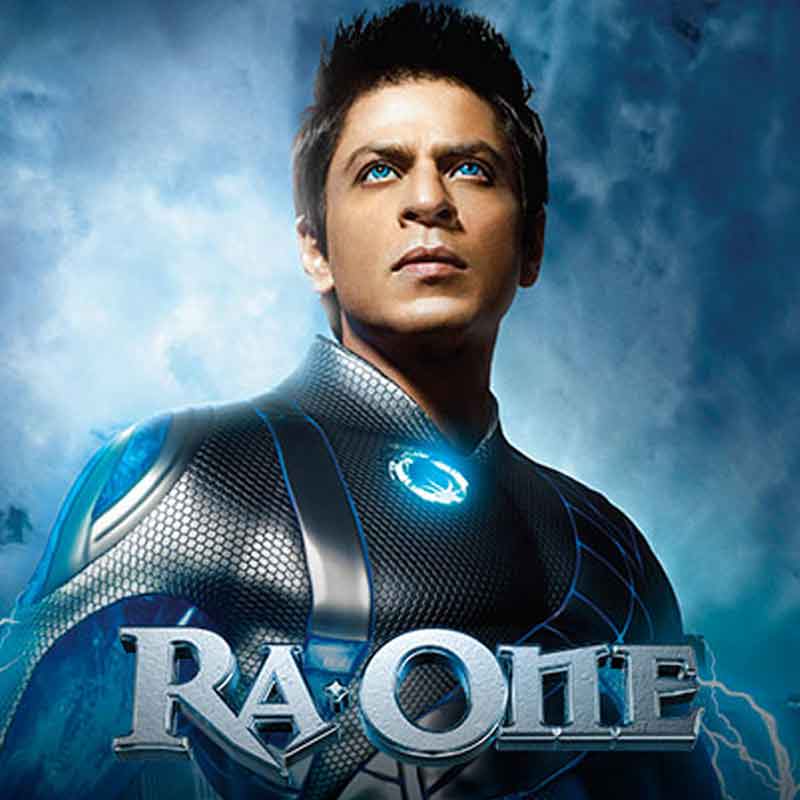
    MUMBAI: Actor-producer Shah Rukh Khan will release his ambitious film RA.One in Tamil and Telugu as well.

    Produced by Red Chillies Entertainment, the movie would also be dubbed in German and other international languages.

    “The dubbing of the Tamil and Telugu versions have been done,” said Khan.

    Khan plays Shekhar Subramanium, a Tamil Brahmin. This connect is expected towork good magic down South, as per the production house.

  • Murugadoss mulls Hindi remake of Ramanna

    Murugadoss mulls Hindi remake of Ramanna

    MUMBAI:Director A.R. Murugadoss, known for the hit film Ghajini, is in plans to remake his Tamil hit Ramanna in Hindi.


    The film is about a college professor who decides to abolish corruption with the help of his ex-students who work in various government offices. The reason behind this powerful decision is told in flashback.


    It is said that not many were interested to make a film of that nature. But now that people have been awakened about corruption due to the Anna Hazare‘s India Against Corruption movement, filmmakers want to encash on the situation and are keen to give the film a Hindi makeover.


    After the Tamil version became a hit, the film was in Telugu as Tagore and in Kannada as Vishnu Sena.

  • Suvarna scripts a programming turnaround

    Star’s Kannada offering Suvarana is on a roll these days. The channel seems to be on the path to entrenching itself, at least for now, in the number two slot in the Kannada GEC space. The top three positions were for long occupied by the Sun Network’s Udaya TV, the number one player by far; Ramoji Rao’s ETV Kannada at No 2; and Zee Kannada, a relatively newer entrant at the third spot.

    “Suvarna stands for fresh entertainment. Call it fiction or non-fiction or any program for that matter; our approach is to offer differentiated and fresh concepts as programs,” says Suvarana business head Anup Chandrasekharan.

    The channel says that it is attempting through a planned strategy that it calls a ‘Threshold Strategy’ to grow its viewership by attracting the 15-24 age group, which did not consume Kannada television. “We decided that once we had the people to sample our offering through reality shows, we will ensure that stickiness prevails in the form of fiction,” reveals Chandrasekharan.


    “Our reality shows such as ‘Pyete Hidigir  Halli Lifu’ (PHHL), ‘Halli Hyda Pyeteg Banda’ (HHPB) ‘Pyete Mandi Kadige Bandru’ (PMKB) have helped bring in younger and newer audiences – the 15-24 year olds, to Kannada television. To our pleasant surprise we find that even the 25 plus age groups are glued to PMKB during the 8-9 pm time slot,” avers Chandrasekharan.


    “Also to  to attract the youngster, we have NGC programs with a Kannada voice over on air for an hour. We have brought in successful soaps such as ‘Lakumi’, a weekend comedy talk show ‘Maja with Sruja’, mythology shows like ‘Guru Raghvendra Vaibhava’, a weekend horror reality show ‘Shhh’, Tulu language shows, etc., into our programming mix,” informs Chandrasekharan.

    He adds: “To present soaps in a new light and form to Kannada viewers, we have set our own rules for producing. For example, the protagonist has to be in the age group of 15-25, she has to be new to the television. Similarly, new to TV yet experts as directors are introduced. Four out of the six soap directors are from cinema, and have made their debut on the small screen through Suvarna.”

    He clarifies that while reality shows have been bringing in the numbers for Suvarna, the effort has been to reduce the number of hours per week of reality programming. “Contrary to perception, we have only one daily reality show Monday to Friday during the 8-9 pm slot and one weekend horror reality show,” states Chandrasekharan.

    The channel experimented with fresh programming concepts such as the tribal theme series with PHHL in May this year. The show had 10 city girls experience 50 days of village life with one winner for the finale. It immediately followed that with HHPB wherein it took the reverse tack in the show. Eight tribal boys were mentored by eight city girls to find who amongst them survived the best in the city.

    The third and culminating sequel this year to the tribal theme is the currently on air PMKB which has 12 city bred Bangalore youngsters-young men and women in their twenties, to rough it out like tribal folk in a dense forest in Karnataka for 60 days. This is a first by any channel in a forest in India – other forest-theme programs have been shot abroad.

    Another first by the channel in the Kannada GEC space is that the grand finale episodes of the two completed tribal reality show sequels have been aired on a Sunday, with each final episode being over 14 hours in duration. This has helped the channel rake in huge mid week GRPs and a leading position for that period in the Kannada GEC space.

    For bringing in new audiences and to ensure viewership involvement and stickiness, the channel has initiated proceedings to help people indentify and associate themselves with the channel. It has started ‘Ladies Clubs’ in various towns and cities in the state.

    “We have started the Ladies Club initiative to involve audiences, to try and understand its pulse, to find out what is that they want,” explains Chandrasekharan.

    Membership to the Ladies Club has strict and special eligibility conditions. Chandrasekharan says the team has so far met and brainstormed with the Ladies Club members in three cities on weekends. To build continued loyalty, during meetings, Suvarna has also given an opportunity to some of the talented Ladies Club members to display any special skill sets they have on air.

    Suvarna has also focused on high intense innovative activities over print and outdoor to promote its soaps. Its religious story ‘Guru Raghavendra Vaibhava’ has been promoted through activities like projecting the episodes on a giant screen everyday between 6.30 pm and 9.30 pm at Mantralaya temple where thousands of devotees gather. The channel has distributed the Mantralaya Prasadam to 200,000 homes in 10 towns along with information on the show.


    Suvarna claims that it has set a record with the world‘s biggest friendship band as part of its initiative to promote the show ‘Classmates.’ ‘Classmates’ has friendship at schooldays as its core theme. It has also implemented classroom-to-classroom promotions in over 170 colleges in 10 towns.

    These efforts seem have borne rich fruit for the channel. TAM ratings furnished by the Suvarana management indicate that over almost four years (starting from calendar year 2007 to week 48 of the current year) viewership for the Kannada GEC space has shrunk. Suvarana has, however, managed to grow its own numbers by double digits year on year, bucking the overall negative trend.


    As per the chart above, Kannada CS 4+ viewership fell from 4147 in 2007 to 4079 in 2009 and to 4014 till the 48th week of this year, while Suvarna moved from the last position in 2007 with ratings of 84 to 251 GRPs (week 48 of 2010).

    Suvarana’s ten week average GRPs from September 2010 to November 2010 are 335. Thanks to the 14 hour long marathon grand finale on a Sunday of HHPB, the channel reached its peak GRPs for the year at 418.

    To quite an extent the channel has nibbled away numbers from Udaya, ETV, Zee and even Kasturi which stood at number four in 2008 just before Star took a controlling stake in Suvarana.

    In 2007, Udaya’s mean GRPs for the year stood at an unassailable 780. The following year they stood at 637, in 2009 at 545, and during the first 48 weeks of the current year, they were at 502. Comparable figures for ETV Kannada during the same period are 372, 283, 246 and 208 GRPs, while those of Zee Kannada are 85, 209, 194 and 169 GRPs. Kasturi’s figures for the same period are 107, 143, 107 and 96 GRPs.

    “The channel (Suvarana) has been producing quality serials and shows at very low cost. Its reality show cost per episode is one-tenth of what it would cost a national level channel to produce,” informs an industry source who has worked with the channel. The source further informs Indiantelevision.com, “This year the channel should turn the corner and show a very decent profit.”

    “From nowhere Suvarna has come up to a respectable position in the Kannada space,” adds a senior Bangalore-based media executive. “Its programming seems to be working well for it.”
     

  • TV18 stalls plans of Gujarati and south language biz news channels

    TV18 stalls plans of Gujarati and south language biz news channels

    MUMBAI: TV18 has stalled its plans to launch three regional business news channels and will wait till the economic downturn reverses before it revives its growth plans in this space, a source tells Indiantelevision.com.

    TV18 is looking at launching a Gujarati and a south-language business news channel. The plan is also on to launch another regional business news channel, the language of which is kept under wraps.

    “We will launch these channels only when the market improves,” says the source.

    CNBC TV18 South will be a single channel that will beam out business news in all the four southern languages – Tamil, Telugu, Kannada and Malayalam.

    TV18 believes that there is potential to grow its business by making strategic investments, both through organic and inorganic routes, in regional and local language news channels.

    TV18 is planning to raise Rs 5.1 billion through rights issue, out of which Rs 3 billion will be utilised towards repaying debt and Rs 300 million on the Forbes project. The company will also invest Rs 450 million for subscribing to the rights issue of Infomedia.

  • ‘Southside sees action’

    ‘Southside sees action’

    “Mind it!”

    A phrase immortalized by Channel [V]’s south Indian cowboy character Quick Gun Murugun in the nineties. And one that is most relevant to the regional language market in 2007. The year saw a flurry of launches or announcements of launches, a change in long-running political equations, continued growth, and an increasing intensity of competition in almost every language segment – whether Tamil or Malayalam or Kannada or Telugu – of the regional market.


    The big news of the year in this space was the public parting of ways between Kalanidhi Maran’s Sun Network and his grand uncle Karunanidhi, the chieftain of the DMK party. The breakup was bitter, and it was almost as if the floodgates were let open and a flurry of launches followed.

    Kalanithi Maran holds the Contribution to Television Award trophy he was presented with at the Indian Telly Awards 2006.

    The DMK launched its own channel Kalaignar TV with a little bit of help from former Maran friend Sharad Kumar, a few Sun TV employees and Sun arch rival Raj TV. The latter offered it uplinking facilities for Kalaignar TV which has a menu consisting of film and entertainment programs and news. The DMK appeared to be in in a hurry to make up for time it lost – over the past decade during which it supported the Sun Network – and announced plans to build a channel bouquet with a 24-hour news channel and music or a movie channel. This apart, it initiated steps to set up its own cable network in the state to counter any moves by the Maran-owned MSO Sumangali Cable Vision as well as to gain control of the last mile.

    DMK ally, Raj TV announced plans to introduce its DTH service, again as if to darken the Sun Network’s DTH prospects. In May 2007, the Raj TV management said that it would roll out 11 channels, and would take the acquistion trail to expand nationally in other languages, without disclosing any time frame. In August, 2007, it unveiled a FTA music channel Raj Musix.

    Besides Musix, Raj TV telecasts two channels – Raj TV and Raj Digital Plus’.
    On the Raj TV horizon are Tamil and Telugu news channels.


    Jaya TV, backed by the AIADMK party, and a comparatively smaller player, recently started testing two new Tamil channels – music and news, which are expected to start full time transmissions sometime this month. As the year drew to a close, Tamil Nadu Congress member of parliament, KV Thangabalu’s flagged off Mega TV, a 24 hour FTA Tamil news, current affairs, and entertainment channel, while Tamil Nadu Congress MLA Vasanth Kumar said he intends to start Vasanth TV.


    For the Sun Network, 2007 was business as usual, the political setbacks notwhithstanding. The network, which has the highest number of channels in south India, dominates the region, with the exception of Kerala where it trails Asianet as a close No 2. It drew the curtains on its DTH service using transponders on Insat 2B, offering subscription packages that looked extremely competitive and attractive. Industry watchers expect Sun’s dominance to get eroded over time, but 2008 is unlikely to be the year when we will see that happen.

    “Sun’s biggest strength has been content, be it GEC or movie. Just because Sun may be not be gaining numbers and Kalaingar is showing unprecedented growth, it doesn’t mean that advertisers are going to run away from Sun to its next biggest rival. At present, Sun has retained a firm grasp on its slowly reducing share in percentage terms, its share has not reduced in numbers,” says an ad executive.


    So far, Sun has been able to maintain a lead over all the others in most of the space it operates in. In a few places, even its second channel has performed better and attracted far more viewers than its nearest competition’s main channel has. In a very dynamic space, how the new equations will work out only time can tell.


    For Telugu print and TV baron Ramoji Rao, however, 2007 would be a year he would prefer to write off as a bad dream. For Rao, who owns TV network ETV and leading Telugu newspaper Eenadu, it was reportedly his close alignment for the past quarter century with the Telugu Desam and his run-ins with the Congress chief minister of Andhra Pradesh, Y Rajshekhar Reddy that cost him dear. It is pertinent to note that a deal signed between US-based Blackstone Group and Rao’s holding company Ushodaya in January 2007 for the sale of a 26 per cent stake is yet to see closure. If Blackstone’s proposal to invest $275 million in Ushodaya had gone through, it would have been the biggest ever media investment in an Indian firm.

    2007 will also go down in the annals of regional television history as the year of TV9. Promoted by Associated Broadcasting Corporation’s (ABCL), it appears to have ambitions to get its foothold into almost every language segment. In Andhra Pradesh, TV9 News got the better of Gemini News and ETV2 News, with its Telugu religious channel Sanskruti beginning to get noticed.

    In Karnataka TV9 Kannada surpassed the biggest player Sun’s Kannada news offering Udaya Varthegalu. It has also been itching to get control of Kerala’s fledgling news channel IndiaVision, but has only managed to start selling air time for it.


    Karnataka witnessed the launch of two GEC channels Asianet’s Suvarna and Kasthuri (the latter headed by then chief minister HD Kumaraswamy’s wife) during the year. Another channel ‘Real Estate TV’ for national consumption by a construction group made a lot of noise, but failed to get its signals carried.


    “Kasthuri could be eating into DD Bangalore’s ad shares, especially ads by the state government and public sector undertakings based in Karnataka,” said an executive from an advertising agency. “Having been the chief minister, Kumaraswamy could leverage his contacts in these companies. Even if these pickings are small, they are very good for a new entrant,” he avers.


    Observers expect the action in the southern space to continue. Balaji Telefilms is expected to launch TV channels in partnership with Star TV either in 2008 or 2009. And there is no doubt that others will also make a try for the southern pie.