Tag: Tamil Nadu

  • Idea expands 4G service across 39 Karnataka towns

    Idea expands 4G service across 39 Karnataka towns

    MUMBAI: Idea Cellular has expanded its high speed 4G LTE services across 39 towns in Karnataka.


    What’s more, by March 2016, the company will extend its services to three more key markets namely, Maharashtra & Goa, North East and Orissa, and by June 2016, Idea’s 4G footprints will cover 750 cities across 10 telecom circles.


    Within a month, the company has expanded its 4G LTE service footprint to 24 districts, including major towns of Bangalore, Mysore, Madikeri, Karwar, Chikmagalur, Belgaum and Chitradurga; covering 20 per cent of the state’s total population.


    In addition to Bangalore metro, Idea has launched its 4G services in other towns of Channarayapatna, Udyavara (CT), Harihar, Kunigal, Mulbagal, and Toranagal. Additionally, Idea is planning to launch its 4G services in Mangalore, Udupi-Manipal, Bijapur, Bellary and 18 more towns by end of this financial year, taking the total tally to 61.


    It can be recalled that last year in December, Idea Cellular had launched 4G LTE services in all four telecom circles (five states) of South India, namely Kerala, Tamil Nadu, Andhra Pradesh & Telangana, and Karnataka. Earlier this month, the company launched services across three more circles (four Indian states) – Madhya Pradesh, Chhattisgarh, Haryana and Punjab, expanding its 4G LTE service footprint to 7 telecom service areas.


    Idea Cellular deputy managing director Ambrish Jain said, “Since last week of December 2015, Idea has rapidly rolled out its high-speed 4G LTE network to cover seven major markets in India.”


    Idea Cellular currently holds 1800 MHz 4G spectrum in these 10 telecom circles, which cover 50 per cent of telecom market but over 60 per cent of Idea’s gross revenue. Additionally, Idea has recently signed an agreement with Videocon Telecommunications for acquiring ‘Right to Use’ 1800 MHz spectrum under Spectrum Trading Agreement in two of its key telecom leadership markets of Gujarat and Uttar Pradesh (West). Post completion of this transaction, 4G services will be extended to 12 service areas, covering 75 per cent of Idea’s revenue base in the country.


    Idea Cellular chief marketing officer Sashi Shankar added, “Idea customers with 4G devices in these 183 towns can now start experiencing super fast speeds by simply upgrading their existing SIM cards to new 4G SIM cards. The company is also offering attractive subscription plans to digital content including a wide range of the latest music, movies and games. Idea has also partnered with leading handset manufacturers and e-commerce retailers for special data bundling offers on new 4G smartphones.”

     
    Idea’s 4G Prepaid & Postpaid tariff plans are priced at par with existing 3G plans. The company is also offering ‘4G Packs’ starting as low as Rs 21.


    Digital Content for 4G consumers 


    Idea, marking its first foray in the digital space, is launching an assortment of digital content in partnership with content aggregators.


    For music, it has tied-up with Hungama Digital, wherein it will offer content at a monthly subscription price of Rs 99 for all its consumers. For movies and videos, Idea has partnered with Eros International, wherein content will be offered at a monthly subscription price of Rs 49 for all its consumers. Idea will also be launching ‘Idea Games Club’ powered by Opera for all its consumers from 1 February, 2016, at a monthly subscription price of Rs 150. However, as an incentive for new 4G customers, a special offer for subscription at just Rs 29 per month till 31 March, 2016 is available for these packs.


    Idea will also unveil ‘Ultimate Plans,’ which provide a Bundleof 4G Data, Unlimited Voice calls and Content subscription, which is powered by Hungama.


    Wide Portfolio of 4G Smartphones & Devices

    Currently, 2.7 million 4G devices across these seven circles are registered on Idea’s network and growing at an exponential rate. To facilitate 4G device upgrade, Idea has launched branded 4G devices namely Idea 4G Dongles, 4G Mi-Fi (connects 10 users) and Home Wi-Fi (connects 32 users), which are now available at Rs 2,599 onwards with 4G Data offers.


    Idea has partnered with Samsung for special offers on its 4G Smartphones, wherein the two companies will launch a variety of programmes to offer differentiated and significant value to customers.


    The TSP has also tied up with smartphone manufacturers including Intex Technologies, Lava, Lenovo and Xolo to offer bundled 4G data plans on smartphones.


    A tie up is also in place with e-commerce retailer Snapdeal for providing bundled data offers on 4G devices.


    Launch of 4G website

    The company has also launched its responsive 4G website -www.ideacellular.com/4G, wherein consumers can log on to get more information about 4G services, tariff plans and recharges, locate the nearest Idea stores offering 4G SIMs and much more. Idea is also rolling out a smartphone e-store on its website. Consumers can now buy 4G smartphone brands, Mi-Fi and Dongles. 


    The company has also rolled out its FDD platform enabled 4G LTE services on the 1800 MHz frequency band, which is the most preferred spectrum band for deployment of 4G services globally, and is supported by the majority of 4G handsets available in the market.


    Idea Cellular’s 4G LTE Network will be equipped with the enhanced ‘Fast Return’ feature enabling seamless and quick toggle for consumers across Idea’s 4G, 3G and 2G networks, offering superior experience for both mobile data and voice services. While the company possesses the capability to introduce VoLTE feature, existing customers’ current 4G devices do not support this feature. Accordingly, the deployment of VoLTE will be evaluated at a later stage.


    Idea is deploying state-of-the-art, ‘Single RAN’ equipment, which supports multiple technologies in a given frequency band. For every 4G site on 1800 MHz, this equipment also provides additional 2G voice capacity on GSM spectrum.


    For FY16, Idea Cellular’s capex guidance is Rs 6,500 crore, significantly higher than earlier years’ annual capex spends. In this fiscal year, Idea plans to add 40,000 – 45,000 sites on 2G, 3G and 4G technology platforms, complete a cumulative roll out of 111,000 kms of Fibre, and add an incremental 175-200 million population to the mobile broadband (3G & 4G) population coverage. The 4G launch in Southern India is part of the capex guidance by Idea.


    The roll out of Idea’s 4G services will be financed through internal accruals. The company recorded an EBITDA of Rs 5,739 crore in H1-FY16, a growth of 27.6 per cent  over H1-FY15 and cash profits of Rs 5,085 crore, a robust growth of 32.5 per cent over H1FY15.
  • Idea expands 4G service across 39 Karnataka towns

    Idea expands 4G service across 39 Karnataka towns

    MUMBAI: Idea Cellular has expanded its high speed 4G LTE services across 39 towns in Karnataka.


    What’s more, by March 2016, the company will extend its services to three more key markets namely, Maharashtra & Goa, North East and Orissa, and by June 2016, Idea’s 4G footprints will cover 750 cities across 10 telecom circles.


    Within a month, the company has expanded its 4G LTE service footprint to 24 districts, including major towns of Bangalore, Mysore, Madikeri, Karwar, Chikmagalur, Belgaum and Chitradurga; covering 20 per cent of the state’s total population.


    In addition to Bangalore metro, Idea has launched its 4G services in other towns of Channarayapatna, Udyavara (CT), Harihar, Kunigal, Mulbagal, and Toranagal. Additionally, Idea is planning to launch its 4G services in Mangalore, Udupi-Manipal, Bijapur, Bellary and 18 more towns by end of this financial year, taking the total tally to 61.


    It can be recalled that last year in December, Idea Cellular had launched 4G LTE services in all four telecom circles (five states) of South India, namely Kerala, Tamil Nadu, Andhra Pradesh & Telangana, and Karnataka. Earlier this month, the company launched services across three more circles (four Indian states) – Madhya Pradesh, Chhattisgarh, Haryana and Punjab, expanding its 4G LTE service footprint to 7 telecom service areas.


    Idea Cellular deputy managing director Ambrish Jain said, “Since last week of December 2015, Idea has rapidly rolled out its high-speed 4G LTE network to cover seven major markets in India.”


    Idea Cellular currently holds 1800 MHz 4G spectrum in these 10 telecom circles, which cover 50 per cent of telecom market but over 60 per cent of Idea’s gross revenue. Additionally, Idea has recently signed an agreement with Videocon Telecommunications for acquiring ‘Right to Use’ 1800 MHz spectrum under Spectrum Trading Agreement in two of its key telecom leadership markets of Gujarat and Uttar Pradesh (West). Post completion of this transaction, 4G services will be extended to 12 service areas, covering 75 per cent of Idea’s revenue base in the country.


    Idea Cellular chief marketing officer Sashi Shankar added, “Idea customers with 4G devices in these 183 towns can now start experiencing super fast speeds by simply upgrading their existing SIM cards to new 4G SIM cards. The company is also offering attractive subscription plans to digital content including a wide range of the latest music, movies and games. Idea has also partnered with leading handset manufacturers and e-commerce retailers for special data bundling offers on new 4G smartphones.”

     
    Idea’s 4G Prepaid & Postpaid tariff plans are priced at par with existing 3G plans. The company is also offering ‘4G Packs’ starting as low as Rs 21.


    Digital Content for 4G consumers 


    Idea, marking its first foray in the digital space, is launching an assortment of digital content in partnership with content aggregators.


    For music, it has tied-up with Hungama Digital, wherein it will offer content at a monthly subscription price of Rs 99 for all its consumers. For movies and videos, Idea has partnered with Eros International, wherein content will be offered at a monthly subscription price of Rs 49 for all its consumers. Idea will also be launching ‘Idea Games Club’ powered by Opera for all its consumers from 1 February, 2016, at a monthly subscription price of Rs 150. However, as an incentive for new 4G customers, a special offer for subscription at just Rs 29 per month till 31 March, 2016 is available for these packs.


    Idea will also unveil ‘Ultimate Plans,’ which provide a Bundleof 4G Data, Unlimited Voice calls and Content subscription, which is powered by Hungama.


    Wide Portfolio of 4G Smartphones & Devices

    Currently, 2.7 million 4G devices across these seven circles are registered on Idea’s network and growing at an exponential rate. To facilitate 4G device upgrade, Idea has launched branded 4G devices namely Idea 4G Dongles, 4G Mi-Fi (connects 10 users) and Home Wi-Fi (connects 32 users), which are now available at Rs 2,599 onwards with 4G Data offers.


    Idea has partnered with Samsung for special offers on its 4G Smartphones, wherein the two companies will launch a variety of programmes to offer differentiated and significant value to customers.


    The TSP has also tied up with smartphone manufacturers including Intex Technologies, Lava, Lenovo and Xolo to offer bundled 4G data plans on smartphones.


    A tie up is also in place with e-commerce retailer Snapdeal for providing bundled data offers on 4G devices.


    Launch of 4G website

    The company has also launched its responsive 4G website -www.ideacellular.com/4G, wherein consumers can log on to get more information about 4G services, tariff plans and recharges, locate the nearest Idea stores offering 4G SIMs and much more. Idea is also rolling out a smartphone e-store on its website. Consumers can now buy 4G smartphone brands, Mi-Fi and Dongles. 


    The company has also rolled out its FDD platform enabled 4G LTE services on the 1800 MHz frequency band, which is the most preferred spectrum band for deployment of 4G services globally, and is supported by the majority of 4G handsets available in the market.


    Idea Cellular’s 4G LTE Network will be equipped with the enhanced ‘Fast Return’ feature enabling seamless and quick toggle for consumers across Idea’s 4G, 3G and 2G networks, offering superior experience for both mobile data and voice services. While the company possesses the capability to introduce VoLTE feature, existing customers’ current 4G devices do not support this feature. Accordingly, the deployment of VoLTE will be evaluated at a later stage.


    Idea is deploying state-of-the-art, ‘Single RAN’ equipment, which supports multiple technologies in a given frequency band. For every 4G site on 1800 MHz, this equipment also provides additional 2G voice capacity on GSM spectrum.


    For FY16, Idea Cellular’s capex guidance is Rs 6,500 crore, significantly higher than earlier years’ annual capex spends. In this fiscal year, Idea plans to add 40,000 – 45,000 sites on 2G, 3G and 4G technology platforms, complete a cumulative roll out of 111,000 kms of Fibre, and add an incremental 175-200 million population to the mobile broadband (3G & 4G) population coverage. The 4G launch in Southern India is part of the capex guidance by Idea.


    The roll out of Idea’s 4G services will be financed through internal accruals. The company recorded an EBITDA of Rs 5,739 crore in H1-FY16, a growth of 27.6 per cent  over H1-FY15 and cash profits of Rs 5,085 crore, a robust growth of 32.5 per cent over H1FY15.

  • DTH to benefit, Reliance Jio to intensify competition in DAS Phase III: Edelweiss

    DTH to benefit, Reliance Jio to intensify competition in DAS Phase III: Edelweiss

    NEW DELHI: Broadcasters are obviously clear winners, but the direct to home (DTH) platforms may ultimately become the greatest beneficiaries of Phase III of digital addressable system (DAS) by garnering incremental market share of more than 50 per cent.

     
    According to Edelweiss Securities Ltd, broadcasters will be one of the safest and most attractive plays on the digitisation theme, irrespective of higher subscriber additions by DTH or MSOs. “We expect a one-year lag for subscription revenue to flow (starting FY18) from the newly digitised subscribers,” Edelweiss said in its analysis of DAS Phase III.   

     
    “In our view, analogue signals will gradually switch off and substantial roll out of Phase III digitisation will take at least three to four quarters driven by mass media ads and proactive steps by DTH players, national MSOs & the regulator,” the firm said.


    However, this view is contrary to the Chrome Data Analytics’ claim of 70 per cent digitisation in Phase III. 

     
    With six states (Assam, Telangana, Andhra Pradesh, Maharashtra and Odisha and Tamil Nadu) stalling Phase III digitisation by eight weeks or more with High Court orders, Edelweiss says, “Uncertainty persists; we expect many more states to follow suit.” In Tamil Nadu, the stand-off between Arasu and the Information & Broadcasting Ministry will delay digitisation, as was the case with Chennai earlier. 

     
    Moreover, Edelweiss believes Reliance Jio’s entry in cable TV will intensify competition in the space. “Overall, we expect Zee, Sun TV, TV18 and Dish TV to be bigger beneficiaries of Phase III digitisation over the long term.”   

     
    In Phase I and II cities, MSOs were able to retain around 75 per cent of incremental market share, while DTH players managed to garner only 25 per cent.

     
    However in Phase III markets, Edelweiss says regional MSOs will have to incur substantial capex to make the cable infrastructure digital ready. “We believe DTH players will enjoy natural advantage over regional MSOs in Phase III markets.”

    Further, voluntary digitisation by national MSOs in Phase III markets, learnings from Phase I & II digitisation and parts of Phase III areas being contiguous with Phase I & II markets put national MSOs in better position than regional MSOs. 

     
    With the rollout of Reliance Jio, Edelweiss expects “competition to intensify in cable TV business. Cashing in on its strong balance sheet, RJio will fuel further competition in cable TV (free STBs, bundled services) in Phase I and II markets. We expect RJio’s entry to change the industry dynamics led by introduction of packaging and prepaid billing.”

  • Discovery channel to air Spirit of India– Makar Sankranti

    Discovery channel to air Spirit of India– Makar Sankranti

    MUMBAI:  Discovery Channel will celebrate India’s traditional harvest festival with the premiere of a special programme Spirit of India– Makar Sankranti.  One of the most auspicious festivals in the Hindu calendar, Makar Sakranti is known by different names in different regions like Lohri in Punjab, Pongal in Tamil Nadu, Uttarayan in Gujarat, Bhogi in Andhra Pradesh, Sankranti in Karnataka among others. Each festival is celebrated largely to observe the harvest season in different parts of India, the start of a new life.


     Spirit of India– Makar Sankranti will celebrate the festival that embodies the spirit of goodwill, brotherhood and reunion with family and will premiere on 14 January 2016 at 9 pm on Discovery Channel.


     According to Discovery Networks Asia Pacific EVP & GM-South Asia Rahul Johri, “Discovery Channel captures and presents India’s vibrant culture and traditions through its path breaking local programming. We are very happy to bring to our viewers a special series Spirit of India – The Festivals that will highlight the rich traditions and diversity of cultures in India. The episode Makar Sankranti will highlight how the traditional harvest festival is celebrated differently in different parts of India.”


     Makar means Capricorn and Sakranti means transition, a day when the sun enters the house of Capricorn leaving the house of Sagittarius. This auspicious occasion is celebrated in myriad cultural forms, with great devotion, fervor & gaiety. Spirit of India– Makar Sankranti will showcase how these festivals are rejoiced in India.


     The state of Punjab enjoys the spirit of Makar Sakranti through Lohri, a festival which is celebrated with great devotion, fervor and gaiety. Lohri is celebrated with the community coming together to engage in many activities like community bonfire, dancing bhangra and gidda to the fast beats of the dhol, flying kites and competing with one another. Even children follow Lohri Loot, a custom which has children going to the neighbouring houses to collect eatables peanuts, jaggery among others. In the evening offerings are made to the fire (agni) to seek his blessings and those of the sun for a bountiful harvest and a prosperous beginning to the year.


    Uttarayan is celebrated in Gujarat and it is the time of the year when kites dominate the sky. People across Gujarat come together with excitement to display their exotic kites of various designs. People make variety of delicacies like undhiyu, sweets to enjoy the festival together.


    In Tamil Nadu, Pongal is celebrated on the same date and the celebrations continue for four days. Pongal means boiling over and Tamilians start the day with the ritual of boiling pot of milk. Just as the sun is crucial to the Indian farmer, Indian agriculture would be lost without its cattle. On this day, villagers bathe their cattle and paint their horns in bright colours.  In the evening the cattle are all gathered together for a celebration where they are garlanded and revered, andare fed pongal, jiggery, fruits and sugarcane. 


    Discovery Channel through its special Spirit of India– Makar Sankranti will celebrate the rituals and celebrations of Makar Sankranti across India that is symbolic of a common thanksgiving to nature represented by the Sun God. 

  • DAS Phase III: MIB’s big dilemma

    DAS Phase III: MIB’s big dilemma

    MUMBAI: The past fortnight has seen High Court directives in five different states make a mockery of the 31 December, 2015 deadline set by the government for the Phase III roll out of digital addressable system (DAS).


    The courts have urged the Ministry of Information and Broadcasting (MIB) to not act against multi system operators (MSOs) and cable operators who have not been able to place set top boxes (STBs) in homes for two months. In essence, the DAS sunset date has been extended in Andhra Pradesh, Telangana, Sikkim, Maharashtra, Odhisa, Tamil Nadu and now Guwahati.


    The Bombay High Court specifically cited a Supreme Court judgment and noted that a stay granted by a high court on a central notification in one state would be applicable in other states as well. That was the case of Kusum Ingots vs the Union of India, in 2004. (http://indiankanoon.org/doc/1876565/)


    The question on everyone’s mind is: would other petitioners in other states under the DAS Phase III ambit also approach their respective High Courts for relief? Hence, did it make sense for broadcast networks to continue with digitally encrypted signals, which they had resorted to once the clock struck midnight of the new year?


    Most of them including Viacom18, Star India, Zee and Sony thought it did not. Hence, they have all switched on their analog signals a day or so after switching them off.


    Now that has put the MIB in a bit of a quandary. The team lead by MIB secretary Sunil Arora – and including special secretary JS Mathur, and joint secretary RS Jaya apart from other members – have been driving DAS III digitisation and were quite clear that no extension should be given. 


    Sources indicate that one line of action being considered by the MIB is to approach the Supreme Court for relief against the restraint orders granted by the various courts. Experts such as Supreme Court advocate KV Dhananjay have argued against the stance taken in the Kusum Ingots case by the courts. (http://www.legallyindia.com/Blogs/some-hc-judges-are-becoming-terribly-ignorant-of-our-constitution)


    Whether the MIB will go ahead and approach the Supreme Court or not is a moot point, but the industry is putting its might behind it. Most of the industry associations like the Indian Broadcasting Foundation, the DTH Operators Association and the MSO Alliance have all reportedly urged the ministry to move the apex court.


    Industry believes that the extension is unlikely to serve any purpose, as cable operators knew of the phased rollout of DAS as much as for the past three to four years and hence they could have prepared for it. Complaining about a shortage of STBs or interconnect agreements or capital post the sunset date is simply facile, professionals state. 


    “The analog switch off is mandatory,” says an industry observer. “Digitally encrypted signals need to be the only mode of television delivery via satellite in India in Phase III areas. Private DTH operators and the government owned FreeDish can deliver television wherever there are signal dark areas courtesy cable TV’s unpreparedness. The government needs to approach the courts to ensure that DAS Phase III proceeds as soon as possible.”


    We will have to wait and watch if it does.

  • Over 70% digitisation completed in Phase III across India: Chrome

    Over 70% digitisation completed in Phase III across India: Chrome

    MUMBAI: Amidst huge confusion of how much of the Phase III of Digital Addressable System (DAS) has actually happened on ground, Chrome Data Analytics & Media released extensive data on the status of digitisation.

    Chrome Data Analytics founder Pankaj Krishna says, “The government mandated an extended deadline for DAS Phase III to Dec’15; we witness 70.04 per cent of Phase III as digitised – which I feel is decent progress considering the various challenges that digital comes with. Digitisation is imperative; transparency in transactions, subscription and carriage, entry/existence of more niche channels, consolidation of cable networks (more so in 10lac below population strata), increase in retail, regional, geographical level advertising and marketing, increase in viewership of content as well as an increase in e-commerce/e-transactions (broadband connected homes) will increase as a subset of digitalisation.”

    In terms of households, Bihar leads the tally with 100 per cent digitisation as per the Chrome analysis. Goa too reached the 100 per cent analysis mark, while Punjab successfully digitised 99 per cent of the Phase III areas.

    Telangana, which legally fought its way through to a stay order on DAS, surprisingly has 82.50 per cent of the Phase III areas digitised.  

    Uttar Pradesh, which has the maximum number of cities in it, has over 30 per cent households yet to be digitised.  

    Tamil Nadu, which is yet to digitise its Phase III areas, has over 1095 cities in it, while Uttar Pradesh is not far behind with 906 cities.  

    Moreover, with the unprecedented rains and floods in December last year, Tamil Nadu is yet to start digitising the Phase III areas. Uttarakhand has over 54.32 per cent left to be digitised.

  • Tamil Nadu cable TV industry incurs Rs 25 crore loss due to floods

    Tamil Nadu cable TV industry incurs Rs 25 crore loss due to floods

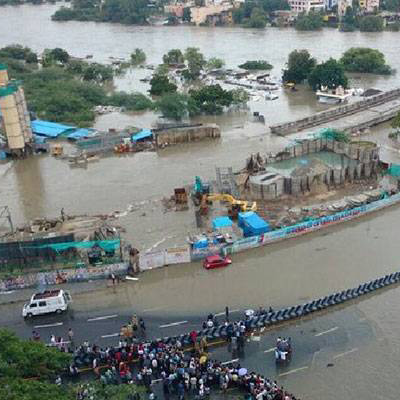
    MUMBAI: ’Twas Mother Nature’s fury at full throttle when the state of Tamil Nadu was flooded by the heaviest rainfall it has been privy to in the last century. Many lives were lost even as over three lakh people became homeless.


    While the southern state is slowly inching back to normalcy from the unprecedented rains and floods, which engulfed whatever came in its way, the natural disaster had a massive impact on the media and entertainment industry as well. The entire cable TV ecosystem was brutally affected by the calamity. It may be recalled that for the last couple of weeks, the Broadcast Audience Research Council (BARC) India hasn’t received television ratings data from the region too.


    In the light of this disaster, a senior cable federation member from Chennai estimates the overall loss suffered by the cable industry to be close to Rs 25 crore. “We have done an on-ground survey and after a thorough analysis, we came to the estimate. Local cable operators (LCOs) will have to bear the majority of the loss as most of the fibre amplifier devices, which were damaged belong to them,” he adds.


    While industry body ASSOCHAM estimated the overall financial loss from the torrential rains and floods in Tamil Nadu to be in excess of Rs 15,000 crore, the Rs 25 crore loss to the cable industry may even be a conservative one. The on-ground reality indeed paints a grim picture.


    “Thousands of fibre amplifiers got affected. The LCOs are trying their level best to restore services but the damage is so massive that it will take at least a week or 10 days more to get things back on track,” added a senior official from the cable fraternity.


    A fibre amplifier, which is located in the operating room of cable operators, costs around Rs 3500 and a large number of them were totally destroyed as they immersed in the flood water. Fortunately, no instance of head-end damaged could be traced.


    An independent multi system operator (MSO), who was also affected by the natural calamity, said, “The head-ends are generally placed at a good height and hence they got saved. But my transmitter is totally damaged. The flood has damaged cable operations brutally, and to restore services it will take me more than 15 days at least.”


    “The transmitter costs Rs 50,000 and I have to invest in a new one,” he adds.


    The other equipment that was damaged in the flood and needs serious investment is Erbium Doped Fiber Amplifier (EDFA), which is an optical repeater device used to boost the intensity of optical signals being carried through a fiber optic communications system. “I need to invest Rs 1.5 lakh in my EDFA and there are many other such operators who will have to change their EDFA,” said an LCO.


    While some equipments may be under warranty, it is unlikely that the warranty applies in the case of natural disasters. A looming question is also that of insurance. All said and done, many LCOs and MSOs affected severely by the flood will have to bend over backwards in order to get their system back on.

  • BARC week 49: CNBC TV 18 is No. 1 in English Business News genre

    BARC week 49: CNBC TV 18 is No. 1 in English Business News genre

    MUMBAI: ’Twas the week of new leaders! In the English Business News genre, CNBC TV 18 toppled the numero uno channel ET Now to become the No 1 channel in week 49 according to Broadcast Audience Research Council (BARC) All India (U+R) (Excluding Tamil Nadu/Puducherry) : NCCS AB : Males 22+ Individuals.


    On the other hand, English News channel Times Now saw downfall in ratings but continued to rule the genre.


    In the Hindi news segment, Aaj Tak continues to lead the genre, while CNBC Awaaz maintained its leadership position in the Hindi Business News section in week 49.


    English News


    Times Now saw a drop in ratings but secured its leadership position with 322 (000Sums) as against 471 (000Sums) in week 48 followed by NDTV 24X7 in the second spot with 237 (000Sums), which was number three last week. On the other hand, India Today Television climbed up at number three with 219 (000Sums). 


    CNN-IBN dropped to number four with 201 (000Sums), while News 9 with 159 (000Sums) bagged the fifth spot.


    English Business News


    CNBC TV18 replaced the leader in Business News genre ET Now and grabbed first position with 205 (000Sums). ET Now was in second position with 172 (000Sums), whereas NDTV Profit and NDTV Prime were in the third slot with 70 (000Sums). Bloomberg TV stood at number four with 10 (000Sums). Pertinent to note here is that these numbers are excluding data from the Tamil Nadu and Puducherry markets.


    Hindi News


    In week 49, Aaj Tak witnessed a fall in ratings but grabbed leadership position with 73666 (000Sums) against 81828 (000Sums) in week 48. India TV bagged second position with 58748 (000Sums) followed by ABP News in the third place with 55667 (000Sums) and News Nation in the fourth slot with 48768 (000Sums). Zee News stood at number five with 46571 (000Sums).

     
    Hindi Business News 


    CNBC Awaaz continued as the leader in the genre and was firmly perched in the first position with 1110 (000Sums) followed by Zee Business in the second spot with 876 (000Sums).

  • News broadcasters finally surf the wave as Chennai drowns

    News broadcasters finally surf the wave as Chennai drowns

    MUMBAI: A natural disaster in Mumbai or Delhi even if not too severe in nature immediately gets the Indian broadcast news media in overdrive mode. “Breaking News” updates are pushed to the viewers every hour if not every few minutes. Everything else takes a backseat as television journalists and cameramen scamper through water or rubble… whatever the case may be.


    But sadly, only the Indian metros of Mumbai and Delhi command that kind of a clout from the Indian news channels, specially the English ones.


    As one of the most senior Indian journalists Rajdeep Sardesai recently said in a blog post, Indian news channels need to know that there is an India that exists beyond the Vindhyas.


    With incessant rains in Chennai over the last few weeks, the situation there is glum to say the least. However, English news channels have only just woken up to this natural disaster. It was only when news poured in of the Chennai airport shutting down due to water logging on the runway, did many realise the gravity of the situation down south.


    The natural calamity has left more than 250 people dead and thousands have been rendered homeless. 


    After waiting for some kind of push, news channels are now also participating in aiding the victims who have been stranded in the most inundated areas across the rain-battered Tamil Nadu. News channels are attempting to provide the nation with timely updates about the torrential rains of Chennai… albeit a tad too late in the day.


    In his blog, Sardesai discussed the issue and blamed the lack of coverage by national news channels on the tyranny of distance.” Since most national bureaus are located in Delhi, news around the national capital gains prominence than those in other parts of the country. According to him, the only solution behind this ignorance by the national media towards such a serious incident was by combining local and national content i.e by giving space to local news in the national news channels. “Maybe we need to have two national bureaus, one in Delhi and one south of the Vindhyas,” he suggested.

    News channels have evidently shown the divide between the coverage of news from the north to south of India. Indiantelevision.com tried to get hold of a few news channels that have invested some efforts in reporting the incident.


    Take a look…


    CNN-IBN


    CNN-IBN has sent two of their senior editors Karma Paljor and Shreya Dhoundial to cover the Chennai rains. The channel has also dispatched a group of five reporters who are there at the ground zero in Chennai. The other journalists on ground are Anna Isaac, Deepa Balakrishnan and Jude Sannith who are continuously bringing the latest update of the rains, the damage caused and the difficulties that the people of Chennai are facing.


    Speaking on the Chennai rains, CNN-IBN managing editor Radhakrishnan Nair said that the entire emphasis of the channel right now is on helping Chennai and connecting the needy and the good samaritans. He added that till normalcy is restored, CNN-IBN will keep the focus on ‘Help Chennai.’


    The channel has been flashing helpline numbers and email ids where people can contact for any kind of assistance. CNN-IBN has tied up with Twitter for people to reach out to their loved ones in Chennai and those who are looking for help. Their social media handles are also posting regular updates about the rains and regarding all the help that can be provided to the people stranded in the city.


    India TV


    The news channel has deployed three senior reporters covering the floods extensively in Tamil Nadu, which includes the bureau chiefs from Hyderabad and Bangalore and a senior defence correspondent from Delhi. Apart from this, the channel is continuously getting information and news from their local stringer network.


    India TV is also carrying out continuous coverage with regular updates on rescue operations, updates from the MET Department, Indian Army, NDRF and from government officials. The channel is covering the floods by way of regular and special programmes in a bid to inform viewers about the situation in Tamil Nadu. The channel’s correspondents, along with the rescue teams are going on aerial surveys to show the extent of devastation and the ground realities.


    NDTV 24×7


    The channel has its resident editor – South Uma Sudhir in Chennai from the day Tamil Nadu was hit by the torrential rains. The channel has also deployed five reporters to cover the entire incident.


    “The Chennai Floods have been NDTV’s main focus since the time the state was hit by the natural calamity and still remains the focus of all our bulletins, including prime time programming, both Left, Right and Centre and The Buck Stops Here have done Chennai related stories. We are also passing on all requests for help to relief officials,” informs NDTV 24×7 managing editor Manika Ahirwal Raikwar.


    Times Now


    Times Now has its senior editor Vivek Narayan spearheading the coverage in Chennai. The channel has also sent a team of eight reporters covering and reporting minute details about the situation in Chennai. The reporters are spread across the city, reporting from districts like Thiruvallur and Cuddalore.


    Additionally, the reporters are also trying to get messages of distress across to the relief teams in a bid to salvage the situation. The channel has also tied up with Twitter and leading news portal of south India News Minute to ensure that these messages reach officials as quickly as possible. “Times Now has been broadcasting non-stop coverage of the situation and has dedicated several hours of programming to the floods in Tamil Nadu,” adds a senior spokesperson from Times Network.


    As Sardesai rightly points out, hopefully such situations wouldn’t take a flood for national media channels to discover the India that exists beyond the Vindhyas. The entire nation hopes that this geographical division would not affect our motherland in the future.

  • Broadcast media urged to help flood-affected people in South India

    Broadcast media urged to help flood-affected people in South India

    NEW DELHI: All television and radio channels have been asked by the Government to send relevant and vital information brought out by concerned government agencies for the people of Tamil Nadu and other southern Indian states affected by torrential rains and floods.

    In an advisory, the Information and Broadcasting Ministry said it was imperative that all information is broadcast that can assist those affected.

    The advisory noted that Doordarshan and All India Radio apart from some other channels had been disseminating information about the efforts of the government and rescue agencies and even weather-related information, help-lines, and contact numbers of personnel that can be of help to the affected people.

    Considering the enhanced gravity of the situation, it stressed the imperative need for dissemination of critical and vital information regarding all aspects of the disaster on real-time basis.