Tag: Tamas

  • Veteran film and TV actor Om Puri passes away

    Veteran film and TV actor Om Puri passes away

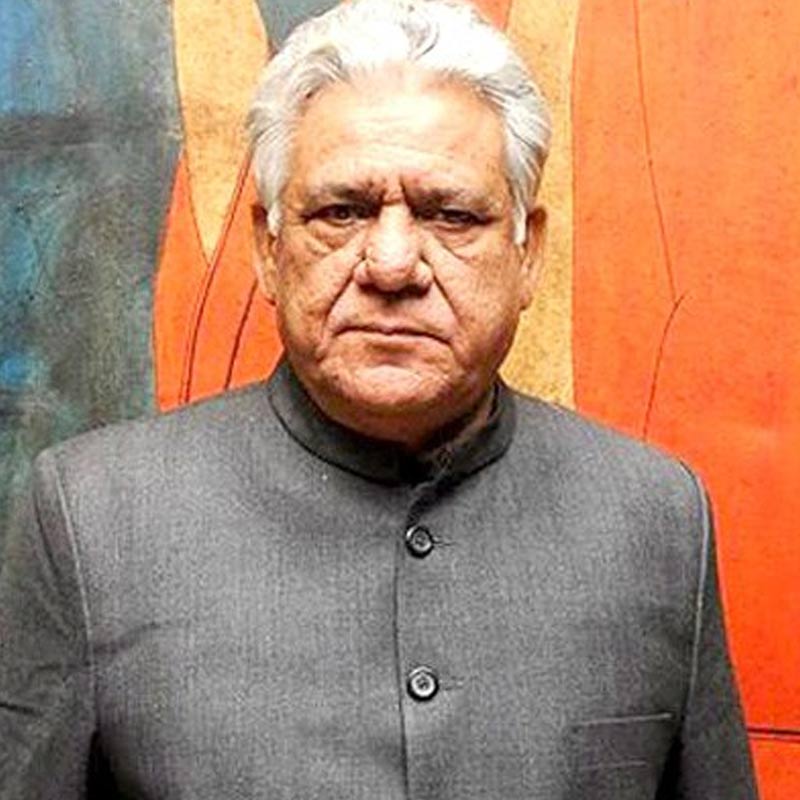
    NEW DELHI: Veteran actor Om Puri, who gave countless memorable performances in movies of diverse genres and also on television shows, died at his residence in Mumbai this morning after a massive heart attack. He was 66.

    ‘Puri passed away this morning due to a heart attack at his residence in suburban Andheri. It’s shocking,’ a family source was quoted by PTI as saying.

    From Bollywood to Hollywood, from independent to art films to television, the noted actor, known for his versatility, gave several acclaimed performances. Puri featured in several Indian, Pakistani, British and Hollywood mainstream commercial films. However, as many of his fans said Puri would be remembered more for his stellar roles in TV serial ‘Tamas’ and film ‘Ardh Satya’. He was awarded the Padma Shri, the country’s fourth highest civilian award, in 1990.

    Prime Minister Narendra Modi condoled Puri’s demise and recalled his long career in theatre and films. Minister for information and broadcasting M. Venkaiah Naidu too condoled Puri’s death and remembered his contribution to the Indian film and TV industry. Bollywood celebrities, including Akshay Kumar, Karan Johar, Anupam Kher, Javed Akhtar and Mahesh Bhatt, expressed grief over Puri’s demise, calling it a huge loss to Indian cinema.

    Born in Ambala, Haryana, in a Punjabi family, Puri graduated from the Film and Television Institute of India, Pune. He was also an alumnus of the 1973 class of National School of Drama, where Naseeruddin Shah was a batch mate. He made his film debut in the 1976 Marathi film ‘Ghashiram Kotwal’.

    Some of his notable films include ‘Bhavni Bhavai’, ‘Sadgati, ‘Ardh Satya’, ‘Mirch Masala’, ‘Dharavi’, ‘Aakrosh’, ‘Maachis’, ‘Gupt’, ‘Dhoop’ and ‘Yuva’. He earned international fame in many British films, such as ‘My Son the Fanatic’, ‘East Is East’ and ‘The Parole Officer’. He also appeared in Hollywood films like ‘City of Joy’, ‘Wolf’, ‘The Ghost and the Darkness’, among others.

  • Veteran film and TV actor Om Puri passes away

    Veteran film and TV actor Om Puri passes away

    NEW DELHI: Veteran actor Om Puri, who gave countless memorable performances in movies of diverse genres and also on television shows, died at his residence in Mumbai this morning after a massive heart attack. He was 66.

    ‘Puri passed away this morning due to a heart attack at his residence in suburban Andheri. It’s shocking,’ a family source was quoted by PTI as saying.

    From Bollywood to Hollywood, from independent to art films to television, the noted actor, known for his versatility, gave several acclaimed performances. Puri featured in several Indian, Pakistani, British and Hollywood mainstream commercial films. However, as many of his fans said Puri would be remembered more for his stellar roles in TV serial ‘Tamas’ and film ‘Ardh Satya’. He was awarded the Padma Shri, the country’s fourth highest civilian award, in 1990.

    Prime Minister Narendra Modi condoled Puri’s demise and recalled his long career in theatre and films. Minister for information and broadcasting M. Venkaiah Naidu too condoled Puri’s death and remembered his contribution to the Indian film and TV industry. Bollywood celebrities, including Akshay Kumar, Karan Johar, Anupam Kher, Javed Akhtar and Mahesh Bhatt, expressed grief over Puri’s demise, calling it a huge loss to Indian cinema.

    Born in Ambala, Haryana, in a Punjabi family, Puri graduated from the Film and Television Institute of India, Pune. He was also an alumnus of the 1973 class of National School of Drama, where Naseeruddin Shah was a batch mate. He made his film debut in the 1976 Marathi film ‘Ghashiram Kotwal’.

    Some of his notable films include ‘Bhavni Bhavai’, ‘Sadgati, ‘Ardh Satya’, ‘Mirch Masala’, ‘Dharavi’, ‘Aakrosh’, ‘Maachis’, ‘Gupt’, ‘Dhoop’ and ‘Yuva’. He earned international fame in many British films, such as ‘My Son the Fanatic’, ‘East Is East’ and ‘The Parole Officer’. He also appeared in Hollywood films like ‘City of Joy’, ‘Wolf’, ‘The Ghost and the Darkness’, among others.

  • For DD, it’s time to introspect not celebrate

    For DD, it’s time to introspect not celebrate

    NEW DELHI: There were evenings in the 1960s to mid ’70s when India, at least those homes fortunate to have TV sets, set their alarm clock in the evening to around 6 pm. It was that time the TV sets came alive with a signature tune and colour bands heralding something exciting.

    Those were the days when Indian pubcaster Doordarshan brought the world and entertainment — in a rationed manner typical of those pre-liberalization days — to Indian homes via production values that would be considered shoddy by today’s standards.

    Cut to circa 2016. TV sets today beam audio and video round the clock by DD, as Doordarshan came to be popularly known as, and a swathe of private sector TV channels.

    However, at a time when DD celebrated its Foundation Day (or birthday) on September 15, a question that rankles everybody is: Why does Doordarshan not function like some other pubcasters — the BBC, NHK, DW, PBS, etc —- in terms of functioning and quality of programming?

    Clearly, it is linked to another question: was Doordarshan doing better off when it was a direct wing of the Ministry of Information and Broadcasting (MIB), or has it benefitted by become ‘autonomous’ under Prasar Bharati?

    Doordarshan since 1959 beamed for half an hour educational programmes three days a week. However, as its programming timing grew, so did the control by the government, which found in DD a perfect tool for propaganda.

    Whether the Emergency days during Prime Minister Indira Gandhi or other governments, the government of the day realized the importance of DD’s widening networks and its role in pushing the government agenda.

    The Prasar Bharati Bill, paving the way for an autonomous DD and sibling All India Radio, was only notified and formalized in 1997.

    Interestingly, DD saw its hey days in the eighties with programmes like ‘Hum Log’; ‘Buniyaad’, ‘Ramayana’, ‘Mahabharat’, ‘Tamas’ and ‘Nukkad’, among many others, which not only highlighted India’s cultural traditions but also the ongoing societal changes. In fact, one wonders, whether a serial like `Tamas’, based on India’s partition, could be made today without somebody’s sentiments getting hurt and, in the bargain, getting canned.

    Though DD (and AIR) are modeled on the BBC — as famously described the then MIB Minister Jaipal Reddy in 1997 — DD’s case is different. Despite being dependent on government funding, it is running low on financial resources with each successive government insisting that Prasar Bharati start generating its own resources, but not letting go of the control. But this is difficult when the network has to compete against more than 800 private channels that are not impeded in terms of programming and other initiatives like DD is.

    No wonder the present Prasar Bharati CEO Jawhar Sircar said on DD’s birthday, “We need to look forward…renew our tryst with destiny.”

    Lines by a Canadian author, who penned ‘Morningstar’, aptly sum up the confused state of Prasar Bharati: “If you think you know what your purpose is, but can never seem to gain satisfaction from it, then it’s probably not the purpose you’re destined for.”

  • For DD, it’s time to introspect not celebrate

    For DD, it’s time to introspect not celebrate

    NEW DELHI: There were evenings in the 1960s to mid ’70s when India, at least those homes fortunate to have TV sets, set their alarm clock in the evening to around 6 pm. It was that time the TV sets came alive with a signature tune and colour bands heralding something exciting.

    Those were the days when Indian pubcaster Doordarshan brought the world and entertainment — in a rationed manner typical of those pre-liberalization days — to Indian homes via production values that would be considered shoddy by today’s standards.

    Cut to circa 2016. TV sets today beam audio and video round the clock by DD, as Doordarshan came to be popularly known as, and a swathe of private sector TV channels.

    However, at a time when DD celebrated its Foundation Day (or birthday) on September 15, a question that rankles everybody is: Why does Doordarshan not function like some other pubcasters — the BBC, NHK, DW, PBS, etc —- in terms of functioning and quality of programming?

    Clearly, it is linked to another question: was Doordarshan doing better off when it was a direct wing of the Ministry of Information and Broadcasting (MIB), or has it benefitted by become ‘autonomous’ under Prasar Bharati?

    Doordarshan since 1959 beamed for half an hour educational programmes three days a week. However, as its programming timing grew, so did the control by the government, which found in DD a perfect tool for propaganda.

    Whether the Emergency days during Prime Minister Indira Gandhi or other governments, the government of the day realized the importance of DD’s widening networks and its role in pushing the government agenda.

    The Prasar Bharati Bill, paving the way for an autonomous DD and sibling All India Radio, was only notified and formalized in 1997.

    Interestingly, DD saw its hey days in the eighties with programmes like ‘Hum Log’; ‘Buniyaad’, ‘Ramayana’, ‘Mahabharat’, ‘Tamas’ and ‘Nukkad’, among many others, which not only highlighted India’s cultural traditions but also the ongoing societal changes. In fact, one wonders, whether a serial like `Tamas’, based on India’s partition, could be made today without somebody’s sentiments getting hurt and, in the bargain, getting canned.

    Though DD (and AIR) are modeled on the BBC — as famously described the then MIB Minister Jaipal Reddy in 1997 — DD’s case is different. Despite being dependent on government funding, it is running low on financial resources with each successive government insisting that Prasar Bharati start generating its own resources, but not letting go of the control. But this is difficult when the network has to compete against more than 800 private channels that are not impeded in terms of programming and other initiatives like DD is.

    No wonder the present Prasar Bharati CEO Jawhar Sircar said on DD’s birthday, “We need to look forward…renew our tryst with destiny.”

    Lines by a Canadian author, who penned ‘Morningstar’, aptly sum up the confused state of Prasar Bharati: “If you think you know what your purpose is, but can never seem to gain satisfaction from it, then it’s probably not the purpose you’re destined for.”

  • “Cinema has evolved with technology as a more democratic medium”: Govind Nihalani

    “Cinema has evolved with technology as a more democratic medium”: Govind Nihalani

    KOLKATA: Indian film director, cinematographer, screenwriter and producer Govind Nihalani, who has proved the power of his cinema through his television series ‘Tamas’, vehemently believes that cinema has evolved with technology as a more democratic medium.


    “Cinema is a very powerful medium. It acts as a dialogue between the filmmaker and his viewers. It can convince you to pick up a gun and kill someone,” Nihalani said, on the sidelines of the ongoing 20th Kolkata International Film Festival.


    ‘Tamas’ is not a daily soap. It deals with the issue of national importance. The emphasis is on the characters and evoking of the period when the partition took place, makes it different from other soaps. “I think it will have a small relevance even today. These programmes are not even being made today,” he said.


    “In these times of hope and convictions, cinema will never die because it has tremendous possibility of creating magic, poetry and change,” he further added.


    On the context of shifting from his usual “serious” content to an animated movie, he mentioned that one should always keep expanding one’s horizon. With reference to digital technology taking over celluloid and the advantages it provides he said, “Technology is all that you want and it will get better with time.” He appreciated Japanese animation as an ingenious art form, but added that it will be sometime before India embraces such content in animation.


    Nihalani has been the recipient of six national film awards (India). His first directorial venture was Aakrosh starring Om Puri, Naseeruddin Shah, the late Smita Patil and the late Amrish Puri. The film is scripted by Marathi playwright Vijay Tendulkar. The film shared the Golden Peacock for best film at the International Film Festival of India held in New Delhi in 1981. He then directed Ardh Satya, based on a story by S. D. Panwalkar. The film has received critical reception for depicting the police-politician-criminal nexus. In 1997, he adapted Bengali novelist, Mahasweta Devi’s acclaimed novel by the same name to Hazaar Chaurasi Ki Maa.


    While interacting with movie lovers, Nihalani flashed upon his memories of a chat session with Sandeeep Ray (son of famous film-maker Satyajit Ray) on Mahasweta Devi’s novel.


    “On a moment like this, I delve into my past when I first met Mr. Ray, two decades later I dared to call him Manik da,” he said.


    Nihalani put forth his initial days with the master and expressed his gratitude when Ray narrated Pikoo’s Diary to him from the very first shot to the last. “It’s very important for a filmmaker to remain relevant to his times and be connected to his reality, his harsh reality,” he concluded by echoing Ray’s words.