Tag: TAM

  • Regional television struggles to find its voice

    Regional television struggles to find its voice

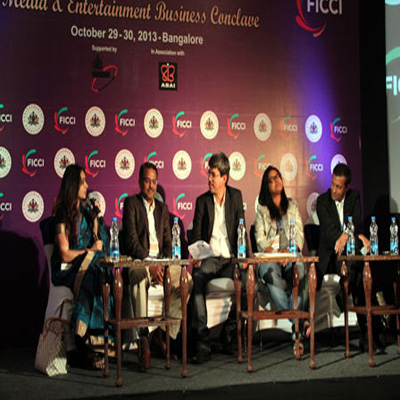
    BENGALURU: What good would a FICCI MEBC event be in Bengaluru without a discussion on the current status of regional TV, ratings, content and formats? The session moderated by indiantelevision.com CEO and editor in chief Anil Wanvari saw four personalities – TAM CEO L V Krishnan, Asianet and Star Suvarna Business Head Anup Chandrashekaran, TV serials director Shruthi Naidu and actress Malavika Avinash – talk about the evolving genres in the south TV market and the tussle that that the industry has with the TAM ratings.


    According to the FICCI Deloitte report, the south Indian TV industry was valued at Rs 13, 470 crore in FY 2013 and is set to grow at an estimated CAGR of 20 per cent over the next four years. TAMs Krishnan added that it also accounts for 20 per cent of national viewership. To top it all, south Indian viewers are glued to their TV sets almost 30 per cent more than their northern cousins. The former spend 150-200 minutes a day watching soaps, series, movies, drama and non-fiction as compared to HSM viewers who spend 100-110 minutes disclosed Krishnan.


    Kannada TV is in a strange predicament and its viewership is eroded because of the fact that the state shares its borders with others such as Tamil Nadu, Andhra Pradesh, Kerala and Maharashtra which means viewers in these regions watch TV shows in the languages prevalent in those states. To make matters worse, only 35-40 per cent of Bengalurus populace speaks Kannada. This despite, Krishnan is optimistic that Kannada TV will do well. It has grown by 25 to 30 per cent in the last five years in terms of engagement and the next four years will see the viewership increase by 20 to 25 per cent, he says.


    Chandrashekaran said that the south TV industry is experiencing changing consumption patterns. Fiction consumption is growing here as compared to HSM where non-fiction is taking over, he said. There has been de-growth of film consumption in the states of Karnataka, Andhra Pradesh and Kerala. Movies are unviable on TV today everywhere else except in Tamil Nadu, he said. We pay Rs 2.5 crore to acquire a title; but we spend around Rs 70,000 to Rs 80,000 an episode for fiction and we get the same or better viewership. Then, big ticket formats are also slowly spreading such as the Kannada and Tamil versions of KBC, he added. Then ETV produced Bigg Boss in Telugu and Kannada.


    Both Avinash and Naidu bemoaned the fact that budget restrictions in Kannada have led to creativity and innovation being stifled in the region. The protagonists in most shows are becoming younger – in their late teens or early twenties, which leaves limited scope for actors like us who have been around for 15 years, wailed Avinash. She, however, added that her Oprah Winfrey-like conflict resolution show has given her a good platform for her to exploit her creativity.


    Chandrashekaran said that the younger protagonist strategy is being resorted to because broadcasters are trying to draw in younger audiences – apart from the plus 45 year olds – to watch television. Krishnan pointed out that the broadcasters strategy is on the button as TAM Media research has shown that boys 14 and above tend to follow what their fathers are watching, mainly sports while girls follow their mothers and watch serials.


    Chandrashekaran said the economics of programming dictate that higher budgets for shows will work in a broadcast network scheme. If we can produce and amortise our costs over various languages like Tamil, Telugu, Malayalam and Kannada it will make our shows viable, he explained.


    Naidu agonised over the fact that Kannada broadcasters are increasingly resorting to making adaptations of successful Hindi shows rather than encouraging and experimenting with original stories from Karnataka. Chandrashekaran said that this was happening because there is a paucity of scriptwriters in the region and the novelists and literature writers from the state tend to look down on TV as below their creative dignity. We do a lot of interactions with our viewers and we only focus on filling whatever our focus group studies throw up as viewing need-gap. Avinash pointed out that emotion and drama work very well with TV audiences which is why adaptations of Hindi shows in the form of soap, drama and series are working on regional television.


    The topic also shifted to the credibility of TAM with her asking whether TAM data is rigged due to inconsistent ratings as compared to the popularity and visibility of shows. To this, Krishnan said that they have checks and balances in place to prevent any penetration or doctoring of the data. Yes, I am honest enough to say, one can reach out to our people meter sample, but we have policing mechanisms in place which will immediately penalise anyone who is trying to do that, he emphasised.


    Niche genres are missing in the south with most of the channels being GECs or film channels. But Chandrashekharan says that the potential to harvest niche genres is there.


    With the 10+2 ad cap coming in, we will see a lot of advertiser funded programs (AFPs) specially in Tamil Nadu because its base is huge, he said. I am very optimistic about our future and I can only see rosy pickings for everyone.

  • CNN-IBN reaffirms the numnero uno slot

    New Delhi, September 4, 2006: CNN-IBN, has reinforced and consolidated on its No. 1 position in the English news genre. The latest TAM report indicates that CNN-IBN has achieved a leadership position across the day in all markets, taking a lead ahead of its competitors. As per the latest TAM report (Week 34, August 20 – August 26, 2006) available, CNN-IBN leads with a market share of 37% (TG Male 25+ All India).


    Source – TAM, Target Audience – Male 25+
    MARKETS: All Markets
    Week 34, August 20 – August 26, 2006

    Day part Channel Channel share
    0700 – 2400 CNN-IBN 37%
    NDTV 24×7 33%


    Highlighting the success Rajdeep Sardesai, Editor-in-chief, CNN-IBN said “It is a moment of pride and delight for all of us and it just accentuates the faith that the viewers have in our content. We consider this success as an encouragement to take the process of newsgathering a step higher. It’s the commitment to good journalism that will always count, and that’s where we always try to measure ourselves against,”


    About CNN-IBN


    TV18 and Time Warner have joined hands to bring CNN-IBN, India’s first and very own world-class English news channel, headed by one of the most credible faces of news journalism, Rajdeep Sardesai. CNN-IBN brings news as well as feature programs. With editorial and network resources across every nook and corner of India and the globe, CNN-IBN is committed to bring to the discerning Indian viewer only the best of television journalism.

    For further information please contact:
    Parul Bhasin/ Namrata Bhalla PR Pundit, New Delhi
    Tel: 93502 65351 / 9873313613

  • ‘We believe that it is not in numbers but in the quality and nature of programming that is getting us noticed’ : Aditya Tripathi – Discovery Lifestyle Networks vice president

    ‘We believe that it is not in numbers but in the quality and nature of programming that is getting us noticed’ : Aditya Tripathi – Discovery Lifestyle Networks vice president

    Discovery Lifestyle Networks VP Aditya Tripathi began his professional career with Living Media India Ltd., and has worked in senior positions with some of the biggest media houses in the country. He made the move to Discovery in 2000 and his expertise in creating brand empathy, marketing and promotion has gone a long way to reinvigorate the various Discovery brands in India, especially Travel & Living.

    India is attaining prominence because of the socio-economic developments taking place in the country. Ahead of Discovery Travel & Living’s (DT&L) first local production The Great Indian Wedding to be aired on 20 August, Tripathi spoke to Indiantelevision.com’s Usha Thomas about how the lifestyle channel was gaining eyeballs with incessant demand from both Indian and foreign viewers for India-centric content.

    Excerpts:

    How did the concept of a lifestyle channel come about?
    With its growing and dynamic TV market and emerging middle-class, India was the right place to begin Discovery Networks’ new lifestyle endeavour. Some years ago, we took stock of the international TV landscape and we identified the presence of established global leaders in different genres: news, sports, movies, factual. And, among all this we identified a niche in the lifestyle space. There was no global brand and given that we had some experience in lifestyle and travel genres, we felt that this was an area we could occupy and dominate in the years to come.

    The senior management from the parent group came to India and wanted to be convinced that India was the right place to launch a lifestyle channel. After a day of the usual presentations, we took them to Gurgaon and showed them the homes, buildings under construction, call centres and malls. They looked around and said if this is the future of India, then lifestyle is the future of India and right there in the middle of a shopping mall, we were given the go ahead to launch DT&L. And, hence India was the first country to launch lifestyle networks.

    What is the positioning of the channel?
    Since its launch in November 2004, DT&L has striven to make its positioning distinct from that of factual channels. From day one, the strategy of our channel was to offer varied, non-fictional content as it is our strength. But, we don’t need to stick to factual alone. We can be factual as well as be in the lifestyle group and our positioning in the lifestyle group is aspirational, yet attainable. It’s just not about enjoying life, it is about celebrating life. It is good looking entertainment. So our channel is aspirational yet attainable, hedonistic, pacy, edgy …always stylish and trendy. We believe in good looking, entertaining television.

    Who is your target audience?
    Our primary target audience is upscale SEC AB audience – males, females and couples, between the age group 18 – 45 years. But, for us SEC, age, gender are limiting definitions. Our focus markets are Top 10 cities in India. Apart from these, the aspirational character of the channel will attract a secondary audience as well. It’s a state of mind that we are looking to capture so we are targeting a person with an international outlook, a person who has travelled abroad, may have even lived abroad, whose kids may be studying abroad and one who has seen international television and international lifestyle. This is common in Travel & Living in the UK, US, Singapore, all over the world. Nationality is not important for people with this mindset.

    Outline your performance in viewership, reach and among advertisers?
    Today, we reach 3 out of 4 cable homes in the country and in the top six metros, we reach 4 out of 5 homes. As far as viewership and relative channel share compared to other English entertainment channels Star World and Zee Café is concerned, we are growing considerably with time. We don’t share content with these channels but almost eight months after our launch, we had overtaken Star World in terms of numbers.

    Word of mouth and strong advertiser response is an indicator of our success. We are looking at the mindset which goes beyond demographics.

    Though TAM is a very democratic form of measurement designed to measure television groups across the country, groups, cities & towns, it is not designed to measure our target audience. For us, it is the people in malls, in fine dining restaurants, our ad agencies who are watching the channel. We believe that it is not in numbers but in the quality of programming and nature of programming that is getting us noticed.

    DT&L is about innovative, up market and interesting programming and we seek to experiment with properties that transverse different genres. We also pride ourselves on understanding our audience. Audience feedback has greatly attributed to our success and word of mouth is what makes us tick.

    In the first year, we had 236 brands on the channel and each time we go to an ad agency, the decision makers and their families are watching the channel so we have got very positive response from the advertisers to this channel. Also, despite the rapid growth of the television industry in India, advertising spends on lifestyle brands have traditionally been restricted to the print medium. The lifestyle channel provides advertisers with a dynamic media vehicle to reach a well targeted and defined viewership profile. It attracts 120 advertisers from across product categories, further cementing the channel’s unique value proposition.

    DT&L is providing a variety of shows, apart from just travel based shows. The programming strategy on DT&L since 2004?
    DT&L is essentially a lifestyle channel and along with travel, the programming will give viewers the inside track on all the latest trends in luxury and includes travel, health, relationships, wine, cuisine, home, car, bikes, the good life with a little bit of celeb and glam life.

    We have evolved keeping our original concept in mind and have grown far more than expected since our launch two years ago. Content is the key driver. We have made it our policy to incorporate as many different genres as possible and to acquire international programs or create localised programming in order to form a strong bond with our viewers.

    The Theme Week and Sunday Brunch strategy introduced in end December 2005 targeted at both viewers and advertisers. These programming blocks were created to appeal to the various target groups at times that they prefer while at the same time giving advertisers a focussed platform to reach key audiences.

    We have introduced a number of genre-defining programmes that have never been seen before in India, for example,American Chopper, Faking It, Million Dollar Agents, Miami Ink. We have all along explored different different genres of programming and experimented with reality factual programming with a difference.

    We don’t do celeb focusssed programming and are not overawed by celebs. Shows that we have incorporated have ranked extremely high in terms of quality and appeal and capitalize on wit and local humor, apart from being real.

    What are your views on DTH in India?
    The encouraging DTH scenario was also one of the reasons why the Indian management had been advocating the case for a lifestyle network in India. The channel has been established as a lifestyle channel, roping in the upwardly mobile. Currently available in 22 million homes across the country, DTL is also now available on the DTH platform.

    Today, we have the choice to choose the bouquet you want and the channel you want, so we welcome it. Internationally, the Discovery family of channels has thrived in all DTH markets. All three of our channels – Discovery, Animal Planet and Travel & Living are available on Dish TV and Tata Sky. We get to see the channel we want rather than with cable ops where they run all the channels and one can’t choose. For DTH, exclusivity is important and that suits us.

    10-15 per cent of the programming will be Indian. At any given point, we will have one local show on air and every quarter, we will premiere a new series

    Can you tell us about Discovery producing programs in India?
    India’s relevance on the world map is increasing. There are more people around the world interested in India, coming to India to work and travel so therefore DT&L is producing programming on Indian audiences but this will go to our channels across the world. The programming will show India in a positive light and in turn we get eyeballs from other regions who see these programs and maybe plan to visit India on seeing it.

    The way the Discovery format is used, we make a program on one part of the world and we show it in other parts of the world. That is the nature of our programming and all the shows on the three channels Discovery, DT&L and Animal Planet are of global interest. Similarly, we know our channel here is an international channel that provides high quality entertainment for a global audience.

    Give us the complete lowdown on the first local production The Great Indian Wedding?
    With our decision to commission local productions in India, we had been identifying various ideas that fit our programming strategy. Amongst many other concepts, we zeroed down to The Great Indian Wedding show. Also, in our discussions with many production houses, Delhi based Blue Mango came up with the very same idea. They were given the go ahead to make a pilot, mainly to serve two purposes: Get the formula right and then make the rest of the series.

    At the time that we decided on the wedding series, the media was all agog about the Chatwal wedding. Many other channels were trying to get the coverage and when we spoke to the Chatwals, they readily agreed to give us exclusive access to all the happenings on the wedding which was to be held in three cities in India – Mumbai, Udaipur and Delhi.

    The Great Indian Wedding is a one of a kind series, allowing the viewer to experience the wedding as an insider. The focus is on weddings with a difference and have a twist to them: opulence, glam quotient, location and theme. The pilot episode premieres on 20 August at 8 pm.

    During the ad break of this pilot episode, a banner will be streamed asking viewers if they have a great Indian wedding coming up. Based on the responses and our research, the 13 part series will be made. The remaining episodes will go into production in the 2006-2007 wedding season. We are looking at ethnic, different weddings and need not be of the same scale as the Chatwal wedding. Apart from the many applications received for the upcoming wedding season, we expect many more once the pilot episode is aired.

    The programme captures the glamorous theme parties extending from exotic locations like Jag Mandir in Udaipur to premium hotels in Delhi, the striking performances by Indian and international artists and the romantic and religious wedding ceremony. The host, Natasha Mago presents an insiders view, chatting up the bride, groom, guests, the challenges and frustrations of the wedding planner and the actual wedding ceremony.

    All guests invited at the wedding who appear on the show have given their signed consent in this regard, mainly to avoid legal hassles later, what with the high celeb turnout for this wedding.

    Our aim is to showcase India and showing a wedding held at the opulent and historical venues at Udaipur & Delhi, we hope to do our bit in promoting tourism in India. Keeping in tune with the high standards that Discovery is associated with, budgets were high especially as it was all shot on digibeta cameras. It was not studio based and there will be no compromise on the quality of the film, light, sound and effects used. We are clear that each programme should include a unique and entertaining story, credible facts and high-quality production values.

    We plan to get into merchandising by early next year by releasing DVD versions of our popular series and those currently on air

    What are the marketing initiatives being undertaken for the new local shows?
    We have already started airing promos and teaser campaigns for the pilot episode from 15 July and these have evinced a lot of interest among the viewers and the advertising fraternity. On the day (20 August) that the pilot episode will be premiered, we will be placing advertisements in all the major national dailies.

    Have you set targets regarding the amount of India centric content?
    It is essentially an international channel and India productions will be a small but significant part of the repertoire of programmes. The Indian programming will never dominate the channel as we clearly make it with the intention of airing it in other parts of the world. So, maybe 10-15 per cent of the programming will be Indian. At any given point, we will have one local show on air and every quarter, we will premiere a new series.

    What outdoor activities are being planned in India in order to extend the brand beyond television?
    We plan to get into merchandising by early next year by releasing DVD versions of our popular series and those currently on air. We have tie ups for the same with firms based out of Singapore and hope to soon associate with local firms.

    Name few acquisitions made recently?
    Among the recent acquisitions are a home interiors show called Trading Spaces and one on the training methods for airline cabin crew called Flight Attendants School. In January, we will be airing another BBC title Hairy Bikers Cookbook which captures the journey of two motorbike freaks as they travel to different places and learn about the local food.

    Are Indian viewers different from their counterpart in other countries?
    Honestly, there is no difference as our target audience matches up to any other in a similar genre in the world. They travel a lot, may have been educated abroad or visit countries on business and their lifestyles, eating habits and aspirations are similar to those abroad.

    Any plans of incorporating broadband and mobile into your business?
    We are looking at what technology may allow and what audiences are looking for and yet marrying that to the core DNA attributes of what Discovery has represented and people have loved through the years. We do not consider them a threat and with time, will integrate them in our business. Flipping channels is a reality and we are evaluating on working with mobiles, VoIP and other different platforms. We have been at the forefront of incorporating technology in the way we program and market the channel.

    For the series aired last quarter Five Takes, we had selected young people in their early to mid-twenties, and have given them $50 a day, a camera to film and software to edit so they document their daily lives. We gave the audience the opportunity to vote on the net and via SMS to decide where these young people should go and what they should do.

    In the niche channel environment where perception counts for a lot customization, do mention any customised solutions that have been done for clients?
    We recently had our first initiative in this regard with HSBC Bank for the HSBC Premiere card. They target the same high net worth individuals like us and they invited their customers and potential customers to a dinner and whisky tasting event at elite hotels in Delhi, Mumbai and Bangalore. We spoke about different whiskeys, their history and they also got to taste the best available in the world. We got tremendous feedback from those invited and HSBC and will hold many more customized events with like minded firms in the future.

  • With more news & more shows Times Now beats nearest competition!

    With more news & more shows Times Now beats nearest competition!

    Mumbai, August 16th: TIMES NOW, the 24 hours English news television channel with more news and more shows has established, when it comes to big stories, it has the viewer’s attention. In the last two weeks, it is clearly ahead of CNN IBN and has narrowed the gap with NDTV 24 X 7.

    The interactive and comprehensive coverage of the Prince story saw TIMES NOW emerge as the leading English News channel on the news which had the entire country hooked.

    TIMES NOW has 30% share to NDTV 24 X 7’s 31% in prime time, with 6 Times Now shows featuring among the top 10 English news genre shows (ref: TAM Top 10 list). In the last week, Times Now’s 31% share in Prime Time to CNN IBN’s 18% share establishes the channels growing popularity.

    Further, at an all day level, TIMES NOW has a 21.5% share of Viewership to CNN IBN’s 17.4% share, again with 4 of the top 10 shows.

    Commenting on TIMES NOW’s leading viewer ship growth, Sunil Lulla, CEO, TIMES NOW said, “With more news & more shows, Times Now is clearly winning the minds and hearts of viewers. It will continue to up the ante to build leadership in the market place”.

    (Data source: TAM 1 Million+ Markets, SEC AB, 25 + M, Weeks 23rd July to 5th August)

    About TIMES NOW

    TIMES NOW is a 24 hour English news television channel that provides the Urbane viewers the complete picture of the news that is relevant, presented in a vivid and insightful manner, which enables them to widen their horizons & stay ahead.

    TIMES NOW is brought to you by Times Global Broadcasting, a Times Group & Reuters service. Times Now operates out of its dual centers at Mumbai and Delhi and has bureaus in all major locations across India, complemented by the news gathering teams of The Times of India and The Economic Times, in India and globally by the Reuters international network.

    The Times Group is the largest media conglomerate in south Asia, with Leadership in newspaper publishing; magazines; music retailing; FM Radio; Internet; interactive media; mobile services and lifestyle television.

    Reuters is a global information company providing indispensable news and financial information to financial professionals, media organizations and consumers around the world. Its news operation of 2300 editorial staff in 196 bureaux serving 129 countries, makes Reuters the world’s largest international multimedia news agency

    Reuters and the sphere logo are the trade-marks of the Reuters group of companies


    For further enquiries:

    Vishakha Singh Ruchi Agrawal/ Ashwin Shetty
    TIMES NOW Genesis Burson Marsteller A Times Group & Reuters Service 1st Flr, Elegant House Times Global Broadcasting Co. Ltd. Raghuvanshi Mills Compound Trade House, 1st Floor, Kamala Mills Compound, S.B.Marg, Lower Parel Senapati Bapat Marg, Lower Parel,
    Mumbai-400 013, India Mumbai – 400013, India Email: Vishakha.singh@timesgroup.com Email: ruchi.agrawal@bm.com
    ashwin.shetty@bm.com
    Phone: 9820100941 Phone: 9869063217
    Website: www.timesnow.tv Website: www.genesispr.com

  • English entertainment channel ad revenue could rise by 25-30% should Tam introduce Elite Panel

    The lack of adequate measurement of SEC A! That is seen among media buyers as a big stumbling block for ad revenue growth in the niche English entertainment genre.This article analyses how media buyers view the genre (movies, infotainment and general entertainment) and the possibilities for more growth

    At the outset it is worth noting that the ad pie for the English entertainment genre is around Rs 2.2 billion. This represents a five to seven per cent growth from last year. Overall, growth is expected to be around eight per cent in the coming couple of years. If however Tam does introduce the elite panel these channels might see a growth of as high as 25-30 per cent.

    What will drive these numbers? According to OMS regional director Madan Mohapatra one will then be able to see more numbers among SEC A. It will thus make it easier to justify ad spends to clients who might be skeptical. Also, one will be able to slice and dice SEC A itself in different cities. Right now viewership for this genre comes mainly from Mumbai, Bangalore and Delhi. The TG mostly is C&S SEC A,B 15+.

    In the overall media plan, the niche English channels get into it to build incremental reach. Also, the affinity that a channel has with a TG that a channel has is also looked at.

    Media planner Rahul Panchal adds that the elite panel will see consolidation happening in the market. This means that not all channels will see a similar increase. Those channels that are able to show better numbers will be in a better negotiating position. Revenue will shift from one channel to its competitor. Now though, everything is a matter of perception. There is a clear segmentation of genre among the media community. This means that a Star Movies will not compete with a Zee Café. This situation will not change.

    Top 10 Advertisers in English Movie channels
    HLL
    L‘Oreal
    Pepsi
    Coca Cola
    Nestle
    Nokia
    Samsung
    Brooke Bond
    Tata Motors
    Paras Pharmaceuticals

    How the different channels are perceived: HBO and Star Movies are more or less on an even keel. The English film genre takes out around 50 per cent of the earlier mentioned Rs 2.2 billion pie. Depending on previous experience a client‘s view will favour one or the other.

    The reason why English movie channels fare better is that they are seen to be more mass compared to the infotainment and English general entertainment genres. They also offer better reach. One advantage that Star Movies and HBO have is that there are not many choices in this genre. Zee Studio is still confronting distribution issues while Pix, which recently commenced airing, has not gone to the media market as yet with this new offering. In fact planners feel that Pix should mature a bit before it can consider itself a serious player. Therefore there is less price elasticity happening in the English film genre.


    Properties like The Lord Of The Rings have helped boost HBO‘s library

    In terms of spot rates, on a comparison scale if English film channels charge Rs 100 for 10 seconds then general entertainment and infotainment charge Rs 50-60. As had been reported earlier by Indiantelevision.com, HBO has hiked its rates by 25 per cent.

    Information available with Indiantelevision.com indicates that this was possible because HBO‘s ad rates were much lower than Star Movies. When HBO moved to Turner last year the existing contracts that clients had thanks to deals negotiated by the One Alliance were cancelled. When deals were renegotiated sometime in June 2005 rates were reduced by seven to eight per cent. So the increase that HBO is now looking for is effectively around 16 per cent compared to what it was when it was with the One Alliance. Post the increase, HBO‘s effect rate per 10 seconds will stand at around Rs 85, still lower though than Star Movies price of Rs 100.


    The Oscars are high impact property for Star Movies

    As already pointed out, HBO and Star Movies are at an advantage here due to there not being many choices available. Of course, it is also true that English movie channels also need to charge more as their acquisition costs are higher and they have operated on a higher bargaining level for a longer period of time, opine industry observers.

    Star Movies‘ cause has been helped by high profile properties like the Oscar Awards. HBO, industry observers though note, has improved the quality of its library.

    For the third player Zee Studio, the biggest hurdle continues to lie in its distribution. This does not mean that cable operators are not carrying it. It is just that the band placement is poor and so too by extension the reception. The number of viewers, therefore, who are able to sample its properties like a few foreign films that one normally catches at film festivals are fewer. Not surprinsgly its rates are around 45 per cent less than what Star Movies charges.

    Top 10 Advertisers in English General Entertainment channels
    HLL
    L‘Oreal
    Coca Cola
    Nestle
    Nokia
    Pepsi
    Brooke Bond Lipton
    Titan Industries
    Tata Motors
    Ponds

    The English general entertainment segment takes out around 30 per cent of the Rs 2.2 billion ad pie. Star World is still seen as having a more upmarket image compared to Zee Café. Its rates are also around 30 per cent more. Panchal though was appreciative of Zee Café‘s efforts like its new look and feel which was done to make it appear more youthful. The fact though is that Star World is at an advantage because it, of the three channels (including AXN), has done the most to improve the variety of content it offers.


    Shows like Desperate Housewives make Star World attractive for advertisers targetting women

    This means that there will always be a trial audience for new shows which offers good visibility for advertisers. Star World is also unique in that of all the channels in the niche English entertainment space it is the only channel besides Zoom which is seen as having a few shows that will mainly appeal to women.

    A case in point is Desperate Housewives. Of course that is not say that women do not tune in to the other English channels as well. It is just that if you look at the programming skew it is slightly more towards men points out Panchal. So advertisers on the niche English channels usually target the male first.


    Local shows like Simply Style have Zee Cafe differentiate itself

    While Zee Café‘s local initiatives work both as a differentiator and a revenue generator Panchal feels that the channel needs to bear in mind the cost factor. Local shows help build a stronger identity for any channel. Of course, it is easier for Zee TV to do local stuff as its revenues are that much more. Both Zee Café and Star World are used in some measure to target the upwardly mobile youth. So its TG would mainly be 15-45. For AXN though, the perception is that men 25+ comprise its main audience. Here the reality shows like Fear Factor are perceived as being a strong draw.

    On the infotainment front, while Discovery was at one time much ahead, that gap has come down to some extent as NGC did a lot of things. Its Think Again repositioning last year helped in this regard. Discovery‘s rates though are still higher to go with their better viewership. It also started selling Animal Planet separately from last year.


    TV films like Hitler are key in history Channel‘s repositioning

    One channel that has improved perception wise is The History Channel. Observers note that previously it was a touch monotonous. However in April it shifted its positioning to being an entertainment channel. Products like Hitler, Nero mean that it can show quality films, series while sticking to its basic positioning of history. The opinion is that in the near future it could go ahead of NGC in terms of the cost of spot rates. In the near future it can also position itself as an alternative to the likes of Star World for ad revenue. October should be a good period to see the progress made since the revamp.

    Not much fluctuation: Planners feel that the English entertainment channels are not as badly affected by events like cricket to the extent that mass channels are. That gives them confidence to put money on them even during October – November 2006 when the ICC tourney is on. If a person wants to see an English film he will more likely do so compared to a Hindi soap when the Indian cricket side is playing.

    Another trend in this genre is that while the share of the English genre in the overall landscape has gone down, their ad revenue has gone up. Clients like Nokia have stayed loyal.


    MythBusters on Discovery. The channel has managed to keep itself in front of archrival NGC

    It may be that a client will shift from one channel to another. However, the number of clients available for English channels will never go down. Clients are also encouraged by the fact that appointment viewing generally is increasing. However, there is still room for improvement in this area.

    In terms of the yield per unit, the infotainment channels fare worse than movie and English general entertainment, say observers. Be that as it may, the quality of the audience is the USP of niche english entertainment channels. A Star Plus may give reach but quite a few of those viewers might not be relevant for example to an advertiser selling an expensive PDA phone. On the niche English entertainment genre there is a certain amount of passion involved and around 80 per cent of those viewers are likely to buy high end products. There is therefore a high amount of relevance translating into a good quality rating point.

    The more expensive a product is, the more likely a client will be to choose a niche English channel. Also, the fact is that while these channels may not contribute much revenue to the network kitty, they help augment the mother brand. They help the broadcaster offer a complete solution to clients, which is why Sony launched Pix after HBO moved to Turner.

    Top 10 advertisers in infotainment channels
    Nokia
    Coca Cola
    Pepsi
    HLL
    L‘Oreal
    Tata Motors
    Parle
    Lenovo
    Motorola
    Paras Pharmaceuticals

    A stronger focus: Media buyers also feel that the niche English channel sellers are more evolved and mature. There is a better focus on how their property fits in with a client‘s needs. This is imperative as these channels are selling an intangible space. They also do not have the ratings.

    So a certain amount of street smartness is key, especially when one considers the fact that clients and channels have opposite goals. The channel wants to get as much revenue as possible while the buyer wants the best (though not always the cheapest) price. The infotainment channels are clearly at a disadvantage in terms of revenue potential. There are six of them (three from the Discovery stable, two from Nat Geo and Zoom) fighting for 20 per cent of the Rs 2.2 billion pie.

    Revenues the channels will get going forward rest on four factors – how seriously they take their content, how well they time the launch of new shows and initiatives to get the most impact (it is not just a matter of quantity), how competitive the rates being offered are and how well they are promoted at both a client and consumer level.

    If a channel is not perceived to be as good as its competition then it needs to offer more customised packages. A case in point is what Zee Café did with Asian Paints on the sitcom Friends. A Friends makeover was done to emphasise the fact that red is the colour of love and friendship. Since Star World is perceived to be better in the market it does not have to go that extra mile if it chooses not to.

    It is also worth pointing out that a niche channel focusses more on chasing those clients who spend a lot of money on this genre rather than merely trying to increase the number of clients. That is because if the number of clients increase beyond a certain point they run the risk of spreading themselves too thin. So while a Sony will have around 230 clients, a niche channel will have far fewer clients, often by choice.

    At the end of the day skill and the level of negotiation are what count. Therefore, the head of the ad sales team is a crucial pivot. His/her attitude and strategy dictates to a large degree the performance and how successful a channel is in meeting targets. Zee Café and Zee Studio have benefitted from recently getting a separate sales team. Panchal notes that the need for sales people with strong persuasion skills is why there is so much poaching happening.

    Buying for the English channels is a mix of round on daypart (RODP) and key properties. However, most of them insist on a client not just paying a premium for a key property but also on increasing their outlay on the channel. Competition for ad revenue among niche English channels, Mohapatra notes, is at both a genre level and a channel level. However, usually the client first chooses the genre and then looks at the channel.

    There are times though when channels from different segments reflect the same values. For instance, AXN has a good duplication with the infotainment audience as it is aspirational. So now if a brand does not have Discovery or NGC in its plan then AXN can add value by giving incremental reach. On the other hand, if one advertises on Star World it does not necessarily mean that one can ignore AXN as the TG is different though they are in the same genre.

    Conclusion: In the months to come, this genre will see competition growing more fierce. It will get a boost should Tam introduce an Elite Panel. At the same time, better strategising both on air and on ground will be key.
  • ‘Ratings not an apt way to judge Awaaz performance’ : Sanjay Pugalia – Awaaz editor

    ‘Ratings not an apt way to judge Awaaz performance’ : Sanjay Pugalia – Awaaz editor

    If news channels are largely described as niche, then Awaaz is a niche within the niche. Positioned as a consumer Hindi news channel, it breaks the general connotation of a business channel as being designed for people dealing in big business.

    Awaaz is primarily, as Editor Sanjay Pugalia points out, for anybody who wants to spend Rs 100 fruitfully or save even that Rs 100. Looking at the way the India economy is changing, Pugalia expresses that there is a gap that has been successfully filled by Awaaz — the 15+ SEC AB in the Hindi speaking markets.

    Pugalia believes that the existence of Awaaz has given a new definition to this news category.

    In a freewheeling conversation with Indiantelevision.com’s Manisha Bhattacharjee, Awaaz editor Sanjay Pugalia provides a low-down on how the consumer channel has shaped up over the last 18 months.

    Excerpts:

    Awaaz underwent a change in its on-air-look? Isn’t it too early for the channel to undergo a makeover?
    When the channel was launched, we followed the time and tested format of CNBC-TV18. Now that we have completed 18 months in the space, it was time to give a distinct identity to the brand Awaaz, as we are addressing a much broader audience base and our offering is very different from CNBC-TV18. Awaaz is an independent product appealing to our kind of target audience. Earlier, we wore blue and white, now the channel dons red and white.

    What is the unique selling point (USP) of Awaaz?
    The consumer channel is primarily targeted at small investors. It is first and foremost for those viewers or consumers who are earning some money, saving some and need proper advice to invest. The channel has been principally designed in the manner wherein experts provide inputs in a manner that will help consumers take their own decisions on all the possible ways he / she can save or make money.

    The channel is a powerful vehicle for small investors, buyers, sellers, etc and it provides opportunities aimed at effectively reaching our target audience.

    Is this an indication that TV18 failed to target this segment through CNBC-TV18?
    It is wrong to say so. CNBC-TV18 created the business news space within the English space for the big corporates. The channel’s coverage extends from corporate news, financial markets coverage, expert perspectives on investing and management to industry verticals and beyond. The channel has been catering to business more relevant to different constituencies across the nation.

    Awaaz on the other hand is for the small investors in the Hindi speaking market. It indeed covers the entire business space from the consumers’ perspective. Who is the consumer? It could a taxpayer, an employer, a small investor, shopkeepers etc. These consumers are interested in the current share or stock market, trade, small business, managing and saving as well as investing. All these needs are serviced through our shows.

    When you say that the word ‘consumer’ covers a vast gamut of audience, trade, equity, non-equity, financial sector etc? Where do women fit in the gamut?
    It is largely noticed that female viewers are much less in comparison to male viewership on any given news channel. But it is otherwise on Awaaz. We have a very strong female viewership, approximately 45 per cent. Our key driver show is Smart Shopping, which airs at 4:30. When the same show airs at 10:30 pm, it brings in male viewership.

    The unisex shows are Awaaz Plus, Tax Guru (tax is generally perceived as a male subject), Weekend Masti, Hum Honge Kamyaab, Jiyo Zindagi, Chalti Ka Naam Gaadi, Glamour Bazaar and Trend Mill to name a few.

    Let me reiterate a point, ratings is just not the apt way to judge the performance of the channel. It is merely an auxiliary data that gives us an insight to the performance of the channel.

    If you say ratings are not the rightful way to judge the performance of the channel, then how do you pitch it to the advertisers?
    It is difficult for me to comment on the marketing side of the channel. But all I would like to add is that the advertisers solely do not rely on Tam data, they also have other means like their own research and other external research which they commission as well as their gut feelings for the channel to make a decision to spend on the channel. Mind you, Awaaz, like CNBC-TV18, has a good number of out-of-home viewership, which is not recorded by Tam.

    In this fragmented news market how do you deal with your competitors?
    Honestly, we have no competitors in this space.

    Well, you are forgetting Zee Business. Isn’t this channel in the same space and targeting your kind of audience?
    Well, as I said we have no competitors in this space. In any case, we are 300 per cent to 400 per cent bigger then Zee Business.

    Network synergies should not be confused with similarities

    Coming from the same TV18 network, is Awaaz cannibalizing big brother CNBC-TV18?
    We cannot cannibalise each other being under one network. We can only strengthen each other and synergies and leverage each others strengths. But it is necessary to comprehend that as a network synergies should not be confused with similarities.

    22 May experienced a massive market crash. Besides retail investors, even small time investors panicked? As you strongly term your channel as a consumer based one, how did you address your TG?
    ‘Caution’ has always been the word from the day we launch the channel, while addressing the news and information needs to the small investors, the mutual fund buyers, shoppers, small time insurance agents etc. This does not mean either that while cautioning them, the investor should stay away from equities. They have to be convinced about their investment ideas after weighing the pros and cons.

    Let’s take the Tam data during the market crash in isolation. According to the data, on 22 May, Awaaz recorded a 2.3 per cent channel share, beating the general Hindi news channels during the 9 am to 4 pm time band, followed by Aaj Tak (1.50 per cent), Zee News (1.43 per cent), NDTV India (1.16 per cent), Star News (1.15 per cent) and followed by the rest.

    TV18 network is involved in a lot of on-ground initiatives. What kind of on ground initiative is Awaaz into?
    All our ground-initiative is marketing backed and strengthen our brand by involving our viewers. When we carry out any on-ground shows it has to be relevant to the issue and place.

    How different is your weekend band from that of weekdays?
    We have branded our weekends as Smart Weekend, which has been created recently. It’s primarily a day long exercise covering various topical aspects of the week providing a holistic and exhaustive coverage from across the nation. The weekend gone by was entirely devoted to the best colleges of Top 10 cities in India. Besides, for those students who did not secure good marks, we provide inputs from across the nation with alternative college and courses for them.

    Now that TV18 is hiving of its internet business into a separate company, is the network aiming at launching a portal to complement Awaaz, just as in the case of CNBC-TV18 and moneycontrol.com?
    I can’t comment as it is a business decision.

    What is making business news channels such a success in India?
    The news needs of TV viewers has dramatically changed in India, because of growing economy, urbanisation, spread of wealth and increased purchasing power to millions of Indians. They want to know about the things; products and services, they can use in order to make decisions every day about shopping needs, investments, spending and saving… and they want it in a relevant, useful manner.

    Awaaz, in this space does it effectively. Viewers’ habits are changing so fast that sometimes media is not able to keep pace with it. But Awaaz is a product of the future and it will only grow as the economy makes new stride and goes global.

    How will all of the emerging ‘viewer-in-command’ technologies — like IPTV — impact traditional broadcasting?
    New technologies will only grow opportunities and expand the market for us. They will add value to our services. Mind you, those who would be using technology like IPTV, will be in the homes with more than one TV set and more importantly millions of Indians are yet to buy a TV set. Traditional broadcasting will continue to remain 2/3rds of the pyramid and the remaining 1/3rd will consume the new offerings.

  • Sony, Star One bid to get back on narrative track

    It was in early October 2005 that we last had a close look at the Hindi entertainment space. What did we see then?

    The top programmes on Star Plus were witnessing a ratings erosion of between 10-12 per cent on an average. But the key point then was that though Star Plus‘ top shows had dropped on the TRP scale, the channel share had dropped by only 5 per cent due to the expansion of the performing time bands to the weekend — thanks to KBC 2 and its effect on the weekend line up on the channel.


    KBC 2‘s unexpected exit and Star Plus‘ failure to present a fitting substitute exposed the channel‘s overdependency on the property

    Add to that was the huge success sibling Star One enjoyed on the back of two talent shows Nach Baliye and The Great Indian Laughter Challenge. So, Star as a network ended the year on a super high note with Star Plus managing to hold steady its grip on Hindi entertainment and the added bonus of Star One‘s meteoric rise in the reckoning.

    Going into the month of April 2006 though, the picture is looking a whole lot different. What has been extensively reported on is Zee TV‘s overtaking of Sony Entertainment Television India’s flagship channel SET to ensconce itself firmly as the clear number two in the Hindi entertainment space.

    What not many seem to have taken note of though is the way Star Plus’ flanker channel, which Star Entertainment India CEO Sameer Nair had hoped would make a serious assault on the number two position, has plummeted hugely from a high of 15.1 channel share in the second week of December to a lowly 5.5 for the week ended 30 April (see charts).

    This brings us to a posit that has been made earlier, but with specific reference to SET — that the recipe of relying on format shows to deliver would prove difficult to sustain as a long term proposition.

    In a sense, the trajectory of both SET and Star One has been similar. While the format shows have offered them temporary spikes, the lack of strong wraparound drama content has meant that overall there has only been a downward spiral witnessed.


    Star Plus has finally zeroed in on the period drama Prithviraj Chauhan to fill the void created by KBC2‘s exit

    Comparing the two is not exactly warranted, though except to draw attention to the inability of the format shows to drive up the channel as a whole without solid dramas (or as Nair terms it narrative fiction) as the main menu proposition.

    Why is it incorrect to compare? The format shows worked brilliantly for Star One in the sense that if one looks at where the channel was before these shows “did the trick” it was far lower than where it is now. So basically, Star One is now in direct competition with Sahara One (which has improved on the ratings reckoner). It would appear that the only way ahead from Star One is up, which should be good news as a lot of hope and money is riding on the channel.

    For Sony, a lot depends on how the strategy that the channel is charting on the narrative fiction front takes off. The results haven‘t been too encouraging so far though with the two new prime time shows launched simultaneously on 24 April (Aisa Des Hai Mera and Thodi Khushi Thode Gham) yet to make an impact. This stands out in stark relief when compared to Zee TV‘s new prime time show Jabb Love Hua, which launched the same day and is doing far better.


    Channel
    Key properties
    April-May average ratings combined
    Star Plus Kyunki…, Kahaani…, Kasauti… 12.64 TVR
    Star One Laughter Challenge, Mano Ya Na.., Kya Hoga.. 2.61 TVR
    Zee TV Saath Phere, Kasamh Se 4.44 TVR
    Sony Idol final & Idol Muqabla, Fear Factor, CID 3.36 TVR
    Sahara One Cricket, Woh Rehne Wali.., Hanuman (film) 2.76 TVR
    Sab TV Caravan (film), Idol Takka Tak, Wah Wah, Lo Kal.. 0.52 TVR


    Source: TAM Peoplemeter System TG: CS 4 years + Markets: Hindi Speaking Markets
    Period: 2/4/06 to 6/5/06


    After Saath Phere and Kasamh Se, Zee‘s latest prime time property Jabb Love Hua is now ringing the alarm bells for rival channels

    If one were to look at Zee, Saath Phere at 9:30 pm delivered and that has given the channel a huge boost. The good show from Kasamh Se, coming at 9 pm, has doubled the channel‘s excitement. According to Tam, the latest prime time offering Jabb Love Hua has also achieved a strong opening. Zee also has strong properties in its afternoon soaps, Paalki and Mamta. Zee is presently strategising its moves to strengthen the afternoon band further.

    What gave Zee the momentum was of course Sa Re Ga Ma Pa Challenge 2005, which has been a solid home grown quality format property which has pretty much chugged along without too much media noise all these years. When Zee made substantial investments in Sa Re Ga Ma Pa Challenge, it got the dividends.


    Sony’s format overkill and the resultant viewer fatigue worked against ‘Indian Idol 2‘ in viewership charts

    While speaking of Sa Re Ga Ma Pa Challenge, the case of Sony’s Indian Idol 2 immediately comes into the frame. We remain convinced that Idol is an intrinsically a strong property. So frankly, we are surprised at the low (comparatively) ratings it delivered. About the only reason that makes sense is that Sony’s format overkill led to viewer fatigue.

    After the first edition of Indian Idol signed off on such a high note, in came Fame Gurukul, which also took the music talent route. From a viewer’s perspective, it was one into the next and before gathering breath as it were, there was Idol 2 back again.

    There was a lot of “format noise” on the rival channels as well so that also has to be factored in. Music talent hunt Sa Re Ga Ma Pa has already been discussed. Then there was the celebrity dance contest Nach Baliye and the Great Indian Laughter Challenge on Star One and of course the big daddy of them all KBC 2 on Star Plus.


    Will the new soaps such as Aisa Des Hai Mera and Thodi Khushi Thode Gham see Sony pulling its viewers back to the drawing room?

    How do the coming months look for Sony? Well it depends on what are the narrative fiction shows that the channel has launched as well as those in the pipeline fare. Drawing from the example of the US, NBC has slid because it has found nothing to replace cult hits like Friends, Seinfeld and Frasier while ABC’s surge has filled the “vacuum” with hits like Desperate Housewives, Lost and Grey’s Anatomy.

    Coming back to Sony, Jassi has bid its long overdue adieu and the channel has tapped the horror genre (Khauffnak) as its replacement. The show is expected to conclude by June end. What shows the channel throws up next in the time band and how Aisa Des Hai Mera and Thodi Khushi Thode Gham ultimately fare in the ratings reckoning could well determine whether the coming months see SET’s ratings curve travelling north or further south.