
Tag: TAM

  • ‘TV established its rightful claim, as the medium for the nation’

    ‘TV established its rightful claim, as the medium for the nation’

    It’s that time of year, for the annual tea leaf-reading ritual, as the media pundits herald a new round of trends.

    Looking back, 2007 was an unusual year. It held much promise for media pundits, poised as it was, on the back of an unparalleled economic boom and a raging bull market. The bull was expected to take a breather and consolidate before a fresh charge and 2007 was to be the “Year of Consolidation” for the financial markets.

    The Media market was to pick up the baton and 2007 was billed as THE year as predictions flew thick and fast (yours truly was guilty of it too!). Almost all of them were, in one way or the other linked to the broadcast business – as the driver, the catalyst, the victim, the recipient.

    Lots of action was predicted and it did deliver, albeit differently. The bull confounded experts and continued to charge, clocking another year of impressive growth.

    What was 2007 for the media market? With the benefit of hindsight, let’s look at some of the popular predictions…

    Year of Cricket? – Starting with the World Cup, that turned out to be a fiasco, cricket proved to be a damp squib, leading many an advertiser to rue misplaced faith and rush back to the time tested favourites and mainstream entertainment.

    Year of Broadcast Erosion & GEC demise? – Probably the strongest and most confident predictions were about the rapid erosion in TV viewing and flight to other media. GEC as a genre held firm as the dominant choice during the year as Zee grew rapidly and consolidated on the gains. Broadcast viewing across genres moved northwards as the viewing experience expanded.

    Year of Consumer? – Besides indirect consumer voice through content viewership, consumer empowerment in a definitive, direct way was to be created on a large scale by way of the addressable Cas systems.

    After starting with much fanfare and anticipation in a limited “manageable” area, it remained confined there as ill equipped operators and logistical inadequacies resulted in thousands of homes blanking out on their favourite content at the stroke of midnight on 31st December 2006.

    Year of Launches? – The “buzz” in the market was entirely around the highly awaited “new additions” across the constituents of the industry. With the enticing promise of taking the TV experience to the next level. A slew of channels on the content side that many believed would reorganize the content genre structure. New broadcast delivery platforms that offered to “liberate” the consumer. Alternative media.

    Fact: The local cablewallah still rings my doorbell each month. General entertainment still rules the roost.

    Year of measurement? The lowest profile, yet most influential stakeholder in the industry was expected to see a major overhaul during the year. TAM’s expanded peoplemeter system was to be a generation leap from a four-year-old limited area, limited scope system, to a cutting edge, expansive full scale one. With capabilities ranging from handling new technologies and platforms, expansive coverage, deeper understanding of viewer segments and viewing behaviour etc. The new panel was a step upgrade in coverage terms. The elite panel too promised much and delivered little as it struggled with limited scope and the hangover of existing methodologies.

    SO WHAT WAS 2007 REALLY?

    It was the year of media consolidation.

    TV established its rightful claim, as the medium for the nation. The resurgence of TV and its ability to thrive even amid an onslaught of new and fragmenting media. Other traditional and new media alike (including FM radio, Internet, Mobile) failed to live up to the hype and proceeded to occupy their place in the hierarchy.

    It was the year when the broadcast industry took its seminal step towards maturity and financial viability in the form of a surcharge. It started of as a unified cry to bring attention to the broadcast industry’s frustrations. Concern against gross under valuation and runaway costs that threaten TV’s vulnerable ad-supported framework.

    It was the 20-20 year

    Not just in terms of the 20-20 format reviving depleting consumer interest in cricket, but to a greater extent, it brought to the fore a new formula of success based on changing audience preferences – short, sleek, quick, entertaining.

    WHAT WILL BE THE MEDIA INDUSTRY’S SEMINAL MOMENTS IN 2008?

    Nothing can kill this much desired, most maligned, most adored, advertising vehicle – not dropping rates, not under valuation, not an overcrowded market, not insufficient measurement, not print, not mobile, not the Internet.

    Genre Consolidation

    The much spoken about deluge of launches will unfold in the coming months, leading to an expansion in viewing experience and preferences, rather than fragmentation as is widely predicted.

    However, as competition enters the market, time, resources and overall value will shift, taking the broadcast industry rapidly towards the inflection point where consolidation becomes inevitable.

    Spiraled out costs, below par returns and maturing viewer preferences would force intra genre consolidation with an alpha duo in the lead and a following pack.

  • Mumbai leads STB penetration, SEC A early adopters: Tam

    Mumbai leads STB penetration, SEC A early adopters: Tam

    MUMBAI: Of the three metros, Mumbai leads in Cas (conditional access system) adoption with a 25 per cent penetration in set-top boxes (STBs), according to a study by Tam.

    While Mumbai has 139000 subscribers buying STBs on a Cas home of 548000, Delhi has a 14 per cent penetration with 97000 out of 676000 homes opting for boxes.

    Kolkata is a clear laggard with a 10 per cent penetration, indicating significant differences in offtake across the three metros. Out of 409000 homes, 41000 subscribers have gone ahead and bought boxes.

    “Of the 1.63 million homes covered by the Cas footprint, 277000 homes had taken up a STB/DTH connection to access pay channels. Pay TV homes amounted to 17 per cent of the Cas-mandated area,” the study said.

    In the first week of January, Tam commissioned AC Nielsen to conduct a ‘Pay TV Homes’ estimation study in the Cas-mandated zones of Mumbai, Delhi and Kolkata. The fieldwork periods were 12-16 January in Mumbai, 11-15 January in Delhi and 11-16 January in Kolkata. The fieldwork mid-point was 14 January, Tam said.

    Tam further divided the zones into 100 sampling nodes, ensuring “adequate geographical coverage.” It conducted face-to-face interviews using a structured questionnaire. The interviewee was the decision maker pertaining to cable subscription. The sample size was 2250 respondents (750 per city).

    According to the study, an additional 198000 homes claimed to have subscribed but are awaiting installation of ‘pay TV services.’The ‘under served’ segments included 109000 (20 per cent awaiting installations) in Mumbai, 43000 (6 per cent) in Delhi and 46000 (11 per cent) in Kolkata.

    “Cumulatively, 475000 homes had subscribed comprising 29 per cent of the Cas-mandated homes,” the study said.

    There are 7.96 million cable homes across the three metros with 1.63 million (approximately 21 per cent) falling under the Cas-mandated zones. Mumbai has 3.25 million cable homes while in Delhi it is 2.61 million and in Kolkata 2.1 million.

    The highest offtake for the boxes is in the SEC A strata of Mumbai. Interestingly, the response by Mumbai’s SEC C is nearly on par with those from SEC A residing in Delhi and Kolkata There is zero demand from SEC D/E in Kolkata. “The offtake levels vary significantly across markets even at a SEC level. The highest offtake is observed in the higher SEC and it declines as one comes down the SEC ladder. Owing to the pre-dominant non-responsive lower SEC, the offtakes seem to have got dampened significantly,” the study pointed out.

    Despite low offtake in Kolkata, consumer awareness appeared to be higher than in Delhi and Mumbai. Consumers residing in Delhi appeared to be the least aware.

    While consumer awareness has significant ground to cover, price remained the pre-dominant reason for subscribers preferring to decide in favour of free-to-air (FTA) channels.
     

  • Kids TV channels expect rapid expansion in 2007

    Kids TV channels expect rapid expansion in 2007

    MUMBAI: Building on the momentum provided in 2006, the kids genre is expected to scoot at an even faster clip this year.

    Backed with experience in the market, these kids entertainers are speaking a ‘lingo’ that is reaching out to Indian kids. The world of opportunity that this genre has opened its doors to in the last two years, seems to have laid the foundation for a level playing ground. The kids channels market is estimated to be in the region of Rs 1.2 – 1.3 billion and is poised to see 20 – 25 per cent growth year on year.

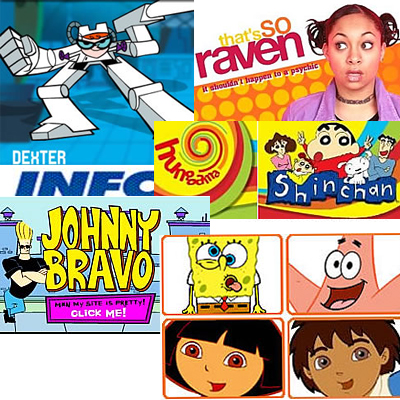
    An analysis of Tam’s six month kid’s score card (TG: CS 4-14 Years, Market: All India) provided exclusively to Indiantelevision.com, highlights key developments that the space has experienced. With the entire kid’s landscape changing, the consolidation of Disney with Hungama TV altered the dynamics, so much that the Turner duo (Cartoon Network and Pogo) were hit hard in the months of October and November 2006, clocking a combined market share of 39 per cent as opposed to Disney’s 52 per cent (Disney Channel 15 per cent, Toon Disney 16 per cent & Hungama TV 21 per cent).

    GENRE / CHANNEL
    15JULY-15 AUG
    15 AUG-15 SEP
    15 SEP – 15 OCT
    15OCT-15NOV
    15NOV-15DEC
    15DEC-30DEC
    01JAN – 13JAN 07
    TG: CS 4-14 Yrs Mkt: All India
     
    Cartoon Network
    25
    24
    24
    23
    24
    26
    28
    Disney
    Channel
    11
    10
    10
    15
    15
    14
    14
    Toon Disney
    18
    18
    20
    16
    14
    15
    13
    HungamaTV
    17
    18
    18
    21
    19
    17
    15
    Nickelodeon
    5
    7
    7
    9
    10
    9
    7
    Pogo
    23
    22
    20
    16
    17
    19
    23

    TAM peoplemeter system: Month on Month Genre – wise Relative Channel Shares (%)

    Although the ratings from July onwards point to a close battle between the two major players, it seems Hungama TV did the trick that fuelled such a massive jump. Speaking to this website, Hungama TV VP programming and production Aparna Bhosle explains that the upward inclination in ratings was actually kicked off with the seven month Oral B John Aur Kaun on-ground activity. “This was a sure reach builder for us and coupled with word of mouth it managed to get many kid’s to come onto the channel and even sample our other shows.”

    Walt Disney Television International (India) executive director production and programming Nachiket Pantvaidya points to a significant finding which sees older children being drawn away from GEC’s, sports etc. and back to kids channels, a challenge that all these broadcasters are working in collaboration towards. “The period that followed from June and July saw a rapid shift in axis towards a transformation of kids viewing habits. Primarily, two factors brought about this change, mainly older children moving to live action programming and secondly, the growing attraction among the 4-9 year age group towards anime.”

    Turner International India Pvt. Ltd. VP – advertising sales and networks, India & South Asia Monica Tata attributes the ratings dip in the months of October – November saying, “it is a known fact that the viewing intensity for kids channels peaks in summers and dips during other months.”

    But come January 2007 and Tam’s data unlocks revelations that have left all broadcasters (not just kid’s broadcasters) baffled! The expansion of Tam’s peoplemeters, coupled with Cas implementation and DTH seems to have thunder struck the newer players in the kid’s market and elevated Turner to the leadership position. As Tata aptly states, “The combined channel shares of Cartoon Network and Pogo in 2007 equal, if not exceed, the combined channel shares of all the other five kids channels put together.”

    While others may counter the argument by saying that with over ten years lead time Cartoon Network has obviously penetrated deeper into the Indian hinterland. But then what accounts for Pogo’s re-entry into the 2007 game, when it is also as old as its other counterparts?

    But the dark horse in the game, which is steadily galloping its way upwards, is Nick, Viacom’s till recently “orphaned” child (at least in India). Nick India VP and GM Nina Jaipuria says, “The challenge for 2007 is to consolidate and drive reach for the channel in India.” The data points to an alarming jump, where the channel has doubled its market share from 5 per cent in July-August to 10 per cent November-December 2006. Coinicidently, NDTV Media was roped in during the same period and has not wasted any time in ramping up activity for Nick.

    What’s strange is that for a player that touched Indian soil in 2000 and has been a forerunner in the International space for over two decades, it is only recently eyeing the advantages that the kid’s market in India has to offer. Nevertheless, it’s not too late and the channel boasts of being the stickiest channel in the latter half of 2006.

    The changing media scenario shaping the consumption patterns of viewers has got media owners biting their nails in anticipation for the next roll out of Tam figures. What seems to indicate a far more accurate measure of channel reach – except for the Turner pair, the others say that they will not totally consider the recent three week Tam findings as it will require a period of about three months to completely settle down and stabilize.

    Come what may the kid’s market is looking promising and according to Pantvaidya the market has grown from 10 to 25 per cent in two years and estimates that 2006-2009 will prove to be the years of expansion in the kid’s space and of course growth in the ad pie. Disney is of course clear on its ‘localization’ strategy that lends itself to animation, live action and on-ground events as being the way forward.

    With a specific agenda on the cards for each channel, will 2007 witness a bunch of kid’s quarreling in the sand? Bhosle thinks otherwise, “It’s rather myopic for players to compete within this small space; the huge fight will be to continue getting kids from other channels onto the kid’s channels.”

    “We believe that healthy competition will help the genre grow and channels will deliver quality entertainment to their audience. It’s the kind of content that makes all the difference and develops loyalty to a channel. A lot more original content in terms of movies and series is planned for the year. We will also provide a platform for content that other people make, through acquisitions. Besides quality programming, we will also try to build up on the events of 2006,” avers Tata.

    The playing field is ready, it is now left to see whether the kid’s market in India will mature to the extent that more than just two players are in the game, but rather multiple teams each delivering their expertise to keep kids glued!

  • RATINGS: Narrowing divide in the English news space

    RATINGS: Narrowing divide in the English news space

    MUMBAI: If the last six months’ TAM ratings in the English news space could tell a story this is what they would reveal:

    What started as a one horse market with NDTV 24×7 garnering the lion’s share of the pie saw two new entrants with CNN IBN and Times Now. Headlines Today, the English news channel from the TV Today Network continued to be in the shadows of Aaj Tak.

    But has the market dynamics changed with Cas in place? Certainly a better picture so far as the niche channels are concerned has appeared post Cas. NDTV 24×7, CNN IBN and Headlines Today have gone pay while Times Now has chosen to stay free-to-air (FTA) at least for the time being.

    CNN IBN, which started on a high note and even managed to equal market share with NDTV 24×7 (See table 15 Nov- 15 Dec) has stabilized at the end of one year and occupies the third position with a 20 per cent relative channel share (TG:CS AB 15+ years- 1 January to 13 January/ Market :HSM ). CNN IBN director marketing Dilip Venkatraman would only say that as far as CNN IBN was concerned, despite the numbers, he was confident that the “content quotient” of their channel was bound to bring in viewership. Also the “stickiness of viewership with the channel” is higher, he asserts.

    GENRE / CHANNEL 15 JULY – 15 AUG 15 AUG – 15 SEP 15 SEP – 15 OCT 15OCT-15NOV 15NOV-15DEC 15DEC-30DEC 01JAN – 13JAN 07
    ENG NEWS – TG: CS AB 15 Years + Market: HSM  
    BBC World 0 0 0 0 0 9 5
    CNN 8 0 0 0 0 0 5
    CNN IBN 23 30 30 27 33 18 20
    Headlines Today 15 10 10 9 11 9 15
    NDTV 24×7 38 40 40 36 33 36 30
    Times Now 15 20 20 27 22 27 25

    (Courtesy: TAM Peoplemeter System)

    Mindshare managing director Gautaman Raghotama believes that the increase in news channel shares is not so much a reflection of eating into each other’s share but eating into the channel shares of GEC. Mindshare is also the media agency for CNN IBN.

    Says Raghotama, “There is a definite movement of viewership from general entertainment channels to niche channels and especially news channels. The news genre is increasingly becoming a space for ‘infotainemt’. Look at how the Shilpa Shetty controversy was played out across news channels. It was as good as watching Celebrity Big Brother on a news channel.”

    “Another problem with the English news space is that at present there are no clear differentiatiors. So while the audience is slowly building a loyalty to certain news channels, the tendency is also to watch news on one channel and then breeze through the others for a different point of view.”

    “With Times Now and Headlines Today there is a connectivity concern.”

    Despite that concern, it is these two channels that one must watch out for in 2007. Times Now weathered a stormy year, to stabilize at the number two spot with a channel share of 25 per cent (See Table 01 January-13 January 2007). The channel achieved better clarity on its personality as a general news channel by slimming down the business band segment and focusing on what it called the ‘Big Story’ in the day, mentioned Times Now CEO Sunil Lulla in an interview to Indiantelevision earlier in the week. Times Now also led the pack in the TAM Elite Panel ratings.

    It is the minnow of the pack Headlines Today, however, that has switched gears into the fast mode with some good programming. TV Today CEO G Krishnan says, “Unlike General Entertainment Channels that get viewership spikes on tent pole programming – News Channels get a spike during big stories. Headlines Today has been able to effectively look at innovative wrap around content around big stories whether it is cricket, the Shilpa Shetty controversy or Abhishek-Aishwarya wedding to engage the viewers. In addition, shows like Entertainment Quarter, Sports Quarter are doing well for us. This week the time spent and the reach of the channel has increased by 50 per cent. We are definitely on the growth path and it’s heartening to note that more viewers are consuming our content for a longer duration.”

    Assuming that there is a potential clutter in this space would it be easier for network channels to woo the advertiser? Says Krishnan, “Headlines Today as a product caters to the metro-urbanite. Thus an advertiser is able to reach out to the younger metro audiences. From a sales strategy – we are able to optimize revenues by looking at a network approach. Now with the increase in viewership – we are also working on a stand alone strategy to maximize on the revenue opportunity.”

    What is noteworthy is that the market share for these channels is now more evenly divided. But does a 4-player market spell a cannibalization of the market share?

    “I don’t think there is a clutter in the news space with four channels in the fray. But is there space for a fifth channel? I would assume not. I don’t know if they will be able to garner channel share but what is certain is that the existing players will definitely find it tough,” says Gautaman.

    Madison Media Group CEO Punita Arumugam looks at the scenario optimistically as far as the ad pie is concerned?

    “Yes, the ER and growth rate will get affected but the genre itself will grow. Take a look at what’s happened in the kid’s channels market or the Hindi movies market. The market also grew as the players increased.”

    It’s anybody’s story so far as English news goes and each one of them must be looking at increasing channel share. But isn’t the English news channel market a niche within a niche segment.

    Counters Arumugam, “As far as the viewers are concerned what would happen is that as more and more choices are available within a particular genre, fragmentation is inevitable. But personally I don’t think this will affect any of the channels adversely.”

    “If you consider the profile of new advertisers that is already happening as the market sees an explosion. The FMCG sector is looking at this genre more aggressively. Also a healthy competition between the four channels would see advertising rates become more competitive.”

    Gautaman agrees that FMCG players are moving out of the GEC bracket and looking at niche channels.”The English news channels targeted at the affluent, metro consumers will certainly benefit from this shift. Local operators and retail clients will also look at this genre closely. Besides much of this money will have to come from GEC’s and other media options. There will be a rearrangement of revenue to various genres,” he says.

    Krishnan surely speaks for all channels when he says, “The operating principle for all advertisers is – “Have viewership – Will advertise”. He further adds, “With Headlines Today being on a growth path in terms of viewership, advertisers wanting to reach out out to the younger affluent metro audiences will look at Headlines Today as an ideal platform.”


  • Tam increases number of peoplemeters to 6917

    Tam increases number of peoplemeters to 6917

    MUMBAI: Ratings measurement service Tam is in expansion mode. Earlier this month it came out with an Elite Panel for Mumbai and Delhi. The aim is to measure what the creme de la creme consume.

    Now it has increased the number of peoplemeters in the country. The number of meters have been increased from 4800 to 6917, a 44 per cent rise. The aim is to deepen the coverage to more towns.

    This Peoplemeter Update marks the second stage of the TAM expansion project. The first stage was executed to broaden the coverage from 5 states to 12 states but within the existing reporting stratum (0.1 Mn+ population stratum). The second stage is to deepen the coverage to more towns within the less than 0.1Mn+ stratum for all markets covered in stage 1.

    This expansion marks the conclusion of the second step of the entire expansion plan.

    In addition, improvements have been made in the design to take into account the changing demographic and media landscape that results in a higher precision of the viewership estimates.

    The number of cities Tam covers has grown from 73 to 151. In terms of expansion in the Metros are as follows: while earlier there were 450 homes measured in Mumbai now there are 495; in Kolkata the number has risen to 330 from 265. In Delhi it has risen from 425 to 470; in Chennai, Bangalore and Hyderabad it has grown from 255 homes in each of them to 280.

    In terms of how the sample sizes across markets were determined, Tam India CEO LV Krishnan says, “A range of factors influence the sample size allocation of the overall sample across markets. These include the desired depth of analysis, availability of sufficient sample sizes for commonly analysed target groups and a desired level of statistical precision.

    “While markets are analysed by two strata (1 million+ and 0.1 – 1 million) for sampling purposes the 0.1-1 million is broken into 0.1-0.5 mn and 0.5 mn – 1 mn. For the expansion, the 0.1-0.5 mn was broken up further into 0.1-0.2 mn and 0.2-0.5 mn.”

    In terms of the SEC distribution, 33 per cent of the sample homes measured in Delhi are SEC A. In Mumbai, Kolkata and Chennai it is 25 per cent. The representation of SEC D and E is highest in Mumbai and Kolkata at 32 per cent. At an all India level it is 28 per cent for SEC D and E. SEC A and B have a 25 per cent representation each. SEC C has a 21 per cent representation.

    The presence of children was included as a new control parameter for the expansion. This paramater, Tam says, ensures that the proportion of homes in the sample with kids 4-9 years and 10-14 years matches that of the universe. In terms of new markets being introduced in the new Tam panel data, two changes have been seen at a market level.

    Firstly West Bengal 1mn+ is a new market strata that has emerged due to towns moving up to the 1mn+ population bracket. Then Rajasthan, which was earlier reported as Rajasthan 0.1mn+, has now split into a two market strata i.e. Rajasthan 1mn+ and Rajasthan 0.1-1 mn.

  • Tam’s Elite Panel data goes live

    Tam’s Elite Panel data goes live

    MUMBAI: It has taken quite a while but media research agency Tam has finally got its Elite Panel up and running.

    This latest value addition for the Indian TV industry will measure the TV viewership behaviour of the crème de la crème of the Mumbai and Delhi population.

    An Elite Household in the panel is defined as one which is SEC A1 owning AC & PC & Car.

    Tam’s Elite Panel is a mix of cable, DTH and Cas homes. The Indian Elite Panel captures the nuances of TV Viewing among the top three per cent of the Socio-Economic strata in Mumbai and Delhi. Tam Media Research CEO LV Krishnan says, “Across the globe, all Elite consumer media studies are recall based survey measurements. Very few attempts have been made to measure this exclusive set of consumers through a continuous panel based method. Tam’s Elite Panel is the world’s first such study to understand Elite consumers’ TV viewing habits.”

    “At this moment of time, I would like to thank every senior member of our industry who gave us a patient hearing, offered us valuable suggestions and stood the test of time to finally see the industry project through. What I am even more pleased about is that, throughout the two years it took us to implement the industry proposal, Tam received support from all constituents of the industry.

    The key question is how is this development viewed by the industry. Star India president, ad sales and distribution, Paritosh Joshi says that while he has not yet seen the numbers, in principle the Elite Panel together with Cas represents a strong plus for channels like Star Movies and Star World that target the affluent segment. “They will be able to offer more demonstrable numbers to clients. More and more brands that target the upmarket audience from sectors like hospitality, finance, automobiles, apparel and lifestyle are looking for the right media vehicles. This development will allow them to do that.”

    Zee Network’s ad sales head Joy Chakraborthy feels that the introduction of the Elite Panel is better late than never. “It is not fair that unique channels are measured in the same way as the general entertainment channels. That situation will change. So far unique channels have been bought on the basis of perception rather than on reality. It was a case of ‘if I am watching it then others must also be watching it’ scenario. This issue will now get addressed. We are still examining the data though, as we only just got it.”

    On the media side Starcom’s Manish Porwal was happy that the long awaited development had finally happened. “While we will wait and see how it fares in terms of consistency, the fact that it has happened is good news for the niche channels who will now get better exposure. Their representation earlier was small. It certainly allows us to look at the niche English genre with finer lenses and also allows us to better qualify the upmarket audience segment.”

    Spatial Access’ Meenakshi Madhvani says that so far the television ratings system has basically catered to the lowest common denominator i.e. the masses. Now though, one will hopefully get a better idea of what the small in number but important affluent consumers are watching. “It will allow us to get a better fix on the affluent viewers. Also the disadvantage that the niche channels had in terms of not having the numbers to show will not be there.”

    One of the additional USPs of the panel is that it has deployed the state-of-the-art Digital TVM5 peoplemeters. Commenting on this, Tam Media Research VP Pradeep Hejmadi says, “The Elite Panel comprises of homes receiving channels through a mix of Analogue cable, Digital set top box (Cas) and Direct –to-Home (DTH) platforms, making this the first technology-hybrid, platform neutral TV study.”

    Tam adds that across the globe, all Elite consumer media studies are recall based survey measurements. Very few attempts have been made to measure this exclusive set of consumers through a continuous panel based method. Tam says that its Elite Panel is world’s first such study to understand Elite consumers’ TV viewing habits.

  • ‘Consumer annoyance with intrusion in their space will take a new turn’

    ‘Consumer annoyance with intrusion in their space will take a new turn’

    Spatial Access Solutions managing partner Meenakshi Madhvani, while reviewing the predictions she made last year as to what the critical drivers in the television and media space would be, comes away pretty satisfied, and does some more crystal ball gazing…


    If there’s anything more challenging than predicting the media scene in India, it’s reviewing them a year later. It does feel good though if you are more right than wrong on your own predictions. Here’s how the reality played out in 2006 and some more predictions for 2007.


    Technology and its impact


    As predicted, the impact of technology on communication in 2006 was rather limited. Consumer pull rather than organizational push continues to determine the rate of acceptance and dissemination of technology. 2007 will see the adoption of newer technology but again, this is likely to be at the very top of pyramid. CAS may be pushed through by legislation but 3G, TiVo and wi-fi zones still appear to be a while away. Value-added SMS services though are likely to thrive.


    Consumers’ annoyance with intrusion in their space will take a new turn. We don’t think consumers are convinced that a “Do Not Disturb” option keeps pesky telemarketers at bay. In 2007, consumers will hit back. Beware all marketers who think they can intrude on consumers’ privacy and get away with it!


    The television medium


    Last year we had predicted that the television media owners would look at sampling the product and then worry about revenue. The resultant of this would be longer gestation periods and fewer media players who will want to enter the space on a whim. True enough, 2006 has seen no significant launches as far as television is concerned.


    To a great extent, this is also impacted by the lack of differentiation in product offerings. We had thought Times Now had the potential to make a dent in the English news segment but it doesn’t seem to have done as well as its competitors. Sticking to the basics though has meant that a NDTV 24×7 continues to hold its own and a CNN-IBN has created a niche for itself.


    We had also mentioned that those who do come in will be serious players with deep pockets. Our prediction that Disney’s entry would make players like Hungama feel the heat couldn’t have been truer. Disney went on to acquire Hungama!


    In 2007, we see major players attempting to build adequate critical mass and then leveraging on it. This could either mean acquisition of existing channels or launch of new ones to fill gaps in their content offerings. NDTV and their proposed general entertainment channel is a case in point.


    This brings us to the point on media companies who sought public funds for consolidation and expansion. 2007 should see a lot more activity in each of these companies. While entities like NDTV and TV18 are seen to be active, some like Mid-Day appear overdue for a significant expansion.


    We had also predicted that television channels (especially the bigger ones) would not be able to hold on to their advertising rates. This too is turning out to be true. The reasons are not hard to find: lack of differentiation and consumers drifting towards more compelling (read niche) content. Already, we see the effective rates for some top rated Hindi soaps dip by as much as 30% over the last quarter. On the other hand, niche content channels have been able to hold on to or slightly better their effective rates.


    The internet


    Last year we had predicted that the internet is going to come into its own in 2006. That has failed to happen or at least failed to match our expectations. 2007 should be year for advertisers to fully wake up to the potential of the web and for web marketers to accelerate the process. Failure to do so may result in advertising monies getting diverted to the “new” medium on the block – FM radio.


    FM radio


    Last year we had mentioned that 2007 and not 2006 will be the year of the radio. Though a few stations have managed to go on air, 2007 will see the complete roll-out. We believe the sheer numbers of channels present and the pressure to deliver a differentiated product will see a few exciting programming formats being developed.


    A contentious issue on radio is research data or the lack of it. We see a TV like situation developing where there may be more than one “industry” data source. The only way to avoid multiplicity of research data is for major players to come together and push the agenda for the industry. This also means that the only available research data, the ILT, needs to expand its coverage to more areas to be relevant to the radio channels and advertisers.


    Print


    The growth of smaller towns into bigger metros will result in more action for newspapers. While this means higher readership, it also means higher advertising costs. Newspaper publishers’ insistences on maintaining a low cover price mean that they are almost entirely dependent on advertising revenues to sustain the venture. Subsidizing cover price only works when there is adequate advertising support. Unfortunately, not all editions may be advertising money spinners. To make newspaper publishing a viable venture, newspapers will have to find a way to rationalize their cover price.


    Interestingly, the magazine scenario in India has become more active than ever before. While newspapers seem to be reaching new lows as far as cover price is concerned, magazine publishers, specifically those specializing in niche content, are intent on making circulation revenue a viable source of income.


    2007 may be too soon to expect newspapers to rationalize cover price but do expect magazines to up their cover price and consolidate.


    While at one point, newspaper supplements almost dealt the death blow to magazines, over a longer time period, the tables may turn. One factor is the size of operations. The bigger a newspaper grows, the more difficult it becomes to cater to specific reader groups and the more expensive it becomes to an advertiser. The cost of creating a 16 page supplement is soon not going to be justified by the ad revenue it brings in!


    The other factors are the speed and depth of coverage. Here, newspapers will get caught between news channels and magazines. And accelerating that process once again will be the consumer who demands what he wants rather than remain pleased with what he gets. Isn’t it ironical that some newspapers actually have magazine inserts these days?


    Other predictions


    An unlikely fall-out of segmentation of media is that we are likely to see more working relationships between players who are not in direct competition to each other. There is even likely to be greater co-operation between direct competitors, like India Today and Outlook, to protect their turf (magazine advertising) and grow it. A similar trend may be observed in radio.


    With consumers now buying around the year, traditional advertising peak periods, like Diwali, may well be on the decline. This can have serious ramifications on budgeting exercises for advertisers as well as the media.


    A shake out on media research seems likely in 2007. aMap versus TAM and NRS versus IRS are the two big title fights.


    Media agencies will continue to face a tough time, all of their own making. Dwindling avenues of compensation, advertisers seeking better ROI, Greater acceptance of the need for media audits, more aggressive media houses and man-power problems will continue to plague Media Agencies.


    With specialists emerging for each degree of the much abused 360 degrees approach to marketing, one wonders what will happen to the traditional media planner. However, all the specialization does present a great scope for people who specialize in multi-tasking to hold all of these activities together. Maybe the much abused client servicing person will be back in the spotlight, for the right reasons this time around.


    By the way, this is another prediction. 2007 will see the resurgence of the Account Executive – he will now play the role of the aggregator! Smart agencies will fuel this need among advertisers and help advertisers manage the process. Smart Agencies have realized that if you cannot get your client to give you all his business, lock stock and barrel, you keep an eye on the outflows and monitor where the money is going. For this you need sharp servicing!


    Finally, 2007 is a year in which we hope issues plaguing the industry are not swept under the carpet but addressed. (We at Spatial Access will be doing our bit to add transparency to the Industry)


    The rot, as they say, may be deep rooted but we need to make a start somewhere. And 2007 just seems right for it.

  • Generation leap takes ‘Kahaani…’ atop ratings heap

    Generation leap takes ‘Kahaani…’ atop ratings heap

    MUMBAI: The leap theory has delivered yet again for India’s lead Hindi entertainment channel Star Plus. The channel’s second biggest show Kahaani Ghar Ghar Kii’s generation leap episode (Week 46 of 2006) has garnered a whopping 15.3 TVRs to top the ratings charts.

    The Wednesday episode reached out to more than 12 Million viewers (Source: TAM, Base: C&S 4+, Hindi Speaking Markets). This is a record-breaking ratings of sorts because no other show this year has delivered such phenomenal ratings, a statement issued by the channel claims.

    Star Plus overall week-day as well as weekend prime-time has simultaneously improved – with a total recorded growth of 14 per cent over the previous week.

    Additionally, the channel’s recent launch – Karam Apnaa Apnaa – has also performed well by touching its highest average rating of 6.93. Out of the weekend programming pool of Star Plus – Sai Baba has recorded the highest ratings of the year with 7.22 and Prithviraj Chauhan also has touched the highest ever rating of 8.55 TVR, the channel asserts.

  • TV measurement service aMap announces all India coverage with 6,000 Peoplemeters

    TV measurement service aMap announces all India coverage with 6,000 Peoplemeters

    MUMBAI: Two years after launching its television ratings service in the country, Audience Measurement and Analytics (AMA) has announced that aMap, which provides data on overnight viewing, has installed 6,000 meters in India.

    In addition to the 28 markets already being measured, aMap is now present in three more markets Jammu, Guwahati and Bihar and Jharkhand.

    aMap CEO Tapan Pal says, “Currently, ten (broadcast) clients buy our product. We have also launched a fastrack service for our clients. This reports on viewership patterns during a significant event. For instance around 27 million people across India watched the Semi-Finals of the ICC Champions Trophy.

    “While these numbers are lesser than what the India matches got, they are considerably higher than the number of people that previously saw neutral matches. I would say that while our price might be higher than the competition (Tam) it is a question of the value one offers. One can slice and dice information in many ways. For instance one can check out what students watch and if o0ne wants to slice further one can see what an a student who speaks English watches versus what a student who speaks Marathi watches. We thus go beyond basic demographics

    “Also our service allows broadcasters and advertisers to constantly stay in touch with the consumer. The resistance from certain quarters to another ratings product will I am sure come down. Already there are another 50 channels who are keen on using us.”

    Pal notes that often there are differences in the ratings that aMap throws up versus what Tam shows. For instance the time spent on the niche channels like HBO, Star Movies is higher in aMap’s analysis than what Tam data shows.

    One show that delivered hugely divergent ratings on aMap and Tam was the Sa Re Ga Ma Pa L’il Champs finale live event which aired on 28 October. Tam data indicates that L’il Champs delivered for Subhash Chandra’s flagship channel Zee TV a whopping 11.1 TVR, rocketing it to the top of the charts for that week. On the other hand, the aMap rating for the show was just 4.7 without the ad break and 4.1 with the ad break included. The data was generated for C&S 4+ for north, west and east. “We are confident about our numbers,” asserts Pal.

    Confident he may be, but such disparities only make the already increasingly complicated job of media consumption analysis that much more difficult.

    aMap director Francis Howard said, “We are committed to the Industry in continuing with the most robust and sophisticated system that addresses the needs of the changing mediascape. We are now present all over India. Introduction of the three new markets of Jammu, Guwahati and Bihar and Jharkhand will give path-breaking insights into hitherto unreported markets. aMap ensures that it is large enough to capture the smallest nuances of the market.”

    “We proceeded in a deliberate manner in adding peoplemeters given the fact that the distribution landscape is changing. Ideally one would want 20,000 meters in three years. We also have plans in radio which we hope to surprise the industry with,” he asserts.

    Of course there is the question of how agencies related to WPP, which co-owns AGB Nielsen Media Research, the parent company of Tam Media, will respond to aMap’s product. aMap MD Raviratan Arora says that while it faces an uphill task in this area, he is confident that firms will accept a product that offers more targeted results. The idea that a monopoly is good in the ratings services industry is a fallacy, Arora argues. After all innovation will not happen unless there is competition, he points out.

    He still has to convince the industry on that score though.

  • ‘Our competitor is the number one player in the pink daily space’ : B Sai Kumar – TV18 Media Network CEO

    ‘Our competitor is the number one player in the pink daily space’ : B Sai Kumar – TV18 Media Network CEO

    Television Eighteen has been on the acquisition mode for a while now to create more revenue opportunities for its shareholders. After creating a new division for marketing and ad sales TV18 Media Network, its CEO B Sai Kumar has chalked out a strategy, which is to emphasise on all the TV18 products in terms of delivering value to shareholders.
    Sai Kumar is trying to position the TV18 brands in such a manner that they will continue to achieve consistent and profitable growth. TV18 Media Network has also conceptualized ‘CNBC Universe’ for such concerted activities for various products.
    In a free wheeling conversation with Indiantelevision.com’s Manisha Bhattacharjee, Sai Kumar speaks of the TV18 brands, and how they will make a measurable contribution to earnings.

    Excerpts:

    Why has TV18 created an umbrella brand called CNBC Universe?
    It has been named so to denote all brands that the group controls. Through products and brands like moneycontrol.com, which is the second best portal globally, commodities.com, compareindia.com, CNBCTV18, Awaaz and the mobile service of 2626, we are telling people that TV18 is an integrated business platform for advertisers and viewers.

    It helps us demonstrate the power of the CNBC Universe platform and shows a tangible integration of different media offerings. It is also about reaching out to multiple communities — from retail investors to foreign institutional investors and even company managements. CNBC Universe is about how much more you can dominate in the business space.

    With the kind of growth our network has seen, the challenge is now to do justice to individual products, individual streams. If you look at the television part of the business, I am extremely kicked about the prospectus of CNBC Awaaz as we have touched operating break even. Of all the elements of CNBC Universe, CNBC Awaaz is the joker in the pack. On the revenue side I see at least 100 per cent growth for the quarter.

    Why do you say the business space is all about influence and not as much as viewership delivery?
    For me, if today CNBC Universe is a Rs 150-160 crore brand, you can only go out and make it Rs 250-300 crore brand. This despite the money that’s getting into print medium. That increasingly is going to be very, very big. So, one of the big reasons for pushing CNBC Universe is to leverage a strong position across television and internet.

    Are you indicating that despite being in the television space, your main competitor is the print medium, pink dailies to be precise?
    Anybody could be your competitor. But if you were to prioritise our efforts at CNBC Universe, it has got to be seriously looking at the pink dailies and the number one player in that segment. Also, from where such dailies get revenues. Indeed, our biggest competitor is the leader in the pink space.

    Has TV18 started working with TAM to address the out of home viewers?
    We have to live by the rules of the game. It is not much of a concern as every advertiser knows that there is a premium to CNBC TV18 as there is some amount of factoring is happening in the minds of the buyers and the clients.

    Have you identified the strong holds of the pink papers in order to wean away advertisers and clients?
    We are going to advertisers and saying that CNBC Universe or CNBC TV18 is country’s largest business medium and not just a business brand. So we are actually telling them that it is not about print vs television. It is about which is the largest medium today. Beyond a point we cannot change people. For instance, it is very tough for advertising relating to obituaries coming to CNBC TV18.

    CNBC Universe is the country’s largest business medium and not just a business brand

    What’s happening on the global front?
    Of course we are addressing that also. Today we tell our clients that as part of CNBC Universe, we offer you CNBC global, which is present across 89 markets. If you are an advertisers and your TG is broadly people who spend money or are investors or CEOs, or analyst, then come to the CNBC Universe.

    What’s the reason behind TV18 initiating a restructuring in its marketing and ad sales set up?
    The media market is a cowboy’s game where structures didn’t exist. We have put a structure of people clearly with a mind to consolidate television revenues business. We have grown almost perpendicular in terms of revenues and for now we need strong leaders to manage these revenues. So, on the television side of the business we have Raj Kamath to oversee inventory sales for the entire TV18 Network. Sanjay Dua will be responsible for advertising sales for the IBN Network – which includes CNN-IBN, IBN-7 and Ibnlive.com. Anil Uniyal has been named as the sales head of the CNBC Universe.

    I will continue to oversee CNBC Focus which is our non-inventory solution cell that reports into Anil, but he will still report into me as I am still involved in that part of the business. And I continue to be involved in the internet side of the business.

    Web18, which comprises moneycontrol.com, easymf.com, commoditiescontrol.com, compareindia.com and tech2india.com, will be handled by an independent team working on this. We already have a 12-member team in place with Raghavan Srinivasa handling internet sales.

    What is the kind of growth the internet business has seen over the last quarter?
    We have seen growth that is almost close to 120 per cent quarter on quarter. That’s not saying much as it can grow further. The medium per se is growing. It does not mean that we are not doing a great job. For us now it is not only about joint sales with television but independently growing the Internet side of the business too.

    How are you pushing your online properties — content or packaging?
    Just as we have done on television with a lot of tailor made solutions, we intend to proceed with the same on the net. We have opened up with live stream, canned stream, running television ads, (like MSN TV), but we do not give it free. It is an independent sales team handling it. As far as powereyourtrade.com goes, we already have 65,000 subscribers, that’s another line of revenue on internet paying us an average of Rs 150 per month.

    So are you indicating that it is content that drives ad sales and marketing activities?
    If you look at TV18, our biggest asset has been content. It is content lead. Ad sales are all about how you leverage content and not influence your content. For example, if I have a CEO interview, I just don’t put a banner. If you brand that CEO interview and go to a B2B player, like a Sun Microsystems, and get it to host an online interview with other CEOs, then that’s adding value and going beyond banner sales. The new mantra in the group is to add value for customers.

    Our biggest challenge is to do justice to individual brands in the TV18 stable. We had to work out a structure by which these brands get adequate attention and well lead by clearly thought-out strategies. So, each of these professionals have the mandate to take business decisions independently.

    What kind of network solutions are you providing for your clients?
    Everybody wants network solutions, the moment you manage more than one channel everybody wants discounts. We have individual teams who go and talk to the clients about the attributes of the brands. We ensure that the channel for example; IBN 7 is taken on its own merit and independently on its plan. Not because he is getting five per cent discount on CNN-IBN. We don’t go and say that CNN-IBN is established, which cost you Rs 100, but you will get it for Rs 90 if you take IBN7 also. That does not happen with us.

    Are you saying that the network does not indulge in combo deal?
    We do any kind of sweetening of the deal if we have a giant share of the news pie. For example: if the client has Rs 100 to spend on the news genre and if I am getting Rs 75, we are ready to sweeten it, otherwise not. We do not sweeten the deal because the client has taken all the four channels. There are some grids in place where, if you take all four channels, you may get some per cent off, but that’s like any rate card. But anything over and above depends upon how much you are dominating the plan, vis-?-vis other news networks.

    Which product in the CNBC Universe needs pushing?
    The best thing about TV18 is that it is not even close to peaking. The biggest fear any person would have who is responsible for revenues is to think of the way forward. But at TV18, almost all our products are on the growth curve. For example, IB7 can only go up from where it is. It is a new product and it can only go up from where it is and I can see growth in revenues. Ibnlive.com and the ones we have acquired or are just getting acquired are attracting traction in the market place.

    The market place has started embracing the internet only recently, so it can only grow. CNN-IBN had an excellent launch, but no way close to the peak. That’s why my question is: what is NDTV going to do next as they have already touched between Rs 90 crores to Rs 105 crores with NDTV 24×7. For CNN-IBN, it is only going to be 100 per cent growth over the next one year.

    Well, that’s because CNN-IBN’s base is small?
    No. The base isn’t that small. We have already achieved operating break even with CNN-IBN business. At any point in time, while we are creating new strategies, they push down our products leaving room enough for growth. TV18 is creating potential for generating more revenues streams.

    For example, I would be extremely concerned if I was running Star Plus. What do you do next when you have already achieved Rs 1,500 crores. Last year, I did Rs 150 crores and there are expectations the entire network may touch Rs 250-Rs 260 crores.

    TV18 has been very aggressive on the acquisition front, especially in the online space? Are you looking at converting any of your online properties that will be largely leady by subscription?
    At this stage it is too early to speak much about it. But we are contemplating creating a portion of moneycontrol.com for subscription opportunities, but it is too early to speak about the plans. Jobstreet.com may look at starting advertising sales once it gets established and the placement revenues kick in. But, subscription for the rest of the online properties, it is too early to say anything.

    You are now the TV18 Media Network CEO, besides overseeing the sales aspects of TV18 properties, are you looking at venturing into commission business?
    TV18’s philosophy is to own IPRs. We will sell what we will own, unlike our competitors who get into the ad sales model. For example: If we make Moneycontrol a 20 crore or 40 crore story, we need to own it. There’s no point in making it a 20 crore (story) for somebody else to own. We are into building long term brands, which add value to the shareholders. If I do sales for ‘A’ product, the brand is built and the shareholder of that product gets to reap the benefits.

    TV18 has moved from a production house to a broadcast house, why? Because we wanted to own our content. In the production space you are selling your content and getting dwindling margins. But in the broadcast space, you own every piece of news that’s going up and this is monetizable and encashable in various forms.

    We are into brand building, product building and business building. We are not into selling. TV18 is an integrated company.

    What does CNBC Universe mean to the advertisers?
    Purely from the editorial side, it is leveraging through the multiple media platforms. From clients’ point of view, he is exposed to non-inventory solutions to our events division; we do around 140 to 150 events a year. We can get the elusive and the affluent audiences on to CNBC TV18, moneycontrol.com.I tell my editors, ‘Dominate the minds of the viewers’. The same thing I tell my advertisers, ‘Come here. It is one stop shop where you can catch every investor, business user, decision maker in the country’.
    Whether they are sitting in the car, or they are money controlling in their office, or they are at home watching CNBC. That is what an advertiser wants to do, he wants to catch the same guy in multiple locations and enter their mind space. If you can’t catch him anywhere, you can catch him at the CEO cocktails at The Oberoi through CNBC events.