Tag: TAM

  • TAM: Arvind Sharma asks broadcasters to be patient as changes take time

    TAM: Arvind Sharma asks broadcasters to be patient as changes take time

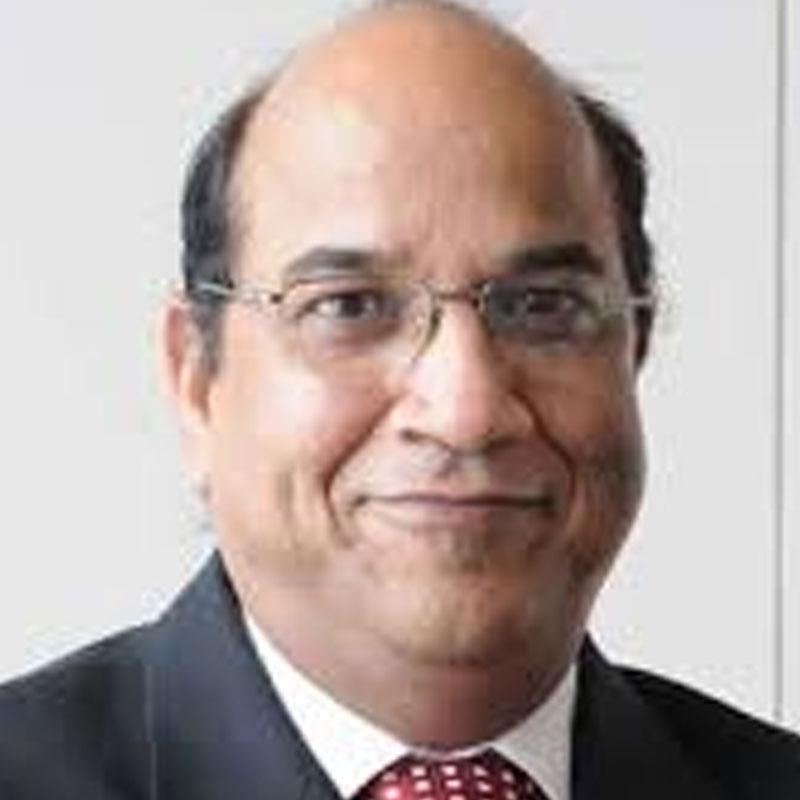
    MUMBAI: Television broadcasters need to have patience as all the stakeholders are taking steps to move to a system of audience measurement acceptable to all, said Advertising Agencies Association India (AAAI) president Arvind Sharma, while speaking exclusively to Indiantelevision.com.

    Sharma’s counsel of patience follows outright rejection by broadcasters of the proposals forwarded by TAM Media Research to fortify its existing television ratings system.

    Sharma is pinning hopes on the proposed Broadcasters Audience Research Council (BARC) becoming operational in the next few weeks. A monitoring team constituted by BARC will then make sure that TAM carries out the commitments it has made.

    AAAI and Indian Society of Advertisers (ISA) had a meeting with TAM officials on 16 August during which the television ratings provider outlined a six-point action plan.

    The six steps outlined by TAM include appointment of a security officer and a security agency, expansion in the number of peoplemeters in six top metros, an industry review of the research processes, independent audit of outlier homes, faster rotation of the peoplemeter homes and setting up of an internal audit team.

    AAAI is hoping a meeting of AAAI, ISA and Indian Broadcasting Foundation (IBF) will happen in the next few days to finalise the modalities of setting up and making operational BARC.

    Sharma said, “I completely understand the growing skepticism. It is only action and demonstration of action which will change skeptics into believers in the sense that something is happening.”

    “In real terms what will happen is that we are hoping that BARC will be created within weeks and there will be a team from BARC which will monitor the progress closely,” Sharma added.

    His argument is that unless the industry has the ability to monitor the progress in improving the audience measurement system, any timelines will make no sense.

    Sharma said he hopes a BARC team to monitor audience measurement is put in place pretty soon.

    Asked about how media agencies not present at the meeting on 16 August and those who are not a part of either AAAI or ISA can be taken into confidence, Sharma had this to say: “The Joint Industry Body (JIB) which was supposed to be guiding TAM has not been functional.”

    He said the fact that TAM has specified some definite action steps was in itself a good signal. “The rest will be up to BARC to assess whether the proposed steps are adequate for the short run and make sure that they get implemented.”

    About a decade ago when there were two suppliers of television ratings – INTAM and TAM, each had their own specific number of meters. The industry stakeholders at that time decided to pool in their resources instead of paying money to two agencies and make the study more robust.

    The problem arose when a list of some peoplemeter homes was leaked and then allegations of manipulation of data were made. “So, if a (television) channel wanted to play mischief, it could target three or four peoplemeters homes through extra activations and that would make a huge difference”, Sharma pointed out.

    The JIB, when it was functioning about a decade ago, had laid down a lot of processes and rigorous rules for how the sampling would be done and had also introduced electronic checking,
    validation of data, etc.

    “Associations have to follow their processes. We just have to be a little patient in letting things fall into place. We are definitely moving forward. I am sure of it. The whole point of having associations is to carry members along even though the solutions may take longer to reach,” Sharma said.

    His philosophical view was that people involved ultimately accept the changes even if it takes a little longer.

    Also read:

    TAM proposals fail to enthuse broadcasters

  • NDTV effect: TAM lists 6 action points to plug loopholes

    MUMBAI: TAM, the television ratings provider, has assured the Indian Society of Advertisers (ISA) and the Advertising Agencies Association of India (AAAI) that it will work on a six-point action plan to plug loopholes in the system.

    The assurance was given at a meeting ISA and AAAI had with TAM on Thursday, 16 August to obtain facts about the audience measurement system. The meeting was held in the backdrop of broadcaster NDTV‘s suit in the US against TAM and its parents Nielsen and Kantar, claiming the ratings were fudged.

    During the meeting, TAM shared its perspective with ISA and AAAI and outlined the following six key action steps:

    • Appointment of a security officer and a security agency
    • Expansion in number of meters in the existing 6 top metros
    • A review by the industry of research processes that determine what TAM reports in its weekly reports. And what meter homes are left out of reporting for being data outliers
    • Getting the outlier homes independently audited
    • Faster panel rotation
    • An internal audit team to be put in place as soon as possible

    In a joint statement, AAAI president Arvind Sharma and ISA chairman Bharat Patel said, “As key users of audience research data, advertisers and advertising agencies need to know facts directly from the research agency. And if there are challenges at any level in the research, the research agency needs to share its proposed action plan with us.”

    They further said, “We look forward to speedy implementation of the six action steps outlined by TAM. With formation of Broadcast Audience Research Council-BARC on the anvil, it will be appropriate for us to request BARC to review if these steps are adequate.”

  • TV channels paid, TAM officials accepted bribes: NDTV’s whistleblower

    Mumbai: Some television channels pay bribes to have their viewership ratings falsely boosted. Those who help the television channels in subverting the ratings system are the ones who are supposed to be the flag bearers of the television ratings agency’s noble duties.

    These are the allegations made by broadcaster New Delhi Television Ltd (NDTV) in its lawsuit in New York against Nielsen, Kantar, their Indian joint venture TAM and their senior officials.

    The basis of the allegations is revelations by a consultant, who provided on ground services to TAM. NDTV claims the revelations were made at a meeting of NDTV, Nielsen and Kantar officials on 20 January 2012. Robert Messemer, chief security officer at The Nielsen Company, was also present at the meeting.

    NDTV has referred to the unidentified consultant as the whistleblower. A whistleblower is a person who reports illegal activities going on in an organisation. But the consultant is, in fact, an approver having admitted to accepting bribes himself. The consultant said he accepted bribes from TV channels and in turn paid bribes to TAM officials and to some of the people who have allowed TAM to install peoplemeters at their homes.

    According to the lawsuit, the whistleblower consultant told the officials present that he was even successful in bribing TAM officials to have a peoplemeter installed at his home. The norms disqualify the consultant from having a peoplemeter deployed as the consultant belonged to the television industry.

    NDTV said the 20 January meeting was also attended by Piyush Mathur, president, India region, The Nielsen Company.

    NDTV subsequently said that at a meeting on 11 April 2012, the representatives of Nielsen and Kantar had “unequivocally admitted” that the information provided by whistleblower consultant was highly credible.

    NDTV has supported its claim of television channels paying a bribe through the admissions of an unnamed employee of a broadcaster that indulged in illegal gratification. It said on 24 February 2012, (the employee of) a broadcaster, whom it did not identify, met NDTV officials Rahul Sood and Kirandev Hiremath.

    The broadcaster employee told the NDTV officials that “his channel was involved in corrupt practices to fix ratings.” He even named a cable operator from Hassan in Karnataka, who acted as a consultant for fixing ratings for his channel.

    To support its allegation that TAM officials were prone to manipulation, it has referred to a meeting its representatives — Rahul Sood, Sidharth Barhate and Anand Mohan Jha – had with two field staff members of TAM on 3 April 2012 at Ramada Plaza Hotel at Juhu in Mumbai. NDTV has not named the two employees in its lawsuit.

    NDTV claimed the TAM employees told its officials that they were willing to manipulate TAM ratings in Mumbai. The two employees claimed to have manipulated ratings for other channels in the past and were willing provide the same “services” for “any” channel that was ready to pay the demanded consideration (bribe).

    They were confident that they could triple channel ratings of NDTV in Mumbai over a period of two to three weeks in the required target group. They said by paying a bribe of $250 to $500 per household per month, the TAM households could be made to watch only those channels which they insisted upon.

    NDTV said the Ramada Plaza meeting was viewed by an external surveillance agency, which took photographs of the employees. Those photographs were shown to Bob Messemer in New Delhi on 27 April 2012.

    On 11 and 12 April, NDTV said its representatives were provided information by Nielsen and Kantar officials that there were cases of several field employees who had refused promotions for last few years simply because at their current positions their alternate source of income was higher than what their salary would be on being promoted.

    Nielsen’s security chief had admitted that proper security practices were not being followed by TAM and that theft and leakage of data was rampant. He had also admitted that in India, the entire system was corrupt from top to bottom, NDTV claimed.

    Subsequent to the meetings held in New Delhi in April 2012, Puliyel, a director on the Board of TAM and a Kantar official, wrote an “evasive” email on 19 April to NDTV, with copy to Piyush Mathur of The Nielsen Company, merely mentioning that there had been a board meeting of TAM and they were doing some additional analysis on reporting samples by channels to examine the threshold for reporting and frequency of reporting, etc.

    NDTV said there was no mention in the email whether the TAM board had even considered stopping the release of “what had now been confirmed” as corrupt television viewership data, as was agreed at the meetings held on 11 and 12 April.

    These instances, if proved to be true, would mean TAM did little to weed out corruption despite years of efforts of NDTV. TAM would have also violated the Nielsen Code written in 1931. Impartiality, thoroughness, accuracy, integrity, economy, price, delivery and service are the hallmarks of the code.

  • Hindi GECs shed GRPs, Sab alone gains

    MUMBAI: In a week when the other GECs lost or maintained GRPs, Sab from the Sony Entertainment stable was the only channel to notch an increase when its numbers rose from 132 to 138. While Sab gained, its bigger sister channel Set shed some 29 GRPs at 206, even as shows such as Bade Ache Lagte Hain, Crime Petrol, CID, Kya Hua Tera Vada lost numbers.

    As per TAM data (HSM, C&S 4+) sourced from Hindi GECs, Star Plus managed to retain its number one position even as it lost nine GRPs at 243. It‘s much touted show Satyamev Jayate closed its first season with a respectable rating of 1.9.

    Zee TV went back to its No 2 spot this week after a gap of a fortnight, losing 11 GRPs with its closing of 211 GRPs. Some key properties like DID lil Masters, Punar Vivah and Mrs Kaushik…also saw a dip in ratings.

    Colors, at No 4, is lagging three points behind Sony with 203 GRPs (last week 228). It was status quo at the bottom of the ladder with Life OK, the second GEC from Star Network, ending the week with 107 GRPs. Sahara One with 34 GRPs (last week 41) remains at the bottom of the ladder.

    Overall the GEC genre has seen a loss of 74 GRPs in the week ended 4 August due to audience shift to other channels because of the premiere of Housefull 2 on 29 July on Star Gold that rated 3.8 TVR and India-Sri Lanka ODI matches on 31 July (2.4 TVR) and 4 August (2.3 TVR) in the prime time slot.

    The launch of Olympics on 27 July and power failure in North India on 29 and 30 July have also contributed to the decrease in GEC viewership. The power failure affected six states including Delhi, Punjab, Haryana, UP, Himachal Pradesh and Rajasthan.

  • AAAI to meet TAM and IBF this week

    AAAI to meet TAM and IBF this week

    MUMBAI: With NDTV‘s lawsuit against television ratings provider TAM Media raising concerns among the industry affiliates, the Advertising Agencies Association of India (AAAI) and the Indian Society of Advertisers (ISA) have decided to meet with senior executives of the television ratings agency on 16 August.

    Speaking to indiantelevision.com AAAI president and Leo Burnett chairman and CEO of India subcontinent Arvind Sharma said: “In the (current) environment where all has been reported about the NDTV-TAM case, we want to understand directly from TAM what the facts are. If there are genuine reasons to be concerned, and we are not prejudging that, ww will have to discus on what action can be taken.”

    Sharma also pointed out that a meeting with the Indian Broadcasting Foundation (IBF) is planned this week. “We are also trying to get together with the IBF urgently and it hopefully happen this week to discuss the BARC issue,” he added.
    Star India CEO and IBF president Uday Shankar had earlier stated that AAAI and ISA are slowing the progress on BARC. In response, Sharma had said that the two advertising bodies were waiting for the IBF to respond to the draft document (incorporating memorandum and articles of association) sent to the IBF a while back.

    The AAAI, ISA and the IBF are stakeholders in the Broadcast Audience Research Council (BARC). While the IBF holds 60 per cent stake in BARC, AAAI and ISA equally share the remaining 40 per cent.

  • DD gets board clearance to initiate steps for legal action against TAM

    DD gets board clearance to initiate steps for legal action against TAM

    NEW DELHI: TAM Media, the sole television ratings agency in India, is now under attack from the pubcaster. The Prasar Bharati board Monday formally gave approval to Doordarshan to finalise the parameters of legal action against TAM for generally overlooking the ratings of the state-owned network which has the largest reach in the country.

    Prasar Bharati chief executive officer Jawahar Sircar told indiantelevision.com that the board took cognizance of the grievances of Doordarshan in this regard.

    The board was apprised of the discussions held so far with the legal experts. The board would approach the Information and Broadcasting Ministry after getting the legal opinion.

    Doordarshan has the largest reach terrestrially through local cable operators and around 20 per cent of the market through various DTH platforms.

    The action by Prasar Bharati comes close on the heels of the case filed by NDTV in a New York court against The Nielsen Co, a global research and information firm, and Kantar Media Research, the owners of TAM Media. NDTV has sought $810 million as compensation for the loss in revenues it has suffered over the years and $580 million in penalty for negligence by Nielsen and Kantar officials.

    Doordarshan with a reach of 92 per cent in the country through 1415 transmitters has a terrestrial reach to around 25 million viewers, apart from those getting the feed through the DTH and other platforms. In fact, Sircar claimed that DD Direct Plus is reaching out to another ten million viewers, thus taking the direct reach to 35 million.

    Also read:

    Agencies feel need to speed up BARC

    NDTV lawsuit may trigger Govt action on BARC

    NDTV sues TAM, Nielsen for manipulation of data

    NDTV lawsuit: Govt may investigate TAM

    The ball is in the IBF court: AAAI prez Arvind Sharma

  • Pubcaster to discuss possible legal action against TAM

    NEW DELHI: Prasar Bharati, which has the largest reach terrestrially through local cable operators and around 20 per cent of the market through various DTH platforms, is also piqued by the way TAM has been side-stepping Doordarshan in the television ratings.

    Encouragd by NDTV‘s lawsuit, Prasar Bharati is exploring legal options against TAM. Prasar Bharati chief executive officer Jawahar Sircar told indiantelevision.com that it was astonishing that TAM had never attempted to give importance to capturing DD‘s viewership with greater details despite it being the largest broadcaster and the fact that every platform has to mandatorily show its channels.

    Sircar said that the pubcaster was also considering taking legal action against TAM and the action in this regard will be finalised in the meeting of the Prasar Bharati Board on 6 August afternoon.

    The pubcaster was also in discussions with its legal counsel and their view would be placed before the Board, he added.

    The issue has been raised regularly by the pubcaster with both the Ministry and the Parliamentary Standing Committee. In fact, with TAM covering a very small number of cities and towns, 62 million of 112 million TV homes were outside the ambit of television audience measurement ratings as they were in rural areas.

    The action by Prasar Bharati comes close on the heels of the case filed by NDTV in a New York court against The Nielsen Co, a global research and information firm, and Kantar Media Research, the owners of TAM Media in this regard.

    Doordarshan with a reach of 92 per cent in the country through 1415 transmitters has a terrestrial reach to around 25 million viewers, apart from those getting the feed through the DTH and other platforms. In fact, Sircar claimed that DD Direct Plus is reaching out to another ten million viewers, thus taking the direct reach to 35 million.

    It has 37 channels including DD Bharati and DD National besides four allied channels like Lok Sabha and Rajya Sabha TV.

    The commercial revenue have been adversely affected because of being totally ignored by TAM which only wants to cater to private channels.

    Doordarshan earned just Rs 7.94 billion – a little over half the projection of Rs 12 billion – during 2011-12 through commercial means.

  • NDTV sues TAM, Nielsen for manipulation of data

    NDTV sues TAM, Nielsen for manipulation of data

    MUMBAI: Television news broadcaster NDTV has filed a lawsuit in New York seeking injunction against publication of television ratings by TAM Media Research and also compensation and damages, a move that can have major implications if the allegations are proved right.

    The lawsuit has been filed against TAM, its parent companies Nielsen and Kantar Media Research and senior officials of the companies in the Supreme Court of the State of New York.

    NDTV has demanded $810 million as compensation for the loss in revenues it has suffered over the years and $580 million in penalty for negligence by Nielsen and Kantar officials.

    In the petition, NDTV has accused the companies of knowingly allowing manipulation of viewership data in favour of channels that are willing to provide bribes to its officials.

    According to NDTV‘s complaint (a copy of which is with Indiantelevision.com), “rampant manipulation” of viewership data has been going on for at least eight years. “The loss of revenue caused to NDTV on account of the false, fabricated and manipulated data released to the public by Nielsen, Kantar and TAM over the past eight years is not less than $810 million,” it states.

    “This is a case, brought under New York State laws, of negligence, gross negligence, false representations, prima facie tort and negligence per se… This is also a case of a once noble company, Nielsen…exhibiting unabashed short term greed and reckless disregard of its duties and of its noble origin. It is a case of the two largest audience measurement conglomerates in the world, Nielsen and Kantar, formerly competitors, operating worldwide through a deliberately complex web of subsidiaries and joint ventures, creating, at least in India, a monopoly and abusing the power of that monopoly,” the lawsuit reads.

    NDTV has also stated that it presented evidences to Nielsen and other parties and its senior officials promised to take remedial actions. However, all promises to make changes proved to be a “sham” and bad data continued to be released “recklessly and in pursuit of profits.”

    At a meeting NDTV had with Nielsen and TAM officials on January 20 2012, NDTV had arranged a detailed presentation by a whistleblower, who was a consultant providing on ground services to TAM. The consultant informed those present that he used to bribe TAM personnel as well as peoplemeter homes in order to manipulate ratings for TV channels and he was successful at doing so. The consultant further stated that he was also able to bribe TAM officials to select him as a sample PeopleMeter home and had a PeopleMeter installed in his own premises.

    NDTV has not disclosed the identity of the consultant in the lawsuit. The 20 January meeting was also attended by Robert Messemer, Chief Security Officer at The Nielsen Company.

    NDTV is being represented by attorneys Adam Finkel and Rohit Sabharwal.

    “The primary reason that data could be so easily manipulated in India was due to the persistent refusal of Nielsen and Kantar to provide adequate funds for TAM to increase its sample size and invest in the systems/quality/security procedures,” the lawsuit says.

    Apart from TAM, Nielsen Group, Kantar Media Research, WPP, JWT, IMRB International, and the Nielsen directors are also made party to the lawsuit.

    NDTV claims that TAM is employing an inadequate sampling size for the Indian market, and also of using inadequate security measures to protect its data. It has also alleged that the lack of security has led to an atmosphere of widespread corruption, with different networks bribing sample households to watch them, and TAM employees taking bribes in exchange for helping to game the numbers.

    The lawsuit lists 42 counts against Nielsen, Kantar, TAM and other defendants, ranging from breach of fiduciary duty and gross negligence to tortious and negligent interference with prospective economic advantage.

    “TAM India doesn‘t comment on any litigation,” said a spokesperson of TAM, a joint venture of Nielsen, Kantar and Cavendish Square Holdings B.V.

    Earlier in 2001 Outlook Magazine and later in 2002 Zee Group had carried exposes on manipulation of TAM ratings.

  • IPL semis notch up 5.4 TVR

    IPL semis notch up 5.4 TVR

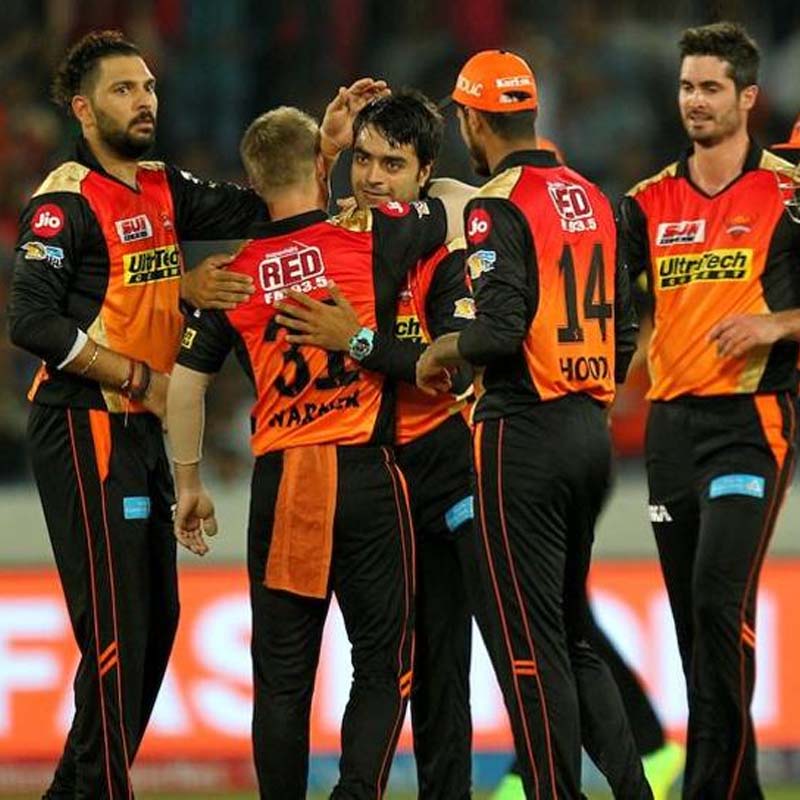
    MUMBAI: The viewership for the fifth edition of Indian Premier League has gone a notch up due to two qualifiers and the lone eliminator match that have recorded average viewership of 5.4 TVR, according to TAM data sourced by Indiantelevision.com for CS4+ TG (All India).

    The closing stages of the tournament have seen ratings improve to 3.36 TVR for 73 matches, compared to 3.27 TVR for 68 matches.

    However, the ratings are marginally lower compared to 3.51 TVR the event had garnered last year for the same number of matches.

    The cumulative reach for the tournament is 161 million compared to 162 million last year, as per data provided by TAM.

    Media buyers had expected the viewership to pick up during the closing stages of the event due to which the spot rates for the matches also went up to Rs 800,000-1 million per 10 second spot compared to the Rs 450,000 during the league stage of the matches.

    Group M ESP Managing Partner Hiren Pandit noted that the IPL has delivered ratings on par with last year.

    “The IPL ratings are pretty good on a standalone basis. If you look at the matches this year almost all of them had packed houses which to my mind is a key performance indicator. Also we should look at the ratings as a broad indication of viewing,” he averred.

    Another media buyer on condition of anonymity said that the ratings are healthy even though it is not comparable to previous editions. “The expectation from the IPL was not that high but still the ratings are healthy considering the negativity surrounding the tournament when it began. The ratings however are not that good when compared to previous editions,” he added.

    Meanwhile, MEC COO South Asia Shubha George said that while its predictions for the IPL‘s performance have been on the mark, there have been some learnings this year.

    “The new understanding we have from our analysis is that time and day of the match has the highest influence on TV viewership ratings. Spikes for favourite teams, while existent, do not have a profound influence as estimated,” George said.

    The agency had estimated that the average ratings for season 5 of the IPL will be 3.8 TVR for CS 15+ SEC ABC using General Linear Model.

    The team ratings for five out of nine teams including Deccan Chargers, Delhi Daredevils, Kolkata Knight Riders, Kings XI Punjab and Rajasthan Royals are within 10 per cent of MEC’s estimate, George added.

  • RAM outlines radio listening trends in 9 cities

    RAM outlines radio listening trends in 9 cities

    MUMBAI: Ahmedabad, Chennai and Hyderabad have emerged as the growth markets for the radio industry, according to the second round of ‘9 Indian Cities Listenership Sweeps‘ data provided by RAM, the radio measurement service of TAM.

    The Southern metros have seen more than 30 per cent growth in listening thresholds while Ahmedabad has witnessed 15 per cent growth. Pune, Kanpur, Indore and Nagpur have remained at almost the same levels as the previous round.

    The second sweeps data is for the period of February-April 2012.

    According to RAM, the sweeps release will help the radio industry, including the broadcasters and media planning agencies, to assess the impact that radio is having on audiences in towns other than the major metros.

    TAM CEO LV Krishnan said, “The second roll out is as per timelines committed by us to the industry. After the first sweeps in October last year, this second one shows interesting changes in radio consumption patterns. While in some markets, radio consumption base itself has seen an increase, in others granular trends like Out Of Home (OOH) listenership have seen an encouraging increase.”

    RAM‘s second sweeps highlights changes in radio consumption behaviour not only across the nine cities but also in comparison to the first round of sweeps which was released in October 2011.

    The RAM panel coverage was expanded to nine additional cities – Ahmedabad, Chennai, Hyderabad, Indore, Jaipur, Kanpur, Lucknow, Nagpur and Pune. Prior to that, RAM operated out of the four Indian metros – Bangalore, Delhi, Kolkata and Mumbai.

    According to RAM, average audience in morning day part has seen a surge in Ahmedabad, peaking at 9 am with a 70 per cent growth. This is largely due to a 10 per cent growth in cumulative reach. In fact, cumulative reach has grown across all the days, with Sunday leading the pack. While 95 per cent of the audience cumulative reach build up was achieved by afternoon earlier, now 95 per cent of the audience can be targeted by the morning day part alone (at a weekly level).

    Time spent, however, has dropped marginally in Ahmedabad, according to RAM data.

    Radio listeners in Chennai, in sharp contrast, have significantly increased their time spent, led by the morning day-part band.

    The share of SEC C‘s listenership has grown from 37 per cent to 43 per cent, while cumulative reach levels have dropped across all the day parts.

    The share of in-home listenership has grown from 76 per cent to 87 per cent. The audience build up has got spread through the day.

    In Hyderabad, evening and night day parts have grown significantly while morning has witnessed a drop in listenership levels. The drop in morning day part is primarily due to drop in cumulative reach levels, while TSL (time spent listening) has grown. In fact, across the day parts, TSL has almost doubled across the day parts.

    Another significant trend is that contribution from SEC A & B has increased.

    There is a 6 per cent drop in share of in-home listening, reflected in the growth of listening share from car/travel/conveyance. According to RAM, equal and high threshold of listenership can be observed across weekdays and weekends. The evening and night day parts add significant amount of audiences to cumulative reach build up.

    The other key findings from the six cities are as follows:

    Nagpur:
    1. The weekly listenership levels have remained at the same levels as the previous round
    2. The daily cume reach has gone up, with Sunday being the maximum, but time spent levels are down across all the days.
    3. Share of In-home listening grows from 82-87%

    Jaipur:
    1. Drop in listenership thresholds across the day
    2. The same reflects in the cume reach levels across the day parts
    3. Dominance of SEC DE in Jaipur‘s listenership contribution is normalized. Proportionate contribution from all SECs to listenership
    4. Morning day part continues to be the one where listenership peaks, though at a lower threshold
    5. Sunday emerges as the one with highest cume reach and time spent levels
    6. The audience build up has got spread through the day. It takes up to afternoon day part to cover 95% of all audience.

    Indore:
    1. The listenership peaks have interchanged between mid morning and morning, morning peak emerging as the highest. Other day parts are more or less are at the same threshold
    2. At a weekly level, morning day part emerges as the highest in cume reach and time spent.
    3. Mid-morning day part saw a reduction cume reach levels.
    4. TSL level growth in night day part
    5. Share of In-home listening significantly drops from 94% to 71%. Maximum growth in Car share of listening (22%)
    6. Saturday loses audiences as Sunday emerges as the destination of maximum listening
    7. Faster cume reach build up across the day as 95% of the audiences are reached by the mid-morning day part.

    Pune:
    1. Similar listenership thresholds across the day parts
    2. Mid-morning to night, there is a drop in cume reach levels, but across the day parts there is a growth in TSL levels
    3. Contribution from different places of listening remains the same
    4. Sunday emerges as the destination of highest listenership
    5. Audience addition from afternoon grows in the current year

    Lucknow:
    1. Listenership thresholds drop across the day parts, while night primetime holds the thresholds
    2. While there is cume reach growth in some of the day parts, there has been TSL drop across all of them
    3. Share of listening from 35+ age group comes down
    4. Contribution from in-home listening grows from 89%-93%
    5. Cumulative audience on Sunday grow from 82% to 94%
    6. Weekdays and weekends have similar thresholds of TSL

    Kanpur:
    1. Marginal changes in day part wise preferences
    2. Growth in consumption share from SEC AB and 45+ age group
    3. OOH share of listening grows from 23 to 29%, majority of the growth coming from car/travel
    4. Sunday emerges as the clear leader in listening threshold