Tag: TAM Media

  • TV ratings issue listed for cabinet discussion on 9 Jan

    TV ratings issue listed for cabinet discussion on 9 Jan

    MUMBAI: The year 2013 saw quite a ruckus being raised about the ratings process being followed in the country. The Telecom Regulatory Authority of India (TRAI) in September 2013 came out with a recommendation paper after receiving suggestions from stakeholders on its consultation paper regarding the same.


    The paper got the ministry of information and broadcasting’s (MIB) nod in mid-November. Now it has been listed for consideration and approval by the cabinet committee on economic affairs on 9 January.


    Complaints about TV ratings in India have been aired for several years now. However, the TRAI released its recommendations only late last year on the way forward. In its paper it gave several suggestions to improve the quality of the ratings, one suggestion was that ratings agencies should register themselves with the MIB  and no one from its board of directors  should be involved in the business of broadcasting or advertising. They will have to give Rs 10 lakh as registration fee and produce a bank guarantee of Rs 1 crore.


    The minimum number of houses was recommended to be doubled to 20,000, to be increased by 10,000 till it reaches 50,000. 25 per cent of the viewership panel being monitored should be rotated every year. 


    If the ratings agencies failed to follow the guidelines they would be penalised, the severest being cancellation of the registration. 


    If the new ratings guidelines do get the cabinet’s nod, it means that the existing ratings agency TAM Media will have to invest anywhere between Rs 200-250 crore to scale up its panel and get itself registered with the MIB. The Broadcast Audience Research Council – which currently has the full backing of the broadcast, advertising and marketing industries and is racing to start its services by mid-2014 – will also have to follow the same course of MIB registration.

  • TRAI recommends guidelines for TV ratings agencies

    TRAI recommends guidelines for TV ratings agencies

    MUMBAI: The Telecom Regulatory Authority of India (TRAI) is once again showing it means business. It has come out with its final recommendations on what should serve as guidelines to put in place a transparent, credible and reliable television ratings process in India. These recommendations have been made after the consultation paper which was first issued by the authority on 17 April 2013. The consultation paper had then called for comments from various stakeholders after which an open house was held on 1 July.

    The problems surrounding the television rating system was raised by the Information & Broadcasting Ministry (MIB) in January 2008. It was then that the authority recommended the adoption of self regulation through the industry led body The Broadcast Audience Research Council (BARC).

    Based on these discussions with the various stakeholders, the TRAI has come up with its own analysis and recommendations which were made public today.

    Amongst the recommendation is that the MIB has to notify the guidelines for regulating television rating agencies based on TRAI‘s recommendation within two months. Any agency wanting to offer TV viewership monitoring or rating services has to perforce get itself registered with the MIB if it fulfills the following guidelines: The rating agency shall be set up and registered as a company under the Companies Act, 1956; any member of the board of directors of the television rating agency should not be in the business of broadcasting/ advertising/advertising agency; the rating agency should have a minimum net worth of Rs 20 crore; the rating agency should also meet the prescribed cross-holdings requirements.

    TRAI has said that to keep the ratings process credible, there should be a minimum of 20,000 panel homes which have to be set up within six months of the guidelines being implemented. Thereafter the number of panel homes has to be increased by 10,000 every year until it reaches 50,000.

    It has recommended that it be mandatory for the industry to observe a voluntary code of conduct for maintaining secrecy and privacy of panel homes and that data and reports should be made available to all stakeholders in an equitable manner on a paid basis.

    Also no single company/ legal entity, either directly or through its associates or inter-connected undertakings, should have substantial equity of 10 per cent or more holding in both rating agencies and broadcasters/advertisers/ advertising agencies.
    TRAI says that ratings agencies will be penalised if they fail to follow the guidelines on cross-holding, methodology, secrecy, privacy, audit, public disclosure and reporting requirements. A penalty of Rs one crore will be levied in the first instance; the second instance will lead to the cancellation of registration.

    For other guidelines, the penal provisions shall be a graduated financial penalty of Rs 10 lakh to Rs one crore for the first three instances of non-compliance and, for the fourth instance, cancellation of registration.

    However, TRAI says an opportunity should be given to each party before invoking any penal provisions. Once guidelines for rating agencies are issued by MIB, these will have to be equally complied by all rating agencies including new entrants.

    In keeping with the fact that the existing rating agency (TAM Media) may require some time for complying with the guidelines, the authority has given it six months to allow it to meet the cross-holding and panel size requirements guidelines.

    It says that it would like industry to implement these recommendations and to show that it means business it says it will suo motu intervene in the larger public interest if the former does not comply.

    Obviously, TRAI is trying its hardest to change the paradigm of TV ratings. Will Indian industry pay heed?

    Click here for the complete final recommendation

  • The curious case of CCI’s TAM Media investigation

    The curious case of CCI’s TAM Media investigation

    MUMBAI: The TV ratings tornado that had struck the industry a couple of months ago has died down and it appears as if even the same has happened with the TAM Media investigation being conducted by the Competition Commission of India (CCI). Of course the CCI will deny it, but, it does seem so.


    The deadline for the responses to the queries sent out to media industry stakeholders by the CCI was 18 July.


    “We had received the questionnaire by the enquiry committee of CCI on 18 July. The responses to which were sent to them on the same day. After that we have not received any update from CCI,” informs a highly placed official in Prasar Bharati.


    It may be recalled that the CCI had started the investigation post a complaint filed by Prasar Bharati against the audience measurement agency for anti-competitive practices in November last year. The complaint was filed under section 4 of the Competition Act 2002, which pertains to abuse of a dominant position by a market player.


    “We are still in the process of collecting data from the stakeholders. The matter is still being investigated,” informs a source from the CCI. The body has asked for an extension to collect the data. “There is a provision to extend the time frame and we are seeking extensions to ensure a proper investigation,” adds the source who refuses to comment any further on the investigation.


    It was in late June, this year that the CCI had started sending out notices to key players in the media and entertainment industry seeking information on TAM in order to ascertain whether there was any case to be made against it. The notice sent by CCI was just the first step to find out what reported “wrongs” was TAM Media doing.


    When Indiantelevision.com contacted TAM for its comment on the same, a TAM representative responded by say, “We have decided not to comment on the investigation.”


    With CCI not yet completing the first step of investigation, how long will the body take to come out with its final verdict? Or are more pressing matters taking up its attention? “You can’t forget, things such as these have a process and take time,” says a media observer. “Don’t be surprised if a damning report against TAM emerges closer to the time of the ratings launch under BARC next year.”

  • “BARC would like to make the entire TV ratings process future-ready”: BARC CEO Partho Dasgupta

    “BARC would like to make the entire TV ratings process future-ready”: BARC CEO Partho Dasgupta

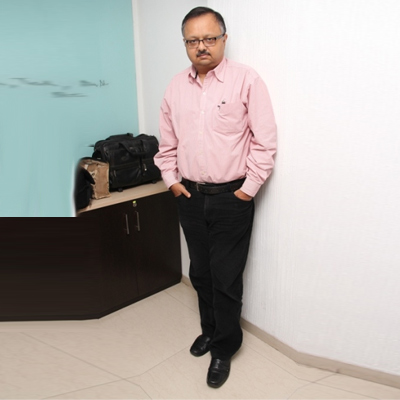
    At first appearance, Broadcast Audience Research Council (BARC) CEO Partho Dasgupta comes across as a pretty mild-mannered professional. But don‘t let that fool you: beneath the mild exterior is a steel-backed executive who has faced many a challenging task in diverse consumer industries and media where he has implemented large and small start up projects. Among this figure: Times Now, Future Media, The Economic Times and Times Multimedia. This apart, he also had an entrepreneurial stint where he co-founded a media company, apart from advising media startups and venture firms and their invested companies on brand strategies. So it is no surprise that the BARC board chose him to steer the setting up of a TV viewership monitoring system when there is a crisis of confidence around the only currency operational in India today – TAM Media.

    Indiantelevision.com‘s Seema Singh and Zeba Warsi spoke to Dasgupta to find out on what challenges await him, why he took up the job, and how he sees the road ahead.

    Excerpts:

    What are your feelings on being appointed the first CEO of BARC? What have you been busy with since joining it? And why did you take up the challenge considering the kind of brickbats that are being hurled at LVK now after years of doing the ratings? Who was it that coaxed you take it up?

    I am very happy to sit in the hot seat. Just before this I was managing the preschool business and the k12 school business growth of Educomp. I am looking forward to contribute to the broadcast industry, which I am very fond of. I love challenges – if you see my background none have been very easy roles. There was a time, then, when the joke was going around and similarly I am hearing now- whether one will ‘Bark or Bite‘ (pun intended). That is simply whether we will live up to all the hype surrounding BARC. It‘s all in good humour and I enjoy the challenge.

    You have worked with Times Now, Future Media and also worked with ET during their growth years. You also took a shot at entrepreneurship. How will you use that experience while working with BARC?

    I have been doing startups for the last 14 years – I love the whole drill – of blocking urls, looking for office, setting up new teams, new brands, processes and managing finances. I have also been on both sides of the table, as a broadcaster and also a client – so I guess I understand the pains of all sides. I am looking forward to go the whole hog again.

    What are the first few major tasks ahead of you taking over as the CEO?

    The single mandate is to design, commission, supervise and own India‘s Broadcast Measurement System. Towards this end, the establishment survey, covering approx 2.4 lakh individuals across India is already underway. This survey will give us details on television penetration in both urban and rural areas; viewership habits across all broadcasting modes, be it terrestrial, C&S, DTH, analog and digital platforms, and other developing and new platforms including newer modes of viewing; as well as viewer demographics. The study would become the basis of designing the rating panel.

    At the same time, separate RFPs for research and technology have been floated globally. Once the proposals are in, the technical committee will scrutinize all proposals in order to select the best in class research methodologies and technology. This will comprise senior experts from the industry representing all stakeholders. Experts in the technology domain are being co-opted to give us insights on the best technology available. So we are ensuring that thought leaders, domain experts and people with relevant skills are all on board from across our stakeholders to assess the best methodologies available globally.

    The group will look into all three parameters:

    • Technology of equipment across all broadcast mechanisms
    •  
    • Capture and analysis of data
    •  
    • Dissemination of data to users

    The global competitive bidding will ensure that India gets the best in class, cutting edge broadcast measurement system.

    Tell us about the structure of BARC, the members, representation and so on. Should there be equal representation from broadcasters, agencies and advertisers like it was initially envisaged?

    The broadcasters, agencies and advertisers are duly represented through their respective bodies namely IBF, AAAI and ISA. We are a neutral nodal body which will be working in a tandem with the three representative bodies. The members of each body find representation in the 10-member Board of BARC, which is already in place. The council will have its own management structure reporting to the Board.

    The tech committee has been working on certain presumptions? What are these and how do you see the tech committee contributing to making the BARC more relevant over the years?

    There are no presumptions that anyone of us are working on. Our one line mandate is to design, commission, supervise and own India‘s broadcast measurement system. And all of us are working to ensure that we get the best in class research and technology to deliver a product that would be the gold standard of broadcast research.


    BARC is striving to ensure the best of research methodologies combined with the best of technology to deliver world-class measurement.

     How do you envision the BARC office to be like – how many staff, how many people employed by it? How do you see this evolving? What will they be doing?

    We are evolving the structure. The mandate is clear and the structure will follow. We will be headquartered in Mumbai and we will be outsourcing a lot of professionals and services for specific functions.

    Tell us about the professionals you have hired so far from the industry…Any reputed names?

    We will be getting many professionals on board. Currently we have Mubin Khan as the vice president of BARC. (Khan has previously worked as senior AVP at Zee Network, media controller at Contract Advertising India Ltd., associate media controller at Mudra Communications Ltd. and was also vice-chairman of the Technical Committee of the IRS – the premier readership survey – conducted by Media Research Users Council among several other accolades.)

    What was the response to the RFIs like? Were there any surprising firms which have been observed on the list – like Infosys and TCS? Which other surprises popped up?

    The response has been very good across both research and technology companies. Global research and technology leaders have collected the RFP documents. I cannot reveal anything more at this point as NDAs have been signed with all firms concerned.

    How is the RFP process progressing? How many responses have you got? When do you expect to make announcements for the same?

    We haven‘t received any responses as of now. Separate proposals for research and technology have been sent to the various companies involved. As they go through the RFP, companies are raising certain queries, which are being formally addressed. The deadline to submit proposals is still more than a month away. The evaluation panel would scrutinize all proposals in order to select the best in class research methodologies and technology. This will comprise senior experts from the industry representing all stakeholders. Experts in the technology domain are being co-opted to give us insights on the best technology available. So we are ensuring that thought leaders, domain experts and people with relevant skills are all on board from across our stakeholders to assess the best methodologies available globally.

    What‘s the current status of the council? 

    The council is already operational. We are waiting for the RFP responses and talks are on with all bodies to better understand their concerns. The responses are expected next month.

    With the likelihood of TAM not being used as a barometer for the broadcast industry, it is quite likely that you will have to speed up your coming to market time to earlier than mid-2014? Do you think you are geared up to achieve that and what is the game plan and what signposts you will have to move forward to achieve this requirement quicker?

    The establishment survey is underway and should be out for us in December-January. After the panel discusses it, we may release it for public in February -March. The process is not an overnight one, it will take its due time and we don‘t want to rush. We are on course for a launch next year as originally planned

    Do you think what is happening to TAM is reasonable – the broadcaster back lash? What in your perception accelerated this? What is your advice to LVK and TAM?

    No comments.

    TAM has been accused of being ambiguous and lacking the required transparency. How do you plan to bring in transparency, accuracy and logical reasoning in the results?

    BARC is striving to ensure the best of research methodologies combined with the best of technology to deliver world-class measurement. To that end separate RFPs for research and technology have been floated globally. The evaluation panel will scrutinize all proposals in order to select the best in class research methodologies and technology. This will comprise senior experts from the industry representing all stakeholders. Experts in the technology domain are being co-opted to give us insights on the best technology available. So we are ensuring that thought leaders, domain experts and people with relevant skills are all on board from across our stakeholders to assess the best methodologies available globally.

    The baby is not born yet. It is too early to start speculating on how many siblings it should have. Besides, if others want to set up a rating agency, we are not stopping and cannot stop them. It is a free country.
     Do you think the ministry, TRAI and the industry as a whole prepared for a self regulatory mechanism of TV ratings? What kind of checks and balances are you going to put in to make everyone in the ecosystem comfortable?

    BARC is not a research agency. We will be working with specialists in research and technology to deliver cutting edge research. There would be adequate representation of various stakeholders in the process to ensure proper checks and balances.

    Do you think all categories will be content with BARC- GECs, news- English and regional and Niche? How will BARC achieve that? 

    It is obvious that we have to address the concerns of all stakeholders. And we are doing so through dialogues with all concerned. If anybody has a concern, they will obviously share it with their representative bodies, who are a part of the Board.

    Is the Indian TV universe more rural or more urban? How will you address issues of broadcasters who have seen a reduction of the TV universe under TAM‘s expansion into LC1 towns? Are you sure the results will not be the same as TAM‘s are currently?

    Let us await the results of the establishment survey before commenting on this.

    How will you address and cover a continually digitising India in terms of cable TV rolling out in phase III and phase IV of the cable TV universe? As well as expanding DTH homes…

    It is too early to comment on this. However, as mentioned earlier, we have a mandate to design, commission, supervise and own India‘s broadcast measurement system. This system will have to be inclusive, covering all aspects of our country‘s heterogeneity. We believe digitisation will actually make it easier for us.

    What kind of tech are you looking at putting in place? Stationary intrusive people meters which involve users to manually put in their inputs by pressing their remotes? Or more evolved ones which senses people‘s presence in the room via advanced tech? Or mobile hand held devices which have similar capabilities? And how will you incorporate tech which can be integrated with the STBs? In the next five years India will probably have about 100 million of these?

    It is too early to comment on the kind of technology, given that the RFP process is underway. Having said that, let me state that BARC would look at all technologies available. We would like to make the entire ratings mechanism process future-ready.

    How will the ratings system be funded annually? What kind of ratings are you hoping to deliver – overnight or weekly or monthly?

    BARC is a non-profit organisation under Section 25 of the companies Act, 1956. The various industry constituents would fund the research. All users of data and analysis will subscribe and pay for the same.

    TAM used only 8150-10,000 households for its rating system which was perceived as not being adequate to represent the population of 15.5 crore TV households in India. Tell us about your survey sample, how many homes, which markets, etc.

    The final contours of the panel size and dispersion will be decided only after the establishment survey is complete and the proposals studied. As mentioned earlier, the establishment survey is covering approx 2.4 lakh homes across urban and rural India.

    When the decision of setting up the council first came up in 2008, it was a joint venture only between IBF and ISA. Then how did AAAI enter the venture?

    BARC represents the entire industry. Hence, it made eminent sense to have all stakeholders on board.

    The initial investment for setting up BARC was Rs 300 million? Has the investment gone up? If yes, by how much? How was the breakup ratio between IBF, ISF and AAAI decided?

    No Comments

    Self-regulation mechanism has worked in some cases, and hasn‘t in some. How do you think BARC will envisage this mechanism in its functioning as opposed to TAM?

    BARC has representation from all stakeholders of the industry. It thus has an in-built mechanism.

    There is an accusation that “Self-regulation of television rating system in India has failed to take off as BARC has not been able to take any credible action on the recommendations made by TRAI and by Dr Mitra‘s Committee. What did the report say? Are the accusations true? How much has BARC worked on it?

    I have taken charge just this month, and the BARC team has also been just set up. We shall take up the issues as they come. Right now, the focus is on the RFPs.

    Following the report, BARC had also set up in-depth research team to study audience measurement system, particularly BARB, the UK‘s audience measurement system, how has that translated in your current structure? Are there any comparisons to be drawn between the two?

    BARC and its stakeholders have been studying the various models and methodologies adopted by broadcast measuring companies and organisations across more than 30 countries across the globe. And we will certainly look at incorporating the best research methodologies and technology available.

    Having said that, India has a lot many complexities that are unique to our country. Be it in the demographic or socio-cultural heterogeneity, the linguistic, geographic and economic disparities or even the hours of accessibility to electricity, any study done in India has to take cognizance of each of these unique complexities, and many more.

    BARC plans to be very robust. Does your set up involve putting in place a complaint mechanism system? If yes, please elaborate.

    For any organisation that is in the service industry, a robust feedback mechanism is a must. BARC is an industry body representing all constituents. There would definitely be continuous dialogue between BARC and its constituents. And this would also incorporate formal feedback mechanisms.

    We are aware that history has shown us that the market can only support one rating currency. But even as recently as yesterday, outgoing I&B secretary Uday Kumar Varma expressed reservations about a monopoly of ratings. He also said that maybe there should be more than one rating system to provide competition in the business, which will also result in enhancing the credibility of ratings. TAM which earlier was the sole rating system has allegedly goofed up and was highly criticised. What is your reaction to this? And why should BARC enjoy monopoly of ratings?

    The baby is not born yet. It is too early to start speculating on how many siblings it should have. Besides, if others want to set up a rating agency, we are not stopping and cannot stop them. It is a free country.

     

  • “We hope to reach a mature solution on the TAM ratings issue” :MadisonWorld chairman & managing director Sam Balsara

    “We hope to reach a mature solution on the TAM ratings issue” :MadisonWorld chairman & managing director Sam Balsara

    There are two kinds of individuals out there. Those, who lead their lives on their own terms and others, who lead their lives according to the terms set by the rest of the world. And then there is Sam Balsara, who creates benchmarks for the rest through his feisty attitude!

    Rated as amongst the top media professionals in the world, MadisonWorld chairman & managing director Sam Balsara is no stranger to a challenging situation. He is known to speak his mind without mincing his words. The media vet has worn many hats in various industry associations and committees over his very long career, which began at Sarabhai’s in the late sixties, early seventies and ended with him setting up Madison 25 years ago.

    Here, in an exclusive interview, Balsara opens up on the heated issue of Broadcasters v/s TAM Media. Who else can give us a better perspective than the advertising genius himself. Sit back, read and enjoy his engaging responses from this free wheeling chat indiantelevision.com had with him.

    Excerpts:

    What is your take on Indian Broadcasting Foundation (IBF) members deciding to discontinue subscribing to TV ratings provider TAM?

    It is very clear ratings are very important not just for advertisers and agencies alone, but for the whole industry which includes broadcasters who have worked so hard to built the industry to Rs 12,000 crore. If there are no ratings the confidence in TV advertising will go down.

    Take a look at radio and out of home; they have no robust measurement system, hence they account for just five per cent of the media spends. Television does have a robust measurement systems and it accounts for a sizeable 45 per cent.

    You don’t have to throw the baby out with the bathwater. If there is something wrong, you fix it. We have to remember that the TV ratings that come out every week are a sample not a census. At times, if it does not do justice, you don’t shut it down. The long term solution is definitely BARC…till then we have to have TAM.


    But then how do you address the problems that the IBF and the government has with the ratings?

    Let the IBF put out a paper on what their view is on what is wrong with the ratings methodology and what needs fixing. We can give our view on what can be done or should be. The answer is not stopping a rating system.

    Why do you say that?

    Stopping a ratings system would hurt the broadcast leaders in their respective individual genres, they would lose their leadership perception and this would hurt them. I think it is a very unwise decision.


    Let the IBF put out a paper on what their view is on what is wrong with the ratings methodology and what needs fixing. We can give our view on what can be done or should be. The answer is not stopping a rating system.

    Let’s say the TAM meltdown continues and you don’t have ratings, is historical data a valid barometer for buying TV advertising time?

    Historical data around TV viewership is not an option and is unacceptable to the buyer. I would not work with historical data for buying. If I am buying IPL this year, why should I use last year’s data? Why should and how can I use historical data for how a serial is performing? We know that viewership habits move around.

    Then what is the solution?

    If there is something seriously wrong with TAM‘s data, methodology, we should sit together, highlight the problems, diagnose the imperfections and come up with answers. We need to give a patient hearing to each other as to why it’s going wrong too!

    I am aware that TV ratings have been going down because of the rejig of the sample, digitisation and also LC1. But every time you go for a change in a changing environment, the findings are also going to change.

    But the dropping ratings are hurting broadcasters and they are saying how is that possible when we are paying for the measurement?

    That brings us to the fundamental question: should media owners pay for the ratings system? Maybe you are right! Media owners should not be involved in media measurement. But the fact is that no media owner has found fault with the ratings system when they are at No 1.

    But Star India which is the leader in the GEC space is also likely to discontinue its TAM subscription…

    Hmmm. The only thing I have to say is that if there is no viewership data, the TV industry is going to suffer.

    Is making the advertiser/ad agency pay for the data a solution?

    As far as the advertising industry is concerned, we don’t really care who pays for the data, we are concerned that we get the data. We are absolutely certain that we need the ratings.

    I am aware that TV ratings have been going down because of the rejig of the sample, digitisation and also LC1. But every time you go for a change in a changing environment, the findings are also going to change.

    What if broadcasters continue to refuse to accept TAM as the currency and want to do transactions for TV adverts with agencies and advertisers?

    For a deal to take place, each seller has to make something available to the buyer and the latter has to see value in it to pay for it. Both parties have an objective and as long as it is met a deal happens. You see if Dove is priced at Rs 30, and you see merit in buying it you will pay for it, if you don’t, you won’t. Similarly with us, we need a measurement metric before we buy media.

    The IBF seems to be pushing the agenda on various fronts. For instance, in the case of net billings it was the IBF which had its way by forcing the advertising industry to accept net billings? Will it do so even in TAM’s case?

    There is no question of IBF having its way. The AAAI, ISA and the IBF found a mutually acceptable solution. Some of our full service advertising agency members wanted the 15 per cent mention to be in the bills and we got that in. It was a mature solution that met the needs of all concerned. We similarly hope to reach a mature solution on the TAM ratings situation too.

  • TAM Media offers possible solution to broadcasters’ ratings woes

    TAM Media offers possible solution to broadcasters’ ratings woes

    MUMBAI: Even as the broadcast community gets ready to put the lights out on India‘s TV ratings, TAM Media CEO LV Krishnan has suggested that he is open to another conversation with the industry. He says that he is open to pulling out the people meters from LC1 markets and deploying them elsewhere where they are needed.

    TAM Media CEO LV Krishnan would like to sort out any confusion about the ratings.

    Krishnan agrees that reportage of the LC1 markets is pulling down the average TV ratings for broadcasters, but the broadcasters should have seen that coming before the data started emerging. He, however, says TAM is open to stepping back even if it is a retrograde step.

    “Let us all come to the table and sort out any confusion that has arisen,” says Krishnan. “If everyone wants TAM to pull out of LC1 markets – that is the IBF, the ISA and the AAAI – we will do whatsoever is in the interests of the industry and ratings. But someone has to answer the government which has been insisting that we expand our footprint.”

    Will the IBF, ISA and AAAI take up his offer?

  • ASCI bags Best Practices Silver Award for National Advertising Monitoring Service

    ASCI bags Best Practices Silver Award for National Advertising Monitoring Service

    NEW DELHI: The Advertising Standards Council of India (ASCI), which is recognised by the government as the primary body for checking misleading commercials, has bagged the Best Practices Silver Award for establishing a National Advertising Monitoring Service on the print and TV ads.

    The award was given at the European Advertising Standards Alliance‘s (EASA) annual meeting held in Milan, Italy. The EASA Best Practice Award is presented each year to the self-regulatory organisation that has most effectively implemented an element of the EASA Best Practice Model-a set of operational standards for advertising standards bodies.

    ASCI chairman Arvind Sharma said, “ASCI through NAMS has done path breaking work in tracking down and removing ads which make misleading, false or unsubstantiated claims. And the EASA Best Practice Silver award is recognition by the global ad self regulatory organisations (SRO) that ASCI not only follows global best practices but also helps in innovating new ones.”

    He added: “This recognition encourages us to further strengthen the professional and ethical standards in the ad industry to ensure responsible advertising and thereby protect the interests of the consumers.”

    Proactive monitoring of NAMS on the print and TV ads has helped in tracking a large number of misleading ads and the number of ads against which complaints were received and processed by ASCI went up almost five times from 177 in 2011-2012 to 784 in 2012-2013.

    ASCI is a self-regulatory voluntary organisation of the advertising industry. ASCI along with its Consumer Complaints Council (CCC) deal with complaints regarding advertisements which are considered as false, misleading, illegal, leading to unsafe practices or unfair to competition and consequently in contravention of the ASCI Code for self-regulation in Advertising. They receive complaints both from the consumers and the industry.

    In May 2012, ASCI introduced NAMS in order to strengthen the process of tracking and reducing misleading advertisements which harm the interests of consumers. NAMS which comprises of the AdEx India, a division of TAM Media Research and with the support of trained personnel from the ASCI keeps a continuous check on all the newly released TV and Newspaper print ads to see that they are not violating any ASCI‘s advertisement code related to unsubstantiated, misleading or false claims.

    On an average, 1,500 TV and 45,000 newspaper ads are monitored monthly. If after persistent reminders, certain ads are not altered and are still being aired in the same manner, then the ASCI reports this to the relevant statutory authorities for action.

    In order to fasten the decision making process and to handle the recent jump in the number of complaints received and processed, the ASCI introduced the Consumer Complaint Council (CCC) and appointed Shweta Purandare as chief operations officer (COO) to drive the investigation of complaints besides heading the complaint redressal and follow up process. The meetings are being conducted every week instead of every fortnight so as to reduce the average complaint adjudication time.

  • NY court dismisses NDTV law firm’s defamation suit against WPP’s Martin Sorrell

    NY court dismisses NDTV law firm’s defamation suit against WPP’s Martin Sorrell

    MUMBAI: Indian newscaster New Delhi Television (NDTV)‘s law firm Sabharwal & Finkel (S&F – its legal representative in the Nielsen-TAM India case in New York) suffered a setback recently.

    A New York court dismissed a defamation suit the firm had filed against Sir Martin Sorrell in August 2012, claiming that he had made libelous and slanderous statement against it in an interview with Indian financial publication livemint.com.

    In that interview, Sorrell had said that the law firm was trying to extort money as a settlement from WPP on behalf of its client NDTV, which had named WPP and Nielsen in a suit relating to TV ratings irregularities by their joint venture in India TAM Media.

    Secondly, S&F had stated, Sorrel had incorrectly mentioned that it was based in Florida, suggesting that the firm was violating laws by practicing there.

    Thirdly, he had also said that S&F specialises in the restaurant business, whereas its specialty is “complex, commercial litigation, arbitration and banking law.”

    S&F had then alleged that Sorrell comments had gone viral on the internet, and, in the process, caused tremendous damage to the firm‘s reputation as it “had been charged with crimes of extortion and or practising law in Florida without a license.”

    Hence, it and its principals Rohit Sabharwal and Adam Finkel had no recourse to but to file the defamation suit.

    But New York State supreme court judge Cynthia Kern dismissed their charges recently saying that no cause for libel or defamation can be found in the statements that Sorrell had made earlier. She highlighted that “no reasonable reader” would decide that S&F was unethical and incompetent after reading his comments; that they would understand that his statements were “an opinion about the merits of the lawsuit.”

    Meanwhile as reported last week, NDTV and S&F have filed a fresh appeal last week in the TV ratings irregularities case against Nielsen in a New York, excluding WPP from the suit.

    (See story: NDTV files fresh appeal against Nielsen in New York supreme court )

  • TAM hires Sr cop to increase security of its TV ratings panel

    TAM hires Sr cop to increase security of its TV ratings panel

    MUMBAI: TV ratings agency TAM Media has come under fire from time to time with the allegation that its ratings sample audience has been breached and that its ratings are not sacrosanct. It is taking steps to put those fears to rest. It today announced that it has set up a dedicated desk for vigilance, investigation and crime detection in a bid to further fortify its TV panel home security process.

    The desk is to be chaired by president‘s medal awardee and a crime investigation veteran (a former ACP, Maharashtra Police with 22 years experience) Ravi Ratanjankar as head, vigilance & corporate risk mitigation. Ravi‘s special role in TAM will be to help fortify the organisation against any potential vested interest parties trying to break into the TAM system. He was earlier with HDFC Bank. Handling pan-India vigilance functions and helping in the implementation of fraud management systems

    This move, probably, is a first of its kind, proactive initiative undertaken by any market research service provider to safe guard its operations, says a TAM Media release.

    Says TAM Media Research CEO LV Krishnan: “Our core service of television audience measurement (TAM) has played a silent, yet, central role in helping the Indian broadcast and advertising industry reach the size and stature we know of today. This has only happened because of our regular proactive measures, one of them being constant expansion and enhancement of our TV audience panel home. Today, our TV audience measurement panel covers over 225 towns & cities across urban and semi-rural markets covering all the key states of India.”

    “The key here is, and which a very few realise, that the complexity of such huge on-ground operations do run a risk of potential external threats. In our unrelenting focus towards quality and the need to protect the services from any types of external threats, TAM is taking further necessary steps that will ensure a deeper safeguard to the services via stronger walls of security and vigilance in the coming months and years. Ravi‘s appointment towards this is not the end but one of the many more initiatives that Industry will see. I am very pleased to have Ravi as part of my team. We are very sure that his role and involvement will further elevate TAM to new performance benchmarks,” adds Krishnan.

  • Agencies feel need to speed up BARC

    MUMBAI: The need for speeding up the existence of a transparent television audience system under the aegis of the broadcasters and the advertising and media agencies is gaining ground after NDTV‘s lawsuit has made allegations against TAM Media, the single TV ratings measurement currency in India.

    “BARC (Broadcast Audience Research Council) needs to probably be expedited. It will not be a supervisory but a governing body. The clients, the broadcasters and the agencies will be represented in that,” said Aegis Media CEO South East Asia Ashish Bhasin.

    The shareholding of BARC was announced in March 2012 with the Indian Broadcasting Foundation (IBF) holding 60 per cent equity and the balance 40 per cent being equally shared by the Indian Society of Advertisers (ISA) and Advertising Agencies Association of India (AAAI). But it has still to become operational and the draft incorporating the memorandum of agreement (MOA) and the Articles of Association (AoA) finally approved and signed.

    Several industry professionals from the advertising and media agencies said that a body overseeing TAM was the need of the hour.

    A senior official from a leading agency emphasised the need for a body like BARC as TAM has become akin to the Holy Grail or Bible when it comes to TV ratings. “I have always wondered how can you base your decisions on a single ratings agency that is so powerful to decide the buying of over Rs 110 billion of television advertising spend. I have found the peoplemeters and the sample size inadequate and there have been allegations of tampering. It defies rationale under these circumstances if we are not to speed up BARC.”

    Another top official from a different agency pointed out that the best way is to review data simultaneously as it gets thrown up so that errors can be kept in check or rectified timely. The anomalies can, thus, be investigated promptly. If there is any mistake, genuine or of malicious intent, it can be set right,” he remarked.

    Media agencies do not depend entirely on TAM when they do their buying plans for their clients. “We also look at other factors and along with our internal research and some element of gut feel we decide on how we can best get to the target audience of the brand. Advertisers and media agencies don’t trust the TAM data blindly before putting monies behind the channel,” a media professional said.

    Is monopoly of a single ratings currency bad? Bhasin does not think monopoly is the issue. “The issue is if somebody is not doing the job properly or deliberately doing it wrong. That is what has to be monitored and controlled,” he said.

    Another senior media executive, however, disagrees. According to him, this may be a good time for other research agencies to offer services compatible to TAM and provide the industry with an alternative.

    Bhasin, though, feels that it is a better option to have the industry’s resources pooled in one place and a monitoring body structured.

    Most of the media executives agree on one thing: to make BARC operational with much thought and detailing.