Tag: TAM Media Research

  • Five categories dominated airwaves during Tokyo Paralympic Games

    Five categories dominated airwaves during Tokyo Paralympic Games

    Mumbai: The top five categories contributed up to 95 per cent of ad volumes on TV during Paralympics 2020, according to data by TAM Media Research. Considering the combined ad volumes for Tokyo Olympics and Tokyo Paralympics, the latter contributed only 17 per cent to total ad volumes, the data revealed.

    The top five categories only contributed to 41 per cent share of total TV ad volumes during Tokyo Olympics 2020 showing that Olympics attracts a far greater depth of advertisers.

    TV ad volumes during the telecast of Paralympic Games were dominated by categories such as corporate/brand image, life insurance, corporate-financial institute, aerated soft drink, and e-commerce-media/entertainment/social media. The top three categories combined contributed 86 per cent share of ad volumes.

    The top five brands for the Paralympics include LIC Corporate, LIC New Jeevan Anand, AMFI, Thums Up, and Watcho. The top five brands for the Olympics include JSW Group, MPL Sports Foundation, AMFI, Thums Up, and BYJUs learning app.

    Both the events attracted common categories. Among the top five categories, three including life insurance, aerated drinks, and corporate-financial institute were common categories. Association of Mutual Funds India (AMFI) was the only common brand among the top five brands visible during both events.  

    Ad rolls of 20-40 seconds were most utilised during the Paralympics with 98 per cent share of ad volumes, as per the data.

    (Source: TAM Sports | Figures are based on Secondages for TV; Commercial ads only; excluding promos and social ads | all matches of Paralympic, 2020; only live matches; excluding pre-mid post programs | Channels – Tokyo Paralympic, 2020: two Eurosport channels + DD Sports | Tokyo Olympic, 2020: 10 Sony network channels + DD Sports)

  • Retail Jewellers ad volumes grew by 52 per cent in Jan-Aug

    Retail Jewellers ad volumes grew by 52 per cent in Jan-Aug

    Mumbai: TV advertising volumes for retail outlets – jewellers grew by 52 per cent in January-August 2021 over the same period in the previous year, according to data shared by TAM Media Research. More than 150 advertisers and 170 brands were visible on TV.

    The news genre with 63 per cent share of ad volumes was the most preferred genre by jewellers followed by GEC (16 per cent). The primetime, afternoon and morning time bands combined accounted for more than 70 per cent of category ad volumes.

    The top ten advertisers included Lalithaa Jewellery Mart, Kalyan Jewellers, Malabar Group of Companies, Thangamayil Jewellery, The Chennai Silks Group, G R Thanga Maligai Jewellery, SDJ Gold Company, Akshaya Gold Company, K D & Sons and Bhima Group. Altogether, they contributed to 75 per cent share of category ad volumes on TV. There were more than 80 new brands that advertised during this period over last year.

    The news bulletin programme genre was most preferred by jewellers to showcase their ads. Film songs and feature films were also popular programme genres with 11 per cent and 10 per cent share of category ad volumes, respectively. 20-40 seconder ads and <20-seconder ads were the most preferred lengths with 58 per cent and 30 per cent share of the category ad volumes, respectively.  

  • TV ad volume for laptop category dips 4 per cent in Jan-August

    TV ad volume for laptop category dips 4 per cent in Jan-August

    Mumbai: The advertising volumes for laptop/notebook category dipped by four per cent in January-August 2021 compared to the same period in 2020, according to TAM Media Research. HP and Lenovo were the only advertisers visible during this period, with Lenovo being the top advertiser, in terms of volumes.

    Lenovo Yoga was the most visible brand on TV with 52 per cent share of ad volumes. Other brands being advertised include HP Envy, HP Spectre 13 X360, HP Pavilion Series.

    The most popular TV channel genre for the laptop brands was the movie channel genre that had a 39 per cent share of ad volumes, followed by news (17 per cent), infotainment (16 per cent), music (15 per cent), GEC (9 per cent), other genres (4 per cent).

    The most preferred programme genre for laptop brands was feature films that accounted for 40 per cent share of ad volumes. This was followed by news bulletins at 12 per cent and film songs at 11 per cent. These three genres accounted for 60 per cent of ad volumes for the category.

    A time band analysis for the category showed that advertisers preferred rolling their ads during the evening primetime between 6 p.m and 10:59 p.m. This time band had 34 per cent share of ad volumes. The afternoon and morning time bands were also popular time bands for laptop ads following the evening primetime, with 20 per cent and 16 per cent of ad volume share, respectively. These three bands account for 70 per cent of ad volumes for the laptop category.

    Laptop ads of a length of less than 20 seconds and between 20-40 seconds dominated airwaves with a 95 per cent share of ad volumes.

    (Figures are based on secondages for TV; commercial ads only; excluding promos and social ads)

  • Brands eager for Onam to help recover Kerala ad market

    Brands eager for Onam to help recover Kerala ad market

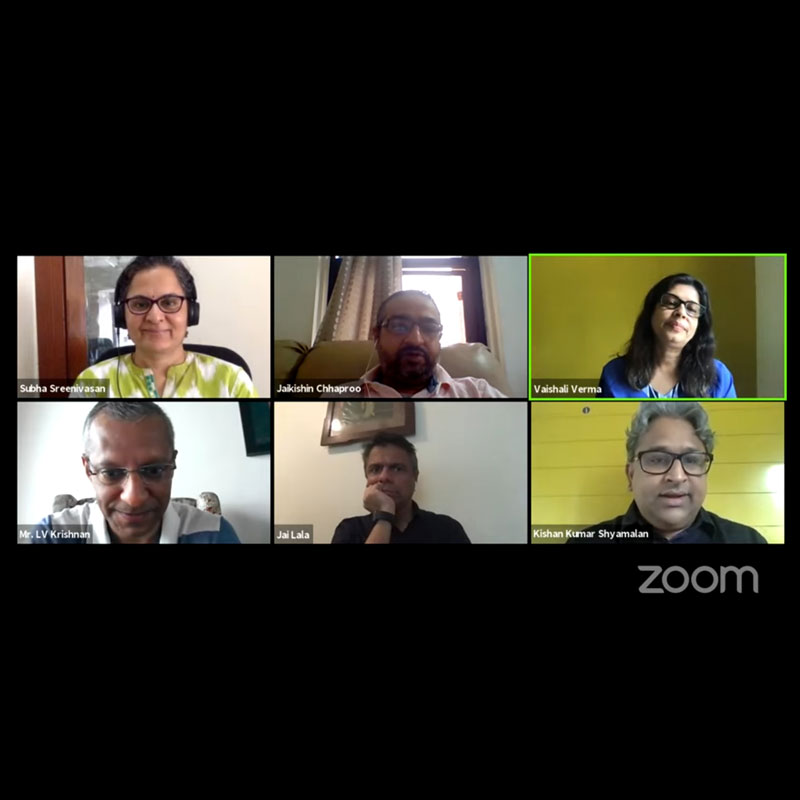
    NEW DELHI:  The first-ever virtual conclave by Indiantelevision.com, ‘The comeback of Kerala: Onam returns’, focused on the growth of the Kerala market post Covid2019. The first session 'The National Perspective – Are Brands & Consumers Ready' focussed upon how brands are looking at cashing in on the festive spirit of Onam.

    The session was moderated by TAM Media Research Pvt Ltd CEO LV Krishnan and the panelists were Wavemaker India VP Kishan Kumar Shyamalan, Zenith India COO Jai Lala, ITC Ltd head media and PR Jaikishin Chhaproo, Initiative India CEO Vaishali Verma and Godrej Consumer Products Ltd head of media Subha Sreenivasan.

    According to Chhaproo, “Things are not back to the normal level. With Onam coming up, we have not witnessed any spike in the sales. There are still challenges in logistics, demand in the market is still low and many are facing issues to have products in the market.”

    Sreenivasan said that things will pick up soon, but it’s not going to be an immediate curve. She adds, “We are not able to sense the bounce back really. Though, we have seen a recovery in the last two months across functions, it’s going to take some time to bounce back as the business has been impacted, it's going to take time to undo that part and as soon as that picks up, consumption will see a revival.”

    Verma shared that as sectors are opened up most of the advertisers are back including retail. The auto sector was completely shut down, but from July onwards there is a positive trend. However, the consumer sentiments have been low. 

    “We hope the next three months will contribute to a positive economy. In the offline market, there was a lot of pent up demand. From August onwards, planned purchase would continue to happen, however, ticket size or value might come down," she added.

    Shyamalan said that while there is a need to celebrate the fact that local retailers are back, it's not a great start to Onam. The large local retailers are not doing the level of business they usually do. National brands need to innovate and create sub-segments and media partners can help to sustain it better.

    Lala opined, “The need of the hour is to work together ever before; we need to get information at the ground level. The engagement has to be very deep; TV and newspapers have been impacted which need to get back to their pace."

    Experts believe that digital will see double-digit growth and hyper-local content will be bound to grow.

    Chhaproo said, “The sheer fact that original content was not available on television and disruption in availability of newspapers, everybody went to the digital medium. Hyper-local content and advertising will grow, there will be a significant surge in digital spends overall. We have also dabbled with local content partners in Kerala, which has helped us to connect better."

    Krishnan asked the panellists how the next quarter looks like.

    Verma said that with the announcement of IPL there is some bit of excitement. “There will be definitely a growth in this quarter over the last three months. As we exit 2020 December, our estimates see a deficit of 20 per cent over 2019. Even if the growth happens in the next three quarters, it is not going to compensate for the loss of the last three months. In a way, it’s a recession, but we hope there will be a revival in advertising. The coming months will define how the year would end up."

    Lala also affirmed that there will be a dent this year. “The next three months are very crucial; if things return to normal then there are chances of a normal 2021. Categories like retail and auto are dependent on the festive season and if that scales up then it will be positive for the economy and push forward for the next year.”

    He also pointed out, “If the brands are performing well in their respective market categories, then this is the right time to invest. But the problem is everybody does not have money to invest.”

    Kumar Shyamalan added, “The H2 impact will be far lesser, and the next three months will be extremely critical to see how many opportunities we have while working together.”

    Sreenivasan concluded, “As a brand, you need to think of a long-term rejuvenation to get out of the adversity that has stuck all of us collectively.”

  • Orissa Tourism top TV advertiser in travel & tourism category during Jan-July 2019: TAM AdEx

    Orissa Tourism top TV advertiser in travel & tourism category during Jan-July 2019: TAM AdEx

    MUMBAI: Karnataka State Tourism Development Corporation recorded an indexed growth of 297 times in ad insertions on TV during January-July 2019, as compared to the same period in 2018, a TAM Ad Ex India data revealed. The data comprises of the names of top 10 state advertisers in the travel and tourism category on Indian television.

    Two other states which witnessed growth in ad volumes were Jharkhand and Uttarakhand. They saw 118 times and 3.2 times indexed growth respectively. Also, Uttar Pradesh Tourism and Maharashtra Tourism Development Corporation were not advertising in the period during 2018 but made an entry into the top 10 list this year, the data showed.

    While these states made an upward stride in the ad volumes on TV, there was a minor 1 per cent indexed drop in the ads from travel and tourism category in January-July 2019.

    Rajasthan Tourism Development Corporation witnessed a dip of 85 per cent in ad volumes, Orissa of 62 per cent, and Kerala of 26 per cent.

    Despite the dip, Orissa remained the top advertiser in the list followed by Uttar Pradesh and Karnataka.

    Jan-Jul'19


    Rank

    Top 10 Advertisers (State)

    Indexed Growth

    1

    Orissa Tourism Devp Corp.

    38

    2

    Up Tourism

    3

    Karnataka State Tourism Devp Corp

    297 (Growth Figure in times)

    4

    Kerala Tourism Devp Corp

    84

    5

    Assam Tourism Devp Corp

    91

    6

    Jharkhand Tourism Development Corp

    118

    7

    Uttarakhand Tourism Devp Board

    3.2 (Growth Figure in times)

    8

    Rajasthan Tourism Development Corp

    15

    9

    Tourism Corporation Of Gujarat

    85

    10

    Maharashtra Tourism Devp Corp


  • TV eats into ad shares of radio, print in South India: TAM

    TV eats into ad shares of radio, print in South India: TAM

    MUMBAI: TAM Media Research – a joint venture between global media research organisations, Nielsen and Kantar has released the very first and one-of-its-kind, comprehensive go-to-market AdEx study for South India. ‘The Southside Story 2018’ shows a sharp increase in the advertising potential in the southern market as media outlets are growing at an exponential rate. One third of all India advertisers are spending in the southern market.

    The year 2018 was dominated by television followed by radio FM in the share of advertising. The advertising pie (in terms of ad insertions) had 79 per cent share of television and 16 per cent share of radio. In terms of ad insertions, print ranked last with a low 4 per cent share.

    The report shared, “The number of TV Channels has increased by 45 per cent (2014: 137 to 2018: 199). Year 2018 had over 66,000+ advertisers/ 86,000+ brands advertising across 690+ categories in TV, print and radio.”

    The sectoral analysis within the report reveals that personal care is the highest contributor to the advertisements on south Indian TV, the services sector is focusing majorly on the radio, and the auto sector advertises the most on print. The top 10 common advertisers contributed 25 per cent of ad insertion share in the Southern market during the year 2018, whereas from 2014-17 it was 33 per cent.

    The state-wise details for the period between 2014 and 2018 reveal that the share of ad insertions on Andhra Pradesh was dominated by television, which stood at 70-78 per cent. Television ruled the ad shares in Karnataka as well, with insertions ranging from 67-77 per cent, which also substantially ate into the pie of radio and print.

  • TAM adex data shows Samsung was top telecom advertiser

    TAM adex data shows Samsung was top telecom advertiser

    MUMBAI: Recently released TAM Media Research AdEx data reveals that Samsung India Electronics was the top advertiser in the telecom products category on print, radio, and digital platforms for the period between January 2018 and September 2018. The brand stood third in the TV section, preceded by Xiaomi Technology India and Vivo Mobile India. Jio Phone was the top new brand on TV and radio.

    Cellular phones – smartphones category dominated telecom products with more than 80 per cent share in all media.

    The report also revealed that ad volumes for telecom products rose by 8 per cent on radio while declined significantly by 19 per cent and 53 per cent on television and print, respectively as compared to ad volumes in the same period of 2017.

    Television remained the top choice of telecom products advertisers to place ads on as the medium had 62 per cent of the total insertions followed by radio (36 per cent share). The media received highest ad insertions during Feb '18. Digital had the highest monthly ad insertions in Aug '18.

    The report also revealed that the telecom products providers preferred to place their ads more during feature films (30 per cent insertions), followed by news bulletin (14 per cent) and film songs (10 per cent).

    In terms of content, sales promotions dominated 84 per cent share of ad space with discount promotions leading the roost and claiming 84 per cent share of sector ad space followed by multiple promotion (15 per cent).

  • BJP leads ad-insertions for August-November 2018

    BJP leads ad-insertions for August-November 2018

    MUMBAI: The general elections of 2019 are just around the corner and for the past few months a feirce political battle is ensuing in some of the major Indian states including Madhya Pradesh, Telangana, and Rajasthan. No party is leaving any stone unturned in promoting its agendas in this politically charged season but Bhartiya Janata Party (BJP) is surely leading this battle of advertisements.

    As per ad-insertion calculation for the period of August-November 2018 – released by AdEx India, a part of TAM Media Research – BJP tops the share of advertisements across television, print, and radio at 58 per cent, which is nearly 2.5 times more than the rival Congress. However, they both collectively contribute a massive 85 per cent to the overall ad-insertion share of political parties.  

    The following parties lag much behind in terms of ad-insertions with Telangana Rashtra Samiti (TRS) and Jana Sena Party contributing three per cent and two per cent respectively, given the state assembly elections in Telangana.Regional Party Dravida Munnetra Kazhagam (DMK) stands at the 5th position with two per cent ad-insertions that can be attributed to the death of  M Karunanidhi  in August.

    Meanwhile, BJP topped the ad-insertions in central Indian state of Madhya Pradesh that went into polls on 28:November as well, owing 73 per cent share. The state also saw a rise in ad-insertions made by the political parties on TV (1.9 times) and radio (2.3 times) as compared to the previous assembly elections. However, the ad-insertions in the print medium saw a dip of 74 percent.

  • TRAI starts exercise on separate regulatory body for rating radio listenership; comments deadline 11 April

    TRAI starts exercise on separate regulatory body for rating radio listenership; comments deadline 11 April

    New Delhi: The Telecom Regulatory Authority of India wants to know if there is a need to regulate the radio audience measurement and rating services and whether this should be done by the regulator/government or self-regulatory bodies.

    In a consultation paper issued today on ‘Issues related to Radio Audience Measurement and Ratings in India’, TRAI has also suggested some broad contours for an industry led body proposed to be formed for regulating the radio rating system and sought views of stakeholders on these.

    It has said that written comments on the consultation paper should be sent by 11 April and counter-comments, if any, may be submitted by 25 April.

    The paper also suggests some eligibility conditions for rating agencies and guidelines for methodology for audience measurement and wants views on these.

    At the outset, TRAI notes that the Information and Broadcasting Ministry issued guidelines for television rating agencies and an industry body Broadcasting Audience Research Council (BARC) has been entrusted with the task of conducting TV audience measurement.

    Similarly for the radio broadcasting sector, Radio Audience Measurement (RAM), which is an indicator of the number of listeners to a radio channels, has become essential.

    At present, radio audience measurement in India is conducted by AIR and TAM Media Research. AIR carries out periodical large scale radio audience surveys on various AIR channels. TAM Media Research conducts radio audience measurement on private FM radio channels through an independent division, which is a joint service between IMRB International and Nielsen Media Research. It uses the paper diary method to measure radio listenership with a panel size of 480 individuals each in Bengaluru, Delhi, Mumbai and Kolkata and listenership data is provided on a weekly basis.

    TRAI says the total advertising revenues of the radio broadcasting sector depend on the advertisement duration and the rates per unit time. The duration as well as the advertisements rates depends upon numbers and demographics of the radio listeners. Accordingly, there is a need for radio audience measurement which can measure the popularity of a channel or a programme for the advertisers and advertising agencies. This will assist them in selecting the right channel or programme at the right time to reach the target listeners. Further, it will also aid the radio channels in improving their programmes (both quality of the programme and content variety) for attracting more listeners.

    The task of allocating resources for advertisements by advertisers and advertising agencies has become increasingly challenging with the growth in the number of FM radio channels and vastly increased variety of programs available. Advertising expenditures are typically guided by audience measurement in addition to other factors such as cost of reaching various audience segments, advertisement placements and programme schedules.

    Advertisement revenues of the radio broadcasting sector are directly linked to listenership of radio channels. In case of newspapers and other print media, audience measurement is based on the number of copies sold. This physical count is however not possible in the case of radio and television sectors, wherein a different form of audience measurement is necessitated. 

    The Regulator has said that a few stakeholders, especially the FM radio operators have voiced concerns about the inadequate coverage and panel size of the radio audience measurement conducted by TAM Media Research. They have expressed reservations about the paper diary methodology used for such measurement. In fact transparency, trust, credibility and acceptability of the radio audience measurement are the key elements for its success.  Better radio audience measurement and ratings would end up promoting a radio channel while poor radio ratings will make it relatively less popular amongst advertisers. Incorrect radio ratings may lead to encouraging production of content which may not be really popular while good content and programs may be adversely impacted on account of misplaced ratings. False and misplaced radio ratings, therefore, can not only end up affecting broadcasters and advertisers, but also adversely impact the quality of the programs being produced and aired to the public. Therefore, there is a need to create a regulatory framework which enables accurate measurements that correctly represent the appropriate ratings for radio channels.  

    TRAI said the consultation paper had been issued to prescribe a framework for radio rating system in India that is conducive to growth, forward looking, and addresses the concerns of the stakeholders while protecting the interests of the consumers. The main objectives of the consultation paper are to ensure growth of the radio broadcasting sector; ensure transparency in radio audience measurement and ratings; ensure greater diversity and better quality content.

    TRAI  also wants to know the views of stakeholders on the rating agency panel size (in terms of numbers of individuals) for different categories of cities that may be mandated in order to ensure statistical accuracy and adequate coverage representing various genres, regions, demographics etc. for a robust radio rating system.

    It has asked if the desired panel size can be achieved immediately, and also if it has to be done in a phased manner, what the minimum initial panel size, quantum of increase and periodicity of such an increase in the panel size should be for different categories of cities.

    It has sought views on what should the rollout framework for introducing radio rating system across all the cities for FM services be and should all cities be covered in a phased manner.

    Stakeholders have been asked to give suggestions/ views as to how the confidentiality of individuals/households included in the panel can be ensured.

    Comments have also been sought on the complaint redressal mechanism for which a suggestion has been made in the paper.

    It wants to know if the rate card for sale and use of ratings data should be published in the public domain by the rating agencies.

    Comments have also been sought on the cross holding restrictions for rating agencies as discussed in the paper.  

    TRAI wants to know views on the parameters/procedures suggested in the paper pertaining to mandatory disclosures for ensuring transparency and compliance of the prescribed accreditation guidelines by rating agencies. Similarly it has sought views on the parameters/procedures suggested pertaining to reporting requirements for ensuring effective monitoring and compliance of the prescribed accreditation guidelines by rating agencies.

    Comments have been sought on the audit requirements for rating agencies and who should be eligible to audit the rating process/system.  What regulatory initiatives are required to promote competition in radio rating services, TRAI wants to know.

    In case guidelines/ rules for rating agency are laid down in the country, the regulator wants to know how much time should be given for complying with the prescribed rules to existing entities in the radio rating services which may not be in compliance with the guidelines.
  • TRAI starts exercise on separate regulatory body for rating radio listenership; comments deadline 11 April

    TRAI starts exercise on separate regulatory body for rating radio listenership; comments deadline 11 April

    New Delhi: The Telecom Regulatory Authority of India wants to know if there is a need to regulate the radio audience measurement and rating services and whether this should be done by the regulator/government or self-regulatory bodies.

    In a consultation paper issued today on ‘Issues related to Radio Audience Measurement and Ratings in India’, TRAI has also suggested some broad contours for an industry led body proposed to be formed for regulating the radio rating system and sought views of stakeholders on these.

    It has said that written comments on the consultation paper should be sent by 11 April and counter-comments, if any, may be submitted by 25 April.

    The paper also suggests some eligibility conditions for rating agencies and guidelines for methodology for audience measurement and wants views on these.

    At the outset, TRAI notes that the Information and Broadcasting Ministry issued guidelines for television rating agencies and an industry body Broadcasting Audience Research Council (BARC) has been entrusted with the task of conducting TV audience measurement.

    Similarly for the radio broadcasting sector, Radio Audience Measurement (RAM), which is an indicator of the number of listeners to a radio channels, has become essential.

    At present, radio audience measurement in India is conducted by AIR and TAM Media Research. AIR carries out periodical large scale radio audience surveys on various AIR channels. TAM Media Research conducts radio audience measurement on private FM radio channels through an independent division, which is a joint service between IMRB International and Nielsen Media Research. It uses the paper diary method to measure radio listenership with a panel size of 480 individuals each in Bengaluru, Delhi, Mumbai and Kolkata and listenership data is provided on a weekly basis.

    TRAI says the total advertising revenues of the radio broadcasting sector depend on the advertisement duration and the rates per unit time. The duration as well as the advertisements rates depends upon numbers and demographics of the radio listeners. Accordingly, there is a need for radio audience measurement which can measure the popularity of a channel or a programme for the advertisers and advertising agencies. This will assist them in selecting the right channel or programme at the right time to reach the target listeners. Further, it will also aid the radio channels in improving their programmes (both quality of the programme and content variety) for attracting more listeners.

    The task of allocating resources for advertisements by advertisers and advertising agencies has become increasingly challenging with the growth in the number of FM radio channels and vastly increased variety of programs available. Advertising expenditures are typically guided by audience measurement in addition to other factors such as cost of reaching various audience segments, advertisement placements and programme schedules.

    Advertisement revenues of the radio broadcasting sector are directly linked to listenership of radio channels. In case of newspapers and other print media, audience measurement is based on the number of copies sold. This physical count is however not possible in the case of radio and television sectors, wherein a different form of audience measurement is necessitated. 

    The Regulator has said that a few stakeholders, especially the FM radio operators have voiced concerns about the inadequate coverage and panel size of the radio audience measurement conducted by TAM Media Research. They have expressed reservations about the paper diary methodology used for such measurement. In fact transparency, trust, credibility and acceptability of the radio audience measurement are the key elements for its success.  Better radio audience measurement and ratings would end up promoting a radio channel while poor radio ratings will make it relatively less popular amongst advertisers. Incorrect radio ratings may lead to encouraging production of content which may not be really popular while good content and programs may be adversely impacted on account of misplaced ratings. False and misplaced radio ratings, therefore, can not only end up affecting broadcasters and advertisers, but also adversely impact the quality of the programs being produced and aired to the public. Therefore, there is a need to create a regulatory framework which enables accurate measurements that correctly represent the appropriate ratings for radio channels.  

    TRAI said the consultation paper had been issued to prescribe a framework for radio rating system in India that is conducive to growth, forward looking, and addresses the concerns of the stakeholders while protecting the interests of the consumers. The main objectives of the consultation paper are to ensure growth of the radio broadcasting sector; ensure transparency in radio audience measurement and ratings; ensure greater diversity and better quality content.

    TRAI  also wants to know the views of stakeholders on the rating agency panel size (in terms of numbers of individuals) for different categories of cities that may be mandated in order to ensure statistical accuracy and adequate coverage representing various genres, regions, demographics etc. for a robust radio rating system.

    It has asked if the desired panel size can be achieved immediately, and also if it has to be done in a phased manner, what the minimum initial panel size, quantum of increase and periodicity of such an increase in the panel size should be for different categories of cities.

    It has sought views on what should the rollout framework for introducing radio rating system across all the cities for FM services be and should all cities be covered in a phased manner.

    Stakeholders have been asked to give suggestions/ views as to how the confidentiality of individuals/households included in the panel can be ensured.

    Comments have also been sought on the complaint redressal mechanism for which a suggestion has been made in the paper.

    It wants to know if the rate card for sale and use of ratings data should be published in the public domain by the rating agencies.

    Comments have also been sought on the cross holding restrictions for rating agencies as discussed in the paper.  

    TRAI wants to know views on the parameters/procedures suggested in the paper pertaining to mandatory disclosures for ensuring transparency and compliance of the prescribed accreditation guidelines by rating agencies. Similarly it has sought views on the parameters/procedures suggested pertaining to reporting requirements for ensuring effective monitoring and compliance of the prescribed accreditation guidelines by rating agencies.

    Comments have been sought on the audit requirements for rating agencies and who should be eligible to audit the rating process/system.  What regulatory initiatives are required to promote competition in radio rating services, TRAI wants to know.

    In case guidelines/ rules for rating agency are laid down in the country, the regulator wants to know how much time should be given for complying with the prescribed rules to existing entities in the radio rating services which may not be in compliance with the guidelines.