Tag: TAM Media Research

  • Mathemedia: Shripad Kulkarni launches podcast for media’s next era

    Mathemedia: Shripad Kulkarni launches podcast for media’s next era

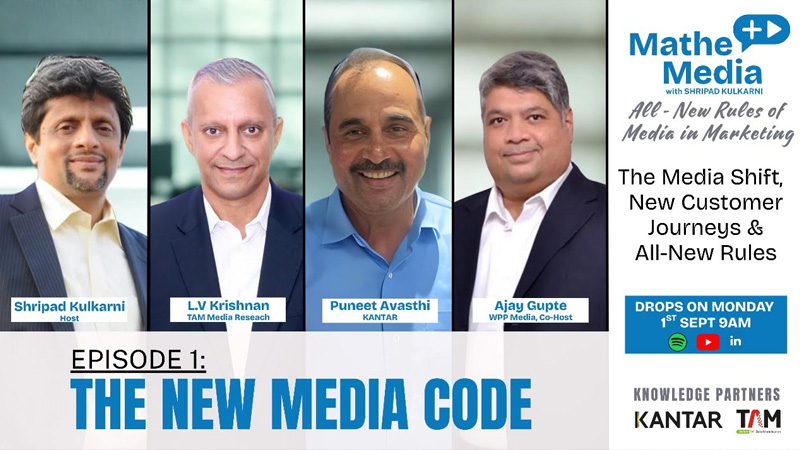
    MUMBAI:  Shripad Kulkarni, veteran media maven and former ceo of Vizeum, is launching MatheMedia, a first-of-its-kind podcast that promises to crack the code of India’s fast-changing media landscape.

    Streaming from 1 September 2025, the long-format series blends a CMO briefing with a masterclass, featuring over 25 industry heavyweights from advertising, tech, publishing, and brand leadership. The opening episode, aptly titled ‘The New Media Code’, will bring together voices such as L.V. Krishnan (TAM Media Research), Puneet Avasthi (Kantar), and Ajay Gupte (WPP Media) to decode the seismic shifts shaking the industry.

    “We live in a world of channel chaos, with more platforms and fragmented audiences than ever before,” said MatheMedia, founder, Shripad Kulkarni. “Gone are the days when we could think & work linear & measure with a linear mindset. Today’s marketer faces multiple challenges. With more category entry points, brand assets & personalised messaging needs, brand strategy is being redefined. Brand custodians face growing pressure from a crowded network of channels and partners. It’s time for new rules in strategy, media, measurement, and collaborations.”

    The podcast’s 12-episode debut season will tackle hot-button issues: the rise of AI in advertising, quick commerce, evolving consumer journeys, and the urgent need for unified, privacy-compliant measurement systems. Expect candid debates, sharp insights, and a dash of storytelling to simplify complex industry jargons.

    Guests lined up include Schbang’s Akshay Gurnani, Google India’s Priya Choudhary, Dentsu Creative Isobar’s Sahil Shah, and India Today’s Vivek Malhotra, to name just a few. Think of it as a roundtable where India’s top media minds redraw the playbook for marketers navigating chaos.

    Kulkarni, who has advised marquee brands from Fevicol and BMW to Airbnb and Yes Bank, brings his three-decade expertise and signature wit to the mic. His goal is to help professionals not just adapt to disruption, but shape it.

    Episodes will drop every Monday across Spotify, YouTube, LinkedIn and Instagram. So, whether you’re a CMO, a curious marketer, or just wondering why your ads keep following you around the internet, MatheMedia might just be the formula you need.


  • Agri sector spends 66 per cent on print ads in 2024, digital sees 18 per cent growth: Excellent Publicity report

    Agri sector spends 66 per cent on print ads in 2024, digital sees 18 per cent growth: Excellent Publicity report

    MUMBAI : The humble print ad is still king of the farm, it seems, as a new report from Excellent Publicity, India’s ad-tech wizards, reveals that the agriculture and farming sector splurged a whopping 66 per cent of its total ad spend on print in 2024. That’s a bumper crop of broadsheets and tabloids reaching the heart of rural India.

    The report, drawing insights from thousands of campaigns and TAM Media Research data, painted a vivid picture of the agri-sector’s media consumption habits. While print remains the sturdy backbone of advertising efforts, digital is certainly planting its seeds, showing an 18 per cent growth in 2024 over 2022. It appears even farmers are swiping right on new tech.

    North Zone proved to be the print-loving powerhouse, accounting for 35.7 per cent of total print ad spends, with the South close behind at 30.8 per cent. Regional stalwarts like Dainik Bhaskar and Eenadu continued to harvest the lion’s share of regional ad spaces, proving that local news still cuts the mustard.

    Indian Farmers Fertiliser Cooperative (IFFCO) cemented its position as the top dog in print, commanding a massive 65.6 per cent share. Clearly, they’re not just fertilising crops, but ad pages too. And for those wondering, 99.4 per cent of these ads were in glorious technicolour – because even a tractor looks better in high definition – with nearly three-quarters gracing those coveted front-page spots.

    Television, however, saw a bit of a dry spell, with ad spends declining by 53 per cent in 2024 compared to 2022. Yet, insecticide brands sprayed their way to the top, seizing a 16.2 per cent share. News channels, ever the purveyors of prime-time drama, scooped up 80.4 per cent of TV ad spends. And who was the most familiar face gracing these agricultural advisories? None other than ajay devgan, whose celebrity endorsements tilled nearly 12 per cent of total TV ad durations.

    Excellent Publicity co-founder & director Vaishal Dalal commented, “The agriculture and farming sector continues to show a strong preference for traditional mediums, particularly print, which offers unparalleled reach in rural and semi-urban India. However, we are seeing growing digital adoption, especially for precision targeting and building direct engagement with the new-age farming community. The integration of digital with traditional advertising will likely shape the sector’s future media strategies.”

    Radio, that old faithful, saw a 38 per cent surge in ad spends in 2023 over 2022. Tirth Agro Technology, clearly with an ear to the ground, dominated radio waves, capturing 30 per cent of total radio ad spends in 2024. The West Zone was the loudest on radio, contributing 59.1 per cent, with My FM becoming the most preferred network. It seems radio still holds its own, proving that some classics never go out of style.

    Digital, the youthful disruptor, witnessed an 18 per cent growth in 2024 over 2022, with Jain Irrigation System leading the charge. Facebook.com, perhaps surprisingly, reaped 60.6 per cent of total digital ad spends, followed by X.com at 28 per cent. Display ads, those familiar banners and pop-ups, were the preferred format, making up 95.4 per cent of total digital ad volumes. Video, while sprouting interest, still has some growing to do. Over 190 advertisers cultivated exclusive digital campaigns in 2024, showing a clear shift towards digital-first strategies.

    The report concluded that advertising activity generally followed the agricultural calendar, peeking from May to November on TV, October to December in Print, January to March on Radio, and June to August on Digital. It seems advertisers know exactly when to sow their seeds to reap the best results.

  • Vikas Boni appointed Crunchyroll’s India lead for global distribution & partnerships

    Vikas Boni appointed Crunchyroll’s India lead for global distribution & partnerships

    MUMBAI: Vikas Boni has taken on the role of senior director and India lead for global distribution & partnerships at Crunchyroll, the world’s leading destination for anime and fandom. Based in Mumbai,  Boni’s mandate is to shape the next phase of growth for Crunchyroll in the region. He commenced his new role in July 2025.

    With over 16 years of experience across the media and digital landscape, Boni specialises in building high-impact partnerships, driving revenue growth, and leading content-driven businesses at scale.

    Prior to joining Crunchyroll, he served as business head & chief operating officer at Stars N Stripes, an award-winning digital marketing agency, from April 2023 to June 2025. In this capacity, he was responsible for developing and implementing the agency’s go-to-market strategy, aiming for a tenfold expansion within five years. His responsibilities included managing the agency’s overall profit and loss and establishing four distinct growth services: Studio SNS (branded content division), Social Circle (social media management), Shortcuts (short video content and tech solutions), and In The Air (creator platform).

    Boni also held significant leadership positions at Viacom18 Media Pvt Ltd  for over 13 years. His roles there included vice president and head of content licensing & partnerships for JioTV & JioTV+, where he led content licensing, acquisition, and partnerships to enhance the content portfolio and drive value for Jio Platforms Ltd.

    He also served as vice president and head of partnerships for Voot Select & Voot Shots, leading global partnerships for Voot and launching the short-form video product Voot Shots. Additionally, he was vice president and head of MTV Beats, business planning & content partnerships (YME), overseeing business planning and strategic partnerships for Viacom18’s Youth, Music & English Entertainment cluster. He played a pivotal role in launching and scaling youth-focused platforms like MTV Beats, MTV Indies, and Voot Shots.

    He began his career as an assistant manager in the strategy group at TAM Media Research from December 2007 to March 2010. Boni holds an MBA in marketing and a BE in information technology from the University of Mumbai.

  • IPL 18 breaks ad records as brands go full throttle on cricket’s biggest stage

    IPL 18 breaks ad records as brands go full throttle on cricket’s biggest stage

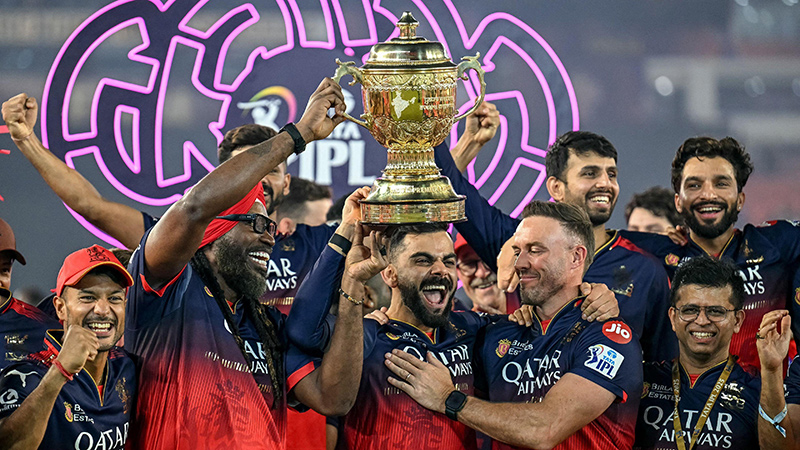
    MUMBAI: India’s favourite cricket carnival isn’t just smashing sixes on the field—it’s delivering knockout punches off it too. According to TAM Sports’ latest “Commercial Advertising Report” for IPL Season 18, ad volumes soared 10.5 per cent over last season, with brands and advertisers pouring into the league like never before.

    Average ad volume per channel per match nudged up by 0.5 per cent, but the real action was in the format. Blink and you’d miss it: sub-10 second spots were the most preferred ad length in IPL 18, overtaking the 11–20 second bracket that ruled in IPL 17. Short and sharp is clearly in.

    IPL 18 introduced over 25 fresh ad categories to the mix—including properties/real estate, branded jewellery, and cellular services—while more than 25 from IPL 17 vanished from the screen (goodbye chocolates and cement).

    The number of advertisers and brands jumped 30 per cent and 29 per cent respectively. Parle Biscuits took the top spot among advertisers (8 per cent share), while Vimal Elaichi chewed up the charts as the most advertised brand.

    Food & beverages led sectoral spends with 36 per cent share, followed by services (23 per cent) and auto (nine per cent). Mouth fresheners remained a favourite, topping both IPL 17 and 18, with ecom-gaming holding steady in third place.

    A total of 186 brands advertised across both regional and national (Hindi + English) sports channels, with Vimal Elaichi emerging as the MVP across language segments. Meanwhile, the likes of Amul and Puravankara focused on national visibility, while brands like Walkmate and Maliban stuck to regional turf.

    The final match of IPL 18 clocked the highest ad volume growth compared to its IPL 17 counterpart, proving once again that cricket’s climax is prime time for marketers.

    As IPL continues to evolve from sport to spectacle, it’s clear advertisers are no longer playing it safe—they’re playing to win, and in ever shorter bursts.

  • Print leads jewellery ad spend as digital gains: Insights from 2024 report

    Print leads jewellery ad spend as digital gains: Insights from 2024 report

    MUMBAI: Print media isn’t ready to hand over its crown just yet. Despite the digital surge, print advertising still ruled the jewellery sector in 2024, capturing 73 per cent of total ad spend, according to Excellent Publicity’s Jewellery Ad Spend Report. Released in collaboration with data from TAM Media Research, the report unpacks how jewellery brands distributed their ad budgets across print, TV, radio, and digital platforms.

    Print remained the undisputed leader, with Titan Company claiming 11 per cent of print ad spend, followed by Malabar Group at 8 per cent and Kalyan Jewellers at 7 per cent. Regional publications were pivotal, with South Indian newspapers commanding 28 per cent of print investments. Eenadu topped the list, closely followed by The Times of India.

    Television, another heavy hitter, accounted for 45 per cent of the total ad spend, with general entertainment channels (GECs) leading the charge. News and sports channels captured 36 per cent and nine per cent, respectively. Indian cinema stardom played a big role here, with Janhvi Kapoor and Alia Bhatt boosting Kalyan Jewellers to the top TV advertiser spot, contributing 20 per cent of TV ad spend.

    Digital platforms made their presence felt, reflecting a shift in consumer behaviour. Display ads dominated with 87 per cent of digital ad volume, while video content contributed 13 per cent. Facebook led the digital pack, commanding 75 per cent of digital ad spend, followed by YouTube at 11 per cent. Notably, August Jewellery was the top digital advertiser, responsible for 34 per cent of the sector’s digital spend.

    Excellent Publicity co-founder & director, Vaishal Dalal noted the evolution, “Television, radio, and print media have always been reliable mediums for the jewellery industry’s advertising. However, the technological revolution has brought about a remarkable change in people’s content-viewing habits. This behavioural change has opened up new avenues of online advertising formats for brands to connect with their audiences. The jewellery sector is no exception, embracing digital media to stay relevant and engage with its target consumers. With the endless possibilities digital offers, the future holds immense potential for growth and innovation in this space.”

    The report highlighted regional nuances in advertising. South India contributed 28 per cent to the overall national ad spend, with North India leading at 30 per cent. Southern publications and Radio Mirchi emerged as key platforms for brands targeting specific demographics, especially in South India’s thriving jewellery market.

    As the wedding season draws near, jewellery brands are expected to ramp up advertising across traditional and digital platforms. With a mix of celebrity endorsements, targeted regional campaigns, and innovative digital formats, the sector is poised to capitalise on increased consumer demand.

    Read the full report at www.excellentpublicity.com

  • TAM AdEx: Surge in political advertising during Maharashtra assembly elections

    TAM AdEx: Surge in political advertising during Maharashtra assembly elections

    Mumbai: As the election season approaches, the advertising landscape witnessed a surge in activity, especially across traditional mediums like TV, print, and radio. A recent report by TAM AdEx, a division of TAM Media Research, delved into the advertising patterns observed during the assembly election periods of September 2023 and October 2024. The report highlighted how political parties have strategically leveraged various media channels to maximize their reach and influence voters.

    The analysis focused on the ad insertions and ad volumes across different media platforms, comparing the data from the months leading up to the elections in 2023 and 2024. The study covered a range of advertising categories, primarily focusing on political ads, and provides insights into the evolving strategies adopted by political entities.

    The report noticed an increase in advertising across TV, print, and radio, particularly in the months leading up to the elections. Here’s a breakdown of the media usage trends:

    ●    Television remained the most dominant platform, capturing a large share of political ad insertions. This trend is attributed to TV’s extensive reach and ability to engage a wide demographic, making it a preferred medium for political campaigns.

    ●    Print media continued to play a crucial role, especially in regional advertising. Political parties leverage newspapers to reach specific voter bases, particularly in rural and semi-urban areas where print media retains substantial influence.

    ●    Radio also saw a noticeable increase in ad volumes, highlighting its importance as a medium for quick and cost-effective voter engagement, especially in local languages.

    The Ad Insertions data from the “Assembl Election – Ad Insertion” sheet reveals some interesting trends:

    ●    In September 2023, there was a moderate volume of ad insertions as political parties started ramping up their campaigns. However, by October 2024, there was a marked increase in ad insertions, indicating a more aggressive approach closer to the election dates.

    ●    The report highlighted that political ads constituted a significant portion of the total ad insertions across all three mediums (TV, print, and radio). This reflects the high stakes of assembly elections and the need for parties to maintain visibility across multiple channels.

    The data from the “Assembly Election – Ad Volume” sheet further elaborates on the share of ad volumes:

    ●    There was a noticeable shift in ad volumes between the two years, with October 2024 showing a higher volume compared to September 2023. This could be attributed to the heightened competition among political parties and the increasing significance of assembly elections in shaping state politics.

    ●    The increase in ad volumes suggested a growing emphasis on broadcast and print advertising as key components of election strategies. This aligns with the broader trend of political parties investing heavily in mass media to sway public opinion.

    The report also highlighted the distribution of ad insertions based on the per cent share of different media:

    ●    TV dominated the share of political ad insertions, followed by print and then radio. This aligns with the general perception that visual media has a stronger impact on viewers, especially during the election season.

    ●    The increased usage of radio in 2024 indicates a renewed interest in using audio channels to reach voters in rural and semi-urban areas. Radio’s localized nature allows political parties to tailor their messages to specific regions, making it a powerful tool for regional outreach.

    The comparative data between September 2023 and October 2024 reveals some strategic shifts in political advertising:

    ●    There was a clear escalation in ad spending as parties approached the 2024 assembly elections, indicating a more robust and aggressive campaign strategy. This aligns with the broader trend of political campaigns becoming more media-centric, leveraging high-frequency ad insertions to dominate the airwaves.

    ●    The report also suggested that political parties are increasingly adopting a multi-channel approach, utilising a mix of TV, print, and radio to ensure widespread voter engagement.

    TAM AdEx-Assembly Election Report – Sep’23 and Oct’24

  • TAM AdEx: Auto sector advertising sees shift in H1 2024 across media platforms

    TAM AdEx: Auto sector advertising sees shift in H1 2024 across media platforms

    Mumbai: According to the latest TAM AdEx half-yearly report for January to June 2024, advertising trends in the Auto sector show a marked shift in media preferences. While TV ad volumes for the Auto industry saw a decline of 14 per cent compared to the same period in 2023, the digital space grew significantly, with a 55 per cent rise in ad impressions. Print media also saw a resurgence, with ad space growing by 25 per cent, demonstrating a renewed interest in this traditional medium.

    Key highlights from the report:

    1.Two-wheelers dominated TV ad volumes, capturing a 39 per cent share in H1 2024, surpassing the Cars category, which held a 37 per cent share.

    2.Print advertising saw a notable 25 per cent increase in ad space, with Honda Shine 100 leading as the top brand, accounting for seven per cent of the ad space.

    3.On radio, the Auto sector’s ad volumes grew by 14 per cent over the previous year, with Cars contributing to 72 per cent of ad volumes. Maruti Suzuki India maintained its top spot with an 18 per cent share.

    4.The digital medium witnessed the most substantial growth, with a 55 per cent increase in ad impressions. Maruti Suzuki India led digital advertising, holding a 26 per cent share, followed by Hyundai Motor India at 14 per cent.

    Top performing brands and categories:

    Honda Shine 100, Maruti Suzuki Brezza and Nissan Magnite were among the leading brands across various platforms.

    The cars category dominated both Radio and Digital platforms, contributing to over 45 per cent of total ad volumes.

    Sales promotions constituted 54 per cent of ad space in print, with discount promotions being the most preferred method.

    Regional trends and insights:

    The north zone led print advertising, contributing 32 per cent of the total ad space, with Delhi and Mumbai as the top cities.

    For Radio, Gujarat emerged as the leading state, capturing 17 per cent of ad volumes.

    Hindi publications dominated print ads, accounting for 41 per cent of ad space, indicating a strong regional focus.

    The Auto sector’s shift towards digital platforms highlights an evolving advertising landscape, where brands are increasingly investing in online engagement. The significant growth in digital impressions suggests a strategic pivot to reach tech-savvy consumers, especially in the Cars and Two-Wheelers segments.

    The rise in print advertising also suggests that despite the digital boom, traditional media holds substantial value, particularly for localized and regional advertising. With news channels leading TV ad volumes and programmatic buying dominating digital transactions, advertisers are leveraging diverse media strategies to maximize reach and engagement.

  • TAM AdEx: FMCG ad volumes shift as print & TV decline, digital & radio grow in H1 2024

    TAM AdEx: FMCG ad volumes shift as print & TV decline, digital & radio grow in H1 2024

    Mumbai: The latest TAM AdEx report for January-June 2024 shows a six per cent decline in print ad space for the fast-moving consumer goods (FMCG) sector compared to the same period last year. January held the highest share of print ad space at 20 per cent, with March following closely at 18 per cent.

    Toilet soaps topped the print ad space with a 10 per cent share, while digestives held onto their leading position from the previous year. Spices, OTC products, vitamins, and health supplements also contributed notably to the ad space, highlighting FMCG’s focus on daily essentials and health-related items.

    Hindustan Unilever commanded an 18 per cent share of FMCG ad volumes in print, followed by SBS Biotech and GCMMF(Amul). New additions to the top advertiser list included Munimjee & Sons, Mankind Pharma, and Vicco Laboratories. Leading brands in the period were Dr. Ortho Oil, Pet Saffa Range, and Roop Mantra Ayur Face Cream, with the top 10 brands collectively contributing 16 per cent of the overall print ad space.

    The North Zone led regional ad distribution, capturing 38 per cent of the total FMCG print ad space, with the West, South, and East zones following. Delhi and Mumbai ranked as top cities for FMCG print ads, alongside regional leaders Kolkata and Bangalore. Sales promotions made up 22 per cent of ad space, with volume promotions holding 35 per cent and discount promotions at 29 per cent.

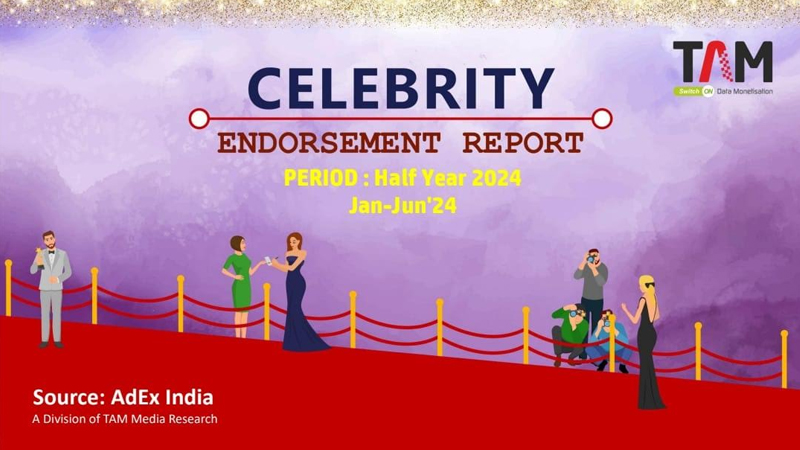
  • Tam AdEx: Celebrity endorsements dominate 32 per cent of TV ads in H1 2024

    Tam AdEx: Celebrity endorsements dominate 32 per cent of TV ads in H1 2024

    Mumbai: The latest report from Tam AdEx India for January to June 2024 highlights a key role of celebrity endorsements in television advertising. This period saw 32 per cent of total TV ads being endorsed by celebrities, with film actors contributing more than 75 per cent of the celebrity ad space.

    The food & beverages sector emerged as the largest contributor, making up 28 per cent of total celebrity-endorsed ads. The food & beverages, personal care/personal hygiene, and household products sectors collectively represented over 50 per cent of celebrity-endorsed ads. Among these, ads in the food & beverages sector saw a dominance of male celebrities, while the personal care segment was led by female endorsers. Categories such as toilet/floor cleaners and aerated soft drinks topped the list, with toilet cleaners alone holding an eight per cent share.

    Film stars, sports personalities, and TV actors were the main contributors to the 32 per cent of ads featuring celebrity endorsements. The top three most visible celebrities during this period were Akshay Kumar and Shahrukh Khan, each with five per cent visibility, followed closely by Amitabh Bachchan with four per cent. Akshay Kumar maintained an impressive 22 hours per day of ad visibility across channels.

    The dominance of the food & beverages sector was clear, while personal care/personal hygiene and household products followed closely. With 28 per cent of the overall ad volumes, the food & beverages sector continued to attract top male celebrities, whereas personal care remained the preferred category for female endorsers.

    In the first half of 2024, Akshay Kumar was the most visible celebrity, followed by Shahrukh Khan, Amitabh Bachchan, and M.S. Dhoni. Six of the top ten celebrities, including Amitabh Bachchan and Kiara Advani endorsed more brands than they did during the same period in 2023. Sports personalities like M.S. Dhoni also made a notable impact. Additionally, power couples like Ranbir Kapoor and Alia Bhatt led the pack in couple endorsements, contributing to more than 18 per cent of the total ad space. Akshay Kumar and Twinkle Khanna followed with 16 per cent, making couple endorsements a growing trend.

  • TV ad volumes of personal healthcare sector rose by 2% in Jan-Sep’22: TAM AdEx report

    TV ad volumes of personal healthcare sector rose by 2% in Jan-Sep’22: TAM AdEx report

    Mumbai: In comparison to January-September 2021, the personal healthcare sector’s ad volume trend witnessed a two per cent rise in television during the same period in 2022. In a report released by AdEx India, a division of TAM Media Research, rubs and balms topped the list of personal healthcare categories on TV with an ad volume share of 20 per cent.

    Antiseptic creams and liquids (17 per cent), digestives (12 per cent), medicated skin treatments (11 per cent), a variety of OTC products (11 per cent), vitamins, tonics, and health supplements (nine per cent), cough lozenges (six per cent), antacids (three per cent), condoms (two per cent), and analgesics and cold tablets (two per cent) were the top ten categories that accounted for 93 per cent of total ad volumes between January and September 22.

    Reckitt Benckiser India topped the list of the top 10 advertisers in the personal healthcare sector with more than a third of sector ad volumes in Jan-Sep’22, followed by Procter & Gamble and Smithkline Beecham with a 10 per cent and seven per cent share, respectively.

    Additionally, the report found that over 500 brands had advertised on television between Jan-Sep ’22, of which 42 per cent share of the ad volumes were accounted for by the top 10 brands. Moreover, the report stated that over 200 exclusive brands had advertised within the personal healthcare sector during the same period.

    The top two channel genres, general entertainment channels (GECs) and news, had an equal share of 29 per cent of the sector’s ad volumes. Movies (23 per cent), music (12 per cent), and kids (three per cent) are the other three channel genres that account for 95 per cent of the sector’s contribution to TV ad volumes.

    Furthermore, the report obscured the fact that feature films were the top programme genre, accounting for a 26 per cent share of the sector and its volumes, and that the top three programme genres combined for 58 per cent of the sector’s ad volume.

    On TV, prime time was the most preferred time-band for the sector ads. The combined share of all three time bands, prime time, afternoon, and morning, stood at more than 70 per cent of ad volumes.

    According to the report, advertisers in the personal healthcare sector preferred ad lengths of less than 40 seconds on television. While 20-40 second and less than 20 second ads combined for more than 98 per cent of total ad volumes between January and September’22,

    Ad Insertions in the personal healthcare sector on digital mediums increased 2.6-fold between January and September’22 of this year compared to the same period in 2021.

    The top 10 categories of the sector had a 95 per cent share of ad insertions during Jan-Sep’22 with hearing aids topping the list with a 30 per cent share, followed by vitamins/tonics/health supplements (24 per cent) and range of OTC products (11 per cent) and corporate-pharma/healthcare (11 per cent).

    The top 10 advertisers in the sector on digital were led by Sundries Hearing Solutions with a 30 per cent share of ad insertions, followed by Sun Pharmaceutical and Johnson & Johnson at four per cent each.

    Display ads were found to account for more than half of sector ad insertions between January and September 22 under the banner of creative types and digital platforms. Among the digital platforms, desktop video topped with a 31 per cent share, which was followed by desktop digital at 23 per cent and mobile display at 17 per cent, the report claimed.

    In the print advertising medium, the personal healthcare sector discovered a three per cent fall in ad space during Jan-Sep ’22 in comparison to the same period in 2021.

    The report further pointed out that in the list of the top 10 categories, vitamins/tonics/health supplements lead the chart with a 23 per cent share of ad volumes.

    According to the findings in the report, the top 10 categories accounted for 93 per cent of the total share. SBS Biotech was the top promoter during the period with a 35 per cent share of the total ad space. Furthermore, it is observed that the top 10 advertisers garnered a 65 per cent share of the sector’s ad space.

    1,400 brands were present during the Jan-Sep’22 period, where the top 10 brands had a 41 per cent share of the sector’s ad space. In addition, from January to September’21, the report discovered over 700 exclusive brands in the personal healthcare sector.

    Hindi accounted for 51 per cent of the sector ad space for languages, followed by Marathi at 17 per cent and English at eight per cent.

    The genre of general interest publications has captured 98.7 per cent of the sector’s ad space. According to the report, 24 per cent of ad space in the personal healthcare sector was with various promotional offers, and volume promotion had a 74 per cent share of ad space among sales promotions.