Tag: TAM AdEX

  • Bihar Election 2020 – Political ad spend analysis: TAM data

    Bihar Election 2020 – Political ad spend analysis: TAM data

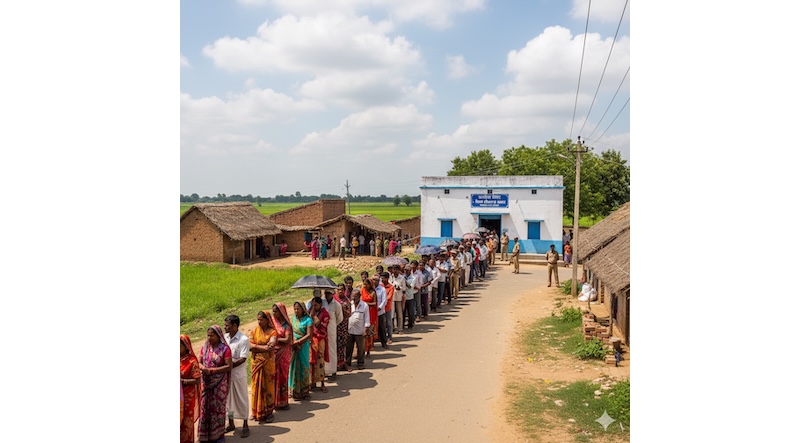
    MUMBAI: The battle for Bihar in 2020 wasn’t just fought on dusty village squares and opposition rallies. It raged across television screens and newspaper columns, with political parties unleashing millions in advertising rupees to woo voters. TAM Media’s advertising expenditure data reveals a lopsided affair: television gobbled up a staggering 93 per cent of all political advertising spend, leaving print media to scrap over a measly 7 per cent.

    The Bharatiya Janata Party emerged as the undisputed heavyweight, commanding 38.7 per cent of overall ad insertions—more than double its nearest competitor. On television, where the real money flowed, BJP’s dominance was even more pronounced at 41 per cent of all ad slots. The National Democratic Alliance, its coalition partner, secured 17.4 per cent overall, with an 18.6 per cent share on television.

    Congress, despite its third-place finish in overall spending at 17 per cent, displayed tactical nous in print advertising. The party ranked second in newspapers with 7.1 per cent of insertions as a standalone advertiser, while a Congress-led coalition (Congress-I/RJD/CPI variants) topped print spending at 15.7 per cent—edging past a BJP-led alliance’s 14.1 per cent.Top 5 ad spenders

    Rashtriya Janata Dal and Janata Dal United rounded out the top five, with 11.9 per cent and 8.9 per cent of overall insertions respectively. The fragmented opposition was evident in the numbers: 25 other parties collectively managed just 6.1 per cent of ad insertions, with print media seeing an even messier 44.6 per cent split among 15 smaller players.

    But the real story lies in the timing. TAM Media’s week-by-week analysis reveals a campaign that began as a whisper and ended as a roar. For the first six weeks—from early September through early October—political advertising barely registered on television. Print maintained a modest but steady presence during this period, with a slight peak in week three.

    Then came the deluge. From week seven onwards, television advertising exploded in a dramatic crescendo. By week nine (25-31 October), TV ad insertions hit their peak at 42 per cent of the entire campaign’s television spend—a staggering concentration just days before polling. Print advertising followed a similar trajectory, peaking at 31 per cent during the same crucial week nine, though it maintained a more consistent presence throughout the campaign compared to television’s late surge.

    The pattern is unmistakable: parties held their fire until voters’ attention was sharpest, then carpet-bombed the airwaves in the final fortnight. Week ten saw a slight decline as polling day arrived, but by then the damage—or persuasion—was done.

    The data, covering political advertisements across Bihar’s television channels and publications during the election period, paints a clear picture: in Bihar’s ad war, television was the main battleground, BJP brought the biggest guns, and everyone saved their ammunition for a final, frenzied assault on voters’ senses. Welcome to democracy, Bihar-style—where timing is everything and the biggest megaphone usually wins.

  • India’s ad market rebounds in H1 2025 as TV steals the show: Excellent Publicity report

    India’s ad market rebounds in H1 2025 as TV steals the show: Excellent Publicity report

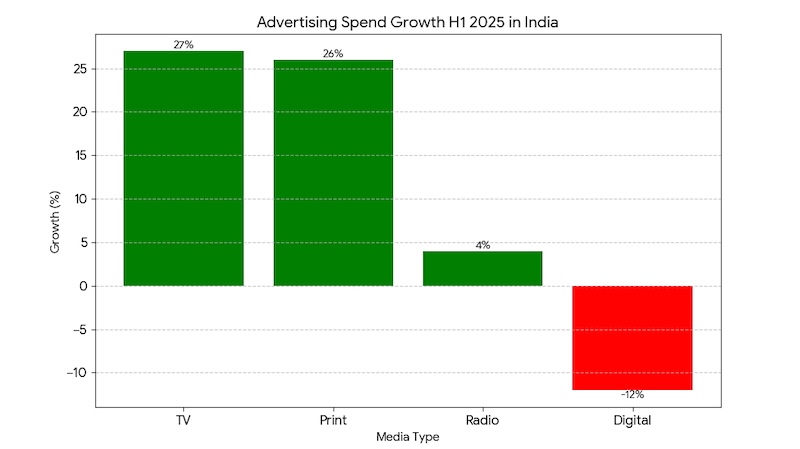
    MUMBAI: Here’s one report which is not talking of doom and gloom as far as ad spends in India are concerned. India’s advertising market kicked off 2025 on a high according to a half-yearly report by ad-tech and media planning agency Excellent Publicity, citing data from TAM Media Research, TAM AdEx and RCS India, reported Business Standard. The report said that  television powered ahead as the biggest gainer in the first half of the year, outspending print and radio, while digital was the lone laggard.

    Ad spends on TV per channel jumped 27 per cent year-on-year. Sports channels hoovered up 68.5 per cent of TV spends, trailed by general entertainment with 15.7 per cent. The e-commerce media, entertainment and social media category led volumes with a 25.6 per cent share. Star India kept its crown with 16.8 per cent of volumes, while Jio Hotstar topped the brand charts. Cellular services were the fastest risers, ballooning 17 times over the year.

    Print was no pushover either, posting a robust 26 per cent growth. Cars took pole position with 8.9 per cent of spends, while two-wheelers zipped ahead with a 31 per cent surge. Maruti Suzuki India was the top advertiser; Allen Career Institute, the top brand. Rajasthan led among states with 15.6 per cent of spends, and Delhi among cities with 7.1 per cent.

    Radio barely moved the needle, inching up 4 per cent. Properties and real estate dominated, cars followed, and pan masala muscled into the top 10. Maharashtra accounted for 19.3 per cent of radio spends, Delhi 18.1 per cent. Maruti Suzuki India again led advertisers, while Jeena Sikho Lifecare was the top brand.

    Digital, by contrast, shrank 12 per cent – the only medium to contract – though it logged the highest number of advertisers in three years. E-commerce online shopping led with an 11.2 per cent share. Amazon Online India was the top advertiser, Amazon.in the top brand. Programmatic buying made up 88.3 per cent of spends. Some niches bucked the trend: washing powders and liquids soared 21 times, perfumes and deodorants six times.

    “What’s really interesting is how brands are navigating a delicate balance,” said Excellent Publicity co-founder and director Vaishal Dalal.. “TV still captures attention, radio keeps the connection local and relatable, print is earning back trust, and digital is becoming sharper and more targeted.”

    Strangely the report did not talk about  outdoor spends. Was the situation hunky-dory in the sector like TV?

  • Ad volumes tune up as TV, radio and print steal the show in H1 2025

    Ad volumes tune up as TV, radio and print steal the show in H1 2025

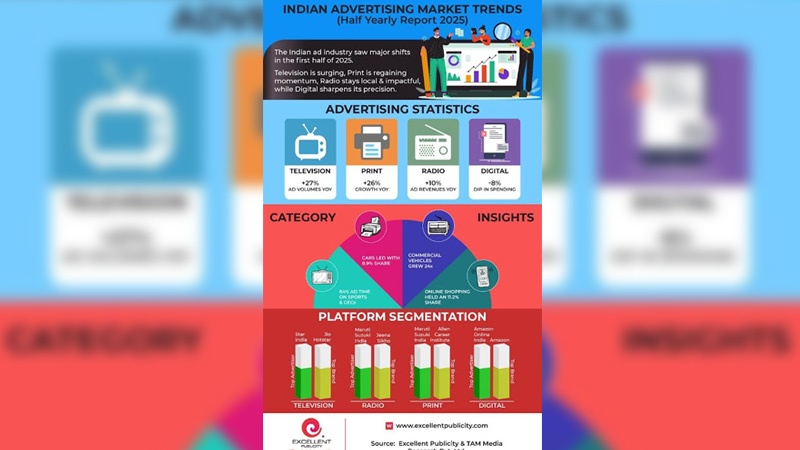
    MUMBAI: Lights, camera, action, India’s advertising pie in 2025 is anything but half-baked. The first half of the year has seen TV, radio, and print rise with renewed swagger, even as digital took a cautious breather, according to a trends report by Excellent Publicity in partnership with TAM Adex and RCS India.

    Television strutted confidently, clocking a 27 per cent surge in ad volumes and a 64 per cent jump in spends over 2023. Unsurprisingly, Star India ruled the charts, while Jio Hotstar topped brand visibility. Together, Sports and GECs claimed 84 per cent of ad time, proving that prime time still makes advertisers shine. Entertainment, e-commerce, and social media alone accounted for 25.6 per cent of volumes.

    Radio kept its local beat alive, growing 10 per cent in revenues over 2023. Real estate and cars dominated the airwaves, with Maruti Suzuki India the top advertiser and Jeena Sikho the loudest brand. The real showstopper? Commercial vehicles, which roared with a 24x spike in ad spends, underscoring radio’s rural and tier-2 pull.

    Print, once counted out, flipped back into relevance with 26 per cent growth YoY. Cars led the page with 8.9 per cent of spends, while Retail Departmental Stores made a debut in the top 10. Allen Career Institute continued to hold the spotlight, and two-wheelers raced ahead with a 31 per cent surge in spends, showing print’s enduring power in suburban and semi-urban India.

    Digital, meanwhile, had a paradoxical season. Though overall spends dipped 8 per cent YoY, the platform saw its highest number of advertisers in three years. Online shopping led the charge with 11.2 per cent of total spends, Amazon India as the top advertiser and Amazon the most visible brand. Quirky shifts included washing powders and liquids exploding by 21x and perfumes/deodorants by 6x, while programmatic accounted for 88.3 per cent of spends, cementing automation’s dominance.

    As Excellent Publicity co-founder Vaishal Dalal put it: “TV still captures attention, radio keeps it local, print earns back trust, and digital is sharper than ever. The winners are those who embrace each medium’s strengths while staying innovative.”

    India’s ad world, it seems, is learning to juggle tradition with tech – and in 2025, every medium is fighting for its close-up.

  • TAM Adex: Indian TV advertising takes a breather as brands tighten purse strings in H1 2025

    TAM Adex: Indian TV advertising takes a breather as brands tighten purse strings in H1 2025

    MUMBAI: India’s television advertising market has hit the brakes. Ad volumes per channel tumbled 10 per cent in the first half of 2025 compared with the same period last year, signalling what industry watchers call a “strategic recalibration” in advertiser spending.
    top 10 brandsThe pullback comes as brands reassess their media strategies amid economic uncertainty. Yet some categories are thriving. Food and beverages maintained their dominance with a 22 per cent share of total ad volumes, followed by personal care and hygiene products at 16 per cent.

    The real winners were toilet and floor cleaners, which saw ad spending surge 16 per cent—the highest growth among major categories. E-commerce firms splashed out too, with online shopping platforms boosting their television presence by 48 per cent. Vocational training institutes went on the biggest spree, nearly quadrupling their ad volumes.
     

    Top 10 advertisers

    Hindustan Unilever retained its crown as India’s biggest television advertiser, with Reckitt Benckiser close behind. Together, the top 10 advertisers—dominated by fast-moving consumer goods companies—accounted for 47 per cent of all ad volumes.

    Toilet soaps led categories

    Reckitt’s aggressive push was evident in the brand rankings. Six of the 10 most-advertised brands belonged to the British consumer goods giant, led by Harpic Power Plus toilet cleaner. Dettol soap and antiseptic liquid also featured prominently.

    Top channel genres

    General entertainment channels edged past news networks to capture 31 per cent of ad volumes, reversing last year’s trend. The top five channel genres hoovered up more than 95 per cent of total advertising, underscoring the continued dominance of mainstream television over niche programming.

    Food and beverages

    The data, compiled by TAM AdEx from over 600 television channels, suggests Indian advertisers are becoming more selective about their television investments. With more than 6,600 brands vying for viewer attention, only the biggest spenders are breaking through the clutter.

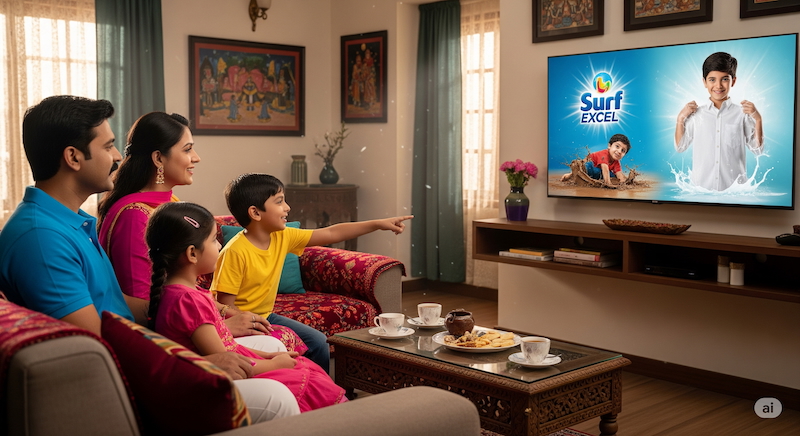
    (The picture featuring the family watching the Surf Excel ad on TV is representational only. No brand infringement is intended)

  • TAM AdEx: Surge in political advertising during Maharashtra assembly elections

    TAM AdEx: Surge in political advertising during Maharashtra assembly elections

    Mumbai: As the election season approaches, the advertising landscape witnessed a surge in activity, especially across traditional mediums like TV, print, and radio. A recent report by TAM AdEx, a division of TAM Media Research, delved into the advertising patterns observed during the assembly election periods of September 2023 and October 2024. The report highlighted how political parties have strategically leveraged various media channels to maximize their reach and influence voters.

    The analysis focused on the ad insertions and ad volumes across different media platforms, comparing the data from the months leading up to the elections in 2023 and 2024. The study covered a range of advertising categories, primarily focusing on political ads, and provides insights into the evolving strategies adopted by political entities.

    The report noticed an increase in advertising across TV, print, and radio, particularly in the months leading up to the elections. Here’s a breakdown of the media usage trends:

    ●    Television remained the most dominant platform, capturing a large share of political ad insertions. This trend is attributed to TV’s extensive reach and ability to engage a wide demographic, making it a preferred medium for political campaigns.

    ●    Print media continued to play a crucial role, especially in regional advertising. Political parties leverage newspapers to reach specific voter bases, particularly in rural and semi-urban areas where print media retains substantial influence.

    ●    Radio also saw a noticeable increase in ad volumes, highlighting its importance as a medium for quick and cost-effective voter engagement, especially in local languages.

    The Ad Insertions data from the “Assembl Election – Ad Insertion” sheet reveals some interesting trends:

    ●    In September 2023, there was a moderate volume of ad insertions as political parties started ramping up their campaigns. However, by October 2024, there was a marked increase in ad insertions, indicating a more aggressive approach closer to the election dates.

    ●    The report highlighted that political ads constituted a significant portion of the total ad insertions across all three mediums (TV, print, and radio). This reflects the high stakes of assembly elections and the need for parties to maintain visibility across multiple channels.

    The data from the “Assembly Election – Ad Volume” sheet further elaborates on the share of ad volumes:

    ●    There was a noticeable shift in ad volumes between the two years, with October 2024 showing a higher volume compared to September 2023. This could be attributed to the heightened competition among political parties and the increasing significance of assembly elections in shaping state politics.

    ●    The increase in ad volumes suggested a growing emphasis on broadcast and print advertising as key components of election strategies. This aligns with the broader trend of political parties investing heavily in mass media to sway public opinion.

    The report also highlighted the distribution of ad insertions based on the per cent share of different media:

    ●    TV dominated the share of political ad insertions, followed by print and then radio. This aligns with the general perception that visual media has a stronger impact on viewers, especially during the election season.

    ●    The increased usage of radio in 2024 indicates a renewed interest in using audio channels to reach voters in rural and semi-urban areas. Radio’s localized nature allows political parties to tailor their messages to specific regions, making it a powerful tool for regional outreach.

    The comparative data between September 2023 and October 2024 reveals some strategic shifts in political advertising:

    ●    There was a clear escalation in ad spending as parties approached the 2024 assembly elections, indicating a more robust and aggressive campaign strategy. This aligns with the broader trend of political campaigns becoming more media-centric, leveraging high-frequency ad insertions to dominate the airwaves.

    ●    The report also suggested that political parties are increasingly adopting a multi-channel approach, utilising a mix of TV, print, and radio to ensure widespread voter engagement.

    TAM AdEx-Assembly Election Report – Sep’23 and Oct’24

  • TAM report: Britannia Industries and Nestle India entered the top 10 list during Jul-Sept’23

    TAM report: Britannia Industries and Nestle India entered the top 10 list during Jul-Sept’23

    Mumbai: TAM AdEx has released a quarterly report on television advertising for Jul – Sep’23.

    Ad volumes on television advertising witnessed growth of five per cent in Apr-Jun’23 and one per cent growth in Jul-Sep’23 compared to Jan-Mar’23. Also, Jul-Sept’23 observed a degrowth of four per cent in TV ad volumes compared to Jul-Sep’22.

    Food & beverages retained its top position compared to Apr-Jun’23; the auto sector observed a positive rank shift. Banking/finance/investment entered the top 10 list of sectors during Jul-Sep’23 compared to Apr-Jun’23. The top 10 sectors together added 89 per cent share of ad volumes in Jul-Sep’23.

    The top 10 categories collectively added 33 per cent share of ad volumes on television advertising during Jul-Sep’23. During Jul-Sep’23, biscuits, tea and mosquito repellents were the new entrants in the top 10 list of categories compared to Apr-Jun’23. Washing powder/liquids, milk beverages, and shampoos observed a positive rank shift in Jul-Sep’23 compared to Apr-Jun’23.

    Hindustan Unilever and Reckitt Benckiser (India) retained their first and second positions during Q’1, Q’2 and Q’3 of Y 2023. During Jul-Sep’23, the top 10 advertisers contributed 49 per cent share of ad volumes on TV advertising. Britannia Industries and Nestle India entered the top 10 list during Jul-Sept’23 and secured ninth and tenth positions compared to their 14th and 13th positions respectively in Apr-Jun’23.

    In Jul-Sep’23, the top 10 brands together accounted for 10 per cent share of ad volumes on television advertising. Out of the top 10 brands present in Jul-Sep’23, five of them belonged to Reckitt Benckiser (India) and four belonged to Hindustan Unilever. Also, five of the top 10 brands belonged to personal care/personal hygiene sector during Jul-Sep’23.

    Milk beverages saw highest increase in ad volumes resulting in 30 per cent growth during Jul-Sep’23 compared to Apr-Jun’23 followed by ecom-online shopping with 76 per cent growth.

    Compared to Jan-Mar’23, GEC and movies genre witnessed minor rise in percentage share of ad volumes in Jul-Sep’23. Whereas, news and kids genre’s share was maintained throughout all three quarters. The top five genre together contributed more than 90 per cent share of ad volumes in each of the Q’1, Q’2 and Q’3 of Y 2023.

  • Top five advertisers contributed 32 per cent of ICC World Cup ’23 ad volumes: TAM Sports

    Top five advertisers contributed 32 per cent of ICC World Cup ’23 ad volumes: TAM Sports

    Mumbai: TAM Sports has released an advertising report based on the first 39 matches of ICC CW’23 and for all the channels on which matches are telecasted.

    ICC World Cup’23 witnessed indexed growth of 19 per cent from the first 39 matches in terms of average ad volumes per match compared to ICC World Cup’19.

    The count of categories & brands grew by 32 per cent and 30 per cent respectively in ICC World Cup’23 compared to ICC World Cup’19 during the first 39 matches from both the World Cups.

    In ICC World Cup’23, perfumes/deodorant was the leading category with eight per cent share of ad volumes. Perfumes/deodorant, pan masala & ecom-wallets were the only common categories among the top five of ICC World Cup’23 and ICC World Cup’19 in the first 39 matches.

    Also, the top five categories together covered 32 per cent share of ad volumes during the first 39 matches of ICC World Cup’23.

    Among the top five advertisers, Vini Product was the only common advertiser between ICC World Cup’23 and ICC World Cup’19. The top five advertisers collectively added 32 per cent share of ad volumes during ICC World Cup’23.

    Over 50 new categories and over 195 new brands were advertised in 39 matches of ICC World Cup’23 compared to the same number of matches in ICC World Cup’19.

    Among the 195 plus new brands, ‘Bharat Petroleum MAK’ was the leading brand followed by ‘Indusind Bank Indie App’.

  • Vini Product – sole common advertiser in ICC World Cup ’19 and ’23: TAM Sports

    Vini Product – sole common advertiser in ICC World Cup ’19 and ’23: TAM Sports

    Mumbai: TAM Sports has released an advertising report based on the first 31 matches of ICC Men’s Cricket World Cup’23 and for all the channels on which matches are telecasted.

    ICC World Cup’23 witnessed indexed growth of 22 per cent from the first 31 matches in terms of average ad volumes per match compared to ICC World Cup’19.

    Count of categories, advertisers & brands grew by 31 per cent, one per cent and 26 per cent respectively in ICC World Cup’23 compared to ICC World Cup’19 during the first 31 matches from both World Cups.

    In ICC World Cup’23, perfumes/deodorant was the leading category with eight per cent share of ad volumes. Perfumes/deodorant & ecom-wallets were the only common categories between ICC World Cup’23 and ICC World Cup’19 in the first 31 matches. Also, the top five categories together covered 32 per cent share of ad volumes during the first 31 matches of ICC World Cup’23. Among the top five advertisers, Vini Product was the only common advertiser between ICC World Cup’23 and ICC World Cup’19. The top five advertisers collectively added 31 per cent share of ad volumes during ICC World Cup’23.

    Over 50 new categories and over 175 new brands advertised in 31 matches of ICC World Cup’23 compared to the same number of matches in ICC World Cup’19. Among the 175 plus new brands, ‘Bharat Petroleum MAK’ was the leading brand followed by ‘Vi Cellular Phone Service’.

  • TAM Sports: Over 165 new brands were advertised in 23 matches of ICC World Cup’23

    TAM Sports: Over 165 new brands were advertised in 23 matches of ICC World Cup’23

    Mumbai: TAM Sports has released an advertising report based on the first 23 matches of ICC Men’s Cricket World Cup’23 and for all the channels on which matches are telecasted.

    ICC World Cup’23 witnessed indexed growth of 24 per cent from the first 23 matches in terms of average ad volumes per match compared to ICC World Cup’19.

    The count of categories, advertisers & brands grew by 29 per cent, two per cent and 24 per cent respectively in ICC World Cup’23 compared to ICC World Cup’19 during the first 23 matches from both World Cups.

    In ICC World Cup’23, Perfumes/deodorant was the leading category with nine per cent share of ad volumes. Perfumes/deodorant & ecom-wallets were the only common categories between ICC World Cup’23 and ICC World Cup’19 in the first 23 matches. Also, the top five categories together covered 33 per cent share of ad volumes during the first 23 matches of ICC World Cup’23. Among the top five advertisers, Vini Product & FX Mart were the only common advertisers between ICC World Cup’23 and ICC World Cup’19. The top five advertisers collectively added 32 per cent share of ad volumes during ICC World Cup’23.

    Over 45 new categories and over 165 new brands were advertised in 23 matches of ICC World Cup’23 compared to the same number of matches in ICC World Cup’19. Among the 165 plus new brands, ‘Bharat Petroleum MAK’ was the leading brand followed by ‘Mahindra XUV 700’.

  • TAM report: LIC was the leading brand during Jan-Jun’23

    TAM report: LIC was the leading brand during Jan-Jun’23

    Mumbai: TAM India has released a half-yearly report for advertising in Banking Finance Investments(BFSI).

    Ad volumes’ trend for BFSI on TV:

    The BFSI sector’s ad volumes on television increased by four per cent during Jan-Jun’23 compared to Jan-Jun’22.

    The top 10 categories together accounted for 85 per cent share of ad volumes in TV during Jan-Jun’23. Life insurance & mortgage loans retained their first & second positions in Jan-Jun’23 over Jan-Jun’22. Housing/construction loans, multiple loans & retail banking were the new entrants in the top ten list of categories in Jan-Jun’23

    compared to Jan-Jun’22. During Jan-Jun’23, the top ten advertisers accounted for 58 per cent of total ad volumes. LIC of India & Muthoot Financial Enterprises retained their first & second positions during H1’23 over H1’22. Piramal Capital & Housing Finance was an exclusive advertiser with five per cent share of ad volume in H1’23 over H1’22.

    Top 10 brands accounted for 42 per cent share of ad volumes in H1’23 over H1’22

    with Muthoot Finance Loan against gold leading the list. LIC New Pension Plus & Piramal Finance Home Loan were exclusive brands during Jan-Jun’23 over Jan-Jun’22.

    The top two TV channel genres accounted for 82 per cent of ad volumes share for BFSI sector during H1’23. The news channel genre was most preferred by BFSI players in Jan-Jun’23.

    News bulletin was the most preferred program genre to promote brands in the BFSI sector on television. The top two program genres i.e. news bulletin and feature films together added 61 per cent of the sector’s ad volumes.

    Prime time garnered the highest advertising on TV followed by afternoon and morning time bands. In terms of ad volumes, the prime time, afternoon, and morning time bands collectively accounted for 73 per cent share.

    Advertisers of the BFSI sector preferred 20 – 40 sec ad size on TV during H1’23. 20-40 seconds and less than 20 seconds ads together covered 92 per cent share.

    Ad space for BFSI sector in Print:

    Ad space of the BFSI sector witnessed a degrowth of seven per cent in Jan-Jun’23 compared to Jan-Jun’22.

    Public issues & life insurance retained their first and second positions in H1’23 over H1’22 with public issues leading the list. Fixed deposits & retail banking were the only new entrants in the top 10 list of categories during H1’23 over H1’22. During H1’23, the top 10 categories together added 88 per cent share of ad space. LIC of India retained its first position in Jan-Jun’23 with 19 per cent share of ad space. Adani Enterprises was an exclusive advertiser during Jan-Jun’23 with two per cent share of ad space. In print medium, the top 10 advertisers of the BFSI sector together added 38 per cent share of ad space in Jan-Jun’23.

    Out of the top 10 brands, five of them belonged to LIC of India in H1’23.

    The top 10 brands accounted for 25 per cent share of the total ad space in print.

    LIC Dhan Varsha, Adani Enterprise-IPO, HDFC Systematic Investment

    Plan & LIC New Pension Plus were exclusive brands present in Jan-Jun’23

    over Jan-Jun’22.

    The English language has the highest share of ad space, i.e., 51 per cent. The top five publication languages together added 88 per cent share of the sector’s ad space. General interest dominates ad space in general newspaper with 59 per cent.

    South zone was the leading territory with 34 per cent share of BFSI advertising in Print in Jan-Jun’23. Mumbai & New Delhi were the top cities in the West zone and North zone respectively. Also, they were the top two cities in PAN India during H1’23.

    Ad volumes’ trend for BFSI sector on radio:

    Index ad volume growth of BFSI sector witnessed surge of 32 per cent during Jan-Jun’23 compared to Jan-Jun’22.

    Life Insurance dominated the category list with 28 per cent of the total BFSI ad volumes. The top 10 categories added 91 per cent ad volume share of the sector on radio. The top four brands retained their respective positions in Jan-Jun’23 compared to Jan-Jun’22. The top 10 advertisers added 81 per cent share of ad volumes during H1’23, among which LIC of India was the leading advertiser. AMFI was an exclusive advertiser during Jan-Jun’23 compared to Jan-Jun’22.

    Top 10 brands accounted for 58 per cent share of ad volumes in Jan-Jun’23, in which LIC Housing Finance retained its first position. Five out of the top 10 brands belonged to LIC of India during H1’23. LIC Dhan Varsha, LIC Pension Plus & AMFI were exclusive brands present in the top 10 list in H1’23 over H1’22.

    The top three states occupied 47 per cent share of ad volumes for the BFSI sector. Maharashtra was the leading state for advertising on radio with 20 per cent share of the sector’s ad volumes in Jan-Jun’23.

    Advertising for BFSI was preferred in the evening closely followed by morning timeband on radio. 87 per cent share of the BFSI ad volumes were in evening and morning time-bands in Jan-Jun’23.

    Ad impressions trend for BFSI sector on digital:

    On Digital medium, ad impressions observed a massive surge of 91 per cent

    during the H1’23 compared to H1’22.

    Mutual Funds ascended to first position with 18 per cent share of ad impressions in H1’23. Also, the top 10 categories together accounted for 92 per cent share of ad impressions. Credit cards and retail banking were the new entrants in the top 10 list of categories during Jan-Jun’23. The top 10 advertisers collectively added 47 per cent share of ad impressions during H1’23 with AMFI leading the list of advertisers.

    Top 10 brands accounted for 41 per cent share of ad impressions in Jan-Jun’23.

    AMFI retained its first position with 11 per cent share of ad impressions in H1’23

    over H1’22.

    Programmatic was the leading transaction method for digital advertising of the BFSI sector in Jan-Jun’23 with 61 per cent share. Programmatic and programmatic/ad network transaction methods together captured 80 per cent share of BFSI ad impressions on digital.