Tag: TAM

  • TAM seeks to re-enter TV ratings: Storyboard18 report

    TAM seeks to re-enter TV ratings: Storyboard18 report

    MUMBAI: The TV ratings saga in India has got a new twist, if Network18’s Storyboard18 is to be believed. According to an unconfirmed report filed with it, the erstwhile TV viewership monitoring body TAM Media is seeking to take a majority stake in its 49: 51 joint venture with BARC – Meterology Data  Pvt Ltd (MDPL), the meter management company which manages panel operations for India’s  current TV audience measurement system.

    MDPL deploys and maintains the meters that form the TV panel, as per sample design specifications and guidelines laid down by the BARC technical committee, and supplies raw data to it which in turn provides it to channels, agencies and marketers.

    To get some perspective, TAM has been pursuing the ministry of information and broadcasting (MIB) to issue it a licence to monitor viewership of India’s television landscape, a role it performed prior to BARC taking charge, following a section of the industry’s disgruntlement with the former. But the MIB has yet to decide on its application.

    Currently, management control of MDPL lies in BARC’s hands,  which provides TV viewership figures, while TAM provides advertising expenditure, radio listenership and sports related data.

    A section of the industry believes that with TAM taking majority control of MDPL, a reverse merger between the two would be a logical conclusion, the storyboard18 report states, quoting anonymous sources, The other option is that TAM gets a licence and television in India has two ratings agencies, which will be unaffordable to the media and advertising industry because of the huge costs involved, explains the storyboard18 report.

     It adds that TAM (a 50:50 joint venture between Nielsen and Kantar Media) will also have to undergo shareholding structural changes with media agency Group M exiting from Kantar Media (on account of conflict of interest, as per Indian regulations) before the MIB can issue it a licence. 

    Picture courtesy Hathway annual report)

  • TV Ad volumes of real estate sector rose by 68% in January-May’22: TAM AdEx report

    TV Ad volumes of real estate sector rose by 68% in January-May’22: TAM AdEx report

    Mumbai: Ad volumes of real estate category on television rose by 68 per cent during January-May’22 over January-May’20, while the growth was 42 per cent more than the corresponding period last year. According to a TAM AdEx cross media report on the real estates sector, advertising volumes for the category saw an increase of 2.8 times on radio during the period as compared to the same period in 2020, even as advertising space in print medium grew by two times during the same period. Ad insertions of the category on digital medium during the January-May’22 saw a rise of 5.5 times.  

    On television the top 10 advertisers accounted for over 40 per cent share of ad volumes during the half-yearly period in 2022 with the advertiser Subha Gruha Projects (India) having the greatest ad volumes in the category, with 9 per cent, as per the report. 300 exclusive brands advertised under the category as compared to 2021. 20-40 seconds and greater than 20 seconds ads together added 83 per cent share of the category’s ad volumes, the data indicated.

    News genre was the most preferred for the sector in the TV medium, with the genre alone hogging 82 per cent of the category’s ad volumes share followed by general entertainment category (GEC) in the second position. The best three channels got 97 per cent of advertisement volumes’ share for category in January-May ’22.

    News Bulletin was the foremost well-known program to advanced properties-real estate category brands on TV, with the top two program genres i.e. news bulletin and interviews/portraits/discussion together adding 66 per cent of the category’s ad volumes.

    In the print medium, Kedia Real Estate was the best promoter within the categories with two per cent share of ad space during January-May ’22. The top ten advertisers accounted for 15 per cent share of ad space. Over 6,000 brands were present in print during January-May’22 among which the top 10 brands had 9 per cent share of ad space. During the period, over 4,500 exclusive brands appeared under the properties-real estates category compared to Jan-May’ 21. English dialect was on top with 37 per cent share of ad space with Hindi following close behind with a 31 per cent share.

    Meanwhile, Kedia Real Estate was the top advertiser in radio too. The top ten promoters added 25 per cent share of ad volumes amid Jan-May ’22. The top ten brands added 18 per cent to the overall advertising space of the category on radio. Over 590 brands advertised exclusively during January-May’22 over January-May’21.

    In digital, the top ten advertisers had 42 per cent share of ad insertions during January-May’22 with Skandhanshi Infra Projects India being on top of the list adding 19 per cent share. Display Ads had more than 98 per cent share of category ad insertions during January-May’22.  Also, among the digital platforms, desktop display topped with 57 per cent share of ad insertions followed by mobile display with 39 per cent share, as per the report.

  • Car brands continue to lead news genre advertising in 2020: TAM Adex

    Car brands continue to lead news genre advertising in 2020: TAM Adex

    NEW DELHI: Covid2019 impacted nearly every genre on television apart from news. Unlike other genres, news channels saw a meteoric rise in viewership for a variety of reasons – first, people turned to their choice of news channels to find out about the development at state, national and international levels around the Covid2019 situation; second, they believed it to be the most credible source of information, and third, it was the only genre that could create content and was permitted by the governments to operate. Unlike the GEC genre that completely relies on production and sets, news relies mostly on the on-ground coverage and its reporters.

    As per BARC, the genre saw a viewership surge of 298 per cent.

    However, during several webinars, industry meetings and discussions, head honchos at news networks clearly mentioned that the surge in viewership did not translate into advertising.

    TAM recently released data that showed ad volumes data on news genre grew by 23 per cent in 2020, compared to ad volumes in 2016. Interestingly, the quarter ended 31 December saw the highest number of hours in ad volumes per day.

    If we look closely at the data, we will notice an obvious trend where the average ad volumes per day steeply fell in the initial stages of lockdown, and then started picking up early May onwards. The trend was obvious because marketing teams at brands were still unable to gauge the depth of the crisis and not ready to bet money on advertising in that quarter.

    News has consistently maintained a 30 per cent average in overall television advertising across the years. (since 2016)

    Apart from the top five news genres – Hindi, Bengali, Telugu, Tamil and Kannada, other sub genres also grew.

    Services and food & beverages sectors were the leading advertisers on the news genre, however, car brands continued to have the highest ad volumes. The category also led the chart in 2019 also.

    HUL and Reckitt Benckiser India were the leading advertisers, while True Shield Hand Sanitiser, Colgate Dental Cream and Policybazaar.com were the leading brands in the genre.

    The report also highlighted that regional news channels had more than 70 per cent share of ad volumes. This year regional channels took away 73 per cent of ad volumes whereas national channels had only 27 per cent. The numbers were not very different in 2019.

    During the Unlock phase, the genre saw nearly 370 hours of average ad volumes per day, which was 49 per cent more than the lockdown period.

    Ad volumes on primetime band and the 20-40 seconder format still ruled the news genre.

  • Old controversy, new chaos: The TRP scam and all that jazz

    Old controversy, new chaos: The TRP scam and all that jazz

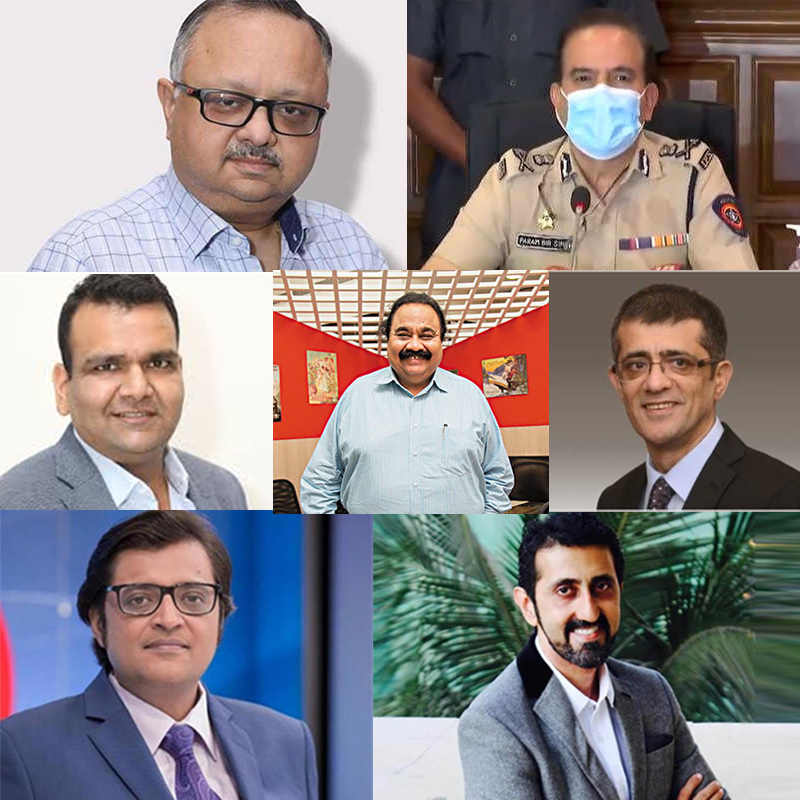
    NEW DELHI: The broadcasting industry had already been reeling under the impact of the Covid2019 pandemic when the Mumbai police came down on it, hard. On 8 October 2020, Mumbai police commissioner Param Bir Singh addressed a press conference about its investigation into an alleged scam involving the television audience measurement system.

    The matter had come to light when ratings agency Hansa Services Pvt Ltd, a contractor of Broadcast Audience Research Council (BARC), filed a complaint with the authorities, alleging that some TV channels had been manipulating their television rating points (TRPs). This had led to faulty calculations for advertisers and a major loss of revenue for stakeholders.

    Three channels were named in the complaint, namely Fakt Marathi, Box Cinema and Republic TV. According to police, the channels had allegedly bribed people who had bar-o-meters installed in their households. The owners of Fakt Marathi and Box Cinema were subsequently arrested and the directors, promoters of Republic TV were summoned for further questioning. Some of them were thrown in the cooler later.

    Three months down the line, the case has sent the entire industry into a conundrum of sorts. BARC has suspended the TV ratings for news channels till January. As many as 15 people, including several influential persons in the industry, have faced arrests, the latest being BARC’s former chief executive officer Partho Dasgupta. The media veteran was instrumental in setting up the BARC television ratings in 2015.

    Early stirrings of trouble

    It is not the first time a TRP measuring agency has found itself in a tight spot. The earliest instance of the tussle between broadcasters and data measuring agencies dates back to 2001. It began when then CEO of Zee Telefilms, Sandeep Goyal, openly declared his lack of faith in top rating agencies – ORG Marg's INTAM and AC Nielsen's TAM Research. Goyal wrote a letter to ORG Marg CEO Titoo Ahluwalia Goyal calling for an immediate suspension of TAM/INTAM ratings.

    “Zee has reasons to believe the data by the agency is ‘seriously influenced’,” he alleged. This was when Star India’s shows Kyunki Saas Bhi Kabhi Bahu Thi and Kahaani Ghar Ghar Ki had been topping the TRP charts consistently for weeks.

    CNBC carried out its own investigation and released a complete list of peoplemeters’ information which was supposed to be ‘strictly confidential’. The same year in October, a merger was announced between TAM and INTAM and they decided to provide combined TV rating services. But the controversy did not die.

    Doordarshan director-general SY Quraishi wrote a column for a leading English daily, wherein he recalled how he got a whiff of alleged manipulation of TRPs in 2002-03. “DD National’s prime time news share was 92 per cent. But, a private channel which described itself ‘sab se tez’ and had just four per cent share was declared as number one channel by TAM,” he wrote.

    Quraishi said he also got a peoplemeter installed in his office TV to see how it worked. And later found out “how people were being incentivised with pressure cookers and dining sets to get the meters installed and later bribed to keep certain channels running.”

    Shockwaves hit the Parliament 

    In 2008, the issue rocked the Parliament. The standing committee on information technology demanded legislation for an effective oversight or regulation on the TRP system to make it credible and accountable to the choice of viewers. It also cited the 1995 Supreme Court judgement, wherein the court pointed out “that airwaves are public property which needs to be controlled by a public authority.” The government was asked to “fructify a self-enabling, people-friendly and comprehensive legislation on broadcasting services without wasting further time.”

    Stand-off with NDTV

    In 2012, news channel NDTV sued TAM India’s parent companies Nielsen and Kantar Media for $810 million for fraud and $580 million for negligence in a New York court. It accused the companies of deliberately publishing corrupt and tainted data, favouring certain channels over others for kickbacks. The case was later dismissed on account of jurisdiction.

    Back home, NDTV decided to unsubscribe from TAM’s services, but ended up subscribing again, citing lack of alternate sources which provided such data. Not surprisingly, the incident left a bitter taste. 

    The rise of BARC

    TAM was already facing flak for inaccurate ratings. It also came under the direct scrutiny of the I&B ministry which stated that its sample size of around 7,200 peoplemeters is too small to represent a country with over 122 million TV households. The NDTV legal suit hastened its downfall and eventually TAM had to sell its TV measurement business to BARC, which was accredited by the Indian government to measure TV audiences.

    BARC was founded in 2010 by the Indian Broadcasting Foundation (IBF), the Indian Society of Advertisers (ISA), and the Advertising Agencies Association of India (AAAI). In April 2015, it released its first set of data which was derived under the new consumer classification system (NCCS). It brought together the three key stakeholders in television audience measurement – broadcasters, advertisers, and advertising and media agencies. The new ratings included a sample size of 10,000 bar-o-meters, which has now been scaled up to at least 40,000 households.

    Five years since it started releasing data, there are still murmurs of discontent. The broadcasters are still not completely satisfied with the sample size, the division of audience set under the NCCS and the measurement points.

    The genesis of the 2020 controversy

    The current controversy erupted when the deputy general manager of Hansa Research Group Pvt Ltd, Nitin Deokar, made a police complaint stating that Vishal Bhandari, a relationship manager at the firm, had allegedly been manipulating the ratings. In his complaint, he mentioned how he found a bar-O-meter installed at the house of Bhandari’s parents. According to police, Bhandari has confessed that he paid people to watch certain channels on the directions of one Vinay Tripathi. He also identified five homeowners who were reached out by him, including his own parents, it said.

    What do the TV channels say?

    The incident has dealt a severe blow to the TV channels named in the case. Several top executives have been arrested and bailed out, including Republic TV’s editor-in-chief Arnab Goswami. However, the channel has maintained that the allegations are false and baseless, claiming that Republic TV is being targeted for its reporting against the Mumbai police and Maharashtra government in the suicide case of actor Sushant Singh Rajput.

    It is also not the first time that Goswami has gotten into loggerheads with the Mumbai police. In a virtual discussion with Indiantelevision.com’s founder, CEO and editor-in-chief Anil Wanwari in September, Goswami had questioned the police on several matters, including the attack on him in Mumbai when he was returning home from work late at night with his wife. In another incident, Goswami had alleged in a petition that Mumbai police’s investigation in his role in the Palghar lynching case was mala fide. 

    The controversy has also led to a war of words between rival channels. Republic TV alleged that India Today was initially named in the complaint as well as the BARC audit report, but the Mumbai police gave it a clean chit.

    The News Broadcasters Federation (NBF), too, has looked askance at the involvement of Mumbai police in the case, which according to it was “never a criminal offence.” It asserted that the case should have been looked into by either TRAI or the ministry of information and broadcasting instead of the Mumbai law enforcers.

    What’s ahead?

    BARC has stopped releasing TRPs for the news channels since 15 October to review its current process. The government has formed a committee headed by Prasar Bharati CEO Shashi Shekhar Vempati to assess the existing rating system for TV channels.

    The committee would conduct an appraisal of the current system, study the TRAI recommendations notified from time to time, take stock of the overall industry scenario and address the needs of the stakeholders. It will then make recommendations for a robust, transparent and accountable rating system through changes, if any, in the existing guidelines.

    The Mumbai police, on the other hand, is on the warpath. BARC’s former CEO Partho Dasgupta will remain in judicial custody till mid-January, his bail plea is slated for hearing on 1 January.

    In a recent press conference, following the arrest of Dasgupta, Mumbai police also charged that he was the ‘mastermind’ of the alleged multi-crore scam. He has allegedly conspired to boost the ratings of one news channel by reducing the viewership of rivals and taking lakhs of rupees from accused channels to rig the ratings of competitors.

    In its charge sheet filed in November, Mumbai police named 140 people as witnesses, which includes some BARC officials, forensic experts, forensic auditors, advertisers and bar-o-meter users.

    The investigations will continue. The faceoff between Arnab and the cops will not end until one waves a white flag and backs off from the other.

    For the industry, the key question is whether BARC in its current form will be able to withstand the intense scrutiny and glare of the spotlight? 

    Its current CEO Sunil Lulla is a professional with impeccable, unmatchable ethics and credibility, as well as great human management skills. 

    One of the suggestions given by an industry veteran is that the way BARC  is funded will have to change. Most of the funding for its monitoring operations comes from broadcasters which are its subscribers; the other two ecosystem players, advertisers and advertising and media agencies, contribute a minuscule amount to its annual revenues. And amongst the broadcasters, the top five or six national TV networks probably contribute a majority to BARC’s kitty annually.

    In such a scenario, can one truly and honestly, with a hand over one’s heart, affirm that subtly or otherwise no outside influence will come into play? Will advertisers and agencies also start subscribing in large enough numbers so that BARC has the money to expand its peoplemeter sample to iron out any tomfoolery that anyone might attempt in future, especially in the case of channels with smaller and niche audiences? 

    Sure, Shashi Shekhar Vempati and his committee may come up with some improvements and recommendations. Will they be radically different? Maybe. Maybe not. Because the BARC tech committee had got everyone’s buy-in when it went about setting up its monitoring system around six or seven years ago. And that took some doing as the intention was to set up a fool-proof operation by all the partners. It had to represent what India watches; hence the sample had to be statistically sound with all the diverse viewing individuals adequately represented. Yet in time, it too flopped, having similar systemic failures as its predecessor. Some say it was on account of the way it gets its funds. 

    Many may not like what indiantelevision.com is stating here. It is quite likely that after this clean-up, the industry may settle down with the new improved BARC system when it starts chugging out the ratings.  However, it could only be for a while. Will it be not too long before it unwarily strays into another controversy? Will history not repeat itself?

    (With inputs from Srishti Choudhary)

  • TAM Media Research launches Crisp

    TAM Media Research launches Crisp

    NEW DELHI: TAM Media Research has launched CRISP (Consumer Reviews & Influencer Sentiments for Brand Performance) -a robust, intelligence analytics tool to help decode consumer sentiments in the Indian marketplace. The product is specially crafted for marketers to gauge and understand the actual consumer reviews/sentiments and augment the consumer product connect. It answers the need of today – to understand the need and qualitative views of the product user and improvise customer satisfaction so as to further build brand affinity and a loyal consumer. 

    TAM has partnered with Revuze – a leading company that has revolutionized product experience management globally. The AI based dashboard will be available to the users from October 2020. 

    The end consumer of a product makes the most significant contribution to a brand.  Consumer reviews, feedback and suggestions are the mirror to the brand’s image.  Today’s consumer at a click of a button can rave or rant about a product, its performance, customer service, etc. Every marketer knows the need to listen,  understand the feedback and reviews but is struggling. There is a gold mine of non-coded and unstructured information and data available in various forms across e-commerce sites, blogs, etc. Marketers do not have a quick and reliable single window means to decode, mine and analyze the data and know the actual sentiments from their direct users/influencers. 

    Crisp will help marketers with a holistic, unbiased, affordable, AI analytical tool at their fingertips.  

    This AI-based analytical tool provides actual data insights and analytics of the user sentiments. It tracks consumer sentiments across multiple e-commerce portals and decodes unstructured data in turn help marketers with valuable information to make informed decisions. The Analyzer tool is unconstrained by human bias and perception. This proprietary technology deep dives and provides Insights via tracking reviews, opinions, and messages.  

    TAM Media Research CEO LV Krishnan says, “Today’s evolved Indian consumer is not just pragmatic about the products they purchase but extremely vocal and quick to give reviews. For a marketer, this customer feedbacks can help realign product and communication strategy effectively. Hence, it is crucial for marketers to constantly keep track, understand and re-connect while managing consumer sentiments towards brands. TAM has partnered with  Revuze to bring a new age, robust, data analytics tool – Crisp, for marketers to decode the realms of unstructured feedback data from consumers and retrace it back into defining sharper brand strategies. In a fast-paced evolving environment, it can be a crucial weapon for Marketers to win additional brand sales and market shares. Crisp will help build the much-needed superior analytical prowess within  the marketers business and help analyze product usage, identify areas of  product/service improvement based on feedbacks so as to take quick-footed  decisions.”

    Revuze CRO Shai Etzion says, “After showing significant success in the USA, Revuze  is entering the Indian Market partnering with TAM Media, a natural choice being our mutual Nielsen family relationship and their 20+ years’ experience in deep understanding of the Indian media landscape. It will be a compelling product and a  game-changer for India to understand consumer sentiments and reviews.”

  • Santoor Sandal & Turmeric was top brand to advertise on TV during Onam, Ganesh Chaturthi

    Santoor Sandal & Turmeric was top brand to advertise on TV during Onam, Ganesh Chaturthi

    MUMBAI: Personal car and personal hygiene sector saw a dip in ad volumes at the onset of festive season during Ganesh Chaturthi and Onam, as revealed by a latest TAM AdEx data. While the sector noted a dip of 12 per cent during Ganesh Chaturthi (3 September-23 September), the decline was 26 per cent during Onam (1 September to 13 September), as compared the last year.

    However, it still remained the second top sector to advertise on television during the season. The first spot was claimed by Food & Beverages sector, that saw an 18 per cent rise during Ganesh Chaturthi but a dip of 8 per cent during Onam.

    Other top categories included services, household products, auto, and laundry.


    Top 10 Sectors around Ganesh Chaturthi festival period in Y-2019* with their indexed growth compared to Y-2018*


    Rank

    Sectors

    Index Growth/
    Degrowth

    1

    Food & Beverages

    118

    2

    Personal Care/Personal Hygiene

    88

    3

    Services

    89

    4

    Household Products

    119

    5

    Hair Care

    101

    6

    Personal Healthcare

    108

    7

    Laundry

    164

    8

    Auto

    110

    9

    Building, Industrial & Land Materials/Equipment

    95

    10

    Personal Accessories

    107


    Top 10 Sectors around Onam festival period in Y-2019* and their indexed growth compared to Y-2018*


    Rank

    Sectors

    Index Growth/
    Degrowth


    1

    Food & Beverages

    92


    2

    Personal Care/Personal Hygiene

    74


    3

    Services

    89


    4

    Household Products

    124


    5

    Hair Care

    95


    6

    Personal Healthcare

    88


    7

    Auto

    81


    8

    Laundry

    130


    9

    Building, Industrial & Land Materials/Equipment

    128


    10

    Personal Accessories

    114


    In terms of categories, ruling the Indian TV sets during these two festivals, toilet soaps remained on top despite recording a dip of 11 per cent during Ganesh Chaturthi and 28 per cent during Onam. Next in the ranking were Toilet/Floor Cleaners with an increase of 12 per cent and 31 per cent, respectively. E-commerce and online shopping also recorded a slight increase in ad volumes during the season.


    Top 10  Categories around Ganesh Chaturthi festival period in Y-2019* with their indexed growth compared to Y-2018*


    Rank

    Categories

    Index Growth/
    Degrowth

    1

    Toilet Soaps

    89

    2

    Toilet/Floor Cleaners

    112

    3

    Washing Powders/Liquids

    148

    4

    Shampoos

    103

    5

    Tooth Pastes

    101

    6

    Milk Beverages

    116

    7

    Auto-cars

    84

    8

    Paints

    90

    9

    Ecom-online Shopping

    103

    10

    Chocolates

    104


    Top 10 Categories around Onam festival period in Y-2019* and their indexed growth compared to Y-2018*


    Rank

    Categories

    Index Growth/
    Degrowth


    1

    Toilet Soaps

    72


    2

    Toilet/Floor Cleaners

    131


    3

    Washing Powders/Liquids

    128


    4

    Shampoos

    89


    5

    Tooth Pastes

    81


    6

    Paints

    147


    7

    Milk Beverages

    81


    8

    Ecom-Online Shopping

    104


    9

    Cars

    67


    10

    Ecom-Media/Entertainment/Social Media

    121


    The top brands to advertise on television, in terms of ad volumes, during these festivals were Santoor Sandal & Turmeric, Vanish Oxi Action, Lizol, Kalyan Jewellers, etc. The top advertisers included Hindustan Unilever, Reckitt Benckiser, Godrej, and Cadburys etc.

    Top 10 advertisers and brands in Y-2019*


    Rank

    Advertisers

    Brands


    Ganesh Chaturthi

    Onam

    Ganesh Chaturthi

    Onam

    1

    Hindustan Unilever

    Hindustan Unilever

    Santoor Sandal And Turmeric

    Santoor Sandal And Turmeric

    2

    Reckitt Benckiser (India)

    Reckitt Benckiser (India)

    Vanish Oxi Action

    Colgate Dental Cream

    3

    Godrej Consumer Products

    Godrej Consumer Products

    Lizol

    Vanish Oxi Action

    4

    Brooke Bond Lipton India

    Brooke Bond Lipton India

    Trivago

    Trivago

    5

    Cadburys India

    Procter & Gamble

    Colgate Dental Cream

    Lizol

    6

    Colgate Palmolive India

    Colgate Palmolive India

    Horlicks

    Kalyan Jewellers

    7

    Procter & Gamble

    Cadburys India

    Harpic 10/10

    Harpic Bathroom Cleaner

    8

    ITC

    Wipro

    Harpic Bathroom Cleaner

    Harpic 10/10

    9

    Wipro

    ITC

    Comfort Fabric Conditioner

    Asian Paints Royale Health Shield

    10

    Smithkline Beecham

    Procter & Gamble Home Products

    Flipkart.Com

    Olx.In

  • TV ad volumes in Q2-19 witnessed 10% rise: TAM AdEx

    TV ad volumes in Q2-19 witnessed 10% rise: TAM AdEx

    MUMBAI: TV ad volumes saw an indexed increase of 10 per cent in Q2-19 as compared to Q1-19, a recent TAM AdEx data report reveals. Personal care/personal hygiene became the top category increasing its percentage share in TV ad volumes by 2 per cent. The top category from Q1-19 was food & beverages, that slipped to second spot following a dip of 1 per cent in ad volumes.

    TV

    Period

    Sectors

    % Shares

    Jan-Mar ‘19 [Q1’ 19]

    Food & Beverages

    19%

    Personal Care/Personal Hygiene

    18%

    Services

    13%

    Household Products

    7%

    Personal Healthcare

    6%

    Apr-Jun ‘19 [Q2’ 19]

    Personal Care/Personal Hygiene

    20%

    Food & Beverages

    18%

    Services

    12%

    Household Products

    6%

    Hair Care

    6%


    TV

    Q1 ‘Y2019

    Q2 ‘Y2019

    Index Growth (Ad Volumes)

    100

    110


    The combined ad volumes of top five categories Q1-19 and Q2-19 witnessed an indexed increase of 1 per cent as compared to the combined volumes of the corresponding quarters of the previous year. Another interesting thing to note is the exit of hair care products from the top five categories this year. Household products made an entry with 7 per cent share in the ad volumes on TV.

    TV

    Period

    Top 5 Sectors

    % Shares

    Jan-Jul ‘18

    Personal Care/Personal Hygiene

    19%

    Food & Beverages

    17%

    Services

    12%

    Personal Healthcare

    6%

    Hair Care

    6%

    Jan-Jul ‘19

    Personal Care/Personal Hygiene

    19%

    Food & Beverages

    18%

    Services

    13%

    Household Products

    7%

    Personal Healthcare

    6%


    TV (Top 5 Sectors)

    Jan-Jul’18

    Jan-Jul’19

    Index Growth (Ad Volumes)

    100

    101


    The data further mentioned an indexed dip of 3 per cent in the growth of top five genres on TV. While feature films saw a rise of 1 per cent, film songs saw a dip of 1 per cent. Film-based magazines were replaced by cartoons/ animations.

    TV

    Period

    Top 5 Program Genre

    % Shares

    Jan-Jul ‘18

    Feature Films

    23%

    News Bulletin

    19%

    Film Songs

    11%

    Drama/Soap

    9%

    Film Based Magazines

    4%

    Jan-Jul ‘19

    Feature Films

    24%

    News Bulletin

    19%

    Film Songs

    10%

    Drama/Soap

    9%

    Cartoons/Animation

    4%


    TV (Top 5 Program Genre)

    Jan-Jul’18

    Jan-Jul’19

    Index Growth (Ad Volumes)

    100

    97

  • Ad volume on regional channels sees 2% dip in Q1’19

    Ad volume on regional channels sees 2% dip in Q1’19

    MUMBAI: While the ad volumes on kids channel and sports channel saw marginal increase in Q1’19 as compared to the corresponding quarter of the previous year, it noted an indexed dip of 2 per cent on regional channels, as revealed by the latest TAM AdEx data. The indexed increase on sports channel was 7 per cent while on kids channels was 2 per cent.

    Other findings of the report indicated a 37 per cent indexed rise in the ad volumes of toilet soaps, 31 per cent in toilet/floor cleaners, and 66 per cent in milk beverages on regional channels, making them the top 3 categories.

    Top 5 Categories – Regional Channels (Q1'18)


    Top 5 Categories – Regional Channels (Q1'19)


    Rank

    Categories

    % Share


    Rank

    Categories

    % Share

    Indexed Growth

    1

    Toilet Soaps

    6%


    1

    Toilet Soaps

    8%

    137

    2

    Two Wheelers

    3%


    2

    Toilet/Floor Cleaners

    4%

    131

    3

    Tooth Pastes

    3%


    3

    Milk Beverages

    3%

    166

    4

    Retail Outlets-Jewellers

    3%


    4

    Tooth Pastes

    3%

    96

    5

    Toilet/Floor Cleaners

    3%


    5

    Retail Outlets-Jewellers

    3%

    98

    Based on Ad Volume (% Share)


    Index Period: Q1'18 = 100


    In sports, the top category of Q1’18 cellular phone service failed to make it to the top categories in the corresponding quarter this year. Perfumes and deodorants recorded a 9 per cent indexed rise in ad volumes, smart phones 12 per cent, cars 23 per cent, two-wheelers 24 per cent, and tyres 28 per cent.

    Top 5 Categories – Sports Channels (Q1'18)


    Top 5 Categories – Sports Channels (Q1'19)


    Rank

    Categories

    % Share


    Rank

    Categories

    % Share

    Indexed Growth

    1

    Cellular Phone Service

    14%


    1

    Perfumes/Deodorant

    11%

    109

    2

    Perfumes/Deodorant

    10%


    2

    Cellular Phones-Smart Phones

    9%

    112

    3

    Cellular Phones-Smart Phones

    9%


    3

    Cars

    9%

    123

    4

    Cars

    8%


    4

    Two Wheelers

    6%

    124

    5

    Two Wheelers

    5%


    5

    Tyres

    4%

    228

    Based on Ad Volume (% Share)


    Index Period: Q1'18 = 100


    The kids category saw an indexed dip of 7 per cent in sugar confectioneries category and 27 per cent in the biscuits category, in terms of ad volumes. Milk beverages recorded an indexed jump of 31 per cent, toilet/floor cleaners of 29 per cent, and diapers of 20 per cent.


    Top 5 Categories – Kids Channels (Q1'18)


    Top 5 Categories – Kids Channels (Q1'19)


    Rank

    Categories

    % Share


    Rank

    Categories

    % Share

    Indexed Growth

    1

    Milk Beverages

    9%


    1

    Milk Beverages

    12%

    131

    2

    Biscuits

    8%


    2

    Toilet/Floor Cleaners

    8%

    129

    3

    Sugar Confectionaries

    8%


    3

    Sugar Confectionaries

    7%

    93

    4

    Tooth Pastes

    7%


    4

    Biscuits

    5%

    73

    5

    Toilet/Floor Cleaners

    7%


    5

    Diapers

    5%

    120

    Based on Ad Volume (% Share)


    Index Period: Q1'18 = 100


  • Automotive fuel, fitness and sports outlets saw aggressive TV ad volume growth in Q1-19: TAM

    Automotive fuel, fitness and sports outlets saw aggressive TV ad volume growth in Q1-19: TAM

    MUMBAI:  Services and personal healthcare saw a dip in TV ad volumes in the first quarter of 2019 as compared to Q1 2018. While they maintained their positions in the top five super categories, their ad volumes decreased with an indexed figure of 12 per cent and 6 per cent respectively.

    The topmost super category was food & beverages, with 19 per cent share in ad volumes. It climbed up a spot from the previous consecutive quarter with a 7 per cent indexed growth. It was followed by personal care & hygiene (19 per cent), services (11 per cent), household products (7 per cent), and personal healthcare (6 per cent).

    The report also highlighted the top categories under these super categories based on their ad volumes on TV.

    Consumer durables sector

    In consumer durables, wires and cables became one of the topmost advertisers, showing 3.8 times growth in ad volumes as compared to Q1’18. Lighting products also showed an indexed growth of 38 per cent.


    Rank

    Top five Categories – Q1'19

    Top five Categories – Q1'18

    Indexed Growth in Q1'19


    1

    Lighting Products

    Fans

    138


    2

    Fans

    Inverters

    49


    3

    Wires & Cables

    Water Purifiers/Filters

    378 (3.8 times)


    4

    Water Purifiers/Filters

    Lighting Products

    57


    5

    Thermowares

    Air Conditioners

    168


    The top five advertisers in the category were Polycab Wires, Microtek International, Philips Electronics India, V Guard Industries, and Orient Electric. The top five brands were V-Guard Wires, Orient Aeroslim, Livfast Inverters and Batteries, Microtek Jumbo Ups, and Usha Goodbye Dust Fan.

    Auto Sector

    In the auto sector, corporate auto recorded an 11 times growth, automotive fuel showed a staggering growth of 5568 times in Q1’19 from the same quarter in the previous year.

    Rank

    Top five Categories – Q1'19

    Top five Categories – Q1'18

    Indexed Growth in Q1'19

    1

    Cars

    Two Wheelers

    117

    2

    Two Wheelers

    Cars

    40

    3

    Corporate-Auto

    Tyres

    1095 (11 Times)

    4

    Tyres

    Commercial Vehicles

    92

    5

    Automotive Fuel

    Tractors

    556738 (5568 Times)


    The top five advertisers were Maruti Suzuki India, TVS Motor Company, Bajaj Auto, Mahindra & Mahindra, and Kia Motors Corporation while top brands were Mahindra XUV 300, Bajaj Auto, Nissan Kicks, Kia, and Jeep Compass.

    Retail sector

    Retail outlets-fitness/sports noted a whopping growth of 267 times in terms of ad volumes in Q1’19 as compared to Q1’18.

    Rank

    Top five Categories – Q1'19

    Top five Categories – Q1'18

    Indexed Growth in Q1'19

    1

    Retail Outlets-Clothing/Textiles/Fashion

    Retail Outlets-Clothing/Textiles/Fashion

    89

    2

    Retail Outlets-Electronics/Durables

    Retail Outlets-Departmental Stores

    142

    3

    Retail Outlets-Departmental Stores

    Retail Outlets-Electronics/Durables

    60

    4

    Retail Outlets-Fitness/Sports

    Retail Outlets-Home/Interiors/Furniture

    26655 (267 Times)

    5

    Retail Outlets-Home/Interiors/Furniture

    Retail Outlets-Medical/Pharmacy Stores

    120


    The top five advertisers were Reliance Retail, The Chennai Silks Group, Vasanth & Co, Saravana Stores, and Mission Sports & Fitness, and the top five brands were Reliance Digital, Vasanth & Co, Reliance Trends, The Chennai Silks Goddess Collections, and The Chennai Silks.

  • TV eats into ad shares of radio, print in South India: TAM

    TV eats into ad shares of radio, print in South India: TAM

    MUMBAI: TAM Media Research – a joint venture between global media research organisations, Nielsen and Kantar has released the very first and one-of-its-kind, comprehensive go-to-market AdEx study for South India. ‘The Southside Story 2018’ shows a sharp increase in the advertising potential in the southern market as media outlets are growing at an exponential rate. One third of all India advertisers are spending in the southern market.

    The year 2018 was dominated by television followed by radio FM in the share of advertising. The advertising pie (in terms of ad insertions) had 79 per cent share of television and 16 per cent share of radio. In terms of ad insertions, print ranked last with a low 4 per cent share.

    The report shared, “The number of TV Channels has increased by 45 per cent (2014: 137 to 2018: 199). Year 2018 had over 66,000+ advertisers/ 86,000+ brands advertising across 690+ categories in TV, print and radio.”

    The sectoral analysis within the report reveals that personal care is the highest contributor to the advertisements on south Indian TV, the services sector is focusing majorly on the radio, and the auto sector advertises the most on print. The top 10 common advertisers contributed 25 per cent of ad insertion share in the Southern market during the year 2018, whereas from 2014-17 it was 33 per cent.

    The state-wise details for the period between 2014 and 2018 reveal that the share of ad insertions on Andhra Pradesh was dominated by television, which stood at 70-78 per cent. Television ruled the ad shares in Karnataka as well, with insertions ranging from 67-77 per cent, which also substantially ate into the pie of radio and print.