NEW DELHI: E-sports and virtual gaming in India is no longer limited to one-player play-to-win matches or personal entertainment without any benefits. It is now getting players recognised and driving immense monetisation across the spectrum. A fully-fledged industry now, it is supported by a larger play of schemes: from planning to development, production to play, and broadcast to post-broadcast content. And what has been at the centre of this evolution is quality content.
E-sports and gaming content production has come up as a separate genre of its own attracting technicians, creators, influencers, and publishers on board. Although the industry is still in its nascent stage, there is a wide scope for it to grow and flourish. To discuss current trends and the way ahead for the same, an elaborate panel of leading industry experts came virtually together for the Esports Production: Going Remote panel of Games, E-sports & More Summit (GEMS) presented by indiantelevision.com and AnimationXpress.com, co-powered by Tata Communications. The panel was supported by associate partner CapeTitans Games and support partner Loco by Pocket Aces.
Moderated by GoLive Games Studio founder and CEO Ravi Kiran, the panel was led by Anand Pimprikar (Tata Communications head sales BD – India, media and entertainment services), gaming/e-sports veteran Anurag Khurana, LXG director e-sports and broadcasting Kiran Noojibail, ESPL CEO Michael Broda, MPL VP-devops and reliability engineering Mukta Aphale, Playtonia Esports co-founder Sanupam Samantray, and Sky esports founder and CEO Shiva Nandy.
The speakers unanimously agreed that e-sports and gaming content is not just limited to live streams and India hosts a great pool of talent – be it technicians or players, or content creators who can take it a notch higher.
Hailing the role of content in popularising the category, Pimprikar noted: “Content drives viewership and that drives role models (for the upcoming generation of players). Therefore, it is very important to improve the quality of production, say like IPL, on both linear and essential channels.”
Multiplayer: The more, the merrier
On the sporting level, the panellists pointed out that to improve the quality of content in any e-sport or game, it is essential to make it multiplayer and interactive.
Broda said on the subject: “What I think about e-sports beside it being skill-based and competitive, it must be multiplayer. In fact, it is important for any sport to be successful. One-on-one games are good for play-to-win, real money-making challenges, but on an overall industry perspective, it is very important to go multiplayer.”
What makes multiplayer fun, added Noojbail, is that it shows glimpses of players playing the game live, making it interactive for people who are playing as well as those who are watching. “Interactivity plays a key part as unlike other games, you cannot see the player directly while playing e-sports. The entire e-sports perception eventually revolves around what the end-user gets to see and that’s where the value of e-sports content becomes even stronger,” he explained.
Read more news on the gaming industry
Beyond game-over
Noojbail also insisted that there is a dire need to curate good post-content, which goes live after the matches to keep the audience hooked. Aphale pointed out that currently, only the audience that wants to better their own game is watching the e-sports and gaming streams and broadcasts, unlike the tier-1 offline sports. This needs to be changed.
Going forward, there are two major aspects that content producers must keep in mind: how to separate the production control rooms (PCR) from the site and then how to virtualise the whole PCR, said Pimprikar.
To this end, Aphale suggested that the technology needs to focus on making the mobiles lighter so a player doesn’t have to download a lot of gaming-related programmes, and then let the cloud servers do the entire processing.
E-sports a big hit in small towns
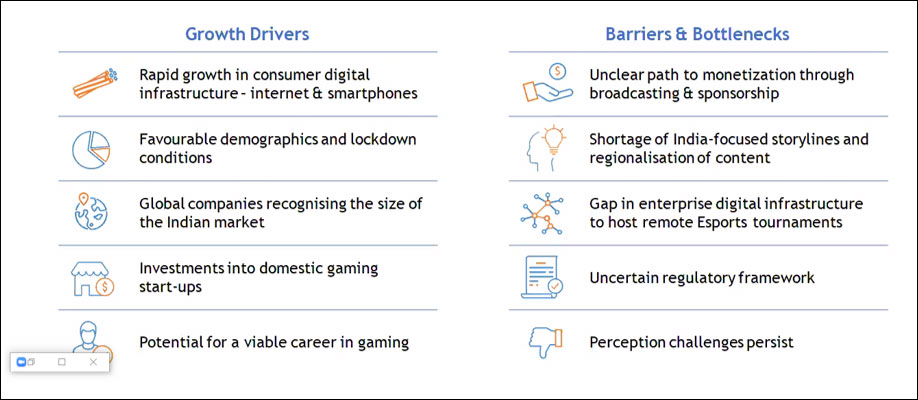
Additionally, the panellists pressed upon the need to take e-sports to grassroots levels in India and equipping the game applications with technology and content support in regional languages.
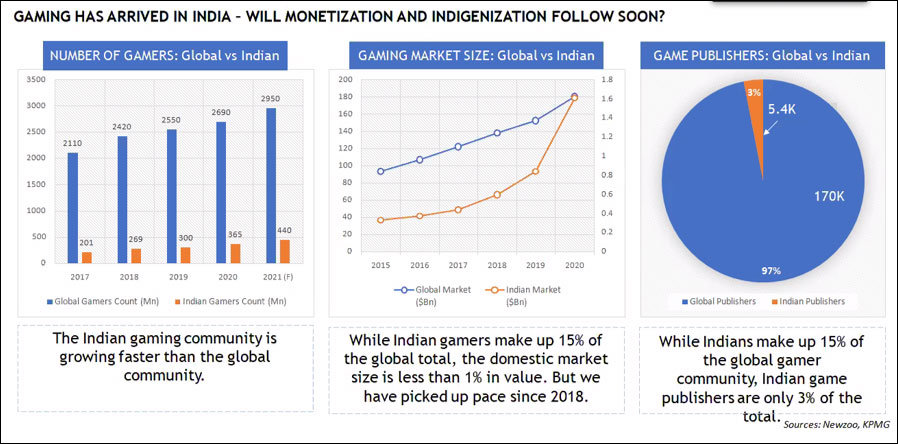
Of the 6 crore active users on MPL, about 83 per cent of the gamers come from tier-2 and tier-3 cities, signifying that the format is already very popular there, Aphale pointed out. Therefore, they are looking for more game developers, technicians, and talents to drive the next leg of growth.
Nandy said that his aim is to further expand the presence of e-sports and gaming in every nook and corner of the country. In fact, he has already started providing streaming services in all major south-Indian languages.
Training is key to success in global arena
According to Khurana, the Indian e-sports and gaming ecosystem also requires a strong backend support system in the forms of coaches and trainers.
“I feel we have great players when it comes to the domestic circuit but we fail when we go international. It is because we are not focussing on organisation and skill development within the sector. There is a great need for psychologists, coaches, and the whole supporting sports staff within the esports ecosystem,” he explained.
Samantray seconded the thought and shared that with Playtonia, the team is already working on these lines. “We are actually working at the grassroots level and are planning to bring a certification as well as a university dedicated to e-sports.”