Tag: Taj TV

  • TDSAT asks Taj TV to restore UCN Cable signals subject to dues payment

    TDSAT asks Taj TV to restore UCN Cable signals subject to dues payment

    NEW DELHI: The Telecom Disputes Settlement and Arbitration Tribunal (TDSAT) today directed Taj Television to restore signals to UCN Cable Network by tomorrow (10 June, 2015) provided the multi-satellite operator (MSO) pays to it a sum of Rs 1.5 crore within a week from today and another sum of Rs 1.5 crore within four weeks from the date of the first payment.


    The vacation bench of TDSAT chairman Aftab Alam and member B B Srivastava made it clear that this on account payment “shall be without prejudice to the rights and contentions of the parties.”


    This admitted petition was filed against the disconnection notices and according to the notices, Taj TV’s dues against UCN Cable for Digital Addressable System (DAS) and non-DAS areas amounts to Rs 4.4 crore as on 20 April, 2015. In pursuance of the notices, the respondent has disconnected the supply of its signals to the petitioner on 27 May, 2015.


    Apart from the aforesaid on account payment, UCN Cable will also pay Taj TV a monthly subscription fees as per the invoices raised by the respondent. In case of default in payment of the installments and / or monthly subscription fees as per the invoices of Taj TV, it will be open to it to disconnect the supply of its signals without any further orders from the Tribunal.


    The matter has been listed on 17 July for further directions. Meanwhile, Taj TV was asked to file its reply within three weeks and UCN Cable to file its rejoinder if any within two weeks of that.

  • Rajahmundry MSO to get signals of Taj TV & Maa TV; Eenadu & Sun signals on interim basis

    Rajahmundry MSO to get signals of Taj TV & Maa TV; Eenadu & Sun signals on interim basis

    NEW DELHI: The Telecom Disputes Settlement and Arbitration Tribunal (TDSAT) has directed Eenadu and Sun TV to enter into interim and provisional interconnect agreements to supply signals to multi system operator (MSO) Vaji Digital Network in Rajahmundry, which is not a Digital Addressable System (DAS) area.


    TDSAT chairman Aftab Alam and member Kuldip Singh said the agreement would be on a fixed monthly fee at the rate of 25 per cent of the aggregate amount of monthly subscription fee that they are receiving from their MSOs in Rajahmundry. 


    Eenadu has one MSO from which it receives Rs 7,48,225 (exclusive of taxes) as monthly subscription fee. Sun has two MSOs in Rajahmundry from whom it receives an aggregate of Rs 11,92,929 as the monthly subscription fee. 


    The provisional agreements with the petitioner will be at the rate of 25 per cent of the aforesaid amounts respectively. 


    The Tribunal made it clear that the interim agreements will be without prejudice to the rights and contentions of the parties and the amount fixed for the provisional agreement will abide by the final determination in these two petitions. The agreements, as directed, may be executed forthwith and not later than a week from today and supply of signals should commence immediately on that basis. 


    While giving the order, the Tribunal said it would give its final order on 22 July with regard to Eenadu and Sun.


    However, the Tribunal resolved the matters relating to Maa TV and Taj TV with the consent of both sides.


    A direction was given to MAA TV to execute an interconnect agreement with Vaji, the petitioner on a fixed fee of Rs 90,000 (exclusive of taxes) per month. The agreement may be executed forthwith and not later than a week from today and supply of signals should commence immediately on that basis. 


    Taj TV submitted that in Rajahmundry area the broadcaster was receiving Rs 6,95,975 as the monthly subscription fee for the Taj group of channels. Taj TV counsel Tejveer Bhatia said Taj was willing to give the signals of its channels to the petitioner on monthly subscription at the rate of 30 per cent of the subscription fee received by it from the other MSO for the first quarter, 35 per cent of that amount for the second quarter and 40 per cent of the amount for the third and fourth quarters. The offer was accepted by Vaji and so the petition was disposed with the direction to enter into an interconnect agreement in the aforesaid terms. The agreement may be executed forthwith and not later than a week from today and supply of signals should commence immediately on that basis.


    A new entrant in the field of broadcasting, MSO Vaji had sought to enter into agreements with the four broadcasters to get their signals. However, the broadcasters did not accept the Service Line Report whereby the petitioner gave the number of subscribers he had with him.


    The matter was first referred to the arbitration centre but could not be resolved.


    In another similar matter by Rudhrapur Cable Network against Star TV, the Tribunal appointed Vadivelu Deenadayalan as an Advocate Commissioner with the consent of the both the parties to carry out the survey of the area and recommend the SLR on which the agreement may be executed between the parties. The survey may be carried out in presence of both the parties and the report be submitted within 4 weeks from today. The matter will now come up on16 July.

  • Taj TV CEO Arun Kapoor quits; Rajesh Sethi to replace

    Taj TV CEO Arun Kapoor quits; Rajesh Sethi to replace

    MUMBAI: Zee Entertainment Enterprises Ltd’s (Zeel) Taj TV has seen a senior level exit. Taj TV distribution business CEO Arun Kapoor has put in his papers.


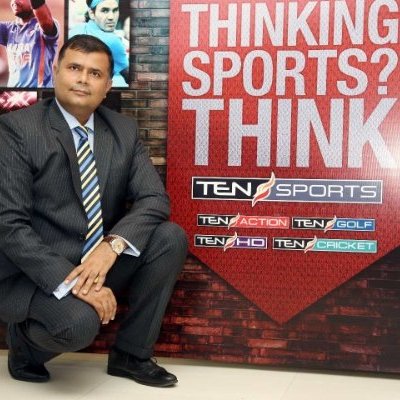
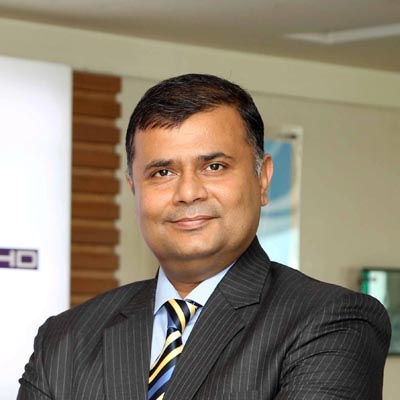
    Ten Sports global CEO Rajesh Sethi will replace Kapoor, who has moved on to pursue alternate career interests.


    Sethi will be overlooking the sports and distribution business of Taj TV from 1 May, 2015. He will continue to report to Zeel MD & CEO Punit Goenka.


    Meanwhile, Kapoor will continue to be a part of the group and will help in streamlining and handholding Sethi in the transition over the next couple of months.


    Goenka said, “Arun was instrumental in setting up the team at Taj TV. He was also a part of the leadership team of the initial JV, which established the distribution business and harnessed available opportunities for the organization. We wish to thank Arun for the years of engagement with us and for contributing to the success of the organization; we wish him the best.”


    Speaking on Sethi’s appointment, Goenka added, “In the last 18 months, Rajesh has been a catalyst in turning around Ten Sports with a strong focus on processes, people and delivering a strong sustainable financial performance. I am confident that Rajesh’s rich experience and knowledge across multiple domains will help us to take Taj TV to the next phase of growth. We wish Rajesh and the entire distribution team the very best for continued success.”


    Kapoor said, “It was one of my most satisfying stints at Zee. Under the leadership and guidance of chairman and Punit, we have managed to establish Taj TV as one of the leading players today. I thank them for the opportunity and wish Rajesh and his team all the success.”


    Sethi added, “Media distribution is one of the fastest growing domains, with evolving regulatory mechanism, which offers both opportunities and challenges.  This challenges the traditional way of doing businesses and offers immense future opportunities. In a short span of its launch, Taj TV distribution has grown in revenues multi fold and successfully established itself as a dominant player in the distribution market. With the new team, I am sure, we will be able to tap this opportunity and contribute to further progress of the company.”

  • Ten Sports acquires exclusive rights to MotoGP for five seasons

    Ten Sports acquires exclusive rights to MotoGP for five seasons

    MUMBAI: Ten Sports Network has secured exclusive rights for MotoGP the premier world championship for motorcycle road racing. As was first reported by Indiantelevision.com, this is for the first time that MotoGP will be broadcast exclusively by a broadcaster in the Indian sub-continent.


    This new deal between Taj TV and MotoGP rights holders Dorna Sports will run for a period of five seasons starting 2015. As a part of this deal, Ten Sports will broadcast all MotoGP, Moto2 and Moto3 races and qualifying practices live on its network of six channels. Ten Sports will also be offering multi-screen feeds on its digital platforms and will develop a dedicated section on www.tensports.com.


    Ten Sports CEO Rajesh Sethi said, “We are very excited to embark on this new journey with Dorna. We are committed to building this property in India over the next five years and viewers will witness unprecedented programming initiatives on our network. We have also been rights holders for this premium property since 2006 and we are delighted to continue and take this partnership to the next level.”


    Dorna Sports managing director Manel Arroyo added, “We are thrilled about our exclusive partnership with Taj TV and looking forward to developing a close relationship with them. India is a key market in the coming years and the World Championship will benefit greatly from the extensive promotion that Taj has committed to provide.”


    The 2015 MotoGP season begins in Qatar on 27 March with the first of 18 races in the 2015 calendar. The 2015 rider line up is stronger and more competitive than ever with defending champion Marc Marquez looking to retain his title over rivals Valentino Rossi, Jorge Lorenzo and Dani Pedrosa amongst others.


    Ten Sports will run contests to send fans to witness live action from the best races. Promotional events are being planned in the territory as well. From a programming standpoint, there will be new shows around races with Ten Sports also looking to add a local flavour by creating Indian-focused programming for a few events.

  • TDSAT directs Taj TV to give signals to Fastway Transmission in Karnal

    TDSAT directs Taj TV to give signals to Fastway Transmission in Karnal

    NEW DELHI: The Telecom Disputes Settlement and Appellate Tribunal (TDSAT) has directed Taj Television – the distribution arm of Zee Entertainment Enterprises Limited (ZEEL) – to provide its signals to multi-system operator (MSO) Fastway Transmission in Karnal in Haryana as an interim measure.


    The Tribunal has said that the final order will be passed post the resolution of a pending dispute where another New Delhi based MSO – Indiverse Broadband has claimed that both Siti Cable and Fastway are indulging in piracy and taking away its subscribers.


    It said the interim order was being given “having regard to the fact that due to non-supply of the signals, Fastway may be losing the market on a daily basis.”


    Even as it appointed Mansoor Ali Shoket as the advocate-commissioner to record the submissions of all the parties, the Tribunal said that Fastway will pay a monthly sum of Rs 17 lakh to the Tribunal and the first month’s fee will have to be deposited in the Tribunal by 3 February.  


    TDSAT chairman Aftab Alam and member Kuldip Singh said, “The supply of signals by virtue of this direction shall not create any equity in favour of Fastway. It is further directed that while enlisting any LCOs or subscribers, Fastway should bear in mind that in case its petitions are finally dismissed, the supply of signals by Taj Television may come to a sudden end without any notice. It is further made clear that as a result of disconnection of the supply of signals, Fastway alone will be responsible for any monetary claims raised by any LCO or subscriber or any civil or criminal liability.”


    The order further said, “Even while the Tribunal proceeds to consider the rival cases of the parties on their merits, it is made clear that the pendency of the petitions before the Tribunal shall not, in any manner, come in the way of any other authority or court having jurisdiction to proceed in the matter.”


    The Tribunal said the cases will be listed on 2 February for framing of issues. On that day, the counsel for all the parties shall jointly submit an agreed list of issues. In case there are issues on which there is no agreement between the parties, the decision will be taken by the Tribunal. All the three sides shall file their respective evidence affidavits by 10 February.


    Fastway shall then produce its witnesses for cross-examination before Shoket – appointed by mutual consent – on 12 February. After cross-examination of Fastway’s witnesses, cross-examination of the Indiverse witnesses will take place following which the cross-examination of Taj Television witnesses will take place. The Advocate-Commissioner and all sides shall ensure that cross-examination of all the witnesses is over by 5 March.


    Shoket will be paid honorarium at the rate of Rs 7,500 per day. The payment for the days on which the cross-examination of any party takes place, will be made by that party. The three cases will be listed for hearing on 19 March.


    The Tribunal noted that in these cases, “We are faced with the issue of piracy of TV channels, that is to say, in case it is established that an MSO is engaged in unauthorised transmission of channels on a large scale and in an organised manner over a long period of time, what would be its liability and what would be the remedies available to the broadcaster whose channels are re-transmitted without legal sanction.” 


    Even though clause 3.2 of the Interconnect Regulations 2004 expressly mentions “default in payment” as the ground for denial of signals, “the question that needs to be examined is whether an MSO indulging in organized large scale piracy over a long period of time would still be entitled to claim the supply of signals as of rights in terms of the Regulations. The ancillary question is what remedies are available to the broadcaster and the other MSOs suffering losses on account of the piracy,” the Tribunal noted.


    Fastway Transmissions had come to the Tribunal seeking a direction to Taj Television, to give its channels for re-transmission in Karnal. Earlier, Indiverse had filed its petition seeking a direction to Taj Television to agree to a substantial reduction in its subscriber base on the plea that the unauthorised entry of Fastway and another MSO, Siti Cable in Karnal, has greatly eroded its subscriber base.


    Taj Television resisted the demands of its channels by Fastway primarily on the allegation that the latter is engaged in rampant piracy of its signals in the area of Karnal. Indiverse also makes the same allegation and states that even though it held dominant position as an MSO in Karnal, as a result of unauthorised entry of Fastway and Siti Cable, another MSO there, and the rampant piracy by them, it is reduced to a state where 90 – 95 per cent of its network is taken over by the two MSOs.

  • Dispute between Taj TV & Meghbela Cable goes to Mediation Centre under TDSAT order

    Dispute between Taj TV & Meghbela Cable goes to Mediation Centre under TDSAT order

    NEW DELHI: The Telecom Disputes Settlement and Appellate Tribunal (TDSAT) has directed Kolkata based multi system operator (MSO) Meghbela Cable and Broadband Services and Taj Television to get their financial dispute resolved before the Mediation Centre.

     
    Senior representatives of both parties have been asked to appear before the Centre on 23 January.

     
    Meanwhile, Meghbela’s counsel Vineet Bhagat has handed over five cheques aggregating to the sum of Rs 16,45,580 to to Taj TV counsel Upendra Thakur towards payment of earlier dues.


    Bhagat stated that the payment was without prejudice to the rights and contention of his client.


    Thakur suggested that the matter may be referred to the Mediation Centre where the parties may have a reconciliation of their accounts and further try to resolve their disputes. Bhagat had no objection to the course suggested by Thakur.

     
    TDSAT chairman Justice Aftab Alam and member Kuldip Singh said in their order, “Needless to say that both sides will be represented by officers who are in a position to take decisions on behalf of their respective principals in course of the mediation proceedings.”

     
    When the issue had come up before the Tribunal last year following Meghbela challenging a disconnection notice, it had been suggested to the parties to hold discussions to reconcile the amounts. Taj TV had also been asked not to carry a scroll against the MSO on its channels. However, a joint meeting on 26 December failed to result in any compromise.

  • Star India commits to renew agreements with MSOs only on basis of RIO, hearing concludes

    Star India commits to renew agreements with MSOs only on basis of RIO, hearing concludes

    NEW DELHI: Judgment was reserved today by the Telecom Disputes Settlement and Appellate Tribunal (TDSAT) in the ‘deep-rooted’ dispute between Hathway and Taj TV, after the hearing that commenced on 25 August and continued on a day-to-day basis.


    Before the Tribunal reserved its order, Star India filed an affidavit in which it said it would ‘henceforth’ enter into agreements under the Reference Interconnect Order on a year-to-year basis with all multi-system operators.


    It said the RIO would commence three months after the expiry of the erstwhile agreement and would only be on the basis of a published RIO.


    It also said it will sign any new agreement on cost per subscriber basis with MSOs operating at national level.


    However, it listed eight MSOs working at regional or state level with which it already has CPS agreements and said these will continue for the term for which they are valid and thus last the full term.


    The eight MSOs are Inspire Infotech of Delhi, Novabase Digital Entertainment of Delhi, E-Infrastructure and Entertainment, Bangalore, Satellite Channels, Poona Cables Systems and Services of Pune, Sky Channel of Delhi, Home Cable Networks of Chittore District in Andhra Pradesh and City TV of Coimbatore.


    In reply to certain queries by the Tribunal in reference to the statement made in paragraph-3 of the affidavit, Star India counsel Saikrishna on instructions received from duly authorised officers present in court stated that in DAS notified areas, any new interconnect agreement with any MSOs operating under a national license or a regional/local license would only be on the basis of the RIO of M/s Star India Pvt. Ltd. and it would not enter into any interconnect agreement in the DAS areas with anyone on fixed fee or on CPS basis for a period of one year.


    Primarily, the Tribunal would have to decide on two matters: the first is an interpretation of the date of renewal under Clause 5(16) of the Telecom (Digital Addressable Systems) Interconnect Regulations relating to renewal of agreements, and the other is about the rates according to the arguments put forth by the various parties.


    Earlier, counsel Tejveer Singh Bhatia who had been asked by TDSAT chairman Aftab Alam and member Kuldip Singh to assist the Tribunal in clarifying certain issues said the Regulations were clear that if certain channels were provided to one MSO, they had to be provided to any other MSO that asked for them. However, this did not mean that the terms would be the same for all MSOs.


    Furthermore, even if channels were put in bouquets, the rates could not be the same as some were regional channels meant for specific areas and others were national channels and the charges would depend on eyeballs. Hence, the negotiation may differ from region to region. But this also meant creation of RIO agreements for every region depending on number of eyeballs.


    He also claimed that the Interconnect Regulations allowed him to change the terms and conditions from time to time.


    But he was categorical that a RIO could not be thrust upon him as it was only an offer. Clause 5(10) provides the remedy in case the broadcaster turns down a RIO agreement.


    He said that the ‘must carry; clause did not mean automatically that the broadcaster will be paid for every channel he beams. It would depend to the number of channels that the subscriber decides to take.


    During the hearing, the Tribunal heard various counsel on behalf of Taj TV and Zee TV, Star India, Hathway, Bhaskar (MSO) from Jabalpur and Scod, an MSO from Mumbai and Navi Mumbai.


    When listing the case for 25 August, the Tribunal had said: “Unfortunately, the dispute between the two sides is playing out in highly aggressive way and one may add in a rather unpleasant manner. It seems to be affecting a large number of people in viewing their favourite TV channels. The disputants themselves are approaching the Tribunal on a weekly basis complaining against the actions of each other and seeking some interim directions of the Tribunal consuming a lot of time on arguments on miscellaneous applications.”


    The Tribunal noted that both sides had assured that they would avoid issuing the offensive advertisements against each other.


    In the order last month, the Tribunal directed Taj TV to file their respective replies in petitions nos.319(C) of 2014 and 47(C) of 2014 and asked Hathway to file its rejoinder.


    The Tribunal noted that the dispute has arisen at a stage when the earlier fixed fee agreement between the parties has come to end and they are unable to come to agreed terms for a fresh agreement and under the circumstances the MSO has no option but to take the broadcasters’ channels on their RIO terms.

  • Regulations skewed against broadcasters: Star India counsel Dwivedi

    Regulations skewed against broadcasters: Star India counsel Dwivedi

    NEW DELHI: Noting that the Telecommunications (Broadcasting and Cable) Interconnection (Digital Addressable System) Regulations 2012 ‘are skewed’ against the broadcaster in every respect’, Star counsel Rakesh Dwivedi said today that there are provisions only for ‘must provide’ and not ‘must carry’.


    Thus, the broadcaster does not get paid by a multisystem operator (MSO) for providing the channels, but only when a subscriber wants to take it from the MSO.


    Furthermore, Clause 5 is clear that no broadcaster can compel a MSO to provide his channel to the subscriber and gives an option to the subscriber to choose the channel he wants, Dwivedi said in the ongoing hearing before the Telecom Disputes Settlement and Appellate Tribunal in the cases linked to Taj TV signals for Turner and Zee TV.


    The Regulations also say that if a broadcaster insisted on a placement of his channel, it would amount to unreasonable terms. The same applied to creation of bouquets by the broadcaster.  


    Referring to the charge that the RIO does not mention bouquet, Dwivedi said there is no question of a bouquet, adding that there would be no point in creating bouquets if the MSO has the right to unbundle it.


    Furthermore, offering all the channels of the broadcaster does not amount to a bouquet, because even the dictionaries define ‘bouquet’ as an assortment out of which the subscriber can choose.


    Even in the case of MediaPro, Dwivedi said no bouquets had been offered and if MediaPro on its own offered any channels in the form of bouquets, it said so.


    Referring to the arguments advanced on behalf of the MSOs, he said there was no reference to being reasonable in clause five which was confined to mutual negotiations and this reference was only with reference to the Reference Interconnect Offer.


    He said that it was also necessary to understand that an RIO was only an offer and not an agreement or contract and therefore ‘cannot be judged on the anvil’.


    Even otherwise, the MSOs had not challenged the RIO but that it should have been brought in only after negotiations fail. 


    At the outset, Dwivedi said the charge against Star and Zee was that they were conspiring with other MSOs because of the closeness to Den and to drive the petitioner MSOs out of business. He also denied the contentions made by the petitioner MSOs that certain other MSOs were being given greater discounts.

  • Broadcaster or distributor has to give reasons for differential rates for different MSOs: Naveen Chawla

    Broadcaster or distributor has to give reasons for differential rates for different MSOs: Naveen Chawla

    NEW DELHI: While stressing that negotiated settlements had also been provided for in the regulations other than an agreement under the Reference Interconnect Order (RIO), two multi system operators (MSOs) apart from Hathway Cable & Datacom contended today that Star had failed to give reasons for having different rates for them as compared to Den or Siticable.


    Naveen Chawla, counsel for MSO Bhaskar, which operates in Jabalpur and Scoda which operates in Navi Mumbai and Mumbai, said his contention was for a reasonable and non-discriminatory rates and he was not challenging the concept of RIO.


    He said according to Clauses 3(1) and 3(2) of the Telecommunications (Broadcasting and Cable) Interconnection (Digital Addressable System) Regulations 2012 were clear that any agreement has to be reasonable and non-discriminatory and all MSOs will be treated equally.  In fact, the provision 3(2) clearly indicated that an RIO that is discriminatory and unreasonable is not acceptable.


    ‘Reasonable’ can mean the rate provided by law or the rate that is negotiated with a client in keeping with market forces.  Thus, RIO itself has to be reasonable and in relation to market conditions, Chawla said in the ongoing hearing before the Telecom Disputes Settlement and Appellate Tribunal (TDSAT) in the cases linked to Star signals for Turner and Zee TV.


    A RIO may be a la carte or bouquet, but has to be linked to the subscriber, he said. He also said it was the responsibility of the broadcaster and not the MSO under Clause 3(3) to provide RIO agreements or to give reasons within 60 days for any demands.


    Clause 4 was clear that it was the broadcaster who had to submit the RIO or agreement to the authorities and also publish it on its website.


    Stressing that his main contention was that the RIO agreement given to him by Star was unreasonable and discriminatory, he said TDSAT had in 2006 held that there should be parity in the rates charged and broadcasters have to give reasons in case the rates are different.


    Meanwhile, Chawla quoted from a judgment of TDSAT of August 2005 in which the Tribunal had said that an MSO cannot be an agent of the broadcaster and thus not a competitor to other MSOs, and this view had been upheld by the Supreme Court in 2007. He quoted other judgments to say that broadcasters cannot create exclusivity or monopoly of particular MSOs as that would be discriminatory.


    He said the only way to judge whether an agreement was not discriminatory or unreasonable was to go by the previous judgment between the parties.

  • Hathway being asked to pay more by broadcasters as against other MSOs: Kathpalia

    Hathway being asked to pay more by broadcasters as against other MSOs: Kathpalia

    NEW DELHI: Even as it said that an agreement under the Reference Interconnect Order (RIO) should be for both ala carte and bouquets, Hathway today questioned why multisystem operators like Den and Siticable were being given greater discounts by Taj TV for distribution of their channels.


    Hathway counsel Arun Kathpalia said that the DAS Regulations of 2012 also provided for negotiations that were non-discriminatory, transparent and on reasonable terms and did not merely insist on an RIO.   


    In the ongoing hearing before the Tribunal in the cases linked to Taj TV signals for Turner and Zee TV, Kathpalia said the Regulation says that the broadcaster or distributor ‘may’ seek inter-connection but also provides for mutual agreement within 60 days of request.


    In any case, RIO is not confined to ala carte or bouquets but refers only to commercial terms, whereas Taj TV was offering Hathway RIO only on ala carte. He said under the RIO regime, both ala carte and bouquets can be offered and these have to be mentioned.


    He also said that the Regulations are clear that RIO can come into play only when there is no first agreement, while the issue here was about renewal.  


    He regretted that despite being the largest MSO, it was being offered the smallest discounts by Taj TV and the broadcasters. While Den and Siticable were being charged Rs 30.50 per subscriber, Hathway was being charged Rs 35.


    He alleged that at one stage, Star had wanted the sports channel to be on RIO but the general entertainment channels to be on negotiable terms. “There should be a level playing field,” he said. There was no consistency of relevant factors, he claimed.


    Hathway had wanted that the starting point for negotiations should be the old agreement, whereas Taj TV insisted that the old agreement was only a promotional offer but this was not true, Kathpalia said.


    At one stage, he said that every carrier including DTH was at a loss with the exception of Den.