Tag: Taj Hotels

  • Pranav Bakshi gets promoted to pilot Network18’s Connected growth engine

    Pranav Bakshi gets promoted to pilot Network18’s Connected growth engine

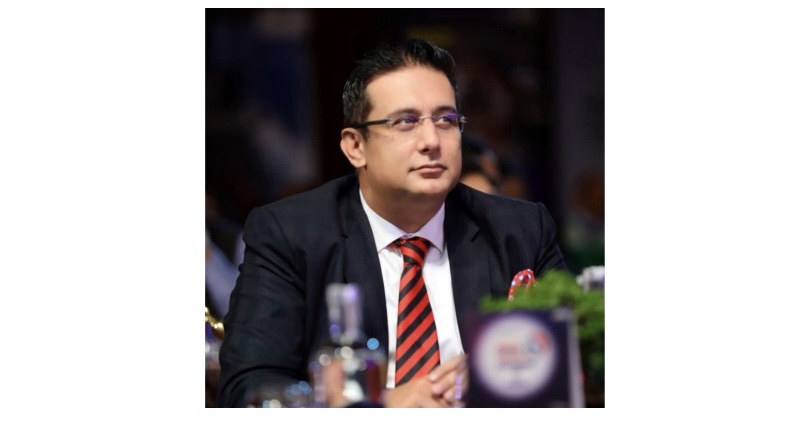
    MUMBAI: Network18’s digital dynamo Pranav Bakshi has just bagged a bold new title — chief growth officer, Network18 Connected — as he takes charge of accelerating content, audience, and revenue across connected TV, social platforms, and strategic partnerships.

    But this isn’t just a new nameplate on the desk. With his finger on the pulse of where audiences are headed (and not where they’ve lingered), Bakshi is gearing up to rewire how content is created, consumed and commercialised across the media conglomerate’s vast portfolio.

    “This role is about leading the charge, not catching up,” said Bakshi. “It’s about scaling platforms, monetising content smartly, and building future-proof digital ecosystems.”

    Having previously helmed digital video strategy for over 45 Network18 brands — from CNN-News18 and CNBC-TV18 to Firstpost, Moneycontrol and History TV18 — Bakshi’s remit covered everything from CTV to creators, from off-platform growth to platform partnerships.

    Before his Network18 innings, Bakshi brought the firepower at Times network, heading digital video, strategy, partnerships, and social media for a bouquet of brands with a collective follower base of 60 million. He’s also worn hats at NDTV, TOI, Taj Hotels and even Maersk, with a track record of marrying content with commerce and strategy with scale.

    With his elevation, expect Bakshi to keep the content taps flowing — but this time, through smarter pipes, faster funnels, and next-gen platforms. The build, as he says, continues.

  • Salt just got tastier as Sudeep Puthyathaya steps in as executive creative director

    Salt just got tastier as Sudeep Puthyathaya steps in as executive creative director

    MUMBAI: Just when you thought salt was merely seasoning your fries, along comes Salt Brand Solutions, sprinkling some creative magic into its leadership pot. Picture this: seasoned storyteller Sudeep Puthyathaya struts into Salt’s Mumbai office, bringing with him over 23 years of crafting iconic brand stories and enough creative spice to make even a bland briefing taste delicious. Could this be the recipe for ‘Salt 2.0’ we’ve all been waiting for?

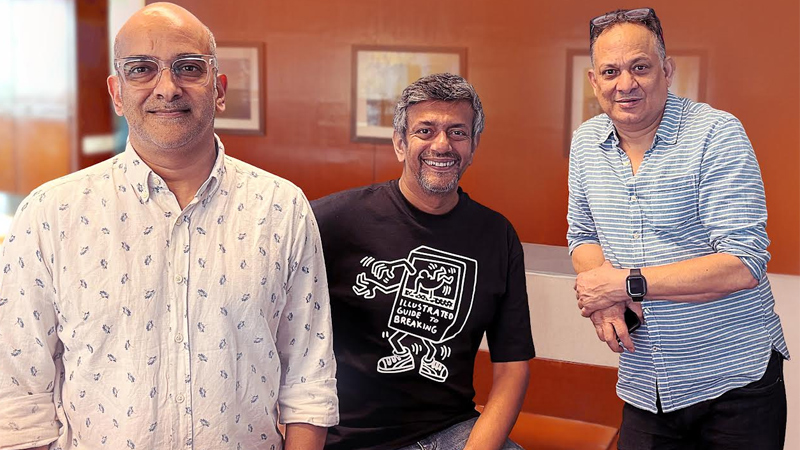
    On 11 March 2025, Salt Brand Solutions announced the hiring of Puthyathaya as its new executive creative director, joining the existing duo—executive director Sagar Mahabaleshwarkar and director Mahesh Chauhan (Mash)—who’ve been shaking things up for quite some time.

    Welcoming the newest spice in Salt’s creative curry, Mash said, “This is a significant step towards further strengthening Salt’s creative leadership.” He further added, “with Sagar, Sudeep, and me coming together, it definitely will add great value to our clients, and this makes me truly excited for Salt 2.0.” Indeed, what good is curry without the right spices?

    Echoing his sentiments, Mahabaleshwarkar remarked, “Sudeep brings a deep understanding of storytelling that connects with real people. His craft in creating human insight-led narratives perfectly complements the creative force we are building at Salt.” Translation? Expect ads that tug at your heartstrings—or at least your purse strings.

    Puthyathaya isn’t exactly new to the storytelling circus. Having juggled creative campaigns for bigwigs like Mercedes-Benz India, Taj Hotels, Royal Enfield, J&J, and Citibank, he’s now ready to spice things up at Salt. With a passion for ‘human-centred narratives’, his style is less boardroom monotony and more Netflix binge-worthy storytelling.

    “I’ve always believed that the most powerful brands are built on stories that resonate at a human level,” Puthyathaya said. “Salt’s culture of bold, insight-driven thinking is a perfect fit for the kind of work I want to create. I’m excited to collaborate with Mash and Sagar to craft narratives that strengthens brand narratives and leave a lasting impact.” Forget salt bae; it’s story bae season now.

    Adding credibility to his creative cooking skills, Puthyathaya has judged the prestigious New York Festivals and Abby’s, proving he’s not just here to cook up stories—he knows how to taste-test them too.

    Founded in 2011 by Mash, Salt Brand Solutions prides itself on being the invisible yet indispensable seasoning of the branding world. With Sudeep now joining Mash and Sagar, expect the creativity (and the seasoning) to be dialled up to eleven, turning more heads, breaking more norms, and making brand storytelling anything but bland.

  • Entourage Films unveils cinematic ode to Taj Hotels’ timeless legacy

    Entourage Films unveils cinematic ode to Taj Hotels’ timeless legacy

    Mumbai: Entourage Films, known for its creative excellence in the world of advertising, has produced a cinematic tribute to one of the living legacies of Taj – The Umaid Bhawan Palace.

    Founded by the visionary executive producer Garima Arora, Entourage Films embarked on this venture. Under the direction of Ishaan Nair and the artistry of Peter Flickenberg, a captivating montage for the brand was created which is a true testament to the magic of their collaboration.

    The film immerses in a narrative where the viewers can encounter the rich affair of memories and history. It flows into the graceful celebration of life that is love, courage and culture witnessed by the walls of the palace. The film lets the viewers perceive, connect, and explore the timelessness through one of the Legacies of Taj.

    Entourage Films encapsulated the journey as one filled with a blend of overwhelming challenges and triumphs. For the entire Entourage team, the film fosters a profound sense of fulfillment that words can scarcely capture.

    Entourage Films is an award-winning and rapidly growing production house, spearheaded by a team of talented women who are committed to building a legacy that empowers womanhood. As Garima Arora quoted –  “In a nutshell, to stay on the path was overwhelming, daunting, yet exhilarating. Needless to say, being chosen to showcase this wonder to the world was humbling for the Entourage team. There are countless untold stories waiting to be shared, and we are inspired to bring them to light.”

  • Rahul Bose’s overpriced bananas feed creativity of brands on Twitter

    Rahul Bose’s overpriced bananas feed creativity of brands on Twitter

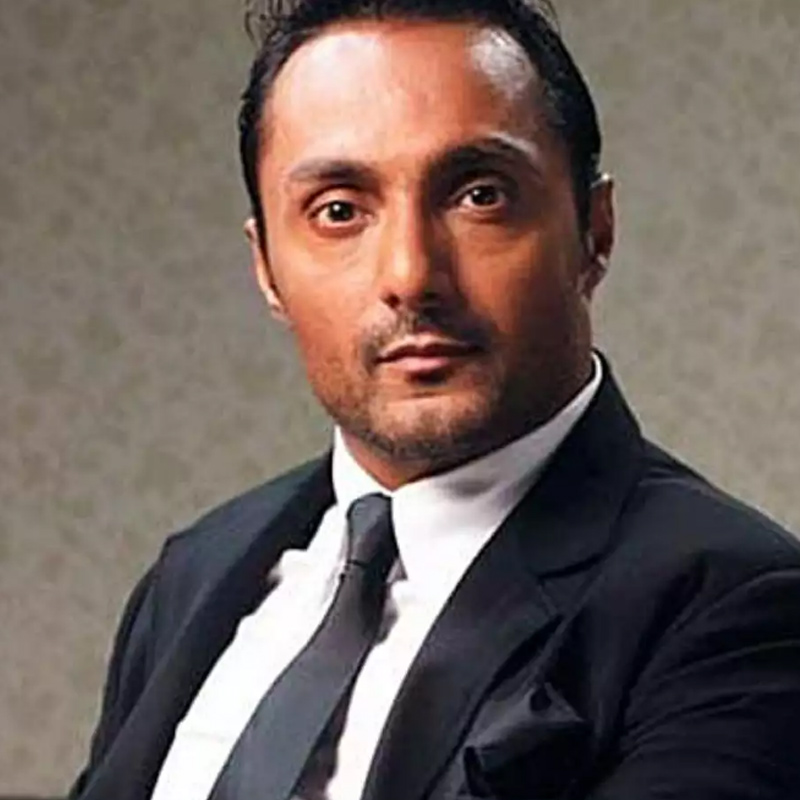
    MUMBAI: While the Chandigarh Police and Excise and Taxation department is looking into the “illegal and exorbitant charge of GST” by JW Marriott Hotels as they sold a pair of bananas at a whopping Rs 442.5 to bollywood actor Rahul Bose, the Twitter-verse is jumping on the marketing wagon to make the most of this bizarre incident.

    A user posted a photo of Taj Hotels in Santacruz Mumbai offering fresh season fruits ‘with best compliments’ with a candid caption “Meanwhile, in the land of trolling JW Marriott….”

    A number of brands including the star of ‘moment-marketing’, Zomato, used the opportunity to share some great creatives around it. Here are some of the most creative pieces from the land of Twitter:

    1. Amazon Prime Video India

    2. Arre

    3. Natures Basket

    4. Oyo

    5. PolicyBazaar

    6. Reliance Smart

    7. Star Quick

    8. Zomato

    9. Coco Soul

    10. Anchor by Panasonic

    11. TEZ

  • Havas Media Group India Tops Performance Charts in 2013

    Havas Media Group India Tops Performance Charts in 2013

    MUMBAI: In the midst of a slow-subdued industry and economy where GDP hit a decade low of 4.5%, Havas Media Group India on the other hand has had an exceptional year in 2013.

    Today it is right at the top of the performance charts of media agencies.

    Besides retaining existing clients, Havas Media Group has had strong new business success.

    The company stood at No. 2 Media Agency position in the recently declared Agency Report Card 2013 by Campaign India – garnering 8 out of 10 points. It was also shortlisted for the Agency of the Year 2013 Awards.

    RECMA 2013 Compitches has graded Havas at No.1 in YTD new business achievements in both the 2013 preliminary reports.

    The company took home two wins at the DMA ECHO Awards India 2013 and was on the shortlist at India Radio Forum’s ERA (Excellence in Radio Awards) 2013.

     “2013 proved to be a good year where our state of the art product, our dedication and hard work paid. We thank all our clients for trusting us with their businesses in an otherwise tough year and our media partners for their unflinching support at all times”, said Anita Nayyar, CEO, Havas Media Group India & South Asia.

    “Given our Meaningful Brands research and other ‘thought leadership’ tools, we are confident that we will replicate the success of the past years. Our ‘Digital at the Core’ avatar is in sync with the current market realities and is finding a lot of interest and traction among the clients. At Havas Village, we are consolidating creative and media through our unique Meaningful Connection Planning offering”, she added.

     “Taking from our Meaningful Brands framework we impart holistic solutions to brand marketing which has been the value differentiator. We believe in client delight and will continue to deliver in 2014” explained Mohit Joshi, Managing Director, Havas Media India.


    Havas Media Group bagged significant new businesses – Emirates, Voltas, Amway, Aspiring Minds, Shaadi.com, Wonder Cement, Neo Milk Products, Halonix, Simmtronics, Mobis and Bloomberg TV India amongst others with a roster of clients including Hyundai Motor India, Parle Products Ltd., MTS India, Quikr.com, Taj Hotels, Capgemini India, etc.

    Arena India was also launched under Havas Media Group to take on the responsibilities of the global LG Electronics win.

    The specialist brands Mobext India for mobile solutions and Ecselis for performance marketing are a part of Havas Media Group India.


  • ‘The pharma industry needs an absolute mind shift. They have to think FMCG and act pharma’ : McCann strategy director Manjunath Hegde

    ‘The pharma industry needs an absolute mind shift. They have to think FMCG and act pharma’ : McCann strategy director Manjunath Hegde

    Manjunath Hegde, masters in marketing management from Jamnalal Bajaj Institute, has over 23 years of experience in 360 brand management and consumer insight based strategy and creative. Over the years he has worked on some of the best brands – P&G, Unilever, Infosys, Taj Hotels, Lakme, ICICI, United Brewries, Marico, Zee TV, CRY. He is also associated with agencies such as Ambience Publicis, Leo Burnett and Bates Clarion.

    Hegde has also spent a couple of years in Dubai as COO, Liwa Advertising, restructuring the agency to global standards and getting business worth millions during the peak of recession. He also co-founded the brand consultancy firm ‘Chlorophyll‘.

    Hegde is presently McCann strategy director, specifically focusing on the pharmaceutical industry.

    In an interview with Indiantelevision.com‘s Anindita Sarkar, Hegde talks about the various advertising and marketing challenges that the pharma industry faces today.

    Excerpts:

    Unlike yesteryears, today there is a lot of brand communication talk happening within the pharma industry. Why this shift? 

    Until now pharma companies had not found a need for real brand management. But they are slowly waking up to the need. And this is because pharma companies have recognised that there is a need for multiple touch points to contact its various stakeholders – patients, chemists, doctors, relatives – for a range of categories as the market in ever expanding and is hugely competitive.


    You have been involved in branding at various levels. How similar or different is brand building in the pharma industry?

    The brand building process of a pharma product is very challenging. The principles of brand building will always remain the same; it‘s the manner of executing them that change when it comes to the pharma category.

    Look, for example, it is quite easy for the FMCG advertisers to create brands because they have access to the mass media. But when it comes to the pharma industry, there are media and legal restrictions; you need to take care of your audience and the key influencer, which is the doctor. Because, in this case, you cannot reach out to the consumer directly by foregoing the doctor.


    So, what is the communication challenge of an OTC product?

    See, an OTC product can be divided into two categories. The first kind is one which can be purchased across the counter and, therefore, can be advertised like cough syrups. The second category is where by repeat purchase (self medication), the product steadily falls into the OTC bracket again. And in both these categories, it is a must for the products to build an image of their own. The brand communication has to create space in the consumers‘ life; it has to be an experience by itself. It cannot behave indifferently. Only then will the brand be recognized by the consumer. And this is the communication challenge in this category.


    How do you deal with the branding strategy of a pharma product as against any other category?

    In the pharma industry, unlike an FMCG product which talks to masses or for that matter any other category, we are dealing with problems that are related to health issues. So, here you are talking to someone who is ill and while your audience is that one affected person, the relatives and family members also become an important audience. Also, here the communication has to be done with the key influencer or the qualified influencer, which is the doctor. And in addition to this, there are also the strict government rules which one needs to adhere to. So the category advertising by itself is extremely challenging and the treatment is very different. Here the product has to go beyond the regular talking about what it will do as a drug and rather become a part of the affected consumer through a new life changing story.

    For example, if it is a product that is made for diabetic patients, then it should talk about the healthy lifestyle approach that one needs to take if affected. It has to show support and concern. Only then will it become a part of the patient‘s life.


    What is the primary difference between promoting an OTC brand versus a general brand?

    In an OTC brand, you talk to the consumer directly. But for non-OTC, you cannot use mass media; you are not allowed to. These brands have to be prescribed by a doctor. So in this case, the communication is directed towards the doctor.

    Also, most brands decide not to go OTC (and sometimes they cannot go because its ingredient based) because it is a different ball game altogether. The media spends are higher, the exposure to competition is on a severe basis; it‘s a large market now and totally volume based. So it‘s largely a pull versus push strategy wherein you make the consumers come and ask for it. Whereas, when it comes to non-OTC, it is only a push and push strategy. The companies push it down to the doctors and then the doctors push it to the consumers.  

    ‘A larger trend is moving towards the wellness category – it is a huge market out there. So there is a huge growth opportunity in this segment.‘


    So many times is it a conscious decision to go non-OTC? 

    Absolutely. Many times it happens that brands have become OTC by default. And this means that at some point of time they were prescription based, but gradually the consumer has moved to buy the product on his own through repeated purchase. Now, one could take a decision to go OTC but in that case, it may lose out on the prescribed category because the doctor will now stop prescribing that medicine.

    The doctor has to and should refer a non-OTC brand and, therefore, companies who are pharma strong will give a window to the doctors.


    In a category like this where you cannot advertise through mass media, what are the primary marketing platforms? 

    In this category there is a need to be present so that you are seen and can touch consumer life in areas where you can meet them. These could be jogging parks, treadmill companies, doctor‘s clinics, conferences and forums. The brands have to talk about their own essence, and say, “I am there.”

    Also, the pharma industry needs an absolute mind shift. They have to think FMCG and act pharma. This means they have to look into the product from the consumer‘s point of view.


    Is there alternative medicine market in India (like ayurvedic products, etc.)? Is there a fair consumer tilt towards these?

    Today consumers are becoming more and more health conscious and, thus, there is a trend wherein people are moving towards organic and non-toxic products, courtesy the internet. A larger trend is moving towards the precaution and wellness category – it is a huge market out there. So there is a huge growth opportunity in the wellness category.