Tag: Swiggy

  • Disney+ Hotstar, Swiggy come together to give consumers a ‘House of the Dragon’ experience

    Disney+ Hotstar, Swiggy come together to give consumers a ‘House of the Dragon’ experience

    Mumbai: With House of the Dragon streaming on OTT platform Disney+ Hotstar, the company has partnered with food ordering and delivery platform Swiggy.

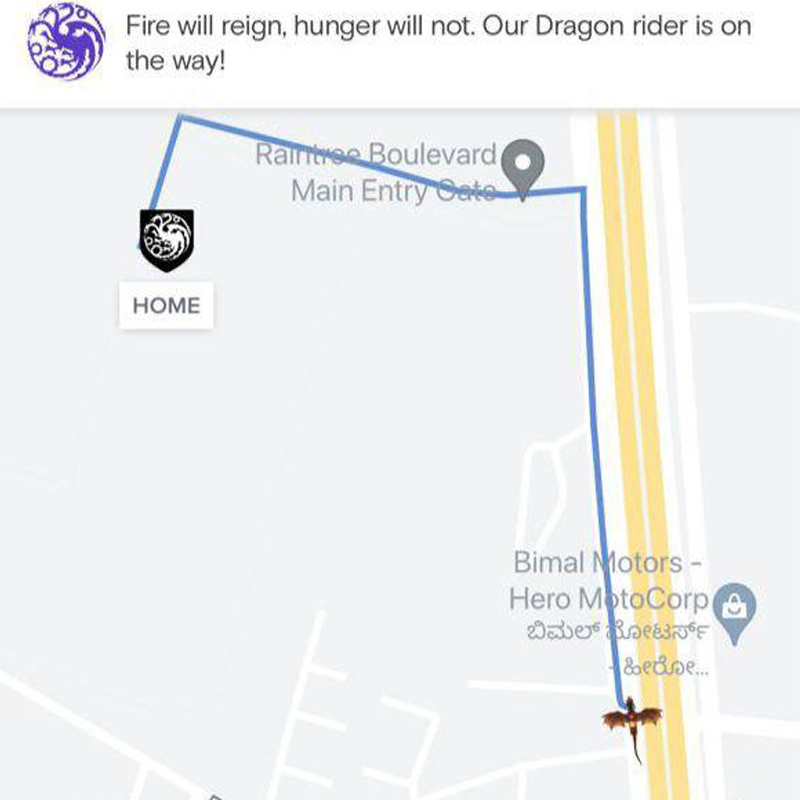
    They are giving consumers a House of the Dragon experience on the order of a meal. The collaboration between the two has turned the Swiggy rider into a dragon, with a tag line on the top of the order ‘Fire will reign, hunger will not. Our dragon rider is on the way!’ The dragons will deliver food pan India until 29 August, 2022.

    Based on George R.R. Martin’s book “Fire and Blood,” the 10-episode series is a story about the House of Targaryen, set 200 years before the events of Game of Thrones. Directed by Miguel Sapochnik, Clare Kilner, Geeta Vasant Patel and Greg Yaitanes, the series has been executive produced by George R. R. Martin, Ryan Condal, and Miguel Sapochnik, along with Sara Hess, Jocelyn Diaz, Vince Gerardis and Ron Schmidt. Actors like Paddy Considine, Matt Smith, Olivia Cooke, Emma D’Arcy, Steve Toussaint, Eve Best, Sonoya Mizuno, Fabien Frankel, and Rhys Ifans bring to life several characters from Martin’s book.

  • Amazon miniTV friendship day campaign creates buzz amongst brands

    Amazon miniTV friendship day campaign creates buzz amongst brands

    Mumbai: Amazon miniTV friendship day campaign #CaseTohBantaHai has marked a new milestone in creating content-led entertaining experiences for its audiences. Interestingly, brands across the vertical started participating in the campaign. 

    When the campaign was unveiled, the streaming service opened the floor to the audiences to put forth an Atrangi Ilzaam on their friends, which is the unifying theme of their tentpole comedy reality show Case Toh Banta Hai. 

    The 360-degree integrated campaign started with Twitterati making funny and outlandish accusations against their friends. Along with that, a barrage of relatable memes inspired by the show also started pouring in. 

    Soon enough, brands jumped onto this bandwagon and #CaseTohBantaHai took over the internet. Over twenty brands including Swiggy, Pizza Hut, Noise, Tinder, Durex, Domino’s Pizza, Baskin-Robbins, Shemaroo, Dunzo, Shaadi.com, Gold’s Gym, PharmEasy, Mad Over Donuts, and Cleartrip joined the digital jest. The brands used this opportunity to poke fun at their customers’ traits, thus leaving the digital-first generation in splits.

    Some of these hilarious ‘cases’ are given below:

    Domino’s

    Swiggy

    Tinder

    Durex

    Pizza Hut

    Baskin-Robbins

    This campaign also coincided with the “Case Toh Banta Hai Celeb 2.0” reveal, which announced a stellar line-up of celebrities who will appear on the show. Concurrently, the celebrities slated to appear on “Case Toh Banta Hai” turned the excitement up a notch higher. Abhishek Bachchan, Shahid Kapoor, Ananya Panday, Chunky Panday, Sonakshi Sinha, Sanjay Dutt, and Pankaj Tripathi, amongst others, took to their social media to answer their summons to the katghara. These posts got people talking and amplified the buzz around #CaseTohBantaHai and also the anticipation for the show.

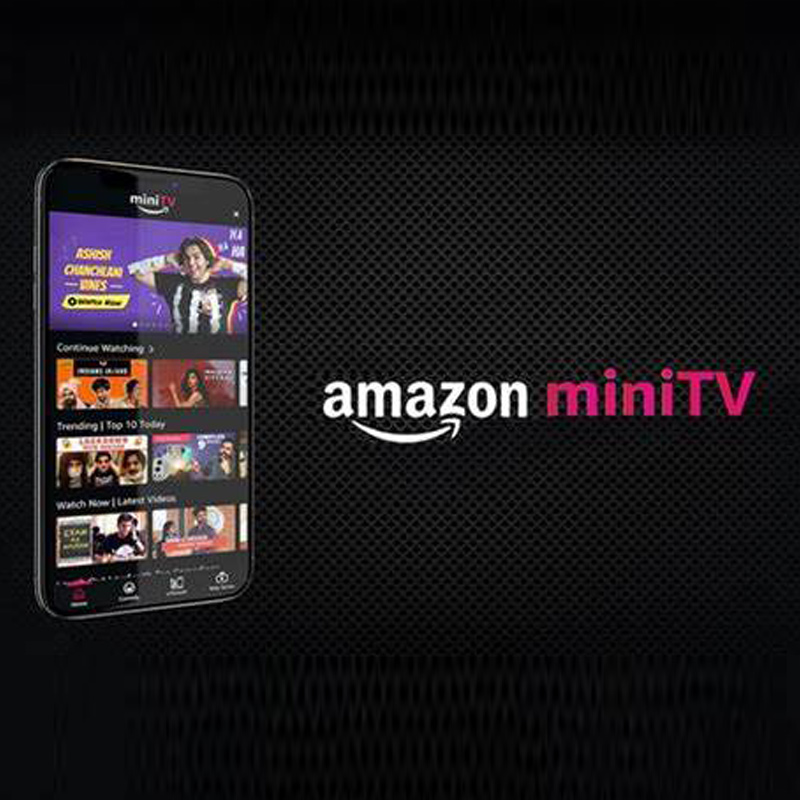
    “Case Toh Banta Hai,” a one-of-its-kind courtroom comedy reality show, features Riteish Deshmukh, Varun Sharma, and Kusha Kapila in the roles of Janta Ka Lawyer, Defense Lawyer, and Judge, respectively. Each week, a new celebrity appears on the show, facing hilarious accusations and having to defend themselves. Produced by Banijay Asia, Case Toh Banta Hai is the perfect blend of sketches, talk shows, and impromptu comedy. Viewers can enjoy new episodes every Friday for free, exclusively on Amazon miniTV, which you can find on Amazon’s shopping app and Fire TV.

  • Zomato to acquire Blinkit, board approves the deal for Rs 4,447 crore

    Zomato to acquire Blinkit, board approves the deal for Rs 4,447 crore

    Mumbai: The board of online food delivery firm Zomato has approved the purchase of quick commerce company Blinkit, which was earlier known as Grofers. This deal has been done for Rs 4,447.48 crore.

    In the information sent to the stock market, Zomato said that this deal will be done under the exchange of shares. The board of directors of the company in a meeting held on Friday approved the acquisition of 33,018 shares from the shareholders of Blinkit Commerce at a price of Rs 13.45 lakh per equity share.  

    After the acquisition by Zomato, the Blinkit team and CEO Albinder Dhindsa will continue to run the company as an independent entity and app.

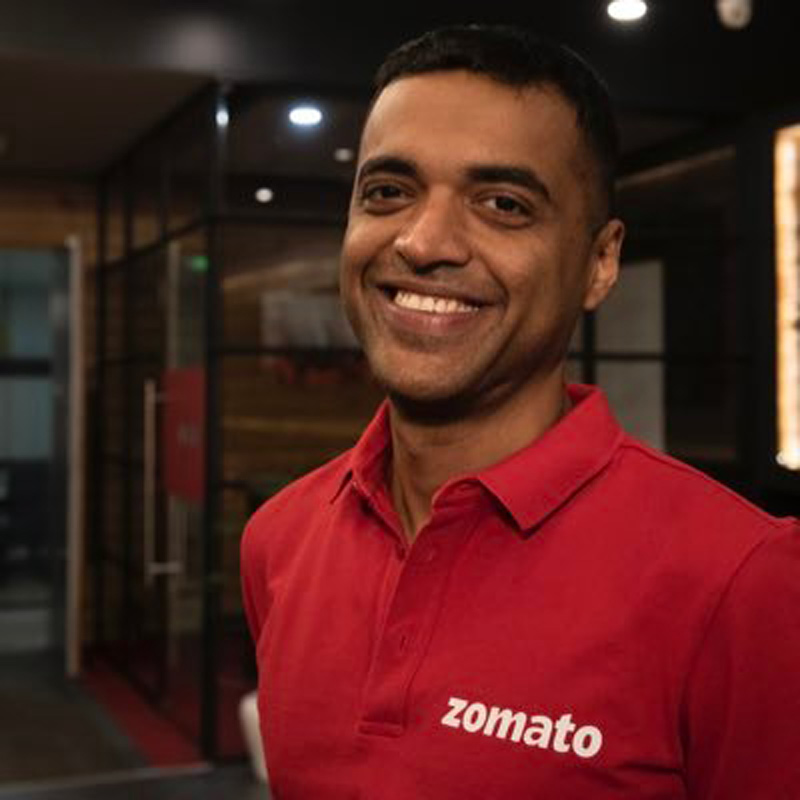
    Zomato CEO Deepinder Goyal said, “We will explore ways in which Blinkit can benefit from Zomato’s large customer base (and vice versa in the long term). Post the deal closure, we are going to start experimenting with various ideas that we have and see which all bear fruit, including having the Blinkit tab on the Zomato app. As they say, experiment a lot and keep what works. This remains our guiding motto.”

    The quick commerce segment in India is estimated to grow to $5 billion over the next three years, which is a 16x jump from the current size of $0.3 billion. Thus, the deal can be a game changer for quick commerce space!  

    Let’s have a look at what, according to the industry experts, works in the favour after this deal and what works against!  

    What works in favour?

    Experts believe that the deal will lead to better utilisation of the delivery fleet for Zomato and also propel multiple orders per transit, which is a global norm for driving efficiency and bringing the delivery costs down. With this, the valuations of Zomato may inch up backed by this, as one can provide a separate valuation to this segment for now, given its strong growth prospects.

    It may also help Zomato to be better placed versus peers who are only into Q commerce, as they have a ready delivery fleet and will also help them compete with players like Swiggy who have made a very serious foray into this segment via Instamart.

    What works against?

    AOV (average order value) for this segment may be extremely low, which in turn will limit margins and capability to charge a higher delivery fee as delivery charge is linked to AOV.

    At the same time, AOV in this segment is low as this segment caters to buyers who would want products on an urgent basis; a customer may order 5-10 per cent of their monthly grocery requirements via this segment.

    India as a market is still predominantly driven by local Kiraana outlets (general grocery stores), within the vicinity, which would generally drive more than 90 per cent of grocery requirements.

    Moreover, industry experts think that Zomato will need to offer something very different in terms of user experience for Blinkit in order to compete with peers and scale up in this business segment. Further, this business model may not have a big potential in the smaller markets such as tier 2 and 3, as the demand for gourmet food is much lesser vs metros.

    Meanwhile, the closing of the transaction is expected to happen in early August. The transaction is subject to shareholders’ and stock exchange approval.

  • As a brand, we have always been hungry for growth and expansion: Anand Vishal

    As a brand, we have always been hungry for growth and expansion: Anand Vishal

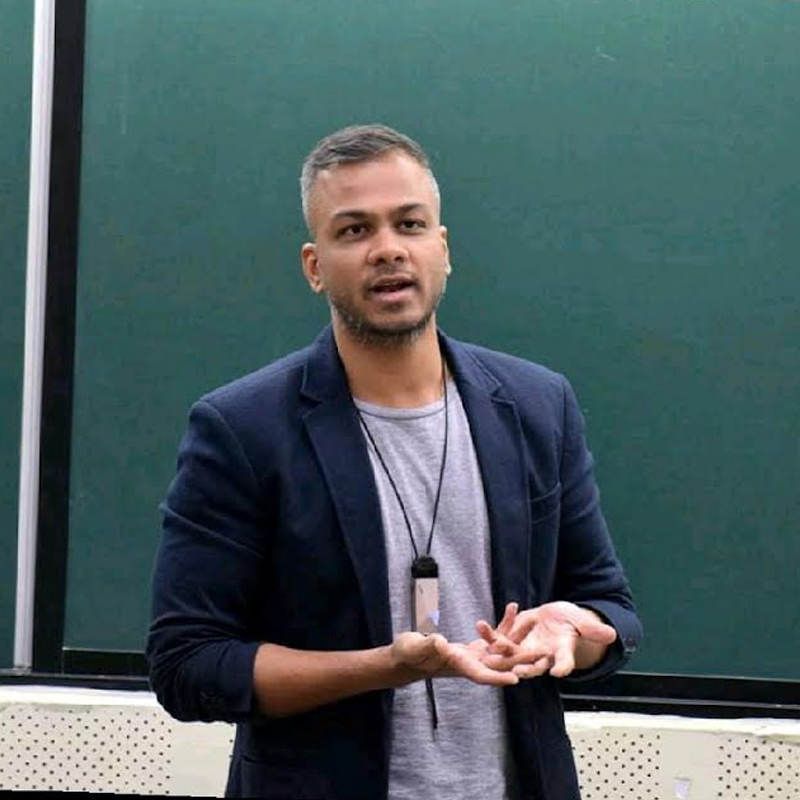
    Inox’s chief sales and revenue officer Vishal Anand has helmed critical management roles with various cinema entities. With a career spanning over two decades, he has managed many portfolios including business operations, sales and marketing.

    Anand has played a spectacular role in driving box-office growth and advertising revenue generation for Inox across multiple platforms & channels. Sharing about the optimistic approach toward growth and expansion of Inox, Anand revealed his plan to add 16 properties with 77 screens in the upcoming year. He also talks about tapping new markets and adding 900 screens that would expand Inox’s presence to over 30 new towns and cities.

    With a holistic and in-depth knowledge of the cinema exhibition business, his expertise lies in developing & executing sales strategies, building strategic coalitions and mapping opportunities. He thrives on cluster mapping, opportunity management and working with cross-functional peers to deliver consistently.  

    Under his leadership, Inox’s business has regained its market momentum with nearly 80 per cent of its business reaching the pre-covid levels and it is expected to revive complete 100 per cent business growth in the next two months, thereby hinting towards better performance and capitalisation during the upcoming festive seasons.

    Indiantelevision.com caught up with Anand to find out about Inox’s plans and cinema exhibition business.

    Excerpts:

    On improving operational efficiencies after the merger with PVR

    While I can’t speak much on the subject, all I can say is that the synergies of the two organisations are going to fetch tremendous value for all the stakeholders, and most importantly, the cinema lovers of India.

    On levelling up Inox’s revenues and profit back to pre-covid level

    The fourth quarter served as a reminder of the pre-covid times for us as well as for the cinema industry, with the remarkable 11 million footfall and 24 per cent occupancies. Within the fourth quarter, the month of March was thunderous, to say the least, with magnificent record-breaking numbers. I am happy to say that we garnered the highest ever F&B collection in a single month, in March 2022. We also reported our highest ever quarterly spends per head or SPH at Rs 91 in Q4. On a full-year basis, we have recorded an increase in spend per head from Rs. 79 to Rs. 97 in the last year.

    On reducing fixed costs by 10 per cent via manpower reduction

    A number of organisations all over the world prioritize cost management as a routine business practice, and there are numerous ways to do it. Use of technology, optimum utilisation of resources and assets are other smarter ways to do it.

    On the capex for the current fiscal and the screen expansion strategy

    We look to add more than 77 screens in this financial year. As a brand, we have always been hungry for growth and expansion. Whether it was calendar year 21 or FY22, we ended up adding the most number of screens in the industry, even when the tides were against us. We are as optimistic as we have always been. We plan to add 16 properties with 77 screens in FY23, out of which, 13 screens have already been added.

    On deciding about different forms of multiplexes like Megaplex

    There is a lot of research and business intelligence which goes into the process of defining the shape, size and number of auditoriums for a cinema. The size and affluence of the catchment, their paying propensity, their aspirations, the competition’s presence, and the F&B revenue feasibility are some of the factors which are ascertained while giving shape to a multiplex.

    Our Megaplexes in Mumbai and Lucknow have allowed us to delight our guests with world-class cinema viewing experiences, fascinating design and ambience, great dining options and above all, fantastic memories to cherish.

    On the number of malls in the country is a challenge

    The Indian cinema exhibition industry can be characterised by a massive appetite for cinematic entertainment and a massive supply of good quality content in multiple Indian languages, but a market which is heavily under-screened. With more than five movies delivering box office collections in excess of Rs 100 crore post, the unlock after the third wave of covid is a testimony to our country’s massive consumption capabilities and well the availability of the content of terrific quality. At the same time, the screen count in our country has been marginally going down. In short, there’s ample demand and ample supply, but the mode of consumption is scarce. Our country’s bludgeoning and ever-growing young aspiration-driven population deserve more good quality entertainment destinations to enjoy the world-class content produced in India, for which the gap needs to be bridged.

    On how the government need to do more to aid the growth of multiplexes

    The entire value chain, which includes state and local level government authorities, mall developers, the technology providers and cinema chains will all have to play a part in this endeavour. The clearances to open a cinema need to be consolidated and streamlined into a single window clearance system. This should go a long way in speeding up the regulatory compliance process.

    The mall-developers community also needs to be armed with simplification of the regulatory environment around the real-estate business, which should allow them to break free and go aggressive on urbanization. Our cinema technology partners must also be prepared to add to the layers of technology and scale up to satiate the demand of various markets in our country. Overall, the government must incentivise and encourage the stakeholders in the cinema exhibition industry, which should not only help them recover from the shackles created by covid, but also set new benchmarks globally. 

    On how the box office is shaping up this year

    We have an extremely positive sentiment for FY23, thanks to an extremely rich pipeline with movies in all genres and languages, including “Dhaakad”, “Bhool Bhulaiyaa 2”, “Maidaan”, “Major”, “Prithiviraj”, “Anek”, “Lal Singh Chaddha”, “Avatar 2”, “Ram Setu”, “Top Gun: Maverick”, “Jurassic World: Dominion” and “Adipurush”. Movies and cricket are two primary and biggest sources of entertainment in India

    On the impact of inflation

    Cinema viewing is a part of our country’s cultural fabric, and to some extent inflation-proof, as proven by the industry’s rollicking performance over the past quarter or so. With about 10 per cent of our screens in the premium category and an even presence in 73 cities across the country, we have a fair mix of premium and affordable experiences and ticket prices across a vast price range. We have not brought in any modifications in our approach due to inflation. 

    On the plan to tap into the smaller towns and cities

    Our additional pipeline of more than 900 screens would expand our presence to more than 30 new towns and cities where we do not have our presence currently. Cinema has a universal demand in our country and we have a strong desire to get closer to our customers and take the world-class cinema experience to new geographies.

    On the revenue split between ticketing and other areas like F&B

    We generate about 60 per cent of our revenues from ticket sales, about 25 per cent of our revenues from F&B sales and about 15 per cent of our revenues from sales of cinema advertisements.

    On the idea of doing merchandising

    We are in the business of movies, and in recent times movies have transformed into movie franchises and are considered brands themselves. Like with every brand, movies also connect on a deeper level with fans who seek this connection and they develop a community with fellow movie lovers. The fans also crave a sense of belonging and something solid when it comes to their favourite movie franchise and stars. We aim to provide this sense of belonging to this large group of passionate fans through our channels. This would help us enlarge and engage the community of Inox patrons as we offer them a shared sense of enjoyment.

    On F&B activities including the home, delivery deals with Swiggy, Zomato

    Inox has implemented a comprehensive and renewed F&B roadmap with the introduction of some new processes and exciting innovations, including making our food available on online food ordering platforms, Swiggy and Zomato. The idea is to tap a new consumer base that buys our food products even if they are not watching a movie, besides strengthening the F&B revenue stream. We have also introduced home-meal replacement options. We have included meal options like Pulao, Biryani, Dal Makhani, the much-loved servings of Rajma-rice & Chana-rice, Pastas, Garlic Bread, Tandoori Popcorn and Chilli Cheese Toasts.

    Recently, we announced our partnership with table reservation and food discovery platform, EazyDiner. We are the first cinema chain in India to get listed on the table reservation platform – EazyDiner. With this collaboration, EazyDiner members can avail of a flat 15 per cent discount across all Inox food counters and Café Unwind. Making the experience more rewarding and befitting, EazyDiner members can enjoy a flat 25 per cent discount across all Insignia lounges across the country on reserving a table via EazyDiner.

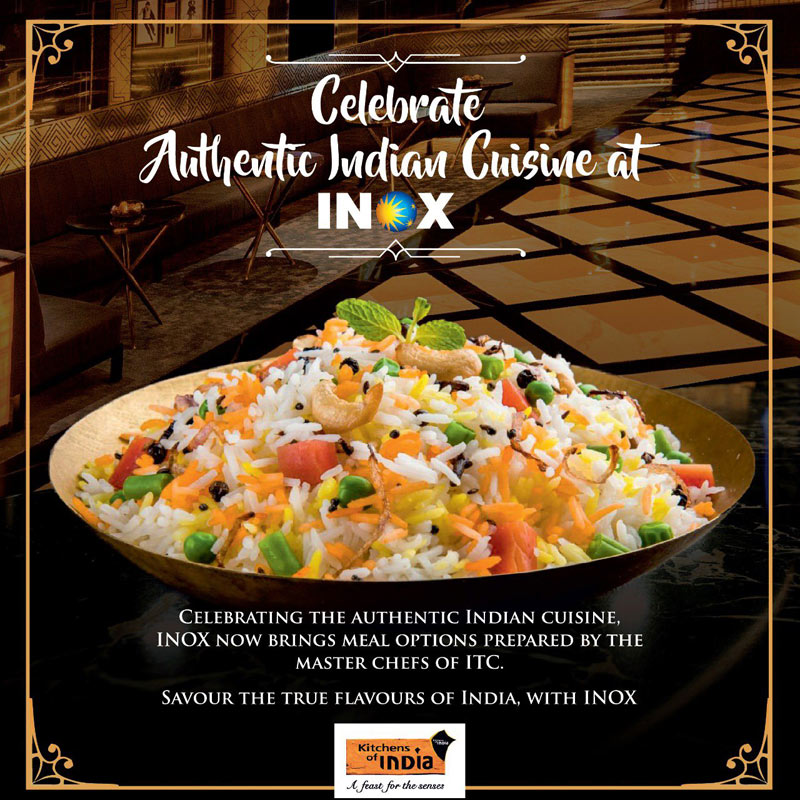
    Inox has announced its partnership with ITC’s ready-to-eat, gourmet brand Kitchens of India to introduce a re-defined innovative F&B experience across all multiplexes across India. With this first-of-its-kind partnership, Inox aims to add a new experience in the cinema halls through a trusted range of 100 per cent natural, Indian gastronomical delights.

    On improving in-cinema advertising revenue 

    Yes, the advertising revenues are not just back to normal but have come back with a renewed rigour. We are back to nearly 80 per cent of the pre-covid levels and expect it to reach 100 per cent within the next two months, well in time to capitalize on the festive season with our complete might. We are seeing a new crop of brands which are keen to explore the unique benefits of cinema advertising, and take their brands to audiences, who are coming to cinemas with a huge pent up appetite for the community viewing experiences.

    With a marvellous content pipeline, a huge desire for participating in community experiences and our efforts to offer unparalleled cinema experience, we are sure of registering a strong comeback on this front.  

    On in-cinema advertising goals of the company

    While offering both reach and recall, there are plenty of benefits of cinema advertising. It offers a tremendous visual impact, which comes through the biggest possible screens that the audience would come across. Another reason behind the success of cinema advertising is the captive state of mind in which the audience is seated in the auditorium, which leads to negligible avoidance of visual communication.

    Cinemas offer higher brand recall and engagement with premium audiences compared to any other medium. While cinema advertising can act as a great tool for geography-specific marketing, we also bring on a national scale thanks to our massive presence in 73 cities with 692 screens.
  • Swiggy announces acquisition of Dineout from Times Internet

    Swiggy announces acquisition of Dineout from Times Internet

    Mumbai: Marking its foray into the high-use dining out category, Swiggy India on Saturday announced that it has entered into a definitive agreement with Times Internet to acquire its dining out and restaurant tech platform, Dineout. Its founders Ankit Mehrotra, Nikhil Bakshi, Sahil Jain and Vivek Kapoor will join Swiggy once the acquisition is completed, while Dineout will continue to operate as an independent app, the food aggregator said in a statement.

    Announcing the development on Saturday on LinkedIn, Swiggy India posted: “It’s a big day for #Swiggy and we’re happy to announce that we have acquired #Dineout – India’s leading dining out and restaurant tech platform.”

    Dineout brings with it a network of over 50,000 restaurant partners along with a ‘proven technology’ and ‘invaluable experience’ that Swiggy can benefit from.  

    “Dineout is a well-loved brand that enjoys loyalty from both consumers and restaurants. Times Internet and the founding team should be credited for the transformational impact they have brought about in the dining out experience through their products, technology and vast selection of restaurant partners,” said Swiggy CEO Sriharsha Majety. “The acquisition will allow Swiggy to explore synergies and offer new experiences in a high-use category.”

    The acquisition will enable the food aggregator to cater to every food occasion by capitalising on Dineout’s assets and position in the dining out space, the statement said. “Swiggy will double down on the synergies with Dineout’s offerings, including dining out table reservations and events. In time, restaurant partners will be able to reach more customers and grow their business,” it added.

    “At Dineout, we always wanted to revolutionise the restaurant industry and this acquisition is an accelerating step towards the same goal. We strongly feel that with Swiggy’s deep understanding of the ecosystem and our shared passion for a superior consumer and restaurant experience, our joint forces will help provide a holistic platform in this industry,” said Dineout co-founder & CEO Ankit Mehrotra.

    Times Internet vice chairman Satyan Gajwani added, “We are proud of the positive impact that Dineout has created for consumers and restaurants, helping streamline and improve the eating out experience. Swiggy + Dineout is a powerful combination, and we are excited to join forces with Swiggy as we continue to look for ways to delight customers.”

    In the last 20 months, Swiggy has strengthened its food delivery business, expanded Instamart, its quick commerce grocery delivery to 28 cities, and Genie, its pick up and drop service to 68 cities.

  • Out of home consumption contributes a big chunk of our business: Pepsico India’s Shailee Tyagi

    Out of home consumption contributes a big chunk of our business: Pepsico India’s Shailee Tyagi

    MUMBAI: Pepsico has long been associated with India’s food service industry, ever since the beverage brand entered India in the 1990s. Amidst inflationary pressures and a tough two years of pandemic notwithstanding, PepsiCo’s India biz in April 2022 reported a double-digit organic revenue growth in the first quarter. The company is well-positioned to adapt and execute in a “challenging operating environment”, having enhanced its focus on productivity and “sharpening its revenue management capabilities”, Pepsico stated while reporting its earnings recently.

    With the pandemic fuelling a paradigm shift in consumer behaviour aided by digital acceleration, and customers preferring doorstep food delivery over dine-in services, the food service industry has been witnessing an upheaval in the past two years. Several restaurants are looking to shift from a traditional dine-in facility to set up a delivery-only cloud kitchen model. On the sidelines of the National Restaurant Association of India’s (NRAI) cloud kitchen convention held recently in Mumbai, Pepsico India beverages director of Organised Trade Channels Shailee Tyagi spoke exclusively to Indiantelevision.com on how the beverage major has been making a difference in the evolving food service ecosystem in the country. She also weighs in on the restaurants vs food tech platforms ongoing dispute and offers her insights on the tussle.

    Tyagi has been a Pepsico veteran with twelve years of experience in channel sales and strategy. She was also the driving force behind the #Pepsisaveourrestaurants campaign with NRAI and Swiggy, to support the restaurant workers when the first covid pandemic wave hit in 2020.

    Edited excerpts:

    How did the food service industry, on the whole and Pepsico India beverages fare during the two successive pandemic waves?

    We launched a Covid assessment report for the foodservice industry along with the NRAI last year, and this was commissioned to Technopak. The insights that came out of the study was that the industry shrunk by 55 per cent in terms of revenue. So, it was a 4.5 lakh crore business with services that shrunk to less than two crore- that was the impact. About 2.5 million restaurants shut down completely- largely the ones unorganised, who do not have the muscle to survive a pandemic like this. And, of course, millions of people lost their jobs.

    Now coming to beverages and us as a company- In the beverages industry, out of home consumption(we refer to outdoors eating as an “out of home” occasion) contributes to a big chunk of our business. For the overall category, it would be nearly 50 per cent. The OOH food service is a part of our growth model for PepsiCo globally. And it is expansive- not just restaurants, even cinemas, airports, airlines all are part of the service. We have built a very strong portfolio which caters to food service requirements. Suddenly, when that shut down, and that too happening in summers, which’s the peak season- you can imagine the upheaval. Unluckily, both the times we lost two summers due to Covid. And those three to four months account for almost 60 per cent for the category. As for the food service industry overall, they lost almost more than 50 per cent of their revenue.

    What was the #PepsiSaveOurRestaurants campaign with NRAI all about?

    The #Pepsisaveourrestaurants is a campaign very close to my heart. It came about at a time when the unthinkable and the unprecedented lockdown happened during the first wave- which was the worst from the viewpoint of the food service industry. We have a huge ecosystem of restaurant partners, and all of a sudden the restaurant workers were out of their livelihoods. There was so much uncertainty looming. So, it was time to really reflect and ask ourselves, ‘Do we just remain silent or become salient at that point in time’? And that’s how I came up with this concept of ‘rallying for our restaurant workers’.

    Fundamentally, we’re a consumer company and we have a consumer connect. So, the idea was how do we connect with consumers and make them part of a movement, where they also come forward to support the restaurant workers. That gave germ to the thought of having an aggregator in play. So, this was really about coming together of three stakeholders who are interconnected, but who hadn’t worked together before, for a common purpose.

    What we essentially did through this is that every time a consumer ordered a meal online on Swiggy, and so long as he or she is adding any beverage- not just Pepsi- for every beverage added, we donated a meal to the restaurant worker. All our proceeds were directed to it and we generated 2.5 million meals during the 40-45 day-long campaign. We generated a lot of goodwill too. It also gave consumers the power of one touch where they could make a difference in the restaurant workers’ lives.

    Essentially, it was about leveraging Pepsico’s entire ecosystem of partnerships, so I think, for me the biggest learning was the power of partnerships, especially in difficult times. How collaboratively we can solve problems, rather than doing it alone. Now, of course, it’s heartening to see the service industries bouncing back.

    How did the industry and the brand cope with the decreasing footfalls in restaurants and the consequent hit in revenue? How is Pepsico making a difference in the post-pandemic F&B ecosystem?

    It’s a very symbiotic relationship that we have with our restaurant partners. It’s like them winning is us winning, and them losing is us losing. After the first wave, we recognised that the consumer habits were changing, and they were moving to aggregators. Because ‘ordering in’ was, in a way, needed and it became the new consumer habit. So what we did is that we worked with the food aggregators on a joint business plan to make sure that all PepsiCo partners, or PepsiCo restaurants, which are on the aggregator platform, how do we increase the discoverability of them. How do we make sure their average order value goes up? So, we came up with insights, partnership with aggregators, built combo led menus, PepsiCo collections, and also created incremental occasions for every festival, where you could celebrate at home with restaurant food. And that’s what we did for every single festival that happened in the last one and a half years through the aggregator platforms.

    After the initial relief that food aggregators offered during the first wave, several restaurants now are at loggerheads with the food tech platforms like Swiggy and Zomato, believing that they are eating into their revenues now that businesses are opening up. Your take on it?

    So, I think, the common insight is that everybody is recognising the benefits of being in a marketplace. It is akin to being in a food court in a physical world. Think of it- in a food court the consumers are there. So, you put up your brand shop, and then the consumer comes and tries it. That’s exactly what an aggregator marketplace is offering you. It does come at a cost. But so is the cost of every channel. I think fundamentally, every channel has certain pros and cons. It’s important to recognise the pros and make it work for you. For instance, the restaurant can ask the aggregator for a lot of insights. Say if you want to do targeted marketing, and want to talk to people who have not interacted with your brand in the last couple of months. So, the moment you recognise them as a partner, and say, what do you bring in as a partner, then I think one can have meaningful conversations.

    The second thing I would say is revenue management is very critical. Like, every channel requires certain dynamics and the consumer requires something. So, fundamentally, you can work with the serve-size of your food, you can work with larger bundles, you can increase your order value on aggregators for group meal occasions. And aggregators are currently working on a model where higher your order value, lower the commission rate. So, it is happening. And a lot of players who have recognised that this is important are having those conversations, and it’s a win-win outcome.

    And thirdly, I think, the stickiness that you build for your food and brand. Once you have built stickiness, the aggregator would also want you, so then they would also want to discuss different terms. Having said that, it’s not just all about aggregators. There is also a ‘direct order’. So, initially you get a trial done on an aggregator, you get immediate feedback, because ratings are visible. Once you have got your trial, and your feedback, and you rework your product and concept fitment, you can always leave a QR code on the packaging, and you can say, hey, next time you order, why don’t you order direct, you can leave a phone number. So, if consumers are comfortable, and if they love you, they will find you. Thus, it’s the mindset that one has to get out of.

    Also Read | Why Restaurants are stepping away from Swiggy, Zomato with #OrderDirect campaign

    What possible pitfalls do you foresee in the cloud kitchen ecosystem in India?

     The only, if I may say, enemy of a cloud kitchen brand is going to be themselves. If they don’t build to last, if they kind of think that this is quick money. If you’re entering with that mindset, you will go wrong. Primarily, if you’re entering a restaurant business you have to enter with a hospitality mindset, be open to feedback for improvisations and have to build trust on board. That is very critical. If this is what a cloud kitchen is building its business on, it’s going to thrive and become scalable.

    The second thing I would say is adoption of technology. One thing that cloud kitchens have access to, is data. They have to ask for that data, it would be available to them in some form. They know exactly how many orders they are taking, they know whether more group meals are getting ordered, or more single people are ordering, they know exactly how many orders are coming and from which location, etc. A physical restaurant didn’t have that choice. Cloud kitchen by the very nature of it is digital-friendly. So, any brand built on consistency, trust and then adopting technology, not just in data, even the processes having standard operating procedures of making food- has to succeed.

    Cloud kitchens and food aggregator platforms saw a spurt during the pandemic-induced lockdown and its aftermath. Now, with businesses and restaurants opening up post-pandemic do you see the growth scaling or sustaining in 2022 and the near future?

    In India, food consumption is on the rise. Because essentially consumer habits are shaping up. What started out as a need has now become convenience. And the fact you have access to so much variety. So, people are okay converting some of their occasions into ordering-in occasions. It takes about 90 days to build a habit, it is said. And in this case, it’s a two-year phenomenon! So, the habits have gotten entrenched.

    The second thing is a couple of things that are fueling it such as, just the fact that people have more spending power now. Also, digital access- wherever you are, the internet travels with you. So, the access and the digital acceleration is supporting it. And when that happens, it’s not just on cloud kitchen, fundamentally, it’s the e-commerce app-based economy that’s really thriving. Digital penetration has happened and the Internet, smartphones are available in even tier four rural areas. People have become comfortable transacting online. Cloud kitchens are just a subset of that.

    And honestly, consumers don’t know whether they’re ordering from a cloud kitchen or restaurant. When you open the app, you’re ordering biryani, and you are ordering from the best place which is nearest and will deliver you on time and has the best rating. That’s all. It is more our industry which uses these words, as far as consumers are concerned- they are ordering from a restaurant only.

    People love ordering in and even love creating social occasions at home. This is here to stay. And in fact, not just survive, but thrive.

  • ‘Wherever a shopper shops, one must make a product around it’: Swiggy’s Swapnil Bajpai

    ‘Wherever a shopper shops, one must make a product around it’: Swiggy’s Swapnil Bajpai

    With the pandemic fuelling a paradigm shift in consumer behaviour aided by digital acceleration and customers preferring doorstep food delivery over dine-in services, cloud kitchens have emerged as viable business model in the F&B industry. Many restaurateurs are now looking to shift from a traditional dine-in facility to set up a delivery-only business to tide over the havoc wreaked by the Covid-19 pandemic. To aid the process and showcase the importance of incorporating cloud kitchens into the Indian restaurant industry, the National Restaurant Association of India’s (NRAI) Mumbai chapter recently held the Cloud Kitchen Convention where prominent stakeholders from the cloud kitchen space got together and shared their knowledge and cutting edge insights.

    Last year, NRAI had launched the #OrderDirect campaign to offer a democratised digital channel with low commissions to reduce their reliance on the aggregator platforms.

    IndianTelevision.com exclusively spoke to Swiggy AVP of sales Swapnil Bajpai on the foodtech brand’s association with the NRAI event. This sheds the spotlight on one of the major concerns of the industry on how to reduce the dependency on restaurants and cloud kitchens on aggregators such as Swiggy and Zomato, and the ongoing debate of whether they are a boon or bane for the F&B businesses.

    The Cloud Kitchen industry is expected to become a two billion dollar industry in India by 2024 as per reports, paving the way for accelerating and revolutionising the concept of dine-in restaurants and cafes. It is this emerging ecosystem that the ‘voice of the Indian restaurant industry’ aims to tap into and grow through such conventions.

    The Swiggy executive was one of the speakers on the event’s panel on ‘Cloud Kitchen marketing – How to stand out amongst the crowd?’

    In this chat, Bajpai further talks about Swiggy’s roller-coaster ride through the pandemic and sustaining the growth going ahead.

    Edited excerpts:

    On Swiggy’s association with the NRAI cloud kitchen convention

    We call our restaurant partners as partners, and we have a partnership with the restaurant association. And this partnership is for something meaningful, not just namesake. We genuinely believe that as aggregators we can learn a lot from the restaurant partners in conventions like these. And we will be able to share our experiences also through which they will also get to learn from us, hopefully. So I look at it as a platform for the mutual sharing of ideas and experiences.
     
    On #OrderDirect campaign by NRAI

    I come from a background of FMCG (Bajpai was previously with Procter and Gamble for close to ten years). And one of the things we learned was wherever a shopper shops we have to make a product around it. And it’s the same for the restaurant partners. When it comes to ordering direct, it’s one of the channels that they would want to operate in. So as aggregators we don’t have a point of view. In fact, if we are able to bring a solution to that, we would also want to do that. So, we don’t see it as competition- it’s just one of those ways to serve the consumer better.

    On Swiggy’s plan to drive awareness about cloud-based kitchen

    Awareness, in general, is created for a brand. Whether the brand is coming from a cloud kitchen or it is coming from a physical restaurant, as a consumer one does not care about it, till the time we know that the brand is preparing the food in a safe way and the quality of the food is good. So we will definitely employ all levers to showcase all brands and their offerings to the consumer – be it cloud or non-cloud in our ecosystem. We already have a bouquet of marketing tools that a new upcoming brand can choose from and we can showcase it on the app. We also go beyond that through our e-mailers and push notifications which we send out to promote and create awareness about the brand.

    On challenges faced during Covid lockdowns

    There have been two cycles of the pandemic that we have seen in wave one and wave two. In the first wave, the biggest concern that people had was whether this delivery would be safe for them or not. Which’s why we saw a massive decline in orders across the board. This coupled with lockdowns and closure of places, movement control etc. In the second wave, this issue was not there, because over time it was established that food delivery is safe. And we also ran many campaigns from Swiggy’s side – I’m sure Zomato also did that, and so did restaurant partners. So mental barriers were taken away from people that food delivery is not safe. Hence after the second wave, we have gradually seen business pick up again, but that first wave to second wave period was very tough when the numbers were pretty low, as compared to 2019 figures. Unquestionably, after the second wave, the platform saw a huge spike in orders.

    On riding the recovery wave post-pandemic

    I foresee a massive potential for food delivery because of the pandemic-fuelled digital acceleration led by increasing internet penetration and also, the frequency of eating out in the country. What delivery does is increase the frequency of ordering out. There are dine-in occasions that you cannot replace with delivery and likewise, there will be delivery occasions that you cannot replace with a dine-in. So each has its own space and they complement one another. Delivery actually increases the frequency of ‘eating out.’ And, now with places opening up, dining-in will also start picking up in its own way. Even pre-Covid when delivery was increasing, dining out was parallelly growing- it’s not as if when delivery picked up, dining actually reduced. So I definitely see food delivery sustaining and scaling up in the coming future.

  • Saurabh Nath joins Swiggy as head of brand marketing

    Saurabh Nath joins Swiggy as head of brand marketing

    Mumbai: Saurabh Nath has joined food delivery platform Swiggy as the head of brand marketing, according to his LinkedIn profile.

    This new role entails Nath leading the brand marketing across Swiggy masterbrand and delivery business.

    Prior to joining Swiggy, Nath was with OZiva, a D2C startup in the nutrition and wellness space, as head of marketing. He led the marketing function and P&L with responsibilities across brand marketing, performance marketing, category management, and e-commerce.

    Armed with over a decade of experience in the field of marketing, Nath began the initial days of his career with Kimberly-Clark Lever as assistant manager-consumer and marketing insights. Later, he joined Kellogg Company where he headed the category of corn flakes, muesli, and granola during his seven-year stint at the FMCG company.

  • Swiggy’s latest campaign helps Santa Claus find new job this Christmas

    Swiggy’s latest campaign helps Santa Claus find new job this Christmas

    Mumbai: What if Santa Claus took a break from deliveries and decided to search for a new gig this Christmas- Who would take over gift deliveries in his absence? In an apparent answer to this question, Swiggy Genie has come up with a quirky creative called the #SantaOpenToWork campaign. The timely campaign, conceptualised by Dentsu Webchutney, hilariously depicts Santa delegating all his gift deliveries to Swiggy Genie.

    At the heart of the campaign is a ’video resume’ by the Father Christmas himself, explaining his decision to move on, and rallying recruiters to hire him. To make things real, the video is accompanied by an actual LinkedIn profile which states Santa’s achievements with fun posts aimed at potential recruiters.

    The campaign aims to showcase how gift-givers can outsource all their delivery tasks to Swiggy Genie this Holiday season, just the way Santa is. So, while Santa is #OpenToWork, Swiggy Genie is #OpenToDeliveries. The short film is directed by Tom Koshy and produced by Raj Banerjee.

    “Our starting point was quite simple: if Swiggy Genie is taking over deliveries, what will Santa Claus do? But we knew we had a winner when we thought of crafting the entire campaign around the #OpenToWork feature, which has become an instantly recognisable mnemonic. I hope people have as much fun watching the campaign as we had creating it,” said dentsu Webchutney creative director Sanket Audhi.

    To create more buzz around the campaign, digital ads across Facebook, Instagram, Twitter, YouTube, Wynk and Inshorts lead people to Santa’s video resume. Swiggy has also used their Genie/Instamart channels to drop unbranded flyers and business cards from Santa, with a special QR Code leading people to the video, said the statement.

    Swiggy director of marketing Sneha John said, “We wanted to remind Swiggy users and non-users alike that they can depend on Swiggy Genie to take care of gift deliveries and other chores this Christmas season. The #SantaOpenToWork campaign does just that, with some Christmas cheer and smart humour.”

  • ITC Kitchens of India to feature on Inox’s menu

    ITC Kitchens of India to feature on Inox’s menu

    Mumbai: Multiplex chain Inox Leisure Ltd on Wednesday announced its partnership with ITC Ltd’s Ready-to-Eat gourmet brand Kitchens of India to introduce a redefined, innovative F&B experience across all multiplexes of Inox in India.

    With this partnership, Inox aims to add a new experience in the cinema halls through a trusted range of 100 per cent natural, Indian gastronomical delights. The new additions to the menu will provide more options to Inox customers, whether ordering at cinemas or from the comfort of their homes through food-ordering apps, said the statement.

    Effective 29 September, customers across the country can have access to authentic Indian cuisine including Vegetable Pulao, Hyderabadi Vegetable Biryani, Dal Makhani, Rajma Masala, Pindi Chana and Steamed Basmati Rice as part of the service, it added.

    “With the addition of Kitchens of India range we are expanding the choices for our patrons by offering an aromatic and flavourful dining experience with their loved ones while watching the movie,” said Inox Leisure Ltd vice president food & beverages operations Dinesh Hariharan. “Consumers will greatly benefit from this collaboration by receiving an array of authentic local culinary delights across the country, served in premium spill and leak proof packaging.  This collaboration is a critical stepping stone in our endeavors to strengthen Inox’s F&B service brand as well as our bond with our patrons, by offering them newer preferred choices.”

    Inox’s new F&B roadmap also includes introducing new processes and innovations including making their food available on online food ordering platforms Swiggy and Zomato. Recently, Inox became the first cinema chain in India to get listed on the table reservation and food discovery platform EazyDiner. Inox sells food under three brands – Café Unwind, Insignia and Delights. Intending to extend the hospitality to new audiences, Inox plans to position these into full-service restaurant brands to target non-cinema consumers.

    “Through this partnership with Inox, Kitchens of India will aim to help redefine and shape a new horizon of cinema and food experience for movie-goers,” said ITC Ltd VP of marketing services (foods division) Shuvadip Banerjee. “As citizens gradually resume out-of-home leisure, entertainment experiences and activities, food safety and hygiene continue to be of paramount importance to consumers. With Kitchens of India featuring on Inox’s menu hereon, consumers will not only enjoy the benefits of convenient indulgences in regal Indian delicacies while enjoying their movie, but will do so with a safe, hygienic and a reliable brand.”