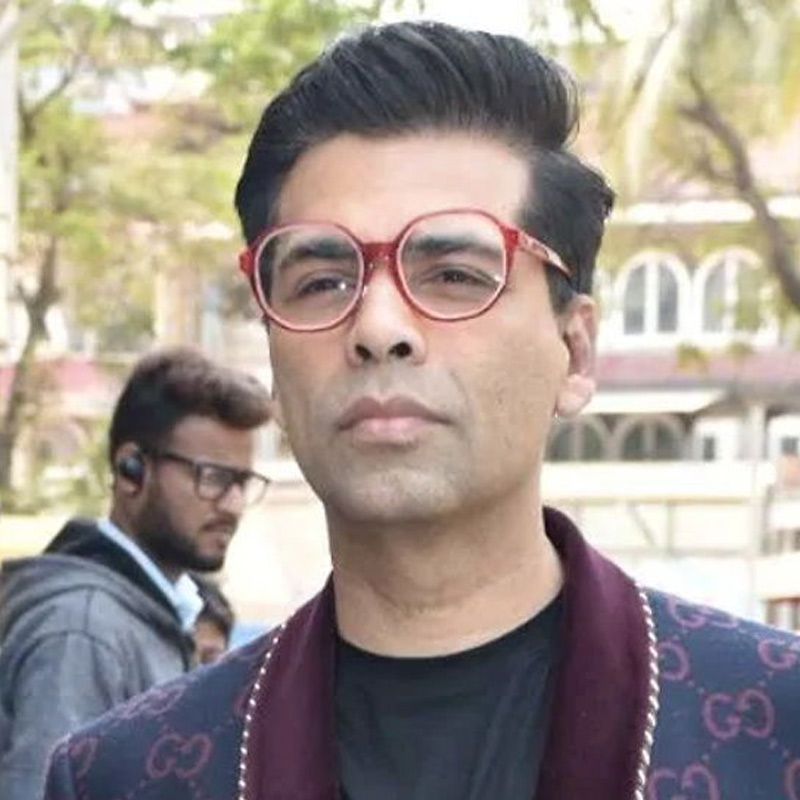
Swayam hosted by Pratibha Advani on Sab TV will feature Karan Johar as its guest on 21 February, 2004 at 10:30 pm. Karan's revelations will include the man behind his successes, his future dreams and lots more.
Tag: Swayam
-
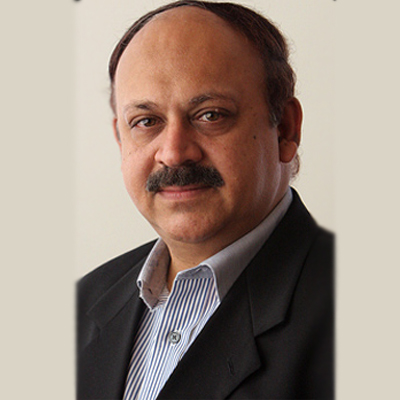
“Life changed after I joined Nimbus” : Akash Khurana Nimbus MD and CEO (Part I)
From actor to scriptwriter and teacher to CEO of a multifaceted production house, Akash Khurana stands out as a rare example of talent and passion married to fervent honesty to his craft. Perhaps one of the few in the industry who have successfully blended academics and creative art to reach a stage where he now shoulders awesome corporate responsibilities as the head of Nimbus, Khurana retains a simplicity that is disarming.
In a freewheeling talk with Vickey Lalwani, Khurana holds forth on a variety of issues, including his own work and what could pep up the creative side of Indian television.
How did you become an actor?
My first tryst with cinema was Kalyug. Ever since my college days, I was a lot into extra-curricular activities like stage shows. Then I did quite a bit of theatre. I was performing with Prithvi, where the casting of Kalyug was happening. That’s it!How did this actor take to writing?
I was acting in a movie called Swayam with Waheeda Rehman in 1988. This was a small budget movie that had to be wrapped up in an intense 18-day schedule. However, the script had some lacunae and we had to re-work it while shooting. I re-worked the script along with Mahesh Bhatt and both of us shared the writing credits. That’s how my writing career started. I later wrote –Aashiqui and Baazigar, besides writing a lot of TV software.What are the essential pre-requisites for becoming a good writer?
a) Idea b)Craft c)Knowledge d)Instinct. Do you know that I haven’t written a script for quite sometime now? (smiles). After I joined Nimbus, life has changed. It’s pretty erratic and that is because I am into so many activities – writing, teaching and then I have a whole lot of responsibilities to shoulder too.Do you experience a writer’s block sometimes?
Happens. Often, the story reaches a point where there is more than one option which I can adopt to take it ahead.“The end helps you to change story tracks, which has become the in thing today. Tracks should be changed in accordance with the end. Else you are simply making a mess of it“ 
So how do you wriggle your way ahead then?
The question is interesting but difficult. There is no one method. In fact, the permutations and combinations of solutions within the process are infinite. Every scene, dialogue, script, part of the process has different variants. To an extent, I can’t answer this question.But do you always have the end in mind?
There again, there are processes and processes. I might have an end in mind, I might not have. Sometimes, I might even discuss it with someone, if I am stuck mid-way.With whom?
Not with anybody! It does not work like that. I need to discuss my project and its difficulties (if any) with people of calibre and sensitivity. The person should have a vision. He/she should be able to relate to a writer’s mind.What have you enjoyed more- writing for cinema or television?
Again a difficult question! Cinema has always been my first love, but I equally enjoyed exploring the field of television. Actually, the technique involved in both is very different. So, it would be unfair to compare the two.What is the difference in technique?
The grammar, structure, characters- everything is so different. Basically, the structure. I mean, the size of the screen, the format. If you are writing a film for television, then there is no difference. But if you are writing a series for television, the structure changes. But please don’t start thinking that I am propagating that TV characters cannot be larger than life. Similarly, cinema characters need not always be larger than life.What helps to keep the programme ticking? Pace/Suspense/…?
There are no answers. You can’t quantify it as 100 grams of this and 250 grams of that. The whole thing should be tight enough.Do you approve of change in tracks and no bound script?
To an extent, yes. There has to be flexibility. If something is not working, you have to manoeuvre it.Are you saying that there are no bound scripts on television?
It depends on calibre and confidence. If you have a great script, these things should not happen. There is an inherent lacuna. According to me, a script should be written, rewritten, tested, approved- and then- shot. Every maker knows the minimum episodes he has been allotted. Keeping that in mind, the story block (beginning-middle-end) should be readied. Unless and until it is ready, shooting must not start.Especially, the beginning and the end is of vital importance. Say, if you want to go to Churchgate from Juhu, you know the starting point, you know your destination. Else how can you term it as journey? The end in particular helps you to change the tracks, which has become the in thing today. The tracks should be changed in accordance with the end. Else you are simply making a mess of it.
Are we having a dearth of script-writers on television?
Inevitable. Everything that had to be done, has been done. Hereafter, the essence of the product will remain the same. Only the marketing and packaging will change.There is a lot of social stuff, a fair dose of spook, now even action, but what’s happening to comedy? Has it dried up?
Yes, it has dried up. Comedy is perhaps the most difficult genre to write. Writing soaps is relatively easy.Did you ever face channel interference in script writing?
Be it Doordarshan, Zee or Channel 9 for which I wrote, I never had channel interference. Today, times have changed. In this respect, I would say that in those times, TV serial makers were far more respected.Is this channel interference due to competition?
No, it’s due to utter mediocrity. And this utter mediocrity begins from the script-writing stage. There is bad raw material, and good packaging won’t help! It’s pathetic, actually!Go on…
These guys keep saying that the content is king. That’s just stating the obvious. But what are they doing about it? On the other side, why don’t they consider that the audience is the king too? You need to give what the public wants.Solution?
No solution in sight! I don’t think that people are even looking for a solution! Not more than a handful take to writing, these days. And I wonder how much these guys read.Why so?
Simple. The low rate of literacy. See a Malayali film and a Hindi film and you’ll understand exactly what I mean. After all, Kerala has the highest rate of literacy, to the tune of 99 per cent.Do you still read?
Of course. I still read more than perhaps the younger generation writers put together. For a writer, there is no substitute to reading. It’s easy to say that one was talented and also present at the right place at the right time, because there was only one channel around.Are writers paid well in India?
Well, I know this is a general complaint. But I think they need to pull up their socks and reach a status before demanding a high price. I put in 20 years of intense study before I headed an organisation. Shortcuts are not the answer to succeed in the sphere of writing. There may be a topper who is working as an engineer for the government, but on the other hand, there may be an average first class engineer who is heading a section in a corporate office. If you have the potential, it will show.Let’s take a look at the programmes abroad. How is it that they have so much variety? Is ‘literacy’ the answer again?
Yes. The culture there is conducive to reading and writing. We are besieged with an intrinsic problem.But aren’t we copying some of the shows from abroad?
Firstly, I don’t understand why people here feel that stolen content will always be better. I am not at all convinced about that. Anyway, does stolen stuff lead to any success? (smiles). I have written a one-page article on ‘Adaptation’ in an anthology on Hindi films, published by Brittanica. Read that and you’ll know what I am hinting at. Anyway, what do you like on television?Nothing much…
I like Office Office. It’s a good social and political comment. Let’s end this by giving a praiseworthy note where it is due. -
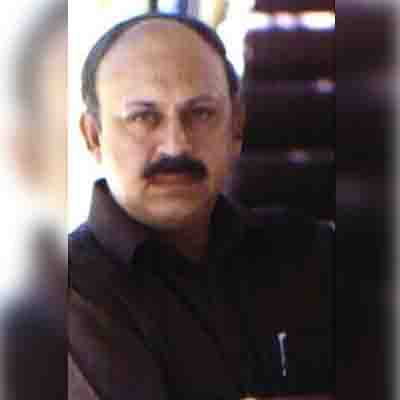
“Dialogues, not visuals hold the TV audience rapt” : Akash Khurana
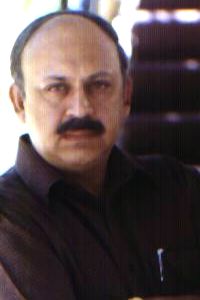
He may be a familiar face as an actor, but Akash Khurana is a multi-faceted personality.
He has a doctorate from the Tata Institute for Social Sciences under his belt, and divides his time teaching Organizational Behaviour and Business Environment at TISS and shouldering responsibilities as the chief creative officer at Nimbus Communications.
His foray into the field of scriptwriting was quite accidental. It was while working on a Mahesh Bhatt film, Swayam, that he chipped in when the script was being reworked. There has been no looking back since. After writing the scripts for feature films like Aashiqui, Baazigar and Daag -The Fire, he ventured into TV territory with Kuch Ret Kuch Pani, a soap that aired on Channel Nine Gold. While he wrote and directed Kuch Ret Kuch Pani himself, he also wrote Plus Channel's Kabhie Kabhie, directed by Mahesh Bhatt.
If his other virtues appear rather disparate from his writing avatar, they also add in making him a more thinking and intellectual writer. Excerpts of an interview with indiantelevision.com correspondent,Amar.
How did your writing career take off?
I was acting in a movie called Swayam with Waheeda Rehman in 1988. This was a small budget movie that had to be wrapped up in an intense 18-day schedule. However, the script had some lacunae and we had to re-work it while shooting. I re-worked the script along with Mahesh Bhatt and both of us shared the writing credits. That's how my writing career started. I later wrote the hit movies – Aashiqui andBaazigar, besides writing a lot of TV software.What do you think is essentially required of an effective writer?
Your instinct, by itself is the most necessary factor. Besides, understanding the craft of TV and film writing, experiences, sensitivity to different situations, empathy towards unknown characters are some of the instincts required of an effective writer.Which subjects appeal most to you?
As far as commissioned programmes go, one really doesn't have much choice as far as subjects are concerned. In fact, I have learnt to operate in a way that I'm fairly comfortable working on disparate subjects.What is the starting point of your writing – an idea, a concept, the complete story?
It could be anything- a thought, a conversation, an incident from real life or it could be autobiographical stuff."India is perhaps the only country where we have such a sharp distinction between screenplay and dialogues"
__________
Do you agree with the adage that TV is a writer's medium?
I agree with it. The effort required in writing five episodes is equivalent to the effort required in writing one movie. Besides, TV has its limitations. Because it can't be shot with the lavishness with which a movie is shot, the dependence on dialogues is that much more. So, writing really is the most crucial aspect in making a serial tick.Why is TV so verbose? Is it because of budgetary constraints that are a hindrance to expensive outdoor shoots?
More than the budgetary factor, I believe it's because the audience is too impatient to stay glued to a programme when there is a gap between dialogues. On TV, more than the visuals it is the dialogues that hold the audience rapt and the moment there is a gap between dialogues they tend to move to another channel.How important is effective narration in selling a story?
It is indispensable. In India, the concept of a bound script is non-existent. At the same time, people lack the practice of extensively reading the scripts. In this situation, effective narration is what matters most.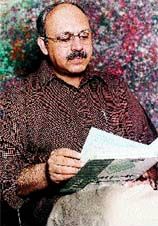
"While a bad piece of work draws flak very easily, writers seldom get due recognition for good work. "
__________Mir Muneer has said that story telling is virtually non-existent today and serials are simply a conglomeration of some very dramatic scenes. Do you feel the same?
I wouldn't agree with him entirely. There are some serials that have very good stories while others don't. So, it's really a matter of personal opinion.You have been quoted as saying that there is no sincerity and passion in TV writing, and no absorbing screenplays nowadays. Could you elaborate?
Actually, I had said that these factors have diminished today. And it is quite obvious too. From less than 100 hours of entertainment programming in 1985, today we have some 5000 hours of entertainment programming. Obviously the ratio of skilled writers has not grown in the same proportion, hence the diminishing sincerity and passion seen in TV writing and the resultant lack of absorbing screenplays. But having said that, let me also add that I have a lot of admiration and respect for people who have sustained themselves and consistently done well as TV writers. I personally have found TV to be an extremely taxing medium where I reached a burn out situation rather quickly.Why do most veteran writers shy away from writing dialogues?
Because they are not qualified. Their level of knowledge and usage of Hindi is rather pathetic. India is perhaps the only country where we have such a sharp distinction between screenplay and dialogues.Does TV writing pay well?
This is a difficult question. Let's say it does pay better than what a well educated and qualified person would earn in a regular job. But if we speak in relative terms, yes, it should pay more considering that TV is acknowledged as a writer's medium. But, frankly, writing is one of the most unenviable professions. While a bad piece of work draws flak very easily, writers seldom get due recognition for good work."My generation of writers is far more literate and well read than the generation that is coming up and there can be no substitute to reading."
__________
What is your writing schedule like?
It's pretty erratic and that is because I am into so many activities – writing, teaching and then I have a whole lot of responsibilities to shoulder as the Chief Creative Officer at Nimbus. So, I really can't plan a definite writing schedule.Do you find channels' interference in the creative process overbearing?
No, certainly not. Channels are more concerned about their product nowadays than they ever were. This has made them more collaborative and involved. But yes, I do feel that the time taken by them to respond on any issue is far too long. If they can improve on this front, it would help do away with a lot of the producer's uncertainties.Does writing require isolation from people in order to concentrate?
Ideally, yes. But it is seldom completely possible. I have seen people writing on the sets also. It's not that one cannot write when not alone, but isolation is certainly preferred.What according to you are the major failings in new writers?
Well, my generation of writers is far more literate and well read than the generation that is coming up and there can be no substitute to reading. But then I also feel that the new generation has grown up watching soaps and thus is that much better versed in its writing unlike my generation which hardly had an access to the electronic medium. But all said, I do feel that the new writers who are just coming up should be better read.Which has been the happiest moment of your career?
My taking to writing was a happy moment. That I'm still writing today makes another happy moment (laughs). Actually, cracking a difficult scene makes an immensely happy moment. The feeling is akin to one of having struck a cover drive from the meat of the bat.