Tag: Swapan Chowdhury

  • Kolkata LCOs appeal to TRAI’s Khullar to air local TV channels

    Kolkata LCOs appeal to TRAI’s Khullar to air local TV channels

    KOLKATA: The Telecom Regulatory Authority of India (TRAI) chairman Rahul Khullar met 150 local cable operators in the city where they told him their grievances.


    The cable operators raised the issue of the regulations of the local video channels floated by the body or in other words popularly known as platform services (PS).


    “We have appealed to TRAI to allow us to run our local channels as we did during the analogue times,” said Cable Operators’ Sangram Committee secretary Apurba Bhattacharya and added, “The cable TV operators have no intention to violate the rules and regulations set up by the most competent authority concerning local channel.”


    “Technology is evolving rapidly and hence, transmission of local content cannot be restricted by selection of type of content. It is advisable that the authority may come out with a guideline with restricted content given the current conditions,” said Cable & Broadband Operators’ Welfare Association general secretary Swapan Chowdhury.


    Khullar answering to some of the LCOs query said that the regulator would like to monitor all the content aired on the local channels. “The LCOs will not be able to telecast news and related events,” he said.


    The chairman also assured that he will keep the view of LCOs in mind while formulating directives on PS. Other LCOs present at the venue said that the local video channel is the foundation pillar of cable television network.


    The TRAI had, a few months ago, come up with a consultation paper to regulate platform services in which it said that due to digitisation, LCOs wont’ be able to transmit a local channel and will have to take it from an MSO.

  • Kolkata LMOs to set up another cooperative post 2014 FIFA WC

    Kolkata LMOs to set up another cooperative post 2014 FIFA WC

    KOLKATA: The last mile owners (LMOs) in Kolkata are yet again gearing for owning their subscribers. While earlier a group comprising 100 LMOs had announced their plan of setting up their own cooperative, news now is that another set of ‘unhappy LMOs’ in Kolkata has united to set up their own control room and headend.  


    According to cable TV sources operating in the region, LMOs will declare their plans only after the end of the ongoing 2014 FIFA World Cup. The delay is to ensure that the 33 lakh cable TV subscribers in the area do not see any disruption in their cable TV services, especially during the football World Cup.


    The trend of more and more LMOs joining hands to set up their own cooperative has come from the rising concern over MSOs becoming the owners of the subscribers, which according to the LMOs have been owned by them for years. Sources hint that the industry will soon see some major announcements.


    Indiantelevision.com was the first to report on how around 100 LMOs in the region had united a few months ago to form a cooperative called ‘Bengal Broadband’.  The aim of this was to provide independent cable TV services to customers like any other multi-system operator (MSO), namely SitiCable, Manthan and Incable among others.


    ‘Bengal Broadband’ aims to start operation in the current fiscal 2014-15 and has already invested around Rs 4.8 crore in setting up the headend equipment and office infrastructure at Salt Lake College More in the city. The cooperative is looking at a subscriber base of one million in the first year of its operations. Not only this, it also aims at providing cable TV connections at a cost which is 15-20 per cent lower than the other MSOs.


    While Cable & Broadband Operators Welfare Association convener Swapan Chowdhury refused to comment on any such development, Cable Operators Sangram Committee general secretary Apurba Bhattacharya confirmed the news of LMOs in Kolkata venturing into forming a cooperative. “The operators are happy to get into this space. We will run the business ourselves.”


    A LMO, who is a part of the new venture said, “We are setting up our own control room and it will involve a cost of around Rs 1 crore. We will be able to offer services to customers at a cheaper rate. It will be an operators’ driven MSO.”


    “During the analogue regime, the revenue share between the MSO and LMO used to be 20:80 but after DAS, it has come down to 65:35. The business model is not at all lucrative. If this continues, we will die and not be able to arrange our daily bread and butter,” added another LMO who is a member of the group that is setting up the control room.


    Small operators will become a part of a larger LMO network, said another, without divulging much details.

  • Kolkata LCOs against having to obtain NOCs from MSOs

    Kolkata LCOs against having to obtain NOCs from MSOs

    KOLKATA: It’s their fight for survival. Local cable operators (LOC) from Kolkata are now up in arms against the regulation that requires them to obtain no-objection certificates (NOCs) from multi-system operators (MSOs) to be able to get their licences renewed.


    It’s not just the billing, inter-connect agreements or revenue sharing issues that is of concern to the LCOs. The requirement of having to obtain NOCs from MSOs for their annual licences is another issue they are preparing to fight against.


    LCOs across the country now come under an amended rule which states that LCOs have to take NOCs from their respective MSOs for renewal of their annual licence from the Post and Telegraph department, which, the LCOs feel, makes their survival at the mercy of the MSOs.


    Swapan Chowdhury, convener of the Joint Forum of Cable Operators’ Association (JFCOA), said earlier the LCOs, the last mile operators, had to apply to the government for renewal of their licences but now have to take NOCs from private companies, the MSOs. “It shall be difficult for the LCOs to exist and operate,” he argued.


    “The forum will raise its objection with TRAI (Telecom Regulatory Auhtority of India) and shall (also) challenge the merit of such an amendment in the appropriate court of law shortly,” Chowdhury said.


    “This mandatory digitisation has adversely affected our livelihood and has proved detrimental to our interests. If TRAI wants the LCOs to be wiped out from the cable TV industry business, it is fine but asking us to get NOCs from MSOs is not a fair idea at all,” said an LCO from the Cable Operators Sangram Committee.


    The LCOs are also against the practice of having to renew licences every year. They want the Ministry of Information & Broadcasting to issue LCOs licences for 10 years.


    “The LCOs are registered with post offices for 1 year whereas the MSOs get the licenses for 10 years from the ministry. This is making LCO business uncertain,” Chowdhury rued.


    Kolkata-based MSOs when contacted said they would adhere to the rules and regulations prescribed by the authorities and ensure that digitisation of cable TV happens smoothly.

  • Kolkata LCOs want to raise bills, pay tax themselves

    Kolkata LCOs want to raise bills, pay tax themselves

    KOLKATA:  It is their fight for staying relevant and thwart looming extinction due to digitisation. More than 2,000 local cable operators (LCOs) from Kolkata have joined forces to keep the last mile in their control.


    The LCOs, under the banner of Joint Forum of Cable Operators’ Association (JFCOA), have decided to mobilise support and start billing their customers themselves, instead of their multi-system operators (MSOs) doing it.


    The LCOs also want to start paying service tax themselves to the government authorities.


    “We will conduct several meetings among operators across the city to mobilise support ,” said JFCOA convener Swapan Chowdhury.


    JFCOA has decided to put pressure on MSOs to make the necessary provisions in their systems to enable billing from the cable operators’ end.


    “(This has been decided) in order to restrain MSOs’ ill intention to eradicate LCOs from the business,” said Chowdhury, after a conference which also attended by representatives of MSOs Meghbela Broadband Services and GTPL-KCBPL.


    With the implementation of digitisation of cable TV services in Phase I and Phase II, the MSOs have been made responsible for sending of bills to cable TV consumers.


    Indiantelevision.com had last month reported that Kolkata’s LCOs have come together to form the JFCOA in a bid to articulate their problems to MSOs and the Telecom Regulatory Authority of India (TRAI).

     
    The conference today discussed issues the LCOs have about billing, interconnect agreement, and the ratio of revenue sharing between LCOs and MSOs with the implementation of digitised delivery of television channels to television households.

      
    A member of the Cable Operators’ Sangram Committee said the LCOs have requested MSOs not to interrupt cable operators’ services till the various issues raised by them are resolved.


    The LCO suggested that there should be an interconnection agreement between the MSO and the LCOs to conduct business in the DAS regime. “In spite of a business relationship and business transactions between the two of them, no interconnect agreement has been followed till now, which is a violation of the law,” he said.

     
    Another LCO pointed out that MSOs were not executing the agreement with LCOs even though DAS had been implemented since February last year. “DAS agreement with cable operators should be completed by MSOs with immediate effect…” he demanded.


    Sujit Das, MD of AMBC, an MSO, said his company could not participate in the conference, but would still talk to affiliated LCOs and discuss issues raised via the forum.

  • Kolkata MSOs anticipate cooperation from LCOs in two months

    Kolkata MSOs anticipate cooperation from LCOs in two months

    KOLKATA: The multi-system operators (MSOs) have started gross billing for the month of December from 7 January in Kolkata and are hopeful that the local cable operators (LCOs) who at present are showing some resistance will eventually fall in line in the next two months.


    The MSOs in the meanwhile are educating consumers about gross billing by publishing advertisements in newspapers. The ads request consumers to make the payment against a bill only.


    “We have started the billing process. Customers are happy, but the operators do not want the billing to be in place. There might be some resistance but eventually things will fall in line,” said Siticable Kolkata director Suresh Sethia.


    While another MSO said that the company is having meetings with operators and trying to convince them of the benefits of digitisation.


    “We are talking to the LCOs and asking them to hike the bill which will include amusement tax and service tax. Even consumers have to understand that they have to pay taxes now,” said the MSO.


    When the MSOs were asked about the disbursement of the bills, some said they have given the bills to LCOs in compact disk (CD), while others like SitiCable said that they have uploaded the bills on their system and the LCOs can easily take the printouts.


    However, the LCOs in Kolkata have made it clear that they will not distribute the bills unless the revenue sharing model and other details are discussed.


    Cable Operators Digitalisation Committee of the Association of Cable Operators convener Swapan Chowdhury said, “The MSOs who are giving the bills on CDs to LCOs need to give a hard copy of the bills as printing will also involve cost.”

    It seems the LCOs are serious about every single penny and are not in a mood to give up easily!

  • LCOs may decrease in number in the next three years

    LCOs may decrease in number in the next three years

    KOLKATA: Lately,  indiantelevision.com  has done a series of reports about local cable operators (LCOs) being unhappy with the process of digitisation. A critical area of concern being the Telecom Regulatory Authority of India’s (TRAI) ruling on consumer application forms (CAFs) and billing, which according to LCOs, makes multi system operators (MSOs) the owners of their hard-won subscribers.

    On the back of these reports comes another disturbing finding: experts say LCOs in the city’s DAS area – currently pegged at 7,000 to 8,000 – will drastically decrease in numbers in the next three years.

    Says Mrinal Chatterjee, who runs Akash Sutra, a cable network in Bangur and its adjoining areas: “During analogue times, the share between the MSOs and us used to be 20:80 but after DAS, it has come down to 65:35. The business model is not at all lucrative enough. A major number of operators might look at other options for existence.” Many others are thinking of ways to ‘only exist’ in the cable TV business, wherein they have invested nearly 20 years of their life; he adds.

    Whereas, Suresh Sethia, Siticable Kolkata director says: “Small operators will become a part of larger networks but will still be in business.” Asked to define the term ‘small operators’ Sethia goes on to explain that LCOs with 100-150 subscribers are small while those with 2,000 and more customers are big. “There are groups of LCOs having more than 10,000 subscribers that are considered large,” he says.

    Sources however say that in Kolkata, most cable ops are yet to sign revenue-sharing agreements with their MSOs.

    An MSO says while the company has asked affiliated LCOs to educate subscribers about the different packages on offer, LCOs are not doing their work. “Secondly, the LCOs did not pay us for each connection in the analogue regime. But with installed set top boxes and the number of connections transparent, LCOs are not supporting us properly implement the new system,” he says.

    By contrast, an LCO who is part of the recently formed Bengal Broadband initiative (GIVE LINK TO OUR STORY) argues: “A multi system operator may provide cable TV services directly to subscribers. They don’t need our services and we are not mere collection agents. So, I will try to become a MSO.”

    Another cable op questions: “Filling up forms to gather information about viewers’ preferences coupled with sharing of network could result in monopoly of MSOs. Where are we in the system?”


    According to Swapan Chowdhury, convener of the Cable Operators Digitalisation Committee of the Association of Cable Operators, the authorities must do something in favour of operators. But he is quick to assure that people who have spent years in this industry will be here and ‘nothing will change’.

    Corpus Media consultant GK Viswanath corroborates Chowdhury’s view and says: “LCOs will not leave the industry. They’ve spent time and money here. LCOs will be the franchisees or payment collectors.” Going forward, he feels the small LCOs will merge with the MSOs and not with big LCOs.

  • MSOs miss 15 November CAF deadline

    MSOs miss 15 November CAF deadline

    MUMBAI: Multi system operators (MSOs) have bought themselves some more time to collect duly filled consumer application forms (CAF) from cable subscribers across 38 cities falling under DAS phase II.


    The earlier deadline for CAF collection was today, that is, 15 November, and consumers failing to comply would have had their transmission cut off, even after possessing set top boxes. However, as learnt from several sources in the industry, MSOs failed to meet the timeline and are now seeking further extension.  


    While a few MSOs including Hathway Cable & Datacom have extended the deadline to 20 November, smaller Kolkata-based MSOs say the procedure will be complete by 23 November.


    It was the Telecom Regulatory Authority of India (TRAI) that had previously extended the original deadline from 20 September to 15 November. When contacted, TRAI principal advisor N Parameswaran said considering it was a national holiday today, “any decision on the final date would be taken only on 18 November.”


    “The MSOs have voluntarily decided to extend the date to 20 November,” informed Maharashtra Cable Operators Federation (MCOF) president Arvind Prabhoo, adding that the regulator had asked the MSOs to send a review of DAS phase I, covering points like billing and CAF, in the interim.


    Kolkata-based Manthan and Siti Cable confirmed that they have achieved 100 per cent CAF collection whereas the Cable Operators Digitalisation Committee of the Association of Cable Operators convener Swapan Chowdhury said a 100 per cent CAF was impossible to achieve in the City of Joy with so many festivities. “We have increased the deadline for duly filled CAF to 23 November,” he said.


    Cable Operators Federation of India president Roop Sharma opined that CAF collection is a difficult task at hand for operators.


    “Considering that the broadcasters have not yet declared the rates for the channels, it is difficult for the consumer to decide which ones they want to subscribe,” she said.
    Clearly, we have not heard of the last of CAFs, phase II – as yet.

  • Howrah’s DAS travails

    Howrah’s DAS travails

    KOLKATA: To DAS or not to DAS? That is the question in West Bengal’s Howrah.
    Howrah, which is among those regions that are under phase II of DAS, has seen the implementation of DAS in only around 40 per cent of the million or so cable TV connections that dot the district.

    The remaining 60 per cent continues to be stuck watching analogue cable TV services. Subscribers have been loathe to pick up a set top box (STB) as local cable TV operators have clearly assured them that they fall under Howrah district and not Howrah city.

    A Howrah resident Rohan Das when contacted says: “I don’t mind buying the set top box (STB) but my operator has informed that it is not necessary to buy now.”

    Sources further add that not enough is being done to monitor or police how cable TV is making the transition to digital in Howrah. Cable Operators Digitisation Committee of the Association of Cable Operators convener Swapan Chowdhury confirmed that there is slackness in the DAS rollout.

    Manthan director Sudip Ghosh pointed out that things are doing well in “Howrah city which has around five lakh cable TV connections; most of these have been digitized. More over the CAF collection has also been completed by many, while some are doing it now.”

    Manthan has installed 20-25 per cent STBs in the region out of the four to five lakh STBs. Ghosh clarified that “Howrah district and Howrah city are different.”

    SitiCable Kolkata director Suresh Sethia also confirmed that the company has completed the work as mandated by TRAI. He however added, “TRAI has to define whether the border of Howrah falls under phase II or not. The regulator has to clarify the DAS area.”

    SitiCable controls a sizeable chunk of cable TV viewers in the region. It should be noted that broadcast regulator TRAI has extended the deadline for collection of Consumer Application Forms (CAF) in phase II cities including Howrah by MSOs to 15 November from its previous deadline of 30 September. MSOs operating in Howrah vicinity confirm that they will meet the deadline.

    While cable TV analysts say that CAF forms have not been received by many cable subscribers due to festive holidays – firstly, Durga Puja, and now Kali Puja followed by Diwali. “LCOs and MSOs will be back to work only after these are over.” 

  • Howrah’s DAS travails

    Howrah’s DAS travails

    KOLKATA: To DAS or not to DAS? That is the question in West Bengal’s Howrah.
    Howrah, which is among those regions that are under phase II of DAS, has seen the implementation of DAS in only around 40 per cent of the million or so cable TV connections that dot the district.

    The remaining 60 per cent continues to be stuck watching analogue cable TV services. Subscribers have been loathe to pick up a set top box (STB) as local cable TV operators have clearly assured them that they fall under Howrah district and not Howrah city.

    A Howrah resident Rohan Das when contacted says: “I don’t mind buying the set top box (STB) but my operator has informed that it is not necessary to buy now.”

    Sources further add that not enough is being done to monitor or police how cable TV is making the transition to digital in Howrah. Cable Operators Digitisation Committee of the Association of Cable Operators convener Swapan Chowdhury confirmed that there is slackness in the DAS rollout.

    Manthan director Sudip Ghosh pointed out that things are doing well in “Howrah city which has around five lakh cable TV connections; most of these have been digitized. More over the CAF collection has also been completed by many, while some are doing it now.”

    Manthan has installed 20-25 per cent STBs in the region out of the four to five lakh STBs. Ghosh clarified that “Howrah district and Howrah city are different.”

    SitiCable Kolkata director Suresh Sethia also confirmed that the company has completed the work as mandated by TRAI. He however added, “TRAI has to define whether the border of Howrah falls under phase II or not. The regulator has to clarify the DAS area.”

    SitiCable controls a sizeable chunk of cable TV viewers in the region. It should be noted that broadcast regulator TRAI has extended the deadline for collection of Consumer Application Forms (CAF) in phase II cities including Howrah by MSOs to 15 November from its previous deadline of 30 September. MSOs operating in Howrah vicinity confirm that they will meet the deadline.

  • WB UDM Firhad Hakim pleads TRAI to extend deadline for CAFs

    WB UDM Firhad Hakim pleads TRAI to extend deadline for CAFs

    KOLKATA: First it was Information and Broadcasting Minister Manish Tewari who appealed to the Telecom Regulatory Authority of India (TRAI) to delay implementation of ad cap for news channels till the completion of digitisation, and now it is the West Bengal Urban Development Minister Firhad Hakim who has appealed to the regulator to extend the deadline for customer application forms (CAFs) submission.

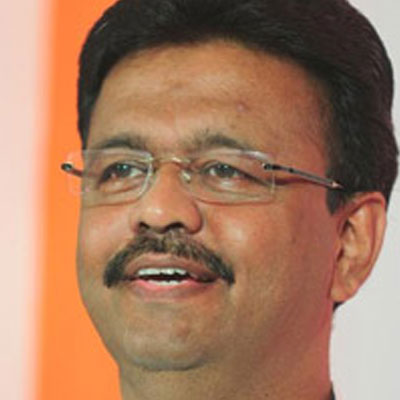
    Firhad Hakim has appealed to the regulator to extend the deadline for implementation of SMS rollout

    The request has come after TRAI confirmed last week that it will strictly adhere to the 23 August cut-off-date. “If subscriber details including channel preference is not done within this deadline, the operator’s connection is liable to be disconnected,” informed TRAI member R K Arnold.

    “After interacting with both the local cable operators (LCOs) and multi system operators (MSOs) at the ground level, we found that most of them are not aware about the registration work which they are mandated to do. TRAI before taking such decisions must spread awareness. I have spoken to the chief secretary to extend the deadline,” said Hakim exclusively to indiantelevision.com today.

    Hakim also said that TRAI must have an elaborate publicity campaign to inform the operators on the procedures involved. “How can TRAI ask the operators to disconnect its services without updating the operators about the whole process of CAFs,” he questions.

    Cable Operators Digitalisation Committee of the Association of Cable Operators convener Swapan Chowdhury informed, “So far only 30-35 per cent of cable consumers in the Kolkata Metropolitan Area have completed the form. It is not possible to meet the 23 August deadline.”

    TRAI officials who were in Kolkata last week said, “If not done within the set deadline, we will take action according to law,” said Arnold.

    Kolkata remains to be the last metro where DAS is yet to be implemented. Manthan Broadband Services director Sudip Ghosh when contacted said, “We will abide by the law and we are working towards meeting the deadline day and night.”

    While Hathway Cable managing director and CEO Jagdish Kumar G Pillai said the company is focused towards meeting the deadline.

    A MSO on the condition of anonymity said, “In the digitisation process, installation of set top boxes and offering of the channels account to more than 85-90 per cent of the work and remaining 10 per cent is clerical job which is letting the consumers to choose the channels. The LCOs have all the details of the customers, and now they just need to go and ask the customers to choose the package they want to go for. All this process will hardly take 10 minutes.”

    Can the cable operators breathe a sigh of relief after the appeal made by Hakim for the extension of deadline? Doesn’t seem like it is too easy to please TRAI, but they can only hope.