Tag: Swachh Bharat

  • Akshay Kumar extends sanitation drive by associating with Swachh Bharat Mission

    Akshay Kumar extends sanitation drive by associating with Swachh Bharat Mission

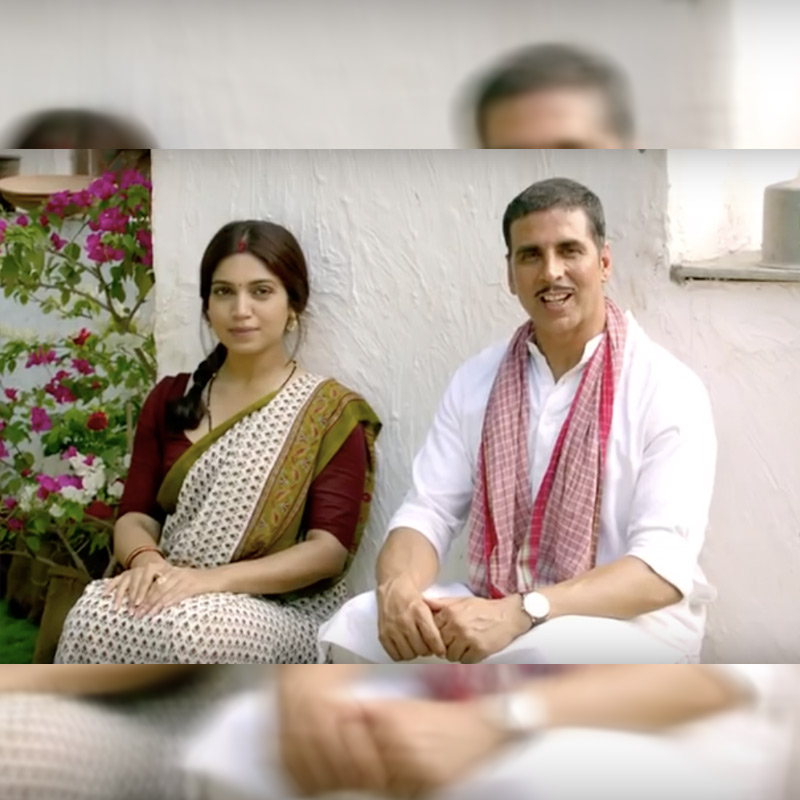
    MUMBAI: Bollywood actor Akshay Kumar has joined hands with Indian government’s cleanliness initiative Swachh Bharat Mission (Grameen) and launched a new campaign.

    The campaign was launched at a Collectors Convention for Toilet Technology organised in Delhi and focuses on promoting the twin pit toilet technology in rural India, and also features actor Bhumi Pednekar along with Kumar.

    In his welcome address, Ministry of Drinking Water and Sanitation secretary Parameswaran Iyer spoke about the contribution made by Kumar to the Swachh Bharat Mission. He said that right from his movie, Toilet Ek Prem Katha, which was seen and appreciated by rural and urban people across the country, to his participation in the twin pit toilet advertisement campaign for the Swachh Bharat Mission, Kumar has been a strong supporter of the sanitation movement underway in the country.

    Kumar interacted with Swachh Bharat Mission officials, district collectors, communication experts and members from the media on the occasion. During his interaction, he spoke about the need for influencers of society to talk freely about toilets, and empty toilet pits around the country to destigmatise cleaning of one’s own toilet by members of the family itself.

    The district collectors and field officials, during the interaction, spoke about the power of women in leading the sanitation mission in rural areas, and the role played by the movie, in leading this behaviour change. It was also announced by the ministry of drinking water and sanitation on this occasion that the producers of Toilet Ek Prem Katha have given rights to all state and district teams of the Swachh Bharat Mission (Grameen) to screen the movie in villages on a non-commercial basis.

    The twin pit toilet technology was invented in India and is the most well-suited toilet technology for rural India, and is recommended by Government of India and the World Health Organisation. It is scientifically proven that a pit in a standard twin-pit toilet model fills up in roughly five years for a 6-membered family.

    The states are continuously encouraged by the Swachh Bharat Mission (Grameen) to include awareness generation about the above facts as part of their grassroots information, education and communication (IEC) efforts.

    The advertisement campaign launched is an effort, supported by the World Bank, towards encouraging this technology using mass media.

    The advertisement will be translated in several regional languages including Hindi on television channels.

  • Dettol campaign for 26k villages to be ‘open defecation-free’ by ’18

    MUMBAI: RB (formerly known as Reckitt Benckiser) in collaboration with Jagran Pehel, in its endeavour to strengthen the prime minister’s ‘Swachh Bharat Mission,’ marked the success of their 1st phase of activation in Uttar Pradesh and Bihar, reaching out to 200 villages and 85,205 households. The 2nd Phase would target 26,032 villages and 14,712,453 households across seven Indian states of UP, Bihar, Rajasthan, Gujarat, Maharashtra, Telangana and Andhra Pradesh covering 25 districts and three cities.

    The BSI Campaign in the second phase will focus on mentoring Swachh Bharat Fellows who will provide support to districts in smooth implementing and monitoring of the mission They would work closely with faith based leaders, mothers, care givers, municipal cleaners on behavioural Change Communication and also initiate citizen movement for human to human connect. The Campaign which was launched in 2015, has been successful in reaching out to 100% of its target and has successfully mobilised around 13000 change leaders in communities.

    The announcement was made in Lucknow at the completion of 1st phase of “’Changing Behaviour, Creating Sanitation Change Leaders programme”in association with Jagran Pehel. The event brought together leaders and policy makers from Global Interfaith WASH Alliance, WHO, UNICEF, World Toilet Organisation and other organisations associated with Dettol Banega Swachh India to share best practices and grassroots solutions that can be implemented to achieve ‘Open Defecation-Free’ status.

    Chief Guest Surya Pratap Shahi, Cabinet Minister for Agriculture, Agriculture Education and Agricultural Research launched the Impact Assessment Report that embodies behaviour change strategies adopted, activities undertaken, success stories and impact created through public-private participation during the first year of the project.

  • Bahubali continues to rule the box office as it pushes aside others in third week

    The fact that films and cricket remain its dominant entertainers on television was evident when the Zee TV premiere of Dangal on 21 May and the final of the IPL T20 on Sony Max took the toll at the box office.

    Last Friday saw the release of two totally different genre films – Hindi Medium and Half Girlfriend.

    Hindi Medium is an entertaining family fare that also tackles a social issue relating to the education system in India; showing how every educational institution brands itself as ‘international’ and,while even the poor want their children to get English education, it is gradually going out of their reach. This is a small budget film with not much wasted on artistes while the limited locations help curtail the budget.

    Half Girlfriend, on the other hand, is youth oriented romance. It used all the traditional stuff that a love story has been using through the history of storytelling: taming of the shrew, rich vs poor, chamcha friends around and, as a side attraction, it also touches on the Swachh Bharat issue stressing on the need for toilets in mofussil area schools so girl students do not shy away from enrol!ing. Sadly, all these elements were badly and predictably strewn together handled with inept direction.

    Of the films released last week, Ram Gopal Varma’s idea of The Godfather, Sarkar 3, backfired yet again. Why is RPG trying to sell the same idea again if it was not accepted the first time? In filmmaking, you can’t be third time lucky with the same stuff!

    Of the already running films, only Bahubali (Dubbed-Hindi) is sustaining. It is no secret that no dubbed film has ever done this kind of business while, it is also no secret that no Hindi films has reached such box office height either, be is a Salman Khan or an Aamir Khan starrer despite their being known to break barriers.

    Box Office status wise:

    *Half Girlfriend opened reasonably well but the word of mouth was mostly against its content. The film collected 29.1 crore over the weekend and may fall short of its target. The price at which its Indian theatrical rights have been sold, the film will need to reach a target of little short of 100 crore.

    *Hindi Medium opened to an indifferent response on Friday, a good word of mouth helped the film as it gained on Saturday and Sunday to end its opening weekend with Rs 109 million. It should sail safe.

    *Sarkar 3 has been very poor managing to collect barely Rs 82 million in its first week and is a loser.

    *Meri Pyaari Bindu, with lesser number of screens compared to Sarkar 3, has been a slow starter but, being a mini budget enterprise, should not offset the producers’ balance sheet. The film collected Rs 86 million.

    *Bahubali 2: The Conclusion (Hindi-Dubbed) maintains strong trends as the film collects a whopping Rs 676 million in its third week taking its three week total to Rs 4.495 billion – the highest box office collections ever for a film in the Hindi belt.

  • Ravi Shankar Prasad plans to create a digital ecosystem

    NEW DELHI: Information technology minister Ravi Shankar Prasad today said social media has created a link between politicians and people in real time and 40 million users advise the prime minister Narendra Modi on social media everyday.

    He said through steady and consistent monitoring, it became possible to create a more participatory system. In fact, the Swachh Bharat logo was created by Indian netizens. “I’m proud of social media. I support freedom of speech on social media. People criticise us, appreciate us and sometimes they blast us. But it’s always a pleasure to know their mind.”

    Addressing the two-day India Today Conclave in Mumbai, he said creating a digital eco system for a population of 1.2 billion is by no means an easy task, and to make it one which is not just inclusive, but also economical is daunting, but necessary. The digital economy will grow to become a $1 trillion economy in the next 5 to 7 years, and there are 1.08 billion mobile phones and 350 million smartphones in India today.

    The minster announced that Adhaar was developed at an impressive expenditure of $2 per day and the government authenticates 30 million transactions daily at no cost.

    He said his Ministry was encouraging women — dalits, Kashmiris and more — to provide common services digitally at the click of a button. This is both empowering and important for India to develop and include in its journey the strata of society that require upliftment. He also spoke of poor farmers, initially with few opportunities and access to mandis, who now have 250 mandis available to them at the click of a mouse in order to more easily and effectively sell their ware. “I want to create a digital ecosystem for the country’s infrastructure,” he said.

    “The Prime Minister has coined the term IT + IT = IT, which means, Indian talent plus information technology equals to India tomorrow.”

    “The vision is to make India the biggest hub for technological manufacturing,” he said adding that India is fast becoming the biggest hub of electronic manufacturing. Prasad stated that from Rs 110 billion invested in the sector, the amount today stands at a whopping Rs 1270 billion.

    Responding to President Donald Trump’s policy on visa restrictions in the United States, the Minister said an Indian presence in the IT sector abroad is indispensible not only for their country but also for India. Indian IT companies in America generate $200 billion plus tax. “America should know, Indians don’t steal jobs, they create them,” he said.

    Prasad explained how campaigns such as Make In India, Start Up India and Stand Up India were designed to bridge the divide and make technology more accessible. “Digital India is more for the poor and underprivileged people,” he said.

    The execution has thus far been successful, Prasad asserted. With the creation of Rs 270 million Jan Dhan accounts, linked to mobile phones and aadhar cards, subsidies on ration and other necessities go directly to people’s bank accounts. “We have saved Rs. 500 billion which used to be pocketed by fictional persons,” he said. Connecting and simplifying business for poor farmers has been a successful endeavour. “Today 250 mandis are available to poor farmers at a click of a button to sell their goods,” he said.

    The Minister celebrated the ideas of Digi Gaons, engagement on social media and his impressive projection that the digital economy will grow to $1 trillion in the next five to seven years. “We don’t want to miss the Digital Revolution,” he said. “We request you to trust the enormous pull of technology.

  • India takes significant initiative to secure cyber space

    MUMBAI: Extending the ‘Swachh Bharat’ campaign to the cyber world, the minister of electronics and information technology Ravi Shankar Prasad has launched the Cyber Swachhta Kendra–Botnet Cleaning and Malware Analysis Centre for analysis of malware and botnets that affect networks and systems. 

    This is a part of MeitY’s Digital India initiative aimed at creating a secure cyber space by detecting botnet infections in India and to notify, enable cleaning and securing systems of end-users to prevent further infections. The centre is operated by the Indian Computer Emergency Response Team (CERT-In).The Centre aims to enhance coordination between the Government and industry in order to encourage cyber hygiene among all end-users and to create a secure and safe internet ecosystem in India.

    Speaking on the occasion, Prasad said, “India is going to take a lead in the digitization process of the world. India today joined the distinguished club of countries that have malware cleaning systems for the use of its citizens. As of now, we have 13 Banks & internet service providers using this facility. With the expanding digital footprint in the country, I see a surge in start-ups in the area of cyber security by the end of the year.”

    “With the expanding role of Information and Communication technology across sectors and growth in volume of transactions and data exchange via internet, Cyber Security as reiterated by the prime minister, has emerged as the most critical factor when we move towards Digital India. Combating cyber threats is not something that can be done just by the government or an organisation or an individual alone. It requires a partnership approach. This centre being launched today will work in coordination with the Internet Service Providers and Industry. This Kendra will also enhance awareness among citizens regarding botnet and malware infection along with measures to be taken to secure their devices”, added Prasad.

    The minister made the following announcement at the launch of Cyber Swachhta Kendra:

    · The National Cyber Coordination Centre to be operational by June 2017
    · Sectoral CERTs to be created, that would operate under CERT-In
    · CERTs are to be set up in the state level as well
    · 10 more STQC (Standardisation Testing and Quality Certification) Testing Facilities to be set up
    · Testing fee for any star-up that comes up with a digital technology in the quest of cyber security, to be reduced by 50%
    · Empower designated Forensic Labs to work as the certified authority to establish cyber crime

    The Centre will operate in close co-ordination and collaboration with Internet Service Providers (ISP) and Anti-Virus companies. Whenever an infection is detected, the Centre will send alerts on the infected IP addresses to the Internet Service Providers, who in turn will inform the end-user about the malware and botnet infections on their system. The Centre will also work in close collaboration with the Banks to detect malware infections in their banking network and enable remedial actions. The launch of the Centre will help the Internet service providers and the banks to keep their networks clean and prevent cases of cyber fraud and theft.

    Ministry of electronics and information technology Aruna Sundararajan said, “With the increased penetration of ICT infrastructure in our country, the threat of cyber security has become more serious and visible. Today, the common man is confronted with hacking, spamming, malware and loss of data, yet public awareness about these issues and how to protect themselves is extremely low. There is a need to collaborate and come forth with solutions like the Cyber Swachhta Kendra in order to ensure a safe and secure cyber world for the citizens of India.”

    With the growth in digitalization and proliferation of broadband and mobile internet, security of end users’ systems is vital for enhancing their trust in ICT and online transactions. User information from the computer and the mobile devices can be compromised if systems get affected with Bots. Users therefore need to practice a rigid cyber hygiene regimen to prevent malware infections on their systems and to ensure security of their systems through suitable anti-malware tools. The Cyber Swachhta Kendra will provide free tools for detection and removal of malicious programmes. More than 3500 users have currently downloaded and tried the free bot removal tools till date. The end-user can log on to the Cyber Swachhta Kendra Portal (www.cyberswachhtakendra.gov.in) and clean their systems using the free cleaning tools. Users can also educate themselves about the various cyber threats and get information on the security tips in order to secure their computers, mobiles and prevent infections in their systems.

    Given below are details of some of the tools released for citizens:

    · USB Pratirodh -A desktop security solution, which protects from USB mass storage device threats.
    · AppSamvid – A desktop solution which protects systems by allowing installation of genuine applications through white listing. This helps in preventing threats from malicious applications. 
    · M-Kavach – An indigenously developed solution to address the security threats in mobiles.

    Also Read:

    Rs 12 billion budgeted for ‘Digital India’ ’17-18

    Cyberbullying may lead to depression in Asian kids

    India, US renew commitment to work on cyber security

  • Ogilvy’s ‘BachchaJi’ and ‘BachchanJi’ promote ‘Swachh Bharat’

    Ogilvy’s ‘BachchaJi’ and ‘BachchanJi’ promote ‘Swachh Bharat’

    MUMBAI: Ogilvy Delhi launched a campaign to curb open defecation. Under the Swachh Bharat Mission, one of the key behaviours to curb, is open defecation. The Ministry of Drinking Water and Sanitation, Government of India, wanted to develop communication that would help bring about this change.

    In India, open defecation is a well-established traditional practice deeply ingrained from early childhood. A significant gap also exists between knowledge and practice. Even when people are aware of the health risks related to poor sanitation, they continue with unhealthy practices.

    For any communication to be noticed, it needs to be relevant and tell a compelling story. Amitabh Bachchan, known to his fans as Bachchanji, has shown his commitment to the Swachh Bharat Mission and was a natural choice for a campaign on behaviour change. It was also clear that we needed to stay away from messaging and protagonists that came across as preachy. So who could partner Bachchanji in this campaign to make it memorable and interesting?

    A young boy was selected as his companion to highlight how even a child is aware of this issue and the simple solution that is available to everyone.

    Ogilvy South Asia executive chairman and creative director Piyush Pandey said, “Open Defecation is not a new or modern problem. It is so deeply entrenched that it is considered normal. To raise a doubt in people’s mind about it was a challenge in itself. The communication would have to break habits and would need to be endearing and assertive without being preachy. We have worked with Bachchan on many communication campaigns and he himself is associated with the government of India across various issues. Thus the task for us on this campaign to curb open defecation was to use our celebrity’s strengths and yet create communication that is differentiated.

    So “Bachchanji” became the influencer and “Bachchaji” the young agent of change.

    This helped disseminate information through a lively, cheeky conversation between our Celebrity and his unlikely, intelligent and quick witted companion, the little boy. In the three-part TVC campaign, we thus tackled each of the barriers – to promote the need for a toilet, usage by all and trigger behaviour change by instilling pride.

    Ogilvy Group Companies North ECD Ajay Gahlaut said, “Any campaign that is designed to change behaviour at a mass level needs to be easily understood by all sections of society. We had Bachchan for our TV ads, so that ensured that the campaign would not be missed and would appeal to everybody. The challenge was to make the campaign a little different and refreshing. Which is where the idea of ‘BachchaJi’ and ‘BachchanJi” came about. After that it was just a matter of making sure that their light -hearted banter addressed all relevant barriers

    Ogilvy, Delhi managing partner Chandana Agarwal added, “For any behaviour change campaign, information needs to be easily understood by all sections of society, further there are so many cultural barriers associated with the eradication of OD that really we were looking for a creative idea that was simple, that would connect with people across and one that would be able tackle all the barriers.”

  • Ogilvy’s ‘BachchaJi’ and ‘BachchanJi’ promote ‘Swachh Bharat’

    Ogilvy’s ‘BachchaJi’ and ‘BachchanJi’ promote ‘Swachh Bharat’

    MUMBAI: Ogilvy Delhi launched a campaign to curb open defecation. Under the Swachh Bharat Mission, one of the key behaviours to curb, is open defecation. The Ministry of Drinking Water and Sanitation, Government of India, wanted to develop communication that would help bring about this change.

    In India, open defecation is a well-established traditional practice deeply ingrained from early childhood. A significant gap also exists between knowledge and practice. Even when people are aware of the health risks related to poor sanitation, they continue with unhealthy practices.

    For any communication to be noticed, it needs to be relevant and tell a compelling story. Amitabh Bachchan, known to his fans as Bachchanji, has shown his commitment to the Swachh Bharat Mission and was a natural choice for a campaign on behaviour change. It was also clear that we needed to stay away from messaging and protagonists that came across as preachy. So who could partner Bachchanji in this campaign to make it memorable and interesting?

    A young boy was selected as his companion to highlight how even a child is aware of this issue and the simple solution that is available to everyone.

    Ogilvy South Asia executive chairman and creative director Piyush Pandey said, “Open Defecation is not a new or modern problem. It is so deeply entrenched that it is considered normal. To raise a doubt in people’s mind about it was a challenge in itself. The communication would have to break habits and would need to be endearing and assertive without being preachy. We have worked with Bachchan on many communication campaigns and he himself is associated with the government of India across various issues. Thus the task for us on this campaign to curb open defecation was to use our celebrity’s strengths and yet create communication that is differentiated.

    So “Bachchanji” became the influencer and “Bachchaji” the young agent of change.

    This helped disseminate information through a lively, cheeky conversation between our Celebrity and his unlikely, intelligent and quick witted companion, the little boy. In the three-part TVC campaign, we thus tackled each of the barriers – to promote the need for a toilet, usage by all and trigger behaviour change by instilling pride.

    Ogilvy Group Companies North ECD Ajay Gahlaut said, “Any campaign that is designed to change behaviour at a mass level needs to be easily understood by all sections of society. We had Bachchan for our TV ads, so that ensured that the campaign would not be missed and would appeal to everybody. The challenge was to make the campaign a little different and refreshing. Which is where the idea of ‘BachchaJi’ and ‘BachchanJi” came about. After that it was just a matter of making sure that their light -hearted banter addressed all relevant barriers

    Ogilvy, Delhi managing partner Chandana Agarwal added, “For any behaviour change campaign, information needs to be easily understood by all sections of society, further there are so many cultural barriers associated with the eradication of OD that really we were looking for a creative idea that was simple, that would connect with people across and one that would be able tackle all the barriers.”

  • ‘Times Are a-Changin’, says Modi at Colors’ GCF via live stream; US$ 3.4bn commitment received

    ‘Times Are a-Changin’, says Modi at Colors’ GCF via live stream; US$ 3.4bn commitment received

    MUMBAI: The Global Citizen Festival India, presented by Colors Viacom18 and Venky’s, called upon governments, and leaders, who made commitments to achieving the sustainable development goals. At the GCF took place for the first time at the MMRDA Grounds, Bandra-Kurla Complex, Mumbai, on 19 November.

    In all, 25 commitments and announcements were made by policymakers which will impact over 50 crore people with an investment of US$3.37 billion (INR 22,940 crore)

    Prime Minister Narendra Modi, via a live video stream, addressed the crowd before the English Music band Coldplay performed. Modi quoted lines from Nobel Laureate Bob Dylan’s iconic “The Times They Are a-Changin” to make a veiled reference to the political situation in the country in the backdrop of demonetisation. “I’m convinced we can and we will build a Swachh Bharat free of all forms of filth within one generation,” he said.

    HP committed to provide 48 mobile classrooms, investing US$3.6 million to result in 15 million people in rural areas of India getting access to quality education and technology over six years . Toilet Board Coalition committed US$ 15 million over three years to help 130 million people gain improved access to sanitation and hygiene. IDFC Bank committed to provide 200,000 micro finance loans for water and sanitation, worth INR 200 crore (US$29.4 million) to reach 450,000 people by the end of 2019.

    Other GCF partners included BookMyShow, Rishtey Cineplex, Voot and Radio Mirchi.

    In two months since the launch of the Global Citizen India movement, more than five lakh young Global Citizens in India took more than 20 lakh actions calling on political, faith and business leaders, along with celebrities, to be more accountable in their efforts to improve education, gender equality and water, sanitation and hygiene in India.

    Global Citizen CEO Hugh Evans said: “Tonight, we saw dozens of commitments that will impact the lives of 500m people.” Global Education and Leadership Foundation CEO Gowri Ishwaran said: “Today’s Global Citizen Festival India brought together 70,000 young people who made their voices heard by leaders from private industry, government, non-governmental, community and religious organisations on the issues that matter: Sanitation, Education and Gender Equality.”

    GENDER EQUALITY: Global Citizens took 518,000 actions in support of investing in girls and women to achieve gender equality. These efforts secured four commitments that are set to affect the lives of more than for two million women, including the International Finance Corporation Banking on Women Group committing USD$ 2 billion towards banking on women and promoting women entrepreneurship by end 2019. This includes a US$100 million investment in India.

    QUALITY EDUCATION: Global Citizens took 265,000 actions. In response, six commitments were secured, including HP committing to provide 48 mobile classrooms, investing US$3.6 million to result in 15 million people in rural areas of India getting access to quality education and technology over six years.

    WATER, SANITATION AND HYGIENE: Global Citizens took 651,000 actions, securing 11 commitments and announcements that are set to affect the lives of 486 million people

    GCF India, powered by UPL and NECC, was hosted by the Government of Maharashtra and produced by Wizcraft International. Other partners included: the United Nations, the Times of India Group, Google, Hindustan Unilever, Ola, Spykar, Make My Trip and Taj Group of Hotels.

  • ‘Times Are a-Changin’, says Modi at Colors’ GCF via live stream; US$ 3.4bn commitment received

    ‘Times Are a-Changin’, says Modi at Colors’ GCF via live stream; US$ 3.4bn commitment received

    MUMBAI: The Global Citizen Festival India, presented by Colors Viacom18 and Venky’s, called upon governments, and leaders, who made commitments to achieving the sustainable development goals. At the GCF took place for the first time at the MMRDA Grounds, Bandra-Kurla Complex, Mumbai, on 19 November.

    In all, 25 commitments and announcements were made by policymakers which will impact over 50 crore people with an investment of US$3.37 billion (INR 22,940 crore)

    Prime Minister Narendra Modi, via a live video stream, addressed the crowd before the English Music band Coldplay performed. Modi quoted lines from Nobel Laureate Bob Dylan’s iconic “The Times They Are a-Changin” to make a veiled reference to the political situation in the country in the backdrop of demonetisation. “I’m convinced we can and we will build a Swachh Bharat free of all forms of filth within one generation,” he said.

    HP committed to provide 48 mobile classrooms, investing US$3.6 million to result in 15 million people in rural areas of India getting access to quality education and technology over six years . Toilet Board Coalition committed US$ 15 million over three years to help 130 million people gain improved access to sanitation and hygiene. IDFC Bank committed to provide 200,000 micro finance loans for water and sanitation, worth INR 200 crore (US$29.4 million) to reach 450,000 people by the end of 2019.

    Other GCF partners included BookMyShow, Rishtey Cineplex, Voot and Radio Mirchi.

    In two months since the launch of the Global Citizen India movement, more than five lakh young Global Citizens in India took more than 20 lakh actions calling on political, faith and business leaders, along with celebrities, to be more accountable in their efforts to improve education, gender equality and water, sanitation and hygiene in India.

    Global Citizen CEO Hugh Evans said: “Tonight, we saw dozens of commitments that will impact the lives of 500m people.” Global Education and Leadership Foundation CEO Gowri Ishwaran said: “Today’s Global Citizen Festival India brought together 70,000 young people who made their voices heard by leaders from private industry, government, non-governmental, community and religious organisations on the issues that matter: Sanitation, Education and Gender Equality.”

    GENDER EQUALITY: Global Citizens took 518,000 actions in support of investing in girls and women to achieve gender equality. These efforts secured four commitments that are set to affect the lives of more than for two million women, including the International Finance Corporation Banking on Women Group committing USD$ 2 billion towards banking on women and promoting women entrepreneurship by end 2019. This includes a US$100 million investment in India.

    QUALITY EDUCATION: Global Citizens took 265,000 actions. In response, six commitments were secured, including HP committing to provide 48 mobile classrooms, investing US$3.6 million to result in 15 million people in rural areas of India getting access to quality education and technology over six years.

    WATER, SANITATION AND HYGIENE: Global Citizens took 651,000 actions, securing 11 commitments and announcements that are set to affect the lives of 486 million people

    GCF India, powered by UPL and NECC, was hosted by the Government of Maharashtra and produced by Wizcraft International. Other partners included: the United Nations, the Times of India Group, Google, Hindustan Unilever, Ola, Spykar, Make My Trip and Taj Group of Hotels.

  • PwC joins ‘Swachh Bharat’; schools access clean toilets, impacting dropout

    PwC joins ‘Swachh Bharat’; schools access clean toilets, impacting dropout

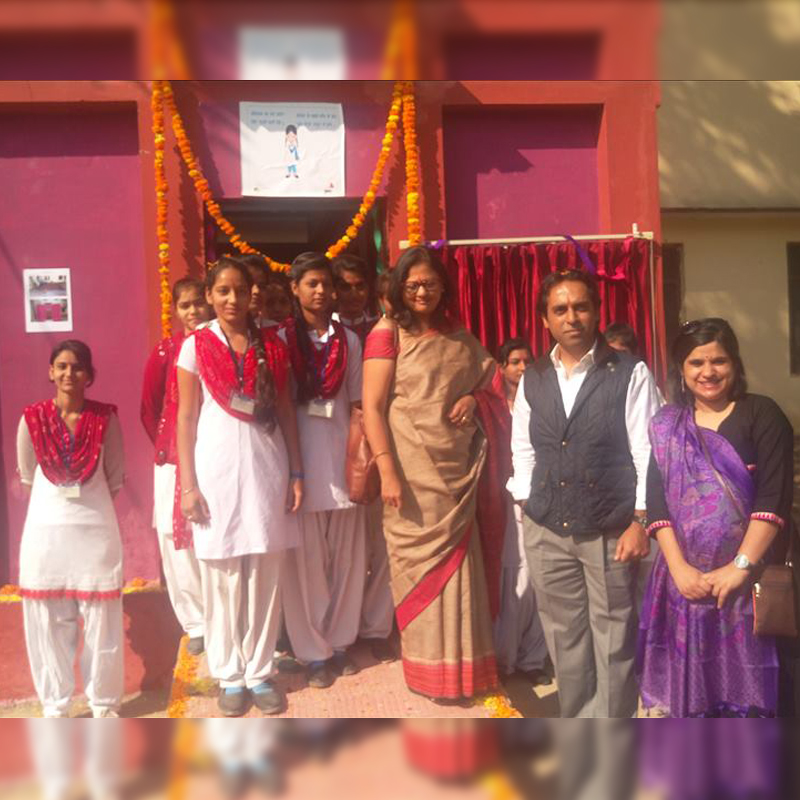
    MUMBAI: Corporates undertake social responsibility. Joining the national focus on empowering the girl child (Beti Bachao, Beti Padhao) and providing sanitation facilities in the country (Swachh Bharat), the PwC India Foundation in collaboration with NGO FINISH Society held the closing ceremony of its year-long school sanitation project in Ajmer that directly impacts 9000 girls.

    The two phased project saw 11 Government Schools from this Smart City being provided with child friendly WASH (Water, Sanitation and Hygiene) facilities that included handwashing stations, supporting Operations & Maintenance (O&M) of these facilities for a year, running a 90-day hygiene curriculum to promote safe hygiene practices, refurbishing existing toilets and building new toilet complexes. Addressing all aspects of sanitation, phase I looked at six schools while phase II covered five schools, impacting over 9000 girl children.

    The closing ceremony was graced by PwC India COO Satyavati Berera, and PwC India Foundation vice chairman Jaivir Singh at the Govt. Girls Senior Secondary School Beawar Cantt. students, teaching staff and the school management committee.

    Singh said, “The feedback from Phase I has been extremely positive. While students and teachers took the onus of managing these facilities, we had few students who didn’t have toilet facilities at home demand the same from their parents after learning the benefits of safe hygiene at school that we facilitated. Our NGO and school supported this initiative of the students wholeheartedly. For us, this was a huge mind-set change.

    Our girls are valuable and deserve a private, safe and hygienic environment to manage their bodily functions, including their period without fear and embarrassment. With the completion of the Second Phase, we are optimistic of the changes that our girls will experience with these new facilities in place.”

    The broad objectives of this intervention have been to support improved sanitation and hygiene facilities as essential components of a Child Friendly School (CFS), design and construct innovative school toilet blocks which can be replicated as a model. The project aims to create an inclusive environment in schools that promote and safeguard health and hygiene, contribute towards increasing the enrollment and retention of children in schools and empower children to be change agents.

    PwC India Foundation will continue to engage with the schools through FINISH Society and monitor the impact of the programme for the next couple of months.