Tag: SVOD

  • Tentkotta launches linear OTT channel with Amagi

    Tentkotta launches linear OTT channel with Amagi

    MUMBAI: Amagi plans to launch south-Indian linear OTT channel Tentkotta to international markets and expand its SVOD offerings by leveraging Amagi’s Cloudport managed services.

    The new Tentkotta TV is a subscription-based, ad-supported 24/7 linear OTT channel bringing premier South-Indian language content to a global audience. Amagi led the service provider’s transition to a cloud-based broadcast infrastructure in accordance with Tentkotta’s vision to grow its global audience through high-quality content delivered by an unmatched OTT viewing experience.

    “Launching a full-fledged linear OTT channel and expanding our viewer base was a natural progression for us,” said Tentkotta co-founder Varun Kumar. “After evaluating multiple options, we found Amagi Cloudport to be unique in terms of its advanced capabilities, automation, transparency, and control for managing a new channel. Coupled with its 24/7 fully managed service, Cloudport allows us to scale quickly and reliably.”

    Amagi Cloudport is a one-stop managed service that is ideal for launching a pure-play OTT platform such as Tentkotta TV. Amagi set up the entire broadcast workflow — from content preparation to HLS stream generation, playlist management and scheduling, graphics insertion, cloud playout, and delivery to Akamai CDN.

    “As the world’s first cloud-based managed services platform, Cloudport offers unparalleled simplicity, advanced automation, and built-in transparency for TV networks and content owners. The result has been transforming: TV networks can now run and control their broadcast operations, from any remote location,” said Amagi co-founder K.A Srinivasan.

    “Partnering with Tentkotta, we are able to provide their viewers with a world-class content experience that features the highest quality content streamed 24 hours every day.”

    Hosted on a secure Amazon AWS cloud infrastructure, the service caters to both OTT and traditional TV platforms, integrating with third-party partners to stitch a seamless workflow that can be managed through a simple Web-based user interface.

  • Tentkotta launches linear OTT channel with Amagi

    Tentkotta launches linear OTT channel with Amagi

    MUMBAI: Amagi plans to launch south-Indian linear OTT channel Tentkotta to international markets and expand its SVOD offerings by leveraging Amagi’s Cloudport managed services.

    The new Tentkotta TV is a subscription-based, ad-supported 24/7 linear OTT channel bringing premier South-Indian language content to a global audience. Amagi led the service provider’s transition to a cloud-based broadcast infrastructure in accordance with Tentkotta’s vision to grow its global audience through high-quality content delivered by an unmatched OTT viewing experience.

    “Launching a full-fledged linear OTT channel and expanding our viewer base was a natural progression for us,” said Tentkotta co-founder Varun Kumar. “After evaluating multiple options, we found Amagi Cloudport to be unique in terms of its advanced capabilities, automation, transparency, and control for managing a new channel. Coupled with its 24/7 fully managed service, Cloudport allows us to scale quickly and reliably.”

    Amagi Cloudport is a one-stop managed service that is ideal for launching a pure-play OTT platform such as Tentkotta TV. Amagi set up the entire broadcast workflow — from content preparation to HLS stream generation, playlist management and scheduling, graphics insertion, cloud playout, and delivery to Akamai CDN.

    “As the world’s first cloud-based managed services platform, Cloudport offers unparalleled simplicity, advanced automation, and built-in transparency for TV networks and content owners. The result has been transforming: TV networks can now run and control their broadcast operations, from any remote location,” said Amagi co-founder K.A Srinivasan.

    “Partnering with Tentkotta, we are able to provide their viewers with a world-class content experience that features the highest quality content streamed 24 hours every day.”

    Hosted on a secure Amazon AWS cloud infrastructure, the service caters to both OTT and traditional TV platforms, integrating with third-party partners to stitch a seamless workflow that can be managed through a simple Web-based user interface.

  • Star India impacts 21st Century Fox Q1-17 numbers

    Star India impacts 21st Century Fox Q1-17 numbers

    BENGALURU: Rupert Murdoch’s Twenty-First Century Fox Inc. (21st Century Fox) reported 7.1 per cent year-on-year (y-o-y) growth in adjusted total revenue (revenue) for its first quarter ended 30 September 2016 (Q1-17, current quarter). Twenty-First Century Fox reported consolidated revenue of $6,506 million in the current quarter as compared to $6,077 million in the corresponding year-ago quarter.

    This revenue growth reflects increase in affiliate fee revenue which was primarily attributable to higher average rates per subscriber across most channels, and the increase in content revenue was led by higher subscription video-on demand (SVOD) revenue from television productions says the company.

    The company’s Operating Income before Depreciation and Amortization (OIBDA) increased 16.7 percent in Q1-17 to $1,791 million from $1,535 million in Q1-16.

    Twenty-First Century has three segments – Cable Network Programming, Television and Filmed Entertainment.

    Cable Network Programming

    Cable Network Programming revenue in the current quarter increased 10 percent y-o-y in the current quarter to $3,810 million from $3,464 million. The segment’s Operating Income before Depreciation and Amortization (OIBDA)increased six per cent y-o-y to $1,384 million from $1,306 million.

    Cable Network Programming has three sub-segments – Affiliate Fees; Advertising; ‘Content and Other’.

    Star India’s contribution

    Twenty-First Century Fox says that International affiliate fee revenue from its segment Cable Network Programming increased as a result of 16 per cent local currency growth, led by additional subscribers, higher rates and new channels in Latin America and Europe at Fox Networks Group International (FNGI) and increases at Star India, partially offset by the adverse impact of the strengthening of the U.S. dollar against local currencies. For Q1-17, international advertising revenue increased as a result of 11 per cent local currency growth, led by the broadcast of the Rio Olympics in fiscal 2017 at FNGI and Star India and higher volume and pricing at Star India’s general entertainment and sports channels, partially offset by the adverse impact of the strengthening of the US dollar against local currencies.

    “Star India’s advertising revenues returned to double digit year-over-year growth on a constant currency basis and we continue to see exceptional growth of our mobile video platform Hotstar,” said James Murdoch during a earnings call on the latest earnings. “Between June and October, average watch time doubled on the platform and minutes viewed is currently more than double, all the mainstream competitors combined and more than 10X the watch time of Netflix, which launched in India earlier this year.”

    The increase in international content and other revenues Q1-17, as compared to the corresponding period of fiscal 2016, was primarily due to higher network and syndication sales in Latin America and Europe at FNGI.

    International channels OIBDA decreased seven per cent, as compared to the corresponding period of fiscal 2016, primarily due to the local currency revenue increases noted above being more than offset by higher expenses an the adverse impact of the strengthening of the US dollar against local currencies. Operating expenses increased by approximately $110 million, for Q1-17, as compared Q1-16, primarily due to the broadcast of the Rio Olympics in fiscal 2017 and increased sports programming rights amortization, including soccer rights at FNGI and cricket rights at Star India.

    James Murdoch responded to a question during the investor call about the IPL rights and other sports properties that the Star Network is developing in India by saying: “..on the IPL, I think it is well known that there’s a – it’s well known that it’s very unclear when those rights will come to market. There has been a delay in that process. But I would say, look with respect to the Indian business we obviously look at different rights packages as they come up, we have really grown the breadth of that business in terms of sports with BCCI domestic cricket contract as well as the growth in Kabbadi and the Indian Super League, so it is really a broad business there and new rights come up where we always will have a look at. There is nothing at this point I can see in the outcome of those things that would deter it from the medium term target that we have laid out for profit growth at Star which were pacing towards pretty well, so we feel confident about that.”

    Domestic (US) Channels

    For Q1-17, Cable Network Programming’s domestic affiliate fee revenue increased primarily due to higher average rates per subscriber led by the

    Regional Sports Networks (RSNs), FX Networks and Fox News Channel (Fox News) partially offset by lower average subscribers.

    For Q1-7, domestic advertising revenue increased primarily due to higher pricing and ratings at Fox News. The increase in domestic content and other revenues for the Q1-17, as compared to the corresponding period of fiscal
    2016, was primarily due to the effect of the acquisition of the NGS Media Business.

    Domestic channels OIBDA increased nine per cent, as compared to the corresponding period of fiscal 2016, primarily due to the revenue increases noted above partially offset by higher expenses which were due to primarily due to the acquisition of the NGS Media Business and higher programming costs, including increased Major League Baseball(MLB) rights amortization at the RSNs and higher entertainment programming amortization at FX Networks.

    Television

    For Q1-17, revenues at the Television segment remained relatively constant, as compared Q1-16 (down one per cent y-o-y in Q1-17 at $1,038 million from $1,049 million), primarily due to higher affiliate fee and content revenues offset by lower advertising revenue. Affiliate fee revenue increased 18 per cent in Q1-17, as compared
    Q1-16, as a result of higher retransmission consent rates. Content and other revenues increased 55 per cent for Q1-17 as compared to Q1-16, primarily as a result of higher SVOD revenue at FOX.

    Television Advertising revenue decreased 11 per cent in Q1-7, as compared to Q1-16, primarily due to lower local advertising resulting from the broadcast of the Rio Olympics on a competitor network, the absence of the Emmy Awards and the Fédération Internationale de Football Association (FIFA) Women’s World Cup events and lower general entertainment ratings at FOX. Partially offsetting these decreases was higher political advertising revenue primarily related to the 2016 presidential election in the US.

    Television segment OIBDA in Q1-7 decreased 2.7 per cent y-o-y to $191 million from $196 million.

    Filmed Entertainment

    Filmed Entertainment revenues increased 6.8 per cent in Q1-17 as compared to Q2-16 to $1,907 million from $1,785 million primarily due to higher SVOD revenue from television productions, led by the licensing of Homeland to Hulu, and higher worldwide theatrical revenue partially offset by lower home entertainment revenue from motion picture productions. For Q1-17, revenues included the worldwide theatrical performance of Ice Age: Collision Course and Independence Day: Resurgence, *as compared to Q1-16, which included the worldwide theatrical releases of Maze Runner: The Scorch Trials and Fantastic Four and the home entertainment release of *Home*.

    In Q1-15, segment OIBDA at the Filmed Entertainment segment more than double (increased $162 million by 2.09 times) to $311 million from $149 million due to the revenue increases noted above and lower expenses of $40 million, or two per cent, as compared to Q1-16. Operating expenses decreased by approximately $20 million for the three months ended September 30, 2016, as compared to the corresponding period of fiscal 2016, primarily due to lower marketing costs due to the mix of theatrical and home entertainment releases in the current quarter compared to the prior year partially offset by higher production amortization and participation costs related to television productions.

    Company speak

    Commenting on the results, Century Fox executive chairmen Rupert and Lachlan Murdoch said, “We delivered a strong quarter, growing our earnings by double digits on solid revenue gains. Whether it was Fox News rating # in basic cable, the 27 primetime Emmy Awards between FX Networks and FOX Broadcasting, producing three of the top five
    scripted shows on television, or our robust international growth, we demonstrated strong operational momentum across our global businesses.”


  • Star India impacts 21st Century Fox Q1-17 numbers

    Star India impacts 21st Century Fox Q1-17 numbers

    BENGALURU: Rupert Murdoch’s Twenty-First Century Fox Inc. (21st Century Fox) reported 7.1 per cent year-on-year (y-o-y) growth in adjusted total revenue (revenue) for its first quarter ended 30 September 2016 (Q1-17, current quarter). Twenty-First Century Fox reported consolidated revenue of $6,506 million in the current quarter as compared to $6,077 million in the corresponding year-ago quarter.

    This revenue growth reflects increase in affiliate fee revenue which was primarily attributable to higher average rates per subscriber across most channels, and the increase in content revenue was led by higher subscription video-on demand (SVOD) revenue from television productions says the company.

    The company’s Operating Income before Depreciation and Amortization (OIBDA) increased 16.7 percent in Q1-17 to $1,791 million from $1,535 million in Q1-16.

    Twenty-First Century has three segments – Cable Network Programming, Television and Filmed Entertainment.

    Cable Network Programming

    Cable Network Programming revenue in the current quarter increased 10 percent y-o-y in the current quarter to $3,810 million from $3,464 million. The segment’s Operating Income before Depreciation and Amortization (OIBDA)increased six per cent y-o-y to $1,384 million from $1,306 million.

    Cable Network Programming has three sub-segments – Affiliate Fees; Advertising; ‘Content and Other’.

    Star India’s contribution

    Twenty-First Century Fox says that International affiliate fee revenue from its segment Cable Network Programming increased as a result of 16 per cent local currency growth, led by additional subscribers, higher rates and new channels in Latin America and Europe at Fox Networks Group International (FNGI) and increases at Star India, partially offset by the adverse impact of the strengthening of the U.S. dollar against local currencies. For Q1-17, international advertising revenue increased as a result of 11 per cent local currency growth, led by the broadcast of the Rio Olympics in fiscal 2017 at FNGI and Star India and higher volume and pricing at Star India’s general entertainment and sports channels, partially offset by the adverse impact of the strengthening of the US dollar against local currencies.

    “Star India’s advertising revenues returned to double digit year-over-year growth on a constant currency basis and we continue to see exceptional growth of our mobile video platform Hotstar,” said James Murdoch during a earnings call on the latest earnings. “Between June and October, average watch time doubled on the platform and minutes viewed is currently more than double, all the mainstream competitors combined and more than 10X the watch time of Netflix, which launched in India earlier this year.”

    The increase in international content and other revenues Q1-17, as compared to the corresponding period of fiscal 2016, was primarily due to higher network and syndication sales in Latin America and Europe at FNGI.

    International channels OIBDA decreased seven per cent, as compared to the corresponding period of fiscal 2016, primarily due to the local currency revenue increases noted above being more than offset by higher expenses an the adverse impact of the strengthening of the US dollar against local currencies. Operating expenses increased by approximately $110 million, for Q1-17, as compared Q1-16, primarily due to the broadcast of the Rio Olympics in fiscal 2017 and increased sports programming rights amortization, including soccer rights at FNGI and cricket rights at Star India.

    James Murdoch responded to a question during the investor call about the IPL rights and other sports properties that the Star Network is developing in India by saying: “..on the IPL, I think it is well known that there’s a – it’s well known that it’s very unclear when those rights will come to market. There has been a delay in that process. But I would say, look with respect to the Indian business we obviously look at different rights packages as they come up, we have really grown the breadth of that business in terms of sports with BCCI domestic cricket contract as well as the growth in Kabbadi and the Indian Super League, so it is really a broad business there and new rights come up where we always will have a look at. There is nothing at this point I can see in the outcome of those things that would deter it from the medium term target that we have laid out for profit growth at Star which were pacing towards pretty well, so we feel confident about that.”

    Domestic (US) Channels

    For Q1-17, Cable Network Programming’s domestic affiliate fee revenue increased primarily due to higher average rates per subscriber led by the

    Regional Sports Networks (RSNs), FX Networks and Fox News Channel (Fox News) partially offset by lower average subscribers.

    For Q1-7, domestic advertising revenue increased primarily due to higher pricing and ratings at Fox News. The increase in domestic content and other revenues for the Q1-17, as compared to the corresponding period of fiscal
    2016, was primarily due to the effect of the acquisition of the NGS Media Business.

    Domestic channels OIBDA increased nine per cent, as compared to the corresponding period of fiscal 2016, primarily due to the revenue increases noted above partially offset by higher expenses which were due to primarily due to the acquisition of the NGS Media Business and higher programming costs, including increased Major League Baseball(MLB) rights amortization at the RSNs and higher entertainment programming amortization at FX Networks.

    Television

    For Q1-17, revenues at the Television segment remained relatively constant, as compared Q1-16 (down one per cent y-o-y in Q1-17 at $1,038 million from $1,049 million), primarily due to higher affiliate fee and content revenues offset by lower advertising revenue. Affiliate fee revenue increased 18 per cent in Q1-17, as compared
    Q1-16, as a result of higher retransmission consent rates. Content and other revenues increased 55 per cent for Q1-17 as compared to Q1-16, primarily as a result of higher SVOD revenue at FOX.

    Television Advertising revenue decreased 11 per cent in Q1-7, as compared to Q1-16, primarily due to lower local advertising resulting from the broadcast of the Rio Olympics on a competitor network, the absence of the Emmy Awards and the Fédération Internationale de Football Association (FIFA) Women’s World Cup events and lower general entertainment ratings at FOX. Partially offsetting these decreases was higher political advertising revenue primarily related to the 2016 presidential election in the US.

    Television segment OIBDA in Q1-7 decreased 2.7 per cent y-o-y to $191 million from $196 million.

    Filmed Entertainment

    Filmed Entertainment revenues increased 6.8 per cent in Q1-17 as compared to Q2-16 to $1,907 million from $1,785 million primarily due to higher SVOD revenue from television productions, led by the licensing of Homeland to Hulu, and higher worldwide theatrical revenue partially offset by lower home entertainment revenue from motion picture productions. For Q1-17, revenues included the worldwide theatrical performance of Ice Age: Collision Course and Independence Day: Resurgence, *as compared to Q1-16, which included the worldwide theatrical releases of Maze Runner: The Scorch Trials and Fantastic Four and the home entertainment release of *Home*.

    In Q1-15, segment OIBDA at the Filmed Entertainment segment more than double (increased $162 million by 2.09 times) to $311 million from $149 million due to the revenue increases noted above and lower expenses of $40 million, or two per cent, as compared to Q1-16. Operating expenses decreased by approximately $20 million for the three months ended September 30, 2016, as compared to the corresponding period of fiscal 2016, primarily due to lower marketing costs due to the mix of theatrical and home entertainment releases in the current quarter compared to the prior year partially offset by higher production amortization and participation costs related to television productions.

    Company speak

    Commenting on the results, Century Fox executive chairmen Rupert and Lachlan Murdoch said, “We delivered a strong quarter, growing our earnings by double digits on solid revenue gains. Whether it was Fox News rating # in basic cable, the 27 primetime Emmy Awards between FX Networks and FOX Broadcasting, producing three of the top five
    scripted shows on television, or our robust international growth, we demonstrated strong operational momentum across our global businesses.”
  • MIPCOM 2016 sets new records

    MIPCOM 2016 sets new records

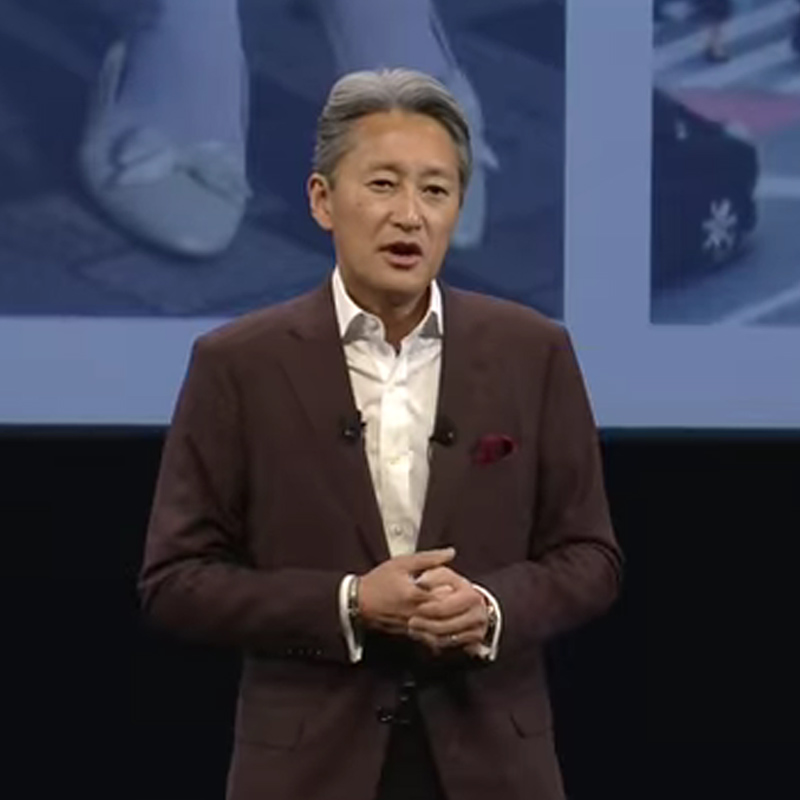
    CANNES: Record attendances at MIPJunior and MIPCOM, more World Premiere TV and International Screenings than ever, a remarkable Japan Country of Honour programme, a Personality of the Year, Shonda Rhimes, who packed delegates into her keynote interview and a tour de force opening keynote from Sony Corporation’s president and CEO Kazuo Hirai, combined to make for a highly successful and memorable MIPCOM 2016.

    MIPJunior (October 15-16) set the tone for the week with a record 1,600 participants including more than 630 buyers (+10%), 1,200 programmes in the screening library and 260 new development projects presented to potential partners. Delegates were treated to a double helping of World Premiere TV Screenings with “Splash and Bubbles” (produced by the Jim Henson Company and Herschend Enterprises) and “Grizzy and the Lemmings” from Studio Hari Production.

    Illustrating the wide international appeal of programming for kids, MIPJunior hosted presentations covering new animation from Finland, animation coproduction opportunities with India, hot kids shows in Norway, how to work in China and how to coproduce with MIPCOM Country of Honour Japan – where animation accounts for 62% of the country’s television exports.

    At the main MIPCOM event, which drew delegations from 108 countries, attendance reached some 14,000 with 4,900 buyers registered including 1,500 acquisition executives working for digital platforms and SVOD.

    In all, 2,000 exhibiting companies packed the Palais des Festivals with new national pavilions bringing together companies from Chile, New Zealand, Morocco, the Philippines, Russia and Japan. Outside the Palais des Festivals exhibition hall, ITV Studios’ revolutionary two-storey stand, made of massive containers, drew plenty of attention.

    Following the successful launch of the MIPDrama Screenings in April 2016, MIPCOM hosted a record number of major drama launches in the World Premiere TV Screenings and International Drama Screenings.

    Among the mega-productions on view, the World Premiere TV Screenings showcased ‘Mata Hari’ (presented by Red Arrow International), ‘The Halcyon’ (presented by Sony Pictures Television), ‘The Same Sky’ (presented by Beta Film), ‘The Rocky Horror Picture Show: Let’s do the Time Warp Again’ (presented by 20th Century Fox Television Distribution’) and an exclusive episode of ‘The Catch, Season 2’ (presented by Disney Media Distribution). For the first time, two of the Screenings, ‘Mata Hari’ and ‘The Rocky Horror Picture Show,’ were open to the Cannes public who reacted enthusiastically to both shows.

    “The interest in the World Premiere TV Screenings and the International Drama Screenings continues to grow and it was great to be able to invite the Cannes public to ‘Mata Hari’ and ‘The Rocky Horror Picture Show: Let’s do the Time Warp Again.’ This bodes well for our plans to expand the 2017 MIPDrama Screenings next April and helps us as we continue to look at bringing a high-end drama festival element to our future events,” noted Laurine Garaude, Director of Reed MIDEM’s Television Division.

    With Japan as MIPCOM’s Country of Honour, 500 Japanese executives from 104 companies attended MIPCOM. Japan’s Prime Minister, Shinzo Abe, sent a special video message to the international television community in Cannes welcoming the MIPCOM Country of Honour programme and the possibility to promote the best in Japanese tech skills and content.

    Delegates enthused that the Japan-themed Opening Party, complete with a host of Japanese chefs, specially-imported Japanese food and beverage and Japanese live music, was one of the most memorable MIPCOM openers in recent years. On the conference front, Sony Corporation President and CEO Kazuo Hirai, opened proceedings with his keynote during a MIPCOM which saw the spotlight turned on Japan’s tech prowess with the latest developments of HD, 4K, 8K and Virtual Reality showcased alongside the newest animation programmes coming to the international market from Japan.

    Undoubted star of MIPCOM 2016 was Personality of the Year Shonda Rhimes. In her various (and often combined) roles as Creator, Writer, Showrunner or Executive Producer, Shonda Rhimes is the driving force behind ‘Grey’s Anatomy,’ ‘Scandal,’ ‘How to Get Away With Murder’ and ‘The Catch.’

    Rhimes was honoured at the annual MIPCOM Personality of the Year gala dinner October 19, which included live and moving tributes to her from ‘The Catch’s’ Mireille Enos, Tony Goldwyn from ‘Scandal’ and fellow ‘Grey’s Anatomy’ Executive Producer Betsy Beers.

    With so much high-end drama at MIPCOM, international talent was in abundance as stars accompanied their respective shows to the market.

    Household names in Cannes included keynote speaker and actor Kiefer Sutherland with ‘Designated Survivor,’ Kyle MacLachlan promoting the new ‘Twin Peaks,’ Dennis Quaid for season 2 of ‘Fortitude,’ ‘Unreal’s’ Constance Zimmer and Shiri Appleby, ‘Conviction’s’ Hayley Atwell, ‘Victoria’ star Jenna Coleman and representing ‘Mata Hari’ Christopher Lambert and Vahina Giocante.

    As part of the Country of Honour programme, Japanese star Kento Hayashi flew in for a special screening of ‘Moribito 2: Guardian of the Spirit.’

    French thespians in town were also numerous with Leila Bekhti, Tcheky Karyo, Emma de Caunes, and Clementine Poidatz all attending MIPCOM.

    “This has been an excellent edition of MIPCOM. Through the central theme of New Television we have showcased technical innovation, discussed how to reach out to younger audiences who consume entertainment when, where and how they want and brought together traditional television leaders with newer online companies. This year has seen a combination of plentiful deal-making, celebration, exchange of knowledge and keynotes from major industry leaders,” concluded Reed MIDEM’s Laurine Garaude.

    At MIPCOM every October, industry’s major players converge in Cannes to turn every moment into an opportunity, transforming four days of meetings, screenings and conferences into deals, from blockbuster programming to ground-breaking partnerships. And MIPJunior is the leading showcase for kids programming, uniting the world’s most influential buyers, sellers and producers the weekend before MIPCOM.

    Reed MIDEM is an organiser of professional, international markets that are essential business platforms for key players in the sectors concerned. Reed MIDEM is a division of Reed Exhibitions, the world’s leading event organiser, with over 500 events in 43 countries.

  • MIPCOM 2016 sets new records

    MIPCOM 2016 sets new records

    CANNES: Record attendances at MIPJunior and MIPCOM, more World Premiere TV and International Screenings than ever, a remarkable Japan Country of Honour programme, a Personality of the Year, Shonda Rhimes, who packed delegates into her keynote interview and a tour de force opening keynote from Sony Corporation’s president and CEO Kazuo Hirai, combined to make for a highly successful and memorable MIPCOM 2016.

    MIPJunior (October 15-16) set the tone for the week with a record 1,600 participants including more than 630 buyers (+10%), 1,200 programmes in the screening library and 260 new development projects presented to potential partners. Delegates were treated to a double helping of World Premiere TV Screenings with “Splash and Bubbles” (produced by the Jim Henson Company and Herschend Enterprises) and “Grizzy and the Lemmings” from Studio Hari Production.

    Illustrating the wide international appeal of programming for kids, MIPJunior hosted presentations covering new animation from Finland, animation coproduction opportunities with India, hot kids shows in Norway, how to work in China and how to coproduce with MIPCOM Country of Honour Japan – where animation accounts for 62% of the country’s television exports.

    At the main MIPCOM event, which drew delegations from 108 countries, attendance reached some 14,000 with 4,900 buyers registered including 1,500 acquisition executives working for digital platforms and SVOD.

    In all, 2,000 exhibiting companies packed the Palais des Festivals with new national pavilions bringing together companies from Chile, New Zealand, Morocco, the Philippines, Russia and Japan. Outside the Palais des Festivals exhibition hall, ITV Studios’ revolutionary two-storey stand, made of massive containers, drew plenty of attention.

    Following the successful launch of the MIPDrama Screenings in April 2016, MIPCOM hosted a record number of major drama launches in the World Premiere TV Screenings and International Drama Screenings.

    Among the mega-productions on view, the World Premiere TV Screenings showcased ‘Mata Hari’ (presented by Red Arrow International), ‘The Halcyon’ (presented by Sony Pictures Television), ‘The Same Sky’ (presented by Beta Film), ‘The Rocky Horror Picture Show: Let’s do the Time Warp Again’ (presented by 20th Century Fox Television Distribution’) and an exclusive episode of ‘The Catch, Season 2’ (presented by Disney Media Distribution). For the first time, two of the Screenings, ‘Mata Hari’ and ‘The Rocky Horror Picture Show,’ were open to the Cannes public who reacted enthusiastically to both shows.

    “The interest in the World Premiere TV Screenings and the International Drama Screenings continues to grow and it was great to be able to invite the Cannes public to ‘Mata Hari’ and ‘The Rocky Horror Picture Show: Let’s do the Time Warp Again.’ This bodes well for our plans to expand the 2017 MIPDrama Screenings next April and helps us as we continue to look at bringing a high-end drama festival element to our future events,” noted Laurine Garaude, Director of Reed MIDEM’s Television Division.

    With Japan as MIPCOM’s Country of Honour, 500 Japanese executives from 104 companies attended MIPCOM. Japan’s Prime Minister, Shinzo Abe, sent a special video message to the international television community in Cannes welcoming the MIPCOM Country of Honour programme and the possibility to promote the best in Japanese tech skills and content.

    Delegates enthused that the Japan-themed Opening Party, complete with a host of Japanese chefs, specially-imported Japanese food and beverage and Japanese live music, was one of the most memorable MIPCOM openers in recent years. On the conference front, Sony Corporation President and CEO Kazuo Hirai, opened proceedings with his keynote during a MIPCOM which saw the spotlight turned on Japan’s tech prowess with the latest developments of HD, 4K, 8K and Virtual Reality showcased alongside the newest animation programmes coming to the international market from Japan.

    Undoubted star of MIPCOM 2016 was Personality of the Year Shonda Rhimes. In her various (and often combined) roles as Creator, Writer, Showrunner or Executive Producer, Shonda Rhimes is the driving force behind ‘Grey’s Anatomy,’ ‘Scandal,’ ‘How to Get Away With Murder’ and ‘The Catch.’

    Rhimes was honoured at the annual MIPCOM Personality of the Year gala dinner October 19, which included live and moving tributes to her from ‘The Catch’s’ Mireille Enos, Tony Goldwyn from ‘Scandal’ and fellow ‘Grey’s Anatomy’ Executive Producer Betsy Beers.

    With so much high-end drama at MIPCOM, international talent was in abundance as stars accompanied their respective shows to the market.

    Household names in Cannes included keynote speaker and actor Kiefer Sutherland with ‘Designated Survivor,’ Kyle MacLachlan promoting the new ‘Twin Peaks,’ Dennis Quaid for season 2 of ‘Fortitude,’ ‘Unreal’s’ Constance Zimmer and Shiri Appleby, ‘Conviction’s’ Hayley Atwell, ‘Victoria’ star Jenna Coleman and representing ‘Mata Hari’ Christopher Lambert and Vahina Giocante.

    As part of the Country of Honour programme, Japanese star Kento Hayashi flew in for a special screening of ‘Moribito 2: Guardian of the Spirit.’

    French thespians in town were also numerous with Leila Bekhti, Tcheky Karyo, Emma de Caunes, and Clementine Poidatz all attending MIPCOM.

    “This has been an excellent edition of MIPCOM. Through the central theme of New Television we have showcased technical innovation, discussed how to reach out to younger audiences who consume entertainment when, where and how they want and brought together traditional television leaders with newer online companies. This year has seen a combination of plentiful deal-making, celebration, exchange of knowledge and keynotes from major industry leaders,” concluded Reed MIDEM’s Laurine Garaude.

    At MIPCOM every October, industry’s major players converge in Cannes to turn every moment into an opportunity, transforming four days of meetings, screenings and conferences into deals, from blockbuster programming to ground-breaking partnerships. And MIPJunior is the leading showcase for kids programming, uniting the world’s most influential buyers, sellers and producers the weekend before MIPCOM.

    Reed MIDEM is an organiser of professional, international markets that are essential business platforms for key players in the sectors concerned. Reed MIDEM is a division of Reed Exhibitions, the world’s leading event organiser, with over 500 events in 43 countries.

  • SVod outpacing pay TV in W. Europe’s consumption trends: Report

    SVod outpacing pay TV in W. Europe’s consumption trends: Report

    MUMBAI: Subscription video on-demand (SVoD) content is increasing more and more as compared to Pay TV.

    Several discussions have taken place in India with the growing number of digital platforms. Broadcasters such as Star India, Viacom18, Zee Media and Sony Television, etc have entered this space with their own OTT/VOD platforms. Debates not just confined to the emergence of VOD platforms but also the entry of various global players have been raging since.

    The fact that digitisation is at a nascent phase in India only paved the way for the players to experiment various models. This also raised a few eyebrows on the existence of cable and satellite television.

    While most follow an advertising-led model or a ‘freemium model’, the countable ones have taken the challenge of following a subscription-based model. As print has survived after the entry of broadcast, analog and digital cable network will also co-exist with the emergence of various digital platforms. With the robust penetration of internet in the US, Pay TV has remained powerful.

    But is it the same everywhere else? Certainly not. The scenario is completely different in Western Europe. SVoD subscription has been outstripping Pay TV since 2012. The subscription net addition of Pay TV in 2016 is 2 million which is estimated to see a downfall by 2021 to 1 million.

    On the other hand, SVoD in 2016 is 9 million only and evaluated to come down to 3 million by 2021. Both the services are currently at its peak but are substantially going to see some disruption. This clearly shows that currently the viewers are ready to pay for good quality content.

    These were some of the findings presented in a report at IBC by Ampere Analysis, a London based analyst firm, at Amsterdam yesterday.

    According to the Ampere report, SVoD is growing as a significant segment not just in the USA but also in other countries such as Poland, France, the Netherlands, Spain, Italy, Germany, the UK, Sweden and Denmark. The average SVoD-only homes in the second quarter of 2015 has been 5 per cent while, in the current scenario, it has grown by 2 per cent for the first quarter.

    US specifically has seen a growth from 9 per cent to 13 per cent whereas the UK has seen an increase of 2 per cent from 8 per cent to 10 per cent in just a year.
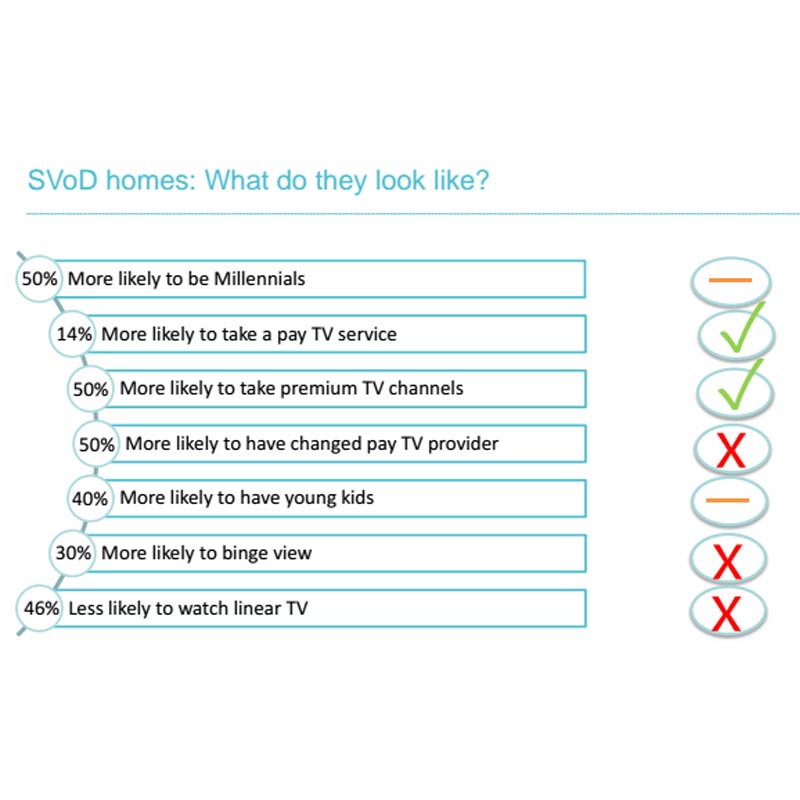
    So, what exactly do the SVoD homes constitute of? The three most relevant observations about who is consuming such massive content on digital platforms are — a big percentage comprise millennials, and the remainder people are more likely to take premium TV channels and some pertcentage have most likely changed their Pay TV provider.

    In all, 46 per cent are less likely to pay for linear TV, while 40 per cent of homes have kids. 30 per cent of the homes have shown an inclination to binge watching. Only 14 per cent of people have opted for a Pay TV service, according to Ampere.

    Business-wise, the concept of platform and channel is evolving though the producer and distributor remain unhampered. Earlier, content was distributed on platforms like Sky, Moviestar and Canalsat, etc which is now replaced by Facebook, Twitter, Snapchat, YouTube, etc. On the other hand, the channel from which content was ideally consumed has converted from Discovery, Fox, HBO, etc to digital platforms like Netflix, SeeSo, CuriosityStream, etc.

    Pay TV and new media products are segmenting, the report states.

    People with lower income are on-demand led whereas people with higher income are linear-led. Young millennials and teenagers can be appealed via services such as Whistle Sports, Soccer, Snapchat, Facebook,etc. Higher income traditional broadcast get pushed through Sky Q to protect high-end broadcast viewers. Direct To Consumers (DTC) cost to get a channel on air are considerably lower. So with a satellite you are going to take your yearly transponder, but with an OTT service you do not have that significant upfront cost. But, what you do have is a scaling cost, CDN delivery, that grows with your customer base.

    Ampere accepts that the latter factor makes OTT uneconomic for reaching very large audiences, estimating that for a single channel or service offering video in any definition from SD to UHD, a satellite feed works out cheaper beyond 10m viewers’ even if they watch on average just one minute of content per day. For a daily viewer base below 20,000, OTT always works out cheaper, even if all viewers watched five hours of content a day and all content was transmitted inUHD, Ampere found.

    With changing economics, channel groups are increasingly looking to Direct To Consumers (DTC) SVOD service. Viewers/advertising spends have shifted to online, operators are pushing back on channel carriage fee, content owners’ margins have squeezed and the DTC, SVoD launch have led to recoup margin. The millennials are already approaching two SVOD services per home. In the US, millennials have crossed the more than 2 number than the average. They are approaching to the number in Germany, Denmark, Poland and UK. Out of the 1002 sample survey, 255 are Netflix customers in UK which only means that the country is most likely to have more Netflix customers.

    It is not all about broadband penetration, because size is also important. And actually if we look at the size of the addressable market, emerging markets like Mexico, Brazil, Russia, China, Taiwan, Thailand, etc all have started to become interesting [DTC] markets when we talk about the total addressable size.

    Ampere’s research found that in the UK a Netflix customer is 1.5 times more likely than average to also take Sky’s Now TV OTT service; 1.8 times more likely to also take Amazon; 2.5 times more likely also to take Spotify’s streaming music services; and 1.5 times more likely to use the catch-up TV apps of the major broadcasters.

    To date, Netflix’s growth strategy has relied on geographic expansion. But, its set to run out of road by 2017. Central, South and Western Europe saw 6 customer additions on an average in 2015 which has reduced to 4 or 5 in 2017 further reducing in 2021. But in Asia Pacific region, the customer addition has gone up from 1 to 5 and is estimated to be 3. Even after this, the fact that Netflix has invested a huge amount of money on content cannot be ignored. Netflix is spending like a broadcast or premium channel group. It spends 60 per cent revenue on program followed by premium platforms contributing 40-70 per cent revenue. Pay multichannels are putting 30-40 per cent revenue on programs.

    Pay TV is still growing but OTT is growing faster – much faster. And that fact sums up both the threat and the opportunity that OTT video presents to platform operators. The survival of service providers depends on their ability to launch new services ahead of the competition.

  • SVod outpacing pay TV in W. Europe’s consumption trends: Report

    SVod outpacing pay TV in W. Europe’s consumption trends: Report

    MUMBAI: Subscription video on-demand (SVoD) content is increasing more and more as compared to Pay TV.

    Several discussions have taken place in India with the growing number of digital platforms. Broadcasters such as Star India, Viacom18, Zee Media and Sony Television, etc have entered this space with their own OTT/VOD platforms. Debates not just confined to the emergence of VOD platforms but also the entry of various global players have been raging since.

    The fact that digitisation is at a nascent phase in India only paved the way for the players to experiment various models. This also raised a few eyebrows on the existence of cable and satellite television.

    While most follow an advertising-led model or a ‘freemium model’, the countable ones have taken the challenge of following a subscription-based model. As print has survived after the entry of broadcast, analog and digital cable network will also co-exist with the emergence of various digital platforms. With the robust penetration of internet in the US, Pay TV has remained powerful.

    But is it the same everywhere else? Certainly not. The scenario is completely different in Western Europe. SVoD subscription has been outstripping Pay TV since 2012. The subscription net addition of Pay TV in 2016 is 2 million which is estimated to see a downfall by 2021 to 1 million.

    On the other hand, SVoD in 2016 is 9 million only and evaluated to come down to 3 million by 2021. Both the services are currently at its peak but are substantially going to see some disruption. This clearly shows that currently the viewers are ready to pay for good quality content.

    These were some of the findings presented in a report at IBC by Ampere Analysis, a London based analyst firm, at Amsterdam yesterday.

    According to the Ampere report, SVoD is growing as a significant segment not just in the USA but also in other countries such as Poland, France, the Netherlands, Spain, Italy, Germany, the UK, Sweden and Denmark. The average SVoD-only homes in the second quarter of 2015 has been 5 per cent while, in the current scenario, it has grown by 2 per cent for the first quarter.

    US specifically has seen a growth from 9 per cent to 13 per cent whereas the UK has seen an increase of 2 per cent from 8 per cent to 10 per cent in just a year.
    So, what exactly do the SVoD homes constitute of? The three most relevant observations about who is consuming such massive content on digital platforms are — a big percentage comprise millennials, and the remainder people are more likely to take premium TV channels and some pertcentage have most likely changed their Pay TV provider.

    In all, 46 per cent are less likely to pay for linear TV, while 40 per cent of homes have kids. 30 per cent of the homes have shown an inclination to binge watching. Only 14 per cent of people have opted for a Pay TV service, according to Ampere.

    Business-wise, the concept of platform and channel is evolving though the producer and distributor remain unhampered. Earlier, content was distributed on platforms like Sky, Moviestar and Canalsat, etc which is now replaced by Facebook, Twitter, Snapchat, YouTube, etc. On the other hand, the channel from which content was ideally consumed has converted from Discovery, Fox, HBO, etc to digital platforms like Netflix, SeeSo, CuriosityStream, etc.

    Pay TV and new media products are segmenting, the report states.

    People with lower income are on-demand led whereas people with higher income are linear-led. Young millennials and teenagers can be appealed via services such as Whistle Sports, Soccer, Snapchat, Facebook,etc. Higher income traditional broadcast get pushed through Sky Q to protect high-end broadcast viewers. Direct To Consumers (DTC) cost to get a channel on air are considerably lower. So with a satellite you are going to take your yearly transponder, but with an OTT service you do not have that significant upfront cost. But, what you do have is a scaling cost, CDN delivery, that grows with your customer base.

    Ampere accepts that the latter factor makes OTT uneconomic for reaching very large audiences, estimating that for a single channel or service offering video in any definition from SD to UHD, a satellite feed works out cheaper beyond 10m viewers’ even if they watch on average just one minute of content per day. For a daily viewer base below 20,000, OTT always works out cheaper, even if all viewers watched five hours of content a day and all content was transmitted inUHD, Ampere found.

    With changing economics, channel groups are increasingly looking to Direct To Consumers (DTC) SVOD service. Viewers/advertising spends have shifted to online, operators are pushing back on channel carriage fee, content owners’ margins have squeezed and the DTC, SVoD launch have led to recoup margin. The millennials are already approaching two SVOD services per home. In the US, millennials have crossed the more than 2 number than the average. They are approaching to the number in Germany, Denmark, Poland and UK. Out of the 1002 sample survey, 255 are Netflix customers in UK which only means that the country is most likely to have more Netflix customers.

    It is not all about broadband penetration, because size is also important. And actually if we look at the size of the addressable market, emerging markets like Mexico, Brazil, Russia, China, Taiwan, Thailand, etc all have started to become interesting [DTC] markets when we talk about the total addressable size.

    Ampere’s research found that in the UK a Netflix customer is 1.5 times more likely than average to also take Sky’s Now TV OTT service; 1.8 times more likely to also take Amazon; 2.5 times more likely also to take Spotify’s streaming music services; and 1.5 times more likely to use the catch-up TV apps of the major broadcasters.

    To date, Netflix’s growth strategy has relied on geographic expansion. But, its set to run out of road by 2017. Central, South and Western Europe saw 6 customer additions on an average in 2015 which has reduced to 4 or 5 in 2017 further reducing in 2021. But in Asia Pacific region, the customer addition has gone up from 1 to 5 and is estimated to be 3. Even after this, the fact that Netflix has invested a huge amount of money on content cannot be ignored. Netflix is spending like a broadcast or premium channel group. It spends 60 per cent revenue on program followed by premium platforms contributing 40-70 per cent revenue. Pay multichannels are putting 30-40 per cent revenue on programs.

    Pay TV is still growing but OTT is growing faster – much faster. And that fact sums up both the threat and the opportunity that OTT video presents to platform operators. The survival of service providers depends on their ability to launch new services ahead of the competition.

  • Netflix steps up marketing drive in India, finally

    Netflix steps up marketing drive in India, finally

    MUMBAI:  There are finally some ripples in sight in the otherwise still surface of Netflix’s marketing efforts in India. From carefully curated short videos hashtagged #LifeWithoutNetflix that are doing the rounds on social media, to meme wars with market rival Hotstar on Twitter, we are seeing more of the American over-the-top video giant’s activity recently — a change from its initial presence in the market.

    https://www.facebook.com/NetflixIN/videos/1008915785888828/

    “The #LifeWithoutNetflix social campaign was created primarily to share with our users the things we love about Netflix and the great stories they can find on our service. We want to build communities within the Indian audience to help them discover content they will love, and also to understand what they want in an entertainment experience,” shared a spokesperson from Netflix team based in Singapore.

    On the recent Twitter spat with Hotstar over an internet meme and its omnipresent rivalry with the Star India owned OTT platform Hotstar, Netflix shared, “Because the entertainment market is so broad, there is an opportunity for multiple brands to be successful. Many people will subscribe to several services (including Netflix) since we have different, exclusive content.”

    For more details on this, please read

    Apart from its quick rise to be a market leader in the digital video space, what makes Netflix stand out is its effervescent marketing campaigns.  Believe it or not, its trademark ads are part of the reason it is a brand to be reckoned with, in several mature markets. And there are no rewards for guessing which media it’s best at. Netflix is known to be bullish with its social media campaigns, with each new market it enters. And yet, its touchdown on Indian soil earlier this year was marked with limited fanfare on the company’s part. No gala launch events, no press conferences with big names, no over the top PR drive. It was left to the overzealous media and enthusiastic netizens to spread the word organically.

    Therefore, industry couldn’t help ponder if this was a strategy of some sort, or Netflix simply wasn’t ready enough to take on the Indian market head on. Or maybe it is not on its priority list, given the fact that Indian audience still hasn’t fully accepted the SVOD way.

    Studying the market and spotting the real problems that is native to the audience was part of the reason for keeping a low profile before taking a plunge, a Netflix official pointed out. After all, a campaign gone wrong is probably worse than no campaign at all.

    “It’s early days in India and there’s still much to learn and discover so that we can keep making the Netflix experience better. We are pleased with how consumers in India are discovering Netflix. They like the fact that we are a flat-fee unlimited viewing commercial-free experience, can cancel anytime without commitments. They can watch as much as they want, anytime, anywhere, on nearly any Internet-connected screen,” Netflix shared. Therefore, to start with, building awareness is Netflix India’s primary task when it comes to marketing.

    Netflix has also somewhat caught the nerve of the Indian audience’s watching taste. “For now, we very quickly see that the shows Indians love are very much similar to what we see in other markets and the top ones are Netflix Originals like Master of None, Narcos, Marvel’s Daredevil and Marvel’s Jessica Jones,” the spokesperson pointed out.

    Analysts and brand consultants have time and again cited Netflix’s ads as the perfect blend of problem solving and brilliant storytelling. A good example is when Netflix coined a whole new term – ‘Netflix Cheating’ to address couples who watch shows together.

    Thus, building that niche in every market is an essential part of the brand’s communication strategy. Building a culture around  local content, of course, is the key to that.

    “On the local front, we are pursuing recent Bollywood titles, notable indie films, memorable classic Bollywood titles and the best of regional cinema (Tamil, Gujarati, Punjabi, Marathi). Our goal is to bring Indian cinema to not only all regions of India but to the world so you’ll find Indian film titles in all countries in which Netflix exists, accessible to all our over 81 million members. For example, Brahman Naman, a coming-of-age comedy by celebrated Indian director Q, is now available globally only on Netflix. Coming up, Raman Raghav 2.0 is also among the titles that we picked up at Cannes this year as an exclusive on Netflix. Sacred Games is Netflix first original series from India, which will be produced in partnership with Phantom Films,” the Netflix official added in parting.

    With so much on the way for Netflix audiences in India, one can anticipate the company to maintain a consistence interaction with streamers online through more engaging and snaky videos, and memes. Although the market has yet to see a high decibel campaign from digital media giant.
     

  • Netflix steps up marketing drive in India, finally

    Netflix steps up marketing drive in India, finally

    MUMBAI:  There are finally some ripples in sight in the otherwise still surface of Netflix’s marketing efforts in India. From carefully curated short videos hashtagged #LifeWithoutNetflix that are doing the rounds on social media, to meme wars with market rival Hotstar on Twitter, we are seeing more of the American over-the-top video giant’s activity recently — a change from its initial presence in the market.

    https://www.facebook.com/NetflixIN/videos/1008915785888828/

    “The #LifeWithoutNetflix social campaign was created primarily to share with our users the things we love about Netflix and the great stories they can find on our service. We want to build communities within the Indian audience to help them discover content they will love, and also to understand what they want in an entertainment experience,” shared a spokesperson from Netflix team based in Singapore.

    On the recent Twitter spat with Hotstar over an internet meme and its omnipresent rivalry with the Star India owned OTT platform Hotstar, Netflix shared, “Because the entertainment market is so broad, there is an opportunity for multiple brands to be successful. Many people will subscribe to several services (including Netflix) since we have different, exclusive content.”

    For more details on this, please read

    Apart from its quick rise to be a market leader in the digital video space, what makes Netflix stand out is its effervescent marketing campaigns.  Believe it or not, its trademark ads are part of the reason it is a brand to be reckoned with, in several mature markets. And there are no rewards for guessing which media it’s best at. Netflix is known to be bullish with its social media campaigns, with each new market it enters. And yet, its touchdown on Indian soil earlier this year was marked with limited fanfare on the company’s part. No gala launch events, no press conferences with big names, no over the top PR drive. It was left to the overzealous media and enthusiastic netizens to spread the word organically.

    Therefore, industry couldn’t help ponder if this was a strategy of some sort, or Netflix simply wasn’t ready enough to take on the Indian market head on. Or maybe it is not on its priority list, given the fact that Indian audience still hasn’t fully accepted the SVOD way.

    Studying the market and spotting the real problems that is native to the audience was part of the reason for keeping a low profile before taking a plunge, a Netflix official pointed out. After all, a campaign gone wrong is probably worse than no campaign at all.

    “It’s early days in India and there’s still much to learn and discover so that we can keep making the Netflix experience better. We are pleased with how consumers in India are discovering Netflix. They like the fact that we are a flat-fee unlimited viewing commercial-free experience, can cancel anytime without commitments. They can watch as much as they want, anytime, anywhere, on nearly any Internet-connected screen,” Netflix shared. Therefore, to start with, building awareness is Netflix India’s primary task when it comes to marketing.

    Netflix has also somewhat caught the nerve of the Indian audience’s watching taste. “For now, we very quickly see that the shows Indians love are very much similar to what we see in other markets and the top ones are Netflix Originals like Master of None, Narcos, Marvel’s Daredevil and Marvel’s Jessica Jones,” the spokesperson pointed out.

    Analysts and brand consultants have time and again cited Netflix’s ads as the perfect blend of problem solving and brilliant storytelling. A good example is when Netflix coined a whole new term – ‘Netflix Cheating’ to address couples who watch shows together.

    Thus, building that niche in every market is an essential part of the brand’s communication strategy. Building a culture around  local content, of course, is the key to that.

    “On the local front, we are pursuing recent Bollywood titles, notable indie films, memorable classic Bollywood titles and the best of regional cinema (Tamil, Gujarati, Punjabi, Marathi). Our goal is to bring Indian cinema to not only all regions of India but to the world so you’ll find Indian film titles in all countries in which Netflix exists, accessible to all our over 81 million members. For example, Brahman Naman, a coming-of-age comedy by celebrated Indian director Q, is now available globally only on Netflix. Coming up, Raman Raghav 2.0 is also among the titles that we picked up at Cannes this year as an exclusive on Netflix. Sacred Games is Netflix first original series from India, which will be produced in partnership with Phantom Films,” the Netflix official added in parting.

    With so much on the way for Netflix audiences in India, one can anticipate the company to maintain a consistence interaction with streamers online through more engaging and snaky videos, and memes. Although the market has yet to see a high decibel campaign from digital media giant.