Tag: SVOD

  • ZEE5 India unveils its new brand campaign

    ZEE5 India unveils its new brand campaign

    MUMBAI: ZEE5 has amassed a loyal following due to its unique premium content library on offer across genres and languages catering to diverse consumer taste clusters. With a mix of Originals, shows, music and movies in 12 languages, the platform has a bespoke catalogue of premium content for the audiences across the country.

    Recognizing this very diverse, new-age audience’s choices and expressive attitude, ZEE5 has launched its new campaign for their ZEE5 Premium offering – “Atrangi Dekho. Atrangi Raho”. ‘Atrangi’ celebrates eccentricity of audience choices pertaining to their life decisions and content that they consume and as part of the campaign, ZEE5 acknowledges the persona and content choices that are unique to this new-age audience. ZEE5 through its wide-ranging, premium subscription-based content encourages the viewers to become Atrangi.

    Today, content consumption is a driving factor in shaping up one’s identity and ability to connect to each other, either personally or professionally. The choices an aspiring youth makes to entertain themselves in the current digital era is also driven by the circle of influence, acceptance in peers, friends.

    The campaign attempts to narrate the reality that in an increasingly connected environment, where great ideas flow each minute, all of us have access to a creatively charged world. A world where individuality and quirks are celebrated. And this change in mindset is a result of the vast spectrum of content we have. Gone are the days of the saying ‘you are what you eat’. Today, ‘you are what you watch’. 

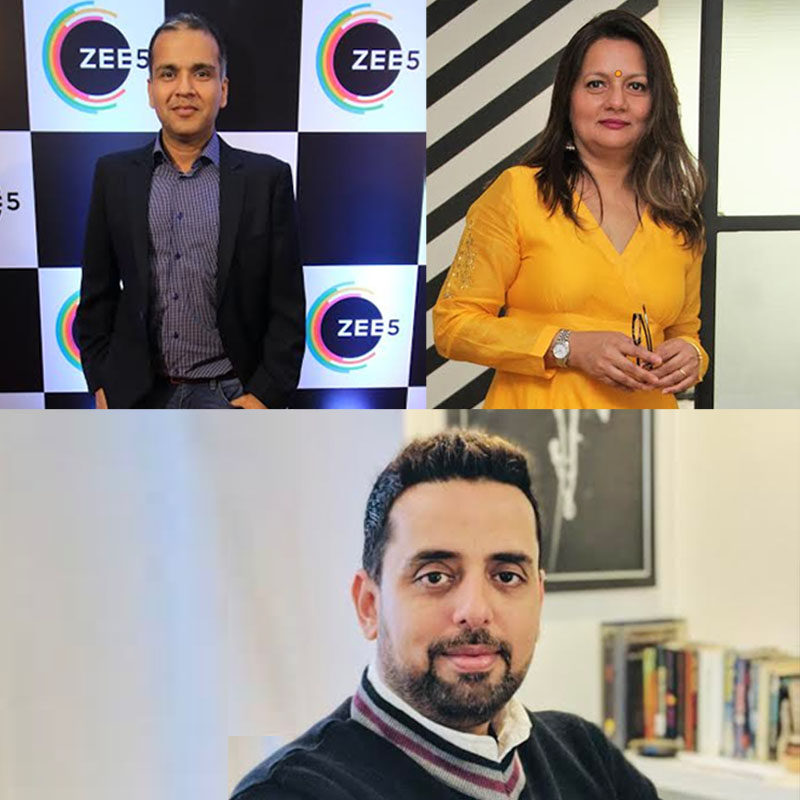
    ZEE5 India senior vice president SVOD head Rahul Maroli said, “India lives in their languages and ZEE5, through its bespoke and premium content offering in 12 Indian languages want to cater to all such audiences. Our new SVOD campaign ‘Atrangi Dekho. Atrangi Raho’, celebrates the very eccentric identity that an individual parades by challenging the status quo. As India’s Entertainment Super-app, we want to reimagine content by our unique storytelling approach which reflects the intrinsic fabric of our culture. We are thankful for all the love given to us by the audiences and we aim to enhance their content viewing experience as we move ahead in our journey to entertain India 24×7.”

    What’s Your Problem managing partner and COO Amit Akali explains, “When it comes to content, there’s a certain consumer who’s the pioneer and influencer, the one who always looks for different, cooler, Atrangi content, finds it and then is followed by the others. He/She is Atrangi and one of the ways this Atranginess is expressed is through Atrangi content. Which they find in abundance on ZEE5, be it original shows like Rangbaaz, or cutting-edge movies, Hindi or the best of original regional content. They are the one who others admire and wonder how they are always ahead of the curve. That’s the consumer we wanted to celebrate by saying, “Atrangi dekho, Atrangi raho.” While executing the film it was important that we captured this inherent coolness or Atranginess in every possible way; the cast, the music, the writing, the attitude. That’s where Arun Gopalan and Storytellers did their magic, making every frame look beautiful and celebrating the Atranginess in it. Like every WYP campaign, there’s a full-fledged digital burst planned across platforms. The idea is also to tie up with people connected to the large Zee family, innovatively as influencers, to reach out to the Atrangi in all of us.”

    The content we watch, the characters we identify with, the stories we live through, are great factors in shaping up our identities. And the campaign encourages one to connect with these Atrangi stories on ZEE5 and encourage to be an Atrangi yourself.

    ZEE5 has something to offer to everyone, right from original content, digital movies, shows, news and so on. As a new age platform, ZEE5 understands changing mindsets and trends of the changing landscape of India and the digital transformation. This campaign is a step in further in strengthening the ZEE5’s connects with their audience and giving them a space to happily be as Atrangi as they can.

  • Lockdown binge-watching a boon for OTT

    Lockdown binge-watching a boon for OTT

    MUMBAI: This unprecedented crisis called COVID-19 has turned out to be a blessing in disguise for OTT platforms. With people locked indoors, the only refuge has been their smartphones, giving way to, possibly, the next wave of growth for OTT companies. New-age entertainers, such as ZEE5, MX Player, Voot, Netflix and Amazon Prime Video, seem to be the obvious beneficiaries as people stay cocooned in the comforts of their homes for weeks.

    Will ad and subscription revenue go up along with the viewership?

    According to the BARC-Nielsen report, the time spent on smartphones, the main device to consume online content in India, has increased by almost three hours per week in week 2 of COVID-19 disruption. Time spent on video streaming apps also grew by 11 per cent which was driven by original series and movies. Hence data has proved what experts predicted at the beginning of the crisis.

    “There will be an impact on all industries. OTT is one of the few sectors which will have a silver lining. Bandwidth for data consumption for telcos will also shoot up. A lot of reality shows and soap-operas which are on a running model have suddenly dried up for short to mid-term and TV channels have to show alternate content. However, when you are confined at home, content consumption both on TV and OTT will go up dramatically. While the supply chain has certainly been affected, content creators and media players will have to be smart enough to see how they build their business continuity plan of content and how they maximise the increased TV or OTT viewership,” says PwC India media, entertainment and sports advisory, partner and leader Raman Kalra.

    SBICap Securities institutional equity research head Rajiv Sharma reaffirms that this is a great thing for the sector. He believes the industry will see a quantum jump in OTT viewership and consumption. Sharma adds that while TV channels are running out of content, OTT platforms have a lot of content which has not yet been consumed by all viewers. According to him, some platforms like Netflix can always have more English content. He, however, reminds that if the lockdown gets prolonged to three to six months, then OTT platforms too will struggle to churn out fresh content.

    Sharma adds that movies can play a role here. Those that were slated for a theatrical release, but had to be called off due to the current situation, can be released digitally through OTT platforms. Irrfan Khan-starrer Angrezi Medium had a short run in theatres before it decided to make its digital debut on Disney+ Hotstar.

    Kalra believes that the situation could even boost subscription for OTT platforms. As more people consume content, some of them will get converted into paid subscribers, bringing in revenue to the digital medium. Sharma also believes that these new subscribers will rake in the moolah for OTT platforms once the situation stabilises.

    The next 90 days will witness growth for the space, according to Sharma. Ad spends will shift to digital, but at a lower rate than the normal. According to him, overall ad sales combining TV and digital may decline by 15-20 per cent if COVID-19 disrupts the business for more than 30 days.

    “With this surge in traffic, telecom operators are struggling to provide adequate bandwidth. When bandwidth consumption reaches the threshold, the user experience gets affected. At this point, companies wouldn’t want to show ads because that will put an extra burden. Currently, ad-dollar is down and no brands want to push them. The only ones that can break through are those that can create relevant content around COVID-19,” says DigitalKites senior vice president Amit Lall says.

    The promise of innovative offerings

    Eyeing opportunities, some platforms have opened up their premium content for free viewing during this period. Some others are trying to push their content to television or partnering with payment gateways. These are inorganic growth mechanisms that are being targetted.

    Amazon Prime Video has brought out a special catalogue of children and family content, available for free; and ZEE5 has also made an array of premium content available on the AVOD side. Eros Now is offering a free two-month subscription. Three of Alt Balaji's shows are being run on Zee TV.

    While media planners laud the social cause behind these moves, they also mention that this is a big opportunity for the SVoD players to get consumers to sample premium content. Media professional Lalit Agrawal says that this sampling will help consumers make an informed choice about the quality of content when they would want to subscribe in the future after the turmoil is over.

    Lall says, “For two to three months, consumers will get to taste the content and since everybody has a sizable inventory in terms of content, once viewers are habituated, they can stick. These people who are now getting into the wheel will move up to pay.”

    Indeed, this phase, caused by a sudden change in lifestyle, is scripting a new chapter for online content with more consumers adapting to streaming services and existing ones increasing the uptake and sampling more platforms. Both AVOD and SVOD platforms will try to convince new floating users with not only great content but also volume. 

  • Voot to soon launch premium SVOD Voot Select

    Voot to soon launch premium SVOD Voot Select

    MUMBAI: Tiering is coming to the OTT ecosystem in India. AVOD, SVOD, premium SVOD is the direction it seems to be taking. Following in the footsteps of Hotstar which launched its VIP service earlier this year, Viacom18, India’s fastest growing entertainment network  has announced its second subscription video on demand service called Voot Select.  Pricing was not revealed in the announcement sent out a short while ago.

    To be helmed, by Ferzad Palia head –youth, music and English, Voot Select will give users access to diverse multi genre marquee content experiences which includes exclusive originals.

    Says Viacom18 Group CEO & MD Sudhanshu Vats: “The video on demand market is the fastest growing segment in the media and entertainment sector today.  Subscription led business models are going to be the next big growth drivers in the years to come. Having established Voot as India’s second largest premium AVoD platform, we think the time is apt for us to unveil our premium subscription offering, Voot Select.  The new premium offering will bring more bespoke content to our always-on viewers.”

    Adds Viacom18 Digital Ventures COO Gourav Rakshit:  “With Voot, the successful launch of Voot Kids and now Voot Select, our aim is to build a versatile and immersive digital ecosystem that will add value to our users. The new offering will provide them with differentiated content experiences across genres and segments. Currently in its final leg of testing, the all new Voot Select once live will see many untapped genres being made available for our users to experience and enjoy.”

    An exclusive logo has been designed for Voot Select that reflects the company’s commitment to providing exclusive content and quality entertainment for subscribers. “Minimal, premium, and contemporary, this wordmark distinguishes itself from the mother brand through its form, while being intimately connected with the core brand ethos through subtle gradients and rounded edges. It is a visual translation of the brand proposition to provide the best digital content for a discerning audience,” says the release.

  • SVOD to account for one-third of sector revenues in India by 2024

    SVOD to account for one-third of sector revenues in India by 2024

    MUMBAI: The Asia Pacific online video industry will generate US$27 billion in advertising and subscription revenue this year, up 24% Y/Y from
    2018, according to a new report, Asia Pacific Online Video & Broadband Distribution 2020, published today by Media Partners Asia (MPA). This pie is forecast to expand at a robust 13% CAGR to US$50 billion by 2024, propelled by rising investment and competition, widening broadband access and ongoing development of local content, payment infrastructure and IP protection.

    China, the world’s second-largest online video after the US, remains a major part of this growth, representing 59% of online video advertising and subscription revenue in Asia Pacific this year, according to MPA, although this share will contract slightly to 55% by 2024. At the same time, online video revenues in China are forecast to reach US$27 billion in 2024, up from US$16 billion in 2019, a 11% CAGR. MPA analysts have reduced earlier China forecasts as a result of economic deceleration as well as increased market maturity and regulatory oversight.

    Nonetheless, China’s online video ecosystem remains highly developed, benefiting from sizable investments from digital majors Alibaba, Baidu and Tencent. These three players are absorbing sustained losses in video thanks to profitability in other parts of the business. This allows them to buy and create local premium content in volume, as well as exclusive sports rights, while developing innovative technologies and large talent pools.

    In recent years, a fourth player, ByteDance, has emerged as another formidable force in China’s online video market. Between them, Alibaba, Baidu, ByteDance and Tencent will represent 69% of online video revenue in China this year, MPA forecasts. Chinese players have also started rolling out online video services in Asia, notably ByteDance in India, Japan and Southeast Asia as well as iQiyi and Tencent in Southeast Asia and Taiwan.

    Ex-China, APAC’s largest online video geographies by revenue are: (1) Japan; (2) Australia & New
    Zealand; (3) India; (4) Korea; (5) Taiwan; and (6) Thailand, with Indonesia set to overtake Thailand by
    2024. Online video revenues in APAC ex-China will grow from US$11 billion in 2019 to US$23 billion by 2024, a 16% CAGR, according to MPA projections.

    Commenting on the findings of the report, MPA executive director Vivek Couto said:

    “The online video industry is evolving and growing rapidly across Asia Pacific. This is especially true in countries with a significant addressable broadband market, developed payment infrastructure and a dynamic local content ecosystem, as entertainment and, in some cases, sports rights move online. Government-enforced IP protection has also been relatively effective in some markets, helping drive the market forward.

    At the same time, deep investments in content and technology have helped a handful of homegrown and global players to scale and dominate market share. Some of these players have access to abundant capital, with content and video distribution forming part of larger ecosystems in some cases, subsidizing costs and investment. Standalone OTT video remains loss-making in Asia Pacific on the whole, although some operators should start to see profits over the next three to five years, either in large domestic markets or as part of an expanding global and regional footprint.

    Deft  regulation  will  be  key  to  fulfilling  online  video’s  potential.  In  many  instances, regulators are attempting to bring OTT regulations in line with broadcasting and pay-TV, although restrictions on foreign investment could inhibit best-of-breed competition, while imposing TV content standards on niche online services may be counter-productive. Rules on foreign content titles allowed within libraries also potentially limit consumer choice.”

    Growth Dynamics

    MPA’s Asia Pacific Online Video & Broadband Distribution 2020 report foresees advertising models staying dominant across most of APAC over the next five years, with the exception of China, Australia & New Zealand, although subscription services are expected to gain scale in key markets. A critical mass of customers is already paying for premium entertainment online in Australia & New Zealand, China and Japan, with India and Korea not far behind.

    In Japan and Korea, SVOD (subscription-based video-on-demand) will contribute a significant chunk of sector revenues by 2024. Advertising will remain dominant however, reflecting the slow-burn nature of SVOD in these markets as well as the growth of online video advertising, benefiting YouTube in particular.

    In India, SVOD will account for about one third of sector revenues by 2024, although local players are also making inroads into online video advertising alongside YouTube. Disney-owned Hotstar is a strong and fast-growing number two platform across both advertising and subscription, lifted by access to IPL cricket in particular. Hotstar has also benefited from demand for catch-up content from Star India, its direct owner, as well as access to premium Hollywood entertainment. MPA estimates that Hotstar will account  for  more  than  20%  of  online  video  advertising  in  India  this  year,  while  its  low-ARPU subscription model has also attracted a critical mass of customers.

    In Southeast Asia, advertising will remain the cornerstone of industry revenue, maintaining a 74% share of online video revenues by 2024, according to MPA. YouTube will dominate, although some local and regional platforms should gain incremental share. Southeast Asia SVOD revenues have largely been driven by Netflix so far.

    Overall,  the  Asia  Pacific  pie  will  remain  fairly  evenly  split  between  advertising  and  subscription according to MPA, with advertising’s share decreasing slightly from 56% in 2019 to 54% in 2024, as subscription increases its share from 44% in 2019 to 46% in 2024.

    Market Leaders

    According to MPA analysis, 15 operators will account for almost 70% of Asia Pacific online video revenues in 2019. This list comprises four operators in China, three in Japan, two in Australia, and one each in India and Korea, alongside three global platforms and one regional service.

    Global players

    Outside China, global platforms have established strong positions in the online video landscape at this early stage of industry development. Between them, Amazon, Netflix and YouTube are on track to represent 54% of online video advertising and subscription revenues in Asia Pacific ex-China this year. YouTube continues to grow consumption and advertising, benefiting from a formidable blend of data and tech, although competition is increasing in key markets such as Australia and India. Netflix is an effective proxy for SVOD in much of Asia Pacific outside China with an estimated 13.2 mil. paying subs as of year-end 2019, according to MPA. At the same time, Amazon has made significant progress in India and Japan where it has invested in local content for its Prime Video service, complementing the growth of other Amazon services.

    More global players are about to join the fray. Disney+ will make its APAC debut in Australia and New Zealand in November 2019 at a competitive price point of US$6.7 per month, likely followed in 2020 by Japan, where a similar service, Disney Deluxe, already exists today. India, Korea, Southeast Asia and Taiwan should come on stream in 2021. Meanwhile, Apple TV+ will launch globally in November 2019, with prices in Asia Pacific ranging from US$1.4 per month in India to US$6.1 per month in New Zealand.
     TV Linx [tvlinx@indiantelevision.in]

  • Paying OTT subs to reach 30-35 mn by 2021, only 2x growth in ad revenue

    Paying OTT subs to reach 30-35 mn by 2021, only 2x growth in ad revenue

    MUMBAI: Digital media is set to overtake filmed entertainment in India this year in terms of revenue. While TV will retain its pole position as the largest segment, digital will also overtake print by 2021 to reach $5.1 billion, according to a report from FICCI and EY report on ‘How a billion screens can turn India into a media and entertainment powerhouse’.

    In this overwhelming growth of digital media, telecom operators will be the future MSOs. As per the report, while 60 per cent of total consumption today is through telco bundles, it is estimated to grow to over 75 per cent by 2021 and cater to over 375 million subscribers. Smartphone penetration is just 36 per cent in 2018, leaving massive room for growth. 30 per cent of phone time is dedicated to entertainment.

    “While watch time could grow 3 to 3.5x over the next five years, resulting in a massive inventory growth, advertising revenues will grow only around 2x. CPMs will correspondingly fall during the period for non-premium inventory,” the report added.

    Along with growth in advertising revenues, subscription revenue is also projected to grow. The report predicts 30-35 million paying OTT video subscribers and 6-7 million paying audio subscribers by 2021.

    “Digital segment will benefit from the growing popularity of e-sports, AR/VR technologies, online gaming and fantasy sports, all of which are “Generation Z” products,” it added. “With its massive base of internet users, India’s digital media market is attractive to global streaming platforms looking to capitalise on the country’s fast-growing digital consumption. This is especially true as competitively priced 4G services become more widely available.”

    The report went on to mention that despite the growth in digital media consumption, piracy threat is
    “likely to restrict full monetisation of content as well as large-scale acceptance of SVoD in India”. It mentioned, “Indian market is highly price-sensitive and is driven majorly by advertising revenues. Several sectors such as print, digital, television and radio derive major share of their revenues from advertising.”

    The report highlighted that consolidation will be needed for platform profitability as contest costs will remain high as each platform produces or acquires content to meet its needs. It also added that post the new tariff order regime, OTT platforms are sure to benefit due to increased parity between television and OTT content choice and costs.

  • SVoD-Pay TV combined households increasing

    SVoD-Pay TV combined households increasing

    MUMBAI: With the advent of subscription-based video-on-demand services (SVoD), Pay-TV households are declining globally. But numbers of SVoD only households along with SVoD-Pay-TV combined households are increasing, according to a report from Ampere Analysis.

    As per the report, a combination of pay-TV, premium channel and SVoD is the most common among television service subscribers, followed by pay-TV and SVoD and SVoD-only.

    While the proportion of Pay-TV-only households are down four points, proportion of households combining pay-TV, premium channel and SVoD services has increased four points in the last 12 months. Although SVoD and pay-TV is the most common service combination among internet users, the proportions range between 55 per cent in Turkey to 14 per cent in Japan.

    “While there are markets such as Australia, Italy and Japan where SVoD-only is becoming the norm, this data reinforces pay-TV’s position in the market, and its continued importance to consumers in the viewing mix,” Ampere Analysis consumer research lead Minal Modha said.

  • Publicis Capital bags the creative mandate of ZEE5 India

    Publicis Capital bags the creative mandate of ZEE5 India

    Mumbai : Carrying on with its winning momentum, Publicis Capital has bagged the creative mandate of ZEE5 India, India’s fastest growing OTT platform. The agency will manage the creative duties for the leading OTT brand across their AVOD, SVOD, Regional SVOD and Trade (B2B) verticals.

    The account will be serviced out of Mumbai.

    ZEE5 is a leading OTT player in India offering 12 navigational and featured languages across original features, live TV, catch up TV, lifestyle shows, children's programmes, exclusive short series and acclaimed plays. It offers an exhaustive array of content; with 80+ live TV channels and 1.25 lac+ hours of viewing across the languages of English, Hindi, Bengali, Malayalam, Tamil, Telugu, Kannada, Marathi, Oriya, Bhojpuri, Gujarati and Punjabi making it a complete video destination for OTT viewers.

    On appointing Publicis Capital as its agency, Manish Aggarwal, Business Head, ZEE5 India commented, “Earlier this year, we completed one year of operations. This year has been one of many learnings and insights. We were keen to bring on board partners who understand our business and have the ability to scale with us. As we continue to be the fastest growing OTT platform in India, we found Publicis delivering on all boxes. We look forward to partnering with Publicis in our next phase of growth.”

    On winning the account, Srija Chatterjee, MD, Publicis India commented: “In 2017, we inaugurated our relationship with the ZEEL family with the broadcast bouquet, in 2018 we expanded it by winning the mandate to launch ZEE5 in the international markets, and now in 2019, the team at ZEE5 India has awarded us the creative mandate for partnering the OTT business in the domestic market as well. It’s when we grow with our clients that we feel true gratification. We’re looking forward to this exciting journey and in partnering ZEE5 India to leadership in what’s an increasingly action-packed category.”

    Adding his views, Suraj Pombra, EVP, Publicis Capital said: “The decibels in the OTT category find no parallel today. The future leadership of content consumption is what all brands are fighting for. We feel privileged to have been chosen by ZEE5 India to partner them in what’s going to be a thrilling battle with daily non-stop action. With their unmatched content library that finds appeal across the country, ZEE5 is poised to be the go-to destination for all Indian viewers. Here’s to leading the change together.”

    ZEE5 is home to 1 lakh hours of On Demand Content and 80+ live TV channels. With over 3500 films, 500+ TV shows, 4000+ music videos, LIVE TV Channels across 12 languages, ZEE5 presents a blend of unrivalled content offering for its viewers across the nation and worldwide. ZEE5 also offers ground-breaking features like 11 navigational languages, content download option, seamless video playback and Voice Search.

  • Content choice drives Indians’ subscription to multiple OTT platforms

    Content choice drives Indians’ subscription to multiple OTT platforms

    MUMBAI: OTT subscription fatigue is a myth in India for now. While subscribing to multiple OTT services, Indian subscribers rely on content as the driving force. There are three primary reasons for this – demand for more content options (42 per cent), satisfying the content needs for an entire family (42 per cent) and all content not being available on one single OTT service (42 per cent).

    “Our research findings suggest that the online TV consumer in India sees the value in TV content whether they are paying with greater focus and attention, or with their money,” says Brightcove India sales director Janvi Morzaria.

    The study run by Brightcove polled 9,000 participants across nine countries in Asia, including 1,000 consumers in India. It also revealed that 79 per cent of respondents welcomed the hybrid model of OTT. The report said that 35 per cent of respondents are open to a reduced monthly subscription package that serves ads depending on the price, whereas 44 per cent said they would definitely sign up.

    25 per cent of Indian respondents wants to pay nothing and watch ads as a trade-off to consuming content while 25 per cent elected to pay a lower fee with limited ads. Just 14 per cent agreed to pay a higher fee to be free from ads and 14 per cent would like an option where they can customise their price and ad packages. 37 per cent of respondents wanted to pay less than $1 per month, 27 per cent would pay $1-$4 per month, and 16 per cent would pay $5-$9 per month.

    “Indian consumers do not mind seeing ads as part of their shows, especially if they are getting a deal. 79 per cent of Indian respondents stated that they are open to a hybrid plan of ad-funded SVOD that comes with a reduced price,” she added.

    It also emerged that offline downloads, access on mobile, and using less data on mobile were the top three OTT service features most wanted by Indian consumers. 22 per cent of Indian respondents found two ads as an acceptable advertising load per ad break and 13 per cent were open to three ads per break. In addition to that, 67 per cent of respondents were receptive to the idea of shoppable TV.

    “OTT service providers should take advantage of this preference and make the advertising experience engaging while limiting ad loads per break. Consumers are now willing to watch ads if they have the option to subscribe to a reduced price plan,” she commented.

  • SVoD subscribers to touch 743 mn globally by 2023

    SVoD subscribers to touch 743 mn globally by 2023

    MUMBAI: Subscription based video on demand (SVoD) is rising persistently and will draw a level with broadcast TV globally by 2023 in terms of viewing hours per day. According to a report from Rethink TV research, SVoD will surpass traditional TV viewing soon after.

    The report forecasts SVoD usage in all the regions as well as highlights the differences between AVoD dominated Asian market and SVoD-crazy US and European market. The research sees 478 million SVoD subscribers today growing to 743 million by 2023.

    China will have the most SVoD subscribers by 2023 although North America will still drive the largest dollar volume. The report also forecasts the US market reaching 236.6 million subscriptions by the end of 2023, from a base today of some 146.5 million.

    “Europe and Asia will be neck and neck in SVoD revenues by 2023, but with far fewer subscribers in Europe, each paying significantly more than those in Asia, a region dominated by frighteningly large Advertising VoD streaming numbers,” it said.

    Outside China, Netflix will continue to lead in SVoD in subscribers numbers. The streaming giant will make up 194 million SVoD customers out of 743 million globally by 2023, some 26 per cent of overall global subscribers.

    The report has also predicted that WarnerMedia, under its new AT&T defined, freemium strategy will emerge as the new leader in the US Market. It is predicted to reach 29.6 million SVoD homes by 2023. Disney is also likely to have multiple SVoD service types, but may struggle outside the US.

    While the Asia Pacific market is highly skewed with China expected to gather 245 million SVoD subscribers, the average spend will be just $2 to $3 a month. Latin  American market will see competition among Netflix, America Movil’s Claro TV and Televisa’s Blim.

    “Europe will be a mishmash of different approaches with pure-play US operators like Netflix and Amazon now established, US studios beginning to stake a claim, and local broadcasters ganging up to challenge them. The region has its own pure play SVoD players also such as Maxdome, Sky, Zattoo, and Rakuten TV,” it stated.

  • ALTBalaji direct subscriptions up by 60-70% over last quarter

    ALTBalaji direct subscriptions up by 60-70% over last quarter

    MUMBAI: Balaji Telefims’ digital venture ALTBalaji has been quickly growing its subscriber base and subscription revenue, further reinforcing the OTT sector’s belief that Indian consumers are more than ready to pay for engaging content. After three consecutive strong quarters on the digital front, the company is now set to shift gears when it comes to its content strategy. Going forward, the video streamer will lay greater emphasis on strategically acquiring direct consumers.

    “We are now at a process where we are confident that we will do about 24 to 30 shows in a year plus three categories of shows, so that is either male focus shows or female focus dramas. We are reinforcing that content strategy and our focus on international, which will be even more as we go ahead as our library builds up,” Balaji Telefilms group CEO Sunil Lulla said in an earnings call after the company announced its Q3 results.

    The Ekta Kapoor-led production house’s OTT arm boasts of 13.1 million paid subscriptions as of February, with a 2x growth in monthly active users that now stand at 4.6 million. 70 per cent of the platform's consumers have opted for a quarterly subscription.

    In addition to that, ALTBalaji has witnessed nearly 60-70 per cent growth in direct subscription numbers over the last quarter. On the back these consumers’ willingness to pay Rs 300 monthly, the OTT platform has made investments and upped marketing spends to further boost these subscriptions.

    Lulla pointed out the subscriber addition is happening at two levels – new subscribers and those returning post the churn.  Notably, Lulla had said in an earnings call after the Q1 result that about 70-80  per cent of traffic comes from telcos while the ARPU from the sector stands at around Rs 15 per month.

    The veteran media executive stated that not only have the new shows aided subscriber addition, but the old ones too make up for a good share. The overall growth in library has played a key role too, he highlighted. The management hopes to hit a tipping point in the next 12 to 18 months.

    While the group had undertaken an equity infusion of around Rs 450 crore in ALTBalaji, it has already invested Rs 350 crore of that.

    “It will be sufficient while we said that we put in Rs 350 crore. You must understand that a lot of cash that is there in production is in production contract that has been executed and they will also get accrued when they are actually put on air, if you see the two content cost across the two years that is not equal to Rs 350 crore yet,” Lulla argued when asked if the balance Rs 100 crore would be enough for the next two years.

    While the group had projected Rs 60 crore in revenue from ALTBalaji for the financial year, it has so far been able to garner Rs 28 crore. However, the number does not contain revenues from international market, which is yet to be reported. Lulla, however, admitted that the strategy for international market probably hasn’t played out the way he had expected it to.

    While TV business continues to be the highest revenue generator of Balaji Telefilms group, it hasn’t shown exponential growth. The group launched new shows in the first quarter, with TV shows already on air having hit maturity. The management now hopes to further improve the performance from this quarter to about five to ten per cent in the next and keep consolidating thereafter.