Tag: SVOD

  • Global appetite for K-content surges as TV commissions slump

    Global appetite for K-content surges as TV commissions slump

    MUMBAI: Audiences worldwide are consuming more South Korean content than ever, but the number of new TV commissions is shrinking, according to research from Ampere Analysis.

    Volume of skorean titles available on SVodThe share of international viewers who say they watch Korean series or films “sometimes” or “very often” rose from 22 per cent in early 2020 to 35 per cent in the first quarter of 2025. The supply of K-content on global streaming platforms grew 55 per cent between 2021 and 2024.

    Yet commissions are falling fast. Ampere reports that overall South Korean TV commissions dropped 20 per cent between the first halves of 2023 and 2025. Global streamers slashed their orders by 43 per cent, while local players cut back 20 per cent as they struggle with rising production costs. Scripted projects—the crown jewel of Korea’s global success—took the biggest hit, with commissions down 39 per cent.

    Volume of SKOrean titles commissionedNetflix is the outlier. It has kept commissioning volumes steady and accounts for 88 per cent of global SVoD announcements in South Korea this year. But even it has shifted emphasis from scripted to unscripted originals, part of a broader industry pivot towards acquisitions and cheaper formats.

    “Despite continued demand for K-content, TV show commissions from local and global players have declined,” said Mariana Enriquez Denton Bustinza, analyst at Ampere. “This leaves the export market open for South Korean commissioners, especially as Netflix considers introducing caps on actors’ fees.”

    For Korea’s content makers, the paradox is clear: global demand is booming, but the economics of production and shifting streamer strategies risk leaving fewer shows for audiences hungry for more.

  • FAST frenzy: Viewers binge more, advertisers cash in, everyone wins!

    FAST frenzy: Viewers binge more, advertisers cash in, everyone wins!

    MUMBAI: Not too long ago, TV lovers had two choices—pay up for endless subscriptions or rely on old-school cable. But just when you thought you were stuck juggling streaming bills like a circus act, FAST (free ad-supported streaming television) swooped in like a digital superhero. Forget flipping channels—now, viewers get premium content for free, advertisers get their dream audience, and content providers rake in the ad dollars. It’s a win-win-win, and Amagi’s latest Global FAST Report 14 Edition proves it.

    The report unveils staggering double-digit growth in both hours of viewing (HOV) and ad impressions, making it clear that FAST isn’t some fleeting trend—it’s an advertising revolution. Gone are the days when ads interrupted your binge session; now, they power the very shows you love.

    Amagi crunched the numbers from 3,300+ channels streaming via its SSAI (Server-Side Ad Insertion) platform, Amagi Thunderstorm. The results? A jaw-dropping 95 per cent YoY surge in global HOV and a 65 per cent jump in ad impressions—because when it comes to FAST, the stream never stops, and neither do the ad dollars. If streaming had a crystal ball, it would be flashing ‘bright future ahead!’

    Key takeaways:

    . U.S. and Canada keep the FAST train running at full throttle, contributing the lion’s share of global ad impressions and HOV. Who needs cable when free streaming is this good?

    .  APAC is the new streaming superstar, boasting a blockbuster 132 per cent YoY increase in HOV and a 130 per cent spike in ad impressions. If FAST were a stock, you’d want to buy in now.

    . LATAM and EMEA aren’t sitting on the sidelines, with entertainment, news, and documentaries leading the charge. Because who doesn’t love free content that informs and entertains?

    .  Entertainment remains the undisputed champion of FAST, making up 40–45 per cent of global HOV. Drama, reality TV, and movies—FAST has it all, without the price tag.

    .  New FAST channels are shaking up the game, with 25 per cent of global HOV and ad impressions coming from channels launched after December 2023. The future of TV is FAST, and it’s only getting started.

    The streaming wars may be ongoing, but FAST has found its niche. Unlike SVOD (Subscription Video on Demand), which relies on subscription models, FAST offers premium content free-of-cost, funded entirely by ads. Viewers have spoken, and their preference for free, high-quality content has set the stage for an advertising revolution.

    Amagi’s consumer survey of 500+ U.S. households revealed key trends:

    . 75 per cent of respondents watch free, ad-supported streaming content.

    . 66 per cent reported watching FAST channels multiple times per week.

    . 67 per cent noticed and engaged with overlay ads, proving the model’s efficacy for advertisers.

    FAST isn’t just standing alone—it’s merging with traditional Pay TV and SVOD models. Pay TV services now offer FAST channels, SVOD giants like Warner Bros. Discovery are experimenting with ad-supported tiers, and FAST services are enhancing their content portfolios with premium offerings.

    With global advertisers shifting their focus from Pay TV to CTV (Connected TV) and FAST, content providers are being forced to rethink their distribution strategies. Industry leaders like Dazn are already unifying conventional broadcasting with FAST to create a seamless viewing experience.

    As more regions embrace FAST, expect to see a sharper focus on localised content, better ad targeting, and stronger partnerships between streaming giants and advertisers. The numbers don’t lie—a 95 per cent rise in viewing hours and a 65 per cent spike in ad impressions make one thing clear: FAST isn’t slowing down—it’s just getting warmed up.

    So, whether you’re an advertiser chasing eyeballs, a content creator searching for the next big platform, or just someone who loves free TV with a side of perfectly timed ads, FAST is your new best friend. 

  • Zee5 elevates Shresth Gupta to VP – marketing (SVOD)

    Zee5 elevates Shresth Gupta to VP – marketing (SVOD)

    MUMBAI: In the fast-paced world of digital streaming, standing still is not an option. Just as an outdated gadget or a long-overdue promotion begs for an upgrade, so too does the leadership that steers innovation.

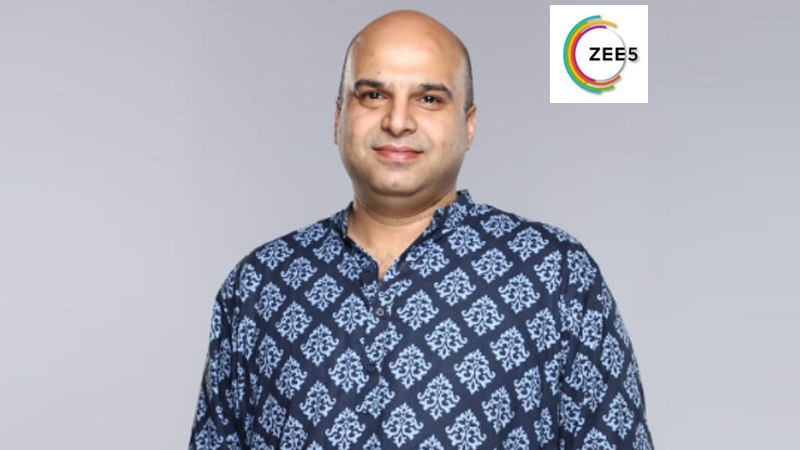
    Zee5, India’s leading homegrown video streaming platform, has announced a major upgrade of its own, elevating Shresth Gupta as VP – marketing (SVOD) for India and global markets. This dynamic move underscores Zee5’s relentless drive to dominate the subscription video-on-demand (SVOD) space, sparking excitement and anticipation as the platform sets its sights on conquering new horizons and captivating audiences worldwide.

    In his new role, Gupta will spearhead the launch and promotion of original series and movies in Hindi, Bengali, and Marathi, aiming to drive subscription growth through impactful campaigns tailored for diverse audiences. Gupta joined Zee5 in August 2020 and has been instrumental in the platform’s success, orchestrating standout campaigns for popular titles such as “Taj: Divided by Blood”, “Sirf Ek Bandaa Kaafi Hai”, and “Gyaarah Gyaarah”.

    With over 15 years of experience in strategic planning and brand building, Gupta has held leadership positions at Sun TV Network, Zee Entertainment Enterprises, and Reliance Broadcast Network. He successfully launched impactful initiatives, including introducing Sun Bangla to eastern markets and overseeing the launch of premium channels like Zindagi and &Prive HD.

    Recognised for his expertise in digital marketing, storytelling, and consumer insights, Gupta has consistently delivered campaigns that resonate deeply with audiences.

    His educational credentials include a post graduate diploma in communications from MICA and a bachelor’s degree in engineering from Rajasthan University.

    This move underscores Zee5’s commitment to innovation in marketing and delivering exceptional value to its growing SVOD subscriber base.

  • From solitude to shared screens: How connected TVs Are changing SVOD in India

    From solitude to shared screens: How connected TVs Are changing SVOD in India

    MUMBAI: Picture this: you’re slouched on the couch, watching the season finale of your favorite show, but the room feels hollow. No one to laugh with, no one to argue about the plot twist. Feels a little dull, doesn’t it?

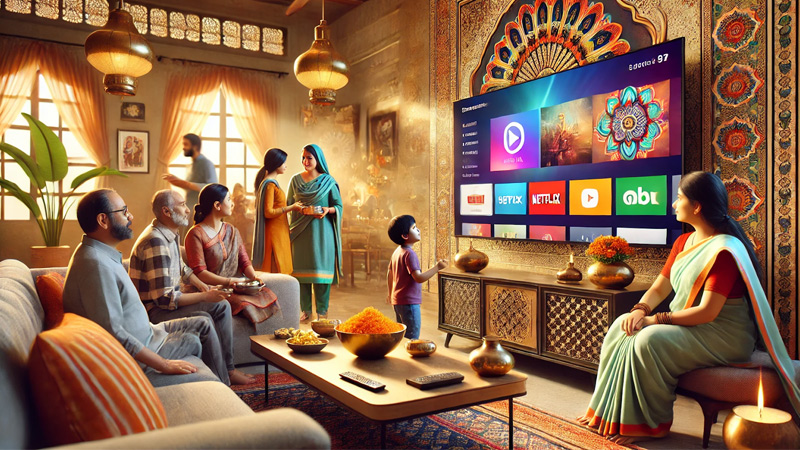
    You’re not alone—literally. A new wave of co-viewing, driven by Connected TVs, is revolutionising how India engages with subscription video on demand (SVOD) platforms.

    Ormax Media’s latest SVOD audience report 2024 reveals a seismic shift in urban India’s viewing habits. With insights from 3,000 subscribers, the report paints a vibrant picture of a market where language diversity, shared experiences, and tech-savvy innovation drive customer loyalty and growth. From couch-bound solo binging to interactive group viewing, the way Indians consume content is evolving faster than ever—and it’s bringing a mixed bag of emotions along for the ride.

    The question is: are you tuning in alone, or are you part of this co-watching revolution?

    The report highlights a stagnation in the SVOD audience base, which declined by two per cent to 150.6 million in 2024, compared to 153 million in 2023. This represents 28 per cent of India’s digital video audience, a group dominated by ad-supported video on demand (AVOD) viewers who account for 72 per cent of the market. The slowdown in SVOD growth underscores the competitive challenges platforms face in subscriber acquisition and retention.

    A major revelation of the report is the growing impact of Connected TVs, with 36 per cent of SVOD audiences in urban India regularly using such devices to stream content. This trend is expanding beyond metro cities into mini metros and smaller towns, altering how content is consumed.

    The report also sheds light on the phenomenon of co-viewing, where 66 per cent of Connected TV users watch streaming content with family members. This shift calls for OTT platforms to prioritise inclusive content catering to diverse age groups and preferences, ensuring a broader family appeal.

    Ormax Media, head of business development (streaming, TV & brands), Keerat Grewal underscored the importance of these insights in shaping OTT strategies.

    “In a cluttered marketplace where subscribers typically pay for just 2-3 apps, pay OTT platforms must align their pricing, content, and marketing strategies with audience preferences,” Grewal said.

    She added, “While platforms have data on their own subscribers, Ormax Media has consistently built industry-wide insights for the Indian OTT sector. Our latest report equips platforms to craft compelling value propositions, grounded in macro-level audience behaviours and tastes.”

    Contrary to perceptions that Connected TVs are limited to metro audiences, the report reveals growing traction in smaller towns and mini metros. Grewal highlighted the potential for this shift to fundamentally reshape the type and style of content consumed on OTT platforms in India.

    The Ormax SVOD Audience Report: 2024 is now available for subscription and provides valuable data for streaming platforms, brands, and content producers. Covering viewing behaviour, language preferences, genre trends, content sampling triggers, and media habits, the report is a comprehensive resource for industry stakeholders aiming to stay ahead in a dynamic market.

  • Netflix to remain SVod world leader by 2027: Digital TV Research

    Netflix to remain SVod world leader by 2027: Digital TV Research

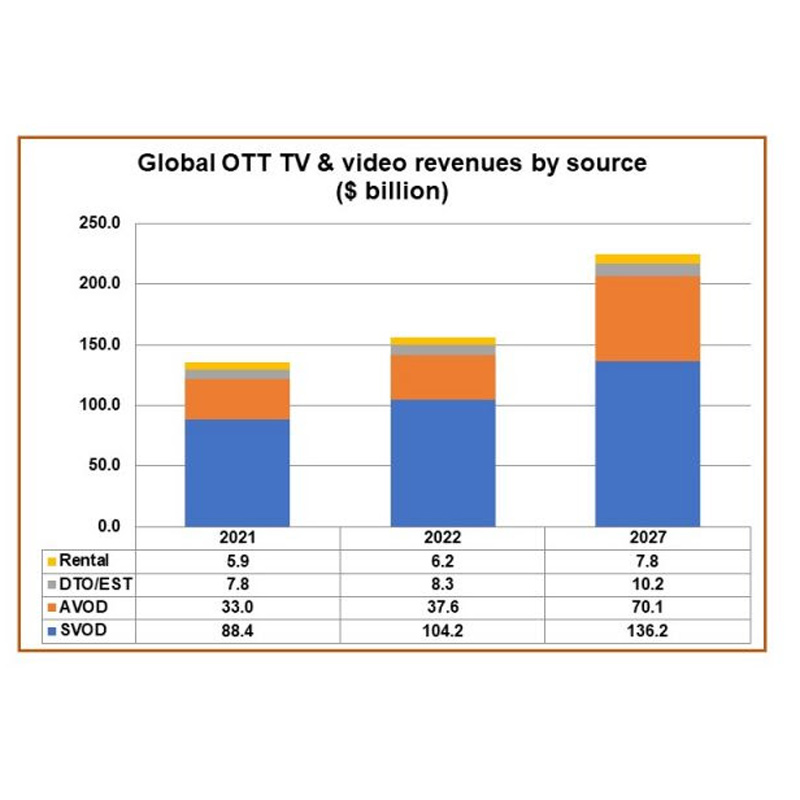
    Mumbai: Global SVod subscriptions will increase by 475 million between 2021 and 2027 to reach 1.68 billion. Six US-based platforms will account for 47 per cent of the world’s total in 2027.

    Netflix will remain the revenue winner, with $30 billion expected by 2027 – similar to Disney+, HBO Max and Paramount+ combined. Global SVod revenues will reach $132 billion by 2027.

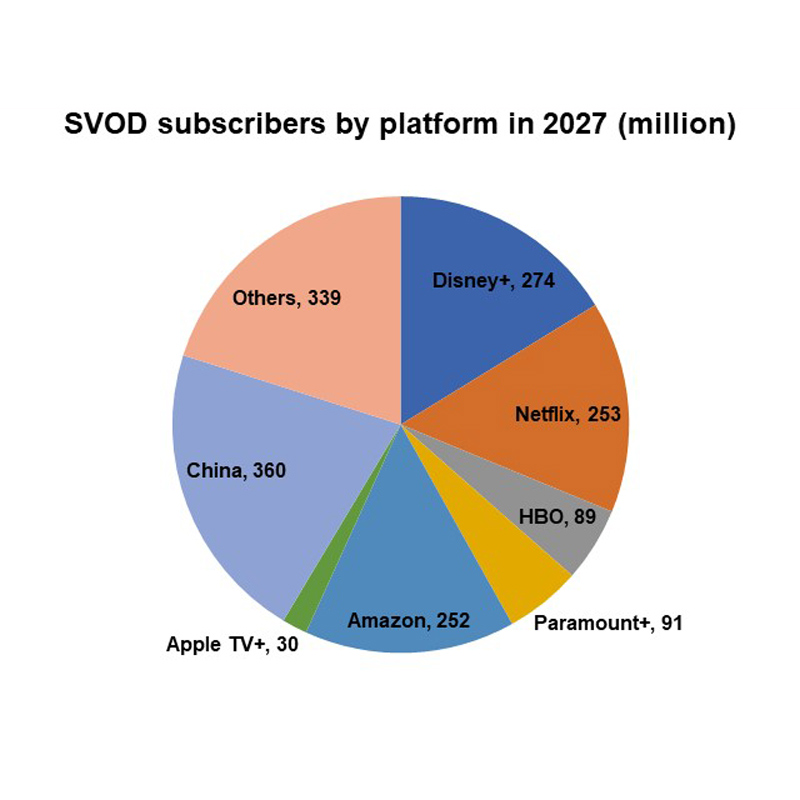
    Digital TV Research principal analyst Simon Murray said, “Our forecasts in June had Disney+ [274 million subscribers] overtaking Netflix [253 million subs] by 2027. These forecasts assumed that Disney+ Hotstar would retain the Indian Premier League cricket rights. It didn’t – hence the 67 million lower forecast for Disney+.

    “SVod revenues for Disney+ will reach $15 billion by 2027. Despite lowering our forecasts by 67 million subscribers, SVod revenues for Disney+ will be the same in 2027 as in our previous forecast. SVoD ARPUs and revenues will increase in key markets after the platform introduces the hybrid AVoD-SVoD tier and the more expensive SVod-only tier,” he added.

  • Western Europe continues to witness growth; adds 73 mn Svod subscribers

    Western Europe continues to witness growth; adds 73 mn Svod subscribers

    Mumbai: Western Europe will have 238 million Svod subscriptions by 2027. The figure has increased from 165 million by end-2021. Six US-based platforms will account for 81 percent of all Svod subscriptions by 2027.

    Netflix will have 62 million subscribers by 2027 – three million more than 2021. Subscriptions are flat for 2022 mainly due to increased competition. Netflix’s share of the total will fall from 36 percent in 2021 to 26 percent by 2027.

    Disney+ will have 46 million subscribers by 2027 – 20 million more than 2021. Newcomer Paramount+ and SkyShowtime will add 11 million subscribers and HBO Max will bring in an extra 5 million.

    Western European Svod revenues will total $25 billion by 2027 – up from $16 billion in 2021. The UK will remain the Svod revenue leader.

    Digital TV Research principal analyst Simon Murray said, “Netflix will slowly lose Svod revenues as we assume that it will convert its cheapest tier to a lower-priced hybrid Avod-Svod tier. Any Svod revenue shortfall will be covered by its Avod revenues. Netflix will remain the Svod revenue winner, although its share of the total will fall from nearly half in 2021 to a third in 2027.

    “We do not expect many more price rises due to the intense competition. We assume that Disney+ will follow its US example by converting its present tier to a hybrid Avod-Svod one and charging more for SVOD-only tier,” Murray added.

  • US SVod revenues to be flat from 2024-2027: Digital TV Research

    US SVod revenues to be flat from 2024-2027: Digital TV Research

    Mumbai: Despite being the world’s most mature market, US SVod (subscription video-on-demand) revenues will grow by $14 billion from $43 billion in 2021 to a peak of $56 billion in 2024, according to new data from Digital TV Research. However, revenue growth will be almost flat from 2024 to 2027 due to price competition and new hybrid AVoD-SVoD tiers from major players such as Disney+ and Netflix.

    Digital TV Research principal analyst Simon Murray said, “Netflix will remain the SVoD revenue winner. However, the platform will lose $1.4 billion in SVoD revenues between 2022 and 2027 due to lower ARPUs from 2023. Netflix will more than recoup these SVoD revenue losses with AVoD (Advertising-based video on demand) sales.”

    Netflix will have 63 million subscribers by 2027 – down by 4 million from 2021. Hulu, Disney+, HBO and Paramount+ will each boast 40-50 million subscribers by 2027. Some consolidation – mergers and closures – is likely.

  • GUEST ARTICLE: Why content creators need to embrace OTT platforms for better growth and impact

    GUEST ARTICLE: Why content creators need to embrace OTT platforms for better growth and impact

    Mumbai: OTT (over-the-top) services have received a lot of attention in the last three years, completely transforming the way we consume information online. OTT platforms are significantly altering the landscape of the entertainment and media industries. OTT services are classified into several groups based on the type of content, helping both innovative content creators and brands gain better visibility and engagement among a wider set of global audiences. With access to internet video material, artists and content creators also have an opportunity to build a brand out of their work, which will lead to organic development and popularity among viewers.

    With the versatility of gadgets, modern consumers are more accustomed to consuming video material at any time and from any location. According to a PWC analysis, India’s OTT video industry would grow at a 21.8 per cent CAGR from Rs 4,464 crore in 2018 to Rs 1,1976 crore in 2023.

    From large companies to start-ups, everyone is welcoming OTT platforms for innovative and data-driven campaigns. This also provides content creators with an opportunity to drive better brand partnerships, find sponsors, and build a stronger viewer base for themselves, as well as enjoy a wider reach to viewers via dedicated OTT platforms.

    In line with the above, having a dedicated OTT platform and building a niche ecosystem can have several benefits for content creators, like:

    1. Better engagement

    OTT platforms have enormous potential for expansion. The enormous market makes it all feasible, but before proceeding, one needs to understand the approach to engaging the audience. OTT enables content makers to create content that increases engagement. It provides a diverse range of materials to choose from based on the consumer’s preferences. Consumers, on the other hand, have increased viewing independence in terms of location, device, time, and quality of options.

    Additionally, OTT platforms also help the audience to locate new material quickly and effortlessly, which will undoubtedly lead to success for content providers.

    2. Increases brand awareness

    OTT platforms are excellent at preserving an image that will improve your audience’s reach. On a regular basis, almost 70 per cent of users watch at least three hours of video streaming services. According to a different survey, video accounts for 82 per cent of all consumer web traffic. So it’s evident that digital and video are here to stay. Any brand, person, or organisation that can successfully combine these two. Owning an OTT platform will aid in improving brand exposure, increasing reach, and gaining more consumer loyalty.

    3. Focus on your target audience

    OTT platforms clearly identify their target audience, followed by enticing and relevant advertising based on their target group’s interests, which increases the ads’ views and reach. The OTT network’s 5G network is based on fixed wireless access video transmission. 5G will encourage high-quality consumption in households, thus enlarging the advertising area. Focus on a certain target first, then expand your reach after you have a clear understanding of the OTT audience.

    4. Monetization model

    Content producers now have the resources and flexibility to pursue their passions. They might monetize their material in a single or several ways. These include ad-supported video-on-demand (AVoD), subscription video-on-demand (SVoD), and a hybrid approach, i.e., ad-supported video with a subscription mode. The service provider or creator should select the most appropriate model for the platform. It all depends on your target audience.

    Every content producer has a strong desire to increase the exposure of his or her own brand in the entertainment industry. And with a strategically planned platform, it is possible for large and small content creators to generate revenue and make an impact in the market through a well-planned and managed platform.

    The author of this article is Ssoftoons COO Hansa Mondal.

  • Netflix to lose SVOD revenues in Latin America: Digital TV Research

    Netflix to lose SVOD revenues in Latin America: Digital TV Research

    MUMBAI: Latin American SVOD revenues will reach $8.54 billion by 2027; up from $5.01 billion in 2021. Netflix will account for 41 percent of the 2027 total, down from 72 percent in 2021. Netflix’s revenues will peak at $3.73 billion in 2023.

    Digital TV Research principal analyst Simon Murray said, “Netflix will introduce AVod-SVod tiers [one for Brazil and another pan-regional one for the Spanish-speaking countries] in 2024, with SVOD revenues and Arpus falling slowly as some subscribers convert to cheaper packages.”

    Disney+ is likely to introduce similar tiers in 2024. The platform is expected to follow its US example by converting its current subscription tier to AVOD-SVOD and charging more for SVOD-only. This will push up average revenue per user (ARPU).

    Latin America will have 139 million gross SVOD subscriptions by 2027; up from 75 million end-2021. Seven US-based platforms (Netflix, Amazon Prime Video, Disney+, Star+, Paramount+, Apple TV+ and HBO) will account for 90 percent of the region’s paying SVOD subscriptions by end of 2027.

  • Aha plans to expand in Tamil market; observes potential business opportunities in Avod model

    Aha plans to expand in Tamil market; observes potential business opportunities in Avod model

    Mumbai: Launched in 2020, video-on-demand streaming service Aha, which provides 100 percent Telugu content, has created its own space in the minds of audiences. Aha, which was dependent on the subscription video on demand (SVOD) model for revenue, has decided to go ‘hybrid’. Subscribers will now decide if they want to watch more ads or in limited numbers.

    After establishing its dominance in Telugu (regional) content, the company is ready to galore opportunities and expand to the Tamil market. In Telugu alone, the company has been able to create more than 1,000 hours of programming on the platform.

    Opportunities in AVOD model

    The advertising-based video on demand is a fast growing market where subscribers access free content. Moreover, the platform leverages advertising revenues to support the service. Speaking in this context during a round table virtual conference recently, Aha senior vice president, content & non-subscription revenue business Vaasudev Koppineni said, “The next big opportunity for growth comes from these AVOD consumers, which is 10x or more than what the paying subscription market is, so it also opens gateways to a great opportunity for a platform to run into profitability as well.”

    The two major focuses that Aha keeps in mind are that they don’t want their audience to have any bad experiences while watching the content, and they don’t want to bombard their customers with 10 or 20 different ads in a short period of time.

    Aha is giving the consumer the choice to select whether to go for an ad-free plan or to go for an ad-based plan. Aha’s vice president and head of non-subscription revenue, Nitin Burman said that they understand that there will be a certain set of users who are ready to pay a premium and get an ad-free experience on their content.

    Adding further, Nitin said, “We also want to come up with live commerce. There, by watching content, you will be able to buy a specific item. We will have that technology where you can click on those shows and directly buy them from an e-commerce partner. We will be offering all those to our consumers as well as to the advertisers to reach out to engage with the consumers.”

    The company has 10 million monthly active subscribers and an overall of 30 million downloads of the company’s app. They also have two million YouTube subscribers as well.

    Focus on advertisers  

    Aha currently has 50 advertisers, including FMCG players like Sprite, Dabar, ITC, HUL, etc., and technology players like Instagram, Zepto, Swiggy including others. Some advertisers such as Sprite, MTR Masala, and Himalaya are integrating advertising into shows.The company anticipates an ad revenue contribution of 15-20 per cent.

    Nitin explained how it will work from an advertisers’ point of view and how regional ads are working for them: “Advertisers also want to reach out to the regional audiences,” he said.

    He expressed that the buying capacity and the market are not just located in the top eight cities but also beyond that. “That’s where the focus has shifted from just going to the urban audience but also to the regional platforms to reach out to these regional audiences,” he said.

    Nitin further added, “This itself has given us the confidence to go on a hybrid future model. Today, what has happened is that after the success of two years and getting two million plus paid users, it has opened eyes for a lot of competitions to actually start targeting Telugu and Tamil audiences as well on all their platforms.”

    Future of OTT

    Nitin believes that the future of OTT in India is definitely a hybrid because, at the end of the day, every business has to break even and has to profit to become profitable as well. “Clearly, the future is hybrid. And with 5G coming, the consumer base is going to increase in this market. So to reach out to that consumer base, the wallet is limited to what they are spending right now. So to get that share, each player is going to come up with a hybrid model where they will want to reach out to premium users as well as to entry-level users with both offerings,” said Nitin.

    Vaasudev added, “You have to give the consumer the convenience in the room who wants to continue to watch content that somebody wants to add to the experience. They should pay for an upgraded experience. If somebody wants to watch the content with a premium, you should be able to go and give it to them in the way they want to, and if there is a consumer who doesn’t want to pay that premium, but wants to consume content with ads, then you should technically go ahead and do that. So, I think it is all about the convenience of the consumer.”