Tag: Suveer Bajaj

  • Decoding the Indian online video watchers remains an enigma

    Decoding the Indian online video watchers remains an enigma

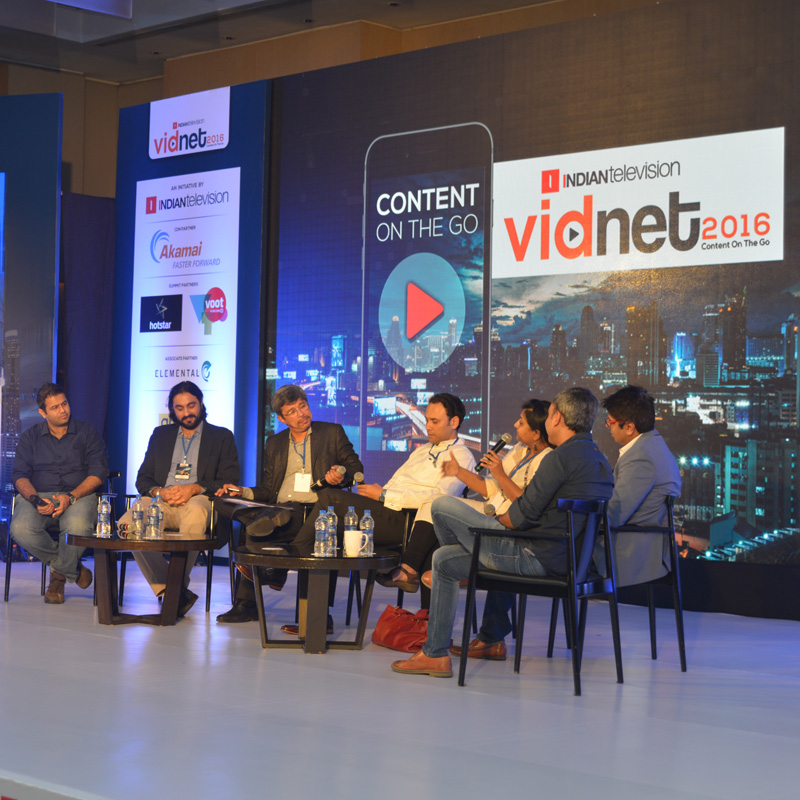
    MUMBAI: Perhaps the biggest challenge for programmers on online media is to define and segregate the online viewers who will take to OTT mediums in India.

    Following the presentation on OTT trends in the APAC region by Media Partners Asia executive director Vivek Couto at VidNet, this question expectedly assumed importance.

    Indian Television Dot Com’s founder CEO and editor in chief Anil Wanvari flagged off the discussion by asking Isobar India MD Shamsuddin Jasani to define who is a customer for him?

    “A person who is consuming digital content through any medium be it TV, mobile, YouTube, Facebook, etc is my customer. I would spend dollars on a person who is consuming content via digital platforms, what is he consuming, time spent on that piece of content,” said Jasani.

    Adding his perspective on defining a digital customer was FoxyMoron co-founder Suveer Bajaj. He seconded the definition of an OTT consumer and added that he was one who migrated to the digital medium. “I have come across consumers who are consuming three hours on digital. There is a very powerful change that we are seeing right now. These people are plunging on digital than TV.”

    Citing example from his own personal experience, Jasani highlighted how his 6-year old kid consumes around six to seven hours of video content on various platforms like Voot, YouTube, etc. He opined that this is a powerful change that he is witnessing from TV which happens through demand. Bajaj further added that it is not just on demand but also on the go.

    dittoTV business head Archana Anand strongly believed on the platform’s subscription model. Underlining the success of ditto TV’s campaign and aggressive pricing, Anand believed that she and her team had grown the pie by reaching out to people who are not internet savvy audience and is very clear on not getting content for free. “We have marked the people who perhaps are not typical OTT audience to whom TV is being provided at a subscription of Rs 20. There is a huge audience who is alien to OTT in India and we are trying to get them on board by handholding them throughout the entire procedure of getting our app by just a missed call.

    Arre co-founder Ajay Chacko was sure he did not intend to become an OTT platform. “The way we are defining our consumers is not just through access and comfort but by creating new forms of content to drive change.”

    Voot, the AVOD platform from Viacom18 which is often credited with bolstering kids and originals apart from content from the various channels falling under the network, has targeted their digital natives. Their Head marketing and partnerships Akash Banerji dissected consumers into different categories depending upon-access and comfort, demographics and content business offers.

    Discussing the first point, he explained that there are 180 million TV households in India with an average of at least two persons in every house, meaning 350 million subscribers on Internet who are not necessarily active users. “In India, we have 120 video consumers out of which 20-30 million are native digital who are consuming videos online. It is up to a platform whether they are targeting digital natives or getting internet consumers who are not consuming videos or are looking at growing the pie of digital.”

    The discussion went a notch up with the panelists enlightening the audience on the regional content that the content providers have created so far.

    Even the consumers come from varied backgrounds. At the base of the pyramid is the young, college or office going people who are mostly from the metropolitans. The older males and women who are consuming on mobile and desktop are not consuming high velocity content like the youth comprise the mid level. Banerji said that in the past 18-24 months, he has also seen consumers evolving from tier 2 and tier 3 markets primarily consuming content on mobiles. “Rural consumers which are about 200 million i.e 80 per cent of India are also coming up on board in the next few years.”

    Voot follows clear cut understanding of content and is leveraging on its popular content library of TV shows from market. Kids content and Voot originals are the other two important key factors for the platform. “Our Voot originals do not have to follow any format or template. They have to resonate with the consumers”, he added.

    Banerji strongly believes that it is a myth for any business to chase app download numbers. “The players should work on active users and the video watch time.”

    With the second most important driver being content, focusing on just the demographics is not enough. Yash Raj Films Head of content and development Nikhil Taneja said the digital audience is primarily between the ages of 18 to 34. “We are not targeted at providing entertainment to the audiences through effective storytelling and providing emotions through content.”

    He also spoke about the different gender differences by sharing some interesting statistics about the traction and viewership of YRF’s shows. The platform, being a YouTube channel, manages to get some revenue from their channel but also has various other ways to make money. “We launch our own talent and if that talent gets picked by an advertiser, we are benefitted. Our show Love Shots has been picked up by airlines. It is definitely early for advertisers to invest but that does not stop us from creating good quality content.”

    Adding to that, Jasani said, “The customers are agnostic in accessing content and consume digital data through Wi-fi and other services available to them. The offline viewing space is also brewing up rapidly in India. If we are putting an advertiser on every stage of digital consumption, there is no need for him to be on TV.” With various service providers launching 4G, Jasani opined that within 18 months the data is going to become cheap. “Adding to cheap data rates is the launch of smartphones for Rs 2,000 which is also going to grow in the future.”

    Banerji also shed light on how the viewing dynamics are changing and why that change is happening. “With consumers in control of what they consume and content being the king, the need for quality content is just going to grow. The illusion that most of us have on the content that can go on a digital platform has to be broken”.

    The panel discussion also concentrated on the discovery of content in various languages which is currently difficult. The players said they were collectively working on the challenge.

    One thing that all the panelists accepted was to keep innovating and experimenting with content.

    Anand spoke of how asked how she is facing a challenge from payment gateways as they are in English which majority of the Indians do not understand. “Even if there is a potential customer, he has to be guided to pay for my subscription and so.80 per cent of my potential subscribers cannot be captured.” She opined that all the players in the eco-system and various payment platforms have to think in this direction.

    But are there advertisers willing to get on board? Bajaj said that it is no more about ads but content. Selective content will attract specific advertisers.

    “Advertisers are squeamish to put money. We decide after evaluating how it will help the brand after a year. We are no more selling a product but brand through its content,” said Taneja.

    “We are not finicky about not putting ads on dittoTV. There is an ad replacement technology through which I can have two different ads on TV and digital for the same content,” added Anand.

    Jasani said the digital advertising pie is small as the major audience is not yet online. The consumers are not ready to pay for content but the fact that innumerable content creators are evolving cannot be sidelined. With both AVOD and SVOD having their own perks and challenges, there is no tangible answer that any player can provide currently.

    It is an exciting space where everyone is experimenting and innovating. The panel discussion concluded by citing that both the models will co-exist at least for 10 years down the line.


  • Decoding the Indian online video watchers remains an enigma

    Decoding the Indian online video watchers remains an enigma

    MUMBAI: Perhaps the biggest challenge for programmers on online media is to define and segregate the online viewers who will take to OTT mediums in India.

    Following the presentation on OTT trends in the APAC region by Media Partners Asia executive director Vivek Couto at VidNet, this question expectedly assumed importance.

    Indian Television Dot Com’s founder CEO and editor in chief Anil Wanvari flagged off the discussion by asking Isobar India MD Shamsuddin Jasani to define who is a customer for him?

    “A person who is consuming digital content through any medium be it TV, mobile, YouTube, Facebook, etc is my customer. I would spend dollars on a person who is consuming content via digital platforms, what is he consuming, time spent on that piece of content,” said Jasani.

    Adding his perspective on defining a digital customer was FoxyMoron co-founder Suveer Bajaj. He seconded the definition of an OTT consumer and added that he was one who migrated to the digital medium. “I have come across consumers who are consuming three hours on digital. There is a very powerful change that we are seeing right now. These people are plunging on digital than TV.”

    Citing example from his own personal experience, Jasani highlighted how his 6-year old kid consumes around six to seven hours of video content on various platforms like Voot, YouTube, etc. He opined that this is a powerful change that he is witnessing from TV which happens through demand. Bajaj further added that it is not just on demand but also on the go.

    dittoTV business head Archana Anand strongly believed on the platform’s subscription model. Underlining the success of ditto TV’s campaign and aggressive pricing, Anand believed that she and her team had grown the pie by reaching out to people who are not internet savvy audience and is very clear on not getting content for free. “We have marked the people who perhaps are not typical OTT audience to whom TV is being provided at a subscription of Rs 20. There is a huge audience who is alien to OTT in India and we are trying to get them on board by handholding them throughout the entire procedure of getting our app by just a missed call.

    Arre co-founder Ajay Chacko was sure he did not intend to become an OTT platform. “The way we are defining our consumers is not just through access and comfort but by creating new forms of content to drive change.”

    Voot, the AVOD platform from Viacom18 which is often credited with bolstering kids and originals apart from content from the various channels falling under the network, has targeted their digital natives. Their Head marketing and partnerships Akash Banerji dissected consumers into different categories depending upon-access and comfort, demographics and content business offers.

    Discussing the first point, he explained that there are 180 million TV households in India with an average of at least two persons in every house, meaning 350 million subscribers on Internet who are not necessarily active users. “In India, we have 120 video consumers out of which 20-30 million are native digital who are consuming videos online. It is up to a platform whether they are targeting digital natives or getting internet consumers who are not consuming videos or are looking at growing the pie of digital.”

    The discussion went a notch up with the panelists enlightening the audience on the regional content that the content providers have created so far.

    Even the consumers come from varied backgrounds. At the base of the pyramid is the young, college or office going people who are mostly from the metropolitans. The older males and women who are consuming on mobile and desktop are not consuming high velocity content like the youth comprise the mid level. Banerji said that in the past 18-24 months, he has also seen consumers evolving from tier 2 and tier 3 markets primarily consuming content on mobiles. “Rural consumers which are about 200 million i.e 80 per cent of India are also coming up on board in the next few years.”

    Voot follows clear cut understanding of content and is leveraging on its popular content library of TV shows from market. Kids content and Voot originals are the other two important key factors for the platform. “Our Voot originals do not have to follow any format or template. They have to resonate with the consumers”, he added.

    Banerji strongly believes that it is a myth for any business to chase app download numbers. “The players should work on active users and the video watch time.”

    With the second most important driver being content, focusing on just the demographics is not enough. Yash Raj Films Head of content and development Nikhil Taneja said the digital audience is primarily between the ages of 18 to 34. “We are not targeted at providing entertainment to the audiences through effective storytelling and providing emotions through content.”

    He also spoke about the different gender differences by sharing some interesting statistics about the traction and viewership of YRF’s shows. The platform, being a YouTube channel, manages to get some revenue from their channel but also has various other ways to make money. “We launch our own talent and if that talent gets picked by an advertiser, we are benefitted. Our show Love Shots has been picked up by airlines. It is definitely early for advertisers to invest but that does not stop us from creating good quality content.”

    Adding to that, Jasani said, “The customers are agnostic in accessing content and consume digital data through Wi-fi and other services available to them. The offline viewing space is also brewing up rapidly in India. If we are putting an advertiser on every stage of digital consumption, there is no need for him to be on TV.” With various service providers launching 4G, Jasani opined that within 18 months the data is going to become cheap. “Adding to cheap data rates is the launch of smartphones for Rs 2,000 which is also going to grow in the future.”

    Banerji also shed light on how the viewing dynamics are changing and why that change is happening. “With consumers in control of what they consume and content being the king, the need for quality content is just going to grow. The illusion that most of us have on the content that can go on a digital platform has to be broken”.

    The panel discussion also concentrated on the discovery of content in various languages which is currently difficult. The players said they were collectively working on the challenge.

    One thing that all the panelists accepted was to keep innovating and experimenting with content.

    Anand spoke of how asked how she is facing a challenge from payment gateways as they are in English which majority of the Indians do not understand. “Even if there is a potential customer, he has to be guided to pay for my subscription and so.80 per cent of my potential subscribers cannot be captured.” She opined that all the players in the eco-system and various payment platforms have to think in this direction.

    But are there advertisers willing to get on board? Bajaj said that it is no more about ads but content. Selective content will attract specific advertisers.

    “Advertisers are squeamish to put money. We decide after evaluating how it will help the brand after a year. We are no more selling a product but brand through its content,” said Taneja.

    “We are not finicky about not putting ads on dittoTV. There is an ad replacement technology through which I can have two different ads on TV and digital for the same content,” added Anand.

    Jasani said the digital advertising pie is small as the major audience is not yet online. The consumers are not ready to pay for content but the fact that innumerable content creators are evolving cannot be sidelined. With both AVOD and SVOD having their own perks and challenges, there is no tangible answer that any player can provide currently.

    It is an exciting space where everyone is experimenting and innovating. The panel discussion concluded by citing that both the models will co-exist at least for 10 years down the line.

  • Asian Paints Ezycolour  urges people to live in harmony with its new campaign

    Asian Paints Ezycolour urges people to live in harmony with its new campaign

    MUMBAI: Asian Paints Ezycolour Home Solutions unveiled a new campaign to create awareness about its newly launched Green Painting Service (GPS), an eco-friendly water based paints range for all surfaces.


    The campaign conceived by digital advertising agency FoxyMoron, spreads the message of living in harmony with nature and encourages people to ‘Think Different’.


    To bring the message to life, the campaign was planned and executed in two phases. In the first phase, three locations in Mumbai with high visibility were shortlisted to create one-of-a-kind murals that had nature as part of the street art.


    The second leg of the campaign took the offline initiative online with a film that captures the stories of the three artists and why they chose art as a way of life.


    Speaking more about the campaign, Asian Paints, group brand manager- services Aupam Kumar said, “Asian Paints has been a pioneer in the paint industry in developing better and safer products for consumers. Eco-friendly and water- based paints have long been considered the future of paint technology. The day has come where this future has definitely arrived with the launch of Green Painting Service by Asian Paints Ezycolour Home Solutions.”


    “For the first time, customers will get the opportunity to have water-based paints applied on all surfaces in their homes. This makes home painting a great experience and helps our customers live in harmony with nature, as well. With an aim to give back to nature, we have taken up an initiative to paint the Mumbai streets green with our products and communicate the message of migrating towards a “Green world” to everyone. This is just the beginning and we would like to do more on this front in the future.”


    FoxyMoron co-founder Suveer Bajaj said, “Ezycolour Home Solutions treats each home as a piece of art, so we thought why not use that to spread the message of living in harmony with nature! Our idea was to take the message to the streets through murals that evolved and revolved around nature and then further leverage this online through a heartfelt film. The film adds another dimension to the campaign with its captivating storytelling and aesthetics. We hope that the concept of nature and art resonates with the consumers and helps Asian Paints amplify the message that all beauty comes from our planet and what we do to spread this beauty can now be given back to nature.”

  • FoxyMoron expands footprint; launches Bangalore office

    FoxyMoron expands footprint; launches Bangalore office

    MUMBAI: Digital marketing agency FoxyMoron has expanded its footprint in India by opening a new office in Bangalore.


    The agency’s Bangalore ops will offer a robust suite of digital marketing services to meet the needs of the evolving market.


    Founded in 2008, FoxyMoron set up its first office in Mumbai and extended its footprints to Gurgaon in 2013. With a talent pool of over 250 people across both the offices, the agency has created many award winning digital campaigns.


    FoxyMoron Media Operations co-founder & director Suveer Bajaj said, “With a thriving industry scenario as well as advancing media and technology in Bangalore, it was a logical step for us to open an office here. We have been serving a couple of Bangalore based clients out of our Mumbai office and felt that the city can open up many more doors for us. With a gamut of exciting opportunities that Bangalore offers, we’re looking forward to expanding our client base here and at the same time building our own capabilities. We’ve also started putting together a robust team in place and have set the ball rolling.”

  • Maybelline New York India adds Bollywood drama with digital campaign #SwipeToSpice

    Maybelline New York India adds Bollywood drama with digital campaign #SwipeToSpice

    MUMBAI: To drive engagements around the recently launched Baby Lips Spiced Up range, Maybelline New York India has launched the #SwipeToSpice campaign. The campaign is conceptualised and executed by digital marketing agency- FoxyMoron.


    With the #SwipeToSpice campaign, Maybelline New York India is asking girls to Swipe with Baby Lips Spiced Up and then spice it up with their favourite Bollywood dialogues. The campaign launched with an exciting video, invites girls to share their ‘Spiced up’ videos via different social media platforms. 


    Maybelline New York India is also leveraging Whatsapp to invite entries. The campaign will be promoted across Facebook, Twitter, YouTube and Instagram. Key influencers and bloggers will also send in their entries and encourage their followers as well.


    At the end of the campaign, a crowd-sourced video will be created by compiling all the spiced up videos sent by the fans. 


    On the new campaign, Maybelline New York India general manager – marketing Pooja Sahgal commented, “Maybelline is a brand known for unique ways of engaging its powerful online community. With the launch of Baby Lips Spiced Up, an exclusive range created for Indian skin tones, we decided to engage fans with something all Indians love and can relate to – Bollywood. With a community like ours, we’re sure to make this as one of our most engaging campaigns for the brand.”


    FoxyMoron co-founder and director – media operations Suveer Bajaj said, “The new Baby Lips Spiced Up proposition is especially created to suit the Indian skin tone and appeals to the Indi pop generation. Taking this into account, we integrated a Bollywood element to the #SwipeToSpice campaign, as it goes well with the fans. The message is simple- swipe the new Baby Lips Spiced Up to add the spice of Bollywood in your life.”

  • FoxyMoron bags the digital duties of &TV

    FoxyMoron bags the digital duties of &TV

    MUMBAI: FoxyMoron has bagged the digital marketing duties of the yet-to-be-launched Hindi general entertainment channel (GEC) – &TV.


    To be launched from the Zee Entertainment Enterprises Ltd (Zeel) stable, the mandate comprises managing the channel’s presence on social media platforms including Facebook, Twitter, Google+, Instagram and YouTube. The account was won following a multi-agency pitch.


    FoxyMoron co-founder Suveer Bajaj said that this win established its foothold in the television entertainment industry and also brings along the creative opportunity to build an entirely new brand. “As a digital partner, it will be our aim to make the channel scale from the very beginning. With soaring engagement for brands in the entertainment industry, we have great aspirations for this new channel,” he said.


    FoxyMoron will work towards creating and executing content revolving around the central belief of the channel – Jashn Jeene Ka (celebrating the spirit of living). It will also create programme-specific content for their flagship shows in order to utilize the ever growing populace of the digital space.

  • Online & mobile advertising service tax levy: Industry says ouch!

    Online & mobile advertising service tax levy: Industry says ouch!

    MUMBAI: Budget 2014 brought with it the announcement that the 12.36 per cent service tax would be levied on online and mobile advertising also. These two were earlier exempt from the levy which was applicable to advertising on television. Finance minister Arun Jaitley, however, chose to continue to keep the much larger print media sector out of the tax net. Service tax on advertising on TV had been hiked to 12 per cent (plus 3 per cent sucharge) from 10 per cent in 2012, by the then government. The new levy will come into effect from a date to be notified after the passing of the Finance Bill.


    Indiantelevision.com spoke to digital agency heads to check out whether they were ok with the inclusion of online and mobile advertising under the service tax umbrella.


    “Okay to be on par with others”

    Online marketing and ad agency Pinstorm Technologies  founder & CEO Mahesh Murthy doesn’t think that it is a big issue. “We are now a grown-up industry and though the tax that’ll be mopped up here will be just around Rs 500 crore, I’m okay with us being treated on par with taxes on broadcast,” says Murthy.


    “The grey area here is what exactly constitutes advertising in the online world. Is a Facebook post by a brand an ad? What about a tweet by an influencer? What about native content-driven solutions being used by sites like Buzzfeed? I believe the definition of what exactly constitutes digital and mobile advertising would help a lot. Right now there isn’t any clarity,” observes Murthy.


    It can be noted that all agencies were charging service tax as it was in non-exempt category. Only recently it was moved to the exempt category.


    Online digital agency ibs MD Sabyasachi Mitter thinks the industry will be going back to how things were a little over a year back.


    “At the agency the billing complication is reduced as we don’t need to raise different bills for media cost and commission. Also, reconciliation becomes easier. For most clients who take input credit it will also not be a big deal. What will happen is for clients who release pay orders for all inclusive budgets, the spendable value will go down, ” mentions Mitter.


    Vdopia APAC VP Preetesh Chouhan says bringing online advertising in the service tax ambit will help digital players understand whether the medium has arrived or not.


    “As a video advertising company, our numbers show that we are witnessing an amazing organic growth of both online and mobile audiences and this is not going to change. So my opinion is that tax levied will not affect how brands are allocating spends on digital media. It could be a good opportunity to see if we have made the final transition from niche to mainstream advertising,” says Vdopia VP-APAC Preetesh Chouhan.


    “Time to re look at online advertising budgets”


    Digital L&K Saatchi & Saatchi CEO and managing partner Anil Nair expected this to happen.


    According to him it will mean that brand managers and media companies will have to relook at their online budgets and account for accommodating the service tax component now given that their overall budgets are already fixed.


    “It may augur well for social media though as monies could be diverted into content, apps etc. While online display will see a marginal cut back for a couple of quarters till it picks up again,” says Nair.


    “While some sections of the industry are not happy with the online and mobile advertising being included under the service tax, we believe that the philosophy of pruning the negative list in order to promote GST in the industry, is in the right direction and thus inclusion of such services in the taxation is a small price to pay in the short-term,” said PricewaterhouseCoopers leader- entertainment & media practice India Smita Jha.


    Foxymoron co-founder Suveer Bajaj believes the finance minister’s decision is likely to have a negative  impact as most brands and large corporations have already budgeted their online media spends for the year.


    “This would imply that these marketing and advertising budgets would eventually get undercut. Owing to the fact that, online and digital advertising in India is fairly nascent, this move might discourage new entrants to the industry and allocation of spends towards digital marketing. The speedy rate at which the industry was evolving now faces a setback,” adds Bajaj.


    Bajaj, however, says the budgetary initiative to set aside  close to Rs 500 crore for the digital India programme to ensure connectivity at the grass-root level is laudable. “Brands and organisations on digital will now also focus on the rural markets, if they haven’t already so through the online mediums. Going forward, there will be a paradigm shift in the communication and marketing strategies by digital and technology agencies to specifically target this new audience by including unique and innovative rural marketing campaigns,” he opines.


    HDFC Life senior executive VP marketing Sanjay Tripathy thinks this move will have an impact on the growth of this medium. He also states that this might lead to cut down on marketing spends in the coming days.


    According to Future Group president (customer strategy) and CEO (Bengal warriors & T24) Sandip Tarkas the announcement is a bit of a hit but not a surprise. “As we move towards a GST regime, this anomaly had to be removed. This also reflects the growing size of online ad market which is large enough to be taxed,” says Tarkas.


    Industry leader and Hungama Digital Media Entertainment MD & CEO Neeraj Roy speaks for the entire online industry in this comment he sent out to publications.  “The aspect of bringing back online advertising into the service tax ambit, whilst it is still a fledgling segment, is almost a conflicting action and not a welcome move.”