Tag: Sustainable Development Goals

  • Global Standards Symposium 2024 concludes, paving way for digital progress

    Global Standards Symposium 2024 concludes, paving way for digital progress

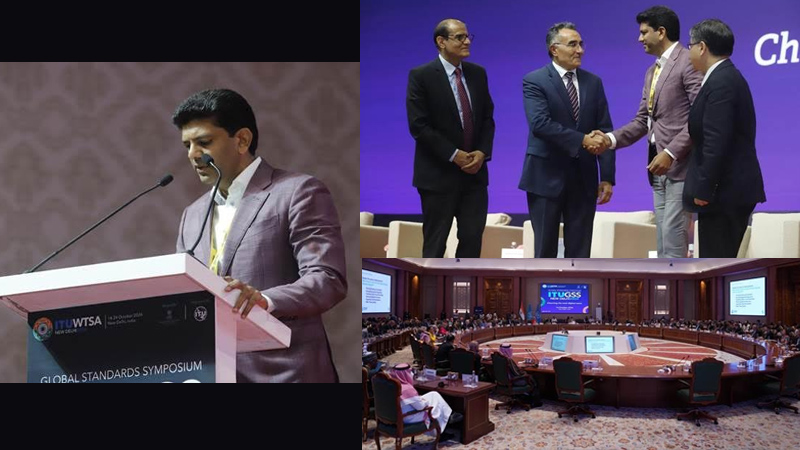
    Mumbai: The fifth Global Standards Symposium (GSS-24) wraps up in New Delhi, making history as the first time the event has been held in the Asia-Pacific region. Organised by the International Telecommunication Union (ITU) and hosted by the Department of Telecommunications, Government of India, GSS-24 gathers a record 1,500 policymakers, innovators, and experts to chart the future of digital transformation. The event emphasises the critical role of international standards in enabling emerging technologies to drive sustainable global development.  

    Minister of state for communications and rural development, Chandra Sekhar Pemmasani delivers a closing address lauding India’s transformation under prime minister Narendra Modi’s leadership. “The standards we establish are more than just technical standards, but they are moral compasses, guiding us towards a future of shared global progress. India is ready to take this journey not alone, but with all of you as partners,” Pemmasani states, advocating for an inclusive, democratic approach to international standards.  

    The symposium’s theme, “Charting the Next Digital Wave: Emerging Technologies, Innovation, and International Standards,” highlights the need for cohesive, forward-looking governance and standardisation in digital technologies. It serves as a platform for high-level dialogues on crucial issues like AI governance, open-source technologies, blockchain-based authentication, and the impact of AI and the Metaverse on public services.  

    Union minister Jyotiraditya M. Scindia underscores India’s role as a global telecommunications and digital innovation hub. He describes India as “a land of science, innovation, and rules aiding in the prosperity of the world.”  

    The key discussions focus on bridging the standards gap between developed and developing countries, emphasising equitable access to technology for all. The AI Standards Summit, held as part of GSS-24, illustrates how consensus-based standards can ignite innovation across multiple sectors, driving technological advancements.  

    Centre for Development of Telematics (C-DoT), CEO, Rajkumar Upadhyay chairs the symposium, marking India’s first time leading the event. The symposium’s outcome document lays the groundwork for discussions at the World Telecommunication Standardisation Assembly (WTSA-24), taking place from 15-24 October 2024, in New Delhi.  

  • India lags in fixed broadband, but ahead in mobile: ESCAP

    India lags in fixed broadband, but ahead in mobile: ESCAP

    NEW DELHI: India had just over 100 million fixed broadband subscriptions in 2015 as compared to Iran and Japan which had more than 250 million.

    There were only 1.3 fixed broadband subscribers per 100 inhabitants in the country as against South Korea which had 40.2 per 100 inhabitants and China and Hong Kong which had 31.9. India stood at the 40th place, even below its immediate neighbours Bangladesh and Sri Lanka.

    However, a map of fixed broadband subscriptions per 100 inhabitants in Asia and the Pacific in 2015 shows India as the most developed country in this regard.

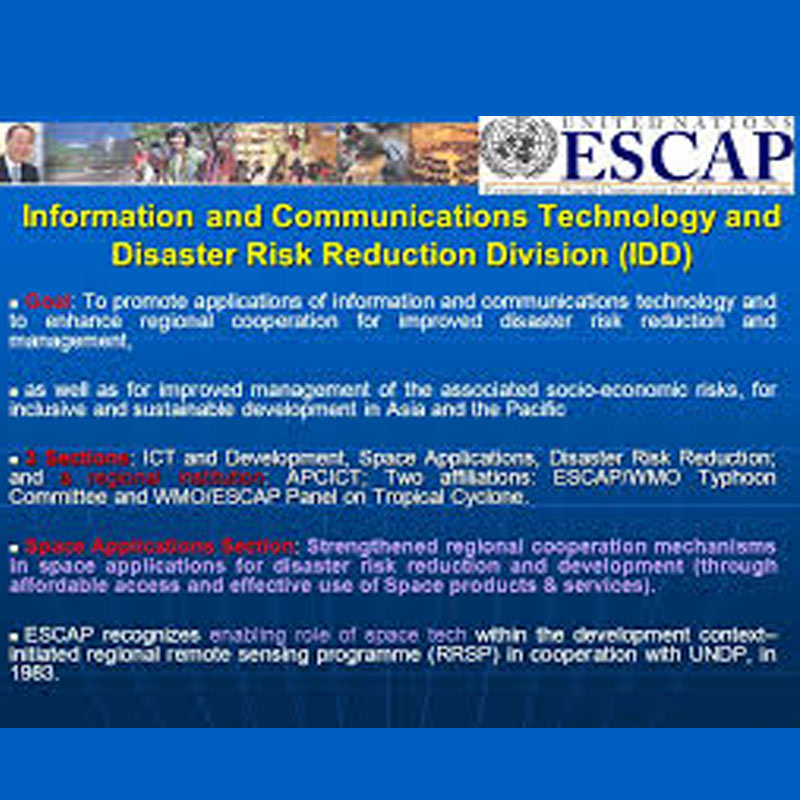
    These facts were revealed by the State of ICT in Asia and The Pacific 2016 Report by the Information and Communications Technology and Disaster Risk Reduction Division of the United Nations Economic and Social Commission for Asia and the Pacific (ESCAP).

    South and South-West Asia, Sri Lanka, Turkey, India and the Islamic Republic of Iran progressed well in both online services and telecommunications infrastructure development between 2008 and 2014. Other countries such as Bangladesh and Maldives performed well predominantly in the development of the telecommunications infrastructure.

    India has risen from just under 4 to around 5.5 out of seven in online services index among South Asian countries between 2008 and 2014.

    India was also among the top active mobile broadband subscriptions per 100 inhabitants in the Asia-Pacific region in 2015 with 120 million subscribers in 2015, the study showed.
    Disaster Risk Reduction Division.

    In 2015, China announced the One Belt One Road (OBOR) initiative, based on six economic corridors corresponding to the Silk Road. These economic corridors (China-Mongolia-Russia Corridor; New Eurasia Land Bridge; China-Central Asia-West Asia; China-Pakistan; Bangladesh-China-India-Myanmar; and China-Indochina Economic Corridor) aim to promote connectivity of these economies with China through infrastructure, trade and investment based on the original Silk Road’s pathway.

    The Global NGO Online Technology Report found that there are diverse regional differences in how NGOs worldwide utilize online technology. Within Asia Pacific, the report notes that the NGOs’ use of online technology varies greatly from subregion to subregion. For instance, India has hundreds of thousands of NGOs likely to come online in the next five years, while internet access throughout South-East Asia is growing as smartphone sales soar across the country. In Australia and Oceania, Europe and North America, NGOs’ use of web and e-mail communications, online fundraising tools, and social media is high, but NGOs in Asia, Africa and Latin America lag behind.

    Lack of a robust internet infrastructure is suggested to be a potential cause for this NGO divide. The report remarks that social, economic and political factors have either hastened or hindered the development of the infrastructure, and thereby also the uptake by the NGO sector.

    In a discussion on net neutrality, the paper says “Free Basics, formerly known as Internet.org, has sparked discussions in India and is one such case of net neutrality. This initiative pursues telecom companies in emerging markets, such as India — the world’s second largest market — to provide their customers free access to Facebook and entailing websites willing to play by its rule.”

    TechCrunch notes that these Facebook rules make it difficult to build competing social network or messaging applications. In February 2016, the Telecom Regulatory Authority of India (Trai) announced the prohibition of internet services such as Free Basics, claiming that they offer discriminatory tariffs for data services on the basis of content. While this may be a victory for neutrality supporters, others might be disappointed with the outcome as the goal of the Facebook initiative is to connect people who may otherwise not have internet access. The ruling will be in place for two years but may be open for review — it is still an open question whether the project will succeed in the long term.”

    The competition for spectrum has significant impact on the cost and affordability associated with broadband networks and access. As observed in the cases of the recent fourth generation (4G) spectrum auctions in India and Thailand, the quests for bandwidth and frequency would intensify along with the demand for mobile access and services, and subsequent need for more extensive broadband infrastructure.

    The report says Asia-Pacific countries are expanding their investments in the ICT infrastructure. For instance, in July 2015, the Chinese State Council announced the plan to develop underground telecommunication networks connecting 10 cities, which will be funded by the USD 160 billion bond programme designed for infrastructure projects.

    A mobile operator in India announced its plan to invest USD 9 billion for their mobile broadband network expansion in the next three years.

    Maldives will soon have USD 25 million nationwide fibre optic submarine networks of 1,200 kilometres to provide high-bandwidth services throughout the island nation. A mobile operator in Brunei announced plan for a nationwide Wi-Fi network rollout through more than 60 hotspots.

    The report found that connectivity still constrains not only ICT development but also various socioeconomic development opportunities. For instance, an UNCTAD report found that despite the unparalleled promise of the digital economy, the main barrier to B2C transactions in Asia and the Pacific appear to be the low internet penetration, the relatively poor postal reliability, and the low number of secure servers, which are essential for online shopping sites.

    China has demonstrated an exponential increase in fixed and mobile broadband, while slowest growths have been detected among LDCs, LLDCs and SIDs. The persistent challenge is that one-third of ESCAP member-countries have made only negligible progress over the last 15 years. In these countries, broadband access is still largely unavailable and unaffordable, while the gap as compared to the fast-growing economies is widening. Some sub-regions, such as Central Asia, seem to have made more holistic progress. The report also conducted descriptive statistical analysis using standard deviation on fixed broadband subscriptions per 100 inhabitants so as to statistically understand the digital divide.

    The results showed that Europe is the only region that has demonstrated a reduction in the broadband digital divide, while in Asia and the Pacific, it
    is in fact widening.

    Despite the increasing spotlight on newer technologies such as the IoT that aims to connect millions of devices and machines worldwide, the region still suffers from the lack of ICT connectivity, and mobile devices are mainly used for communication and entertainment.

    The report found that some countries have focused on broadband access expansion over online content and service development, but, in the long run, both infrastructure and content should be developed in tandem. The telecommunications investment seems to co-relate with fixed broadband subscriptions more strongly than with mobile broadband, indicating the investment-intensive nature of the fixed broadband infrastructure, which is a prerequisite for e-commerce.

    The report also found that weak regulatory framework might be associated with slow broadband growth.

    Regional broadband initiatives, such as the Asia-Pacific Information Superhighway, have become an essential and strategic development intervention that will shape the future of the region, the report concludes.

  • India lags in fixed broadband, but ahead in mobile: ESCAP

    India lags in fixed broadband, but ahead in mobile: ESCAP

    NEW DELHI: India had just over 100 million fixed broadband subscriptions in 2015 as compared to Iran and Japan which had more than 250 million.

    There were only 1.3 fixed broadband subscribers per 100 inhabitants in the country as against South Korea which had 40.2 per 100 inhabitants and China and Hong Kong which had 31.9. India stood at the 40th place, even below its immediate neighbours Bangladesh and Sri Lanka.

    However, a map of fixed broadband subscriptions per 100 inhabitants in Asia and the Pacific in 2015 shows India as the most developed country in this regard.

    These facts were revealed by the State of ICT in Asia and The Pacific 2016 Report by the Information and Communications Technology and Disaster Risk Reduction Division of the United Nations Economic and Social Commission for Asia and the Pacific (ESCAP).

    South and South-West Asia, Sri Lanka, Turkey, India and the Islamic Republic of Iran progressed well in both online services and telecommunications infrastructure development between 2008 and 2014. Other countries such as Bangladesh and Maldives performed well predominantly in the development of the telecommunications infrastructure.

    India has risen from just under 4 to around 5.5 out of seven in online services index among South Asian countries between 2008 and 2014.

    India was also among the top active mobile broadband subscriptions per 100 inhabitants in the Asia-Pacific region in 2015 with 120 million subscribers in 2015, the study showed.
    Disaster Risk Reduction Division.

    In 2015, China announced the One Belt One Road (OBOR) initiative, based on six economic corridors corresponding to the Silk Road. These economic corridors (China-Mongolia-Russia Corridor; New Eurasia Land Bridge; China-Central Asia-West Asia; China-Pakistan; Bangladesh-China-India-Myanmar; and China-Indochina Economic Corridor) aim to promote connectivity of these economies with China through infrastructure, trade and investment based on the original Silk Road’s pathway.

    The Global NGO Online Technology Report found that there are diverse regional differences in how NGOs worldwide utilize online technology. Within Asia Pacific, the report notes that the NGOs’ use of online technology varies greatly from subregion to subregion. For instance, India has hundreds of thousands of NGOs likely to come online in the next five years, while internet access throughout South-East Asia is growing as smartphone sales soar across the country. In Australia and Oceania, Europe and North America, NGOs’ use of web and e-mail communications, online fundraising tools, and social media is high, but NGOs in Asia, Africa and Latin America lag behind.

    Lack of a robust internet infrastructure is suggested to be a potential cause for this NGO divide. The report remarks that social, economic and political factors have either hastened or hindered the development of the infrastructure, and thereby also the uptake by the NGO sector.

    In a discussion on net neutrality, the paper says “Free Basics, formerly known as Internet.org, has sparked discussions in India and is one such case of net neutrality. This initiative pursues telecom companies in emerging markets, such as India — the world’s second largest market — to provide their customers free access to Facebook and entailing websites willing to play by its rule.”

    TechCrunch notes that these Facebook rules make it difficult to build competing social network or messaging applications. In February 2016, the Telecom Regulatory Authority of India (Trai) announced the prohibition of internet services such as Free Basics, claiming that they offer discriminatory tariffs for data services on the basis of content. While this may be a victory for neutrality supporters, others might be disappointed with the outcome as the goal of the Facebook initiative is to connect people who may otherwise not have internet access. The ruling will be in place for two years but may be open for review — it is still an open question whether the project will succeed in the long term.”

    The competition for spectrum has significant impact on the cost and affordability associated with broadband networks and access. As observed in the cases of the recent fourth generation (4G) spectrum auctions in India and Thailand, the quests for bandwidth and frequency would intensify along with the demand for mobile access and services, and subsequent need for more extensive broadband infrastructure.

    The report says Asia-Pacific countries are expanding their investments in the ICT infrastructure. For instance, in July 2015, the Chinese State Council announced the plan to develop underground telecommunication networks connecting 10 cities, which will be funded by the USD 160 billion bond programme designed for infrastructure projects.

    A mobile operator in India announced its plan to invest USD 9 billion for their mobile broadband network expansion in the next three years.

    Maldives will soon have USD 25 million nationwide fibre optic submarine networks of 1,200 kilometres to provide high-bandwidth services throughout the island nation. A mobile operator in Brunei announced plan for a nationwide Wi-Fi network rollout through more than 60 hotspots.

    The report found that connectivity still constrains not only ICT development but also various socioeconomic development opportunities. For instance, an UNCTAD report found that despite the unparalleled promise of the digital economy, the main barrier to B2C transactions in Asia and the Pacific appear to be the low internet penetration, the relatively poor postal reliability, and the low number of secure servers, which are essential for online shopping sites.

    China has demonstrated an exponential increase in fixed and mobile broadband, while slowest growths have been detected among LDCs, LLDCs and SIDs. The persistent challenge is that one-third of ESCAP member-countries have made only negligible progress over the last 15 years. In these countries, broadband access is still largely unavailable and unaffordable, while the gap as compared to the fast-growing economies is widening. Some sub-regions, such as Central Asia, seem to have made more holistic progress. The report also conducted descriptive statistical analysis using standard deviation on fixed broadband subscriptions per 100 inhabitants so as to statistically understand the digital divide.

    The results showed that Europe is the only region that has demonstrated a reduction in the broadband digital divide, while in Asia and the Pacific, it
    is in fact widening.

    Despite the increasing spotlight on newer technologies such as the IoT that aims to connect millions of devices and machines worldwide, the region still suffers from the lack of ICT connectivity, and mobile devices are mainly used for communication and entertainment.

    The report found that some countries have focused on broadband access expansion over online content and service development, but, in the long run, both infrastructure and content should be developed in tandem. The telecommunications investment seems to co-relate with fixed broadband subscriptions more strongly than with mobile broadband, indicating the investment-intensive nature of the fixed broadband infrastructure, which is a prerequisite for e-commerce.

    The report also found that weak regulatory framework might be associated with slow broadband growth.

    Regional broadband initiatives, such as the Asia-Pacific Information Superhighway, have become an essential and strategic development intervention that will shape the future of the region, the report concludes.

  • Freedom of information and media needed for new UN global development goals

    Freedom of information and media needed for new UN global development goals

    NEW DELHI: The Global Forum for Media Development (GFMD) has welcomed UN secretary general Ban Ki-Moon’s endorsement of guarantees for freedom of information and media in the UN’s next set of global development goals.


    In his long-waited “synthesis” report on the UN’s post-2015 development agenda, presented to the General Assembly in New York, the secretary general said “press freedom, access to information and freedom of expression” are essential “enablers of sustainable development.”


    The Secretary General’s report urged the adoption in 2015 of the 17 new Sustainable Development Goals proposed by a 70-nation General Assembly working group, which includes a commitment by all countries to ensure public access to information and the protection of “fundamental freedoms” guaranteed by UN human rights treaties.  The proposed goals also include commitments to the complete eradication of extreme hunger and poverty, strong new global environmental protection measures, the elimination of deaths from preventable diseases, and the fulfillment of past pledges on gender equality and universal childhood education.

    Over the past year, a civil society coalition of national, regional and international press freedom and media development organisations led by GFMD and London-based Article 19 has been advocating for the inclusion of commitments to freedom of information and media in the UN’s new global goals.  

    “We have been saying for some time that a free press and open access to information of all kinds are essential to achieving these goals, and it is very encouraging to see that the Secretary General shares that view,” said GFMD chairman Leon Willems in a statement from Brussels.   

    The secretary general’s report today echoed civil society calls for post-2015 commitments to freedom of information and media both as crucial rights-based ends in themselves and as practical necessities for monitoring progress towards all the proposed new goals.  His report noted that the UN’s advisors on the “data revolution” required for tracking and achieving the post-2015 goals have “underscored the importance of increasing access to quality data, remedying inequalities in the areas of access to information, data literacy, promoting civic space and enhancing the sharing of data and information.”

    A free flow of public information and independent debate and analysis in media and civil society would also be required for the secretary general’s proposed annual “participatory, multi-stakeholder, and, importantly, universal review” of progress towards the new goals, under the auspices of a new “high-level political forum (HLPF)” at the United Nations.

    “Press freedom and access to information, freedom of expression, assembly and association are enablers of sustainable development,” the report says.