Tag: Sushma Swaraj

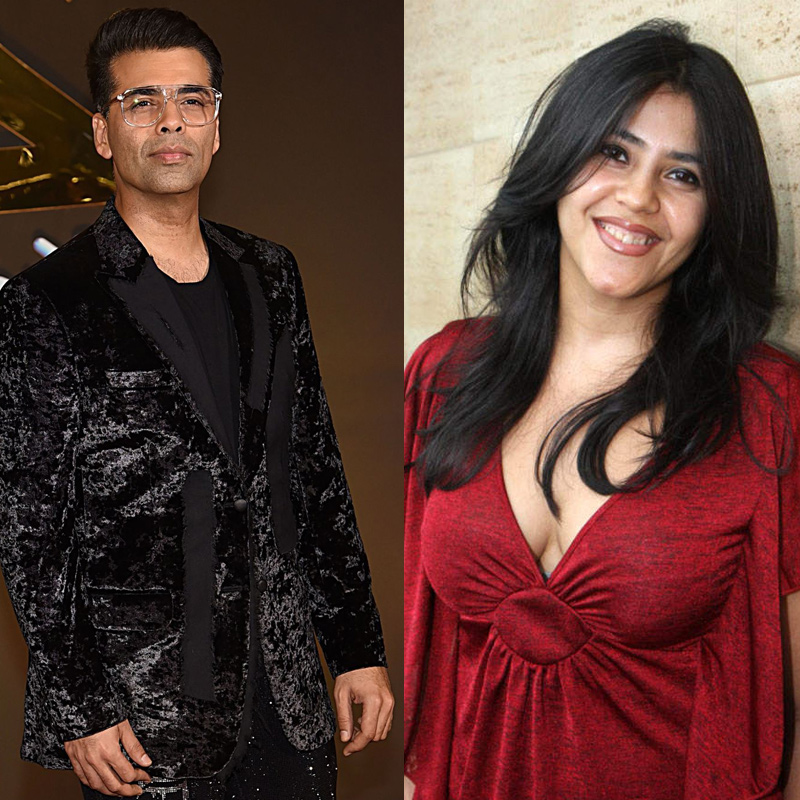
  • Ekta Kapoor, Karan Johar, Anand Mahindra to receive Padma Awards

    Ekta Kapoor, Karan Johar, Anand Mahindra to receive Padma Awards

    MUMBAI: This year’s Padma awardee list is out. And it has quite a few worthy individuals on whom the Home Ministry is conferring various Padma Awards  – right from Padma Vibhushan to the Bhushan to the Shri.

    TV Czarina Ekta Kapoor, family drama producer and director Karan Johar, actor Kangana Ranaut, singer Suresh Wadkar, sitarist Manilal Nag, folk musician Anwar Khan Mangniyar, Gujarat theatre artist Yazdi Naoshirwan Karanjia, folk singer Shanti Jain, folk singer Madhu Mansuri Hasmukh, Sambalpuri lyricist Mitrabhanu Gountia, puppetry artist Yadla Gopalarao, musician Madan Singh Chauhan, Info Edge founder  Sanjeev Bikhchandani, Surya Roshini chairman Jai Prakash Agarwal, singer Adnan Sami and Sarita Joshi have been conferred the Padma Shri for their distinguished contribution in the fields of art and business.

    Anand Mahindra and TVS group boss Venu Srinivasan are two industrialists who are to be conferred the Padma Bhushan for their distinguished service of a high order to the nation and society.

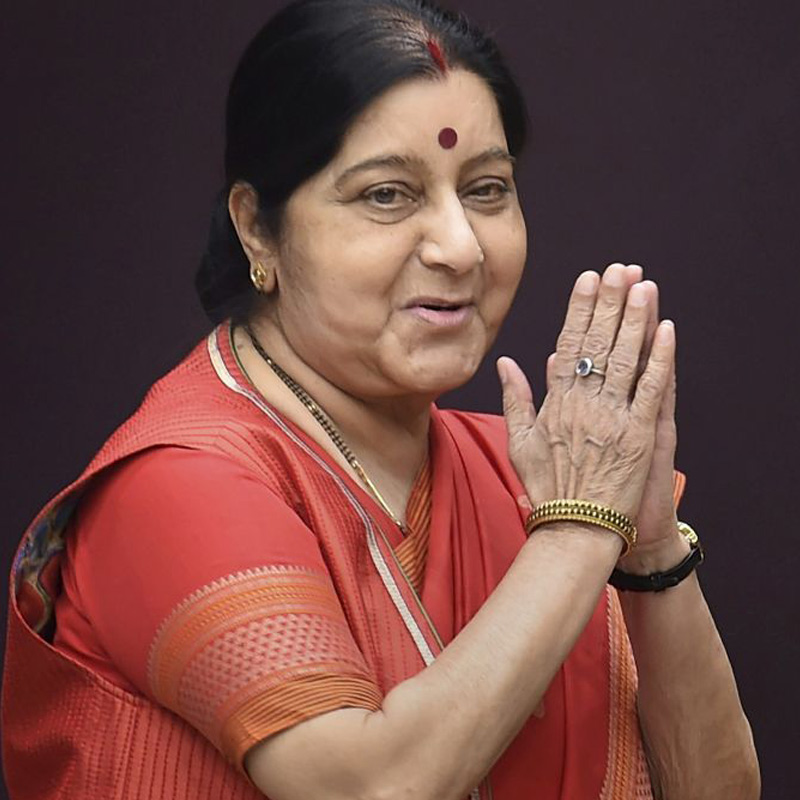
    Boxer Mary Kom is being recognised with the highest civilian honour – the Padma Bhushan. Others who have been listed to receive the same award include: Sushma Swaraj, Arun Jaitley, George Fernandes, Mauritian Anerood Jugnauth, Channulal Misra and Vishveshateertha Swamiji Pejavara Adhokhaja Matha Udupi.

    The awards will be given away later this year.

  • Sushma Swaraj will be remembered as one of the most efficient I&B ministers of India

    Sushma Swaraj will be remembered as one of the most efficient I&B ministers of India

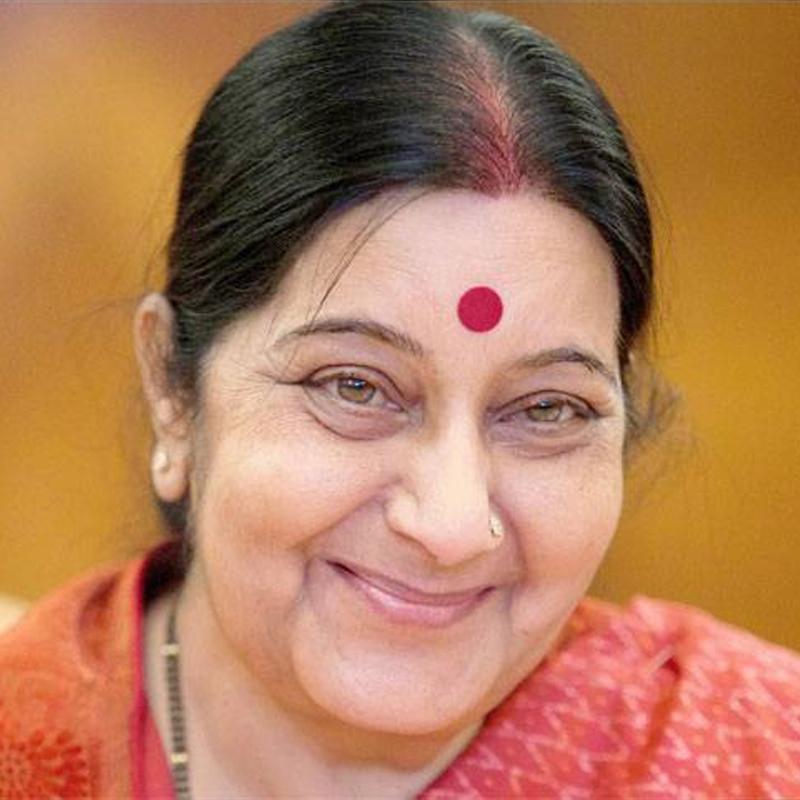
    MUMBAI: It was a sad day for Indian politics, yesterday, as one of the most vibrant politicians of her time succumbed to a heart attack. Senior BJP leader Sushma Swaraj will be remembered as one of the greatest orators and one of the most efficient Minister of External Affairs that the Union of India has had. Her presence on Twitter during her tenure as MEA in the previous government had also got her a lot of praise.

    But Swaraj, before becoming the MEA in the 2014-2019 government had a very interesting political career, and her role as Union Minister of Information and Broadcasting (I&B), between 2000 and 2003, will remain one of the key highlights of it.

    One of her biggest achievements as I&B minister was passing of (Conditional Access System) CAS Bill in 2002, which made it mandatory for consumers to install a set-top box allowing them to pay for only those channels that they want to watch. The maximum price for the basic tier of service comprising free-to-air channels would be determined by the government under the bill.

    Also, it was under her tenure as I&B minister that the Indian entertainment sector, including films, was declared as an industry, making it eligible to get loans from financial institutions.

    She also actively batted for the introduction of FDI in Indian publications, which none of her predecessors spoke of after it was banned in 1955. She had said in the year 2002 that with the introduction of the internet, the government is planning to look into the matter.

    Swaraj had also held the post of Minister of Information, Broadcasting, and Telecommunications for a short term between March 1998 and October 1998.

    She breathed her last in national capital Delhi on 6 August following a cardiac arrest.

  • Educational institutions to have own radio stations

    Educational institutions to have own radio stations

    NEW DELHI: India’s Union Cabinet yesterday approved a proposal to allow universities, technical institutes like the Indian Institutes of Technology and the business management schools like the Indian Institutes of Management to set up their own FM radio stations.

    The proposal, as reported by indiantelevision a few months ago, allows such educational organisations as also residential schools to have FM radio stations of their own with a maximum range of five kilometres.

    This, the government says, would allow educational institutes to reach out to their closed community in a better fashion and that too at not a very high cost. A typical such FM radio station project, including programming, would cost around Rs. 10,00,000.

    Unlike in the privatisation of the FM radio sector where players bid for the licence in some cities of the country — at times going overboard and bidding too high — the universities and schools would not be needed to pay a licence fee

    According to information and broadcasting minister Sushma Swaraj, here only a fee would have to be paid for the spectrum to the wireless planning co-ordinator. She also said that rules would be framed, but by and large the FM radio stations of educational institutes would be guided by the programming code of pubcaster All India Radio.

    When contacted, a senior functionary of Delhi University, with affiliated colleges, spread all over the city, said such FM radio stations would prove to be of immense use to spread various news and information regarding the university, especially during admission and exam time.

  • Educational institutions to have own radio stations

    Educational institutions to have own radio stations

    NEW DELHI: India’s Union Cabinet yesterday approved a proposal to allow universities, technical institutes like the Indian Institutes of Technology and the business management schools like the Indian Institutes of Management to set up their own FM radio stations.

    The proposal, as reported by indiantelevision a few months ago, allows such educational organisations as also residential schools to have FM radio stations of their own with a maximum range of five kilometres.

    This, the government says, would allow educational institutes to reach out to their closed community in a better fashion and that too at not a very high cost. A typical such FM radio station project, including programming, would cost around Rs. 10,00,000.

    Unlike in the privatisation of the FM radio sector where players bid for the licence in some cities of the country — at times going overboard and bidding too high — the universities and schools would not be needed to pay a licence fee

    According to information and broadcasting minister Sushma Swaraj, here only a fee would have to be paid for the spectrum to the wireless planning co-ordinator. She also said that rules would be framed, but by and large the FM radio stations of educational institutes would be guided by the programming code of pubcaster All India Radio.

    When contacted, a senior functionary of Delhi University, with affiliated colleges, spread all over the city, said such FM radio stations would prove to be of immense use to spread various news and information regarding the university, especially during admission and exam time.

  • ‘The joy is in the journey and the journey for me is only journalism till the last breath:’ Arnab Goswami

    ‘The joy is in the journey and the journey for me is only journalism till the last breath:’ Arnab Goswami

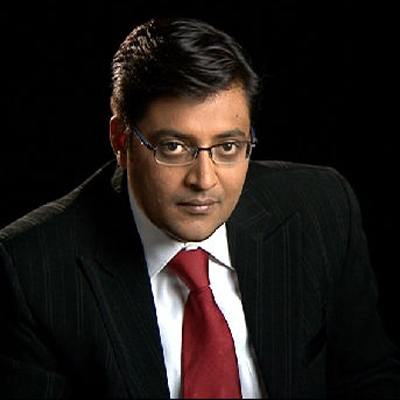
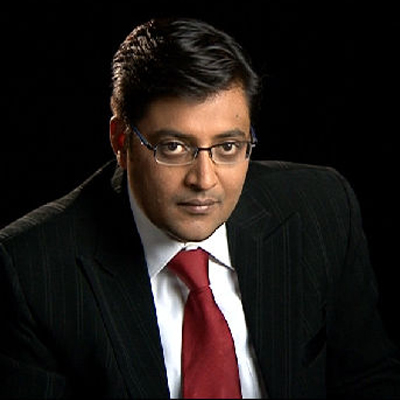
    Arnab Goswami needs no introduction. He is the man who proved that high decibel is not always harmful and that sometimes it plays a pivotal role to awaken those in deep slumber. Opinionated journalism is not a bad thing if that opinion leads to a change for good. Sensationalism is not a crisis if done for the benefit of the society. Not following the traditional may give birth to something for the traditional to later follow. All these daring aspects are the gut feeling of the man who has redefined broadcast journalism in India. He along with his team has changed how media was consumed and perceived.

    Social consciousness was invoked time and again in the debates he conducted. The topics gave news a whole new dimension; the decibel levels brought the stories alive for viewers; the questions and counter questions heightened the bring-in-a-change quotient. His stories not only reflected the abysmal crisis in society but also exposed many a top notch officials. Be it Suresh Kalmadi in the CWG scam or Sushma Swaraj in Lalit Gate… backing down was never an option for him.

    He silenced naysayers early on with the famous lines crooned by Bob Dylan: Don’t speak too soon. For the wheel’s still in spin. And there’s no tellin’ who That it’s namin’. For the loser now, will be later to win. For the times they are a-changin’.

     He acknowledged every change and adapted accordingly to stay relevant and ahead of competition. If needed, he even resorted to speaking in Hindi on his English news channel. Ten years down the line, he is an established name and Times Now is the undisputed leader in its space. Not only in terms of viewership, the moolah that The Newshour rakes in now, is higher than that of many shows on GECs.

    Speaking to Indiantelevision.com’s Anirban Roy Choudhury, Times Now, ET Now and MagicBricks Now president – news and editor-in-chief expresses his profound love for journalism and speaks on competition’s mockery, the scams, investigative journalism and much more…

    Read on: 

    On screen on a Sunday morning, you break the Lalit Gate story. Incidentally the week before for the first time Times Now dropped down to second place. Was Lalit Gate an attempt to go back to number one?

    Actually, we had the story with us for almost three weeks before we broke it. These kind of stories doesn’t happen overnight. So we were working on it for a long period of time. We put it up on a Sunday typically because Sunday is a slow news cycle day. What we did not expect was the confirmation on the story from Sushma Swaraj’s office within 15 to 20 minutes, which led to the blow up. We take our time working on stories. Being a channel, which has been there done that, we don’t respond to things immediately. That one week that you are talking about was purely because of the double frequency model adopted by one channel, which failed very quickly and you can see the numbers now. We have been number one for 10 years on television and we are pretty immune to one or two weeks.


    How much does a campaign of a rival English news channel featuring mimicry of you and your show bother you?

    There is only one botheration from all that ape-mocking and negative campaigning that happens against me and Times Now and that is they are wasting their time trying to mock, mimic or ape us. People should stop wasting their time but if they want to pay more attention to us, they can. It only proves that they are also watching us all the time!


    There was a time when you were about to give up journalism and were standing in front of a PR firm with your CV in hand. Today, ten years later when you look back, are you glad that you did not give up journalism?

    I am very glad that I did not quit journalism. I feel I was very fortunate that I was given a chance to start a channel on my own, find my own team and get a group of people, who are willing to work with me. Also ten years back, I had not built a professional reputation of my own and I feel fortunate that people choose to share their professional years with me to take a big risk and start this channel. I am very grateful that I had the support of good people. I also feel fortunate that we have been able to go by our gut and change the way journalism is done. And it was not because our back was against the wall but because we felt this was the way forward. If I have to launch a channel all over again, I will go by gut instinct.


    Purulia Arms Drop was a piece of investigative journalism that turned to a documentary and got mass acclamation. Do you see investigative journalism, which is not the high decibel eight box debates getting more prominence?

    I think Purulia Arms Drop documentary, which led to foreign news organisations commissioning documentaries in it, is an amazing story. This is the kind of journalism I would like to do more and more. Going forward, when we explore different formats, the investigative format is the one that I will find most exciting.


    Despite having such high inclination towards investigative journalism, why did you publicly oppose the airing of India’s Daughter?

    I don’t think you can give a platform to a rapist on TV. It is ridiculous if a rapist is given a platform on TV to talk about how he is innocent when the matter is sub-judice. Will you give a platform to 1000 of rapists to go on air and justify why they are innocent? Will giving a rapist a platform not impact the victim as well as the rapist’s family? Is it not an interference in the judicial process? Of course it is!


    Even today I challenge such journalism. If giving a rapist a platform is good journalism, then I don’t believe in such journalism. It is disgraceful giving a rapist a platform. Certainly a foreigner with some interest in India cannot come and say that giving a rapist a platform is good journalism. Will they go to the US and the UK and give rapists there a platform to broadcast to the masses? It is morally wrong. It’s totally incorrect. I stand by my position and it was all on moral ground. I was cringing when I saw the clip of a rapist describing why he is innocent. Any right thinking person will cringe. Good journalism is Lalit Gate not giving a platform to a rapist; good journalism is breaking scams and not giving a platform to a rapist.


    How will you deal with a story from the hinterlands? Will you treat it with same detail as you do to a story breaking in the metros?

    We will do partnerships with regional channels to cover every story with utmost details. Our foot presence is low in those areas. For example, we have the largest TV presence with couple of camera crews, a consulting editor, two reporters a full VSAT 2 MBPs loop, an OB van and live view units. Compared to other channels, we are three times bigger in the North East. But if you ask me if it’s enough, well it’s certainly not! If something happens in Manipur, or upper Assam or Arunachal Pradesh, we are not in a position to connect in those regions. So we tie-up with regional channels like News Live and other local channels to ensure that we get the right news. These are all situation based tie-ups. While we don’t have formal associations with anyone, we have very strong informal understandings with channels across the country.


    If news was not a viewership and advertising led business in India, would you have followed the same form of journalism? Is this a rating led Arnab Goswami?

    Let me answer this in this way, there was no guarantee that the formats I was getting into would be successful. Without the guarantee, why did I start the format? Because I believed in it. I was a debater since I was in class seven. I think sometimes when you do things that you like, it works. TV is a transparent medium, you cannot lie on television or pretend to be something you are not. All those who pretend and lie, fail. And the ones who do things with honesty and purpose will succeed. So what we want is a group of producers and journalist saying, we want to see it the way it is. Sitting in Mumbai in the media business I couldn’t care less if it works or it doesn’t. I am not a Santa Clause. I’m not here to get affection or be popular. I am here to be relevant.


    How to you react to the perception that Times Now is as good as Arnab Goswami and that it’s a one man show? You must have heard it every now and then.

    I am the leader of my team of reporters and producers. I am as good as my team. My team believes in that and we work together. We are fortunate to have India’s best reporters working with us. I feel proud when I see a reporter who has just been with me for a year, covering a big political story. When we depute people for foreign assignments, I feel proud. We are the only channel to send reporters with the Prime Minister on his foreign visits. We deploy our reporters far quicker than our competition. Our speed of deploying reporters in a news space is far quicker than any other channel in India. If we need to deploy a particular person in a particular place, nobody can do it quicker than me and my logistics team. So in terms of production and logistics, we are far smarter than any other news channel in India. I cannot do anything about perception and frankly, I don’t care.


    Very often we see your peers from other media firms sharing their dislike for you. Does that somehow affect you?

    Since we have beaten every news channels in last ten years, I don’t expect to be liked by news channels and journalists. Since me and my team are not doing traditional journalism, I don’t expect the ones doing traditional journalism to like me. Also while we take away 60 per cent of the market share, the others are scrambling for the remaining 40 per cent. I don’t expect the ones scrambling for the 40 per cent to like me. How does it even matter if they don’t like me?


    How do you approach a legal sub-judice story?

    Generally when an issue goes to the realm of courts, we pull down. Most of the breaking stories like the 2G or CWG scams, we push with debates and discussions till the point it goes to the court. And once it goes to the court, we kind of pull back. We believe once it has gone to court, the court should look into it. We do not interfere in the judicial process.


    Social media is breaking stories in bits and bytes from every nook and corner. The news of Abdul Kalam’s death broke on Twitter. Do you see that impacting TV news?

    Breaking a big exclusive story has not yet happened on social media. But it’s good that social media is keeping us informed about things happening around us. That’s one thing but remember in the case of Abdul Kalam, we are talking about the demise of a former President. We will not put it up till we have an official confirmation. So there is no reason to presume that we did not have the news. It’s just that at times, we choose not to put the news till we receive official information on it.


    Your gut feeling and people management has taken Times Now to new heights in the last 10 years. The characteristics are exactly what is required for an entrepreneur. How far are you from your entrepreneurship voyage?

    Let’s see what happens in the future. Who can predict what happens in the future? I want to do nothing but journalism till my last breath. I want to do journalism in a way that we can make Indian media go global in the digital world. I want to do journalism in a way that people coming out of colleges should feel that the first job they want to do is with this team.


    The joy is in the journey and the journey for me is only journalism till the last breath. There may be many vehicles, Times Now itself has been an entrepreneurial journey for me. I never predict the future but the future can take me anywhere. Let’s see.

  • ‘The joy is in the journey and the journey for me is only journalism till the last breath:’ Arnab Goswami

    ‘The joy is in the journey and the journey for me is only journalism till the last breath:’ Arnab Goswami

    Arnab Goswami needs no introduction. He is the man who proved that high decibel is not always harmful and that sometimes it plays a pivotal role to awaken those in deep slumber. Opinionated journalism is not a bad thing if that opinion leads to a change for good. Sensationalism is not a crisis if done for the benefit of the society. Not following the traditional may give birth to something for the traditional to later follow. All these daring aspects are the gut feeling of the man who has redefined broadcast journalism in India. He along with his team has changed how media was consumed and perceived.

    Social consciousness was invoked time and again in the debates he conducted. The topics gave news a whole new dimension; the decibel levels brought the stories alive for viewers; the questions and counter questions heightened the bring-in-a-change quotient. His stories not only reflected the abysmal crisis in society but also exposed many a top notch officials. Be it Suresh Kalmadi in the CWG scam or Sushma Swaraj in Lalit Gate… backing down was never an option for him.

    He silenced naysayers early on with the famous lines crooned by Bob Dylan: Don’t speak too soon. For the wheel’s still in spin. And there’s no tellin’ who That it’s namin’. For the loser now, will be later to win. For the times they are a-changin’.

     He acknowledged every change and adapted accordingly to stay relevant and ahead of competition. If needed, he even resorted to speaking in Hindi on his English news channel. Ten years down the line, he is an established name and Times Now is the undisputed leader in its space. Not only in terms of viewership, the moolah that The Newshour rakes in now, is higher than that of many shows on GECs.

    Speaking to Indiantelevision.com’s Anirban Roy Choudhury, Times Now, ET Now and MagicBricks Now president – news and editor-in-chief expresses his profound love for journalism and speaks on competition’s mockery, the scams, investigative journalism and much more…

    Read on: 

    On screen on a Sunday morning, you break the Lalit Gate story. Incidentally the week before for the first time Times Now dropped down to second place. Was Lalit Gate an attempt to go back to number one?

    Actually, we had the story with us for almost three weeks before we broke it. These kind of stories doesn’t happen overnight. So we were working on it for a long period of time. We put it up on a Sunday typically because Sunday is a slow news cycle day. What we did not expect was the confirmation on the story from Sushma Swaraj’s office within 15 to 20 minutes, which led to the blow up. We take our time working on stories. Being a channel, which has been there done that, we don’t respond to things immediately. That one week that you are talking about was purely because of the double frequency model adopted by one channel, which failed very quickly and you can see the numbers now. We have been number one for 10 years on television and we are pretty immune to one or two weeks.


    How much does a campaign of a rival English news channel featuring mimicry of you and your show bother you?

    There is only one botheration from all that ape-mocking and negative campaigning that happens against me and Times Now and that is they are wasting their time trying to mock, mimic or ape us. People should stop wasting their time but if they want to pay more attention to us, they can. It only proves that they are also watching us all the time!


    There was a time when you were about to give up journalism and were standing in front of a PR firm with your CV in hand. Today, ten years later when you look back, are you glad that you did not give up journalism?

    I am very glad that I did not quit journalism. I feel I was very fortunate that I was given a chance to start a channel on my own, find my own team and get a group of people, who are willing to work with me. Also ten years back, I had not built a professional reputation of my own and I feel fortunate that people choose to share their professional years with me to take a big risk and start this channel. I am very grateful that I had the support of good people. I also feel fortunate that we have been able to go by our gut and change the way journalism is done. And it was not because our back was against the wall but because we felt this was the way forward. If I have to launch a channel all over again, I will go by gut instinct.


    Purulia Arms Drop was a piece of investigative journalism that turned to a documentary and got mass acclamation. Do you see investigative journalism, which is not the high decibel eight box debates getting more prominence?

    I think Purulia Arms Drop documentary, which led to foreign news organisations commissioning documentaries in it, is an amazing story. This is the kind of journalism I would like to do more and more. Going forward, when we explore different formats, the investigative format is the one that I will find most exciting.


    Despite having such high inclination towards investigative journalism, why did you publicly oppose the airing of India’s Daughter?

    I don’t think you can give a platform to a rapist on TV. It is ridiculous if a rapist is given a platform on TV to talk about how he is innocent when the matter is sub-judice. Will you give a platform to 1000 of rapists to go on air and justify why they are innocent? Will giving a rapist a platform not impact the victim as well as the rapist’s family? Is it not an interference in the judicial process? Of course it is!


    Even today I challenge such journalism. If giving a rapist a platform is good journalism, then I don’t believe in such journalism. It is disgraceful giving a rapist a platform. Certainly a foreigner with some interest in India cannot come and say that giving a rapist a platform is good journalism. Will they go to the US and the UK and give rapists there a platform to broadcast to the masses? It is morally wrong. It’s totally incorrect. I stand by my position and it was all on moral ground. I was cringing when I saw the clip of a rapist describing why he is innocent. Any right thinking person will cringe. Good journalism is Lalit Gate not giving a platform to a rapist; good journalism is breaking scams and not giving a platform to a rapist.


    How will you deal with a story from the hinterlands? Will you treat it with same detail as you do to a story breaking in the metros?

    We will do partnerships with regional channels to cover every story with utmost details. Our foot presence is low in those areas. For example, we have the largest TV presence with couple of camera crews, a consulting editor, two reporters a full VSAT 2 MBPs loop, an OB van and live view units. Compared to other channels, we are three times bigger in the North East. But if you ask me if it’s enough, well it’s certainly not! If something happens in Manipur, or upper Assam or Arunachal Pradesh, we are not in a position to connect in those regions. So we tie-up with regional channels like News Live and other local channels to ensure that we get the right news. These are all situation based tie-ups. While we don’t have formal associations with anyone, we have very strong informal understandings with channels across the country.


    If news was not a viewership and advertising led business in India, would you have followed the same form of journalism? Is this a rating led Arnab Goswami?

    Let me answer this in this way, there was no guarantee that the formats I was getting into would be successful. Without the guarantee, why did I start the format? Because I believed in it. I was a debater since I was in class seven. I think sometimes when you do things that you like, it works. TV is a transparent medium, you cannot lie on television or pretend to be something you are not. All those who pretend and lie, fail. And the ones who do things with honesty and purpose will succeed. So what we want is a group of producers and journalist saying, we want to see it the way it is. Sitting in Mumbai in the media business I couldn’t care less if it works or it doesn’t. I am not a Santa Clause. I’m not here to get affection or be popular. I am here to be relevant.


    How to you react to the perception that Times Now is as good as Arnab Goswami and that it’s a one man show? You must have heard it every now and then.

    I am the leader of my team of reporters and producers. I am as good as my team. My team believes in that and we work together. We are fortunate to have India’s best reporters working with us. I feel proud when I see a reporter who has just been with me for a year, covering a big political story. When we depute people for foreign assignments, I feel proud. We are the only channel to send reporters with the Prime Minister on his foreign visits. We deploy our reporters far quicker than our competition. Our speed of deploying reporters in a news space is far quicker than any other channel in India. If we need to deploy a particular person in a particular place, nobody can do it quicker than me and my logistics team. So in terms of production and logistics, we are far smarter than any other news channel in India. I cannot do anything about perception and frankly, I don’t care.


    Very often we see your peers from other media firms sharing their dislike for you. Does that somehow affect you?

    Since we have beaten every news channels in last ten years, I don’t expect to be liked by news channels and journalists. Since me and my team are not doing traditional journalism, I don’t expect the ones doing traditional journalism to like me. Also while we take away 60 per cent of the market share, the others are scrambling for the remaining 40 per cent. I don’t expect the ones scrambling for the 40 per cent to like me. How does it even matter if they don’t like me?


    How do you approach a legal sub-judice story?

    Generally when an issue goes to the realm of courts, we pull down. Most of the breaking stories like the 2G or CWG scams, we push with debates and discussions till the point it goes to the court. And once it goes to the court, we kind of pull back. We believe once it has gone to court, the court should look into it. We do not interfere in the judicial process.


    Social media is breaking stories in bits and bytes from every nook and corner. The news of Abdul Kalam’s death broke on Twitter. Do you see that impacting TV news?

    Breaking a big exclusive story has not yet happened on social media. But it’s good that social media is keeping us informed about things happening around us. That’s one thing but remember in the case of Abdul Kalam, we are talking about the demise of a former President. We will not put it up till we have an official confirmation. So there is no reason to presume that we did not have the news. It’s just that at times, we choose not to put the news till we receive official information on it.


    Your gut feeling and people management has taken Times Now to new heights in the last 10 years. The characteristics are exactly what is required for an entrepreneur. How far are you from your entrepreneurship voyage?

    Let’s see what happens in the future. Who can predict what happens in the future? I want to do nothing but journalism till my last breath. I want to do journalism in a way that we can make Indian media go global in the digital world. I want to do journalism in a way that people coming out of colleges should feel that the first job they want to do is with this team.


    The joy is in the journey and the journey for me is only journalism till the last breath. There may be many vehicles, Times Now itself has been an entrepreneurial journey for me. I never predict the future but the future can take me anywhere. Let’s see.

  • Majid Majidi, AR Rahman face ire for working on Prophet Mohammed film

    Majid Majidi, AR Rahman face ire for working on Prophet Mohammed film

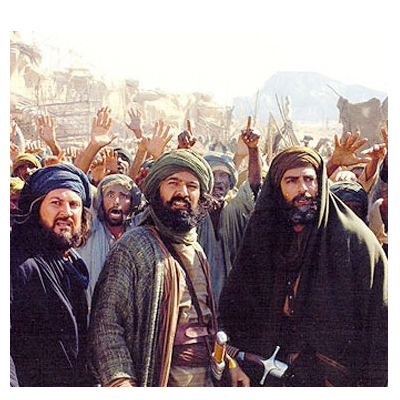
    NEW DELHI: Seeking a ban on renowned Iranian filmmaker Majid Majidi’s film Mohammed: Messenger of God, which opened the Montreal World Film Festival this month, an Indian Muslim group has also issued a fatwa against Majidi and the film’s music composer AR Rahman.


    The Mumbai-based Raza Academy – a Sunni Muslim group, demanded that Muslims reject the film, which is the first of the trilogy on the life of Prophet Mohammad.


    Last week, the group had written to Home Minister Rajnath Singh and Maharashtra Chief Minister Devendra Fadnavis, seeking a ban on Majidi’s film. They have also sought a meeting with the Home Minister and External Affairs Minister Sushma Swaraj.


    “We are against the title. People may use it in a bad manner if they don’t like the film, which will mean an insult to the Prophet. The actors have charged money to act in the film and they may have dubious character in real life. How can we Muslims allow such things to happen?” asked Raza Academy chief Saeed Noorie. The fatwa was issued by Muhammad Akhtar – the chief mufti of Mumbai.


    In the fatwa, the reason cited is the Prophet’s word that no visual or picture of him be created or kept. The fatwa claims the film makes a mockery of Islam, and professional actors, including some non-Muslims, have been cast in the key roles.


    The fatwa adds that the Muslims working on the film have committed sacrilege and will have to read the kalma again and also solemnise their marriage again. “They have erred and they must apologise,” he said.


    Noting that most members of the film’s crew were Muslim, Noorie said that it was more important to make them realise their mistake. “We would have been criticised if we had condemned American or Danish filmmakers. If it’s an insult, then it is an insult and the person’s religion doesn’t matter,” he said.


    Majidi along with another Iranian filmmaker Mohsen Makhmalbaf  has directed films like Children of Heaven, which was nominated for Best Foreign Film at the 1998 Academy Awards, The Color of Paradise, and Baran. He is also currently working on a film on Kashmir. 

  • “Four smaller channels don’t match up to Times Now:” Arnab Goswami

    “Four smaller channels don’t match up to Times Now:” Arnab Goswami

    MUMBAI: Reporting an event and informing viewers with occurrences from that event is no longer enough for a news channel in India. Week 23 of calendar year 2015 showed the television industry some never before incidences.

    When the Broadcast Audience Research Council (BARC) India announced its ratings for week 22, it showed how India Today Television pipped Times Now to take the pole position in the English News genre. And that’s something Times Now did not like!


    The zest to go back to number one saw Times Now and ET Now news president and editor-in-chief Arnab Goswami getting into action mode on the first day of the week, which incidentally is Sunday – a day when he is generally off action. The Sushma Swaraj – Lalit Modi controversy turned out to be just the right fodder and Goswami exploited the opportunity by covering the news as extensively as possible. The action that began in the Times Now studio certainly irked the then number one India Today Television’s Rahul Kanwal and he even took to Twitter to express his disdain by tweeting the following:

    Not only that, another tweet from Kanwal read as below:

    While Goswami in his coverage mentioned time and again that he broke the Keith Vaz – Lalit Modi story, Kanwal tweeted his reservations thus:

    The week got over, Times Now regained pole position after securing 345 (000s sum), whereas India Today Television managed 151 (000s sum) followed by NDTV 129 (000s sum). 


    Commenting on the ratings and indirectly responding to Kanwal and other channels Goswami said, “My experience has been that leadership is built by doing the news, not by negative marketing campaigns. Each time someone mocks or apes us, our viewership grows. There is a big lesson in this fact. Besides, the massive public response to our LalitGate expose matches the growing number of our viewers. Four smaller channels don’t match up to Times Now. I think it is time for the smaller channels to realise that aping the leader, or spending a lot of money mocking the leader is futile.” 


    Now it remains to be seen if this jingoism continues and how it affects viewers and if ever any other channel succeeds to grab the pole position. Overall, not only is the news industry providing news, it is also making headlines.

  • “We are looking at funding options and are actively engaged with investors”: JK Jain

    “We are looking at funding options and are actively engaged with investors”: JK Jain

    Cable TV industry in the country has been the hub of the action for the past one year, especially with the government pushing through digitisation of cable TV homes. An important player in the industry is the headend in the sky (HITS) player JAINHITS, which did face some initial hiccups in being accepted by the broadcasters and local cable operators (LCOs), but has now finally made in-roads in several homes pan-India.


    And leading the HITS platform from the front is Dr. Jinendra Kumar Jain, who is not only a surgeon, a former member of parliament, but also the founder chairman of Jain TV Group.  


    He pioneered the satellite TV era in India by launching the country’s first round-the-clock satellite television service in Indian languages. JAINHITS is his latest initiative to serve the national goal of digitisation. 


    The HITS platform proposes to distribute 200 to 500 digital channels via satellite to the existing ground networks of cable operators. It is designed to integrate broadcasting and broadband services and thus, help bridging the digital divide in one go all over the country.


    Jain’s leadership, innovative ideas in the ICT sector and entrepreneurial initiatives have led to establishment of several successful businesses, including: Video on Wheels (Vow), a countrywide network of mobile video and health service vans, Noida Software Technology Park Limited (NSTPL), India’s first private teleport that provides both fixed (FSS) as well as mobile (MSS) satellite services, Medical Communication Network (MCN) whose publications include the Indian edition of FIGO Journal, IJGO (International Journal of Gynecology and Obstetrics) and the Population Reports for John Hopkins University, National Broadcasting Academy (NBA), a graduate and post graduate educational programme providing degrees in Management and Communication fields.  


    While the eyes are fixed on the soon-to-be launched HITS platform from Hinduja, Indiantelevision.com’s Seema Singh spoke to Jain on the platform’s performance, the struggle in getting accepting, his future plans and much more….


    Excerpts…


    How did you think of launching a HITS platform in a market which was dominated by multi system operators (MSOs)? How long did it take from planning to finally launching the service?


    We were the very first company that explained the headend in the sky (HITS) strategy to deliver digital signals to the cable operators. It was somewhere in the year 2003 that the then Minister Sushma Swaraj declared the decision of digitisation. They had obviously not done any homework and officials in her Ministry were willing to learn the technological aspects of the task. I had an opportunity to explain Anil Baijal, the then additional secretary in the Ministry about HITS. He liked the idea and I agreed to submit a detailed project report with all the relevant information.  The Government issued us the permission letter to deliver HITS services from our Teleport which had already been set up. In the beginning, there was no market and therefore we did not show any hurry. In fact, Citi Networks also got the similar permission and even started HITS based services without waiting for finalisation of rules and regulations. They arrived in the market before time but we waited for the right time and that is how they closed their shop without waiting for the market conditions to ripe and our timely decision is now giving us full benefits. Today we are the market leader in this sector. 


    Was it a task to get the broadcasters onboard? How did they initially react to the HITS model?


    Yes it was quite a task to get the broadcasters onboard. This became possible only with the help of judicial intervention. The big monopoly houses of the Indian cable industry have been offering resistance at every step of our journey. Nobody doubts the fact that cable digitisation will be a game changer in India. The cable distribution market is flourishing and millions of people in India watch TV via cable. Digitisation is certainly good news for broadcasters and tax authorities because subscriber numbers will be reported accurately and transparently.  Even the subscriber shall benefit from itemised billing detail so that they will be charged only for the channels that they wish to subscribe.


    It is true that the vertical chain of the industry stands divided between big and small players.  But, the game is turning in favour of small cable operators and their victory would mean the success of HITS platform.


    While a lot of the issues have been resolved with the court ruling in your favour, how have you dealt with the issues the broadcasters were raising, that of piracy?


    We have deployed best technology solutions to prevent piracy related issues.  As a company we take ‘Piracy’ very seriously. We have our own anti-piracy teams who look into such piracy issues.


    We also work in tandem with our business partners- broadcasters, LCOs, and distributors and take inputs from them to fight back the malice of Piracy. At present, during the audits conducted by the broadcasters they have found our systems working efficiently and exceeding industry standards. 


    How big is the company today, in terms of number of offices, employees, ground stations, revenue?


    NSTPL is a Public Ltd. profit making company. The business of the company is divided across three verticals:


    NSTPL Infra

    NSTPL Broadband

    JAINHITS


    The company has presence across the country with its own offices as well as distribution partners spread across India. NSTPL that operates India’s only National Cable and Broadband Platform called JAINHITS, operates teleports in Greater Noida and Hyderabad, serving 70 broadcasters. The Teleport is duly authorised & licensed by various regulatory bodies such as Ministry of Information & Broadcasting and Ministry of Communications, Government of India.


    When you started, what was the initial investment that was made into the company? Who were the partners? How have you grown the company over the years?


    NSTPL is a closely held Limited Company with fully paid up share capital of Rs 30 crore. 86.66 per cent of its shares are held by  Ankur Services Growth Fund, 13.33 per cent is held by Jain Studio and 0.002 per cent is held by individuals. We have invested approximately Rs 150 crore in JAINHITS since the concept initiation i.e. from April 2012.


    The response to JAINHITS has been extremely encouraging and thus, in a short span of one year we have signed up with over 300 cable operator partners across India.


    How many TV channels does the platform have currently? How many homes do you reach to and in which regions?


    We have around 254 channels today. Out of which 7 channels, namely, Disney, Cartoon Network, Pogo, Discovery, History, TV18, Animal Planet and Nickelodeon have dual audio feeds. Our services are available pan-India.


    How will digitisation benefit JAINHITS? What are the steps that are being taken to reap the maximum benefits of digitisation?


    Owing to pressure from DTH and on account of the digitisation law, all cable operators have to go digital. JAINHITS provides most cost-effective digitisation solution for such cable operators across India. Any cable operator across India can go completely digital and be fully DAS compliant with mere investment as low as Rs 5-10 lakh, while retaining full control of their business. They also have a chance to enhance their monthly Average Revenue Per User (ARPU) by offering additional value added services like Triple Play Services throughout India – Video, Data & Voice, Broadband Services.


    We keep announcing consumer friendly schemes so that our business partners i.e. the cable operator community have the best to offer to its customers. We conduct LCO meets in every state almost once a quarter. This is a platform where partner LCOs along with potential prospective cable operators come face to face and get their concerns addressed. We participate in industry events and expos to reach more and more cable operators.


    What are the services that the platform provides to its consumers?


    JAINHITS provides a platform of 254 SD channels at present. Very soon we will introduce HD platform and additional value added services like Triple Play Services– Video, Data & Voice, Broadband Services throughout India.


    How do you think HITS platform will play a major role in phase III and IV of digitisation? Will you be competing with DTH and MSOs? What’s the strategy?


    Phase III & IV of digitisation covers over 1350 Municipal Corporation and 597,464 Villages (as per Census 2011) spread in the far flung areas across India. These are the areas where the reach of cable TV is at its lowest level on account of non-availability of adequate infrastructure. For the land based networks and MSOs, this vast area in phase III & IV is the most difficult to reach.


    Only and most effective method of reaching this area is through HITS platform. JAINHITS allows all cable operators in these phase III & IV markets to go digital at a miniscule cost of Rs 5 lakh. The platform also provides these cable networks to offer broadband services to their consumers in these far flung areas. Above all, it is the only platform in the country, offering complete empowerment and ownership to even the smallest LCO by making him a leader & cable owner and an ISO (Independent Service Operator). It provides a simple “Plug & Play cost effective digitisation solution” to cable operators.


    Recently, MSOs have been facing issues with a few broadcasters like Star and Zee. Also with TDSAT ruling that Star channels will be available on RIO, does that impact JAINHITS in any way? What’s your take on the judgment?


    We have most of our content available on RIO basis and accordingly we offer our viewers a choice wherein they can opt for A-la-Carte choice of content to meet their individual needs.


    Per say this Judgment, really doesn’t affect our business models.


    While the cable TV industry in phase I and II are still struggling with packaging and billing, what’s the scenario with the HITS platform?


    HITS services were envisaged with an inbuilt SMS & CAS system. Accordingly, we at JAINHITS have also sensitized our partners- ‘the need’ of different types of packaging that may be required based on the area they will service. Accordingly, we have created different types of packs that serve the needs of large cross-section of people in India. Billing is automated and done through SMS platform.


    Are you looking for funding to go ahead with your plans? Any plans for IPO?

    We are indeed looking at funding options and are actively engaged with investors interested in the Indian cable & broadband market.

  • Elections 2014: News channels ‘Modi’fy

    Elections 2014: News channels ‘Modi’fy

    NEW DELHI: Even as television channels are trying to be one up on the other in the coverage of the counting process and the general election results, most channels reflected a common perception:that the results were individual-based and not party-based.

    In fact, most channels had the faces of Narendra Modi when showing the results of the Bharatiya Janata Party (BJP), that of Rahul Gandhi when showing the fate of the Indian National Congress (INC), of Arvind Kejriwal when reflecting how the Aam Aadmi Party (AAP) was doing, and so on. The party symbols of these parties were curiously missing from the studio reportage, even as these appeared during the live coverages from all over the country.

    Doordarshan News expectedly was the most sober in its coverage even as it was a little behind the other channels in showing the trends or results, but surprisingly even Times Now appeared to move a bit slowly with the trends and results even as it succeeded in getting a large number of panelists and politicians on board throughout the day.

    Even Lok Sabha TV (LSTV) and Rajya Sabha TV (RSTV) joined the fray for the first time to show the results. However, while LSTV confined itself to showing figures taken from Doordarshan accompanied by a live panel discussion, RSTV had live coverages from different parts of the country in collaboration with DD.   


    Clearly, NDTV 24×7 and ABP News captured a large number of eyeballs with their graphic presentations. NDTV 24×7 showed graphic presentation of the Lok Sabha, with a majority of seats occupied with yellow-coloured figures representing the BJP, and the numbers changed as the trends and results emerged.

    Aaj Tak had moving caricatures of Modi, Gandhi and Kejriwal reflecting the fate of their respective party, with Modi dancing with joy, Gandhi brow in frustration, and Kejriwal looking crestfallen in place of the party symbols.

    Interestingly the poll figures remained on screen even during the commercial breaks, reflecting the interest of the viewer.     

    As expected the presentations on the main news channels were led by their heads including Prannoy Roy of NDTV, Arnab Goswami of Times Now, and Rajdeep Sardesai of CNN-IBN.

    One common repeat throughout the day on all channels were the shots of Modi meeting and taking the blessings of his aged mother after his Vadodara victory and the run of the party for which he is the Prime Ministerial candidate.


    While Times Now appeared very cluttered with too many figures running simultaneously along with several visuals at the same time, channels like Zee News, ABP News, NDTV 24X7, P7, India News, CNN-IBN and NewsX caught the eye with their graphics and presentation.


    The interest in the Indian elections overseas was reflected by BBC Global News, as it went live several times during the day and had a live translation of all press meets being addressed in Hindi. CNN in comparison showed little interest as it only mentioned the results or trends from time to time.

    Clearly, all the channels were out to outdo each other as far as presentation was concerned vis-a-vis live graphics and coverage, and some like Times Now, ABP News, CNN-IBN and NDTV 24X7 catching the eye with their sets, with ABP News and NDTV 24X7 being most innovative.

    But it was clear that all the channels probably spent much more than the budgets initially earmarked by them for today. An earlier report had said that the channels had put aside Rs 1 crore to Rs 1.5 crore for the day, but one reporter of a channel told indiantelevision.com that the amount would go higher.


    Certain common points of discussion emerged throughout the day: was it the victory of Modi, the BJP workers or the RSS (an issue raised by both LK Advani and Sushma Swaraj during the day); will Rahul resign, accepting responsibility; did the allies matter since the BJP had emerged strongly on its own; was this high vote for BJP a rejection of many that it was a communal party; whether BJP leader Giriraj Singh who had made some very damaging statements should be removed from the party; why Sonia and Rahul Gandhi did not take questions and just made statements (Rahul was ready to face question, but left on Sonia’s gesture); and why were Dr Manmohan Singh and Arjun Kejriwal conspicuously missing. Advani and Sushma Swaraj’s attribution of the victory to BJP workers and the Rashtriya Swayam Sevak Sangh; and the virtually plastic smile on the face of Rahul also made for a lot of talk on TV channels and social media.

    But apart from the TV channels and even All India Radio including FM Gold which went live from 8:30 am in the morning, the social media was as active. While live coverage by way of latest figures appeared on sites like yahoo.in, Twitter was very active and was quoted throughout the day by TV channels whenever any personality including Modi and LK Advani sent tweets.


    Several interesting cartoons came on the internet, particularly Facebook, from individuals. One had a cartoon of Rahul Gandhi’s smiling face with the use of a BJP slogan: ‘Acchey din aaney waley hain, hum naani ke ghar jaane waaley hain’ (Good days are coming, we will go to our grandmother’s house) while another had a poster of ‘Dabbang 3’ with the photo of Modi. Some wanted to know if the victory of the film personalities was that of the individuals or the party they represented.    

    Even as the results started coming in the afternoon, the focus shifted entirely to the major personalities in the fray. And it will be interesting to note the conjectures of the channels about possible portfolios, particularly since most TV channels had got the exit polls right by predicting the victory of BJP.