Tag: Survey

  • Consumer sentiment up for jobs: LSEG-Ipsos PCSI August 2024

    Consumer sentiment up for jobs: LSEG-Ipsos PCSI August 2024

    Mumbai: The August 2024 wave of the LSEG-Ipsos primary consumer sentiment index shows confidence around jobs has improved and India was placed second in the pecking order on the national index score across the 29 markets covered in the survey.

    However, overall the sentiment was seen to be down -2.9 per cent points.  

    The LSEG-Ipsos PCSI maps consumer sentiment on four sub-indices and sentiment around the PCSI employment confidence (‘Jobs’) sub-index, has seen an uptick of +0.9 per cent points, the PCSI current personal financial conditions sub index (current conditions) was down -6.5 per cent points; the PCSI investment climate (‘Investment’) sub-index has lowered -6.5 perc ent points; and the PCSI economic expectations (‘Expectations’) sub-Index was down 2.0 per cent points.

    Ipsos India CEO Amit Adarkar elucidating on the findings said: “The sentiment around jobs has improved with some sectors hiring in H2 and also with the government announcing new initiatives for job creation in the budget. Some consumers are feeling the pinch of high cost of living in terms of strain on personal finances for day-to-day running of households and lack of disposable incomes for savings and buying of big ticket items and discretionary spends. The sentiment is also down around the economy. Global factors continue to bog down our economy also with the rupee weakening against the dollar at Rs. 84/$, with the wars in Ukraine and Gaza continuing.”

    Consumer sentiment in 29 countries

    Among the 29 countries, India has now moved to the 2nd spot, preceded by Indonesia (63.6) which now holds the highest national index score. Indonesia and India (61.6) are the only countries with a national index score of 60 or higher.

    Eleven other countries now show a national index above the 50-point mark: Sweden (57.3), the Netherlands (55.6), the U.S. (55.3), Malaysia (54.2), Great Britain (53.8), Brazil (53.1), Singapore (52.5), Mexico (52.0), Spain (50.2), Canada (50.1) and South Africa (50.1).
    In contrast, just three countries show a National Index below the 40-point mark: Japan (38.0), Hungary (36.8), and Türkiye (36.4).

    “India continues to be one of the most resilient markets despite all the global turbulence and tough macro conditions. We have good monsoons and that should bring down food inflation,” added Adarkar.

  • 48 per cent urban couples influenced by cost-affordability for destination weddings: Betterhalf survey

    48 per cent urban couples influenced by cost-affordability for destination weddings: Betterhalf survey

    Mumbai: Indian weddings are renowned for their elaborate ceremonies, exquisite decor, picturesque venues, and culinary creations. All of these have contributed to making the Indian wedding market the second-largest in the world. In fact, weddings in India have truly evolved as brides and grooms today are more than ready to have their dream destination weddings instead of fitting them into the little traditional box.

    Given the burgeoning trend of destination weddings, Betterhalf- India’s leading matrimony super-app and premier tech-enabled end-to-end wedding planning company recently conducted a survey to unveil a new perspective on Indian destination weddings, breaking them away from the connotations of being exorbitant affairs. With more than 47 per cent of eligible bachelors and to-be-wed couples opting for destination weddings, Betterhalf’s survey also debunks the myths associated with the trend.

    The majority of around 48 per cent of urban professionals preferring to have a destination wedding are significantly influenced by the affordable cost associated with them. This majority underpins that destination weddings have departed from being costly celebrations to becoming more customizable as per the couple’s wedding budget. In addition, 25 per cent of urban professionals value location while 23 per cent consider experience as the key influential factor to choose a destination wedding.

    “Destination weddings have evolved so much over the years, that they have emerged as the most favorable wedding option for India’s diverse populace. That being said, destination weddings are elaborate ceremonies and people tend to think of them as over-the-top expensive affairs. With our survey insights, we are hoping to break away from this persona of the Big-Fat destination Weddings, making it a dream come true for all by making budget-friendly destination weddings more accessible,” said Betterhalf co-founder and CEO Pawan Gupta.

    For all to-be-wed couples, budget plays a significant role, which was highlighted by Betterhalf’s survey as 72 per cent of urban professionals considered it significant when planning a destination wedding. As a result, the secret ingredient to having the most surreal yet economical destination wedding that perfectly aligns with your budget is to engage the services of online wedding planning platforms, as preferred by 38 per cent of couples in contrast to traditional planners.

    With an online wedding planning platform, one can be guaranteed to have a fairytale wedding come true, in perfect accordance with the budget set. These online wedding platforms create a synergy between affordability and top-notch quality, and their network of multiple vendors further helps them offer the best services within the decided budget. While destination wedding planners can certainly help in allocating the budget effectively, over 54 per cent of urban professionals want them to offer additional services like travel arrangements. Apart from this, over 30 per cent of them look for assistance in on-site coordination respectively.  

    Thus, amidst all the pomp and circumstance, destination weddings can truly be economical. By choosing to engage the services of online wedding planning platforms, you stand a chance to save big bucks on your big day. Having said that, destination wedding or not, the most important element is cherishing the future that awaits you and your partner on this incredible journey.

  • Indians have a sense of onus on climate change but live in their own reality: Ipsos’ Earth Day survey

    Indians have a sense of onus on climate change but live in their own reality: Ipsos’ Earth Day survey

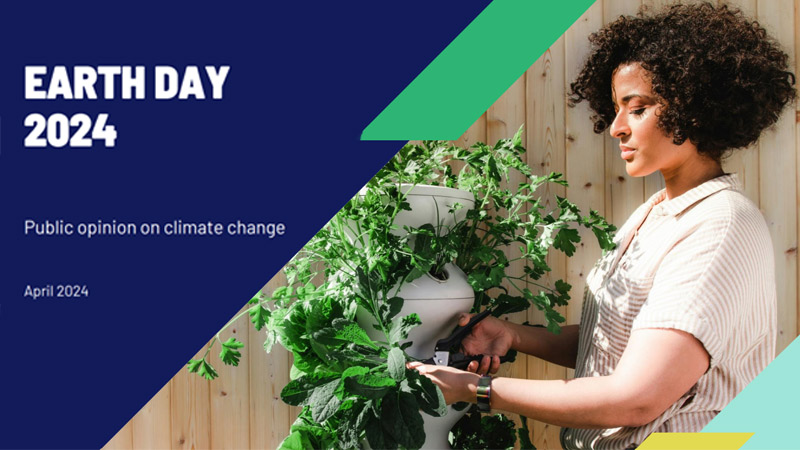
    Mumbai: Ipsos, one of the world’s leading market research companies, releases a 33-country study as part of Earth Day, looking at how attitudes to climate change are changing. Urban Indians believe govt (75 per cent), businesses (75 per cent), individuals (77 per cent) need to act now to mitigate the risk of climate change, at the same time two in three urban Indians (68 per cent) believe the negative impact of climate change is too far off to worry in the present. Further, 68 per cent urban Indians see no rationale in changing their own behaviour in tackling climate change believing it will make no difference.  

    Should developed countries be doing more?

    Two-thirds across 33 countries and 76 per cent Indians think countries like the US, GB, France, Canada and Germany should pay more to solve climate change. At the same time, France and Canada have seen an increase in people feeling they are being asked to sacrifice too much to fight climate change, with both countries now more likely to say this is the case than not.

    Attitudes to climate change and misconceptions

    People do want to help in limiting the effects of climate change. In all countries people are more likely to say if everyone made small changes in their everyday lives this could have a big impact, with at least 77 per cent in India endorsing this view. However, they lack the knowledge on how to do this. For instance, 66 per cent urban Indians believe it is the usage of products that deplete the ozone layer as the biggest contributing factor for climate change, while in actual rank the number one cause was industry, electricity and heat production; number was deforestation, agriculture and other land use changes; and number three was air pollution caused by cars, trucks, planes, trains and ships etc. Further, they overestimate the importance of recycling and underestimate the impact of acts like not having a car or going vegan.

    Incentives for personal action

    Urban Indians say the following would encourage them to take personal actions to fight climate change: Seeing the impact of climate driven weather events in other countries around the world (30 per cent), seeing the impact of climate driven weather events in my country (29 per cent), having easy access to information on the steps which I can take every day (28 per cent) and a financial incentive, or tax cut to allow me to make more environmentally friendly purchases of goods and services (27 per cent).

    Summarizing on the findings of the survey, Ipsos India CEO Amit Adarkar said, “On Earth Day, we are aware of the grim realities of climate change and how it is leading to sudden, unforeseen weather conditions and natural calamities in India. We need to build more awareness around the actions actually needed to offset the impact of climate change. Right now the immediate actions needed are not the ones on the radar of citizens. Indians also tend to underestimate the power of personal actions.”

    https://resources.ipsos.com/GM-GC-2024-04-22EarthDay_W.html

    The “33-country average” reflects the average result for all the countries and markets where the survey was conducted. It has not been adjusted to the population size of each country or market and is not intended to suggest a total result. All global numbers cited reflect this 33-country average.

  • IKEA launched their 10 Life at Home report insights

    IKEA launched their 10 Life at Home report insights

    Mumbai : Swedish home furnishings brand IKEA launched their 10 Life at Home report with insights around how Indians live at home. IKEA spoke with thousands of families and captured a decade of discoveries in one of their biggest annual studies around life at home. As priorities evolve, homes have also gone through a series of transformations over the years. The IKEA Life at Home Report 2023 is a culmination of findings from extensive research as well as insights from nine previous editions, 2014–2022.

    These insights help IKEA create a better everyday life for the many people and develop home furnishing solutions that suit their needs, wants, and dreams.

    The global report identifies 4 major themes this year: Current and Future Homes, Sleep, Movement, and Needs of Home.

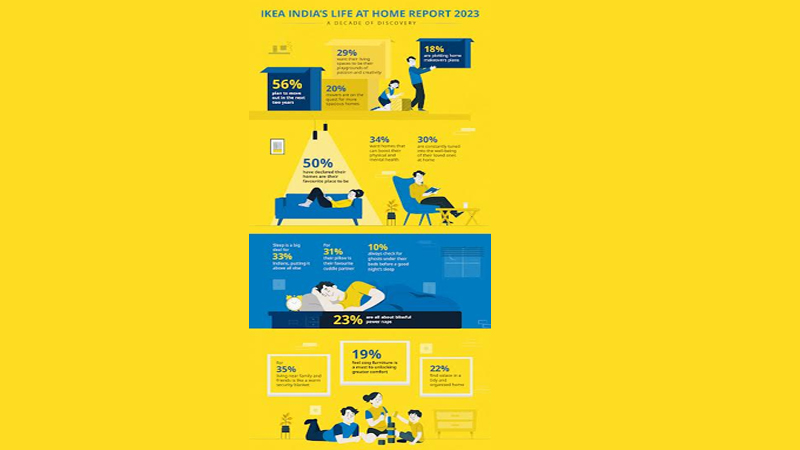
    Delving into India, the report finds that for 50 per cent of Indians, home is their favourite place to be, and 63 per cent of Indians shared that they feel positive about their current life at home. Living close to the ones they love is a big contributor to this. The report revealed that 35 per cent of Indians say that living close to family and friends and 33 per cent shared that being with the people they love are the main elements of feeling comfort and secure at home. So, here’s to endless movie nights, game nights, and shared meals together.

    The Life at Home Report 2023 also highlights another reason that makes home a happy place for Indians: furry friends. According to the report, 27 per cent of pet owners shared that having a pet is a factor that helps them feel secure at home. Happiness is unconditional love from a pet, and it’s no wonder 32 per cent of pet owners shared that it’s their pets who rule their homes. 31 per cent of owners also said that they choose spending time with their pets and watching their pets sleep, i.e., 18 per cent is a driver of enjoyment at home. Moving to the outer circle, the report also reveals how Indians feel about their neighbours. Connecting with those around us is essential to creating a sense of home, and 23 per cent of Indians said that knowing their neighbours is the main driver of feeling secure at home, so it’s never too late to knock on the door and say HEJ!

    Cleaning, moving, renovating—2024 seems to be the year for it. 56 per cent of Indians are planning to move in the next two years, and an additional 18 per cent are planning to stay in their current home but renovate it. For a lot of Indians, decluttering is an essential way to create space at home, and 22 per cent shared that a tidy and organised home makes them feel comfortable at home. When it comes to household chores, 22 per cent of women and 17 per cent of men feel they are never-ending. So, whether tidying is therapeutic or whether it’s an obstacle course, keeping it organized is the plan.

    Indians love their sleep, and according to the report, 33 per cent of Indians find sleeping to be of top importance for nurturing at home, with 23 per cent revealing that a nap brings them the most joy in their life at home. The habits they follow to ensure deep sleep were also revealed. 19 per cent said fresh bed sheets; 12 per cent said having a soothing drink before bed; 31 per cent said it’s their favourite pillow; 26 per cent need complete darkness; 26 per cent said checking that the door is locked; and 10 per cent said looking in the closet or under the bed helps them get the best possible sleep- the recipe for the perfect siesta. The report also revealed a reason for sleepless nights, as 9 per cent of Indians shared that their home may be haunted due to creaky floorboards or strange happenings.

    Home has become a sanctuary for holistic health, offering a personalised space to foster physical fitness and mental well-being. For Indians, the top three concerns around their life at home are related to health, with 34 per cent prioritising their own physical health, 29 per cent prioritising their mental wellbeing, and 30 per cent focusing on the health of people around them as well. To make home a multi-sensory space that boosts relaxation, Indians have a lot of tricks up their sleeve. 9 per cent set the mood by lighting candles; 19 per cent said having comfortable furniture is essential; 14 per cent said having the right lighting to match their mood is important; and 8 per cent even shared that keeping crystals at home helps create the perfect ambiance.

    Self-love and personal time, too, found a unique place in the report with 20 per cent of Indians sharing that changing clothes when they come home is the main driver of feeling comfort at home; 13 per cent revealed that they sometimes walk around naked at home; and 31 per cent dance or sing at home when no one is around!

    IKEA India CEO & CSO Susanne Pulverer said, “We are obsessed with making life at home better, so it’s been incredible taking a look at the last decade of research to really understand what millions of people around the world and in India need and dream at home. This year’s report highlights that apart from bigger trends like moving and renovation, it’s the little things- like family time, self-care, being a good neighbour, health and wellness, organizing, enjoying meals together at home, and sound sleep- that brings one the ultimate comfort at home. We’ve got the knowledge and the solutions to be a part of these big little moments and will continue to learn from India,” shares Susanne Pulverer,

    In an extension to this year’s report, IKEA collaborated with AI illustrators to imagine and design the homes of the future. The collaboration brings alive three different future scenarios: the first showcases distant family members joining Sunday lunch in a hologram form, the second features bio-solar wallpaper using algae to generate electricity from sunlight, and the last one with chairs created by 3D printers using a mushroom compound. It also explores the new ways we live, sense of community, and how our reliance on the land may change.

    The global report identifies 4 major themes this year: Current and Future Homes, Sleep, Movement, and Needs of Home.

    Delving into India, the report finds that for 50 per cent of Indians, home is their favourite place to be, and 63 per cent of Indians shared that they feel positive about their current life at home. Living close to the ones they love is a big contributor to this.

    The report revealed that 35 per cent of Indians say that living close to family and friends and 33 per cent shared that being with the people they love are the main elements of feeling comfort and secure at home. So, here’s to endless movie nights, game nights, and shared meals together.

    The Life at Home Report 2023 also highlights another reason that makes home a happy place for Indians: furry friends. According to the report, 27 per cent of pet owners shared that having a pet is a factor that helps them feel secure at home. Happiness is unconditional love from a pet, and it’s no wonder 32 sets of pet owners shared that it’s their pets who rule their homes. 31 per cent of owners also said that they choose spending time with their pets and watching their pets sleep, i.e., 18 per cent is a driver of enjoyment at home. Moving to the outer circle, the report also reveals how Indians feel about their neighbours. Connecting with those around us is essential to creating a sense of home, and 23 per cent of Indians said that knowing their neighbours is a main driver of feeling secure at home, so it’s never too late to knock on the door and say HEJ!

    Cleaning, moving, renovating—2024 seems to be the year for it. 56 per cent of Indians are planning to move in the next two years, and an additional 18 per cent are planning to stay in their current home but renovate it. For a lot of Indians, decluttering is an essential way to create space at home, and 22 per cent shared that a tidy and organised home makes them feel comfortable at home. When it comes to household chores, 22% of women and 17 per cent of men feel they are never-ending. So, whether tidying is therapeutic or whether it’s an obstacle course, keeping it organized is the plan.

    Indians love their sleep, and according to the report, 33 per cent of Indians find sleeping to be of top importance for nurturing at home, revealing that a nap brings them the most joy in their life at home. The habits they follow to ensure deep sleep were also revealed. 19 per cent said fresh bed sheets; 12 per cent said having a soothing drink before bed; 31% said it’s their favourite pillow; 26 per cent need complete darkness; 26 per cent said checking that the door is locked; and 10 per cent said looking in the closet or under the bed helps them get the best possible sleep- the recipe for the perfect siesta. The report also revealed a reason for sleepless nights, as 9 per cent of Indians shared that their home may be haunted due to creaky floorboards or strange happenings.

    Home has become a sanctuary for holistic health, offering a personalised space to foster physical fitness and mental well-being. For Indians, the top three concerns around their life at home are related to health, with 34 per cent prioritising their own physical health, 29 per cent prioritising their mental wellbeing, and 30 per cent focusing on the health of people around them as well. To make home a multi-sensory space that boosts relaxation, Indians have a lot of tricks up their sleeve. 9 per cent set the mood by lighting candles; 19 per cent said having comfortable furniture is essential; 14 per cent said having the right lighting to match their mood is important; and 8 per cent even shared that keeping crystals at home helps create the perfect ambiance.

    Self-love and personal time, too, found a unique place in the report with 20% of Indians sharing that changing clothes when they come home is the main driver of feeling comfort at home; 13% revealed that they sometimes walk around naked at home; and 31% dance or sing at home when no one is around!

    “We are obsessed with making life at home better, so it’s been incredible taking a look at the last decade of research to really understand what millions of people around the world and in India need and dream at home. This year’s report highlights that apart from bigger trends like moving and renovation, it’s the little things- like family time, self-care, being a good neighbour, health and wellness, organizing, enjoying meals together at home, and sound sleep- that bring one the ultimate comfort at home. We’ve got the knowledge and the solutions to be a part of these big little moments and will continue to learn from India,” shares Susanne Pulverer, CEO & CSO (Chief Sustainability Officer) of IKEA India.

    In an extension to this year’s report, IKEA collaborated with AI illustrators to imagine and design the homes of the future. The collaboration brings alive three different future scenarios: the first showcases distant family members joining Sunday lunch in a hologram form, the second features bio-solar wallpaper using algae to generate electricity from sunlight, and the last one with chairs created by 3D printers using a mushroom compound. It also explores the new ways we live, sense of community, and how our reliance on the land may change.

  • For Circa 2024, 87 per cent expecting better year: Ipsos Global Predictions 2024

    For Circa 2024, 87 per cent expecting better year: Ipsos Global Predictions 2024

    Mumbai: Ipsos Global Predictions for 2024 shows a positive outlook emerging for the year 2024 with 87 per cent urban Indians and 70 per cent global citizens predicting it to be a better year.

    And 8 in 10 urban Indians (84 per cent) say they are willing to make personal resolutions and specific changes for themselves in 2024. And 85 per cent Indians are also hopeful of the global economy doing better in 2024.    

    2023 was a bad year

    The local and global verdict on the year 2023 shows a great deal of disappointment, with 65 per cent of urban Indians pronouncing it a bad year for India and 64 per cent calling it a bad year for them and their family. 70 per cent global citizens felt it was a bad year for their country and 1 in 2 global citizens (53 per cent) felt it was a bad year for them and their family.

    The markets unhappy with 2023 were Argentina (88 per cent), Sweden (84 per cent), Turkey (84 per cent), Great Britain (per cent), Portugal (82 per cent), South Korea (82 per cent) and Hungary (82 per cent).

    The survey captured views of citizens on a host of issues, with their predictions for 2024.  

    Economy

    Most urban Indians expect cost of living to go up, with 71 per cent believing prices in the country will increase faster than people’s incomes.79 per cent global citizens echo similar views

    7 in 10 urban Indians (70 per cent) further believe inflation will be higher in 2024 as compared to 2023. 68 per cent urban Indians expect interest rates to be higher in 2024 as compared to 2023. 66 per cent expect unemployment to be greater in 2024 versus 2023.

    Technology

    Impact of technology in 2024 is likely to be a mixed bag. 61 per cent urban Indians expect artificial intelligence leading to loss of many new jobs in the country. 56 per cent Indians fear their personal data being leaked on the internet in 2024. 67 per cent urban Indians expect doctors in India to use artificial intelligence regularly, to decide on treatments for their patients. Interestingly, 61 per cent urban Indians believe in 2024, robots will look, think and speak like humans. The biggest upside, 65 per cent urban Indians polled believe artificial intelligence will lead to many new jobs being created in the country. And 57 per cent urban Indians plan to use social media less in 2024.

    Environment

    Climate change has been wreaking havoc around the globe.

    In 2024, 65 per cent urban Indians expect more extreme weather events in the country than seen in 2023. 60 per cent Indians also fear a natural disaster hitting a major city. And 70 per cent urban Indians expect the average global temperature to increase.

    At the same time 67 per cent urban Indians polled expect the govt to introduce more demanding targets for reducing carbon emissions quickly in 2024. While 63 per cent urban Indians expect more restrictions to be introduced to reduce the amount people drive in their cars in the country.    

    Society

    Predictions for 2024 are optimistic. 71 per cent urban Indians expect women to be paid the same as men for the same work. 71 per cent expect India to win more medals in the 2024 Summer Olympics than the last one. 66 per cent Indians believe people in the country will become more tolerant of each other.

    69 per cent urban Indians predict office workers spending more time in the office than at home, in 2024. 86 per cent Indonesians held this view, 78 per cent Malaysians and 76 per cent Chinese.

    63 per cent Indians expect the level of immigration into the country to increase in 2024. Markets predicting the most influx included Portugal (87 per cent), Turkey (82 per cent), Singapore (82 per cent) and Italy (79 per cent).

    And 1 in 2 Indians (53 per cent) expect the total size of the population of the country to fall in 2024. For a country that has become the world’s most populous nation.

    Ipsos India CEO Amit Adarkar said, “Majority of our citizens have a positive outlook for 2024, predicting it to be a better year for them. Though they are bracing themselves up for a tougher year in terms of inflation, rising prices, higher interest rates and higher unemployment. Year 2023 was a bad year is the majority verdict. The year saw many upheavals due to inflation, rise in prices of essential commodities, yo-yo of fuel prices, drought and floods and violence in certain parts of the country. The predictions for 2024 hinge a lot on optimism, of office workers going more often physically to work, govt taking stringent measures to reduce the carbon footprint, pay parity of women with men doing the same work, citizens becoming more tolerant of one another and India bagging more medals in its kitty in the summer Olympics. AI is expected to stave off some jobs and create new ones, so this will put a lot of emphasis on reskilling. Cautious optimism is the approach for 2024, as there is also fear of a new more severe pandemic and natural disasters.”      

    About the study

    These are the results of a 34-country survey conducted by Ipsos on its Global Advisor online platform and, in India, on its IndiaBus platform between Friday 20 October to Friday 3 November, 2023.

    For this survey, Ipsos interviewed a total of 25,292 adults aged 18 years and older in India, 18-74 in Canada, Malaysia, New Zealand, South Africa, Turkey, and the United States, 20-74 in Thailand, 21-74 in Indonesia and Singapore, and 16-74 in all other countries.

    Africa, Turkey, and the United States, 20-74 in Thailand, 21-74 in Indonesia and Singapore, and 16-74 in all other countries.

    Read the full report here:

    https://www.ipsos.com/en-in/optimism-rife-among-urban-indians-circa-2024-87-expecting-it-be-better-year-ipsos-global-advisor

  • Mustard oil brands disclose zero info on pungency levels: Mustard Oil Pungency Awareness Survey 2023

    Mustard oil brands disclose zero info on pungency levels: Mustard Oil Pungency Awareness Survey 2023

    Mumbai: A Mustard Oil Pungency Awareness Survey 2023: ‘Jhaanjh Ki Jaanch’, an independent survey conducted by NFX Digital across major mustard oil markets of North and East India reveals a surprising information gap among the consumers regarding the pungency level of mustard oil, its primary characteristic.  Astonishingly, 85 per cent of respondents were unaware of this most important benefit of mustard oil despite its regular inclusion in their culinary pursuits.

    Basis the findings of the survey and with the intent to empower consumers with the right knowledge about Mustard Oil, Emami Agrotech Ltd has introduced its  ‘Emami Healthy & Tasty Kachchi Ghani Mustard Oil,’ in a unique selection of three distinct pungency levels: mild (Jhaanjh level: .24 per cent), strong (Jhaanjh level: .30 per cent), and super strong (Jhaanjh level: .36 per cent). This disruptive & innovative concept, tailored to individual taste, is set to redefine the mustard oil landscape. This is the first time that any edible oil brand is offering such information.

    The quantitative survey conducted by NFX Digital aimed to gain insights into consumer awareness, perceptions, and preferences regarding Mustard Oil pungency level. The survey revealed that consumers seek  ‘pungency’ or jhaanjh as the primary reason for mustard oil consumption for specific taste and aroma. Respondents acknowledged that the pungency in mustard oil imparts a robust flavor and aroma, making it an essential component of their cooking.

    A remarkable 75 per cent of users expressed a keen interest in learning about the pungency level in mustard oil. Additionally, the survey displayed that 91 per cent of users are ‘very likely’ to try a mustard oil brand that provides clear information regarding its pungency level on the packaging, reflecting a strong desire for transparency to make informed purchasing decisions.

    Commenting on the findings of the survey and the need to launch a novel product endeavour, Emami Agrotech Ltd president, marketing Debasis Bhattacharyya said, “At Emami Agrotech, we are committed to offer transparency and honesty to our consumers and not just products. Therefore, the Mustard Oil Awareness  ‘Jhaanjh Ki Jaanch Survey’ presented the right opportunity to honor our consumers and empower them with a ‘right to know’, so that they can make informed choices about their preference of mustard oil – one of the most essential ingredients in their kitchens. We hope ‘Emami Healthy & Tasty Kachchi Ghani Mustard Oil,’ with its three different pungency levels will offer the freedom of choice to our consumers to select their preferred levels of pungency.”

    Expressing her thoughts on the survey and the consumers’ right to know, chef Pankaj Bhadouria, India’s first Masterchef said,  “In the rich culinary tradition of the northern and eastern parts of India, mustard oil plays a vital role. Unfortunately, mustard oil brands in India have no standardization for their pungency levels and often it varies from pack to pack even in the same brand. Consumers being unaware, end up buying a product, which may not meet their satisfaction. It is heartening to see Emami Agrotech being the first mover to display pungency levels on their packs, bringing transparency for the buyers.”  

    With a ‘jhaanjh’ (pungency) percentage labeled on each variant, Emami Healthy & Tasty Kachchi Ghani Mustard Oil is available with prices ranging from Rs 155 to Rs 180 for 1-liter pouches, as per the pungency levels and will be available in key markets such as Bengal, UP, Bihar, and Jharkhand etc. from December 2023 onwards.

  • ViewNexa survey highlights viewer dissatisfaction with streaming services

    ViewNexa survey highlights viewer dissatisfaction with streaming services

    Mumbai: Nearly half (46 per cent) of viewers do not believe they are getting good value from major streaming services, with nearly a fifth (19 per cent) saying they could do better, according to a survey by Bitcentral’s ViewNexa, the unified workflow solution that simplifies video management, streaming, the consumer application experience, and distribution for media companies and content owners. The findings come from the company’s new report, ‘How to follow the audience: the challenges and opportunities in today’s streaming market.’

    The research shows that under half of older viewers believe they are getting good value from their paid video subscriptions. There is an untapped opportunity to reach and monetize this segment of viewers through advertising. Baby Boomers (59-77-year-olds) would be more likely to watch three ad breaks an hour (44 per cent) than millennials (32 per cent).

    When asked what would make viewers try a new streaming service, over three-quarters (76 per cent) of those asked cited relevant content as the number one reason. Audiences are open to free, advertising-based options, with three-quarters (75 per cent) saying they are interested in trying services like Pluto, Tubi, or Amazon Freevee.

    Netflix’s crackdown on password-sharing has not been popular, creating another opportunity for other streaming subscribers to take advantage of subscriber unrest. Two-thirds (65 per cent) of Netflix subscribers say the crackdown on password sharing has driven them to look elsewhere. Millennials (aged 27-42) say they are most likely to switch, with a third (33 per cent) saying they are very likely to consider other providers.

    “Despite what may seem a crowded marketplace, there is ample opportunity for companies with high-quality content to succeed in the direct-to-consumer streaming market,” said Bitcentral GM Streaming Media Group Greg Morrow. “A lot of the industry conversation is dominated by big streaming services that cater to a mass market, but there are whole swathes of viewers who are more than open to change if the content and price point are right. There is a fantastic opportunity to increase ARPU if providers cater better to the nuances among their audience.”

    ‘How to follow the audience: the challenges and opportunities in the streaming market today’ is available to download at: https://content.bitcentral.com/viewnexa-survey-report

  • Agencies need to start leading and stop lagging: Dentsu Creative’s CMO report

    Agencies need to start leading and stop lagging: Dentsu Creative’s CMO report

    Mumbai: Dentsu Creative has released the results of its annual survey of CMOs in the UK, US, China, India, and Brazil. The survey, called “The Power of Modern Creativity: Insights for Today and Tomorrow,” identifies eight key themes that define the future of modern creativity and what clients most want from their agencies .

    According to the report, 85 per cent of clients agree that while consumer behaviour has undergone rapid changes in the last five years, the agency model is yet to adapt. 78 per cent say that the silo-ed agency model is no longer fit for purpose in today’s world. Clients are seeking a new agency model where creativity is a horizontal not a vertical, with 82 per cent agreeing they want to see creative solutions across every aspect of their business-media, commerce, and CXM-just as much as in campaigns.

    India is the market where CMOs are most likely to have invested in creating their own TV programming.

    China and India dominate the creation of branded entertainment and intellectual property (IP), with 53 per cent of CMOs in these markets investing here, and China is the global leader in creating branded characters and IP.

    Dentsu International global chief creative officer Fred Levron said, “We introduced Dentsu Creative to the world in the belief that clients want something new and different. That they are tired of artificial silos and complexity and are seeking modern, integrated creativity. This survey showed that today’s CMO’s are with us all the way on that. They don’t want creativity to stay in its swim lane; they want to see creativity across every aspect of their business-across media and CXM just as much as campaigns and content. That’s why we designed Dentsu Creative not only to bring together our amazing capabilities in entertainment, experience, storytelling, and innovation, but to integrate seamlessly with our media and CXM businesses. Clients are asking agencies to create culture, to invent new possibilities, to help reshape society and we care ready to deliver this.”

    Dentsu Creative chief strategy officer Patricia McDonald added, “Today’s CMOs are asking agencies to stop lagging behind and start leading again.  Our study confirms that today’s CMOs believe in the power of modern creativity to engage a new generation of consumers. They are asking their agency partners to think beyond legacy silos and bring the right talent around the table to deliver ideas big enough to live anywhere, bold enough to chart new executional territory and rich enough to make personal connections with millions of customers around the world. That requires us to connect our core skills in strategy and brand building with the ability to execute anywhere from gaming to entertainment, culture to commerce.”

    Dentsu Creative chief executive officer Amit Wadhwa commented, “We all know that the business landscape is rapidly changing and so are the expectations from agencies on how and what we deliver. It’s extremely essential for all of us to be in tune with the requirements and expectations in this changing environment. With this very objective, the CMO survey was conducted. What really excites me is that the responses augur extremely well for the direction we took when we launched Dentsu Creative based on the philosophy of modern creativity. Excited with the way we are moving ahead.”

    Eight key themes identified and unpacked in the report:  

    From complexity to simplicity: Today’s clients reject artificial divisions and binaries, seeking simple but powerfully integrated solutions to their problems.  

    73 per cent of marketers agree that the modern comms landscape, and by extension their roles, have become increasingly complex.

    Inventing the future: Investment in gaming, virtual technologies and social commerce continues as clients believe the online space is where their most meaningful customer interactions take place.

    84 per cent agree that an online store should feel as immersive as an offline store.

    Big ideas, boldly executed: The big organising idea is more important than ever but today big ideas must be executed in bold new ways, to connect in personal, contextually relevant ways.

    84 per cent agree that modern creativity creates culture, it doesn’t just interrupt.

    Radical collaboration: Delivering modern creativity means rejecting traditional silos and traditional definitions of scale, using data and technology to nimbly connect the right talent around the right brief.

    76 per cent want agencies to connect the right talent around the right brief, wherever it sits in their networks.  

    Creating Culture: CMOs across the globe are investing in content marketing, entertainment and IP as never before, building their own audiences and creating their own properties.  

    84 per cent of respondents are implementing or have implemented entertainment platforms and IP as a strategy.

    Horizontal Creativity: To thrive in the modern world, networks must embrace creativity across every touchpoint; content to commerce, media to CXM. Creativity is no longer a vertical or discipline but a horizontal.

    82 per cent want to see creative solutions across media, commerce and CRM, just as much as in campaigns.

    Changing society: CMOs speak with one voice on the vital importance of using their platform for good and the imperative to pivot their business model in response to the climate crisis.  

    84 per cent agree that real change is only possible through sustained collaboration between businesses, consumers and policy makers.

    Embracing difference: Designing for the modern world means investing in teams that reflect the modern world. Today’s agencies must embrace difference as the only true way to deliver work that makes a difference.

    95 per cent agree that it is a brand’s responsibility to change behaviour and change society.


  • Triton Digital and VTION Digital demonstrate effectiveness of podcast in new study

    Triton Digital and VTION Digital demonstrate effectiveness of podcast in new study

    Mumbai: The global technology and service provider to the digital audio and podcast industry, Triton Digital, has unveiled the results of their “Podcast Advertising Effectiveness Study,” commissioned with VTION Digital Analytics, a leading digital consumer behaviour intelligence platform.

    The survey highlights the strong growth of podcast listening in India and the effectiveness of podcast advertising to drive brand and product recall.

    According to the study, on an average, audio content consumers in India listen to podcasts three to four times per week. In metro cities, this rate is even greater, with 70 per cent of respondents listening to podcasts weekly and 30 per cent listening daily.

    He added, “Our study further demonstrates a high brand recall in the region and a willingness to receive additional advertisements, setting the medium up for a long future of success.”

    Additional key findings of the study include:

    Podcast listeners are willing to listen to ads. In fact, out of the total respondents who have reported ever hearing a podcast ad, 42 per cent had no issues with hearing ads in the middle of podcasts that are free.

    Advertising frequently leads to purchases. 80 per cent of listeners who have heard of a product are interested in learning more about it, with 29 per cent claiming to have bought the product they heard advertised.

    Podcast advertisements catch people’s attention. 40 per cent of listeners state that ads in between podcasts always or often capture their attention, with 40 per cent of these listeners saying they trust these advertisements.

    “We are grateful to be commissioned by Triton Digital to study the state of podcast listening in India and measure the effectiveness of podcast advertising in the region,” said VTION Digital Analytics chief executive officer Manoj Dawane.

    “Podcasts are clearly becoming a popular medium in India. It is great to see listeners respond positively to podcast advertisements as well,” he concluded.

    The report surveyed 354 VTION panellists who defined themselves as podcast listeners between 1 August and 7 August. Triton Digital will be sharing these results at Radiodays Asia, 6-7 September in Kuala Lumpur, Malaysia.

    Check the full report here: (Embed Link) https://info.tritondigital.com/podcast-advertising-effectiveness-survey

  • GUEST ARTICLE: Four mistakes Indian brands make with promo codes

    GUEST ARTICLE: Four mistakes Indian brands make with promo codes

    Mumbai: Promo codes—the backbone of partner marketing—are highly powerful marketing tools. When used correctly, they have the potential to attract new customers while also rewarding existing ones for their loyalty. Many brands understand this—according to Coupon WhiteLabel, a company that creates coupon pages for hundreds of companies around the world and drives traffic to them, the number of promo code online-purchases in India in the first half of 2022 increased by more than 40 per cent.

    Even so, many brands still don’t know how to properly work with promo codes. Analysing their customer data, Coupon WhiteLabel came up with a list of the most common mistakes brands make when using promo codes—and how to avoid them.

    Mistake #1: Treating promo codes as a last minute solution

    Promo codes can provide a great last minute boost to sales for brands that want to clear excess stock. But to be truly effective, promo codes need to be integrated into a brand’s entire sales and communication strategy.

    Promo codes are a vital part of a healthy sales strategy, mostly because they offer real incentives to the customer right at the end of the decision journey. But when used correctly as part of a comprehensive plan, they can variously deliver new customers, help launch new products, boost sales during a slump, or increase visibility during a peak sales season.

    Mistake #2: Assuming that promo codes work fine on their own

    It’s clear that promo codes can help increase sales, but they are not miracle workers. Unless your brand is offering truly massive discounts, promo codes are most effective when they can be contextualised within a customer’s life. By connecting your brand (and the promo code’s discount) to a holiday, seasonal event, or trend, you can improve your brand’s emotional connection with the customer.

    Brands should be continuously analysing their customers’ reasons for purchase: why do people buy our product? What are there holidays, seasonal events, or trends that tie in well with my product? In a normal year, there are thousands of events that can amplify the power of a promo code. From New Year’s resolutions to spring springing, graduation season, festival season, wedding season, back-to-school season, autumn (pumpkin spice latte anyone? ), and the holidays, brands should create a calendar of events that correspond to their product offering and consider how these times can fit into their overall message.

    Mistake #3: Disregarding deal hunters

    An estimated 35 per cent of customers use coupons that the brand did not give them directly, instead using promo codes they found by searching on the internet on third-party platforms and websites. This represents a certain loss of control for you—a third of your customers are at risk of finding a better deal elsewhere, being frustrated by expired promo codes, or something else that results in a bad experience.

    How can you reconnect those customers with your brand? Coupon WhiteLabel’s data shows that additional coupon sites launched by the service in collaboration with brands help bring most of these customers back under the control of the brand. This allows the brand to better manage the customer experience and focus their attention back on the desired products.

    Mistake #4: Prioritising a short-term sales boost over building long-term loyalty

    Promo codes are a tried-and-true way to boost sales by taking a bit of a hit to your margins. But if you take the time to foster an emotional, long-term connection with the customer, you can reap the lasting benefits of customer loyalty.

    Instead of just looking at promo codes as a way to trade a bit of your profit margins in exchange for a sales boost, you can instead consider promo codes as a way of building rapport with the customer. Offering special promo codes for different groups can help make your customers feel like they’re important to you. Take a look at your customer demographics and consider offering tailor-made promo codes to different groups within your customer base—this can be especially effective when targeting lower-income groups like college students, public servants, or senior citizens. That being said, high-income groups also love a good discount, so don’t leave them out—instead, consider linking the discount to a larger cart size.

    In each of these cases, the promo code will be most effective when combined with a clear and well-planned communication campaign aimed at the group(s) you’re targeting.

    Why promo codes are right for your Indian business

    When used correctly, promo codes are a great way to incentivise conversion. As ecommerce booms in the wake of the pandemic, brands in India and beyond should take a thoughtful look at their online strategy and ask themselves how they can get the most out of their promo codes.

    The author of the article is Admitad India country manager Neha Kulwal.