MUMBAI: Shantanu Sapre, a seasoned advertising leader with more than 25 years in the business, has been appointed chief business officer at MullenLowe Lintas Group. He stepped into the role in July after a three-year entrepreneurial run, where he was involved in tech start-ups building mobile apps in ticketing, quizzing and fantasy sports. Sapre is no stranger to the agency. Over a 15-year stint at MullenLowe, he rose from executive vice president to president, steering some of its biggest business units and contributing nearly a quarter of its India revenues at his peak. He was instrumental in driving the agency’s “hyperbundling” solutions, pushing digital transformation, and broadening its client roster beyond FMCG to online, fashion, sport and media brands. Earlier in his career, Sapre held leadership roles at Leo Burnett, TBWA, Euro RSCG and MTV Networks India, where he helped launch Viacom Brand Solutions. His portfolio includes campaigns for Bajaj Auto, Surf, Axis Bank, Johnson’s Baby, Burger King, FirstCry and Mumbai Indians. In 2015, Campaign Asia named him Account Person of the Year. Back at MullenLowe, Sapre is expected to lean on his blend of big-agency heft and start-up agility to sharpen the group’s growth strategy, deepen client relationships and accelerate digital-led innovation.
MUMBAI: It’s Thursday once again, and in continuation of our Throwback series featuring prolific marketing campaigns from the past, we rewind to an ad that is sure to invoke nostalgia in most of us.
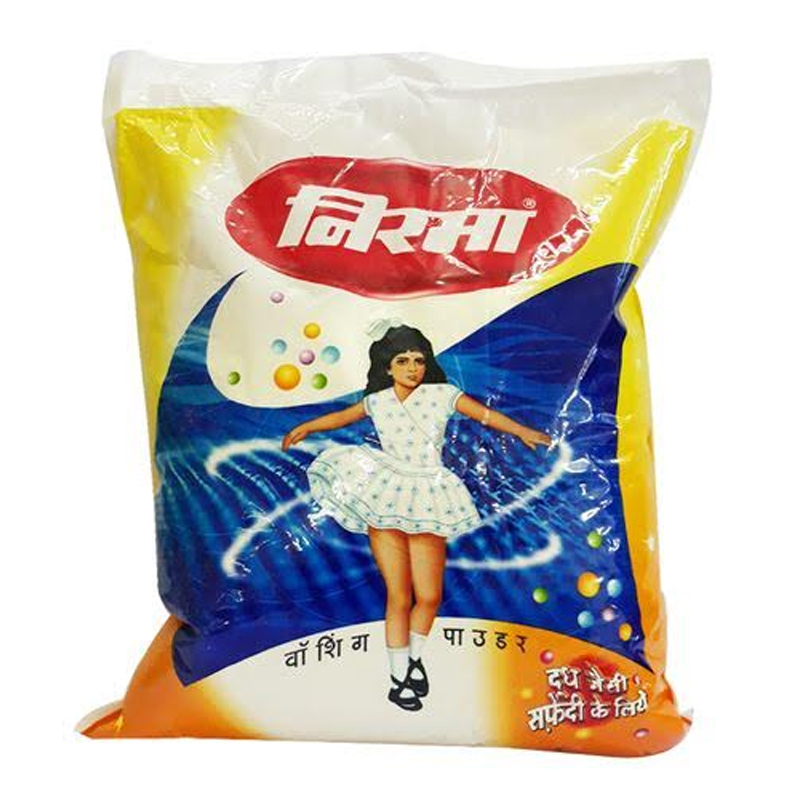
Remember the visuals of a little girl in a frilly white frock twirling to the tune of a catchy jingle? It remains one of the most enduring images from television commercials of the ’80s. Yes, we are referring to the ‘Washing Powder Nirma’ advertisement, which played a key role in catapulting an underdog, regional, barely known brand into the national limelight and in scripting its marketing success. Admit it, the song “Doodh si safedi Nirma se aayi” is already playing in your head, right? So, let’s flashback to the time when this jingle played on every television set – be it black & white or colour. But for that, we need to start from the beginning.
The homegrown detergent brand, which went on to become a household name, had a unique journey that began in the backyard of its founder. The washing powder is the brainchild of Karsanbhai Patel, who worked as a lab technician at the time, at the department of mining and geology in Ahmedabad, Gujarat, after completing his BSc in Chemistry. The year was 1969 and he was all of 24, when he started experimenting with phosphate-free synthetic detergent powder. Eventually, he started manufacturing it in his house. Packaging the washing powder neatly in a transparent pouch, he started handing out packets to people on his way to work, even selling it door-to-door.
‘Detergents’ till then were a premium product, with most average-income households using laundry soap instead. But Patel knew his target consumers well. In order to reach the masses, the product was priced low and presented sans any fancy packaging, to appeal to the target group. The packaging just had the name ‘Nirma’ with a little girl’s mascot on it. Not many know that the brand derives its name from Patel’s own daughter, Nirupama, who tragically passed away young in an accident. The image of the girl on the detergent’s pack belongs to her, as well. This also explains why the image has remained a constant throughout, upto this day.
The detergent market in those days was dominated by Hindustan Lever Ltd’s (now Hindustan Unilever) Surf, which was priced at around Rs 13 per kg. Since the majority of the middle class couldn’t afford to buy detergents at that time, it hardly had any competition. It is this market that Patel tapped into. He priced his brand at Rs 3.50 per kg. This massive price difference led to consumers opting to buy Nirma, over other pricier alternatives. Subsequently, the product sales picked up and Patel started manufacturing Nirma on a large scale. The time was ripe for a low-cost, no-frills alternative to Surf.
In the 1970s, when Nirma entered the market, the biggest challenge it faced was to make its targeted audience aware of its existence. This was the time when the available means of advertising were primarily radio, newspaper, and magazines- and only a few hours of television. This is where Nirma’s advertising strategy caused an upheaval in the detergents market.
Karsanbhai Patel collaborated with Purnima Advertising Agency for a catchy ad that would promote the product, create brand awareness and of course, boost sales. And thus, the jingle was born — “washing powder Nirma, washing powder Nirma…“
It first hit radio airwaves in 1975 and was a hit. Patel then took a chance on TV advertising, upon seeing the increasing scope of television commercials. And the rest, as they say, is history.
The ad debuted on television in 1982 with actor-model Sangeeta Bijlani as the face for the television commercial. The catchy jingle of “Washing Powder Nirma…Sabki Pasand Nirma” captured the nation’s attention, embedding it in our psyches forever.
The jingle had a desi touch with regular Indian names such as Hema, Rekha, Jaya, and Sushma being thrown in, which struck a chord with the masses. The ad by itself was not path-breaking as such. Positioning itself as a brand for the masses, it followed a similar template for long, showing young people actively enjoying- singing, dancing – and of course, washing clothes using the Nirma powder. It portrayed the act of doing laundry as a fun activity, instead of a dreary task. Focusing on pan-India reach perhaps, the ad was shot at a variety of vantage locations across the length and breadth of the country. The ad begins and closes with the ‘Nirma girl’ – the brand’s mascot- twirling onto the detergent pack.
It is probably one of those rare ads where the jingle actually outshines the visuals that accompany it. The song effectively and simply drove the brand messaging with lyrics like “doodh si safedi, nirma se aayi, rangeen kapda bhi, khil khil jaayae” (It brings the whiteness of milk to white clothes and brightens coloured ones too) and, “kam keemat mein adhik safedi laya nirma” (superior whiteness at a low price), which stressed on the low-cost factor coupled with a quality wash that basically every housewife was looking for. The campaign succeeded in dethroning the detergent heavyweight, Surf and overtaking all other big names in the market with its brand positioning.
Little wonder then, that apart from minor tweaks, Nirma retained the jingle in its ad campaign for more than a dozen years- going on to become the longest-running ad jingle in Indian advertising. The brand responded to the evolving customer tastes and times by showcasing the four characters of Hema, Rekha, Jaya, and Sushma as evolving with time, depicting them as independent-minded women actively pursuing their interests and passion, in a slight upgrade from the original ad.
By 1985, Nirma had overtaken Surf to become the best-selling detergent brand in India. And three years later, what started as a door-to-door selling brand, had 60 per cent of the total detergent market share in the country, dethroning the heavyweight brand from the house of a multinational, which had created the market in India. Also forcing HLL marketing stalwarts to go into a huddle for “Operation STING” which stood for-believe it or not-Strategy To Inhibit Nirma’s Growth!
It was a classic David vs Goliath case- that’s worthy of becoming a management case study- where the advertisement helped script the perfect underdog win. The Nirma ad goes down the annals of Indian advertising for taking on the market leader of the time. And while at it, it did what a good ad is supposed to do – tell you about the product’s advantages and make you remember it. And if an ad doesn’t tick those two boxes, all the awards in the world cannot make it work.
BENGALURU: Indian FMCG giant Hindustan Unilever Limited (HUL) spent 7.6 per cent less towards Advertisement and Promotions expense (marketing spends, ASP) in the quarter ended 30 September 2016 (Q2-17, current year) as compared to Q2-16(year-over-year or y-o-y) on a standalone basis. Also, quarter-over-quarter (q-o-q) ASP declined 3.2 per cent in the current quarter as compared the immediate trailing quarter Q1-17. HUL spent Rs 851.38 crore (10 per cent of Total income from operations or TIO) in Q2-17, Rs 921.04 crore (11 per cent of TIO) in Q2-16 and Rs 879.75 crore (10 per cent of TIO) in Q1-17 towards ASP.
ASP was also down, both in terms of absolute rupees as well as percentage of TIO during the half year ended 30 September 2016 (HY1-17) versus the corresponding half year period of the previous year. As a matter of fact, ASP in HY1-17 was the lowest since HY1-13.
HUL chairman Harish Manwani said, “In challenging market conditions, we delivered another quarter of profitable growth. We remain focused on market development, consumer led innovations and an even sharper drive on operating efficiencies. With a good monsoon, weexpect a gradual improvement in market demand and remain positive on the mid-long term outlook for the industry. Our strategic agenda of delivering consistent, competitive, profitable and responsible growth remains unchanged.”
Trends
During aneighteen quarter period starting Q1-13 until Q2-17, HUL’s ASP in Q4-15 was the highest in absolute rupees at Rs1,027.89 crore (13.4 per cent of TIO), while in terms of per centage of TIO in current fiscal, it was highest in Q2-14 at Rs954.02 crore (13.8 per cent of TIO). Please refer to Fig A below. ASP shows linear increasing trend in terms of absolute rupees while in terms of ASP as per centage of TIO, the trend shows a decline during the eighteen quarter period under consideration in this report.
Please refer to Fig B below. HUL’s ASP in HY1-17 at Rs 1,731.13 (10 per cent of TIO) was 4.6 per cent lower than the Rs 1,813.77 crore (11.2 per cent of TIO) in HY1-16. As is obvious, HY1-17 ASP is the lowest over a five year period starting HY1-13 in terms of per centage of TIO and second lowest during the same period in terms of absolute rupees. ASP during the first half period of a fiscal shows a declining trend in terms of per centage of TIO during the period HY1-13 to HY1-17.
The company’s TIO in the current quarter increased 1.6 per cent y-o-y to Rs8.480.26 crore as compared to Rs8,348.60 crore but declined 3.7 per cent q-o-q from Rs8,802.82 crore q-o-q. Please refer to Fig C below. TIO represented by the broken light blue line shows a linear increasing trend during the eighteen quarter period under consideration in this report.
HUL’s Profit after Tax (PAT) in Q2-17 increased11.6 per cent y-o-y to Rs 1,095.60 crore (12.9 per cent margin) as compared to Rs982.06 crore (11.8 per cent margin) and increased by 11.5 per cent q-o-q from Rs 982.17 crore (11.2 per cent margin). PAT shows a linear decreasing trend in terms of percentage of TIO, but indicates a linear increasing trend in terms of absolute rupees during the eighteen quarter period under consideration in this report.
HUL’s Q2-17 reporton categories
Home Care: Robust growth with continued momentum on premium laundry In Fabric Wash, growth was driven by the premium segment as Surf maintained its strong volume-led growth. In Household Care, Vim liquiddid well on the back of sustained market development. The water business continued to do well.
Personal Care: Growth impacted by slowing markets and Personal Wash volumes. In Personal Wash, the performance was impacted by price increases taken during the quarter. Skin Care growth was driven by the BB andCC creams. Hair Care growth was led by the premium brands Dove and TRESemmé. The recently acquired Indulekha brand continued toperform well and was extended to four new states in the quarter. In Oral Care, the overall performance was subdued, though Pepsodent started recovering post relaunch. Lakme Colour Cosmetics sustained its broad based innovation led growth. In Deodorants, Axe Signature continuedto gain ground during the quarter.
Refreshment: Strong growth led by Tea. In Tea, all key brands grew well driven by focused in-market initiatives. Lipton Green Tea and the Natural Care portfolio registered anotherquarter of high growth on sustained market development. In Coffee, Bru Gold continued to lead premiumisation and performed well. In Ice Cream & Frozen Desserts, Magnum Minis were launched during the quarter.
Foods: Modest growth in a challenging market. The focus continues to be on market development for the category. Kissan range of premium Jams gained further traction with consumersand Instant Soups led the growth for Knorr.
BENGALURU: Indian FMCG giant Hindustan Unilever Limited (HUL) spent 7.6 per cent less towards Advertisement and Promotions expense (marketing spends, ASP) in the quarter ended 30 September 2016 (Q2-17, current year) as compared to Q2-16(year-over-year or y-o-y) on a standalone basis. Also, quarter-over-quarter (q-o-q) ASP declined 3.2 per cent in the current quarter as compared the immediate trailing quarter Q1-17. HUL spent Rs 851.38 crore (10 per cent of Total income from operations or TIO) in Q2-17, Rs 921.04 crore (11 per cent of TIO) in Q2-16 and Rs 879.75 crore (10 per cent of TIO) in Q1-17 towards ASP.
ASP was also down, both in terms of absolute rupees as well as percentage of TIO during the half year ended 30 September 2016 (HY1-17) versus the corresponding half year period of the previous year. As a matter of fact, ASP in HY1-17 was the lowest since HY1-13.
HUL chairman Harish Manwani said, “In challenging market conditions, we delivered another quarter of profitable growth. We remain focused on market development, consumer led innovations and an even sharper drive on operating efficiencies. With a good monsoon, weexpect a gradual improvement in market demand and remain positive on the mid-long term outlook for the industry. Our strategic agenda of delivering consistent, competitive, profitable and responsible growth remains unchanged.”
Trends
During aneighteen quarter period starting Q1-13 until Q2-17, HUL’s ASP in Q4-15 was the highest in absolute rupees at Rs1,027.89 crore (13.4 per cent of TIO), while in terms of per centage of TIO in current fiscal, it was highest in Q2-14 at Rs954.02 crore (13.8 per cent of TIO). Please refer to Fig A below. ASP shows linear increasing trend in terms of absolute rupees while in terms of ASP as per centage of TIO, the trend shows a decline during the eighteen quarter period under consideration in this report.
Please refer to Fig B below. HUL’s ASP in HY1-17 at Rs 1,731.13 (10 per cent of TIO) was 4.6 per cent lower than the Rs 1,813.77 crore (11.2 per cent of TIO) in HY1-16. As is obvious, HY1-17 ASP is the lowest over a five year period starting HY1-13 in terms of per centage of TIO and second lowest during the same period in terms of absolute rupees. ASP during the first half period of a fiscal shows a declining trend in terms of per centage of TIO during the period HY1-13 to HY1-17.
The company’s TIO in the current quarter increased 1.6 per cent y-o-y to Rs8.480.26 crore as compared to Rs8,348.60 crore but declined 3.7 per cent q-o-q from Rs8,802.82 crore q-o-q. Please refer to Fig C below. TIO represented by the broken light blue line shows a linear increasing trend during the eighteen quarter period under consideration in this report.
HUL’s Profit after Tax (PAT) in Q2-17 increased11.6 per cent y-o-y to Rs 1,095.60 crore (12.9 per cent margin) as compared to Rs982.06 crore (11.8 per cent margin) and increased by 11.5 per cent q-o-q from Rs 982.17 crore (11.2 per cent margin). PAT shows a linear decreasing trend in terms of percentage of TIO, but indicates a linear increasing trend in terms of absolute rupees during the eighteen quarter period under consideration in this report.
HUL’s Q2-17 reporton categories
Home Care: Robust growth with continued momentum on premium laundry In Fabric Wash, growth was driven by the premium segment as Surf maintained its strong volume-led growth. In Household Care, Vim liquiddid well on the back of sustained market development. The water business continued to do well.
Personal Care: Growth impacted by slowing markets and Personal Wash volumes. In Personal Wash, the performance was impacted by price increases taken during the quarter. Skin Care growth was driven by the BB andCC creams. Hair Care growth was led by the premium brands Dove and TRESemmé. The recently acquired Indulekha brand continued toperform well and was extended to four new states in the quarter. In Oral Care, the overall performance was subdued, though Pepsodent started recovering post relaunch. Lakme Colour Cosmetics sustained its broad based innovation led growth. In Deodorants, Axe Signature continuedto gain ground during the quarter.
Refreshment: Strong growth led by Tea. In Tea, all key brands grew well driven by focused in-market initiatives. Lipton Green Tea and the Natural Care portfolio registered anotherquarter of high growth on sustained market development. In Coffee, Bru Gold continued to lead premiumisation and performed well. In Ice Cream & Frozen Desserts, Magnum Minis were launched during the quarter.
Foods: Modest growth in a challenging market. The focus continues to be on market development for the category. Kissan range of premium Jams gained further traction with consumersand Instant Soups led the growth for Knorr.
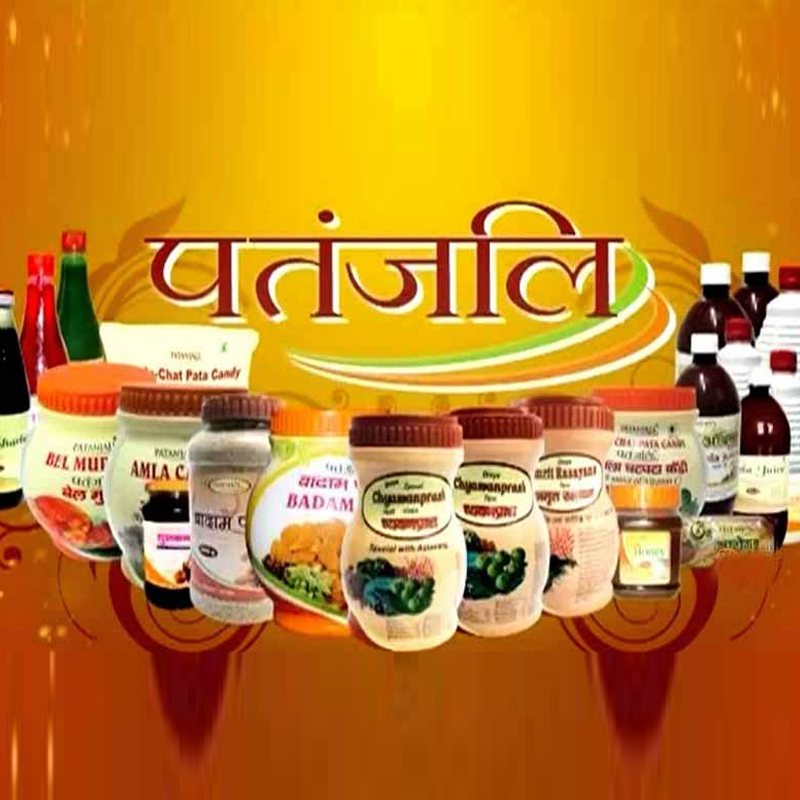
BENGALURU: Personal care, confectionary, food and beverage, oral-care, automobile brands were among the top ten advertisers during BARC week 36 in terms of ad insertions. Though Patanjali Ayurved Limited brand Patanjali led in terms of the maximum number of ad insertions, six of Hindustan Unilever Limited (HUL) brands were also a part of the top ten brands list – and the combined ad insertions of 79,767 by the six HUL brands was a little more than triple of Patanjali’s insertions
Patanjali led the top ten brands across genres all India (U+R): 4+ individuals in terms of ad insertions with 26,579 insertions in BARC week 36. Far behind at second place was HUL’s Fair & Lovely (personal care) brand with 15,640 insertions, followed by another HUL brand Lakme (personal care) at number three with 14,765 insertions.
Mondelez International’s confectionary brand Cadbury was at fourth place with 13,532 insertions, while Colgate-Palmolive Company oral care brand Colgate was at fifth with 13,189 insertions. Three of HUL’s brands – Surf (home care), Dove (personal care) and Pond’s (personal care) were at sixth, seventh and eighth places with 12,982, 12,711 and 12,479 insertions each respectively. Automobile brand Honda followed at ninth place with 11,199 closely followed at tenth place by HUL’s beverage or food and drink brand Brooke Bond with 11,190 ad insertions.
BENGALURU: Personal care, confectionary, food and beverage, oral-care, automobile brands were among the top ten advertisers during BARC week 36 in terms of ad insertions. Though Patanjali Ayurved Limited brand Patanjali led in terms of the maximum number of ad insertions, six of Hindustan Unilever Limited (HUL) brands were also a part of the top ten brands list – and the combined ad insertions of 79,767 by the six HUL brands was a little more than triple of Patanjali’s insertions
Patanjali led the top ten brands across genres all India (U+R): 4+ individuals in terms of ad insertions with 26,579 insertions in BARC week 36. Far behind at second place was HUL’s Fair & Lovely (personal care) brand with 15,640 insertions, followed by another HUL brand Lakme (personal care) at number three with 14,765 insertions.
Mondelez International’s confectionary brand Cadbury was at fourth place with 13,532 insertions, while Colgate-Palmolive Company oral care brand Colgate was at fifth with 13,189 insertions. Three of HUL’s brands – Surf (home care), Dove (personal care) and Pond’s (personal care) were at sixth, seventh and eighth places with 12,982, 12,711 and 12,479 insertions each respectively. Automobile brand Honda followed at ninth place with 11,199 closely followed at tenth place by HUL’s beverage or food and drink brand Brooke Bond with 11,190 ad insertions.
BENGALURU: Indian FMCG giant Hindustan Unilever Limited’s (HUL) Advertisement and Promotions expense (marketing spends, ASP) in Q1-2016 (quarter ended 30 June, 2015) was 22.1 per cent more at Rs 1153.39 crore (14.2 per cent of Total Income from operations or TIO, approximately $181.4 million) than the Rs 944.88 crore (12.2 per cent of TIO) in Q1-2015 and was 12.2 per cent more than the Rs 1027.89 crore (13.4 per cent of TIO) in Q4-2015.
(2) All figures in this report are standalone figures filed by the company. The trends are based on the numbers submitted by the company or picked up from the company’s website. For performance of HUL’s various product lines please refer to the attached earnings release for Q1-2016.
(3) The US dollar figures are approximately based on a conversion rate of 1US$ = Rs 63.57.The converted numbers have been rounded off.
HUL chairman Harish Manwani said, “In a subdued market environment, the business delivered another quarter of healthy volume led growth and strong improvement in operating margin. We are particularly pleased with the stepped up momentum in personal products and the sustained double digit performance in packaged foods. With the near term outlook largely dependent on pickup in rural markets and commodity costs expected to remain benign with little or no price growth across select categories, our focus will be to drive market development and simultaneously deliver cost efficiencies to sustain profitable volume led growth.”
Advertising and Sales Promotion trends
As a matter of fact, HUL’s ASP in Q1-2016 is the highest during a 13 quarter period starting Q1-2013 until Q1-2016, both in terms of percentage of TIO and in absolute rupees. During the period under consideration in this report, ASP in absolute rupee spends shows a marked linear increasing trend, while ASP in percentage of TIO terms shows a slight linear increasing trend, though more marked than until the previous quarter. The company’s lowest ASP was in Q2-2013 at Rs 768.98 crore (12.2 per cent of TIO) in absolute rupee spends during the period under consideration, while the lowest in terms of percentage of TIO was in Q4-2014 at 11.8 per cent of TIO (Rs 840.34 crore). Please refer to Fig A below.
If the company follows the trends of the past three fiscals, at least one or more quarter in FY-2016 will see higher ASP in terms of absolute rupees than Q1-2016.
HUL Revenue and PAT
HUL reported five per cent growth in TIO in Q1-2016 at Rs 8105.13 crore as compared to the Rs 7716.34 crore in Q1-2015 and reported 5.6 per cent growth as compared to the Rs 7094.01 crore in the immediate trailing quarter. The company’s TIO shows a linear increasing trend as indicated by the broken blue trend line in Fig B below. TIO in Q1-2016 is the highest reported by the company during the 13 quarter period under consideration in this report.
HUL’s PAT in Q1-2016 was almost flat (higher by 0.2 per cent) at Rs 1059.14 crore (13.1 per cent of TIO) as compared to the Rs 1056.85 crore (13.7 per cent of TIO) in the corresponding quarter of last year and was four per cent more than the Rs 1018.08 crore (13.3 per cent of TIO) in Q4-2015. During the period under consideration, HUL’s highest PAT was in Q1-2013 at Rs 1331.19 crore (20.9 per cent of TIO), both in terms of absolute rupees and in percentage of TIO. While PAT in absolute rupees shows a linear increasing trend as indicated by the broken pink trend line in Fig B below, while in terms of percentage of TIO, the linear trend is declining as indicated by the broken yellow line below.
HUL Speak: Category and brand growth
HUL says that during Q1-2016, its domestic consumer business grew at five per cent, with six per cent underlying volume growth. The growth in the quarter was impacted by the phasing out of excise duty incentives and price de-growth, as the benefit of lower commodity costs was passed on to consumers.
Soaps and Detergents
In Skin Cleansing, the performance was driven by the premium segment, with Dove and Lifebuoy Handwash delivering strong growth.
In Laundry, Surf maintained its strong volume led growth momentum with broad based double digit growth. Rin did well on the bars portfolio, while Comfort Fabric Conditioners delivered another quarter of high growth on sustained market development.
In Household Care, Vim delivered double digit volume growth, driven by the tubs and liquids formats.
The quarter witnessed further price deflation across these categories given benign input costs.
Personal Products
Skin Care delivered broad based volume led growth across Fair and Lovely, Pond’s, Lakme and Vaseline. Fair and Lovely saw an encouraging response to the newly launched BB cream. Pond’s performance was led by premium skin lightening and facewash while Lakme’s growth was buoyed by CC Cream, Perfect Radiance and new innovations.
Hair Care maintained its strong volume led growth momentum. Dove growth accelerated further, while Clinic Plus, Sunsilk and TRESemmé continued to deliver robust growth.
In Oral Care, Close Up grew in double digit, supported by impactful market activation. In Pepsodent, the Gum Care and Clove & Salt variants continued to do well, with the latter been extended nationally during the quarter.
In Colour Cosmetics, Lakme sustained its strong innovation led performance across the core, Absolute and 9 to 5 ranges.
Beverages
Tea delivered double digit growth with healthy volumes, led by Red Label and another strong quarter on Lipton Green Tea. In Coffee, Bru Gold sustained its robust growth momentum.
Packaged Foods
Market development continues to be the key driver of growth in this segment says HUL. Kissan delivered one of its strongest quarters as growth accelerated across both ketchups and jams. Knorr grew despite a sharp market slowdown in the quarter, led by instant soups. Ice creams registered double digit growth, driven by sharper in-market execution on Kwality Walls and the extension of Magnum to new cities.
Water
Pureit sustained its growth ahead of a slowing durables market, with premium devices delivering another quarter of double digit growth. The category performance continued to be led by modern trade, ecommerce and Perfect Stores
BENGALURU: Indian FMCG major Hindustan Unilever Limited spent 13 per cent more in Q3-2014 towards advertising and marketing at Rs.929.46 crore as compared to the Rs.822.16 crore during Q3-2013, but 2.57 per cent lower than the Rs.954.02 crore for Q2-2014.
During the nine month period ended December 31, 2013 (y-t-d), the company spent Rs. 2773.26 crore, 15.04 per cent more than the corresponding period during the last year. During FY2013, HUL spent Rs.3231.88 crore towards advertising and marketing during FY2013.
Overall, the FMCG giant saw standalone revenue during Q3-2014 increase by 9.39 per cent to Rs.7037.78 crore from the Rs.6433.69 crore during the corresponding quarter of last year and increase by 4.31 per cent from the Rs.6747.20 crore during the immediate trailing quarter.
Its nine month revenue to December 31, 2013 increased by 8.67 per cent to Rs.20472.47 crore from Rs.18839.25 crore during the nine month period ended December 31, 2012. HUL had revenue of Rs.25206.38 crore during FY2013.
Based on this advertising and marketing spends percentage with respect to revenue during Q3-2014 was 13.21 per cent, in Q3-2013 it was 12.78 per cent and in the immediate preceding quarter it was 14.14 per cent.
The corresponding advertising and marketing spends percentage of overall standalone revenue was slightly higher at 13.55 per cent during the nine month period ended 31 December 2013 at Rs.2773.26 crore as compared to the 12.8 per cent (Rs.2410.75 crore) during the corresponding period of last year. During FY2013, the percentage of standalone revenue that the company spent towards marketing and advertising was 12.82 or Rs.3231.88 crore.
HUL’s PAT jumped by 22.02 per cent to Rs.1062.31 crore during Q3-2014 from Rs.871.36 crore in Q3-2013 and was up by b16.26 per cent from the Rs.913.80 crore during Q2-2014. PAT for the nine month period of FY 2014 at Rs.2995.36 crore was lower by a little less than half a per cent as compared to the Rs.3009.47 crore during the corresponding period of last year. HUL’s PAT for FY2013 was Rs.3796.67 crore.
The company reported healthy performance and growth in most of the segments it operates in. Here is a reproduction of a part of the company’s press release.
Soaps and Detergents deliver a healthy performance
Skin Cleansing delivered another quarter of volume led growth. The category performance was driven by Dove, Pears, Lifebuoy and Breeze. Pears was relaunched during the quarter with a new proposition around younger looking skin. The liquids portfolio saw accelerated growth led by Lifebuoy Handwash.
In Laundry, growth was led by the premium segment. Surf growth was buoyed by the robust performance in Surf Excel Easy Wash and Excel Matic while Rin saw good growth on the bars portfolio. Wheel was re-launched with a superior formulation at the end of the quarter. Comfort fabric conditioners continued to lead market development with sustained high growth. Household Care delivered another strong quarter with both Vim and Domex growing in double digits.
Personal Products growth steps up
Skin Care grew well in a slowing market. The re-launch of Fair & Lovely, with the new ‘Best Ever Formula’ and a focused activation plan in the last quarter, is on track. Lakme and Dove grew well and the facial cleansing portfolio registered strong growth, driven by a range of differentiated innovations launched earlier in the year.
Hair Care sustained its strong growth momentum with broad based double digit volume growth. Dove led the category performance with accelerated growth while Sunsilk, Clinic Plus and TRESemmé continued to make very good progress.
In Oral Care, both Pepsodent and Close Up delivered stepped up double digit growth in a competitive market. Pepsodent GermiCheck which was relaunched in the last quarter with a superior product and proposition did particularly well. A&P investments were significantly stepped up to sustain our competitive position in this category.
Colour Cosmetics maintained its strong innovation led growth momentum across both Lakmé and Elle 18. Lakmé continues to strengthen its position in premium make up driven by a range of exciting and contemporary offerings from Absolute and 9 to 5.
Beverages led by double digit growth in tea
Tea delivered another quarter of broad based growth with Taj Mahal, Red Label, 3 Roses and Taaza growing in double digits, driven by a strengthened mix and focused in-market activities. The sustained thrust on leading market development for tea bags, enabled flavoured and green tea bags more than double sales in the quarter. The Lipton Clear Green Tea portfolio was expanded with the launch of new packs. In a slowing Coffee market, Bru continued to drive category premiumization, led by Bru Gold.
Packaged Foods growth steps up; Kissan, Knorr and Kwality Walls grow in double digits
Kissan further accelerated with both Ketchups and Jams delivering strong growth on the back of impactful activation. Knorr had a good quarter particularly on Instant Soups which more than doubled volumes while the growth in Kwality Walls was driven by sharper in-market execution and the robust performance of Cornetto and Creamy Delights. Magnum continues to do well.