Tag: Suresh Narayanan

  • Nestlé India cooks up a strong Q1 with Rs 659 crore profit and volume growth

    Nestlé India cooks up a strong Q1 with Rs 659 crore profit and volume growth

    MUMBAI: Nestlé India’s Q1 wasn’t just about instant noodles, it was an instant hit. Powered by pantry staples, caffeine cravings, and chocolate cheer, the FMCG major cooked up a Rs 5,074 crore sales recipe in the June quarter of FY26, stirring in a 5.9 per cent year-on-year growth and a net profit of Rs 659.2 crore.

    From steaming cups of Nescafé to school tiffins packed with Maggi and KitKat, the company’s core brands did the heavy lifting. Seven of the top twelve brands brewed double-digit growth, fuelling overall volume-led momentum across categories. The EBITDA margin stood robust at 21.7 per cent of sales, while earnings per share for the quarter came in at Rs 6.84.

    “Three of our four product groups bounced back to volume-led growth,” said outgoing Nescafé CMD Suresh Narayanan, who exits the company this month after a decade-long stint. “Maggi noodles saw double-digit growth, and our beverage and confectionery portfolios continued to perform strongly.”

    And perform they did. The Powdered and Liquid Beverages segment led by Nescafé Classic, Sunrise, and Gold perked up with high double-digit growth, aided by cold coffee campaigns that clicked during the summer. Meanwhile, the Prepared Dishes and Cooking Aids category, fuelled by Maggi’s ever-spicy range (Garlic, Cheesy, Pepper, Manchurian), added more masala to the numbers.

    Confectionery was another sweet spot. Kitkat emerged as the crown jewel, leading the charge in both urban and “Rurban” markets. Munch and Milkybar also saw high double-digit gains. Nestlé’s push into premium variants like Kitkat Lemon n Lime and Dark Sharebag helped expand its digital-first distribution.

    Milk Products and Nutrition showed mixed results, but brands like Milkmaid and Nestlé’s growing-up milk range still gained market share. Meanwhile, breakfast cereals buoyed by the recent launch of Munch Choco Fills crunched out high double-digit growth.

    Nestlé’s e-commerce channel now contributes 12.5 per cent of domestic sales, with quick commerce and newer launches proving to be the growth engines. Its Out-of-Home business think vending corners and retail kiosks continues to post double-digit growth, with over 1,000 Nescaf Corners, Maggie Hotspots and Kitkat Break Zones spread across India.

    On the export front too, it was a power-packed quarter, with high double-digit growth across foods, beverages and cereals. The UK even got a taste of desi spice, with Masala-Ae-Magic officially launching there.

    The business faced its share of heat: inflationary pressures pushed up costs of key commodities, and manufacturing expansion led to higher operating expenses. Finance costs rose due to short-term borrowings. But there’s relief in sight coffee, edible oil, and cocoa prices have stabilised, and milk is expected to cool with the monsoon flush.

    As Narayanan passes the baton to incoming Nescafé chairman and MD Manish Tiwary from 1 August, he exits on a high note. Over the last decade, Nestlé India has reported a 150 per cent rise in sales, a 490 per cent jump in PAT, and a 3.9x increase in market capitalisation, with a 17 per cent CAGR in total shareholder return.

    With a legacy that’s chocolate-dipped and noodle-tossed, Nestlé India has shown that even in a high-cost environment, flavour-packed fundamentals and strong consumer connect can serve up consistent, comforting growth.

    (If you are an Anime fan and love Anime like Demon Slayer, Spy X Family, Hunter X Hunter, Tokyo Revengers, Dan Da Dan and Slime, Buy your favourite Anime merchandise on AnimeOriginals.com.)

  • Nespresso expands into India with Delhi flagship

    Nespresso expands into India with Delhi flagship

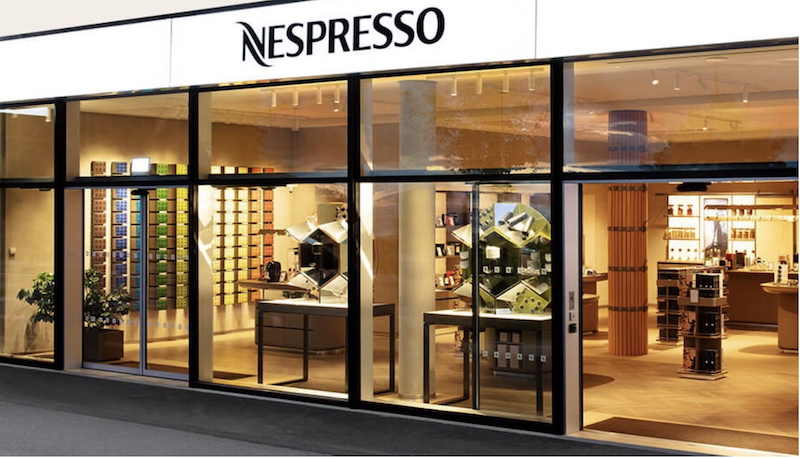
    MUMBAI:  Coffee connoisseurs can cheer. Nespresso, the Nestlé-owned premium coffee brand, has established its first Indian retail presence with a boutique in Delhi’s Select Citywalk Mall, marking a significant step in the firm’s Asian expansion strategy.

    The Swiss company, which pioneered the premium single-serve coffee segment, has entered a market traditionally dominated by tea consumption but where urban coffee culture has gained substantial momentum in recent years. The company had initially entered the Indian market in late 2024 through e-commerce channels before committing to this brick-and-mortar investment.

    Nespresso chief executive  Philipp Navratil, highlighted the importance of physical retail in the firm’s market development approach. “This boutique will help us bring Nespresso’s product range to Indian coffee consumers in an immersive environment,” he noted at the launch event. The company appears to be replicating its successful retail strategy from other emerging markets, where experiential shopping has proven effective in building brand loyalty.

    The Delhi boutique follows Nespresso’s established retail formula: trained coffee specialists offer tastings and personalised recommendations in a carefully designed environment showcasing both the firm’s coffee varieties and its machine range. This high-touch approach has served the brand well in other markets where coffee consumption patterns are evolving.

    For Nestlé, the parent company with an already substantial presence in India, this expansion represents a strategic move into the premium segment.

    “Coffee culture in India is evolving rapidly,” observed Nestlé India chairman & managing director Suresh Narayanan. “This launch reflects our commitment to deliver premium experiences to Indian consumers.”

    The company has appointed Thakral Innovations as its official distribution partner in India, covering all Nespresso products across retail channels. This partnership model has been successfully deployed by Nespresso in other markets where specialised distribution expertise is required.

    Notably, Nespresso has maintained supply chain connections in India since 2011, sourcing high-quality coffee through its sustainability programme. The firm currently works with approximately 2,000 Indian coffee farmers through its AAA Sustainable Quality initiative, which focuses on improving quality, productivity and environmental practices.

    The Indian premium coffee market has shown resilience and growth potential despite economic headwinds, with urban consumers increasingly willing to spend on premium food and beverage experiences. Nespresso’s entry pits it against established players including Starbucks, which has operated in India since 2012 through a partnership with Tata Consumer Products.

    Nespresso, which achieved B Corp certification in 2022, currently operates in 93 markets worldwide with a retail network of 791 boutiques. Whether the company can successfully cultivate a significant market in a country where tea remains the dominant hot beverage will be a key test of its globalisation strategy and the evolving tastes of Indian consumers.
     

  • YES BANK & CNBC-TV18 Growth Summit in association with Max Life Insurance puts a spotlight on India’s $10 trillion economy plan

    YES BANK & CNBC-TV18 Growth Summit in association with Max Life Insurance puts a spotlight on India’s $10 trillion economy plan

    Mumbai: The Delhi edition of YES BANK and CNBC-TV18’s – The Growth Summit: A Vision to a $10 Trillion Economy, in association with Max Life Insurance, was organised on Wednesday. The summit brought together policymakers, industry leaders, startup founders, and a diverse range of experts to engage in substantive discussions regarding India’s economic growth. The primary focus of the summit centred on the government’s ambitious 25-year plan aimed to position India as the world’s third-largest economy, boasting a GDP of $10 trillion.

    A spokesperson from CNBC-TV18 extended a warm welcome to the attendees, moving to the opening remarks by YES Bank CEO & MD Prashant Kumar.  “In the last few years, we have witnessed large investments in the infrastructure landscape, taking the country to the next-level. India has come out as a strong force with all the headwinds happening around the world, and to continue that, we need to remain self-insulated and self-reliant. Moving towards becoming the third largest economy is not enough; the ultimate goal should be that every Indian benefits from this growth. It is crucial for all of us to work collaboratively and focus on areas including—inclusivity with growth, manufacturing, boosting exports, supporting MSME and the startup ecosystem and funding innovation. The involvement of the government and private sector together is the key to achieving the $10 trillion economy plan.”

    During his address, Mr Kumar announced the launch of ‘Yes Private’ in Delhi, which is the Bank’s newest market offering that aims to partner HNI Business owners and C-Suite executives in their endeavour to leverage the opportunities on the road towards a $10 trillion Indian economy.

    The event kicked off with a fireside chat on ‘Leading from the front: How to Live up to your Strategic Vision’ in conversation with Nestle India CMD Suresh Narayanan, he said, I feel fortunate to be a part of a 160-year-old company that values providing experiences to people, not just selling products. Nowadays, digitisation has levelled the playing field for everyone, and e-commerce and AI are helping us plan better. However, with tech being such a driving force presently, we need to utilise it responsibly and remember technology is here to serve mankind and not the other way around. Lastly, trust, empathy and compassion are not just buzzwords and the long-lived companies are going to be those where this five letter ‘TRUST’ is placed in everything they do.” The discussion was moderated by CNBC-TV18 managing editor Shereen Bhan.

    The event continued with another interesting thought-provoking discussion on ‘Unveiling Indian Healthcare as a Model of Growth & Excellence’ in conversation with Medanta executive chairman Dr Naresh Trehan, he stated “Every person in India deserves access to decent healthcare. With the introduction of the Ayushman Bharat scheme, the industry has extended a lifeline to over 500 million individuals who were previously left out of the healthcare facility. It’s surprising to admit that healthcare expenses alone are driving 2 to 4% of our population below the poverty line each year. Considering the extent of our nation’s growth, with a population increasing by 25 million annually, the challenge before us is immense, but the steps taken by the current government through Ayushman Bharat have provided immense relief.”

    Subsequently, there was another fireside chat on ‘Betting Big One on India: Identifying New Growth Opportunities’, Dixon Technologies chairman Sunil Vachani.  

    The fireside chat was followed by a special address by Max Life Insurance CEO & MD Prashant Tripathy. He said, “In India’s pursuit of becoming a $10 trillion economy, visionary policy initiatives stand as cornerstones of inclusive growth. From pioneering financial inclusion schemes and the development of robust digital infrastructure to the progress of our vibrant start-up ecosystem- these collective endeavours underscore the remarkable journey we’ve undertaken as an economy in the last decade. As we stride forward, India must prioritize policies that foster innovation, technological advancement, tackle income inequality, and promote sustainable development practices. These critical areas demand our unhindered focus, as we inch towards an economy that unlocks sustained development for one and all.”

    The evening continued with an engaging panel discussion on ‘Facilitating the Emerging Stars of Indian Business’ with insights from industry experts Akshay Ghulati (Co-founder & COO, Shiprocket); Mr Anirudh Arun (Co-founder, CEO, BluSmart Fleet) and Ish Babbar  (Cofounder & CTO, Insurance Dekho).

    The evening continued with an engaging conversation with Former Indian cricketer Virendra Sehwag. Talking about how the Indian team can bring home the World Cup, he said, “We need to play it like a knockout match, be brave and fearless and most importantly, make the right decision on the field. India has never lacked talent; we need to play aggressive cricket and not worry about winning.”

    Concluding the summit was a thought-provoking session conducted by Kumaar Bagrodia, leading Neuroscientist & Founder of NeuroLeap, on ‘The Neuroscience of Investing’.

    The Delhi edition of ‘The Growth Summit – Vision for a $10 trillion Economy’ underscored India’s trajectory towards economic prosperity as industry leaders and experts converged to chart a path towards a $10 trillion economy. The next edition of the summit will be held in Hyderabad on 15 March,2024.

  • Partha Sinha, Suresh Narayanan and Suparna Mitra part of the Effies Global “Best of the Best” Grand Jury

    Partha Sinha, Suresh Narayanan and Suparna Mitra part of the Effies Global “Best of the Best” Grand Jury

    Mumbai: Effie Global Best of the Best stands as the world’s most definitive effectiveness awards program. A beacon for the industry, drawing on the very best ideas work from around the world.

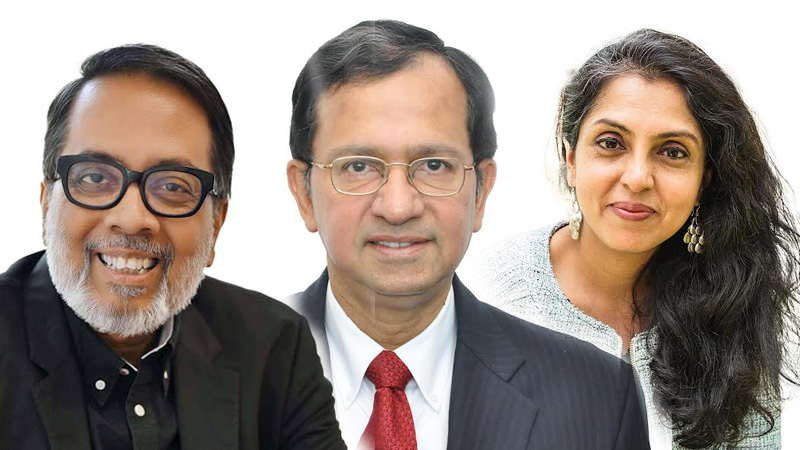
    Three industry stalwarts from India known for their extensive body of work will be part of the Grand Jury to determine the winners. Bringing their experience and insights to the jury discussions will be –

    Mr. Partha Sinha, President, The Times of India Group

    Mr. Suresh Narayanan, Chairman & MD, Nestle India and

    Ms. Suparna Mitra, CEO, Watches & Wearables Division, Titan Company Ltd.

    Global Grand Judges will review the Grand contenders selected to move forward in the competition to determine the Global Grand Effie Winners. The Global Grand Effie winners will then move on to compete for the Iridium Effie, the single most effective marketing effort worldwide. The grand jury will take place in September, 2023 in Singapore.

    The Global Best of the Best is everything its name suggests. A platform built on all the learnings, insights, data and experience gained from the industry and the entrants. It will select from only the work that has achieved Gold or Grand Effie winning status.

    Five other industry stalwarts from India have been selected to be part of the Round One judging

    Ms. Neha Ahuja, Director, Head of Marketing, Spotify India;

    Mr. Mitrajit Bhattacharya, Founder & President, The Horologists;

    Ms. Ruchika Gupta, Marketing Director, Beam Suntory India;

    Mr. Sujit Ganguli, Chief Marketing Officer, ICICI Bank; and

    Mr. Neil George, General Manager & Managing Director, Abbott Nutrition India.

    The round one judging will be done online. 

  • Nestle India clocks double digit growth on the back of in-home consumption

    Nestle India clocks double digit growth on the back of in-home consumption

    NEW DELHI: Nestle India has clocked total sales of Rs 3,525 crore in Q3 2020 ending on September 30, 2020. Domestic sales as well as total sales grew at 10.2 per cent and the total profit during this period was Rs 587 crore. As a result, the company has announced an interim dividend of Rs 135 per equity share.

    The FMCG company registered double digital growth in key brands boosted by in-home consumption. Interestingly, the demand for ‘Out of Home’ channels has also improved during the quarter. Also, the e‐commerce segment grew by 97 per cent, contributing about 4 per cent of domestic sales. 

    Nestle India chairman & MD Suresh Narayanan announced that the company has planned an investment of Rs 2,600 crore over in India over the next three to four years. This is to augment their existing manufacturing capacities, as well as towards the construction of a ‘state of the art’ factory in Sanand, Gujarat, he added.

    “I am extremely proud of my team, our distribution partners, hundreds of suppliers including MSMEs, many thousand farmers, agencies, service providers large and small, as well other stakeholders in our business, for their determination, anticipation, tenacity, imagination and sheer hard work that has helped us achieve a strong performance this quarter. This has been achieved in the face of daunting challenges in operations thrown at us by this pandemic. We are proud of our 108‐year long association with the nation and nearly six‐decade long manufacturing journey,” Narayanan said.

    The quarter witnessed growth driven by an improved supply situation, with factories returning to normal output. Key brands like Maggi Noodles, Maggi Sauces, Kitkat, Nestlé Munch, Nescafe Classic & Nescafe Sunrise witnessed double digit growth on the back of increased in-home consumption.

    “Demand in ‘Out of Home’ channels improved during the quarter but continues to be impacted due to the overall environment. We continued our strong performance in the e‐commerce channels, which grew by 97 per cent and now contributes about 4 per cent of domestic sales,” the company stated in its Q3 earnings report.

  • Nestle India ad and sales promotion expenses up 44% in 2018

    Nestle India ad and sales promotion expenses up 44% in 2018

    BENGALURU: Food and Beverages major Nestle India Ltd (Nestle India) spent Rs 729.44 crore or 6.46 percent of its operating revenue towards advertisement and sales promotion expenses for the year ended 31 December 2018. This was the highest spends towards ad and sales promotion (promo) by the company in absolute terms – in terms of percentage of operating revenue, this was the highest percentage that Nestle India has spent towards ad and sales promotion since 2013. Nestle’s India’s ad and sales promotion spends in 2018 were 44.16 percent higher than the Rs 506 crore (4.96 percent of operating revenue).

    The figures below indicate Nestle India’s operating revenue and ad and sales promotion expenses growth. The number for 2014 in the first chart is with respect to the number for 2013.

    In 2017, the company claimed in an annual report, that it was the first purely food and beverages company in India to cross the milestone of operating revenue of Rs 10,000 crore (Rs 100 billion). The company had reported operating revenue of Rs 10,192.18 crore for 2017.

    Nestle India has been a profitable company with average profit after taxes (PAT) of 10.33 percent of operating revenue over the past 6 years (from 2013 to 2018) despite a downturn in 2015. In 2015, the company had a huge setback due to one of its biggest products – noodles sold under the Maggi brand. Operating revenue, profit after tax plummeted. The company had to spend more towards ad and sales promotion for damage control. If one were to neglect the numbers for 2015, the company’s average operating profit was 12.22 percent of operating revenue during five years from 2014 to 2018 excluding 2015.  Its PAT of Rs 1,606.9 crore in 2018 has been the highest in terms of rupees as per well as in terms of percentage of operating revenue at 14.23 percent during the period under consideration.

    When comparing Nestle India’s ad and sales promotion expenses with PAT, the average ad and sales promotion spends during the six year period between 2014 and 2018 was 50.48 percent of PAT. If one were to neglect the numbers for 2015 during which the company spent an equivalent of 93.27 percent of its PAT towards ad and sales promotion, the five year average works out to 41.92 percent.

    Company speak

    Nestle India chairman and managing director Suresh Narayanan said in the company’s annual report, “2018 has been memorable and a year of many ‘firsts’. We started the year on a bright note, as by the end of 2017 we became the first listed pure play food and beverage Company in India to reach a milestone crossing Rs 10,000 crore in revenue. This historic milestone signifies the strength of our 106-year old business in India and will serve as a moment of inspiration as we continue to build for a healthier future. It is clear that a healthier future requires a healthier business and a healthier society, and my team and I are fully committed to this. We continued to build trust with consumers and communities by being responsible, transparent and maintained our focus on building long term relationships.”

    “Consumers have always been at the heart of our initiatives. We continued to offer exciting new product categories by introducing NESPLUS Breakfast Cereals, MAGGI Nutri-licious Baked Noodles, MAGGI Dip & Spread, NESCAFÉ Ready-to-Drink Cans, NESCAFÉ É Smart Coffee Machine and EVERYDAY Chai Life,” added Narayanan.

  • Nestlé, Google & Paytm join hands for new Maggi

    MUMBAI: In a first-of-its-kind association, Nestlé India has collaborated with Google and Paytm Mall to roll out an exciting new promotion for the launch of the new variants of Maggi Noodles. Inspired by the regional cuisines, Maggi Masalas of India will cater to distinctive local tastes with signature herbs and spices. The objective of this engagement is to build anticipation and excitement around the new variants, where consumers have to guess the four flavours from the eight options provided.

    Nestlé India CMD Suresh Narayanan says, “At Nestlé we constantly use platforms and technology to deliver differentiated brand experiences. We are confident that our consumers, who have always demonstrated an unconditional love for their favourite Maggi Noodles, will be excited with this association. I am thankful to both our partners, who are leaders in their respective areas, for this association, to provide consumers with a unique and innovative experience that is a win-win for all.”

    This innovative association with Google allows users to key in “Meri Maggi” in the search bar, and be presented with eight options of Maggi Masalas of India variants. The user has to then choose four out of the eight options displayed and submit their vote. Upon submission of vote not only will the user become eligible to participate in the contest to win the Masalas Of India Goodie Box, but can also pre-book, the yet to be launched, Maggi Masalas of India Noodles, exclusively through Paytm and Paytm Mall.

    Google India director – sales Vikas Aghnihotri adds, “Google is always innovating to create unique experiences for users and this innovation is an example of how we can work with organizations to drive engagements at a mass scale.”

    Paytm Mall has created a special Maggi Brand Store to sell the Maggi Masalas of India box from 22 April. The company has also launched a unique campaign – Catch the Maggi Train, in which four new flavor packs will appear as icons forming a train on Paytm and Paytm Mall app. Consumers who will click on the train icons & buy the product will be gratified with exclusive cashbacks on their purchase.

    Paytm Mall vice president Saurabh Vashistha said, “India is a richly diverse country with countless cultures, languages and cuisines. Nestlé has done an excellent job of creating a special range of Masala Noodles drawing inspiration from this culinary diversity and we’re happy to bring this delight to the doorsteps of millions across the country. This is truly aligned with our ideology to build unique products handcrafted in India that acknowledge and celebrate our diversity.”

  • Nestlé supports ‘Nanhi Kali’; changes packaging

    Nestlé supports ‘Nanhi Kali’; changes packaging

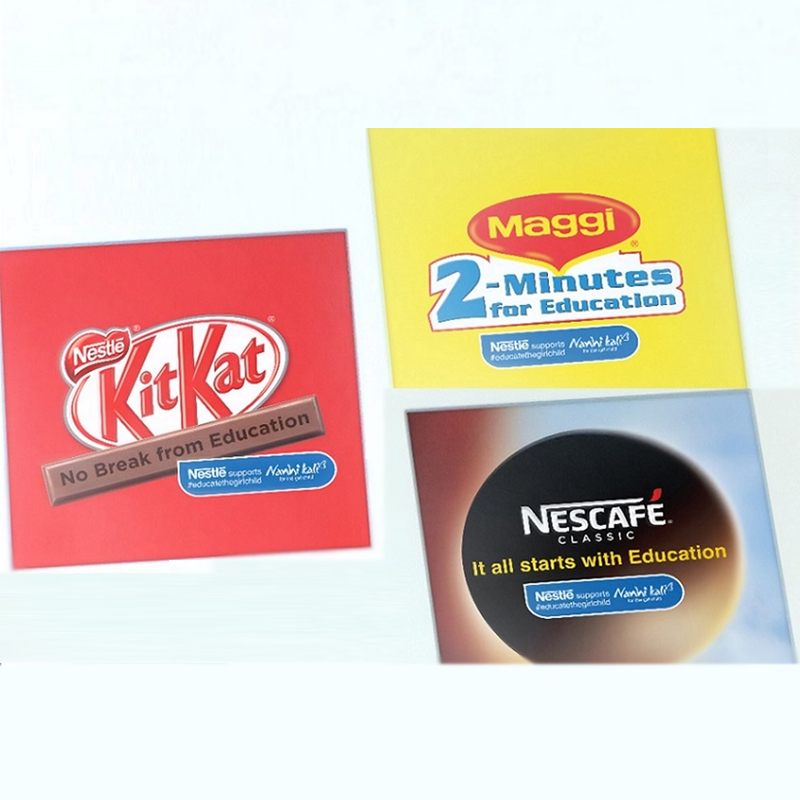
    MUMBAI: Nestlé India has changed the packaging of its iconic brands, Maggi, Nescafe and Kitkat to support girl child education in association with Nanhi Kali, an NGOs imparting education to underprivileged girl children across India.

    In an attempt to spread awareness about this crucial issue, Nestlé has changed packaging of 100 million packs available on shelves till September-end.

    Project Nanhi Kali was initiated in 1996 by the K. C. Mahindra Education Trust (KCMET) with the aim of providing primary education to underprivileged girl children in India.

    The changes include, Maggi’s tagline going from ‘2 minute noodles’ to ‘2 minutes for education,’ Kitkat’ to ‘No break from education’, and Nescafe changed the tagline to ‘It all starts with education.’ This has been further reinforced with a blue band which carries more information on the association with ‘Nanhi Kali.’

    Nestlé India MD and chairman Suresh Narayanan said, “Each time a consumer picks a pack, the visual properties of the brand serve as symbols of the promise the brand has made to the consumers. We are changing the packaging of three of our most iconic brands to sensitize and draw attention to the crucial need for society.”

    Mahindra Group chairman Anand Mahindra added, “This is a path-breaking and innovative partnership between Nestlé India and a non-profit organisation.”

    The partnership with Nanhi Kali further strengthens the Nestlé Healthy Kids Programme which has already reached out to about 1,00,000 beneficiaries. Project Nanhi Kali, jointly managed by K. C. Mahindra Education Trust and Naandi Foundation, has been a credible programme.

  • Nestlé supports ‘Nanhi Kali’; changes packaging

    Nestlé supports ‘Nanhi Kali’; changes packaging

    MUMBAI: Nestlé India has changed the packaging of its iconic brands, Maggi, Nescafe and Kitkat to support girl child education in association with Nanhi Kali, an NGOs imparting education to underprivileged girl children across India.

    In an attempt to spread awareness about this crucial issue, Nestlé has changed packaging of 100 million packs available on shelves till September-end.

    Project Nanhi Kali was initiated in 1996 by the K. C. Mahindra Education Trust (KCMET) with the aim of providing primary education to underprivileged girl children in India.

    The changes include, Maggi’s tagline going from ‘2 minute noodles’ to ‘2 minutes for education,’ Kitkat’ to ‘No break from education’, and Nescafe changed the tagline to ‘It all starts with education.’ This has been further reinforced with a blue band which carries more information on the association with ‘Nanhi Kali.’

    Nestlé India MD and chairman Suresh Narayanan said, “Each time a consumer picks a pack, the visual properties of the brand serve as symbols of the promise the brand has made to the consumers. We are changing the packaging of three of our most iconic brands to sensitize and draw attention to the crucial need for society.”

    Mahindra Group chairman Anand Mahindra added, “This is a path-breaking and innovative partnership between Nestlé India and a non-profit organisation.”

    The partnership with Nanhi Kali further strengthens the Nestlé Healthy Kids Programme which has already reached out to about 1,00,000 beneficiaries. Project Nanhi Kali, jointly managed by K. C. Mahindra Education Trust and Naandi Foundation, has been a credible programme.

  • FY-2015: Nestle ups marketing spends to Rs 525 crore

    FY-2015: Nestle ups marketing spends to Rs 525 crore

    BENGALURU: That the Maggi fiasco was going to cost Nestle India Limited (Nestle India) dear was a given. Post the relaunch of one of the most staple dishes of modern India, the company had to follow up with a massive damage control and marketing push. Not only has the company had to pay more towards marketing, for the first timein this century, it has reported a drop in revenues. Also for the first time in this century, profit margin in terms of profit after tax (PAT) as percentage of total revenue from operations (TIO) has slipped down to a single digit. Further, in September 2015, the company completed 100 years in India. In its corporate campaign, the Swiss major conspicuously avoided mention of its biggest brand Maggi noodles while mentioning features of its other brands such as Nescafe and KitKat .

    Nestle India hired McCann World Group for the Maggi Noodles relaunch, with the agency’s India unit chief executive Prasoon Joshi in charge of the creatives for the campaign. Reportedly the largest food company in the world, Nestle India kicked off there launch campaign in October 2015 with a print advertisement that said: ‘Your Maggi is safe, has always been.’ The ad went on to explain that around 3,500 samples of the noodle brand were put to rigorous test in India and in places such as the USA, Canada, UK, Australia, New Zealand and Singapore.During the Maggi noodles recall and ban, the brand’s past and present endorsers, including actors Madhuri Dixit, Amitabh Bachchan and Priety Zinta, were served notices by the Uttarakhand Food and Drug Administration for making false claims.Further, since a court case had been filed against the brand’s ambassadors in Uttar Pradesh for their endorsement of Maggi, the relaunch communications did not carry any brand ambassadors.

    As is known, Maggi noodles were banned by the Food Safety and Standards Authority of India (FSSAI) and the commissioner of Food Safety, Maharashtra (FDA) in June 2015, mainly due to the allegation that they contained higher than the permissible limits of the metal lead. The company had to stop production of Maggi noodles, recall existing stocks of the noodles from the market and destroy them.The company says that it conducted extensive tests of over 3,500 samples representing over 200 million (20 crore) packets of Maggi Noodles in both national and international accredited laboratories. It said that all the results showed that the levels of lead were below permissible limits The companyalso claimed that several other countries also found Maggi noodles safe after testing samples of the product exported from India.

    Court orders directing fresh testing of samples from three national laboratories, while revoking the ban on Maggi noodles, were issued. Nestle India says that all the results from three National Accreditation Board for Testing and Calibration Laboratories (NABL) said that 100 per cent of samples were clear, with lead within the permissible limits. Manufacture of Maggi noodles was recommenced from November 2015 onwards. FSSAI has challenged the judgement that lifted the ban on Maggi noodles and the matter is still in court.

    Brand and trust had to be re-built, and is still an on-going process. Nestle India is one of the biggest spenders on advertising in the country. Nestle India’s new chairman and managing director Suresh Narayanan said in a financial release, “I am happy to report that despite the exceptional toll the Maggi noodles crisis took on our financials, our optimism about the future helps us with a healthy dividend payout. The high point of the last quarter has been the return of Maggi noodles to the market and the consumers to whom it rightfully belongs. The sales evolution and reception in the marketplace gives us satisfaction, but we have ambitions ahead to strengthen the brand. Following the reintroduction of the Maggi Masala variant, we have launched another favourite Maggi Chicken noodles. As a team we are committed to serving our consumers with more offerings from Maggi and our other brands by accelerating the pace of innovation and renovation.”

    Ad spends and other numbers

    Nestle India increased its advertisement and sales promotion (ASP, marketing) spends by 18.9 per cent for the year ended 31 December 2015 (FY-2015, current year) to Rs 525.21 crore (6.42 per cent of TIO) as compared to the Rs 445.47 crore (4.52 per cent of TIO) in the previous year (year ended 31 December 2014, FY-2014).

    Note:(1) Nestle India financial year is the calendar year. It reports annual results for the period 1 January to 31 December. Hence FY-2015 represents the period between 1 January 2015 and 31 December 2015.

    (2) The unit of currency in this report is the Indian rupee – Rs (also conventionally represented by INR or ).The Indian numbering system or the Vedic numbering system has been used to denote money values in this report. The basic conversion to the international norm would be:

    (a) 100,00,000 = 10,000,000 = 100 lakh = 10 million = 1 crore.

    (b) 10,000 lakh = 100 crore = 1 billion = 1 arab.

    Over a 12 year period starting FY-2004 until FY-2015, Nestle India’s year on year ASP spends had been dropping in terms of percentage of TIO from a high of 5.5 per cent in 2005 to a low of 4.3 per cent in FY-2011, FY-2012 and FY-2013. The previous year saw a slight percentage increase of 20 basis points in ASP to 4.5 per cent, and this year saw a massive 190 basis points increase in ASP as percentage of TIO to the above mentioned 6.4 per cent as compared to FY-2014.

    During the 12 year period under consideration, ASP has seen a CAGR of 14.3 per cent from the Rs 251.92 crore (5.4 per cent of TIO) to the above mentioned Rs 525.21 crore in the current year. Until the previous year, ASP at Rs 445.47 crore (4.5 per cent of TIO) had seen CAGR of 13.9 per cent since FY-2004.

    The FMCG major’s TIO declined 17 per cent to Rs 8,175.31 crore in FY-2015 as compared to Rs 9,854.84 crore in FY-2014. Please refer to figures 1 and 2 below.

    During the same twelve year period under consideration, Nestle India’s TIO has shown a CAGR of 12.5 per cent from Rs2,227.57 crore in FY-2004 to the above mentioned Rs 8,175.31 crore in FY-2015. Last year, the company’s TIO had a CAGR of 16 per cent since FY-2004 with TIO of Rs 9,854.84 crore in FY-2014. CAGR at 16.9 per cent since FY-2004 was even higher in FY-2013, when Nestle India had reported TIO of Rs9,101.05 crore.

    Nestle India’sPAT had crossed the Rs 1,000 crore mark in FY-2013, when the company had reported PAT of Rs 1,067.93 crore (12.8 per cent margin) on TIO of Rs 8,334.53 crore.

    PAT in the current year declined to less than half – declined by a massive 52.5 per cent to Rs 563.27 crore (6.9 per cent of TIO) as compared to the Rs 1,184.69 crore (12 per cent of TIO) in FY-2014. Please refer to figure 3 below.

    In terms of percentage of TIO, Nestle India’s simple avarage PAT between FY-2004 and FY-2014 was 12.3 per cent. This has dropped to 11.8 per cent of TIO between FY-2004 and FY-2015.

    Between FY-2004 and FY-2014, Nestle India’s PAT had shown a CAGR of 16.7 per cent growth from Rs 251.92 crore (11.3 per cent of TIO) to the above mentioned Rs 1,184.69 crore (12 per cent of TIO). Between FY-2004 and FY-2015, PAT CAGR declined to less than half at just 7.6 per cent.

    Report background: Being a part of a multi-national group, the company is generally quite tight lipped about sharing financials unless it has to legally do so. Details about the company’s advertisement spends are not indicated even in the company’s annual reports – what you have is a combination of the Advertisement and Sales Promotion spends declared as a single entry in the notes forming the part of the company’s annual financials. There is really no way that one could pin an exact number for these spends unless one has an inside track on the company’s marketing budgets. The projections and numbers in this report are pure conjecture based on the author’s statistical tools used on the historical annual numbers revealed by the company in its annual reports. The author has no knowledge about Nestle or Nestle India’s strategy, past or present.