Tag: Surendra Pal

  • Experience Pracchand Ashok’s grandeur on COLORS

    Experience Pracchand Ashok’s grandeur on COLORS

    Mumbai: The greatest love stories are not without their trials, but what happens when fate writes a timeless saga that changes the course of history? Witness the colossal power of love as COLORS takes the audience back in time to the glory of the Mauryan and Kalinga dynasty with its magnum opus ‘Pracchand Ashok’. Making a stellar edition to its library of riveting love stories, the channel treats the viewers to the royal odyssey of Samrat Ashok and Princess Kaurwaki whose thirst for power and yearning for affection collide. After curating iconic franchises that were household favourites, COLORS and Balaji Telefilms unite to raise the bar of storytelling yet again with the historical romance that shaped destinies of empires. Starring actors Adnan Khan and Mallika Singh in the roles of Samrat Ashok and Princess Kaurwaki respectively and produced by Ekta Kapoor’s Balaji Telefilms, ‘Pracchand Ashok’ premieres on 6 February, 2024 and airs every Monday – Friday at 10:00 pm only on COLORS.

    ‘Pracchand Ashok’ recounts the tale of Samrat Ashok and Princess Kaurwaki, two legends who are as different as day and night. While Kaurwaki dreams of a partner with a heart of gold, cherishing family values above all, Ashok is a relentless conqueror who thinks of family as a chink in one’s armour and unafraid to spill blood for power. However, deep within, he harbours a burning desire to create a legacy, earning respect for his mother, who’s been treated no less than a maid in the kingdom and securing a place for himself in his father’s heart. Kaurwaki seeks a noble companion while Ashok wants to be feared, craving dominion over everyone. Amidst conflicting ideals and aspirations begins a love story that alters the history of Bharatvarsh.

    Popular actor Adnan Khan said, “Getting the chance to essay the role of Samrat Ashok is like living out a childhood fantasy. Joining the COLORS family, especially with a grand show like Pracchand Ashok, is an incredible opportunity to connect with its massive set of viewers across the country. I’m grateful to COLORS and Balaji Telefilms who have trusted me to embody a legend, whose life spans from the conquest to compassion. I promise that this show will enliven the historical romance on Indian television screens.”

    On essaying the role of Princess Kaurwaki, Mallika Singh said, “Working with COLORS, a channel loved by many, and the incredible Ektaa R Kapoor is a dream come true. Princess Kaurwaki’s huge role in Samrat Ashok’s life and how she shaped history is a story that deserves to be told. I believe my calling as an actor through this show is to pay tribute to the legendary woman, who knew the power of love. I am beyond excited for my collaboration with COLORS and Balaji Telefilms and hoping that our hardwork pays off.”

    ‘Pracchand Ashok’ navigates the historical romance of Samrat Ashok and Princess Kaurwaki. Growing up with an unwavering belief in the potency of love, Kaurwaki stands in stark contrast to Ashok, who fosters hatred and animosity, oblivious to his destined path. She serves as a beacon of hope in his life. Additionally, a myriad of emotions intricately weaves Samrat Ashok’s journey. From his indelible connection with his father to his relentless pursuit of respect and justice for his mother, every emotion is explored with depth and nuance, further adding layers to the narrative. Joining the stellar cast are seasoned actors such as Rakshanda Khan as Helena, Chetan Hansraj as Bindusar, Surendra Pal as Chandragupta Maurya, Manoj Kolhatkar as Chanakya, Aarush Shrivastava as Sushim, Dinesh Mehta as Subhandhu, Ankit Bhatia as Bhadrak, Shalini Chandran as Dharma, Leena Balodi as Salukkhavati, Manish Khanna as Padmanabhan.

    Get ready for a historical love saga in ‘Pracchand Ashok’ premiering at 10:00 pm on the 6 February 2024 and airing every Monday to Friday only on COLORS.

  • BIG MAGIC Bihar & Jharkhand presents Tata Sumo Gold Hindustan ka BIG Star

    BIG MAGIC Bihar & Jharkhand presents Tata Sumo Gold Hindustan ka BIG Star

    MUMBAI: India is a storehouse of diverse religions, culture, traditions as much as it houses incredible talent in all four directions. Exploring the vast talent from North, East, South and West India, BIG MAGIC Bihar & Jharkhand, the region’s No.1 entertainment channel along with TATA Sumo Gold launches ‘ Tata Sumo Gold Hindustan Ka BIG Star ‘ powered by Horlicks. With an aim to find the most impeccable talent from the country, the show airs every Saturday and Sunday at 8pm exclusively on BIG MAGIC Bihar & Jharkhand!


    The show that started on the 14th of March, spans for a period of 10 weeks of 2 episodes each. Throughout its duration, the show promises display talent / art forms across all age groups and regions from India. After multiple rounds of screening and eliminations, the semifinalists will be shortlisted from each direction (North, East, South and west) and pitted against each other in the finale. The show concludes with a grand finale on the 18th of May 2014.


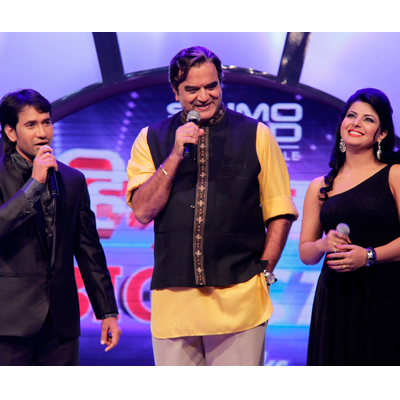
    Inviting participation from across the length and breadth of the country, the show is hosted by famous Bhojpuri Actor Dinesh Lal Yadav ‘Nirahua’ and judged by the gorgeous Smirity Sinha & the renowned Surendra Pal. The three well known personalities from the Bhojpuri entertainment world lend their talent and experience to the show. The show is being marketed and promoted across various platforms with the help of Reliance Broadcast Network’s marketing muscle and also sees great synergies with 92.7 BIG FM in the Jharkhand region.

  • Teri Meri Kahaani is two love stories too many

    Teri Meri Kahaani is two love stories too many

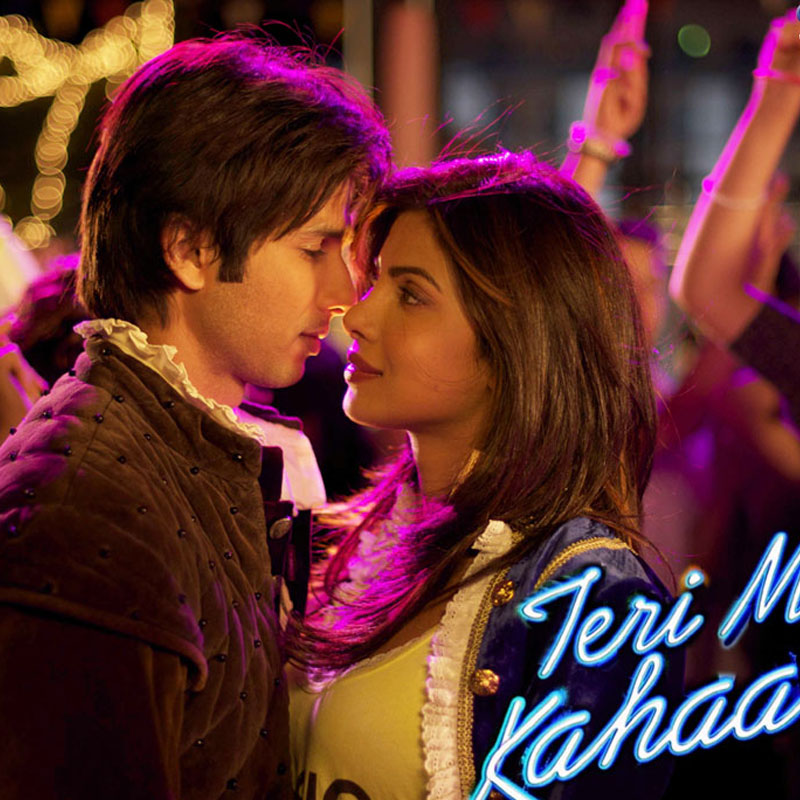
    MUMBAI: As the tagline hints, Teri Meri Kahaani is made of three love stories spread over a century. All three are love at first sight with the same lead pair, Shahid Kapoor and Priyanka Chopra playing the lovers.

    The three stories happen during different eras and backdrops. The first is in 1960, the second one is contemporary and takes place in 2012, while the last one takes place in 1910; the logic, if any, behind the order of the stories is not explained and it is the choice of placing the third story that weighs heavily against the otherwise average product.

    The first story is more like a fantasy love story in the 1960s. On a train journey from Poona to Mumbai, Shahid Kapoor boards a running train. The compartment that he boards has four berths, all of which are booked exclusively for the use of Priyanka Chopra. She is a film star and flashes an issue of Filmfare featuring her on the cover to make her point. She wants Shahid to be kicked out but he expresses his helplessness as the train is already running. The train is nothing like one has ever seen in India and there seem to be no stops between Poona and Mumbai! By the time they reach Mumbai, Priyanka Chopra is besotted with Shahid and craves his presence every moment from then on.

    What sours the romance is the third person, Prachi Desai, a girl sharing same accommodation as Shahid but in the opposite room. Not only has she also fallen for Shahid, but she happens to be a close friend of Priyanka. There is no apparent reason but nobody seeks an explanation and the romance is over.

    The second takes place in 2012 in UK. Shahid Kapoor has a live in girlfriend, Neha Sharma. Her usual problem is that Shahid has no time for her between his studies and his job. She fights with him and calls it quits. A while later, Shahid bumps into Priyanka Chopra, they both drop their belongings including cell phones and in a misunderstanding, she thinks Shahid has stolen her cell phone on the pretext of bumping into her and gets him put behind bars. She soon realises that the phones were switched and she had Shahid‘s phone instead. Apologies later, the duo is celebrating since it is also Shahid‘s birthday. Love has already happened. What follows are SMSes galore and the next meeting, which Neha Sharma decides to wreck by forwarding Shahid‘s personal pictures with her. Priyanka Chopra is offended because within hours of breaking off with Sharma, Shahid had fallen in love with her. That is not a done thing according to her morals.

    The romance is curtailed. The fact that Shahid is named Krish, Priyanka is Radha and Neha Sharma is called Meera is meant to be funny!

    The third romance is in a place called Sargodha near Lahore in 1910. Shahid is Javed, a Muslim whose whole-time occupation is chasing and bedding girls. This time he has scored with the daughter of a British officer; while he is closeted with her, her father turns up. As a result, Shahid is chased by policemen and while running from them, he bumps into Priyanka. She is a Sikh freedom fighter‘s daughter named Aradhana. Shahid wants her to be his by any means. To impress her father, Surendra Pal, Shahid joins a freedom march only to run away when police start laathi charge. He has lost his respect in the eyes of Aradhana and to win her back, he plays a prank on a British police officer and is sent to jail. The jail has laws convenient to prisoners: women are allowed to visit, dance and make merry with the inmates! When he gets out of jail, Priyanka‘s father has already married her off. Shahid decides to tie the knot too if only to please his father.

    It is time to tie the loose ends, finish the love stories on happy notes and all three Shahids are duly united with their respective Priyankas.

    To choose a period film is a tricky business and to do so without proper cause is even worse. Justifying the atmosphere and feel of an era gone by is a tough job. In the first story, the director has taken the viewers for granted, neither the train nor the stations nor Mumbai of 1960 are anywhere close. The 2012 story passes muster on this count. However, the story set in 1910 is poorly executed and the sets are patchy and shoddy. Generally too, the direction is just about average. Placing the 1910 story at the end was not wise. The film has some good tunes in Mukhtasar… and Jabse mere dilko….. Shahid Kapoor‘s one liners are witty.

    While the chemistry between Shahid and Priyanka does not create magic, Shahid‘s charm and natural performance see him through. Priyanka Chopra manages with her usual repertoire of expressions. Of the rest, Vrajesh Hirjee and Prachi Desai are good and Neha Sharma is okay.

    Teri Meri Kahaani is two love stories too many, all told without much effect. The emotion quotient is nil.

    Having opened to tepid response, the film will find its high price tag too much to justify.

    Gangs Of Wasseypur scores only on the performance front

    Gangs of Wasseypur, like so many recent films, highlight a local story. This seems to be a trend among new generation filmmakers in Mumbai. Unlike the earlier filmmakers who came from many parts of India but merged into mainstream filmmaking, the new lot is staying away from the mainstream commercial format. They dabble in stories they grew up with or were privy to.

    Gangs of Wasseypur takes a story about rivalries in a small town called Wasseypur, which, over a period, changed its parent state few times and is located near the coal mining hub of India, Dhanbad. The birth of gangsterism is credited to legendary outlaw, Sultana Daku (who has been a subject of a couple of Hindi films earlier) notwithstanding the fact that Sultana was a dacoit, not a gangster, who looted train wagons of goods transported by the British rulers of India.

    Sultana was repentant of his past and did not want his sons to take to the same life as his. Contrary to that, Gangs of Wasseypur is about dynastical enmities between two Muslim clans: Khans (Pathans) and Quereshis (butchers).

    There is a third angle to the story about the local bahubali/warlord and politicians, Ramadhir Singh (Tigmanshu Dhulia) whose life has been made miserable by the Khans, who plays Quereshis against them.

    The film begins with a prologue showing Quereshis ambushing the house of Khans and leaving convinced they have killed all of them. While that prologue will matter more in the second part of the film, here it creates the groundwork to take you back to 1941, the origin of the crimes and enmities.

    Shahid Khan (Jaideep Ahlawat) has picked up where Sultana Daku left off. He is a dreaded train robber who has mended his ways and started working as coalmine labour at a mine owned by Ranbir Singh.

    When Shahid Khan‘s wife is dying during a child delivery, the miners‘ muscleman, who treats these labourers like slaves, does not allow him to leave and run to her rescue. When he manages to reach, it is too late and he has lost his wife and is left with a new-born baby in his arms. He kills the miner‘s muscleman and at the same time, also earns the same job for himself. However, Shahid Khan is an ambitious as well as a ruthless man. He soon expects to kill Ramadhir Singh and take his place as the mine owner. His ambition causes him his life and almost that of his tiny son and cousin but they manage to run away in the nick of time.

    Shahid Khan‘s son grows up to be Sardar (Manoj Bajpayee) and all the prologues and preambles later; this is what Part I of Gangs of Wasseypur is all about: the life and times of Sardar. Sardar is now grown up, told of the cause of his father‘s death and initiated into violence for revenge. He decides to play games with Ramadhir Singh and humiliate him and his MLA son on regular basis.

    The enmity between Khans and Quereshis dates back to Sultana Daku days when a Quereshi dared to infringe on Sultana‘s wagon-breaking monopoly and looted some food grain wagons. He paid for this with his life and the Khans and Quereshis have never seen eye to eye ever since! So what if the story of revenge is between Khans and Quereshis, Sardar Khan is back in Wasseypur to avenge his father‘s death and his enmity is with Ramadhir Singh. The Quereshis are just silent spectators and haters of Sardar Khan until one day they are provoked into action by Ramdhir Singh, aided and armed amply with automatic guns and let loose on Khans.

    Sardar Khan‘s aim is to avenge his father‘s death and kill Ramadhir Singh but lesser priorities take over and soon he is into one wife (Richa Chadha) than whoring, and then another wife, a Bengali maid, Reema Sen, as well as plundering and looting.

    He follows the trends of American Italian mafia except that he is neither as brainy nor as resourceful. That means no drugs, no casinos, and no prostitution. He just takes over the local lake and its fishing monopoly! Meanwhile, the much humiliated Ramadhir Singh, who can‘t cope with Sardar Khan alone, seeks the help of age-old enemies, the Querishis and seeks revenge through proxy. Sardar Khan is betrayed and assumed dead even while he hitches a hike on a cycle cart and the rest is left for Part II.

    For now, Sardar, the Khan, has been routed.

    Gangs of Wasseypur aspires to be an Indian Godfather, but unlike the old classic, it has no relevance to the whole of India in that it is purely a local folk. Director Anurag Kashyap has shot the film as if for the History Channel with having an editor on the roll only to delete NG shots. For most parts, it is not a regular film but a straightforward account. The film is the director‘s dream and obsession and an editor is, at best, a nuisance. Technically and production-values wise, the film is shoddy. Songs in the background serve little purpose. The background score is inconsistent and often fails to match the events on screen.

    Where Gangs of Wasseypur really scores is on the performance front. The film has some excellent portrayals and the one to lead the gang is Richa Chadha as Najma, Sardar Khan‘s first wife, followed by Tigmanshu Dhulia, who as the conniving ex-strongman is subdued yet effective. Manoj Bajpayee needs to get out of his skin and play the character instead of playing himself.

    Gangs Of Wasseypur is replete with gore, violence and foul words which cuts out a huge part of its audience. The film‘s prospects thus depend on single screens. The film‘s best chances are in Eastern UP and Jharkhand and to some extent in Bihar.