Tag: Supriya Sahu

  • Supriya Sahu gets three-month extension as JS in I&B

    Supriya Sahu gets three-month extension as JS in I&B

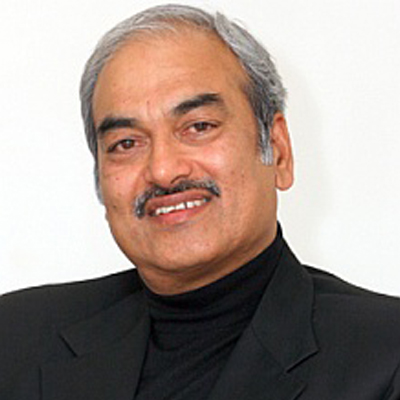
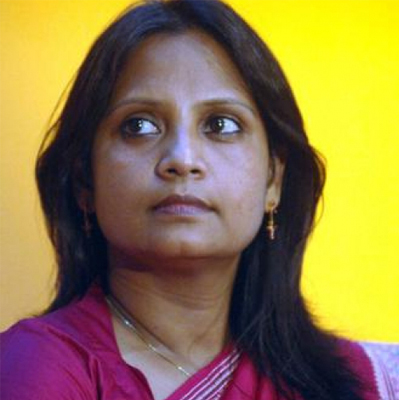
    NEW DELHI: Senior Indian Administrative Officer, Supriya Sahu, has been given a three-month extension as joint secretary in the Information and Broadcasting Ministry.


    Her term ends later this month. The extension has been approved by the Appointments Committee of the Cabinet.


    Ministry sources told indiantelevision.com that the necessary proposal for extension beyond 22 July had been moved prior to the election of the new government.  The normal term of an IAS officer is five years, said the sources.


    A 1991 Tamil Nadu cadre IAS officer, Sahu is presently joint secretary (Broadcasting) in the Ministry.


    Prior to this, she was broadcasting director at MIB and was directly involved with the drawing up of the Broadcasting Services Regulation Bill and the Content Code for TV channels.


    As JS, she has been involved with digitisation of cable television as well as the dynamic growth of both FM and community radio.

  • Broadcasters, teleports warned on forex payments without I&B permission

    Broadcasters, teleports warned on forex payments without I&B permission

    NEW DELHI: The government has warned broadcast companies and teleport operators who have obtained permission for services of foreign satellites without prior approval of the Information and Broadcasting Ministry for remittance in foreign exchange of hiring charges which is mandatory under a circular of the Finance Ministry of September 2004.


    Ministry joint secretary (Broadcasting) Supriya Sahu in an advisory reiterated the need and importance for seeking prior approval of the Ministry for making payments in foreign exchange towards hiring of transponders of foreign satellites and complying with the existing provisions of the Reserve Bank of India in this regard.


    She stressed that the I&B Ministry is the administrative Ministry for granting permission to remittance of Forex for hiring charges of transponders on foreign satellites by TV channels/ teleports.


    She said that in view of this, all broadcast companies and teleport operators are advised to strictly follow the guidelines under the provisions of the Foreign Exchange Management Act 1999. Any proposal seeking approval of the Ministry should be submitted at least 30 days in advance of the date before which the payment is due.


    She drew attention of the broadcasters to the Reserve Bank of India Circular of October 2004 wherein authorised dealer banks had been apprised that proposals for remittance of hiring charges of transponders by TV channels would require prior approval of the Ministry. The circular also stressed on the authorised dealer banks to bring the contents of the circular to the notice of their constituents and customers for ensuring compliance of the provision of the FEMA Act.

  • I&B Ministry-bashing unwarranted, says NDTV’s Narayan Rao

    I&B Ministry-bashing unwarranted, says NDTV’s Narayan Rao

    MUMBAI:  For the past one and a half years, India has been undergoing stomach churning change in the television industry thanks to the government mandated rollout of digitisation. With the due date to complete digitisation nationwide getting closer (31 December), much needs to be done. Now, with a new government in place and new Information and Broadcasting (I&B) Minister Prakash Javadekar assuring the industry that digitisation will be implemented, expectations are only rising.


    The recent CII meeting that took place with Javadekar saw industry stalwarts express their woes and wish-lists to the minister. They also expressed their displeasure at the inefficiency of the I&B bureaucracy.


    I&B joint secretary of broadcasting Supriya Sahu and I&B secretary Bimal Julka were targets of accusations of delays in clearances and permissions.


    Some other industry leaders – while appreciating the fact that the I&B Ministry  pushed through DAS, whereas CAS in 2006-2007 just fell through –  have lambasted even the TRAI – along with the I&B Ministry – at industry  gatherings over the past six months for not moving fast and determinedly enough on many issues that have impacted their businesses.


     NDTV vice chairperson and News Broadcasters Association president KVL Narayan Rao thinks that industry needs to keep a cool head and not resort to bureaucracy bashing. Narayan Rao has nearly 30 years work experience; half of that was spent in the bureaucracy with the Indian Revenue Service (1979-1994); the other half has been with the news network NDTV.


    Says he: “I think the attack on the bureaucracy, particularly that on the I&B Ministry, was quite unfair. We currently have some highly efficient officials at the I&B Ministry who have shown a lot of understanding of our issues and have tried to do all they can to solve them. Supriya Sahu and Bimal Julka come immediately to mind.”


    At the CASBAA India 2014 conference in New Delhi earlier this year, Sahu made a detailed presentation on the progress and benefits of digitisation stating that only 10 broadcasters had shared data with the Ministry. She appealed to other broadcasters to share revenue data with them so that the government could ascertain whether the digitisation dividend was really coming the way of industry.


    If one harks back to 2012 almost everyone was cynical that the government mandated digital addressable system (DAS) rollout would ever become a reality. Almost everyone scoffed at even the suggestion. But it was a determined ministerial secretariat led by the then secretary Uday Kumar Varma and his team which consisted of Supriya Sahu and her directors Reijemon who pushed it through – along with the TRAI. Julka who replaced Varma has been following the same narrow strait.


    Hence Rao feels that constant hurling of barbs at ministry officials is unpalatable. Says he:  “Please remember that this is virtually the same lot of officials who ensured the implementation of the first two phases of digitisation which isn’t an easy task at all, who also issued the notification on ratings agencies, a long pending demand of the industry, and issued over 400 permissions for channels and who have allowed self/independent regulation to prevail. Yes there have been delays now and then but how much of that can be attributed to the bureaucrats is debatable.”


    Indeed, several initiatives were taken by the I&B mandarins. Officials regularly met (at one time it was almost weekly) with industry executives – whether from broadcasting, MSOs, or LCOs – to asses digitisation’s progress. The security clearance check that directors of various channels were subject to – which pained many a broadcaster – came at the behest of the Ministry of Home Affairs.


    When a large grouping from the broadcasting industry  rose against the only TV ratings agency TAM, it was the I&B Ministry that took note of it and came up with policy guidelines for TV viewership monitoring. It was the Ministry which also pushed the institution of Broadcasting Audience Research Council, which the industry had kept in cold storage for almost half a decade.


    After the Saradha chit fund scam, the Ministry quickly stepped in and did a check of the shareholding pattern of various channels to prevent repeats of a similar nature.


    When TRAI came out with the 10+2 ad cap regulation, the Ministry supported the broadcasters’ view in keeping it at bay till digitisation pans out, though nothing concrete has come out of it as yet.


    Additionally, while the Ministry did use the stick, it also doled out carrots by extending DAS deadlines on more than a few occasions – keeping in mind the realities on the ground – to give it a reasonable chance at success. Despite the long rope extended by both TRAI and the I&B Ministry, industry at the cable TV and MSO level has yet to begun physical billing for DAS subscribers even in some phase I cities. Forget about phase II.


    Says a media observer: “Agreed for the last three or four months of the UPA regime the Ministry’s focus was on the election; industry issues were not a high priority. It was not a fault of the civil servants alone; the Ministry itself and the government on the whole could not move, thanks to the losses in the New Delhi state elections, and the stigma of corruption which kept hitting the Congress I in its face. I can understand some sections of the industry getting edgy, nervous and agitated for many a broadcaster’s, DTH operator’s business plans are linked to digitisation’s success and the fact that bureaucrats and ministries don’t throw a spanner in the works.”


    She adds: “But we have to remember we have a new government led by Narendra Kumar Modi who has a lot more freedom than the previous regime. There’s a lot of positivity around, even though there are economic challenges on hand. The industry should look ahead, and not back. Things can only get better, and with experienced officials in the Ministry at helm, it will be easier to push through things. New ones could end up taking longer as they will have to come to grips with the sector – and that takes time.”


    That’s a piece of advice which the irate members of the industry can ponder upon.
  • I&B Ministry to create online mechanism for all applications for TV channels, teleports

    I&B Ministry to create online mechanism for all applications for TV channels, teleports

    NEW DELHI: The Information and Broadcasting Ministry has once again asked prospective broadcasters to deal directly with the Ministry with regards to permissions for television channels or teleports and not appoint any intermediaries or consultants.


    In a public notice issued today by Joint Secretary (Broadcasting) Supriya Sahu, similar to the one issued late last year, the Ministry said anyone who wishes to apply for permission to start a television channel, teleport or various permissions under the Uplinking and Downlinking guidelines, can seek clarifications at the Open House held every month for the purpose and also get information on pending issues.


    The Ministry will not entertain any intermediary, consultant, advisor, consultancy organisation or firm to liaise with the Ministry on behalf of applicants and permission holders for following up on their requests.


    The Ministry follows an absolutely transparent and open process to grant various permissions to television channels, teleport operators, news agencies etc.


    In addition, the Ministry has also put in place a specialised software, Satellite Television Channels Application Tracking System (STATS), for those who have already applied to the Ministry for various permissions. An lD and password have been given to all of them to track the status of their pending applications.


    The Ministry is in the process of automating the entire Broadcasting Wing to ensure that an online mechanism is brought for various applications. Once in operation, this web enabled software will help applicants to apply online and also make payments of various fees etc., through the payment gateway.


    All applicants and permission holders have therefore been advised not to approach anyone who claims to be an advisor, consultant or facilitator on behalf of applicants. 

  • I&B proposes weekly MSO meetings to sort out problems of registration

    I&B proposes weekly MSO meetings to sort out problems of registration

    NEW DELHI: A meeting of representatives of all multi-system operators (MSOs) with senior officials of the Information and Broadcasting Ministry (I&B) will be held every Tuesday commencing 6 May.


    The Ministry has said these Open House Meetings (OHM) with Director (BP&L) in Room No.662 in the Ministry’s office will be conducted between 11 am and noon.


    The main objective of these meetings will be to bring transparency and accountability in the MSO registration process; provide a forum for applicant MSOs to track status of their applications in the Ministry; and clarify MSO application process to prospective applicants.


    The meetings are open to those applicants/MSOs who have already applied for MSO registration with the Ministry and those applicants/MSOs who wish to apply for MSO.


    Only authorized representative of the MSOs will be allowed to participate in the OHM


    Those wishing to participate should call or send an email on Mondays between 10.00 am to 3.00 pm to Under Secretary (DAS) Sonika Khattar at 011-23387774 or s.khattar@nic.in.

  • Ministry seeks data on impact of digitisation from IBF, NBA

    Ministry seeks data on impact of digitisation from IBF, NBA

    NEW DELHI: Digitisation of cable TV in the top four metros has resulted in 20-25 per cent fall in carriage fees paid and a 200-300 per cent rise in subscription charges earned by broadcasters, said Ministry of Information and Broadcasting (MIB) joint secretary-broadcasting, Supriya Sahu.


    Sahu said the impact of phase I digitisation on the revenues of broadcasters was based on a report submitted by the News Broadcasters Association (NBA) for 10 news broadcasters.


    But, Sahu was quick to also add, that while the broadcasters have given the report for phase I, they have expressed that the result in phase II of digitisation in 38 cities has not been too good.


    “We have asked both the IBF (Indian Broadcasters Foundation) and the NBA to give us reports for phase II. Broadcasters need to share their data with the ministry to help us understand if the carriage fees have gone down or not,” said Sahu.”And to assess better the effectiveness of our digitisation programme.”


    Sahu was addressing CASBAA India Forum 2014,  in New Delhi, an annual event to explore the Indian cable and broadcasting markets in the context of the global economy and challenging regulatory regime. She emphasised that everyone involved in the TV value chain has gained – broadcasters, MSOs, local cable operators, and even state governments – thanks to the digitisation drive the government has enforced over the past 18-24 months.


    Making an extremely detailed presentation replete with statistics and numbers, she pointed out that the tax collected by the Delhi government from phase I digitisation areas was three-times the pre-digitisation level. “While in August 2012 the tax revenue collected by government was Rs 55 lakh, in August 2013, the revenue collected is close to Rs 3 crore,” informed Sahu.


    According to data received by the ministry from one of the national multi-system operator, the carriage fee received by it per channel from broadcasters in Delhi has fallen to Rs 3.79 lakh after digitization from Rs 12.33 lakh in the pre-digitisation era. In Mumbai, the carriage fee per channel has fallen to Rs 2.16 lakh from Rs 6.51 lakh in pre-digitisation ear.


    Similarly, the subscription fee paid to broadcasters by the MSO in Delhi has gone up to Rs 597.06 lakh from Rs 438.57 lakh before digitisation. In Mumbai, the subscription fee paid to broadcasters by the MSO rose to Rs 183.13 lakh from Rs 116.79 lakh before digitisation.

    She pointed out that only 10 broadcasters have come forward o share data about the impact of digitisation on their business and beseeched more of them to do so.


    Summarising the total number of cable TV homes, Sahu said, “As per 2011 census, the total number of cable TV homes is 11.65 crore. The total number of set top boxes required, after adding 20 per cent for multiple TVs in houses and TVs in offices and shops, a total of 14 crore STBs are needed. While a total of 3 crore STBs have been seeded in phase I and II collectively, more 11 crore STBs are needed for phase III and phase IV.”


    Sahu acknowledged that there could be tough times in digitisation of cable TV homes in phase III and phase IV markets. “77 per cent of the phase III and phase IV falls in 10 states like Tamil Nadu, Andhra Pradesh, UP, Maharashtra, Kerala, etc. The MIB will initially focus on these 10 states. If this is achieved, achieving the deadline for digitising phase III and phase IV will be easy,” she said. “There are a lot of learnings we have got from the first two phases; there are roadblocks we have understood we need to overcome. All our learnings wlll be put to practical use as we move into phase III and phase IV in a serious manner.”


    The ministry is also looking at conducting an impact assessment survey to study the how digitisation has affected the local cable operators. “We will start this in the next couple of months,” concluded Sahu.

  • I&B sets up Internal Complaints Committee for female staff

    I&B sets up Internal Complaints Committee for female staff

    NEW DELHI: In its attempt to strengthen the mechanism for redressal of grievances of the female employees working with it, the Information and Broadcasting (I&B) Ministry has renamed the Women’s Cell in the Ministry which will now be known as ‘Internal Complaints Committee’.


    The Committee will review the programmes and monitor implementation of development schemes for women in accordance with the guidelines suggested by the National Commission for Women. It will also function as the Complaint Committee in terms of the judgment delivered by the Supreme Court in a matter relating to sexual harassment in the work place, which has since been included in the CCS (Conduct) Rules, 1964 as Rule 3 C.


    Accordingly, this Committee will also look into all complaints of sexual harassment including such complaints filed against the heads of the media units under the administrative control of this Ministry in lines with Duty of Employer at workplace or other institution to prevent or deter the commission of acts of sexual harassment in terms of guidelines and norms laid by Supreme Court in Vishakha & Others versus the State of Rajasthan and others (JT1997(7)SC 3847).

    Headed by Joint Secretary (Broadcasting) Supriya Sahu, directors Priyamvada and G. Jayanthy and S O Kamlesh Makker. While Centre for Media Studies director P Vasanti is a non-official representative of YWCA, Under Secretary (Films) S.B. Pandey is the lone male member.

  • Triumphant I&B sec Varma says Phase II digitisation 99% complete

    Triumphant I&B sec Varma says Phase II digitisation 99% complete

    NEW DELHI: Information & braodcasting ministry secretary Uday Kumar Varma – along with his ministerial team – has almost singlehandedly been working on aggregating and consolidating India‘s fragmented cable TV sector by pressing the digitisation accelerator and pushing the members of the ecosystem to forge ahead no matter what.

    His touch stance seems to be working if one goes by the numbers that he announced today. Speaking to indiantelevision.com, Varma stated that almost 99 per cent digitisation had been achieved in the 38 cities that were part of Phase II of Digital Addressable System (DAS) for cable television.

    Addressing a meeting of nodal officers from different states yesterday, Varma expressed satisfaction at the work being done by the additional secretary C Viswanath, joint secretary (broadcasting) Supriya Sahu and other senior officials.

    Varma also asked the nodal officers to send show cause notices to all MSOs who had still not switched off analogue signals.

    The nodal officers generally expressed satisfaction with the cooperation they received from stakeholders.

  • Govt. mulling four-fold increase in ad rates for CRS

    Govt. mulling four-fold increase in ad rates for CRS

    NEW DELHI: The Government is considering raising advertisement rates of the Department of Advertising and Visual Publicity (DAVP) from Re 1 per second to Rs 4 per second for community radio stations (CRS). The CRS stations had demanded a rate of Rs 7 per second.

    The government is also learnt to be working on a dedicated fund for development of CRS with a Rs 1.70 billion corpus to provide seed money to community radio stations during the 12th Plan period. Another proposal being worked out is using funds from the MP Local Area Development Scheme (MPLADS).

    The Government wants the CRS to devote a large part of their programming to making the people aware of the flagship programmes, and ensure participatory communication.

    The Centre is prepared to give help to the CRS to achieve this, Information and Broadcasting Minister Ambika Soni said in an interview over All India Radio.

    Soni said the total number of CRS that stood at around 30 two years back had gone up to 135. And 240 more CRS are in the pipeline for clearances from various departments, she added.

    The Minister said radio was the best way to reach out to the target group of people enabling them to avail the benefits of the massive development schemes being implemented by the government.

    Soni emphasised that all efforts should be made for knowledge about the massive Government development programmes benefiting the rural people, the farmers and the poor and under privileged should percolate to the grass root level.

    The minister said suggestions from the Open House forum of a three-day workshop being held in New Delhi on Community Radio led by I&B Joint Secretary Supriya Sahu will be utilised to fine tune radio communication to meet the requirements of the local people.