Tag: Supreme Court

  • Supreme Court allows transfer of DTH licence fee petition from Kerala HC

    Supreme Court allows transfer of DTH licence fee petition from Kerala HC

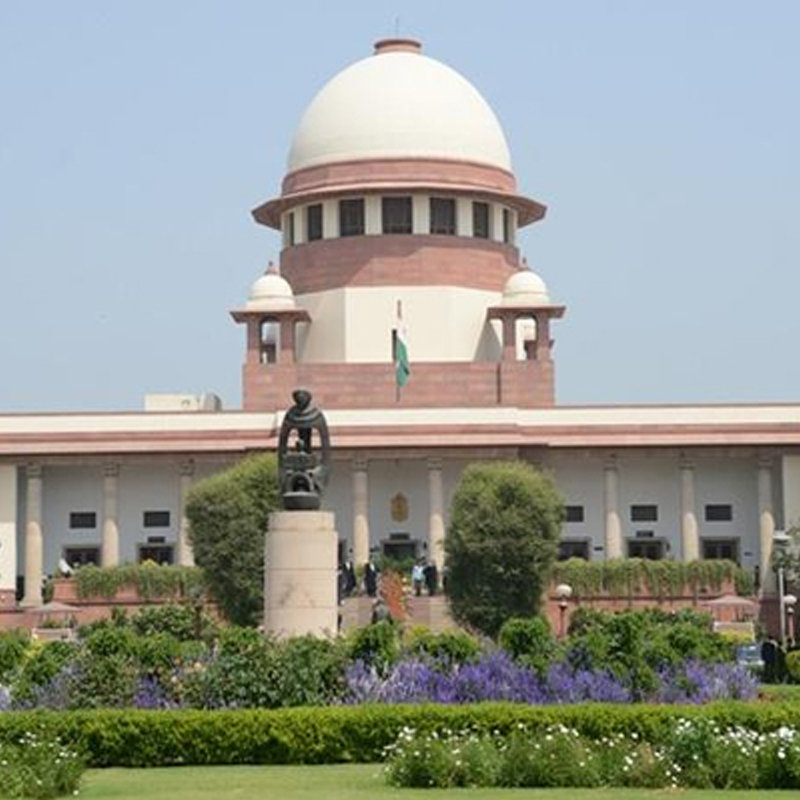
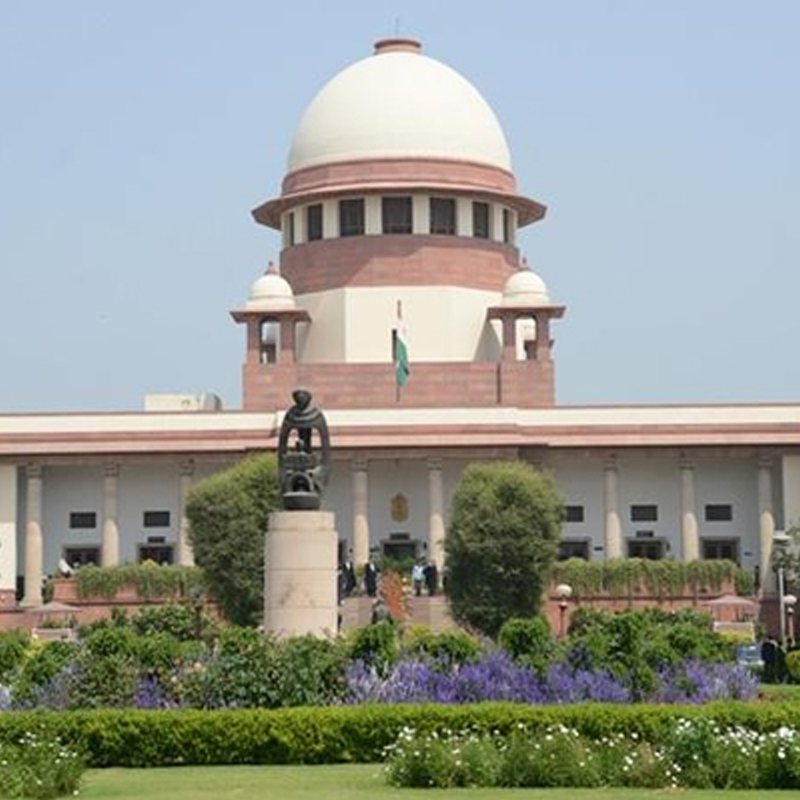
    MUMBAI: Moving one step closer to the long-fought battle on licence fees between direct-to-home (DTH) operators and the government of India, the Supreme Court has allowed the transfer of a related case to the apex court from the Kerala High Court.

    “Having heard the learned counsel for the parties and gone through these transfer petitions filed under Article 139A of the Constitution of India and considering the facts and circumstances of the case, we deem it fit and proper to transfer the matters mentioned in Prayer (a) of the Transfer Petitions from the High Court of Kerala at Ernakulam to this Court,” Supreme Court said in an order dated on 23 September.

    The transfer of the petition will help DTH players to pave the way for the long-pending new DTH licenses.

    Last year, the Telecom Regulatory Authority of India (TRAI) had reiterated most of its recommendations in response to back reference received from the ministry of information and broadcasting (MIB) on the authority’s recommendations related to the new direct to home (DTH) licence. The authority had issued recommendations on ‘Issues related to New DTH Licenses’ on 23 July 2014.

  • TRAI files appeal against TDSAT’s landing page judgment in Supreme Court

    TRAI files appeal against TDSAT’s landing page judgment in Supreme Court

    MUMBAI: In a move that can have far-reaching implications for India's broadcasting sector, Telecom Regulatory Authority of India (TRAI) on Thursday filed an appeal in the Supreme Court against Telecom Disputes Settlement and Appellate Tribunal (TDSAT) order on landing pages. A bench headed by HMJ Arun Mishra will hear the matter, listed as item 21, today.

    The sector regulator’s action comes in the wake of TDSAT, by virtue of its 29 May order, setting aside TRAI’s 3 December directive to broadcasters and distribution platform operators (DPOs) to refrain from placing registered television channel, TV rating is released by BARC India, on the landing page or boot up screen.

    According to TRAI, its order was aimed at protecting the interest of service providers and consumers while ensuring orderly growth of the sector. This, however, was successfully challenged by Bennett Coleman & Co. and other in TDSAT.

    “In our considered view, the impugned directions are beyond the provisions of the act, which empowers TRAI to issue directions. Therefore, the impugned directions must be set aside on this point alone. We order accordingly,” TDSAT Chairperson Justice S K Singh and Member AK Bhargava said.

    A series of controversies have been triggered post the landmark TDSAT order that resulted in disruption in viewership measurement of channels with a relatively smaller audience like English news.

    Data for week 22, first since the landing page ruling, saw CNN News 18 upset the English news apple cart to top the chart, followed by Republic TV, Times Now, DD India and India Today Television.

    BARC switched back to its previous methodology from week 23 onward claiming it had received multiple representations from stakeholders and the mandate of its board.

    BARC’s flip-flip with its outlier policy implementation further fueled the landing page row, raising concerns among stakeholders.

    Reacting to stakeholders’ issues, the BARC board gave its nod to form a two-member committee to carry out an independent review of BARC’s data validation and outlier policy.

    With opinion divided within the industry, some broadcasters have also written letters, highlighting the negative impact of landing pages, to TRAI and BARC’s technical committee.

    With the matter now landing up in the top court, industry will be hoping to get more clarity on this very controversial issue.

  • India’s sports broadcasting ecosystem threatened by ‘motivated’ PILs

    India’s sports broadcasting ecosystem threatened by ‘motivated’ PILs

    MUMBAI: On 10 May 2019, the Delhi High Court issued a notice in a petition challenging Section 3 (1) of the Sports Broadcasting Signal (Mandatory Sharing with Prasar Bharati) Act 2007, which restricts the retransmission of live broadcasting signals of sporting events of national importance by Prasar Bharati only on its terrestrial and DTH (DD Free Dish) networks.

    The petitioner Vaibhav Jain had sought that the DD signals should also be carried on digital platforms so that viewers can access the ongoing cricket World Cup matches shown on Doordarshan channels on a free-to-air basis. Despite the petitioner’s lawyer insisting that some order be passed for the upcoming World Cup, the Court denied relief and listed the matter for 22 July, a week after the World Cup concludes.

    A similar petition has also been filed by one Ramesh Kumar in the Punjab & Haryana High Court. According to the PIL, the petitioner is a driver by profession and neither has access to cable and DTH networks nor owns a TV, and hence is unable to exercise his right to access sporting events of national importance on a free-to-air basis.

    Those following the matter closely believe some vested interest groups are misusing the PILs to circumvent the orders of the Supreme Court to amend the Sports Act, which is not only against the interest of India's sports broadcasters but also detrimental to building a self-sustainable sports ecosystem in the country.

    The Delhi HC PIL is the first challenge made to Section 3 (1) after the judgment passed in August 2017 by the SC which affirmed the Delhi High Court judgment and held that the live feed received by the public broadcaster from content right owners or holder is only for the purpose of retransmission on its own terrestrial and DTH networks and not to private cable operators.

    The top court had clarified that sharing of signal with Doordarshan was to provide sporting content access to consumers who did not have it and not those who have already subscribed to private cable networks.

    A similar interpretation of Section 3 (1) was offered by an earlier judgment of the SC in 2016, holding that Prasar Bharati was supposed to telecast sporting events for the benefit of general masses, who otherwise do not receive signals of private channel due to geographical remoteness or are lacking the financial capacity to pay for these channels.

    However, Section 8 of the Cable Television Networks Act makes it mandatory for all cable operators to carry two Doordarshan channels. This meant cable operators got access to the broadcast of sporting events through two avenues: through the channels of Star or Sony, or other sports broadcasters, for which they have to pay subscription fees, and via the channels of Doordarshan, which are free.

    In the recent consultation by MIB for extending mandatory sharing to private platforms, many sports federations including the AIFF (football), AITA (lawn tennis) among others argued that public interest is better served in ensuring that funds for sports development are generated by sale of media rights and extending mandatory sharing across all platforms will sound a death knell to sports funding.

    For instance, the Indian Olympic Association’s feedback on the proposed amendment read, “It dents the commercial model of sports broadcast as buying of exclusive rights of sporting event, especially the Olympics Games and delivering it in world-class quality incurs very high investment for the private broadcasters in India. Competitive bidding of broadcast rights is imperative to up-keep the Olympic movement’s efforts to support sports and athletes. Besides, the niche sports that do not yield space in television broadcast unlike the popular sports of football, cricket, kabaddi, etc use new technologies and internet. Olympic Channel is also promoting the popularity of various sports through its network, which could be affected by the new amendment.”

    Legal experts are of the view that in light of the Supreme Court judgment, as long as Section 3 (1) of the Sports Act stands in its present form, no court is likely to grant any interim relief permitting retransmission on private networks and digital platform. 

    An industry insider, who wished to remain anonymous, indicated that sports content gives immense bargaining power to sports broadcasters and therefore, challenge to Section 3 (1) becomes important so as to restore the balance in favour of cable operators.

    The outcome of challenge raised before the Delhi and Punjab High Courts will determine whether sports rights continue to remain viable considering that a successful challenge before the Courts would result in retransmission of sporting events by private cable and DTH operators along with the same being available for online streaming on a free-to-air basis.

  • PILs filed against restriction of sharing sports feed of “national importance” with DD platforms

    PILs filed against restriction of sharing sports feed of “national importance” with DD platforms

    MUMBAI: Two separate petitions filed over a rule relating to the broadcasting of sports feeds by DD channels will be heard soon in the high courts of Delhi, and Punjab & Haryana. While the media rights holders of sporting events with “national importance” are bound to share the live feeds with public broadcaster Prasar Bharati, the rule restricts the telecast of such matches only on the terrestrial network and DTH operator of the pubcaster.

    According to a report from Economic Times, the petitioners are of the view that restricting the live telecast to the terrestrial and DTH networks of Prasar Bharati defeated the purpose of Section 3 (1) of the Sports Broadcasting Signals Act related to mandatory sharing with the pubcaster. Ahead of the ICC Cricket World Cup, the PILs have been filed seeking direction on allowing Prasar Bharati to live telecast the matches on its channels available on private cable and DTH platforms.

    Vaibhav Jain and Ramesh Kumar filed the PILs in the Delhi High Court and in the Punjab & Haryana HC respectively. Both high courts have posted the matter for hearing in late July while the World Cup will end before that on 14 July.

    The Supreme Court imposed restrictions on such retransmission back in August 2017. The report quoted a legal expert saying he doesn’t expect the high courts to give any interim relief to the petitioners in light of the Supreme Court judgement. But given that these are PILs, there are chances of spending some time to look for merits.

    Earlier, Supreme Court clarified in its order that sharing of signals with Prasar Bharati was aimed at giving access to consumers who otherwise did not have access rather than reaching consumers who have already subscribed to private cable and DTH networks.

  • TRAI clarifies tariff regime didn’t restrict Ind-Aus T20I match

    TRAI clarifies tariff regime didn’t restrict Ind-Aus T20I match

    MUMBAI: The thrilling last ball finish in the T20I match between India and Australia on 24 February grabbed the attention of many but was not accessible to the consumers of cable TV networks. This was apparently due to the implementation of the new regulatory framework prescribed by the Telecom Regulatory Authority of India (TRAI), according to reports in certain sections of the media and other social platforms.

    However, TRAI clarified that the tariff regime, in no way inhibited or restricted the telecast of India and Australia T20I cricket match. It stated, “The non-availability or non- transmission of the recent cricket matches (T20I and ODI) being played between India and Australia over the cable networks has nothing to do with implementation of new regulatory framework of TRAI for broadcasting and cable services.”

    TRAI also pointed out that the transmission are governed by the Supreme Court judgement dated 22 August 2017.

    It also quoted the Supreme Court’s direction stating, “Under Section 3 of the Sports Act, 2007 the live feed received by Prasar Bharati from content rights owners or holders is only for the purpose of re-transmission of the said signals on its own terrestrial and DTH networks and not to cable operators so as to enable the cable TV operators to reach such consumers who have already subscribed to a cable network.”

    After the decision of the Supreme Court, Ministry of Information and Broadcasting (MIB) issued a notice dated 12 April 2018, asking all the DPOs to display a caption, during the broadcast of sports events of national importance, on DD Sports channel that “The match/ game can be viewed in free-to-air mode on DD Sports channel, on DD FreeDish and DD terrestrial network”.

    Therefore, the distribution platform operators (DPOs) have to switch off the DD Sports channel from their cable networks during the period of the matches under the recent India-Australia T20I and ODI series.  

    “Therefore, the rumours circulating in some sections of the press or in social media platforms holding TRAI regulations responsible for non-transmission of the cricket matches in cable networks are baseless and incorrect,” TRAI concluded.

    Recently, TRAI extended the deadline for consumers to pick their television channels under the new tariff regime till 31 March. The subscribers that don’t opt for new channel would be moved to ‘Best Fit Plans’, which would be developed as per usage pattern, language and channel popularity.

    According to TRAI, close to 100 per cent of cable subscribers and 57 per cent of DTH subscribers have been shifted to new packs.

  • Bombay, Telangana HCs yet to decide on TRAI tariff cases

    Bombay, Telangana HCs yet to decide on TRAI tariff cases

    MUMBAI: Cases have been filed in various courts across the country and while the Calcutta High Court has vacated the stay on the case and the Gujarat High Court has asked for a response from TRAI, the Bombay and Telangana courts are yet to decide on similar petitions.

    The Telangana HC reserved judgment on a case filed by local cable operators who said that the regulations are arbitrary. The Pune Cable Operators Association went ahead and challenged TRAI as well, asking for a stay on the lines of the Calcutta High Court order. The bench, however, asked them to submit a copy of the order and refused to provide relief.

    The Madras High Court dismissed the PIL against the TRAI tariff order last week by quoting the Supreme Court judgment that went in favour of the regulator late last year.

    On 14 January, a similar case before the Kerala High Court was also dismissed which related to the revenue sharing aspect as well.

    LCOs all over the country are up in arms against some suggestions that have been made in the new tariff regime by TRAI that came into effect from 1 February. After TRAI won the case against Star India in October, the regulator gave the industry time till December end to put things into action. This was later extended to 31 January which was confirmed to the last date and no more extensions would be granted beyond that.

    Two days ago, TRAI claimed that all the stakeholders were ready with the new regime’s requirements. It also praised itself for ensuring that a large number of customers had exercised their options.

  • Madras HC dismisses PIL against TRAI tariff order

    Madras HC dismisses PIL against TRAI tariff order

    MUMBAI: After the Supreme Court verdict that went in favour of the Telecom Regulatory Authority of India’s tariff scheme, the Madras High Court has dismissed a petition challenging this 2017 order.

    A news item by the Press Trust of India said that the bench consisting of justices S Manikumar and Subramonium Prasad also upheld the deadline of 31 January which was an extension by TRAI to the broadcast industry to finalise necessary arrangements for implementing the new tariff regime from 1 February.

    Dismissing the PIL, the HC quoted part of the Supreme Court judgment by stating that TRAI could not only regulate operations but also lay down terms and conditions for providing services. The report mentioned the HC as stating: “It cannot be said that TRAI has been acting hastily or implementing its directions in a hurried manner, without taking into account the interest of all the participants.”

    The Supreme Court’s verdict came on 30 October and from 1 February the new tariff scheme where consumers will get to decide their channels is to commence.

  • DPOs say TRAI tariff order lacks value without 15% bouquet discount cap

    DPOs say TRAI tariff order lacks value without 15% bouquet discount cap

    MUMBAI: With TRAI’s petition seeking clarity on the 15 per cent bouquet discount cap being dismissed as withdrawn in the Supreme Court, distribution platform operators (DPOs) are of the opinion that the entire value chain is now bound to function like it did before the new tariff order came into existence.

    Last month, the regulator had filed a petition in the top court on the issue of 15 per cent cap on discount on a bouquet price of TV channels to consumers that had been set aside by Madras High Court while upholding TRAI’s right to regulate the broadcast sector.

    Highlighting the delay, the Supreme Court was of the opinion that the TRAI should have sought clarification on the clause while arguments were being presented in the matter last year.

    With the court’s latest act, CEO of the Chandigarh-headquartered MSO Fastway Peeush Mahajan believes that the DPOs will not be in a position to package their product, thereby being reduced to just passing on to consumers the offerings broadcasters have prepared.

    “Basically what I’m seeing is, we are back to stage one. 15 per cent clause, as per me, is the gist of the entire tariff order. With 15 per cent gone, there will now be predatory pricing. Broadcasters will keep the rates higher for a-la-carte channels and give a discount of 50-60 per cent on the bouquets,” Mahajan told Indiantelevision.com.

    Maharashtra Cable Operators’ Federation (MCoF) committee member Asif Syed concurs with Mahajan. According to him, the 15 per cent clause was in the interest of consumers as well as the MSOs.

    “If the capping is not allowed now, the problem would be MSOs won't be able to bundle all the packages. If someone wants to watch a Marathi GEC, right now there is no option wherein you can get Star Pravah and Zee Marathi in the same package. MSOs could have done that had there been a 15 per cent cap. We won't market the pay channels. Since we are not getting a good share why should we help the broadcasters? Let them advertise, let them do the hard work. There would be resistance from our side,” Syed further added.

    The DPOs point out that the problem with the pre tariff order period was that the a-la-carte pricing was very high and bouquet pricing was extremely low. In a sense, that’s the direction the industry will now be headed in.

    “As on today, we basically have an LCO and subscriber contact programme where we are reaching to the LCOs and they are further reaching the subscribers. Now there is a big resistance from the cable operators, so let’s see how this will shape up. We are trying to convince the cable operators that we have to implement the order but the actual number of consumers registered by the LCOs is unknown,” Mahajan stated.

    While the regulator failed to get a written assurance on whether the court would entertain similar pleas in the future, there’s little doubt of it seeking further amendments to the order going forward.

    “To my understanding, TRAI has withdrawn the petition. In my belief, TRAI will definitely take steps to bring about whatever amendments are required in the tariff order so that it meets the objectives. In the meanwhile, it would be better if broadcasters review their negative approach and make it friendly to consumers as well as DPOs,” Kerala Communicators Cable Limited (KCCL) CEO Shaji Mathews highlighted.

    A section of the DPOs believes that broadcasters have acted, by adopting an unrealistic pricing model, against the spirit of the TRAI order. This, they feel, has been done in order to pressurise TRAI as well as DPOs. The regulator’s objective was to ensure that rates are realistic. Broadcasters not adhering to realistic pricing models amounts to deliberately defeating the purpose of the tariff order, says an MSO CEO who did not wish to be quoted.

    The TRAI is now set to meet major MSOs and broadcasters to discuss the implementation of the tariff order on 4 January. That is when there will be further clarity on what lies ahead for the entire content distribution value chain.

  • TRAI issues warning against spreading ‘fabricated’ facts on tariff

    TRAI issues warning against spreading ‘fabricated’ facts on tariff

    MUMBAI: The Telecom Regulatory Authority of India (TRAI) on Tuesday cautioned stakeholders against spreading “concocted and fabricated facts” against its new tariff directive, while releasing a list of TV channels along with their respective maximum retail prices as per information received from broadcasters.

    The TRAI statement insisted that the new tariff regime will bring about more transparency in the eco-system by “separating the network capacity fee and pay channel price” and added any “malpractice” from service providers will compel the regulator to intervene.

    Pointing out that a section of the broadcasting and cable industry was creating confusion by insinuating the new tariff regime will increase the monthly cost of consumers for watching television by making inaccurate comparisons, TRAI said comparisons were “skewed” and far from the “market discovered” prices of TV channels.

    Though the Pune Cable Operators Association some days back said it’d move the Bombay High Court against TRAI’s new tariff regime as it could hurt LCOs’ earnings as also consumers, the regulator allayed such fears saying comparisons were not based on “reasoned analysis” and the standard interconnect agreements protected the revenue model of LCOs.

    Meanwhile, TRAI yesterday also released the maximum retail price of 332 pay channels offered by broadcasters to subscribers.

    As per the MRP list released by TRAI, NHK World Premium’s HD version is the costliest TV channel in the group at a stated price of Rs 1,800.

    Though most TV channels are running against time to meet the year-end deadline to disclose MRPs and also conclude signing of agreements with distributing platforms, the issue of tariff is unlikely to settle down soon as TRAI itself has filed a petition in the Supreme Court to get clarifications on the issue of 15 per cent cap on discounts on channel pricing.

    Star India on Monday was the latest one to announce the new a-la-carte prices for its TV channels and company MD Sanjay Gupta made it clear the organisation would adapt to any new pricing structure if necessitated by a future court ruling.

  • IBF to intervene in TRAI’s SC petition on 15% discount cap

    IBF to intervene in TRAI’s SC petition on 15% discount cap

    MUMBAI: The TRAI tariff order, which remained a topic of intense debate and discussion in 2017 and 2018, is likely to dominate discourse early on in 2019 too, at least from a legal standpoint as the Supreme Court resumes work after the winter vacations.

    A source close to the development has told Indiantelevision.com that the Indian Broadcasting Foundation (IBF) is set to intervene in the matter — a special leave petition (SLP) filed by the regulator seeking clarifications on 15 per cent discount cap — when it gets listed.

    All parties, including Star India, which were part of the Madras High Court proceedings, are involved in TRAI’s petition on the issue of 15 per cent cap on discount on a bouquet price or a la carte price of TV channels to consumers.

    The IBF was not originally a party, but an intervener. Hence it wasn’t incumbent upon the TRAI to make it a party in the fresh SLP. However, the IBF will now implead itself in the petition.

    Currently, the tariff order and regulations are getting implemented without the 15 per cent cap as confusion prevails over its validity, though a section of the industry is of the opinion that the Madras High Court had struck down the discount cap issue. TRAI had not issued any clarification on this while setting a roadmap earlier this year for the new tariff regime’s implementation after the Madras HC order.

    On Monday, Star India’s MD Sanjay Gupta during a media roundtable, responding to a question from Indiantelevision.com on the broadcaster’s position on the 15 per cent discount cap said, “It is up to the court to decide that. Now, as an SLP is in the SC…the courts will decide. I don’t have a view beyond that. In the current ruling, there is no discount cap. It may change going forward depending on the SC ruling.”

    Gupta, however, was confident in adapting to a new pricing structure should the SC uphold the high court’s view on the 15 per cent cap.

    “In case the court has a new ruling that discounts have changed, pricing [too] needs to change, both a-la-carte and bouquet pricing in that case, because the distance between them has to be only 15 per cent. I think we are still awaiting the court’s decision and if we need to adapt to it, then we’ll adapt to it. But there will be a shift again in pricing if that comes through,” he added.

    TRAI’s petition demands that the SC set aside the portion of the high court judgment that frowns on the 15 per cent cap on discounts on bouquet prices of TV channels.   

    The Madras High Court, while upholding most of the TRAI tariff order — issued middle of 2016 and challenged by Star India and Vijay TV later that year on grounds of overstepping of jurisdiction — had struck down as arbitrary almost 18 months later the 15 per cent cap on bouquet prices.

    With the case finally disposed of by the Supreme Court earlier this year, upholding the high court’s views, TRAI had issued a notification stating that India’s broadcast and cable industry stakeholders implement its tariff regime in phases and report on compliance.