Tag: Supreme Court

  • Centre moves SC seeking transfer of pleas challenging IT rules

    Centre moves SC seeking transfer of pleas challenging IT rules

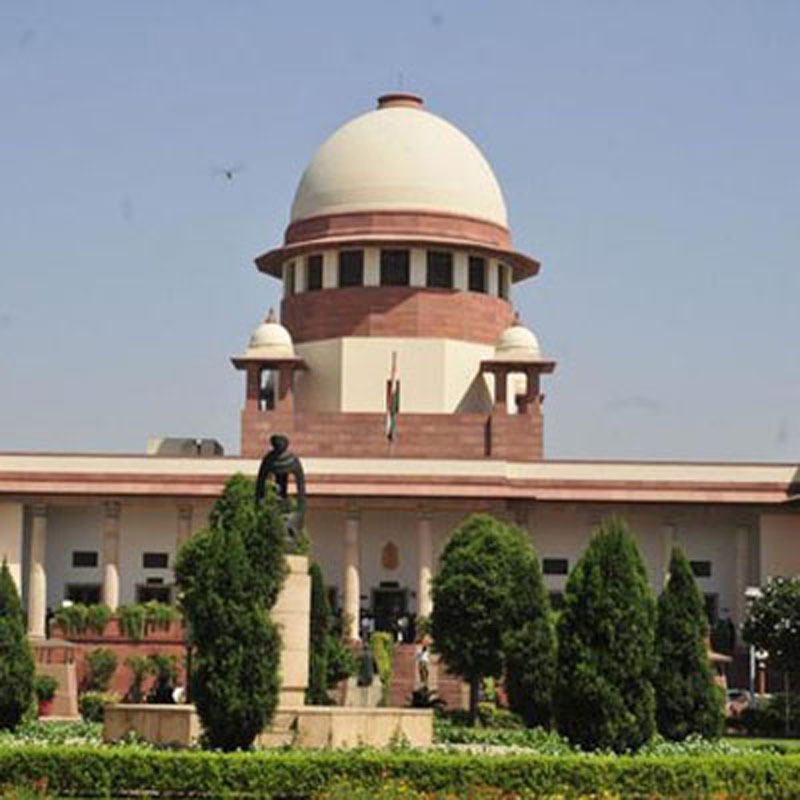
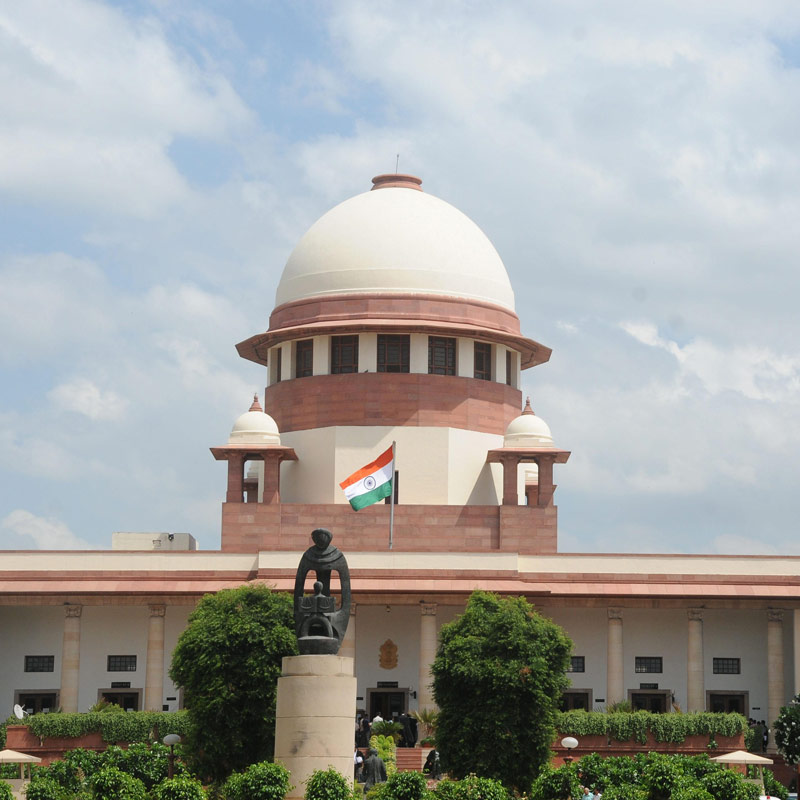
    New Delhi: The Centre on Tuesday approached Supreme Court seeking transfer of all pending pleas challenging its new IT rules to the apex court.

    Numerous petitions challenging the Information Technology (Intermediary Guidelines and Digital Media Ethics Code) Rules, 2021, are currently pending in various high courts across the country. The new rules notified on 25 February, came into effect on 26 May recommend a three-tier mechanism for the regulation of all online media.

    While the government has maintained that the new rules were introduced to make social media platforms like Facebook, WhatsApp, Twitter and Instagram more accountable and responsible for the content hosted on their platform, many have challenged the new rules over issues of privacy. Several petitions are pending in several courts, including the Delhi high court.

    In June, Digital News Publishers Association (DNPA) , composed of digital arms of 13 leading media companies of the country had moved high court against the rules, which it said ” violate the fundamental right of equality (Article 14) and freedom of speech and expression (Article 19(1)(a)”.

    The Foundation of Independent Journalism (the non-profit company that publishes The Wire) and legal website, LiveLaw has also filed petitions against the new rules

    Meanwhile, Delhi high court has directed Twitter to inform it by 8 July as to when it will appoint a resident grievance officer in compliance with the new IT Rules after the microblogging platform informed court that it was in the process of doing so.

    The government had earlier announced that if significant social media intermediaries, those with more than 50 lakh registered users failed to comply with the new requirements by 25 May, they will lose their intermediary status. On Monday, the Centre, had filed an affidavit in the high court, stating that any non-compliance amounts to breach of provisions of IT Rules, leading to Twitter losing its immunity conferred under the IT Act.

    Under the new rules, the digital publishers are required to take urgent steps for appointing a grievance officer, if not done, and place all relevant details in the public domain. “They also need to constitute self-regulatory bodies through mutual consultation so that the grievances are addressed at the level of publishers or the self-regulating bodies themselves,” according to the ministry.

  • OTT regulation: SC stays all petitions in high courts

    OTT regulation: SC stays all petitions in high courts

    KOLKATA: The Supreme Court has stayed all proceedings dealing with petitions filed on the matter of content regulation on OTT platforms. The court will hear the matter in two weeks after Holi. 

    A bench headed by justice DY Chandrachud passed the order while hearing a plea by advocate Shashank Shekhar Jha, appearing for Justice for Rights Foundation, that has sought the establishment of an autonomous body for monitoring of content on online video streaming services.

    Earlier, the central government filed a petition seeking transfer of OTT related petitions pending before various high courts to the Supreme Court. The apex court had issued a notice in this regard. However, the Punjab and Haryana high court continued hearing the case on merits, solicitor general Tushar Mehta submitted.

    Now, the court has clearly mentioned that all the proceedings of such petitions in lower courts across India would be stayed for now.

    Meanwhile, the government has informed apex court in an affidavit that the Information Technology (Intermediary Guidelines and Digital Media Ethics Code) Rules, 2021 were framed upon receiving several complaints from the public as well as lawmakers regarding content streaming OTT platforms.

    The affidavit also mentioned that digital or online media, films and audio-visual programmes made available by online content providers, news and current affairs content on online platforms have been brought under the purview of the ministry of information and broadcasting (MIB) last year.

  • ‘Potential to undermine media freedom’: Editors Guild on new IT rules

    ‘Potential to undermine media freedom’: Editors Guild on new IT rules

    NEW DELHI: The Editors Guild of India has raised concerns about the Indian government’s new Information Technology rules, saying they will “fundamentally alter” and put “unreasonable restrictions” on digital media.

    On 25 February, the Centre notified the Information Technology (Intermediary Guidelines and Digital Media Ethics Code) Rules 2021, under the Information Technology Act. The rules are framed to regulate social media companies, streaming and digital news content, virtually bringing them under the ambit of government supervision.

    Online platforms will now have to be much more responsive to complaints about posts on their networks, including giving the government details about the “originator” of content – effectively breaking end-to-end encryption – as well as setting up verification systems that could have a major impact on individual privacy.

    The Editors Guild said the government cannot “overwhelm India’s constitutional safeguards” for free media in the name of controlling an “unfettered social media”.

    “The rules, issued under the Information Technology Act, 2000, fundamentally alter how publishers of news operate over the Internet,” the association said. “They empower the Union government to block, delete, or modify published news anywhere in the country without any judicial oversight and mandate all publishers to establish a grievance redressal mechanism. Various provisions in these rules can place unreasonable restrictions on digital news media, and consequently media at large.”


    The Editors Guild added that the rules have potential to “seriously undermine” media freedom in India. It expressed concern over the fact that the government did not consult all stakeholders before notifying the “far-reaching rules”.

    The association urged the government to suspend the rules and hold a meaningful consultation with the stakeholders.

    Meanwhile on Friday, the Supreme Court noted that the rules to regulate streaming platforms “lacked teeth” as there was no provision to punish violators. It made the observation while granting interim protection from arrest to Amazon Prime Video’s India content head Aparna Purohit in the criminal complaints lodged against her in connection with the web series Tandav.

    Solicitor general Tushar Mehta, appearing for the Centre, said he will submit a draft legislation to the court.

    On Thursday, minister of information and broadcasting Prakash Javadekar had clarified that OTT platforms will not have to register with the ministry and that a self-regulating body under the new digital rules would have no members appointed by the government. Javadekar claimed that the rules focused on self-classification of content instead of imposing any form of censorship.

  • SC favours OTT guidelines, says screening needed

    SC favours OTT guidelines, says screening needed

    KOLKATA: The Supreme Court on Thursday remarked that there should be pre-censorship of OTT content like films while hearing a plea by Amazon Prime Video India originals head Aparna Purohit. She had moved the apex court challenging Allahabad high court order denying anticipatory bail to her in connection with the Tandav controversy.

    "We are of the view that some screening of OTT content should take place,” the bench comprising justices Ashok Bhushan and S Subhash Reddy said. "In fact, some platforms even show pornography.”

    Being informed of the new rules announced by the government to regulate OTT content, the bench directed solicitor-general Tushar Mehta to place the rules on record and circulate it.

    Senior advocate Mukul Rohatgi, appearing for Purohit, stated that it was shocking that she, neither a producer, nor an actor, has still been made an accused in the cases against Tandav. The Allahabad high court had rejected Purohit’s bail plea on 25 February, pronouncing that “…the applicant had not been vigilant and has acted irresponsibly making her open to criminal prosecution in permitting streaming of a movie which is against the fundamental rights of the majority of citizens of this country.”

    The matter will be again taken up on Friday.

    Tandav, which premiered on Amazon Prime in January this year, has been embroiled in a series of controversies. A petition was filed against the makers and actors for hurting religious sentiments by mocking Hindu deities in some scenes of the web series. They were also accused of showing the Uttar Pradesh police in bad light. Multiple complaints – including three FIRs in Uttar Pradesh – were filed against the makers of the show as well as the actors involved.

    Yesterday, Amazon Prime Video once again issued an unconditional apology for the “objectionable” scenes in Tandav, and reiterated that all such scenes were deleted or edited.

  • NDTV founders appeal interim SAT order in Supreme Court

    NDTV founders appeal interim SAT order in Supreme Court

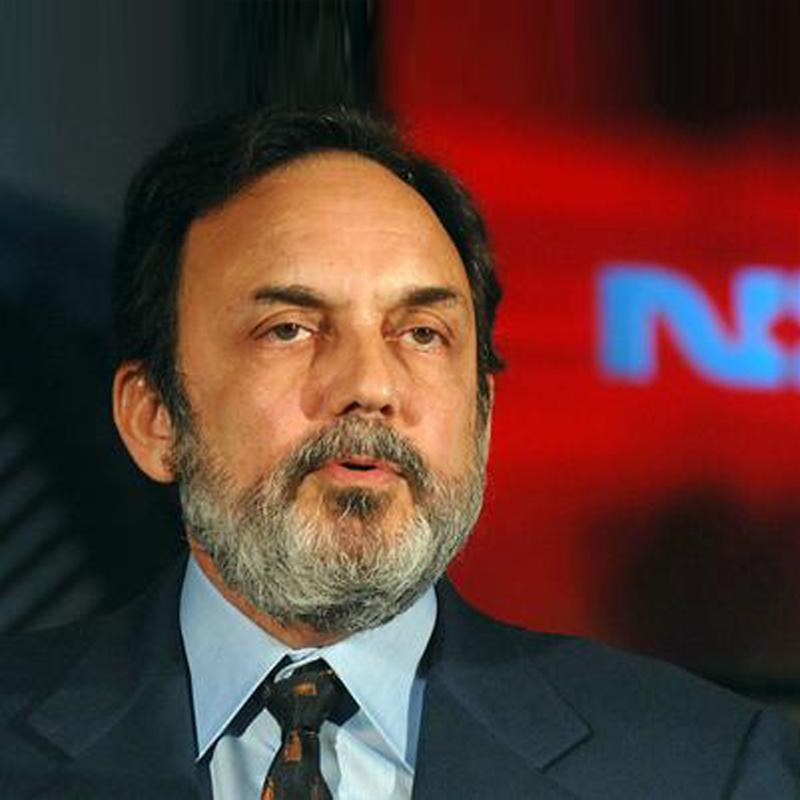
    NEW DELHI: NDTV founders and promoters Prannoy Roy and Radhika Roy have filed an appeal in the Supreme Court against the interim order dated 4 January 2021 passed by the Securities Appellate Tribunal (SAT). The order directed NDTV to deposit 50 per cent of the fine levied by SEBI.

    The SAT order said, “Deposit 50 per cent of the disgorged amount before the respondent within four weeks from today. If the said amount is deposited the balance amount shall not be recovered during the pendency of the appeal.”

    SAT further stated that the appeals filed by the founders require consideration and directed to list the matter for final disposal on 10 February 2021.

    Earlier in December 2020, SEBI imposed a fine of Rs 27 crore on NDTV for concealing information from shareholders on certain loan agreements. However, in a regulatory filing, the channel mentioned that the promoters through disclosures to the stock exchanges have repeatedly said that they have never allowed for transfer of NDTV's control and that they continue to own and hold 61.45 per cent of the total paid up share capital in the media entity.

  • Dish TV receives MIB notice for payment of Rs 4,164.05 crore

    Dish TV receives MIB notice for payment of Rs 4,164.05 crore

    KOLKATA:The Indian ministry of information & broadcasting (MIB) and  direct to home television provider Dish TV have been at loggerheads over this matter for sometime now. And the latter has informed the Bombay stock exchange (BSE)  that the former has brought up its demand to pay up long disputed licence fees totalling Rs 4,164.5 crore once again.  The amount includes interest and the demand from the MIB is that Dish TV pay it up within 15 days.

    The Jawahar Goel headed firm says that the MIB has clarified that the amount  is further subject to verification and audit and the outcome of various court cases pending before the TDSAT, the high court of Jammu and Kashmir and the supreme court.

    “In this regard, we would like to inform that the ministry of information and broadcasting had issued a demand notice in the year 2014 for the licence fee pertaining from the date of issuance of DTH License till financial year 12 – 13. The said demand notice was challenged by the company before the TDSAT and the said demand has been stayed by the TDSAT, which stay continues to be in force,” Dish TV said in the regulatory  filing with the BSE. .

    Further, the company's petition is also pending before the  Jammu and Kashmir high court where it has challenged  inter alia the quantum / applicability of licence fee and imposition of interest. Similar writs are also pending before the apex court.

    Dish TV informed that it is studying the communication to determine its next steps. The DTH licence  fee matter has already been through several rounds of litigation, the final outcomes of which are yet to be argued and concluded, it added. It would update the stock exchanges on any material developments.

    The notice has come at a time when the government has opened up 100 per cent foreign direct investment in DTH, extended the duration of licences given to operators.

  • No prima facie evidence against Arnab Goswami in abetment to suicide case: SC

    No prima facie evidence against Arnab Goswami in abetment to suicide case: SC

    NEW DELHI: Detailing the reasons for granting interim bail to Republic TV editor-in-chief Arnab Goswami in its 11 November judgement, the Supreme Court highlighted that the bail will remain in force for four weeks, even after the Bombay high court decides on the journalist-cum-businessman’s plea to quash the FIR against him. The judgment was delivered by a bench of justices DY Chandrachud and Indira Banerjee. 

    Justice Chandrachud said that prima facie, it could not be held that Goswami had abetted the suicide of Anvay Naik. 

    The apex court also lamented the Bombay high court’s order in the matter. “The striking aspect of the impugned judgment of the high court spanning over fifty-six pages is the absence of any evaluation even prima facie of the most basic issue. The high court, in other words, failed to apply its mind to a fundamental issue which needed to be considered while dealing with a petition for quashing under Article 226 of the Constitution or section 482 of the CrPC.”

    The bench upheld that the judiciary should stand as a bulwark against weaponizing criminal law for selective harassment. “Courts must be alive to the need to safeguard the public interest in ensuring that the due enforcement of criminal law is not obstructed. The fair investigation of crime is an aid to it. Equally, it is the duty of courts across the spectrum – the district judiciary, the high courts and the Supreme Court – to ensure that the criminal law does not become a weapon for the selective harassment of citizens."

    Read our coverage in the suicide abetment case

    Goswami had approached the SC after the Bombay high court refused to grant him bail. The top court gave a prima facie view that the preliminary evaluation of FIR did not establish any abetment to suicide charge and granted interim bail to Goswami, saying it will be a "travesty of justice" if personal liberty is curtailed.

    The bench had also ordered the release of two others in the case — Neetish Sarda and Feroz Mohammad Shaikh — on a personal bond of Rs 50,000 each and directed that they shall not tamper with evidence and cooperate in the probe.

    The accused were arrested by Alibaug police in Maharashtra’s Raigad district on 4 November in connection with the suicide of architect-interior designer Anvay Naik and his mother in 2018 over alleged non-payment of dues by companies of the accused.

  • SC asks Centre to create regulatory mechanism for electronic media

    SC asks Centre to create regulatory mechanism for electronic media

    New Delhi: Supreme Court asked the Centre to file a fresh affidavit dealing with mechanism to regulate electronic media under the Cable TV Network Act while hearing the pleas filed by Jamiat Ulama-I-Hind and others alleging that a section of the media was spreading communal hatred over Tablighi Jamaat congregation during the onset of pandemic. It also expressed displeasure over the Union government’s affidavit in the same case.

    A bench headed by CJI S A Bobde said that the Centre should consider setting up a regulatory mechanism to deal with such content on TV. It sought to know from the Centre about mechanisms available for it under the Cable TV Network Regulation Act.

    The apex court asked the government to create and apprise it of the mechanism. “We want to know as to what is the mechanism to deal with these contents on television. If there is no regulatory mechanism then you create one. Regulation cannot be left to organisation like NBSA.”

    Solicitor general Tushar Mehta on behalf of the Centre replied that it has ample powers to regulate contents of TV channels but takes a very cautious approach, as right to free speech as a fundamental right is available to media.

    The court then asked the solicitor general to create a mechanism for addressing grievances against fake news circulated by TV channels and media, if none such is available currently. “What is shown in TV channels is of great consequences for the country,” it said.

    The ministry of information and broadcasting, in its affidavit filed on 13 November, had informed the Supreme Court that the petition against communal reporting of Tablighi Jamaat incident was based on "vague assertions" and news reports published by certain fact check websites, and the same cannot be relied upon to contend that entire media was spreading communal disharmony.

    The plea before the top court sought directions to the Centre to stop dissemination of fake news and take strict action against the section of the media spreading bigotry and communal hatred in relation to the incident.

  • Abetment case: Arnab Goswami granted interim bail by Supreme Court

    Abetment case: Arnab Goswami granted interim bail by Supreme Court

    NEW DELHI: In a major relief to Republic TV editor-in-chief Arnab Goswami, the Supreme Court has granted him interim bail in a 2018 case of abetment to suicide of interior designer Anvay Naik and his mother. The top court also allowed the interim release of the co-accused Neetish Sarda and Firoze Mohammed Sheikh.

    The accused are required to execute a personal bond for an amount of Rs 50,000 for release on interim bail. They have also been directed to cooperate with the investigation and should not interfere with the witnesses. 

    A vacation bench comprising justices D Y Chandrachud and Indira Banerjee passed the order after an urgent hearing given to the pleas challenging the order of the Bombay high court, which denied the accused interim bail in the habeas corpus petitions filed by them challenging their ‘illegal’ custody. 

    The Supreme Court stated that the Bombay HC was in error in rejecting the application for grant of interim bail and failed to exercise its jurisdiction to protect the personal liberty of a citizen. 

    "If this court does not interfere today, we are travelling on the path of destruction. Forget this man. You may not like his ideology. Left to myself, I will not watch his channel. Keep aside everything. If this is what our state governments are going to do to people who are to be nailed, then the Supreme Court has to intervene. There has to be a message to HCs- Please exercise your jurisdiction to uphold personal liberty. We are seeing case after case. HCs are failing to exercise jurisdiction. People are in jail for tweets," justice Chandrachud remarked.

    Goswami was arrested from his Mumbai residence on 4 November and was sent to 14-day judicial custody. 

  • Abetment case: Arnab Goswami moves Supreme Court

    Abetment case: Arnab Goswami moves Supreme Court

    NEW DELHI: Republic TV editor-in-chief Arnab Goswami has challenged the Bombay high court’s order dismissing his petition for interim bail in the 2018 abetment to suicide case in the Supreme Court. 

    Goswami, who remains in 14-day judicial custody, was refused interim bail by the Bombay HC on Monday stating that no case was made out for the exercise of extraordinary jurisdiction by the high court under Article 226 of the Constitution when the petitioners have the alternate remedy of seeking regular bail under Section 439 of the Code of Criminal Procedure. 

    "Rejection of interim application shall not be construed as an impediment to the petitioner seeking alternate remedies. Observations are prima facie in nature confined to the present application only," the bench said in its order yesterday.

    The journalist has also filed a regular bail application in the Alibaug sessions court seeking his release from judicial custody.

    Read our coverage of the 2018 abetment case  

    Goswami and two others were arrested on 4 November in relation to abetment to a suicide case of an interior designer and his mother for non-repayment of dues by the accused.