Tag: Supreme Court

  • Apex Court sets up panel to study issuance of ads glorifying politicians

    Apex Court sets up panel to study issuance of ads glorifying politicians

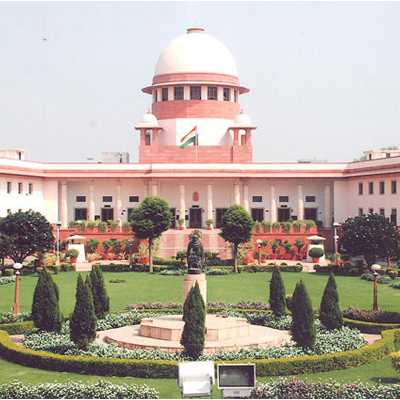
    NEW DELHI: The Supreme Court has formed a three-member panel to frame guidelines to regulate government advertisements glorifying politicians in media.


    The apex court bench headed by chief justice P Sathasivam said that the existing guidelines of the Directorate of Advertising and Visual Publicity (DAVP) do not cover such advertisements.


    The panel will be headed by Prof NR Madhav Menon, founder director of Bangalore’s National Law University. TK Vishwanathan, former Lok Sabha secretary general and senior advocate Ranjit Kumar are the other two members of the panel. The report has to be submitted to the court in three months.


    The court has asked Information and Broadcasting Ministry secretary Bimal Julka to coordinate the meetings of the committee.


    The court passed the order on a public interest litigation (PIL) filed by the NGOs Common Cause and the Centre for Public Interest Litigation (CPIL) pleading it to frame guidelines. The petition sought issuance of guidelines for curbing ruling parties from taking political mileage by projecting their leaders in official advertisements.


    Counsel for Common Cause, Meera Bhatia, had earlier said that the glorification of politicians linked to the ruling establishment, in order to attain political mileage at the cost of public exchequer, was violative of Article 14 of the constitution.


    But counsel representing CPIL, Prashant Bhushan, had told the court that there was nothing wrong in issuing advertisements and informing the public about the programmes of the government. However, he had said such advertisement campaigns become arbitrary and malafide when aimed at gaining political mileage.

  • Narendra Modi on ABP News’ Ghoshnapatra

    Narendra Modi on ABP News’ Ghoshnapatra

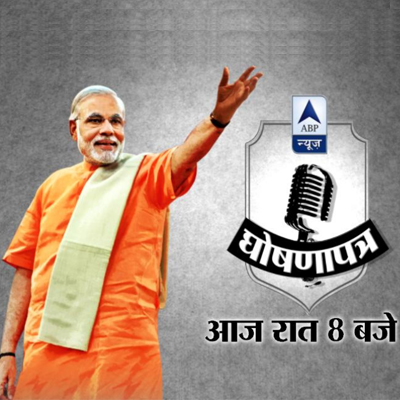
    MUMBAI: ABP News election special- “GHOSHNAPATRA”, brings BJP Prime Minister candidate Narendra Modi interacting with the Editors, ABP News, ABP Majha and ABP Ananda on the array of issues in the run up to the Lok Sabha polls 2014. This interview was recorded on April, 20, 2014, Sunday.


    Please find below some of the highlights of the interview.
     

    Please note that the interview was in Hindi and the translation in English is indicative. Kindly refer to the detailed intercepts in Hindi on our website http://abpnews.abplive.in/ and for English at http://www.abplive.in/ at 9pm.


    Modi on RSS, ‘India First’- “I need to run the government, and the government functions as per the constitution. I believe that there is only one religion for the government- India First. There is only one Holy Book for the government- our Constitution, the government believes in one prayer- “Bharat Bhakti”. There is only one way to governance- “Sabka Sath, Sabka Vikas”.


     Modi on ‘Rajdharma’-  “I have taken it (moral responsibility of any person killed in Gujarat) since day one. All my interviews, speeches (in the assembly) are available. I request you to do some research. Everything is available…you will find answers to all your queries (in those speeches and interviews).”


    Modi on being grilled for 9 hours in the 2002 riots case: “you can try me as much (on the 2002 riots), but you wont be able to do it. In 2007, when UPA came into power the second time, I was dragged to Supreme Court due to (political) conspiracy..it was then that I decided not to speak since the Supreme Court must not get influenced. Till date, no chief minister in India has been grilled by police for nine hours…this (me) is the chief minister who has been grilled for 9 hours by police officers. Supreme Court has seen the video recording (of the questioning). I have proven myself on these fronts and will continue to do so in future as well. But I refuse to surrender to lies and political conspiracies.”


    Modi on “Muslims scared of Modi”- “You would have my interview in your library (archives) in 2002 (post-winning the Gujarat polls). After winning the polls in 2002, I went to Maninagar in the evening to thank the voters…I said in my speech that day, that this (Gujarat) government belongs to those who have voted for it, against it and even to those who have not voted. The ‘mantra’ for my government is ‘Abhai (fearless), Abhai, Abhai’…I said it thrice.”


    Modi On Giriraj- “Nobody can agree with what he (Giriraj) has said”…


    Modi on his aggressive personality, issues like Ram Mandir, Uniform Civil Code in the manifesto-  “The country doesn’t work with aggression, the nation works as per the Constitution, country moves forward with constitutional dignity…aggression is meant for polls…not to run the government.”


    Modi on- “Acche din aane wale hai”- “Is there an expiry date mentioned everywhere…a (party) manifesto stands for five years, a government is formed for five years…it (government) has to deliver in these five years- some work (projects) is initiated and some work (projects) are meant to be accomplished…It is very clear that a manifesto is not a final declaration of the 21st century (a decade)…it stands for the term of a government.”


    Modi on Vadra- “Jeejaji”- “see you will have to acknowledge, how will you acknowledge…if something (Vadra’s alleged growth in real estate) has happened, if there is a connect with the family (The Gandhis), then the connect lies within this word (‘Jijaji’)…I am not aware of any other word (connect), otherwise I would have taken up that…”


    Modi on Ambani and Adani: “This is not your question. It is not expected from media to carry forward the agenda taken up by the political opponents. You are expected to talk about how Modi has governed (in Gujarat) for the last 14 years. There was a government where you could find only middlemen (in political corridors)..Modi’s identity is a government where you can not find any middlemen…people of India can proudly say that there is a (state) government which can not be pressurized, which can’t be managed (with money). My 14-year track record speaks for me…at least people like you (media) should should not own such (allegations) things…here I am using the word media.”


    Modi on “Shehzada”: “This is weird…this word “Shehzada”…we have read about it in history…around four-five years back, Congress had termed Sonia Gandhi as “Rajmata”…and they continued using the word (“Rajmata”) this for a long time…so now should I question Congress for using these princely terms when those times are long over…It’s fine (no big deal) if they have said such a thing.”


    Modi on his marital-status row: “I am not surprised at anything, there is nothing to my (personal) life…since there is nothing much for them (to talk about), they keep talking about (such) things…”


    Modi on black money: “there is a word about Indian money stashed in banks abroad…by and large there is no dispute in that. The government has the information on that…but we are not in the government, and those in the government are not responding to it. So our stand is, that we will bring the truth out as we form the government. The rounds will stop if there is nothing to it and if it is (money stashed abroad) then we will get it back.”


    Modi on political alignment with Lalu and Pawar- “No, no no…there is no such (political alignment with Sharad Pawar) thing. As far as friendship is concerned, you would be surprised to know that I am friends with Laluji…we exist in a social setup, but we need to take individual stands due to our political ideologies. But this is one big family…and there can’t be any enemies here.”


    Modi on support from Raj Thackeray: “As far as the results are concerned on May 16, I firmly believe that we will not need any such support to govern the nation. But you need everyone’s support to run the nation. I am of the opinion that in a democracy, to run the nation, we must rise above politics and take support from everyone, (though) we would not need (support) to the run the government, we will get full support from the people. Even if Rahul wins from Amethi, though the chances of that are bleak, and becomes the leader of Opposition…we will take his support too. In my view, you need to take everyone along to run the nation.”


    Modi on firm-handedness with Pakistan: “first and the foremost thing is that we should run the country in such a way that nobody should be able to dare look at us. We need to be balanced (look straight into the eyes at the international level) and that should get reciprocated…that is the best way forward.”


    Modi on visting US: ”this is a tough question…yes a very tough question…the country has chosen me to work for the nation.”
  • TDSAT to hear DTH ops plea on licence fee on 6 May

    TDSAT to hear DTH ops plea on licence fee on 6 May

    NEW DELHI: The petition by the three major direct-to-home (DTH) operators challenging the notice of the government for clearing arrears of licence fees will be heard on 6 May by the Telecom Disputes Settlement and Appellate Tribunal (TDSAT).


    When counsel for the petitioners mentioned the petition before the Tribunal, counsel for the government said the DTH operators will not be pressurised in this regard till the case is taken up for hearing.


    The government has been asked to file a reply within three weeks and the three petitioners – Tata Sky, Sun Direct TV and Reliance Big TV – will file rejoinders, if any, within one week of that.


    Even as the petitioners have alleged that the demand by the Information and Broadcasting Ministry is contempt of court as the matter in this regard is pending in the Supreme Court, I and B Secretary Bimal Julka had earlier told indiantelevision.com that the apex court had not issued any stay order.


    However, conscious that the TDSAT or the Supreme Court may be moved in the matter, a caveat had been filed by the Ministry in this regard.


    The Ministry had recently sent a notice to the six private DTH operators with regard to licence fee dues amounting to Rs 2,066 crore.


     According to the notice sent early last week, the six private operators had been asked to pay the amount within fifteen days.


     However, most of the operators contacted by indiantelevision.com said they had cleared the dues of licence fee.


     The operators say the licence fee as demanded under the rules is on gross revenue (GR) whereas they have been asked to pay the fee on the basis of Actual Gross Revenue (AGR). The operators have said the fee should be only on subscription revenue and not on allied earnings such as dividend and interest income.

  • Sunny Days for Indian Cricket

    Sunny Days for Indian Cricket

    The Supreme Court’s (SC) latest judgement in the Board of Control for Cricket in India (BCCI) versus petitioners Bihar Cricket Association case has kept the Indian cricket fan upmost in mind. BCCI president N Srinivasan has to make way for legendary cricketer Sunil “Sunny” Gavaskar who will act as the interim president for the duration of the Indian Premier League’s (IPL) seventh edition.


    It is obvious that the SC has taken this decision to re-instil faith in the average Indian cricket fan who was disillusioned by the murky happenings viz. spot fixing and illegal betting by key members of a few franchisees of the IPL. Over the past six seasons the blue riband tournament has seen millions of dollars being invested in it and has captured the fancy of cricket followers – actually increasing the ‘fan base’ to an astounding number.


    Fortunately, the SC has allowed the BCCI to continue hosting the tournament for the seventh season and has also allowed two teams – Chennai Super Kings (CSK) and Rajasthan Royals (RR) – which were surrounded by controversy, to be a part of the series.  This is good news for the fans, players, franchise owners, media and the many people that are involved in the running of the tournament.


    With the IPL a few weeks away, SC’s rider that no employee of India Cements, the company headed by N Srinivasan and which owns CSK, will be part of the BCCI is a hitch that needs to be resolved by the august body. For starters, Sunder Raman the IPL CEO happens to be part of the company. Not just that but many people involved with India Cements are part of the BCCI in various capacities – from coaching to administration.


    SC’s directive that Gavaskar will now oversee the IPL Governing Council (which includes his brother–in-law and the other Indian legend, Gundappa Viswanath) in running the tournament has sent a strong message to the people associated with the tournament. Gavaskar is known for his diligence, prudence, patience and for his inclination to play with a straight bat.  Given his reputation as a disciplinarian on and off the field during his playing days, it will be difficult for anyone to twist and turn a norm under his watchful eye.


    From what one understands, SC’s latest directive is the first of the many changes that may be in the offing. The next hearing, scheduled in mid-April, will be decisive for the BCCI who will be hoping that the apex court will not cause more changes and disrupt the portals of the ‘most exclusive club in India.’


    The SC, by allowing the IPL to continue, has given a breather to the players and fans and has signalled BCCI in clear terms to shape up or face the consequences. Never before in the history of the game in India has a judicial body intervened to set the house right. BCCI, since its inception in 1928, has had conscientious administrators who kept the game above politics. Knowing Gavaskar’s penchant for fair play, Indian fans can rest be assured that underarm tactics will be met with a straight bat. Howwzat!!!


    (Hemant Kenkre is a Communications specialist, cricket columnist and former Bombay University cricketer and the views expressed are his own.)

  • Telecom stakeholders’ views sort over MWA and MWB spectrum allocation and pricing

    Telecom stakeholders’ views sort over MWA and MWB spectrum allocation and pricing

    NEW DELHI: The Telecom Regulatory Authority of India (TRAI) on 28 March asked stakeholders in the telecom sector to give their views on whether excess spectrum should be withdrawn from existing telecom service providers and whether what should be the criteria for determining this excess usage.


    Following a reference from the Department of Telecom (DoT), the regulator issued a consultation paper on the issue of Microwave Access and Backbone (MWA/MWB), and has sought the views by 21 April with counter-comments by 28 April.


    TRAI has sought to know the number of Microwave Access and Backbone (MWA/MWB) carriers that should be assigned to a TSP deploying 2G technology only, 3G technology only, BWA technology only, both 2G and 3G technologies, 2G and BWA technologies and 2G, 3G and BWA technologies.


    The charging of MWA and MWB carriers is regulated by the AGR based annual spectrum usage charges notified in the DoT’s orders of 3 November 2006, its amendments dated 10 November 2008 and 19 February 2009. However, these orders were set aside by a judgment of the Telecom Disputes Settlement Appellate Tribunal (TDSAT) of 22 April 2012 and are now sub-judice in view of an appeal by the government before the Supreme Court. As an interim arrangement, the DoT has issued guidelines in respect of allotment of MWA carriers for BWA services through its order of 16 March 2012. TRAI had been asked to give its recommendations on certain issues in a letter sent by the DoT on 26 November 2012.


    According to TRAI, Microwave transmission refers to the technology of transmitting information using radio waves. Microwave technology is widely deployed in mobile communications to provide point-to-point (PTP) Radio Frequency (R.F.) links in mobile backhaul as well as in the backbone network. Mobile backhaul is that portion of the network infrastructure that provides interconnectivity between the access and core networks. The backbone network is used to interconnect different nodes situated at different geographical locations.


    For PTP links, microwave frequencies are generally assigned in blocks of 2×28 MHz, known as microwave carriers. There are two types of microwave carriers viz. Microwave Access (MWA) Carriers and Microwave Backbone (MWB) Carriers. 


    TRAI wants to know from stakeholders the number of MWA/MWB carriers that should be assigned to TSPs in case of 2G, 3G and BWA at the start of their services [at beginning of rolling of services].


    Some of the other questions to which views have been sought are:


    1.      What should be the preferred basis of assignment of MWA/MWB carriers to the TSPs i.e. ‘exclusive basis assignment’ or ‘link-to-link based assignment’?
     

    2.      In case ‘exclusive basis’ assignment is preferred, whether MWA and MWB carriers should be assigned administratively or through auction.
     

    3. In case ‘link-to-link basis’ assignment is preferred, how the carrier assignment for different links should be carried out, particularly in nearby locations?
     

    4. Considering the fact that different TSPs may require additional carriers at different point of time, what should be the assignment criteria for allocation of additional carriers for MWA and MWB?


    5. How can it be ensured that spectrum carriers assigned are used optimally and the TSPs are encouraged to move towards the OFC?


    6. Should an upfront charge be levied on the assignment of MWA or MWB carriers, apart from the annual spectrum charges?


    7. What should be the pricing mechanism for MWA and MWB carriers? Should the annual spectrum charges be levied as a percentage of AGR or on link-by-link basis or a combination of the two?


    8. In case of percentage AGR based pricing, is there any need to change the existing slabs prescribed by the DoT in 2006 and 2008?


    9. In case link-by-link based charging mechanism is adopted then:

    (a) Should the spectrum be priced differently for different MW spectrum bands (6GHz/7GHz/13GHz/15GHz/18GHz/21 GHz/26GHz/28GHz/32GHz/42 GHz etc) and the formula for such charges

    (b) What are the factors that should appear in the formula?


    10. Should the option of assignment of MWA carriers in all the spectrum bands in 6-42 GHz range be explored in line with other countries? What are the likely issues in its assignment MWA carriers in these additional spectrum bands?


    11. In your opinion, what is the appropriate time for considering assignment of MWA carriers in higher frequency bands viz. E-band and V-band?


    12. Should E-band be fully regulated or there should be light touch regulations?


    13. What charging/pricing mechanism would be appropriate for these bands?

  • Former TRAI Chairman J.S. Sarma passes away

    Former TRAI Chairman J.S. Sarma passes away

    NEW DELHI: Senior Indian Administrative Service officer J S Sarma, who was a strong supporter of reforms in the telecom sector, has passed away.  


    Sarma also served as chairman of the Telecom Regulatory Authority of India (TRAI) from 14 May 2009 to 13 May 2012.


    Aged 65, Sarma passed away in Hyderabad on 28 February after a brief ailment.


    During his regime, mobile number portability was introduced, allowing customers to switch telecom operators without changing their mobile numbers. The per-second billing plan was also mandated during his tenure.


    During Sarma’s time at the helm of TRAI, the Supreme Court cancelled 122 2G licences and directed the regulator to recommend steps to auction the spectrum in the same manner as 3G airwaves were sold in 2010.


    A 1971 batch IAS officer from the Andhra Pradesh cadre, Sarma initiated the process to stop telecom operators from activating value-added services such as mobile internet and caller tunes without permission from the consumer.


    Although the direction was challenged by operators in court, Sarma’s successor and present Chairman Rahul Khullar implemented the regulation in July 2013 with a provision that entitles customers to refund of money deducted for value-added services provided without their permission.


    TRAI’s recommendations on ‘Spectrum Management and Licensing Framework’ in 2010 during Sarma’s tenure formed the basis of the new unified telecom licence regime under which spectrum was separated from permits. They also laid the ground for other telecom liberalisation measures such as spectrum auctions, sharing of airwaves and mergers and acquisitions.


    The TRAI’s recommendations for the 2G auction in 2012 drew criticism from the industry as the minimum price recommended by the regulator was a little above the rate companies paid for the 3G spectrum.


    But he retired before he could consider any amendments, six months before the auction was held in November 2012, attracting a poor response.


    Sarma was made a member of the Telecom Disputes Settlement and Appellate Tribunal in July 2008 and served as the Telecom Secretary before becoming TRAI chairman.


    Born in Vijayawada on 4 September 1948, Sarma graduated from Osmania University in 1966. He had an M. Tech degree in Applied Geology (1969) and a Doctorate in Public Enterprises (1982) from the University of Paris.


    He served at the centre first between the years 1977 and 1980 in the Defence and Chemicals & Fertilizers Ministries and returned to the centre in June 1997 when he was made Joint Secretary in the Rural Development Ministry till October 2002; Additional Secretary, Department of Personnel and later in the Department of Telecommunications between October 2002 and November 2004; Secretary, Department of Telecommunications and Chairman, Telecom Commission from June, 2005 to July 2006; and Secretary, Department of Fertilizers from July, 2006 to July, 2008.


    He also served in Andhra Pradesh in the Districts of Kurnool, Prakasam, Cuddapah, Guntur, and as Collector and District Magistrate, Chittoor. He held the posts of Managing Director of the Oilseeds Growers’ Federation, Commissioner of Municipal Corporation of Hyderabad, Commissioner of Land Reforms and Urban Land Ceilings, and Secretary in the Departments of Labour, Education and Planning.

  • Subrato Roy arrested

    Subrato Roy arrested

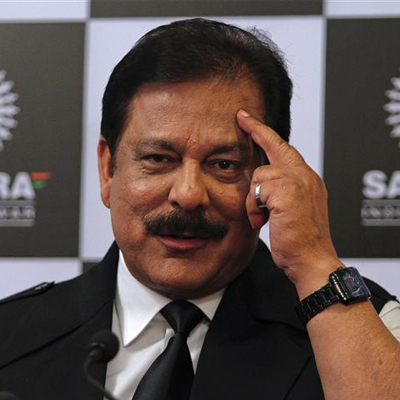
    MUMBAI: Subrata Roy, head of Sahara group, was arrested in Lucknow today by the Uttar Pradesh police following the Supreme Court’s non-bailable warrant against him for failing to appear in the court on Wednesday.


    The Sahara group businesses include Sahara One Media & Entertainment and real estate development.


    In New Delhi, Roy’s lawyer Ram Jethmalani informed the Supreme Court that Roy has surrendered in Lucknow.


    Police had visited Roy’s residence on Thursday but did not find him at home. Before surrendering, Roy issued a statement saying he was not absconding and was ready to “unconditionally follow” any Supreme Court directions.


    The Supreme Court is hearing a case against Roy for non-compliance with its directive to refund money back to investors in the Sahara’s group financial services company.

  • TRAI plea in SC for raising pay channel tariff cap

    TRAI plea in SC for raising pay channel tariff cap

    MUMBAI: The Telecom Regulatory Authority of India (TRAI) has petitioned the Supreme Court to allow it to raise the ceiling on tariff for pay channels distributed in non-addressable areas.


    The tariff for pay channels in areas where cable TV is distributed through analogue technology has remained capped at the pre-2009 rates, following a direction by the Supreme Court in March 2009 for maintenance of status quo.


    TRAI says there is a need for reviewing the ceiling to adjust the tariff for pay channels in non-addressable areas for inflation.


    The court is likely to hear the TRAI plea towards the end of March.


    TRAI in its appeal to the SC says, “The present tariff was based on the figures of 2009 and the appellant is of the view that an across the board adjustments be provided in respect of tariff to compensate for increased costs on account of inflation.”


    The TRAI had amended the tariff order of 2007 by providing for a 7 per cent increase on account of inflation effective from the year 2009.


    TRAI says, “The authority since then has not been able to revise the tariff for non-addressable systems, even though more than five years have passed.”


    Before 2009, the tariff orders were amended periodically, thereby providing for adjustments for inflation.  No such exercise has been undertaken after 2009.


    The TRAI through its appeal has informed the Supreme Court that it had in its ‘Recommendations on Issues relating to Broadcasters and Distribution of TV Channels’ provided for a provision to periodically review the ceiling on tariff to make adjustments for inflation.


    “According to the Ministry of Commerce and Industry, a substantial increase in the price has taken place and the ceiling thus needs to be reviewed immediately,” reads TRAI’s appeal to the SC, a copy of which is with Indiantelevision.com.


    According to the current tariff ceiling, the subscriber for up to 20 pay channels and minimum 30 free to air (FTA) channels in A1 and A class cities has to pay not more than Rs 160, in B1 and B class cities not exceeding Rs 140 and in other areas not more than Rs 130.


    Likewise for more than 20 and up to 30 pay channels and minimum 30 FTA channels, the subscriber in A1 and A class cities has to pay not more than Rs 200, in B1 and B class cities not exceeding Rs 170 and in other areas not more than Rs 160.


    For viewing more than 30 and up to 45 pay channels, the subscriber as per the tariff has to pay not exceeding Rs 235 in A1 and A class cities, Rs 200 in B1 and B class cities and not exceeding Rs 185 in other cities.


    Also for viewing more than 45 pay channels and minimum 30 FTA channels, subscribers, according to the current ceiling on tariff, has to pay not more than Rs 260 in A1 and A class cities, Rs 220 in B1 and B class cities and Rs 200 in other cities.


    While the broadcasters would welcome over the appeal by TRAI, but cable operators feel the subscription charges for consumers in non-addressable areas will rise by as much as 36 per cent if the ceiling is approved.

  • Bharti Airtel set to acquire Loop for Rs 700 crore

    Bharti Airtel set to acquire Loop for Rs 700 crore

    MUMBAI: India’s largest cellular carrier, Bharti Airtel, is set to acquire small mobile operator Loop Mobile for about Rs 300 crore, according to reports. This would be the first merger in six years in an industry long seen as ripe for consolidation.


    Loop, which operates only in Mumbai with about three million subscribers, was up for grabs as a potential acquisition as its spectrum licence lapses on 28 November.


    If Bharti completes the acquisition it will overtake Vodafone India and become the market leader in terms of customer numbers, although not by revenue in Mumbai – which is one of the biggest cellphone markets in India.


    The deal – if it happens – would also see Bharti take on Loop’s debt of nearly Rs 400 crore.


    Industry consolidation has been slow to take place in the world’s second-largest cellular market due to challenging merger rules, including a new requirement that the buyer pay separately for the target company’s airwaves based on prices determined at an auction.


    Loop Telecom, an associate company of Loop Mobile, lost its permits in 21 of India’s 22 teleco service areas after the Supreme Court order on the 2008 wireless permits. Loop has denied any wrongdoing.


    Loop’s main investor is Dubai-based Khaitan Holdings, whose founders are related to the founding family of Indian conglomerate Essar Group. Essar owns over a per cent in Loop.

  • High Court muzzles media against sexual harassment case against ex-judge

    High Court muzzles media against sexual harassment case against ex-judge

    NEW DELHI: In a directive that has not been taken kindly by the media, the Delhi High Court yesterday restrained the media from publishing and telecasting the contents of the law intern’s complaint of sexual harassment against former Supreme Court judge Justice Swatanter Kumar.


    Ordering deletion of alleged defamatory parts of the news items and the photograph of Justice Kumar within 24 hours, Justice Manmohan Singh, in his interim order, also asked the media not to carry the photographs of Justice Kumar, who is also the National Green Tribunal Chairperson in their future news reports.


    “The defendants number 1 to 5 (media houses and the law intern) are further restrained from telecasting and printing the photograph of the plaintiff (Justice Kumar),” the judge said while pronouncing the order in a packed court room.


    Interestingly, the Court order came a day after the Supreme Court issued notice to Justice Kumar on a petition filed by the law intern.


    The High Court also made it clear that its order will remain effective till 24 February, the next date of hearing, and issued notices to the woman intern, two English news channels, and a leading English daily.


    The court had earlier reserved its interim order on the plea of Justice Kumar seeking to restrain media from reporting, publishing or telecasting news relating to the law intern’s complaint against the judge, saying only court proceedings can be reported “nothing more, nothing less”.


    The plea had also sought a ban on repeat of the television programmes on the subject.

    Justice Kumar has also demanded Rs. 5 crore as damages from the law intern, who made the allegation against him, and three media groups that publicised her complaint.

    Senior advocate Mukul Rohatgi, appearing for the former judge, had said Justice Kumar has an “illustrious career spanning 43 years in the legal field as a lawyer and as a high court and the Supreme Court Judge and more over, his fundamental right of good name and reputation cannot be allowed to be blackened by the media.”


    The petition has also said, “pass a decree for damages in favour of the plaintiff and against defendant number 1 to 5 jointly and severally at least for an amount of Rs 5 crore only or for any higher amounts as this court may be pleased to determine…”