Tag: Supreme Court

  • Will keep away from IPL, says Srinivasan to SC

    Will keep away from IPL, says Srinivasan to SC

    MUMBAI: International Cricket Council (ICC) chairman and BCCI president in exile N Srinivasan has told the Supreme Court of India, that if he is re-elected, he would keep away from the IPL  governing council, till the proposed council decides on the issue of conflict of interest involving him and his IPL franchise Chennai Super Kings. Hi son-in-law Gurunath Meiyappan is an alleged accused in the IPL betting scam.

    Senior advocate Kapil Sibal, appearing as his counsel told the bench comprising Justice T.S Thakur and Justice F.M.I. Kalifulla, that if the apex court permitted elections and in the probability that Srinivasan wins, he would keep away from the Indian Premier League council and the Board of Control for Cricket in India (BCCI) meetings wherein issues relating to the IPL will be discussed.

    Meanwhile media reports also suggested that the BCCI is not in favour of an external committee to look into Srinivasan’s conflict of interest suggesting that it would affect the autonomy the board enjoys.

    This comes in the wake of the Cricket Association of Bihar filing a Public Interest Litigation (PIL) that has asked for the disqualification of Srinivasan as being a part of the BCCI and owner of Chennai Super Kings is a direct conflict of interest.


  • TRAI issues draft tariff order for non addressable cable TV systems

    TRAI issues draft tariff order for non addressable cable TV systems


    MUMBAI: The Telecom Regulatory Authority of India (TRAI) has come out with its draft tariff order for non addressable cable TV system and is asking for comments on the same from stakeholders.


    This comes after the Supreme Court’s order in September wherein it had asked stakeholders to submit views by 30 September, which the TRAI has now extended by 15 December, which it says will be final.


    To be called Telecommunication (Broadcasting and cable) services (seventh) (non-addressable systems) Tariff Order, 2014 (draft) it will come into effect from 1 January 2015 and will be applicable to broadcasting and cable services provided to cable subscribers throughout India through non addressable systems. The Telecommunication (Broadcasting and Cable) Services (Fourth) (Addressable Systems) Tariff Order, 2010 (1 of 2010) shall apply to only DAS areas.


    For wholesale tariff, broadcasters have to specify their channels rates both a-la-carte as well as bouquets provided that the a-la-carte and bouquet rates for  pay and free to air (FTA) channels shall not firstly exceed its current rate before the order comes into force.


    In a bouquet the sum of the a-la-carte rates of all channels shall not exceed 1.5 the rate of the entire bouquet. The a-la-carte rate of one channel will not exceed thrice the average rate of a pay channel. The bouquet composition as on 1 December 2007 shall not change.


    If a bouquet is to be modified post this order coming into existence, this is how it will be calculated: The rate of the modified bouquet = [rate of the existing bouquet] x [sum of a-la-carte rate of pay channels comprising the modified bouquet/sum of a-la-carte rate of all the pay channels comprising the existing bouquet].


    Rates of channels or bouquets can only be increased by a TRAI order while it can be reduced without the same. For conversion of channels from pay to FTA or discontinuation, the bouquet prices need to be modified accordingly. New channel launches will be priced similar to other channels in its genre and language. For new launches or conversions, a-la-carte as well as bouquet rates shall be declared 30 days in advance.


    The charges that a local cable operator (LCO) shall pay to a multi system operator (MSO) will have to be mutually decided. The LCOs have been told to issue bills to subscribers with a breakup of the number of channels, the charges levied (excluding taxes), nature and rates of taxes levied and amount thereof and then issue a receipt for the same.


    The draft tariff order is proposed for the cable TV services offered through non addressable (analogue) cable TV systems. The operators who implement DAS before the notified cut off dates for phase III and IV will be governed by the DAS regulatory regime.


    The Telecommunication (Broadcasting and Cable) Services (Second) Tariff Order 2004 (6 of 2004) has been repealed with this new one that will be called the Telecommunication (Broadcasting and cable) services (seventh) (non-addressable systems) Tariff Order, 2014 (draft).


    The Supreme Court in its order has disposed off the appeals, while leaving all the questions of law open. It also ordered that status quo will continue till 31 December 2014. The order further stated that TRAI will attempt to notify the fresh tariff order immediately after 31 December 2014. Since the last consultation paper had been given out in 2010, TRAI felt that stakeholders need to relook entirely.


    On 10 February 2014 five amendments, to the tariff orders and regulations were notified by TRAI. These amendments were made to bring in clarity in the roles and responsibilities of the broadcasters and their authorised agents. On 31 March 2014, eleventh amendment to the tariff order applicable for non-addressable cable TV systems was notified by TRAI to allow inflationary adjustment at, both, retail and wholesale levels.


    Click here to read the consultation on draft tariff order


    Click here to read the press release


    Click here to read the report submitted to Supreme Court

  • Comedy Central to resume transmission, this evening

    Comedy Central to resume transmission, this evening

    MUMBAI: Comedy Central, the English general entertainment channel (GEC) from the Viacom18 Group, which was asked by the Delhi Court  to go off air for six days, beginning from  26 November 2014, for airing objectionable content, has found  reprieve from the Supreme Court. The court has stayed the previous order of the high court, which means the channel can be telecast again this evening.


    Welcoming the court’s decision, Viacom18 Media group general Counsel Sujeet Jain says, “The Hon. Supreme Court today stayed the order on the suspension of the channel, Comedy Central. We are happy to announce that the channel will resume broadcast this evening.”


    The previous order had come in wake of the Information and Broadcasting Ministry (I&B) finding two of the channels shows, Popcorn and Stand Up Club which were telecast in 2012 having objectionable content. The shows “were not suitable for unrestricted public exhibition and children as the same depicted women as a commodity of sex and appeared to deprave, corrupt and injure the public morality and morals,” it was observed.


    The apex court, while staying that decision has also issued a notice to the Centre on a petition by Viacom 18, challenging provisions of the law that allow the MIB to take action against TV channels. 

    A channel spokesperson previously said in a statement that it was evaluating all the options available to them during which it approached the SC. It argued that the decision would cause “irreparable loss and damage” to the channel and claimed transmission was its fundamental right.


    The High Court had also fined the channel Rs 20,000 which was imposed by the centre.
     

  • SC names Srinivasan, Meiyyappan, Kundra and Sundra Raman in Mudgal report

    SC names Srinivasan, Meiyyappan, Kundra and Sundra Raman in Mudgal report

    MUMBAI: The Supreme Court of India disclosed the names of ICC chairman N Srinivasan, his son-in-law Gurunath Meiyappan, Rajasthan Royals co-owner Raj Kundra and former Indian Premier League CEO Sundar Raman among the 13 who were investigated by the court-appointed Mudgal committee to look into the corruption in the Indian Premier League (IPL) scam.


    The Apex court has also asked that findings of the Mudgal committee report on non-cricketers be disclosed and that a copy of the report be provided to BCCI, Srinivasan and other non-players. Meanwhile BCCI, Srinivasan and other non-players who are named in the report have been asked to file their objections within four days of the receipt. The next hearing will be on 24 November.


    Some media reports quoted the court saying, “Certain findings recorded by committee are understood to have indicted some individuals whose conduct has been investigated. We have seen the report and it did suggest some misdemeanour on part of certain individuals.”


    Senior advocate Raju Ramachandran, appearing for the Mudgal committee, had submitted that the report does not name any player and they are referred as numbers whose key is kept in a separate report.


    It is not clear whether Srinivasan who is seeking to contest the BCCI elections once again will be able to contest the same. The Board AGM, which was scheduled on 20 November has once again been deferred by four weeks and it is the first time in the boards history that it has been put off twice said a report.


  • SC Panel announces guidelines for govt ads

    SC Panel announces guidelines for govt ads

    NEW DELHI: A Supreme Court-appointed high- powered committee recently announced guidelines on government advertisements in order to prevent misuse of public funds for furthering political motives.


    The guidelines recommend that names and pictures of political parties and their office bearers should be not mentioned in government advertisements.


    The report, submitted to the apex court, also emphasises that only pictures and names of the President, the Prime Minister, Governor and Chief Ministers be published to ‘keep politics away from such ads’.


    The guidelines have been framed by a three-member committee headed by eminent academician Professor NR Madhava Menon to regulate expenditure and contents of such advertisements paid out of tax payers’ money. The committee also comprises of former secretary general of Lok Sabha TK Viswanathan and solicitor general Ranjit Kumar. The apex court had decided to frame these guidelines on 23 April to prevent the misuse of public money.


    The apex court bench headed by chief justice P Sathasivam with justice Ranjan Gogoi and N V Ramana had said that the existing guidelines of the Directorate of Advertising and Visual Publicity (DAVP) do not cover such advertisements. There was therefore a need for substantive guidelines to be issued by the Court until the legislature enacts a law in this regard.


    The report also added that the committee has included suggestions of the Election Commission about severe restrictions on such advertisements six months prior to elections.


    It further endorsed that a deadline should be fixed for prohibiting their publication and the poll panel should be authorised for the purpose.


    The report recommended that the central and state governments must decide in advance on a list of personalities whose birth or death anniversaries will be marked with ads.


    The government must then specify which Ministry should release the ad to avoid different departments and state-run companies from paying tribute to the same leader with a multitude of ads. “There should be a single advertisement only,” the Committee said.


    The Bench had also noted that the Directorate of Advertisement and Visual Publicity (DAVP) guidelines do not lay down any criteria for the advertisements to qualify for public purpose as opposed to partisan ends and political mileage, adding that there is a need to distinguish between the advertisements that are part of government messaging and daily business and advertisements that are politically motivated.


    The Government in its counter affidavit claimed that 60 per cent of the advertisements released by the DAVP on behalf of various ministries/departments/public sector undertakings of the Central Government relate to classified or display/classified category such as UPSC/SSC or recruitment, tender and public notices, etc. The respondents asserted that government advertisements sometime carry messages from national leaders, ministers and dignitaries accompanied with their photographs.


    However, Government counsel K Radhakrishnan said the purpose of such advertisements is not to give personal publicity to the leaders or to the political parties they belong to rather the objective is to let the people know and have authentic information about the progress of the programmes/performance of the government they elected and form informed opinions, which is one of the fundamental rights of the citizens in our democracy as enshrined in the constitution.

  • “DoT should regulate carriage and I&B can look at content”: Rahul Khullar

    “DoT should regulate carriage and I&B can look at content”: Rahul Khullar

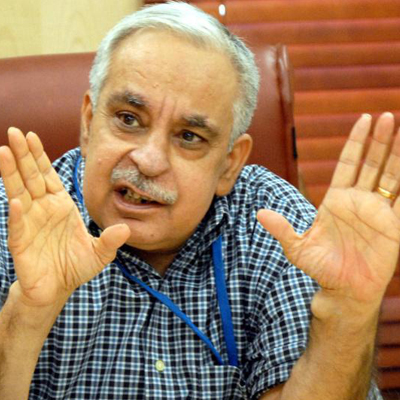
    NEW DELHI: The Telecom Regulatory Authority of India (TRAI) chairman Rahul Khullar has once again spoken loud and clear. The 62-year-old Khullar has proposed that while the Department of Telecom should exclusively focus its attention on carriage and carriage related issues while the Information and Broadcasting Ministry (I&B), considering its history, should be only regulating content.


    “And I think that is the way we need to go,” he said while addressing the gathering at the recently concluded CII Big Summit 2014.


    He also came down heavily on the politicians and political parties. He said, “The Supreme Court through its ruling has clearly stated that airwaves are not the monopoly of the state.”


    So, while Prasar Bharati must exist and it must be independent; politicians, governments, state governments and their organs have “absolutely no business whatsoever to be in broadcasting space,” he announced and suggested that the government must announce this as an integral part of the National Media Policy.


    Khullar also gave his perspective on the other components of the National Media Policy. “Firstly, there must be a clear articulation that we want a free media, unhampered and unrestricted by the government in any way possible,” he said while also suggesting that the media itself must be subject to safeguards. “It could come from other forms of independent regulators. You cannot have an institution which has rights but no duties,” he added.  


    Secondly, there must be commitment in National Media Policy to uphold plurality of views and opinion. “And this must be a commitment,” he said.


    Thirdly, time has come that we start talking about infrastructure. “If this National Media Policy is actually going to work, are we or are we not going to be in a digitised world? We cannot be flipping and flopping the dates as we send out wrong signals to the rest of the world about your credible commitment towards any policy,” he stated.


    Khullar also pointed out the issues with spectrum availability. “It is a nightmare to deal with ISRO. The organisation neither gives you a transponder nor does it allow you to get a transponder of your own,” he informed.  

  • DoT challenges TDSAT judgment on 3G roaming services in Supreme Court

    DoT challenges TDSAT judgment on 3G roaming services in Supreme Court

    NEW DELHI: The Department of Telecom has moved the Supreme Court challenging tribunal TDSAT’s judgment that allowed Airtel, Idea and Vodafone to offer 3G services under a roaming arrangement in areas where not all of them own 3G spectrum.


    “Legal opinion has favoured challenging TDSAT judgement dated 29 April on 3G intra-circle roaming. DoT has sent petition to Supreme Court registry around a week ago for appeal against the judgement,” an official source told.


    The Telecom Disputes Settlement and Appellate Tribunal had overturned a government ban on offering 3G mobile services beyond their licensed zones through roaming pacts, saying that it was in national interest to allow better utilisation of scarce radio frequency.


    The three operators – Airtel, Vodafone and Idea Cellular – benefitted from this judgment as they were facing a penalty of Rs 1,200 crore for entering into pacts with each other to offer 3G services in regions where they did not win spectrum in the 2010 auction.


    Airtel had won the 3G spectrum in 13 out of 22 telecom service areas for Rs 12,295.46; Vodafone in 9 for Rs 11,617.86 and Idea Cellular in 11 circles for Rs 5,768.59 crore.


    DoT issued notices to Airtel, Vodafone and Idea on 23 December 2011 asking them to stop 3G ICR within 24 hours and report compliance but the order was challenged by them.


    Tata Teleservices and Aircel too had signed 3G ICR but immediately called off their agreement after DoT issued notice to them.


    Following the TDSAT judgement, Airtel, Vodafone and Idea have extended service under their 3G ICR at pan-India level except Odisha.


    Reliance Communications also entered in similar agreement with Tata Teleservices to provide 3G services in Karnataka, Andhra Pradesh, Tamil Nadu, Kerala and UP-East telecom Circles.

  • American Court issues injunction in case relating to re-transmission of broadcast signals over internet

    American Court issues injunction in case relating to re-transmission of broadcast signals over internet

    NEW DELHI: Insisting that it was not striking a blow against new communications technology, the American Supreme Court has ruled that the engineers at the new firm of Aereo had — so far — not found a way to avoid violating television networks’ copyright privileges by delivering their programmes to Aereo’s customers for a small monthly fee.


    In what is clearly a landmark decision, the SC reversed a lower court decision denying an injunction to broadcasters in a case in which the court considered “whether a company ‘publicly performs’ a copyrighted television programme when it retransmits a broadcast of that program to thousands of paid subscribers over the Internet.”


    The petition was filed by American Broadcasting Companies against Aereo.


    The case arose from a broadcaster petition to reverse a lower court ruling that denied an injunction against Aereo.


    The injunction was sought to shut down the service while the question of copyright was determined.


    Broadcasters claim Aereo is violating their copyright by reselling TV signals—like a cable operator—without permission. Aereo says it is not reselling signals, but “renting” individual antennas to monthly subscribers who pay $8 to $12 monthly for the multichannel service targeting second-screen devices.


    However, senior Supreme Court lawyer Amy Howe who is an expert on copyright and edits the SCOTUS Blog wrote: “Aereo performs petitioner’s works publicly within the meaning of the transmit clause of the Copyright Act.”


    Analysing the order, the blog said the analytical technique the Court used in finding a likely copyright violation by Aereo was to compare its streaming of internet-based TV programmes to cable TV systems’ snatching of TV broadcasts out of the airwaves for re-delivery to customers.  Congress had meant to bar that kind of programming in a major 1976 revision of the Copyright Act, the Court said, and it applied that change directly to Aereo’s clever new business model.


    The over-the-air TV broadcast industry had taken the case to the Supreme Court, claiming that its very survival was at stake.  Aereo’s system, the industry contended, was offering a very cheap version of TV programming to its customers while paying not a cent in royalties to the TV networks and their program developers.  This was threatening to draw the networks’ own paying customers away, depriving it of revenues that have been replacing their declining take from advertising, the TV firms said.


    The Court, in its six-to-three ruling, said nothing about rescuing the TV broadcasters, basing its ruling on a fairly simple application of what it means to “perform” a copyrighted program through distribution to “the public.”   Aereo’s system, Justice Stephen G. Breyer wrote for the majority, both performs the copyrighted programs and does so through delivery to the public.


    Aereo has developed a system in which it uses thousands of tiny antennas, each tuned to respond to an individual customer’s internet demand for a particular TV programme, and through those antennas it delivers to each customer only their own personal copy.   Aereo contended that it simply was supplying the technology hardware — like a DVD recorder — to enable its customers to get access to TV programmes that were broadcast over the air.


    The Court rejected that claim, concluding that Aereo was not simply an equipment provider. It was putting on the TV shows for its customers, the public.


    However the Court said it was issuing only a narrow ruling.  It said it was dealing, at this point, only with Aereo’s system so far as it enabled its viewers to view copyrighted TV programmes “live,” or after only a brief delay. Justice Breyer stressed that the decision said nothing about downloading a TV programme in order to recover it and keep it on hand for somewhat later viewing. Justice Breyer also said the new decision was not dealing with other potential time-shifting download technologies.


    Aereo’s case will now return to lower courts, and it appears that Aereo may have some opportunity there to salvage some of what its offers to its customers.  

  • Supreme Court sets panel on government advertisements

    Supreme Court sets panel on government advertisements

    NEW DELHI: Pursuant to the Supreme Court order for forming panel to frame guidelines to regulate publicly funded government advertisements, the Information and Broadcasting Ministry has formally notified the names of Bangalore’s National Law University director Prof NR Madhav Menon, former Lok Sabha secretary general T K Vishwanathan and senior advocate Ranjit Kumar.


    I&B Ministry secretary Bimal Julka will be the member secretary of the committee, which held its first meeting on 5 May.


     The Ministry said the report will be given preferably within three months of the date of the judgment, 23 April, by the panel after an intricate study of all the best practices in public advertisements in different jurisdictions.


     The apex court bench headed by chief justice P Sathasivam with justice Ranjan Gogoi and N V Ramana had said that the existing guidelines of the Directorate of Advertising and Visual Publicity (DAVP) do not cover such advertisements. There was therefore a need for substantive guidelines to be issued by the Court until the legislature enacts a law in this regard.


     The court passed the order on a public interest litigation (PIL) filed by the NGOs Common Cause and the Centre for Public Interest Litigation (CPIL) pleading it to frame guidelines. The petition sought issuance of guidelines for curbing ruling parties from taking political mileage by projecting their leaders in official advertisements.


     It was, the Court said, ‘vividly clear’ that the DAVP guidelines, which are available in the public domain, only deal with the eligibility and empanelment of the newspapers/journals or other media, their rates of payment, and such like matters. Besides, it only specifies that in releasing advertisement to newspapers/journals, the DAVP would not take into account the political affiliation or editorial policies of newspapers/journals.


     “Hence, it is evident that there is no policy or guideline to regulate the content of government advertisements and to exclude the possibility of any mala fide use or misuse of public funds on advertisements in order to gain political mileage by the political establishment.”


    The Government in its counter affidavit claimed that 60 per cent of the advertisements released by the DAVP on behalf of various Ministries/Departments/Public Sector Undertakings of the Central Government relate to classified or display/classified category such as UPSC/SSC or recruitment, tender and public notices, etc. The respondents asserted that government advertisements sometime carry messages from national leaders, ministers and dignitaries accompanied with their photographs.


    However, government counsel K Radhakrishnan said the purpose of such advertisements is not to give personal publicity to the leaders or to the political parties they belong to rather the objective is to let the people know and have authentic information about the progress of the programmes/performance of the government they elected and form informed opinions, which is one of the fundamental rights of the citizens in our democracy as enshrined in the Constitution.


    The apex court noted in its judgment that the immediate cause of filing these writ petitions in 2003 and 2004 respectively was stated to be the numerous full page advertisements in the print media and repeated advertisements in the electronic media by the Central Government, State Governments and its agencies, instrumentalities including public sector undertakings which project political personalities and proclaim the achievements of particular political governments and parties at the expense of the public exchequer.


    It was also the assertion of the petitioners – Common Cause represented by Meera Bhatia and the Centre for Public Interest Litigation (CPIL) represented by Prashant Bhushan – that such advertisements become more blatant and assumes alarming proportions just before the announcement of the general elections. Accordingly, it was the stand of the petitioners that such deliberate misuse of public funds by the Central Government, State Governments, their departments and instrumentalities of the state is destructive to the rule of law.


    It was also alleged that it allows the parties in power to patronize publications and media organizations affiliated to the parties in power and also to get favourable media coverage by selective dispersal of the advertising bonanza. It was projected that the use of public funds for advertising by public authorities to project particular personalities, parties or governments without any attendant public interest is mala fide and arbitrary and amounted to violation of Article 14 of the Constitution. It was also argued that use and wastage of public funds in political motivated advertisements designed to project particular personality, party or government by wasting public money is also in violation of the fundamental rights under Article 21 because of diversion of resources by the governments for partisan interests. Such violation, therefore, attracts the remedy under Article 32 for the enforcement of fundamental rights of the citizens.

  • Ad cap case adjourned till 15 July

    Ad cap case adjourned till 15 July

    Updated: 05:04 pm


    NEW DELHI: The Delhi High Court today adjourned to 15 July the final hearing of a bunch of petitions challenging the ad cap sort to be imposed by the Telecom Regulatory Authority of India (TRAI), even as it said the regulator will not take any coercive action under the ad-cap regulations.
     

    The adjournment by Chief Justice G Rohini and Justice Rajiv Sahai Endlaw was allowed after counsel Neeraj Krishna Kaul representing the News Broadcasters Association (NBA) sought more time to file a rejoinder.


    The bar on coercive action by TRAI had been given in an earlier hearing and remains in force. However, the Court had said the petitioners have to submit a weekly report on the consumption of commercial airtime in a clock hour.


    TRAI Counsel Saket Singh opposed the adjournment noting that the matter had come up earlier before the Telecom Disputes Settlement and Appellate Tribunal (TDSAT) but has been transferred to the High Court after the Supreme Court ruled that TRAI regulations could not be adjudicated upon by the Tribunal.


    He said a lot of time had been, and in any case the Cable TV Networks (Regulations) Rules of 1994 were clear about the ad cap and TRAI had only sought to implement that.
     
    However, Kaul argued that the case involved important constitutional issues as they were cases where the freedom of the press and freedom of speech and expression are involved and the case cannot be decided without having all facts on record.
     
    Earlier in the hearing on 13 March, TRAI sought early hearing in the case on the ground that it had filed its affidavit and the court gave time to NBA to file its rejoinder.


    The NBA had challenged the ad cap rule, contending that TRAI does not have jurisdiction to regulate commercial airtime on television channels.


    Apart from the NBA, the petition have been filed by Sarthak Entertainment, Pioneer Channel Factory, E24 Glamoru, Sun TV Network, TV Vision, B4U Broadband, 9X Media, Kalaignar, Celebrities Management, Eanadu Television and Raj Television.


    The news and regional broadcasters fear that the capping of commercial airtime will curtail their ad revenues. They also argue that the ad cap must be brought only after the benefits of cable TV digitisation start kicking in.


    Earlier, the Court had also granted interim relief to Hyderabad-based MAA Television Network against the ad cap regulation. However, the court had also observed that the cap on advertisements is a ‘reasonable exercise’.


    The broadcasters had on 17 December challenged the ad cap rule in the Court after TDSAT had dismissed their appeal in the wake of the apex Court judgment that the tribunal does not have jurisdiction over TRAI regulations.


    Four major broadcast networks—Star India, Zee Entertainment Enterprises, Multi Screen Media and TV18 Group—are following the regulation.