Tag: Supreme Court

  • Supreme Court declines to stay TDSAT order cancelling inflation-linked hike

    Supreme Court declines to stay TDSAT order cancelling inflation-linked hike

    NEW DELHI: The Supreme Court has declined to stay the order of the Telecom Disputes Settlement and Appellate Tribunal (TDSAT) setting aside the amendments in two tariff orders, which had sought to put an inflation-linked hike of 27.5 per cent on addressable and non-addressable systems.


    While listing the appeal for hearing on 1 July, Justice V. Gopala Gowda and Justice C. Nagappan said it would only consider the matter if matters of law were involved.


    Earlier, counsel for the Indian Broadcasting Foundation (IBF) and some broadcasters sought stay on the ground of wholesale price index. They also sought to argue that there was consultation prior to issuance of the Telecommunication (Broadcasting & Cable) Services (Second) Tariff (Eleventh Amendment) Order, 2014’ and ‘The Telecommunication (Broadcasting & Cable) Services (Second) Tariff (Thirteenth Amendment) Order, 2014’ and these were not strictly tariff orders.


    However, counsel Vivek Sarin and Aman Lekhi for Home Cable Network, the Centre for Transforming India, Lucknow 9 Cable Network, Good Media News India Pvt Ltd, Sikkim Digital Network and Cable Combine Communication Siliguri said that the wholesale price index could not be applied in this case as WPI was applicable to labourers wages or products that were linked to agriculture since the WPI was fixed on the basis of prices of agricultural products


    TDSAT chairman Aftab Alam and member Kuldip Singh said in their order dated 28 April that the ‘The Telecommunication (Broadcasting & Cable) Services (Second) Tariff (Eleventh Amendment) Order, 2014’ and ‘The Telecommunication (Broadcasting & Cable) Services (Second) Tariff (Thirteenth Amendment) Order, 2014’] were ‘untenable.’


    The Tribunal also said it thought the Telecom Regulatory Authority of India (TRAI) “will be well advised to have a fresh look at the various tariff orders in a holistic manner and come out with a comprehensive tariff order in supersession of all the earlier tariff orders.”


    “While doing so, it may consider all the agreements and relevant data available with it. It may consider differentiating between content which is of a monopolistic nature as against that the like of which is shown by other channels also.”


    “It may also consider classifying the content into premium and basic tiers. It may identify the major cost components so that increase or decrease in such costs may be suitably factored while working out the inflationary hikes. Increase in costs of such components as may be available in indexes such as WPI, GDP deflator etc. can then be applied. While working out the tariffs, the effort should be to encourage a correct declaration of SLR. While carrying out the exercise, it may take the inputs from various stakeholders and give a reasoned order for accepting or rejecting the same. We want to be amply clear that the above are only some suggestions and TRAI being an expert body may arrive at suitable tariffs independently; it is up to it to consider the above and/or any other factors,” the Tribunal said.


    Later, IBF supported the order as intervener while other interveners including Direct to Home (DTH) operators, Multi System Operators ( MSOs), and Association of Cable Operators opposed the order on the same grounds as the Appellants.


    TRAI had allowed a 15 per cent hike from 1 April, 2014. The second installment of 12.5 per cent tariff hike came into effect from 1 January, 2015.


    TRAI said the inflationary increases given by it are based on increase in the Wholesale Price Index (WPI). In the Explanatory Memorandum with the Second Amendment to the Principal Tariff Order, it was explained that for making adjustments for inflation Wholesale Price Index (WIP) had been used. It was explained that Consumer Price Index (CPI) was not used as latest information for this was not available and further this related to certain specific consumption baskets. As per the Explanatory Memorandum to the impugned Tariff Order, the WPI has increased by 43.69 per cent and giving a pass through of 63 per cent, an inflation linked increase of 27.5 per cent is allowed.
  • Karunanidhi opposes SC rule against ban of politicians’ pictures in govt ads

    Karunanidhi opposes SC rule against ban of politicians’ pictures in govt ads

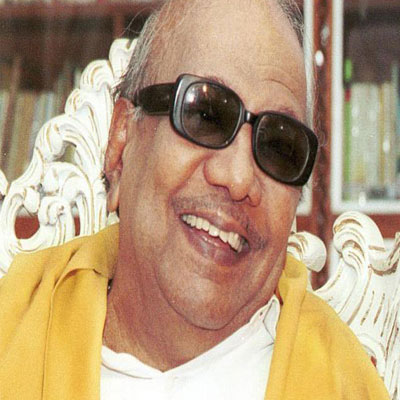
    NEW DELHI: DMK chief and former Tamil Nadu chief minister M Karunanidhi has lashed out at the Supreme Court’s ban on the photos of politicians in government ads.


    The veteran politician has said that this takes away the rights of the states.


    He was quoted in media reports as saying, “The PM and CMs are of same status in a federal set-up. In states, people give more importance to the CMs than the PM. A picture of a CM is inevitable in state govt advertisements. There are few educated people. The pictures help people understand ads better.”


    Holding that taxpayers’ money cannot be spent to build “personality cults” of political leaders, the Supreme Court restrained ruling parties from publishing photographs of political leaders or prominent persons in government-funded advertisements.


    The Court said such photos divert attention from the policies of the government, unnecessarily associate an individual with a government project, and pave the way for cultivating a “personality cult.”


    A bench of Justices Ranjan Gogoi and N.V. Ramana said the photos of only three constitutional authorities – the Prime Minister, the President and the Chief Justice of India – can be used in such ads. However, the personal approval of these three authorities will be necessary before publication.


    The observations of the Court were based on examination of the findings of a Committee led by Bangalore’s National Law University Director N.S. Madhava Menon set up in May last year, which had submitted its report in October. The Committee was set up by the Information and Broadcasting Ministry pursuant to an order of 23 April last year. Other members were former Lok Sabha secretary general T K Vishwanathan, and senior advocate Ranjit Kumar. Bimal Julka, secretary in the I&B Ministry, was the member secretary of the Committee.


    The court passed the order on a public interest litigation (PIL) filed by the NGOs Common Cause represented by counsel Meera Bhatia and the Centre for Public Interest Litigation (CPIL) represented by advocate Prashant Bhushan pleading it to frame guidelines.


    The petitions sought issuance of guidelines for curbing ruling parties from taking political mileage by projecting their leaders in official advertisements.


    The Menon panel had recommended a complete ban on publishing of photos in the ads. It had further said that no ads should be allowed on election eve.


    However, Justice Gogoi made changes in four cases. Instead of a complete ban on publishing of photos of all individuals, it said pictures of PM, President and CJI can be used provided they personally clear it – thus, in a way, making them also accountable for the publication.


    Secondly, the court improvised on the Menon committee recommendations to direct the government to appoint a three-member Ombudsman body of persons with “unimpeachable integrity.”


    The bench disagreed with the panel’s suggestion for a performance audit on such government ads.


    Holding that there had been “misuse and abuse” of public money on such advertisements, the three-member committee headed by eminent academician Professor Menon had framed guidelines to regulate expenditure and contents of such ads.


    The report had said only pictures and names of the President, the Prime Minister, Governor and Chief Ministers be published.


    The apex court bench had then said that the existing guidelines of the Directorate of Advertising and Visual Publicity (DAVP) do not cover such ads. There was therefore a need for substantive guidelines to be issued by the Court until the legislature enacts a law in this regard.


    The three members of the committee recommended that the governments must prepare a list of personalities whose birth or death anniversaries will be marked with ads in advance.


    The government must then specify which Ministry should release the ad to avoid different departments and state-run companies from paying tribute to the same leader with a multitude of ads. “There should be a single advertisement only,” the Committee said.


    The committee said that its recommendations are to prevent “the arbitrary use of public funds for advertising… to project particular personalities, parties or governments without any attendant public interest.”


    As was reported earlier by Indiantelevision.com, the move is likely to impact the revenues of some media groups as television channels will no longer be able to run TVCs by state governments featuring Chief Ministers and other local political leaders.

  • Supreme Court stays Delhi government’s defamation circular against media

    Supreme Court stays Delhi government’s defamation circular against media

    NEW DELHI: The Supreme Court has stayed operation of a circular dated 6 May by the Delhi government, which would have initiated defamation proceedings against media for publishing or broadcasting news that damage the reputation of the chief minister, the council of ministers and the government.


    The bench comprising Justices Dipak Misra and Prafulla C Pant issued a notice Delhi chief minister Arvind Kejriwal. “As an interim measure we direct stay of the circular dated May 6, 2015 till further order of this court,” the notice said.


    Asking Kejriwal to explain why the directorate of information has issued “such circular,” the court sought a reply within six weeks and listed the matter for further hearing on 8 July.


    The court’s order came on an application filed by senior advocate Amit Sibal seeking vacation of the stay granted by the apex court on the proceedings before a trial court in a defamation case.


    Sibal, who had filed a criminal defamation complaint against Kejriwal and others in the Patiala House court, said that while the chief minister on one hand seeks setting aside of penal laws on defamation, on the other hand he has issued such a circular.


    “It is noteworthy that the petitioner (Kejriwal) in his affidavit declares that he is working as chief minister of Delhi. However, the aforesaid circular directly contradicts and mitigates against the stand taken by him in the present petition,” the plea said, adding that the stay on the trial court proceedings against Kejriwal be vacated.


    The circular, issued by state information and publicity department, said that if any officer associated with the Delhi government feels that a published or aired item has caused damage to his or the government’s reputation, he should file a complaint with the principal secretary.

  • Freedom of speech and expression cannot be “absolute”: Supreme Court

    Freedom of speech and expression cannot be “absolute”: Supreme Court

    NEW DELHI: While holding that freedom of speech and expression cannot be “absolute,” the Supreme Court refused to quash criminal charges against Marathi poet Vasant Dattatraya Gurjar for penning an alleged vulgar and obscene poem on Mahatma Gandhi in 1994. 


    Putting vulgar and obscene words in the mouth of “historically respected personalities” like Gandhi cannot pass the “contemporary community standards test” meant to adjudge the obscenity of an alleged literary work, Justices Dipak Misra and P C Pant said. 


    At the same time, the court upheld the Bombay High Court’s decision of not quashing charge under section 292 (sale, publication of obscene books) under the IPC framed against bank employee Devidas Ramchandra Tuljapurkar for publishing the “vulgar and obscene” poem on Gandhi in 1994 in an in-house magazine of which he was an editor. The bank employee had challenged framing of charges against him.


    However, the Court quashed the criminal proceedings against the printers and publishers of the magazine in which the poem penned by Gurjar was published, saying they have already tendered an unconditional apology.


    The bench asked Tuljapurkar, the then editor of in-house magazine of Bank of Maharashtra Employees Union, to express his point of view before the lower court during the trial. The bench noted that the publisher published the poem “Gandhi Mala Bhetala” in 1994 and “immediately” after coming to know its impact; he tendered an unconditional apology in the next issue of the magazine. 


    “Once he has tendered the unconditional apology even before the inception of the proceedings and almost more than two decades have passed, we are inclined to quash the charge framed against him as well as the printer. We are disposed to quash the charge against the printer, as it is submitted that he had printed as desired by the publisher. Hence, they stand discharged,” the bench said. 


    “Freedom of speech and expression has to be given a broad canvas, but it has to have inherent limitations, which are permissible within the constitutional parameters. We have already opined that freedom of speech and expression as enshrined under Article 19(1)(a) of the Constitution is not absolute in view of Article 19(2) of the Constitution.We reiterate the said right is a right of great value and transcends and with the passage of time and growth of culture, it has to pave the path of ascendancy, but it cannot be put in the compartment of absoluteness. There is constitutional limitation attached to it,” the bench said. 

  • TRAI to wait for final SC verdict before implementing tariff orders for C&S

    TRAI to wait for final SC verdict before implementing tariff orders for C&S

    NEW DELHI: The Telecom Regulatory Authority of India (TRAI) has said that amendments to its tariff orders issued on 1 October, 2004 and 21 July, 2010, which had been set aside by the Telecom Disputes Settlement and Arbitration Tribunal (TDSAT) earlier this month, would be subject to the outcome of the appeal filed by the regulator before the Supreme Court.


    The two amendments made by the TRAI to its tariff orders that aimed at preventing broadcasters from giving their channels directly to subscribers and putting commercial subscribers at par with ordinary subscribers were struck down by TDSAT on 9 March.


    TDSAT chairman Aftab Alam and member Kuldip Singh said the two amendments were “quite unsustainable and we are thus constrained to set aside the impugned amendment orders.”


    The amendments referred to the Telecommunication (Broadcasting and Cable) Services (Second) Tariff (Twelfth Amendment) Order 2014 dated 16 July, 2014 and the Telecommunications (Broadcasting and Cable) Services (Fourth) (Addressable Systems) Tariff (Fourth Amendment) Order 2014 dated 18 July, 2014 by which similar amendments were made in the Telecommunication (Broadcasting and Cable) Services(Second) Tariff Order 2004 dated 1 October, 2004 (relating to non-addressable or analogue systems) and the Telecommunication (Broadcasting and Cable) Services (Fourth) (Addressable Systems) Tariff Order 2010 dated 21 July, 2010 (relating to addressable systems) respectively.


    The Indian Broadcasting Foundation (IBF) and the Federation of Hotels and Restaurant Association of India had challenged the amendments as the commercial subscriber had been put at par with the ordinary subscriber and the tariff orders treat as equal groups of subscribers that are inherently unequal and are also so recognized in their different definitions in the tariff orders.


    In a press note today, TRAI said it had filed an appeal before the apex court and decided to hold its orders in abeyance ‘after duly considering the matter.’


    TRAI had issued the tariff orders – “The Telecommunication (Broadcasting and Cable) Services (Second) Tariff (Seventh Amendment) Order 2006″ dated21 November, 2006and the Telecommunication (Broadcasting and Cable) Services (Third) (CAS areas) Tariff (First Amendment) Order2006” dated 21 November applicable to commercial cable subscribers in the non-addressablesystem (non-CAS) and the CAS systems, respectively.


    Following an appeal, the Supreme Court had on 16 April, 2014 directed TRAI to look into the matter de-novo and within three months re-determine the tariff after hearing all the stakeholders’ contentions.


    The orders set aside by TDSAT on 9 March were the result of this re-examination.

  • SC guidelines on govt ads might impact TV channels

    SC guidelines on govt ads might impact TV channels

    MUMBAI: Television channel and newspaper sales execs may be in for a bit of a shocker. Those gigantic ads and long running TVCs by state governments featuring Chief Ministers and other local political leaders mug shots tom-tomming their and their political parties’ achievements could well dry up.


    The reason: the Supreme Court (SC) today issued guidelines relating to Central government advertising, which are put out using public money. The guidelines clearly forbid the use of photographs of chief ministers, government bureaucrats and appointees and other political leaders in government ads. They however permit the use of the photographs of the President, the Prime Minister, Chief Justice of India, departed leaders, including Mahatma Gandhi in these ads.


    The apex court however refrained from disallowing the government to issue public advertisements six months prior to an election. It added that governments can’t be allowed to use public money for unproductive purposes like giving advertisements for political gains.


    Industry experts believe that the Supreme Court guidelines could impact the revenues of some media groups.


    A media observer tells Indiantelevision.com, “Local state governments, from time to time, release boastful ads and TVCs featuring their CMs in newspapers and on TV channels as a bit of a quid pro quo for favourable coverage and positioning of the parties and their representatives in the media. I don’t think any state CM will allow the ad expenditure if it does not feature him or her, because they tend to use it to build their own image.”


    Another expert opines that it is quite likely that the media managers could well divert government ad spending toward social and mobile media as the SC restrictions do not apply to them – at least as yet. This could be in the form of viral campaigns both as videos, and textual posts.


    Watch this space for further news.

  • Bollywood slammed for barring women make-up artists despite order

    Bollywood slammed for barring women make-up artists despite order

    NEW DELHI: Slamming gender discrimination against women in Bollywood, the Supreme Court demanded to know why its directive of 10 November, 2014 quashing a bylaw of the Costume and Make-Up Artists and Hair Dresser Association had not been followed.


    However, the Court was assured that Association had accepted the application of Charu Khurana and would issue her a membership card in due course, making her the first member of the male-dominated make-up fraternity.


    Until now, women were only allowed to work as hairstylists and the work of make-up was left to men.


    “Such shocking discrimination on the basis of gender is violative of constitutional values. Earlier, the fee (for association membership) was only Rs 5,000 and now you are asking for Rs 1 lakh. These are clearly ways to keep women away even after our order quashing your discriminatory clause,” an angry Justice Dipak Misra told the association’s lawyer. 


    “The societal mindset must change. The male community in several spheres devises ways to keep women away from particular areas of employment,” Misra added. 


    The court was hearing a plea filed by a group of women make-up artists headed by Khurana, after they were refused admission by the make-up artists’ associations in Maharashtra, Karnataka, Andhra Pradesh and Kerala. 


    Thirty-two-year-old Khurana, who lives in New Delhi, said women artists had to either abandon the profession or work illegally, often giving credit for their work to male colleagues so that the union of makeup artists would not find out.


    After being fined Rs 25,000 for working on a Tamil movie, Khurana had sought legal recourse. The apex Court vindicated her stand by instructing the Maharashtra chapter of the Cine Costume Make-up Artists and Hair Dressers Association to allow women to take membership as makeup artists and without the need to hold a domicile certificate of Maharashtra, another prerequisite that prevented those from outside the state from working in Bollywood.


    “The Supreme Court had directed the union to remove the clause pertaining to women and domicile within 10 days,” said Jotika Kalra, the lawyer who represented Khurana in the case.


    For Khurana, the verdict was a vindication of her fight against the misogyny that she and other women artists have faced in the film industry, both in Bollywood and in southern India.


    “We have to do makeup in vans, or in hotel rooms, because the union could raid the sets anytime and fine us. Our names never appear in the credits and there is always a male makeup artist on set, even though he may not be working,” Khurana said in an interview in November.


    In the early years, Bollywood did not have too many women working behind the scenes. Men handled costumes and makeup and even played the role of women up until the 1950s because working in films was not considered an honourable profession.


    Even after women started working in films, the union rules only allowed them to register as hairdressers, never as makeup artists, thus depriving them of rightful wages and the chance to expand their skills.


    A makeup artist can earn anywhere between Rs 5,000 to Rs 25,000 a day, Khurana said, adding several qualified female artists had to turn away from the film industry and settle for weddings or other events because of the archaic rule.


    In its arguments last year, the union boasted of 1,780 makeup artists in Maharashtra alone but said men had always been makeup artists and women always the hairdressers. “That’s just the way things were. We were not against women as such,” said Maharashtra chapter President Sharad Shelar had then said.


  • Spectrum bid revenue up 37% from last time; Govt denies tariff increase

    Spectrum bid revenue up 37% from last time; Govt denies tariff increase

    NEW DELHI: Even as the government has allocated spectrum worth more than Rs 1.09 lakh crore, Telecom minister Ravi Shankar Prasad has said this will not mean any rise in mobile tariffs.


    Tariff impact after the auctions will not be more than 1.3 paise per minute for users,” he said. About the criticism over high spectrum prices, he said, “It is not correct to speculate that prices of mobile calls will increase. We have seen estimates and analyses.”


    The spectrum won would be with telecom companies for 20 years. Hence, the total bids of about Rs 1.1 lakh crore, if spread over 20 years, would lead to a payout of only Rs 5,300 crore a year for operators. The annual revenues, he said, of mobile companies in India collectively are roughly Rs 2 lakh crore.


    The successful bidders have to pay 33 per cent of the amount within 10 days of the result of the auction and the balance 67 per cent is to be paid by the TSPs over the next 12 years (of which there will be a moratorium of two years and and then ten equally).  


    Meanwhile, the Supreme Court permitted the government yesterday to declare the results of the bidding and also to commence work of allocation.


    However, the judges made it clear that this was subject to the final judgment in the bunch of petitions challenging the conditionalities in the notice inviting applications to join the e-auction process.


    The spectrum auction in 2100 MHz, which caters to 3G, 1800 MHz, 900 MHz, and 800 MHz band, which commenced on 4 March and ended on 25 March after 115 rounds over 19 days, has fetched over Rs 109,874 crore. However, approximately 11 – 12 per cent spectrum remained unsold.


    In all, 470.75 MHz has been put to auction in various local service areas. This compares with 390 MHz in November 2012 and 426 MHz in February 2014.


    There was robust activity in the all the spectrum bands and vibrant bidding. Prices have significantly increased in 50 of the 69 offerings with bid price being as high as 300 per cent over reserve price in some instances. Overall increases over estimated proceeds from auction is about 37 per cent.


    In November 2012, the total realization from auction of spectrum in 1800 MHz band was Rs 9407 crore and in February 2014 Rs 61,162 crore has been realized. 


    Since the Supreme Court has given the leave to proceed further, the provisional results are being declared. Of the eight participants in the auction, seven have been awarded spectrum.


    This is the first time that spectrum has been offered simultaneously in four bands. In previous auctions, different bands were auctioned sequentially. This auction design has enabled bidders to take informed decisions while placing bids and consider alternatives dynamically.


    Another noteworthy feature is that for the first time there is robust demand for 800 MHz band, which in previous auctions had seen very sluggish response.


    Some of the steps taken to enhance transparency as well as to remove barriers to participation included five MHz spectrum in 2100 MHz band released to increase availability of spectrum; in principle approval was received from Defence to release further 15 MHz in 2100 Mhz band to the telecoms sector; earnest money percentage was reduced to between 11-25 per cent, earlier in some instances it was over 40 per cent; taking into account suggestions and request from operators the ‘extension’ budget – that is the extra time allowance for bidding was increased from 240 minutes to 360 minutes.


    Orders on applicable Spectrum Usage Charges (SUC) were issued before the auction, which reduced the regulatory risk of the bidders and the modalities for liberalization of 800 MHz spectrum was notified.


    Transparent and clear rules for allocation of spectrum were notified for the first time. Earlier spectrum other than the contiguous spectrum was allotted randomly.


    The Department also took steps towards putting in place a roadmap for availability of spectrum by notifying the Defence Band and Defence Interest zone.

  • Two lawyers issued notice for anti-women remarks on ‘India’s Daughter’

    Two lawyers issued notice for anti-women remarks on ‘India’s Daughter’

    NEW DELHI: The Supreme Court today asked the two advocates representing the 16 December gangrape convicts to respond to the charges that they allegedly made derogatory remarks against women in a BBC documentary India’s Daughter by Leslee Udwin.


    Justices V Gopala Gowda and C Nagappan issued notices to the two advocates M L Sharma and A P Singh and sought their response in two weeks following a petition by the Supreme Court Women Lawyers Association.


    “We have heard the argument, pleadings and grievances urged in the petition. The matter requires consideration in view of the factual and legal submissions,” the Court said.


    The Association had sought restriction on the entry of the two advocates in the apex court premises, alleging that their remarks in the controversial documentary were “inhumane, scandalous, unjustifiable, biased, outrageous, ill-minded” and are a “direct affront to and in violation of the dignity of women,” especially those practicing in the Supreme Court. The Supreme Court Bar Association (SCBA) supported the plea of Women Lawyers association.


    Senior advocate Vibha Datta Makhija representing the Women’s Association urged the Court to lead from the front and show zero tolerance for such views. “We need an environment where we are fearless,” she said and added that the two advocates need to be sensitised.


    Senior advocate Dushyant Dave, appearing for SCBA, submitted that there should be a meaningful and proper implementation of gender sensitisation regulation. He said, “SCBA has taken a unanimous decision to take action against Sharma.” 


    The petition had sought protection of fundamental rights, guaranteed under the Constitution, of the female advocates practicing in the apex court to work with dignity and without any gender bias.


    The petition filed through advocate Mahalakshmi Pavani has made Chairperson of Gender Sensitisation Committee and Registrar of the apex court as parties and submitted a transcript of the two lawyers’ comments.


    It also sought the court’s direction to make Sharma and Singh issue a public apology in the media for holding and making public views, which are “absolutely derogatory to the dignity of women” and refraining from issuing such statements in future. The two advocates also be directed to retract their statements and their apology should also be included in the BBC documentary, the petition had said.


    The Association represented by secretary Prerna Kumari had said in the petition that the remarks made by the two advocates showed they do not have respect for any woman and do not see them as more than an object. It had added that the conduct of these lawyers showed complete absence of any concern for society and utter disregard of the Constitutional values and human rights of women besides the ethics and etiquette of the Bar.


    The petition said the lawyers should retract their statements and their apology should be included in the BBC documentary.


    It had added that the conduct of these lawyers showed complete absence of any concern for society and utter disregard of the Constitutional values and human rights of women besides the ethics and etiquette of the Bar. It is much more than a crime, the petition said. 


    Although it has been banned in India and NDTV could not screen the film as slated on 8 March, it continues to be available on the Internet and has been aired more than two times by BBC4, which is not seen in India, apart from some other countries have screened the film on International Women’s Day.


  • Supreme Court scraps ‘draconian’ Section 66A of IT Act

    Supreme Court scraps ‘draconian’ Section 66A of IT Act

    MUMBAI: In a landmark judgement the Indian Supreme Court today scrapped the ‘draconian’ Section 66A of the IT Act, which provides the power to arrest a person for posting allegedly offensive content online.


    The court ruled that the controversial Section 66A of the Information Technology Act was unconstitutional.


    The move comes in the wake of multiple arrests that have been made over the last year of citizens for posting their personal views on social media websites like Facebook and Twitter. The latest was the arrest of a teenager from Bareilly, Uttar Pradesh last week. The Class 12 student was arrested and sent to jail for a Facebook post about senior Uttar Pradesh minister Azam Khan.


    The order was delivered by a two-judge bench of the Supreme Court on petitions filed by civil rights groups and a law student, who argued that Section 66A violated people’s fundamental right to freedom of speech and expression. In the judgment, the Supreme Court said, “There is a difference between discussion, advocacy and incitement. Discussion and advocacy, no matter how annoying, is allowed.”


    The Supreme Court’s move has been lauded by members of the film and media fraternity online, who took to Twitter to express their views on the verdict.


    Journalist turned filmmaker Pritish Nandy tweeted, “Section 66A of the IT Act, the noxious, draconian law has been struck down by the Supreme Court. Restores our faith in democracy. What an achievement! @karunanundy #66A, the black act goes.”


    Director Madhur Bhandarkar said, “Landmark judgement by Hon Supreme Court as it strikes down Sec 66A of IT Act. Freedom of thought & expression rightly upheld in a democracy.”


    Filmmaker Shekhar Kapur added, “As Supreme Court has quashed #Sec66A, its time for every1 to realise growing power of #socialmedia… a powerful tool 2 be used responsibly.”


    Actress Suchitra Krishnamurty tweeted, “Yippee #Sec66A has been scrapped. So our freedom of speech is back. Can we have a law to scrap/challenge bans imposed by Govt too?”


    Journalist Sagarika Ghosh expressed her views by tweeting this, “Now that #Sec66A gone, in same spirit will GOI apologise to Priya Pillai, allow Wendy Doniger, un-ban books, stop calling media anti-national?”


    India Today consulting editor Rajdeep Sardesai tweeted, “The only exception to free speech must remain hate speech and incitement to violence. Defamation/slander as per common law. #Sec66A”