Tag: Supreme Court

  • MIB asks FM Phase III bidders to pay full amount by 1 October

    MIB asks FM Phase III bidders to pay full amount by 1 October

    NEW DELHI: All successful bidders for the 91 FM Radio channels in 54 cities that were announced yesterday in the first stage have been asked to pay the bid deposit – 25 per cent of the bid amount – by 21 September. The balance will have to be paid by 1 October. 

    Both amounts have to be paid by demand draft in the name of the Pay and Accounts Officer, Information and Broadcasting Ministry.


    At the same time, the Ministry warned that if the bid deposit is not received by the due date, the earnest money deposit (EMD) will be forfeited, and if the balance is not received by 1 October, the bid deposit and EMD will be forfeited.


    The Ministry also made it clear that this was without prejudice to any other action that it may take against defaulters.  


    While placing the results of 91 channels in fifty-four cities on the website of the Ministry, the frequency allocated and the successful bid amount was also stated.


    The Ministry said the results do not include the results of the bids by Sun TV, South Asia FM and Kal Radio in compliance with the orders of the Madras High Court.


    It also said the Centre had decided to file a special leave to appeal in the Supreme Court against the order of 26 July of the Delhi High Court of Delhi in the petitions by Digital Radio (Mumbai) Broadcasting Ltd. & Digital Radio (Delhi) Broadcasting Ltd. respectively.


    Even as the government withheld six results because of legal cases, Entertainment Network India Ltd (ENIL) emerged the largest gainer with 17 channels in its kitty. 


    Rajasthan Patrika Pvt Ltd, Reliance Broadcast Network and DB Corp Ltd got 14 channels each. Meanwhile, Music Broadcast Pvt Ltd has got 11 channels and HT Media has 10 channels. Digital Radio (Delhi) Broadcasting Ltd and Abhijeet Realtors and Infraventures Pvt Ltd got two channels each.


    Others who have successful bid and got one channel each are Digital Radio (Mumbai) Broadcasting Pvt Ltd, Renderlive Films and Entertainment Pvt Ltd, Sarthak Films Pvt Ltd, Abir Buildcon Pvt Ltd, Mathrubhumi Printing and Publishing Co Pvt Ltd and Odisha Television Ltd.


    The auction was stopped on the 33rd day after just one round, with 97 channels in 56 cities became provisional winning channels with cumulative provisional winning price of about Rs 1156.9 crore against their aggregate reserve price of about Rs 459.8 crore.


  • SC agrees to hear review pleas against its order relating to pictures of politicians on govt. ads

    SC agrees to hear review pleas against its order relating to pictures of politicians on govt. ads

    NEW DELHI: The Supreme Court will hear on 14 September a batch of petitions filed by various states seeking a review of the decision of the apex court relating to photos of politicians on government advertisements.


    The Court had earlier given a direction on a public interest petition that only photographs of the Prime Minister, President and Chief Justice of India can be published in official media advertisements and not those of chief ministers. But the personal approval of these three authorities will be necessary before publication.


    Justices Ranjan Gogoi and Prafulla C. Pant which had passed the original directions on 13 May said the review petitions will be heard in open court.


    Prior to the order, the judges perused the petitions of Tamil Nadu, West Bengal, Karnataka, and Assam in the chamber.


    The four states filed the review petitions challenging the 13 May direction as being discriminatory and erroneous since it has permitted the photograph of the Prime Minister but not the chief ministers who too are elected representatives of the people.

    The states pointed out that the expert panel had recommended display of photos of CMs/governors as well but the Court had restrained the states from displaying photos of CMs/governors.


    The petitions said: “There is nothing wrong if the publication issued by the government highlighting the achievements of the government contains photographs of the chief minister and the other ministers if they have made contribution to the achievements of the state government. The judgment is completely silent regarding the exclusion of the chief minister who is the head of the state government. If the photograph of the Prime Minister is permitted on the publication/advertisement then the photographs of the chief minister must have also been permitted by this court.”


    The May order had come on public interest litigations (PIL) filed by the NGOs Common Cause represented by counsel Meera Bhatia and the Centre for Public Interest Litigation (CPIL) represented by advocate Prashant Bhushan pleading it to frame guidelines.


    Holding that taxpayers’ money cannot be spent to build “personality cults” of political leaders, the Court had restrained ruling parties from publishing photographs of political leaders or prominent persons in government-funded advertisements.


    The Court said such photos divert attention from the policies of the government, unnecessarily associate an individual with a government project, and pave the way for cultivating a “personality cult”.


    The observations of the Court were based on examination of the findings of a Committee led by Bangalore’s National Law University Director N.S. Madhava Menon set up in May last year which had submitted its report in October.


    The Committee was set up by the Information and Broadcasting Ministry pursuant to an order of 23 April last year. Other members were former Lok Sabha Secretary General T K Vishwanathan, and senior advocate Ranjit Kumar. Bimal Julka, Secretary in the Ministry, was the member Secretary of the Committee.  

  • SC stays ED proceedings in Aircel-Maxis case to attach Sun TV assets

    SC stays ED proceedings in Aircel-Maxis case to attach Sun TV assets

    NEW DELHI: For the second time within a month, the Supreme Court has come to the rescue of the beleaguered Sun TV group owned by the Maran brothers.


    Earlier on 26 July, the apex Court had permitted the FM channels associated with the group to take part in the e-auctions that commenced on 27 July.


    The SC today stayed the attachment proceedings before the Enforcement Directorate (ED) Adjudicating Authority against Sun TV assets of the Maran brothers in the Aircel-Maxis case.


    The Court, however, said the provisional attachment order issued by the ED would stay alive even if the 180-day period for confirming the attachment order is over.


    ED had ordered provisional attachment of assets of Sun TV worth Rs 742 crore allegedly linked to the Aircel-Maxis deal. The attachment order was under the Prevention of Money Laundering Act.


    Sun TV had approached the Supreme Court against a Madras High Court order refusing to hear their plea against the provisional attachment on the grounds that the case was linked to the 2G spectrum scam, which is already pending before the bench headed by the Chief Justice of the apex court.

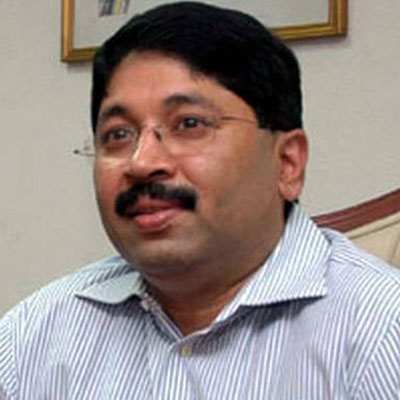
  • Dayanidhi Maran’s arrest stayed by Supreme Court

    Dayanidhi Maran’s arrest stayed by Supreme Court

    NEW DELHI: The Supreme Court today stayed the Madras High Court order cancelling former Telecom Minister Dayanidhi Maran’s anticipatory bail in the illegal telephone exchange case.


    Issuing notice to the Central Bureau of Investigation (CBI) to reply within two weeks, the court listed the matter for 14 September.


    Attorney General Mukul Rohatgi appearing for CBI referred to the facts of the case to stress that it was a huge corruption case and said, “Maran used clout in government to fix lines for use of the huge media house Sun TV. We want his custody to prove the conspiracy involving Maran, Sun TV network and BSNL.”


    Maran had argued that bail is cancelled only when there is danger of the person fleeing the country or influencing the witnesses in the case. In this case, he contended that neither apprehension was considered or sounded out in the High Court order. He contended that the CBI had sought the cancellation of his bail only to humiliate him.


    Justice T S Thakur and Justice V. Gopala Gowda questioned both Maran’s counsel Shyam Diwan and Rohatgi before giving their order.


    Justice Thakur asked whether political vendetta was behind the push for Maran’s arrest. Asking the CBI whether it was trying to “fix” him, Justice Thakur asked, “Why do the CBI need to arrest a man for Rs 1 crore pending phone bills? When the FIR was filed in 2013, why did you not make any arrest? What were you doing for nearly three years?”


    “If you think the phone lines were fixed as part of conspiracy, question him, question the BSNL officials. Why arrest him?” he said.


    “Is it a matter of prestige for you to arrest him? Nobody should get away after causing public loss but custodial interrogation? How did you assess the Rs 1 crore loss? You say no bills were raised. Anyway he is willing to pay. You raise the bill now and he will pay up,” Justice Thakur said.


    Diwan added, “There is no criminality in this case, only monetary claim. We will pay if any dues.”


    Earlier, the former Telecom Minister argued that the Madras High Court did not consider the legal circumstances before cancellation of bail and the order was an error in law.


    According to the prosecution, Maran as Minister entered into a criminal conspiracy with officials of the BSNL and by abusing their official positions, caused a huge financial loss and wrongful loss to the exchequer to the tune of Rs 1.78 crore.


    The prosecution alleged that the former Minister installed over 300 telephone connections in his residence in the name of the accused government servants to show these connections illegally under “service category,” thereby making no payments for the installation and rentals.


    Maran was granted anticipatory bail for six weeks on the condition that he would cooperate with the agency in the investigation. 

  • Tariff Hike Case: SC rejects appeal challenging TDSAT order; asks TRAI to out new tariff

    Tariff Hike Case: SC rejects appeal challenging TDSAT order; asks TRAI to out new tariff

    NEW DELHI: Dismissing the appeal challenging an order of the Telecom Disputes Settlement and Appellate Tribunal (TDSAT) setting aside the amendments in two tariff orders, which had sought to put an inflation-linked hike of 27.5 per cent on addressable and non-addressable systems, the Supreme Court today asked the Telecom Regulatory Authority of India (TRAI) to come up with new tariff as early as possible.

    The Court also said that the multi-system operators (MSOs) will not insist on a refund of their payments to broadcasters but will wait for the new tariff orders.

    Thus, the apex Court held intact the 28 April order of the Tribunal holding as ‘untenable’ the Telecommunication (Broadcasting & Cable) Services (Second) Tariff (Eleventh Amendment) Order, 2014’ and ‘The Telecommunication (Broadcasting & Cable) Services (Second) Tariff (Thirteenth Amendment) Order, 2014’.

    Appellants Indian Broadcasting Foundation (IBF), Star India, Vijay Television, Viacom18 and Sun TV had sought stay on the ground of wholesale price index. They also sought to argue that there was consultation prior to issuance of the Tariff orders, which they said were not strictly Tariff orders.

    While the appellants were represented by senior advocates Kapil Sibal and Abhishek Manu Singhvi, the defendant Home Cable Network Services Pvt Ltd and Vikki Choudhary were represented by senior counsel Aman Lekhi and Vivek Sarin.

    When the appellants late last month sought early hearing, the Court asked TRAI not to give effect to its direction asking broadcasters to roll back the 27.5 per cent tariff hike for non-addressable areas until the next hearing. The regulator had on 27 July asked broadcasters to revise their wholesale tariffs, even though it had noted that the Supreme Court had declined to stay the TDSAT order.

    In its order, TDSAT had said TRAI “will be well advised to have a fresh look at the various tariff orders in a holistic manner and come out with a comprehensive tariff order in supersession of all the earlier tariff orders.”

    “While doing so, it may consider all the agreements and relevant data available with it. It may consider differentiating between content which is of a monopolistic nature as against that the like of which is shown by other channels also.”

    “It may also consider classifying the content into premium and basic tiers. It may identify the major cost components so that increase or decrease in such costs may be suitably factored while working out the inflationary hikes. Increase in costs of such components as may be available in indexes such as Wholesale Price Index (WPI), GDP deflator etc. can then be applied. While working out the tariffs, the effort should be to encourage a correct declaration of SLR. While carrying out the exercise, it may take the inputs from various stakeholders and give a reasoned order for accepting or rejecting the same. We want to be amply clear that the above are only some suggestions and TRAI being an expert body may arrive at suitable tariffs independently; it is up to it to consider the above and/or any other factors,” the Tribunal said.

    The IBF had come in as an intervener while the other interveners were direct to home (DTH) operators, MSOs, Association of Cable Operators and cable operators.

    TRAI had allowed a 15 per cent hike from 1 April, 2014. The second installment of 12.5 per cent tariff hike came into effect from 1 January, 2015.

    TRAI said the inflationary increases given by it were based on increase in the WPI. In the Explanatory Memorandum with the Second Amendment to the Principal Tariff Order, it was explained that for making adjustments for inflation WPI had been used. It was explained that Consumer Price Index (CPI) was not used as latest information for this was not available and further this related to certain specific consumption baskets. As per the Explanatory Memorandum to the impugned Tariff Order, the WPI has increased by 43.69 per cent and giving a pass through of 63 per cent, an inflation linked increase of 27.5 per cent is allowed.    

  • CNN-IBNlaunches ‘Good Samaritans Law’ campaign

    CNN-IBNlaunches ‘Good Samaritans Law’ campaign

    New Delhi, 15 July 2015: India has the dubious distinction of being counted amongst those countries in the world with a very high incidence of road fatalities – 10% of the total deaths on account of road accidents occur here. Bystanders avoid coming forward to offer help to the victims, in fear of harassment and court hearings. Samaritans who save the victims’ lives often end up becoming victims themselves. Certain guidelines were issued by the Indian government on 13th May, 2015, under orders of the Supreme Court, for the protection of such individuals, yet no proper laws have been made as yet.


    With an aim to create awareness and urge the government to implement a law towards helping   ‘Good Samaritans Law’ campaign. To be aired on 17th July 2015, the campaign will air stories of victims who died because they did not receive timely help along with good Samaritans who have been victims of harassment. The campaign will also look at laws in other countries and do a special story on the need for a similar law in India.


    Participate in the ‘Good Samaritans Law’ campaign on 17th July, through the day, only on CNN-IBN.

  • Sahara asset attracts Rs 150 crore bids; SC turns into auction room

    Sahara asset attracts Rs 150 crore bids; SC turns into auction room

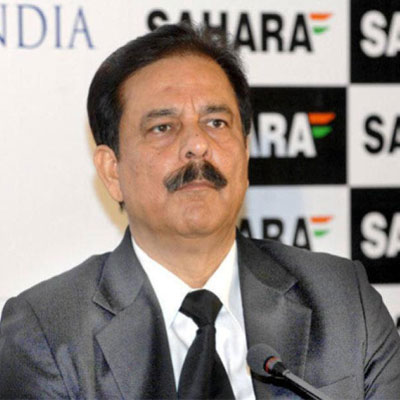
    MUMBAI: Sahara Group’s press and television business have taken a hit. Not just this, the group’s 45 acre property in Gorakhpur, Uttar Pradesh, has been entangled in a courtroom bidding war, with the Supreme Court turning into an auction room.


    Samriddhi Developers and Gorakhpur Real Estate Developers are the two companies that are vying for the property.


    While Samriddhi Developers had initially put an offer of Rs 64 crore, the amount rose to Rs 150 crore by the end of the bidding.


    According to an Economic Times report, the group needs to raise Rs 1,800 crore by way of cash as part of a Rs 5,000-crore payment it needs to make to free chairman Subrata Roy on bail. Aside from this, the Supreme Court has also asked for a Rs 5,000-crore bank guarantee in a case involving refunds to investors. 


    What is notable is that while Samriddhi and Sahara had signed an initial memorandum of understanding (MOU) for the sale of the plot at Rs 64 crore, the scenario changed after Gorakhpur Real Estate Developers made an offer of Rs 110 crore for the plot.


    Samriddhi Developers, senior advocate Paras Kuhad took instructions from one of the partners present in the court, and jacked the bid to Rs 125 crore. Later, the rival took it up to Rs 140 crore, adding another Rs 5 crore, before finally settling at Rs 150 crore.


    The bench has now asked both parties to show their bonafides by depositing 25 per cent of the amount by 31 July in the Sebi-Sahara account. The rest needs to be arranged in three equal installments by 31 October. If either of them fail to meet the deadline, the amount deposited will be forfeited.  


    The money generated from the sale of the Gorakhpur property will be added to the amount already deposited by the Sahara Group in the Sebi-Sahara account and go towards securing Roy’s release. 


    Complying with the July order, Gorakhpur Real Estate Developers has already deposited Rs 11 crore with the Supreme Court Registry to establish its bonafides. Samriddhi too has placed a letter and a cheque from its bankers to show its bonafides.


    The bench has now posted the matter for hearing on 3 August. 

  • Supreme Court issues notice on UP journalist’s killing

    Supreme Court issues notice on UP journalist’s killing

    NEW DELHI: The Supreme Court today issued a notice to the Centre, the Uttar Pradesh government, and the Press Council of India on a Public Interest Litigation (PIL) seeking a Central Bureau of Investigation (CBI) probe into the killing of Uttar Pradesh journalist Jagendra Singh allegedly at the behest of UP minister Ram Murti Verma.


    The Court ordered notice, returnable in two weeks, on the PIL filed by Sadbhawna Sandesh editor Satish Jain.


    The PIL urged the court to formulating guidelines in cases of threat, attack or unnatural death of journalists across India.


    The petitioner also wanted the Court to formulate the guidelines to ensure that the investigation will be monitored by the local Sessions Judge in case of unnatural death of a journalist.


    Singh was doused with kerosene oil and set on fire. Before he died, he is reported to have asked why didn’t they beat him up instead of burning him if they had a grievance against any report filed by him.

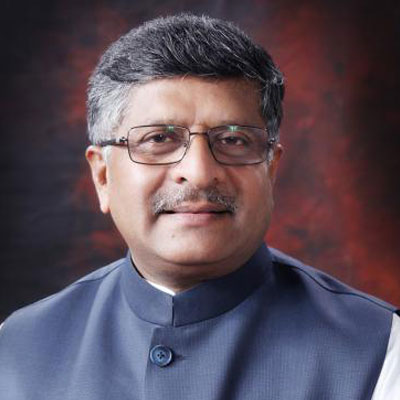
  • Full mobile number portability from July: Ravi Shankar Prasad

    Full mobile number portability from July: Ravi Shankar Prasad

    NEW DELHI: Communications and Information Technology minister Ravi Shankar Prasad has said that full mobile number portability will become operational across the country from July and consumers will get to keep the same numbers even when changing the telecom service provider.


    He also announced on 2 June 2015 that Bharat Sanchar Nigam Limited (BSNL) will offer free roaming all over the country from 15 June.


    The telecom minister further added that spectrum sharing and trading policy would go to the Cabinet this month.


    Last month, BSNL introduced an unlimited free calling scheme from 9 pm and 7 am to revive its landline business. BSNL has the largest number of landline customers, with a market share of 62.26 per cent.


    The Minister regretted that BSNL, which had shown profits in 2004, was showing a deficit at present.


    When asked about frequent call drop complaints by consumers, the Minister said he has asked officials if a scheme of disincentive for the operators can be put in place.


    “Call drops are due to lack of towers. As far as installation is concerned it is subject to local law. No point to raise bogey of cell tower radiation and then complain of call drop,” Prasad said.  


    Additionally, answering a question relating to the controversial Section 66A of the IT Act 2000, Prasad said that the government fully backs freedom of speech.


    Section 66A defines the punishment for sending “offensive” messages through a computer or any other communication device like a mobile phone or a tablet. A conviction can fetch a maximum of three years in jail and a fine.


    The Supreme Court is already examining the constitutional validity of Section 66A of the amended IT Act following a batch of petitions alleging the section impinges upon the Fundamental Right to freedom of speech and expression.


    The Minister said, “The case was pending in the court before I joined the ministry.”

  • Tamil Nadu calls for review of Supreme Court judgment on government ads

    Tamil Nadu calls for review of Supreme Court judgment on government ads

    NEW DELHI: The Tamil Nadu government has sought a review of the Supreme Court judgment restraining both Central and State government from publishing photographs of political leaders and ministers, except the President, Prime Minister and the Chief Justice of India.


    The apex Court had pronounced the judgment on 13 May on the basis of the recommendations of an expert panel set up by it last year following public interest litigations by two NGOs.


    As was reported earlier by Indiantelevision.com, DMK chief and former Tamil Nadu chief minister M Karunanidhi had lashed out at the Supreme Court’s ban on the photos of politicians in government ads.


    In its review petition, the State government said the judgment contradicts the federal structure based on grounds of “parity” between the Centre and States.


    It contends that Chief Ministers and State Governors are also constitutional authorities and by allowing publication of photographs of only the President, Prime Minister and Chief Justice of India, the apex Court has disregarded the equal share of powers enjoyed between the Centre and the States.


    The petition requests the apex court to set aside the judgment on the ground that it gives an impression that the judiciary is intruding into policy decisions of the executive.


    It said the party in power has the right to publish the Chief Minister’s photograph in a government advertisement regarding the achievements of the State government.


    The petition, filed by advocate Yogesh Kanna for the State, further contends that the Supreme Court overlooks the recommendations made by its own committee, which said that the photos of Chief Ministers and State Governors should be allowed along with the other constitutional authorities.


    The judgment had said that such photos tend to portray a government project as the achievement of a particular individual and thus pave the way for making of a “personality cult.” Such personal glorification and image-making on public expenses is a “direct antithesis of democratic functioning,” it held.


    However the court had said that the Prime Minister, the President and the Chief Justice of India have to decide themselves on whether their photographs should appear in a government advertisement or not. By this, the judgment, in a way, had made them personally accountable for the publication of their photographs.


    Drawing a distinction between “government messaging” and “politically motivated ads” in this context, the Supreme Court had said that such a curb is unnecessary on election eve provided the advertisement serves public interest and enables dissemination of information.