Tag: Supreme Court

  • IPL media rights bidding postponed sine die

    IPL media rights bidding postponed sine die

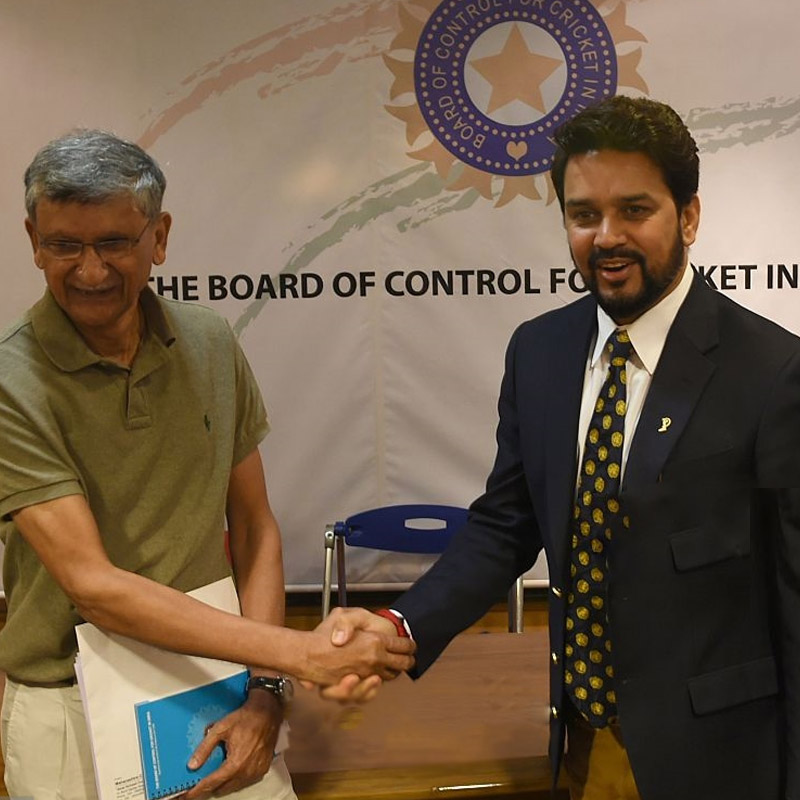
    MUMBAI: The BCCI has made it clear that the media rights auction cannot take place till the time it gets a concrete go-ahead and a formal approval from the Justice RM Lodha committee. Till the evening of 24 October (Monday), BCCI did not receive the okay from the committee which said, “it is in receipt of the communications from the BCCI and that it would issue directions after meeting amongst themselves.”

    Uncertainty loomed over auction as representatives from the 18 international bidders who have bought the ITT documents would have their business schedule in a mess. If the BCCI goes ahead with the bidding process, it could cause contempt of court.

    The BCCI had appointed Deloitte to supervise the opening and studying of the bid. Before the SC order came on Friday, the tenders were slated to be submitted on October 25.

    The BCCI had been awaiting a response from the Justice Lodha panel on the appointment of an independent auditor. Today being the scheduled day for opening of bidding for broadcast, mobile and internet rights, the auditor may not come through as the three-member panel is not meeting (on Tuesday). The Lodha panel was earlier expected to meet on October 21 but the meeting was later cancelled.

    BCCI gave a third reminder to the Lodha panel on Sunday, asking it whether they could stage Tuesday’s media rights bidding or not. The board also explained how the uncertainty surrounding the bidding process has given rise to several queries from the prospective bidders. In a letter, BCCI also reminded the panel how the board has submitted all the relevant papers in time and how clarity would be needed to complete the bidding process.

    It was also disclosed that the board would continue to discuss the matter with all the stake-holders of the game on Tuesday with a hope that the Lodha panel would take necessary steps.

    BCCI, in a statement, stated late last night:

    Indian Premier League Media Rights (Television & Digital)

    The global tender for award Indian Premier League Media Rights (Television & Digital) for the cricket season 2018 and onwards was issued on the 19th of September 2016 after a detailed exercise by the Board of Control for Cricket in India (“BCCI”). The BCCI team invested a lot of time and money in framing of a tender with norms to ensure the highest levels of transparency.

    It was expected that the new IPL season rights that were to be awarded would bring in huge revenue for the game of cricket and expectations amongst the BCCI, players and the cricket loving public ran high in the build up to the award of the IPL tender. This was more so in view of the fact that the IPL has been successfully piloted by the BCCI with support of all stakeholders to become one of the important events in the world cricketing calendar and has apart from providing a platform for showcasing domestic cricket talent resulted in the country being projected as an important sporting destination. In fact the IPL has resulted in the active building of Brand India and has brought laurels to the country.  The IPL has also contributed substantially to the Indian Economy.

    At the time the tender was floated and even till date there has been no complaint by any person that the tender was being issued in a non-transparent manner or that there appeared to be problems with any of its terms and conditions. The Potential Bidders who bought the Tender document had requested for certain Clarification, to which BCCI issued responses in 2 sets. Set 1 of the response to Clarification was issued on 14th October 2016 and Set 2 was issued on 20th October 2016. Based on the clarification issued, BCCI was subsequently to issue the Revised Media Rights Agreements (MRAs) along with the order relevant documents, which were not issued on account of the Hon’ble Supreme Court Order.

    The BCCI has also appointed independent agencies to vet the legal, financial and technical details of the bids as well as the bidders.

    In the meanwhile the BCCI received a copy of the judgment of the Hon’ble Supreme Court in CA No.4235/2014 – BCCI v. Cricket Association of Bihar & Ors. dated 21.10.2016 (“Judgment”) at 650pm issuing the following directions in relation to tender processes being undertaken by the BCCI:

    “(ii)(a) The Committee appointed by this Court is requested to appoint an independent auditor to scrutinise and audit the income received and expenditure incurred by BCCI; (b) The auditor shall also oversee the tendering process that will hereinafter be undertaken by BCCI, as well as the award of contracts above a threshold value to be fixed by the Committee; (c) The award of contracts by BCCIabove the threshold fixed by the Committee shall be subject to the prior approval of the Committee; (d) The Committee shall be at liberty to obtain the advice of the auditors on the fairness of the tendering process which has been adopted by BCCIand in regard to all relevant facts and circumstances; (e) The Committee will determine whether a proposed contract above the threshold value should or should not be approved; and (f) The Committee will be at liberty to formulate the terms of engagement and reference to the auditors having regard to the above directions.  BCCI shall defray the costs, charges and expenses of the auditors.”  

    In view of the aforesaid directions, as the Committee has been entrusted by the Hon’ble Supreme Court with the mandate of overseeing the tender process and in effect is now the custodian of the IPL tender process and has to take all actions to safeguard the IPL tender and the interest of BCCI and cricket in India, the BCCI wrote to the Committee on 21st October 2016 itself immediately on receipt of the Judgment, inter alia seeking guidance on (a) whether to defer the IPL tender or (b) to cancel the same and (c) requesting that the name of the auditor appointed be intimated to the BCCI to ensure that he could be associated with the IPL tender. Further, BCCI has sent all the IPL Media Rights Tender documents to the Committee along with the Revised MRAs and relevant documents, which are yet to be issued to the Potential Bidders.

    Keeping in view the urgency in the matter, the BCCI has informed the Committee that the tender process being underway there were certain timelines that potential bidders were following. The BCCI also informed the Committee that a large number of potential bidders had travelled to the country from outside as bids had to be submitted in person.

    The BCCI has accordingly sent requests on 23rd October 2016 and 24th October 2016 to the Committee on the aforesaid lines and requested for confirmation of receipt of emails and an urgent response to avoid any uncertainty in the IPL tender process to avoid any inconvenience to potential bidders. The BCCI also informed the Committee that any delay in responding and resultant uncertainty was hurting the commercial interest of the BCCI as it would lead to devaluation of the commercial rights that were to be awarded.

    The BCCI has also received numerous queries from potential bidders explaining the hardship being faced by them due to the inability of the BCCI to address their queries and to furnish a clear roadmap on the way forward.  

    Today (on Monday, 24 october) at 3:07 pm the BCCI has received a response from the Committee asking for certain further undertakings from the BCCI and sought further clarifications. These have accordingly been furnished to the Committee. The BCCI has received a response from the Committee a short while ago stating that it is in receipt of the communications from the BCCI and that it would issue directions after meeting amongst themselves.

    The BCCI, apart from the above communication, has so far at the time of going to Press, not received any further directions from the Committee, which is now the custodian of the entire process and has been tasked with the duty to ensure that the tender process is undertaken in a professional and transparent manner with least inconvenience to all stakeholders. Once the BCCI receives a response from the Committee it shall bring the same to the notice of all stakeholders as the BCCI is currently not in a position to take any decision in the matter other than what the Committee recommends. In the absence of permission from the Committee to go ahead with the process scheduled for tomorrow, the BCCI is unable to do so.

    The BCCI requests all bidders to appreciate that the events as have occurred were unforeseen and something over which the BCCI has no control. The potential bidders would appreciate that in the past the BCCI has responded to all queries to potential bidders in a prompt fashion and has conducted the entire process in a fair, transparent and professional manner.

    BCCI offers its sincere apology to all potential bidders and stakeholders who have put in efforts to put together bids by expending considerable time and resources, and have travelled from all across the country and the world to take part in this event.

  • IPL media rights bidding postponed sine die

    IPL media rights bidding postponed sine die

    MUMBAI: The BCCI has made it clear that the media rights auction cannot take place till the time it gets a concrete go-ahead and a formal approval from the Justice RM Lodha committee. Till the evening of 24 October (Monday), BCCI did not receive the okay from the committee which said, “it is in receipt of the communications from the BCCI and that it would issue directions after meeting amongst themselves.”

    Uncertainty loomed over auction as representatives from the 18 international bidders who have bought the ITT documents would have their business schedule in a mess. If the BCCI goes ahead with the bidding process, it could cause contempt of court.

    The BCCI had appointed Deloitte to supervise the opening and studying of the bid. Before the SC order came on Friday, the tenders were slated to be submitted on October 25.

    The BCCI had been awaiting a response from the Justice Lodha panel on the appointment of an independent auditor. Today being the scheduled day for opening of bidding for broadcast, mobile and internet rights, the auditor may not come through as the three-member panel is not meeting (on Tuesday). The Lodha panel was earlier expected to meet on October 21 but the meeting was later cancelled.

    BCCI gave a third reminder to the Lodha panel on Sunday, asking it whether they could stage Tuesday’s media rights bidding or not. The board also explained how the uncertainty surrounding the bidding process has given rise to several queries from the prospective bidders. In a letter, BCCI also reminded the panel how the board has submitted all the relevant papers in time and how clarity would be needed to complete the bidding process.

    It was also disclosed that the board would continue to discuss the matter with all the stake-holders of the game on Tuesday with a hope that the Lodha panel would take necessary steps.

    BCCI, in a statement, stated late last night:

    Indian Premier League Media Rights (Television & Digital)

    The global tender for award Indian Premier League Media Rights (Television & Digital) for the cricket season 2018 and onwards was issued on the 19th of September 2016 after a detailed exercise by the Board of Control for Cricket in India (“BCCI”). The BCCI team invested a lot of time and money in framing of a tender with norms to ensure the highest levels of transparency.

    It was expected that the new IPL season rights that were to be awarded would bring in huge revenue for the game of cricket and expectations amongst the BCCI, players and the cricket loving public ran high in the build up to the award of the IPL tender. This was more so in view of the fact that the IPL has been successfully piloted by the BCCI with support of all stakeholders to become one of the important events in the world cricketing calendar and has apart from providing a platform for showcasing domestic cricket talent resulted in the country being projected as an important sporting destination. In fact the IPL has resulted in the active building of Brand India and has brought laurels to the country.  The IPL has also contributed substantially to the Indian Economy.

    At the time the tender was floated and even till date there has been no complaint by any person that the tender was being issued in a non-transparent manner or that there appeared to be problems with any of its terms and conditions. The Potential Bidders who bought the Tender document had requested for certain Clarification, to which BCCI issued responses in 2 sets. Set 1 of the response to Clarification was issued on 14th October 2016 and Set 2 was issued on 20th October 2016. Based on the clarification issued, BCCI was subsequently to issue the Revised Media Rights Agreements (MRAs) along with the order relevant documents, which were not issued on account of the Hon’ble Supreme Court Order.

    The BCCI has also appointed independent agencies to vet the legal, financial and technical details of the bids as well as the bidders.

    In the meanwhile the BCCI received a copy of the judgment of the Hon’ble Supreme Court in CA No.4235/2014 – BCCI v. Cricket Association of Bihar & Ors. dated 21.10.2016 (“Judgment”) at 650pm issuing the following directions in relation to tender processes being undertaken by the BCCI:

    “(ii)(a) The Committee appointed by this Court is requested to appoint an independent auditor to scrutinise and audit the income received and expenditure incurred by BCCI; (b) The auditor shall also oversee the tendering process that will hereinafter be undertaken by BCCI, as well as the award of contracts above a threshold value to be fixed by the Committee; (c) The award of contracts by BCCIabove the threshold fixed by the Committee shall be subject to the prior approval of the Committee; (d) The Committee shall be at liberty to obtain the advice of the auditors on the fairness of the tendering process which has been adopted by BCCIand in regard to all relevant facts and circumstances; (e) The Committee will determine whether a proposed contract above the threshold value should or should not be approved; and (f) The Committee will be at liberty to formulate the terms of engagement and reference to the auditors having regard to the above directions.  BCCI shall defray the costs, charges and expenses of the auditors.”  

    In view of the aforesaid directions, as the Committee has been entrusted by the Hon’ble Supreme Court with the mandate of overseeing the tender process and in effect is now the custodian of the IPL tender process and has to take all actions to safeguard the IPL tender and the interest of BCCI and cricket in India, the BCCI wrote to the Committee on 21st October 2016 itself immediately on receipt of the Judgment, inter alia seeking guidance on (a) whether to defer the IPL tender or (b) to cancel the same and (c) requesting that the name of the auditor appointed be intimated to the BCCI to ensure that he could be associated with the IPL tender. Further, BCCI has sent all the IPL Media Rights Tender documents to the Committee along with the Revised MRAs and relevant documents, which are yet to be issued to the Potential Bidders.

    Keeping in view the urgency in the matter, the BCCI has informed the Committee that the tender process being underway there were certain timelines that potential bidders were following. The BCCI also informed the Committee that a large number of potential bidders had travelled to the country from outside as bids had to be submitted in person.

    The BCCI has accordingly sent requests on 23rd October 2016 and 24th October 2016 to the Committee on the aforesaid lines and requested for confirmation of receipt of emails and an urgent response to avoid any uncertainty in the IPL tender process to avoid any inconvenience to potential bidders. The BCCI also informed the Committee that any delay in responding and resultant uncertainty was hurting the commercial interest of the BCCI as it would lead to devaluation of the commercial rights that were to be awarded.

    The BCCI has also received numerous queries from potential bidders explaining the hardship being faced by them due to the inability of the BCCI to address their queries and to furnish a clear roadmap on the way forward.  

    Today (on Monday, 24 october) at 3:07 pm the BCCI has received a response from the Committee asking for certain further undertakings from the BCCI and sought further clarifications. These have accordingly been furnished to the Committee. The BCCI has received a response from the Committee a short while ago stating that it is in receipt of the communications from the BCCI and that it would issue directions after meeting amongst themselves.

    The BCCI, apart from the above communication, has so far at the time of going to Press, not received any further directions from the Committee, which is now the custodian of the entire process and has been tasked with the duty to ensure that the tender process is undertaken in a professional and transparent manner with least inconvenience to all stakeholders. Once the BCCI receives a response from the Committee it shall bring the same to the notice of all stakeholders as the BCCI is currently not in a position to take any decision in the matter other than what the Committee recommends. In the absence of permission from the Committee to go ahead with the process scheduled for tomorrow, the BCCI is unable to do so.

    The BCCI requests all bidders to appreciate that the events as have occurred were unforeseen and something over which the BCCI has no control. The potential bidders would appreciate that in the past the BCCI has responded to all queries to potential bidders in a prompt fashion and has conducted the entire process in a fair, transparent and professional manner.

    BCCI offers its sincere apology to all potential bidders and stakeholders who have put in efforts to put together bids by expending considerable time and resources, and have travelled from all across the country and the world to take part in this event.
  • DAS Phase III cases caught up in a logjam courtesy Delhi High Court

    DAS Phase III cases caught up in a logjam courtesy Delhi High Court

    NEW DELHI: With the Delhi High Court yet to decide on the date of hearing all cases seeking extension of Phase III of digital addressable system passed on to it by the Supreme Court, two more cases – before the Telecom Disputes Settlement and Appellate Tribunal – have been put off again.

    Petitions by the Rohtak Cable Operator Association, Haryana, and Rewari Cable Operators Association against Siti Cable Networks have been put off to 11 August by member B B Srivastava.

    In the previous hearing on 6 May 2016, the cases had been put off in view of their pendency before the Punjab and Haryana High Court.

    However, the Tribunal said that in view of the directive by the Punjab and Haryana High Court that SitiCable will not interfere with the operators continuing to transmit in analogue, the previous order of 6 May 2016 of the Tribunal will continue.

    In its order on 11 July 2016, the Tribunal noted the statement by counsel for the cable operator organizations that the matter was now being transferred to the Delhi High Court after the order of the Supreme Court but “is yet to be listed.”

    But the Tribunal said the LCOs will continue to pay the monthly subscription fee as per the previous agreement and on thebasis of invoices raised by the respondent in order to receive signals.

    The registry of the Supreme Court has sent to all the concerned High Courts the directive of the apex court of 1 April for transfer of all cases seeking extension to digital addressable system for cable television to Delhi High Court with a view to avoid conflicting decisions.’

    A copy of the order was also sent to the Delhi High Court and it was now up to that Court to fix a date, Supreme Court officials said.

    The officials said that the attempt would be to first receive from the various High Courts the papers relating to the petitions, which almost all had pleaded shortage of set top boxes for seeking extension or stay of DAS which became effective 1 January 2016.

    The apex court had accepted the plea of the Central Government that ‘it would be just and proper for this Court to withdraw allthose cases pending in different High Courts and transfer the same to the Delhi High Court.’

    Ironically, the Information and Broadcasting Ministry had on 12 January 2016 written to its counsel in Punjab and Hryana High Court that it had understood the Hyderabad order to mean a pan India stay while asking him to defend the case.

    But later, the Ministry sources admitted to indiantelevision.com that there was a misreading of the Bombay High Court directive. The Court had merely refereed to the Kusum Ingots & Alloys Ltd vs the Union of India 2004 case to say that if one High Court gives a stay, another High Court can act in similar fashion if the facts are similar – in this case, shortage of STBs. Thus, they agree that the High Court stay was only confined to Maharashtra and not pan-India.

    Earlier, the Indian Broadcasting Foundation had withdrawn its petition after the Supreme Court said that the order of the Bombay High Court did not imply any pan-India stay.

    The last DAS Task Force meeting on 30 May 2016 was informed that a total of 42 court cases have been filed for extension in the deadline of Phase lll in various courts in the country with the two-month extension by the Telangana & Andhra Pradesh High Courts. Other Courts followed suit in the ground that this order was extendable to other areas. This led to the Centre moving the Supreme Court which passed an order of transfer of all cases for extension filed in various courts and any new cases on similar prayer to the Delhi High Court for adjudication.

    The meeting was also told 17 cases had been transferred by various courts to the Delhi High Court out of which the High Court had dismissed three cases and another three cases were being heard that same day.

  • DAS Phase III cases caught up in a logjam courtesy Delhi High Court

    DAS Phase III cases caught up in a logjam courtesy Delhi High Court

    NEW DELHI: With the Delhi High Court yet to decide on the date of hearing all cases seeking extension of Phase III of digital addressable system passed on to it by the Supreme Court, two more cases – before the Telecom Disputes Settlement and Appellate Tribunal – have been put off again.

    Petitions by the Rohtak Cable Operator Association, Haryana, and Rewari Cable Operators Association against Siti Cable Networks have been put off to 11 August by member B B Srivastava.

    In the previous hearing on 6 May 2016, the cases had been put off in view of their pendency before the Punjab and Haryana High Court.

    However, the Tribunal said that in view of the directive by the Punjab and Haryana High Court that SitiCable will not interfere with the operators continuing to transmit in analogue, the previous order of 6 May 2016 of the Tribunal will continue.

    In its order on 11 July 2016, the Tribunal noted the statement by counsel for the cable operator organizations that the matter was now being transferred to the Delhi High Court after the order of the Supreme Court but “is yet to be listed.”

    But the Tribunal said the LCOs will continue to pay the monthly subscription fee as per the previous agreement and on thebasis of invoices raised by the respondent in order to receive signals.

    The registry of the Supreme Court has sent to all the concerned High Courts the directive of the apex court of 1 April for transfer of all cases seeking extension to digital addressable system for cable television to Delhi High Court with a view to avoid conflicting decisions.’

    A copy of the order was also sent to the Delhi High Court and it was now up to that Court to fix a date, Supreme Court officials said.

    The officials said that the attempt would be to first receive from the various High Courts the papers relating to the petitions, which almost all had pleaded shortage of set top boxes for seeking extension or stay of DAS which became effective 1 January 2016.

    The apex court had accepted the plea of the Central Government that ‘it would be just and proper for this Court to withdraw allthose cases pending in different High Courts and transfer the same to the Delhi High Court.’

    Ironically, the Information and Broadcasting Ministry had on 12 January 2016 written to its counsel in Punjab and Hryana High Court that it had understood the Hyderabad order to mean a pan India stay while asking him to defend the case.

    But later, the Ministry sources admitted to indiantelevision.com that there was a misreading of the Bombay High Court directive. The Court had merely refereed to the Kusum Ingots & Alloys Ltd vs the Union of India 2004 case to say that if one High Court gives a stay, another High Court can act in similar fashion if the facts are similar – in this case, shortage of STBs. Thus, they agree that the High Court stay was only confined to Maharashtra and not pan-India.

    Earlier, the Indian Broadcasting Foundation had withdrawn its petition after the Supreme Court said that the order of the Bombay High Court did not imply any pan-India stay.

    The last DAS Task Force meeting on 30 May 2016 was informed that a total of 42 court cases have been filed for extension in the deadline of Phase lll in various courts in the country with the two-month extension by the Telangana & Andhra Pradesh High Courts. Other Courts followed suit in the ground that this order was extendable to other areas. This led to the Centre moving the Supreme Court which passed an order of transfer of all cases for extension filed in various courts and any new cases on similar prayer to the Delhi High Court for adjudication.

    The meeting was also told 17 cases had been transferred by various courts to the Delhi High Court out of which the High Court had dismissed three cases and another three cases were being heard that same day.

  • Empower TDSAT more, with specialized members to deal with broadcasting: Vidhi

    Empower TDSAT more, with specialized members to deal with broadcasting: Vidhi

    NEW DELHI: As a majority of the cases that come up before the Telecom Disputes Settlement and Appellate Tribunal relate to broadcasting, specialised members in the field of broadcasting can be given the power to hear these broadcasting disputes.

    Furthermore, a separate bench may be formed (with due administrative support) which deals with the smaller recovery matters in the Tribunal or the matters may be diverted to consumer forums.

    This has been recommended by the Vidhi Centre for Legal Policy which noted in its study of the working of TDSAT that a marked characteristic of the Tribunal’s changing mandate has been that recent times have seen an acute rise in the number of original broadcasting petitions coming before the TDSAT.

    In fact, the study said “it can be seen that the mandate of the TDSAT has undergone many changes since the time of its inception.” It noted that TDSAT was set up to adjudicate upon telecom matters.

    Need for Greater Administrative Autonomy

    The Vidhi report also says that the experience of the working of the TDSAT points to the need for greater administrative autonomy as well as structural changes in the budget allocated to the Tribunal to ensure that it continues to function with the same efficiency. “The powers of the Tribunal and Chairman, therefore, may need some re-thinking. One of the ways that this can be done is an amendment to the Sections of the TRAI Act dealing with the powers and functions of the TDSAT.”

    In any event the conclusion is inescapable that the functioning of the TDSAT now needs government attention, considering the rapidly changing mandate and growth of disputes in the telecom and broadcasting sectors.

    The TDSAT has commonly been regarded as one of the most efficient tribunals in the country. To ensure that this distinction is maintained, the TDSAT along with the government must ensure that it continues to function in an efficient and healthy fashion, offering adequate remedies to disputing parties, in a speedy and effective manner.

    The two studies of TDSAT done by us offer some indicators of the present functioning of the tribunal, and possible ways in which it may evolve in the future.

    Strengthen TDSAT with more benches

    The study said nearly half of all petitions filed before the TDSAT are for recovery. In addition, the appellate jurisdiction of the TDSAT remains practically unused, with an insignificant number of appeals coming before the body. The Tribunal is staffed with highly experienced members (headed by a retired judge of the Supreme Court or a former Chief Justice of a High Court, as well as members with technical expertise).

    In such a scenario, it becomes important to introspect about the mismatch between the current mandate and functioning and the expertise of the members of the Tribunal.

    The government can either decide to continue with the extant jurisdiction of the TDSAT, in which case it needs to change the composition and resources spent on such a body; on the contrary, if it decides to restore the TDSAT to the role that was envisaged in operating as an independent and specialised tribunal dealing with weighty telecom matters, legal and administrative changes are required.

    Need for more broadcast experts

    Drawing from a study of the jurisdiction and powers of the TDSAT as well an analysis of the data regarding appeals, and case institution, the study said it was evident that the TDSAT has to deal with a disproportionately large volume of broadcasting disputes. This may have implications on the ability of the TDSAT to function optimally. This is exacerbated by two factors. The first is that even though the mandate of the TDSAT was amended to include broadcasting disputes, the qualifications to become a member of the Tribunal do not anticipate broadcasting as a relevant area of expertise (Section 14C requires that a member should be, among other things, a person who is well versed in the field of technology, telecommunication, industry, commerce or administration). The absence of technical expertise required to understand broadcasting disputes may affect the ability of the TDSAT to adjudicate upon such matters. Secondly, the changed mandate has resulted in an exponential increase in the number of cases that are being handled by the TDSAT, but the staffing of the body remains the same as it was when it was first created in 2000.

    Vidhi said there is bound to be an impact of the efficiency of the functioning of a body where limited resources are expected to cater to an ever-expanding volume of responsibilities.

    It noted that there is no impact on the efficiency of the TDSAT at present owing to such cases because a large number of matters are recovery matters and these are decided at a faster rate than matters whose merits have to be gone into and have technical aspects. But if the number of cases being filed increase however, efficiency is bound to be affected. If the TDSAT is expected to continue hearing broadcasting disputes, its functioning can be addressed in multiple ways.

    To begin with, the government could require that technical members well-versed in broadcasting as an industry and a discipline be appointed to the Tribunal. Section 14B of the TRAI Act allows the Chairperson to constitute multiple Benches, comprising one or two members of the Tribunal, which power could be exercised to deal especially with broadcasting disputes, or disputes of a particular nature. A full bench of the tribunal may be required to sit in session only with respect to certain types of cases, which could be identified in advance.

    Constitute benches in other cities

    Further, if a large number of cases appear to emerge from particular parts of the country, ad hoc benches could be constituted in relevant cities other than Delhi, to deal with such cases. This reassignment of cases to various benches of the tribunal, however, is not likely to be successful without adequate administrative support, for which government approval would be required.

    There was also need to clarify the distinction in the jurisdiction of the TDSAT and Consumer Forums. With reference to the 2014 judgment of the Meghalaya Consumer Commission, it is evident that there has been acceptance of the jurisdiction of the consumer forums over telecom and broadcasting disputes.

    In a scenario where the TDSAT is burdened with broadcasting disputes from all parts of the country, particularly disputes with smaller recovery amounts, it would be prudent to divert these matters to the consumer courts. This would be particularly beneficial for the litigants as they would be spared of the travel and litigation costs of coming to New Delhi, which may not be a practical option for smaller players in the telecom and broadcasting sector.

    Greater institutional autonomy

    There was also a case for increasing the institutional autonomy of the TDSAT, the Report said. An issue plaguing the administration of the TDSAT is the fact that the Tribunal is understaffed. An exponential increase in litigation in the TDSAT has not been met by a proportional increase in the staff strength of the Tribunal. To rectify the same, the powers of the Tribunal may be broadened in their scope. The Tribunal, acting through the Chairperson can be given the power to increase the staff strength through an order in consultation with the central government.

    In the Draft Broadcasting Services Regulation Bill of 2006 (which never got cleared), the Chairperson of the Broadcast Regulatory Authority of India was given certain administrative powers to regulate the conditions of service etc. of the Authority. Although the Bill did not become law, some provisions of the Draft Bill would be useful as a reference point to make amendments to the existing provisions relating to the administrative autonomy of the TDSAT.

    Fee can cut frivolous cases

    Measures were also needed to reduce frivolous litigation in the TDSAT, the study says. The Tribunal briefly imposed ad valorem fees on the cases being instituted before the Tribunal. However, the order imposing the same was overturned subsequently. The possibility of reviving the provisions for imposition of ad-valorem fees, subject to appropriate scrutiny, could be considered in order to address the problem of frivolous litigation, for instance, parties filing matters in the TDSAT simply to obtain an interim order before withdrawing their petition(s). This can be done through legislative amendment in the TRAI Act empowering the TDSAT to notify the same.

    Encourage mediation to resolve cases

    Mediation has to be encouraged as a dispute settlement mechanism, the report says. As seen from the data pertaining to, and the working of the mediation centre, alternate dispute resolution mechanisms are an increasingly popular way of resolving telecom and broadcasting disputes. This trend must continue, as a large number of matters that come before the Tribunal are recovery matters and the litigants are usually small and medium-sized players in the broadcasting industry and likely to benefit from the speed and economic viability of such procedures.

    Encouraging dispute resolution through mediation will go a long way in reducing the burden on the tribunal of smaller matters; as well as ensure more amicable and less time consuming techniques of dispute resolution for the litigants.  

    The provision that establishes the TDSAT – Section 14 of the TRAI Act, entrusts the tribunal with two types of functions. The first is to adjudicate disputes by way of original jurisdiction, and the second is by way of an appellate jurisdiction. Indeed, the appellate powers of the TDSAT are evident from the name of the body itself, which was envisioned as a telecom dispute settlement and appellate tribunal. This dual function has been acknowledged by the Supreme Court as well, which observed that the exercise of original jurisdiction by the TDSAT is an original adjudicatory function, whereas its appellate function is to hear appeal(s) against an order of TRAI which may or may not essentially be an adjudicatory one.

    Supreme Court has curtailed powers of Tribunal

    But the Vidhi study quoted several judgments to say that the Supreme Court had over time gradually curtailed the jurisdiction of the TDSAT by placing restrictions on its functioning.

    In one case relating to cellular operators in 2003, the Supreme Court said the jurisdiction of the TDSAT under the TRAI (Amendment) Act 2000 empowered the Tribunal with both original and appellate jurisdiction. The Court observed that because the only appeal that lay from the order of the TDSAT was to the Supreme Court, it would be reasonable to hold that the Tribunal had unfettered jurisdiction to adjudicate the dispute raised, as well as decide the legality of an order of the central government or even an opinion of the TRAI or any other expert body. In this regard, the Court noted that the jurisdiction of the Tribunal is quite wide.

    The Court held that the decisions of the Supreme Court dealing with the powers of a court exercising appellate power or original power would have no application in limiting the jurisdiction of the appellate tribunal under the Act. The Court further observed that the Tribunal had committed an error in holding that its jurisdiction could not be wider than that of the Supreme Court; and stated that a reading of Sections 14 and 18 of the TRAI Act also goes to illustrate that this was not the case.

    This judgment thus held that the jurisdiction of the Tribunal was very wide, and stated that the Tribunal was an expert body that had powers wider than that of the Supreme Court. The dispute before the Supreme Court was, as a consequence, remitted back to the Tribunal for reconsideration of the materials. The Court also held that it had limited power under Section 18 of the TRAI Act, and as such it could not interfere with the findings of the Tribunal (particularly because the Tribunal had reached these conclusions after due consideration of all the relevant facts and technical materials).

    But in another case in 2013 relating to BSNL “with pervasive practical impact”, the Supreme Court limited the jurisdiction of the TDSAT, holding that it had no authority to rule on the validity of the Regulations made by the TRAI. The Court’s judgment focused on the scope of the jurisdiction of the TDSAT in the context of examining the TRAI regulations. The Court pointed out that the issue of whether the words “direction”, “decision” and “order” under Section 14(b) of the TRAI Act, as amended in 2000, included regulations, had not been previously examined.

    While the judgment seems to merely clarify a position of law that was placed before the Court, its consequences run deeper. By limiting the jurisdiction of the TDSAT, the Supreme Court also directly impacted the mandate of the Tribunal. What was originally meant to be a tribunal that exercised original as well as appellate jurisdiction, after this judgment, took on the role of a court mainly of original jurisdiction, hearing mostly disputes between licensors and licensees in the first instance. Weighty telecom matters instead were challenged in the High Court and subject to systemic delays and expected lack of specialisation.

    This judgment also sought to limit the power of judicial review of the TDSAT. In doing so, the Supreme Court also relied on the principles enunciated in another matter  where the question of law pertained to the power of judicial review of the Appellate Tribunal of Electricity to examine the validity of the regulations framed by the Central Electricity Regulatory Commission.

    The issue of whether tribunals, in general, ought to have the power of judicial review is a question that begs a much larger canvas, and has been debated on more than one occasion. It remains an open question as to whether tribunals ought to have such power, or whether writ courts are an effective check and balance on regulatory actions.

    As the TDSAT is empowered to examine disputes between telecom service providers and consumers, the issue of jurisdiction of these consumer forums over the same matters also assumes significance.

  • Empower TDSAT more, with specialized members to deal with broadcasting: Vidhi

    Empower TDSAT more, with specialized members to deal with broadcasting: Vidhi

    NEW DELHI: As a majority of the cases that come up before the Telecom Disputes Settlement and Appellate Tribunal relate to broadcasting, specialised members in the field of broadcasting can be given the power to hear these broadcasting disputes.

    Furthermore, a separate bench may be formed (with due administrative support) which deals with the smaller recovery matters in the Tribunal or the matters may be diverted to consumer forums.

    This has been recommended by the Vidhi Centre for Legal Policy which noted in its study of the working of TDSAT that a marked characteristic of the Tribunal’s changing mandate has been that recent times have seen an acute rise in the number of original broadcasting petitions coming before the TDSAT.

    In fact, the study said “it can be seen that the mandate of the TDSAT has undergone many changes since the time of its inception.” It noted that TDSAT was set up to adjudicate upon telecom matters.

    Need for Greater Administrative Autonomy

    The Vidhi report also says that the experience of the working of the TDSAT points to the need for greater administrative autonomy as well as structural changes in the budget allocated to the Tribunal to ensure that it continues to function with the same efficiency. “The powers of the Tribunal and Chairman, therefore, may need some re-thinking. One of the ways that this can be done is an amendment to the Sections of the TRAI Act dealing with the powers and functions of the TDSAT.”

    In any event the conclusion is inescapable that the functioning of the TDSAT now needs government attention, considering the rapidly changing mandate and growth of disputes in the telecom and broadcasting sectors.

    The TDSAT has commonly been regarded as one of the most efficient tribunals in the country. To ensure that this distinction is maintained, the TDSAT along with the government must ensure that it continues to function in an efficient and healthy fashion, offering adequate remedies to disputing parties, in a speedy and effective manner.

    The two studies of TDSAT done by us offer some indicators of the present functioning of the tribunal, and possible ways in which it may evolve in the future.

    Strengthen TDSAT with more benches

    The study said nearly half of all petitions filed before the TDSAT are for recovery. In addition, the appellate jurisdiction of the TDSAT remains practically unused, with an insignificant number of appeals coming before the body. The Tribunal is staffed with highly experienced members (headed by a retired judge of the Supreme Court or a former Chief Justice of a High Court, as well as members with technical expertise).

    In such a scenario, it becomes important to introspect about the mismatch between the current mandate and functioning and the expertise of the members of the Tribunal.

    The government can either decide to continue with the extant jurisdiction of the TDSAT, in which case it needs to change the composition and resources spent on such a body; on the contrary, if it decides to restore the TDSAT to the role that was envisaged in operating as an independent and specialised tribunal dealing with weighty telecom matters, legal and administrative changes are required.

    Need for more broadcast experts

    Drawing from a study of the jurisdiction and powers of the TDSAT as well an analysis of the data regarding appeals, and case institution, the study said it was evident that the TDSAT has to deal with a disproportionately large volume of broadcasting disputes. This may have implications on the ability of the TDSAT to function optimally. This is exacerbated by two factors. The first is that even though the mandate of the TDSAT was amended to include broadcasting disputes, the qualifications to become a member of the Tribunal do not anticipate broadcasting as a relevant area of expertise (Section 14C requires that a member should be, among other things, a person who is well versed in the field of technology, telecommunication, industry, commerce or administration). The absence of technical expertise required to understand broadcasting disputes may affect the ability of the TDSAT to adjudicate upon such matters. Secondly, the changed mandate has resulted in an exponential increase in the number of cases that are being handled by the TDSAT, but the staffing of the body remains the same as it was when it was first created in 2000.

    Vidhi said there is bound to be an impact of the efficiency of the functioning of a body where limited resources are expected to cater to an ever-expanding volume of responsibilities.

    It noted that there is no impact on the efficiency of the TDSAT at present owing to such cases because a large number of matters are recovery matters and these are decided at a faster rate than matters whose merits have to be gone into and have technical aspects. But if the number of cases being filed increase however, efficiency is bound to be affected. If the TDSAT is expected to continue hearing broadcasting disputes, its functioning can be addressed in multiple ways.

    To begin with, the government could require that technical members well-versed in broadcasting as an industry and a discipline be appointed to the Tribunal. Section 14B of the TRAI Act allows the Chairperson to constitute multiple Benches, comprising one or two members of the Tribunal, which power could be exercised to deal especially with broadcasting disputes, or disputes of a particular nature. A full bench of the tribunal may be required to sit in session only with respect to certain types of cases, which could be identified in advance.

    Constitute benches in other cities

    Further, if a large number of cases appear to emerge from particular parts of the country, ad hoc benches could be constituted in relevant cities other than Delhi, to deal with such cases. This reassignment of cases to various benches of the tribunal, however, is not likely to be successful without adequate administrative support, for which government approval would be required.

    There was also need to clarify the distinction in the jurisdiction of the TDSAT and Consumer Forums. With reference to the 2014 judgment of the Meghalaya Consumer Commission, it is evident that there has been acceptance of the jurisdiction of the consumer forums over telecom and broadcasting disputes.

    In a scenario where the TDSAT is burdened with broadcasting disputes from all parts of the country, particularly disputes with smaller recovery amounts, it would be prudent to divert these matters to the consumer courts. This would be particularly beneficial for the litigants as they would be spared of the travel and litigation costs of coming to New Delhi, which may not be a practical option for smaller players in the telecom and broadcasting sector.

    Greater institutional autonomy

    There was also a case for increasing the institutional autonomy of the TDSAT, the Report said. An issue plaguing the administration of the TDSAT is the fact that the Tribunal is understaffed. An exponential increase in litigation in the TDSAT has not been met by a proportional increase in the staff strength of the Tribunal. To rectify the same, the powers of the Tribunal may be broadened in their scope. The Tribunal, acting through the Chairperson can be given the power to increase the staff strength through an order in consultation with the central government.

    In the Draft Broadcasting Services Regulation Bill of 2006 (which never got cleared), the Chairperson of the Broadcast Regulatory Authority of India was given certain administrative powers to regulate the conditions of service etc. of the Authority. Although the Bill did not become law, some provisions of the Draft Bill would be useful as a reference point to make amendments to the existing provisions relating to the administrative autonomy of the TDSAT.

    Fee can cut frivolous cases

    Measures were also needed to reduce frivolous litigation in the TDSAT, the study says. The Tribunal briefly imposed ad valorem fees on the cases being instituted before the Tribunal. However, the order imposing the same was overturned subsequently. The possibility of reviving the provisions for imposition of ad-valorem fees, subject to appropriate scrutiny, could be considered in order to address the problem of frivolous litigation, for instance, parties filing matters in the TDSAT simply to obtain an interim order before withdrawing their petition(s). This can be done through legislative amendment in the TRAI Act empowering the TDSAT to notify the same.

    Encourage mediation to resolve cases

    Mediation has to be encouraged as a dispute settlement mechanism, the report says. As seen from the data pertaining to, and the working of the mediation centre, alternate dispute resolution mechanisms are an increasingly popular way of resolving telecom and broadcasting disputes. This trend must continue, as a large number of matters that come before the Tribunal are recovery matters and the litigants are usually small and medium-sized players in the broadcasting industry and likely to benefit from the speed and economic viability of such procedures.

    Encouraging dispute resolution through mediation will go a long way in reducing the burden on the tribunal of smaller matters; as well as ensure more amicable and less time consuming techniques of dispute resolution for the litigants.  

    The provision that establishes the TDSAT – Section 14 of the TRAI Act, entrusts the tribunal with two types of functions. The first is to adjudicate disputes by way of original jurisdiction, and the second is by way of an appellate jurisdiction. Indeed, the appellate powers of the TDSAT are evident from the name of the body itself, which was envisioned as a telecom dispute settlement and appellate tribunal. This dual function has been acknowledged by the Supreme Court as well, which observed that the exercise of original jurisdiction by the TDSAT is an original adjudicatory function, whereas its appellate function is to hear appeal(s) against an order of TRAI which may or may not essentially be an adjudicatory one.

    Supreme Court has curtailed powers of Tribunal

    But the Vidhi study quoted several judgments to say that the Supreme Court had over time gradually curtailed the jurisdiction of the TDSAT by placing restrictions on its functioning.

    In one case relating to cellular operators in 2003, the Supreme Court said the jurisdiction of the TDSAT under the TRAI (Amendment) Act 2000 empowered the Tribunal with both original and appellate jurisdiction. The Court observed that because the only appeal that lay from the order of the TDSAT was to the Supreme Court, it would be reasonable to hold that the Tribunal had unfettered jurisdiction to adjudicate the dispute raised, as well as decide the legality of an order of the central government or even an opinion of the TRAI or any other expert body. In this regard, the Court noted that the jurisdiction of the Tribunal is quite wide.

    The Court held that the decisions of the Supreme Court dealing with the powers of a court exercising appellate power or original power would have no application in limiting the jurisdiction of the appellate tribunal under the Act. The Court further observed that the Tribunal had committed an error in holding that its jurisdiction could not be wider than that of the Supreme Court; and stated that a reading of Sections 14 and 18 of the TRAI Act also goes to illustrate that this was not the case.

    This judgment thus held that the jurisdiction of the Tribunal was very wide, and stated that the Tribunal was an expert body that had powers wider than that of the Supreme Court. The dispute before the Supreme Court was, as a consequence, remitted back to the Tribunal for reconsideration of the materials. The Court also held that it had limited power under Section 18 of the TRAI Act, and as such it could not interfere with the findings of the Tribunal (particularly because the Tribunal had reached these conclusions after due consideration of all the relevant facts and technical materials).

    But in another case in 2013 relating to BSNL “with pervasive practical impact”, the Supreme Court limited the jurisdiction of the TDSAT, holding that it had no authority to rule on the validity of the Regulations made by the TRAI. The Court’s judgment focused on the scope of the jurisdiction of the TDSAT in the context of examining the TRAI regulations. The Court pointed out that the issue of whether the words “direction”, “decision” and “order” under Section 14(b) of the TRAI Act, as amended in 2000, included regulations, had not been previously examined.

    While the judgment seems to merely clarify a position of law that was placed before the Court, its consequences run deeper. By limiting the jurisdiction of the TDSAT, the Supreme Court also directly impacted the mandate of the Tribunal. What was originally meant to be a tribunal that exercised original as well as appellate jurisdiction, after this judgment, took on the role of a court mainly of original jurisdiction, hearing mostly disputes between licensors and licensees in the first instance. Weighty telecom matters instead were challenged in the High Court and subject to systemic delays and expected lack of specialisation.

    This judgment also sought to limit the power of judicial review of the TDSAT. In doing so, the Supreme Court also relied on the principles enunciated in another matter  where the question of law pertained to the power of judicial review of the Appellate Tribunal of Electricity to examine the validity of the regulations framed by the Central Electricity Regulatory Commission.

    The issue of whether tribunals, in general, ought to have the power of judicial review is a question that begs a much larger canvas, and has been debated on more than one occasion. It remains an open question as to whether tribunals ought to have such power, or whether writ courts are an effective check and balance on regulatory actions.

    As the TDSAT is empowered to examine disputes between telecom service providers and consumers, the issue of jurisdiction of these consumer forums over the same matters also assumes significance.

  • SC rejects Star appeal on sharing sports signals with DD

    SC rejects Star appeal on sharing sports signals with DD

    NEW DELHI: The Supreme Court today upheld the contention by Prasar Bharati that enhancements embedded in the sports feed shared by sports channels with Doordarshan were commercial advertisements.

    Rejecting a special leave petition by Star India against a Delhi High Court order which had gone in favour of Prasar Bharati, The apex Court also held that the prohibition in Section 3 of the Sports Broadcasting Signals (Mandatory Sharing with Prasar Bharati) Act 2007 (Sports Act) is not only against advertisements of the broadcast service provider but also those of the content rights owner and holder.

    The Court said the word ‘its’ in Section 3 of the Act refers to the the content rights owners, holder and broadcast service provider. Therefore it was immaterial as to who inserted the enhancements. Under the Act the signal to be provided had to be free of advertisements.

    The Sports Act is clear that live signals of sporting events of national importance have to be shared by the content rights owners or holders and broadcast service providers with Prasar Bharati without advertisements. Furthermore, a clean feed is to be provided.

    Prasar Bharati in its petition in the High Court had claimed that the feed being provided contained commercial enhancements. But Star took the plea that the commercial enhancements were not advertisements and the enhancements were in any case being inserted by International Cricket Council.

    Star also said the prohibition in Section 3 of the Sports Act was only against advertisements of the broadcast service provider (Star) and not those of the content rights owner (ICC). It claimed that the word ‘its’ in Section 3 of the Act only referred to the broadcast service provider and not the content rights owner.

    While senior counsel Abhishek Manu Singhvi had appeared for Star Sports, Prasar Bharati was represented by Attorney General Mukul Rohatagi.

    Taking up the case in Febuary last year, Justice Ranjan Gogoi and Justice Prafulla C Pant had said ‘we are of the view that the interim order passed earlier to the effect that the impugned order dated 4 February of the High Court shall remain suspended should continue until further orders.’

    The Court had at that time said it was ‘not inclined’ to consider the suggestion made by Star Sports that Doordarshan should set up an extra/special channel which has been contended by Prasar Bharati to be unviable and technically unfeasible within any reasonable period of time.

    On the second suggestion about ‘putting up a scroll to the effect that ‘the channel displaying the sports event (concerned ICC World Cup 2015 matches) is meant only for Doordarshan’, the Court said ‘acceptance of the said suggestion would be understanding the provisions of Section 3 of the Sports Act 2007 and Section 8 of the Cable Television Networks (Regulation) Act 1995 in a particular manner which is not warranted at this stage of the proceedings. We, therefore, decline to accept the said second suggestion advanced on behalf of the respondents.’

    Star India had in an additional affidavit at the time said that it was losing around Rs 290 crore every year by sharing its sports signals with Doordarshan and was expecting to lose around Rs 120 crore by sharing the telecast of the World Cup this year. (Under the Sports Act, the rights holder gets 75 per cent of the revenue from the telecast on DD which keeps the balance 25 per cent.)

    The Delhi High Court had declined to set aside the must carry clause as well as the Sports Act in its judgment.

  • SC rejects Star appeal on sharing sports signals with DD

    SC rejects Star appeal on sharing sports signals with DD

    NEW DELHI: The Supreme Court today upheld the contention by Prasar Bharati that enhancements embedded in the sports feed shared by sports channels with Doordarshan were commercial advertisements.

    Rejecting a special leave petition by Star India against a Delhi High Court order which had gone in favour of Prasar Bharati, The apex Court also held that the prohibition in Section 3 of the Sports Broadcasting Signals (Mandatory Sharing with Prasar Bharati) Act 2007 (Sports Act) is not only against advertisements of the broadcast service provider but also those of the content rights owner and holder.

    The Court said the word ‘its’ in Section 3 of the Act refers to the the content rights owners, holder and broadcast service provider. Therefore it was immaterial as to who inserted the enhancements. Under the Act the signal to be provided had to be free of advertisements.

    The Sports Act is clear that live signals of sporting events of national importance have to be shared by the content rights owners or holders and broadcast service providers with Prasar Bharati without advertisements. Furthermore, a clean feed is to be provided.

    Prasar Bharati in its petition in the High Court had claimed that the feed being provided contained commercial enhancements. But Star took the plea that the commercial enhancements were not advertisements and the enhancements were in any case being inserted by International Cricket Council.

    Star also said the prohibition in Section 3 of the Sports Act was only against advertisements of the broadcast service provider (Star) and not those of the content rights owner (ICC). It claimed that the word ‘its’ in Section 3 of the Act only referred to the broadcast service provider and not the content rights owner.

    While senior counsel Abhishek Manu Singhvi had appeared for Star Sports, Prasar Bharati was represented by Attorney General Mukul Rohatagi.

    Taking up the case in Febuary last year, Justice Ranjan Gogoi and Justice Prafulla C Pant had said ‘we are of the view that the interim order passed earlier to the effect that the impugned order dated 4 February of the High Court shall remain suspended should continue until further orders.’

    The Court had at that time said it was ‘not inclined’ to consider the suggestion made by Star Sports that Doordarshan should set up an extra/special channel which has been contended by Prasar Bharati to be unviable and technically unfeasible within any reasonable period of time.

    On the second suggestion about ‘putting up a scroll to the effect that ‘the channel displaying the sports event (concerned ICC World Cup 2015 matches) is meant only for Doordarshan’, the Court said ‘acceptance of the said suggestion would be understanding the provisions of Section 3 of the Sports Act 2007 and Section 8 of the Cable Television Networks (Regulation) Act 1995 in a particular manner which is not warranted at this stage of the proceedings. We, therefore, decline to accept the said second suggestion advanced on behalf of the respondents.’

    Star India had in an additional affidavit at the time said that it was losing around Rs 290 crore every year by sharing its sports signals with Doordarshan and was expecting to lose around Rs 120 crore by sharing the telecast of the World Cup this year. (Under the Sports Act, the rights holder gets 75 per cent of the revenue from the telecast on DD which keeps the balance 25 per cent.)

    The Delhi High Court had declined to set aside the must carry clause as well as the Sports Act in its judgment.

  • SC nixes TRAI’s compensation directive for call drops

    New Delhi: In a judgment that comes as a major relief to telecom operators even as it hits the users, the Supreme Court today held as arbitrary and unconstitutional a decision by the Telecom Regulatory Authority of India in October last year  imposing a compensation for call drops.

    The decision came on an appeal by the the telcos after their petition in the Delhi High Court was dismissed in December last against the directive of compensation of Rs one for every call drop, limited to a maximum of three such calls per day. The TRAI order of October last year was to come into effect from 1 January.

    The Apex Court said the order was “illegal and not transparent”.

    Talking to newspersons outside the court, telecom operators counsel Kapil Sibal said: “(The) SC has rendered historic judgement today by striking down Trai s regulation.”

    “The court said the regulation was unreasonable, arbitrary and the procedure followed was not transparent,” he added. 


  • SC nixes TRAI’s compensation directive for call drops

    New Delhi: In a judgment that comes as a major relief to telecom operators even as it hits the users, the Supreme Court today held as arbitrary and unconstitutional a decision by the Telecom Regulatory Authority of India in October last year  imposing a compensation for call drops.

    The decision came on an appeal by the the telcos after their petition in the Delhi High Court was dismissed in December last against the directive of compensation of Rs one for every call drop, limited to a maximum of three such calls per day. The TRAI order of October last year was to come into effect from 1 January.

    The Apex Court said the order was “illegal and not transparent”.

    Talking to newspersons outside the court, telecom operators counsel Kapil Sibal said: “(The) SC has rendered historic judgement today by striking down Trai s regulation.”

    “The court said the regulation was unreasonable, arbitrary and the procedure followed was not transparent,” he added.