Tag: Supreme Court

  • Supreme Court tells comedians to apologise for mocking disabled

    Supreme Court tells comedians to apologise for mocking disabled

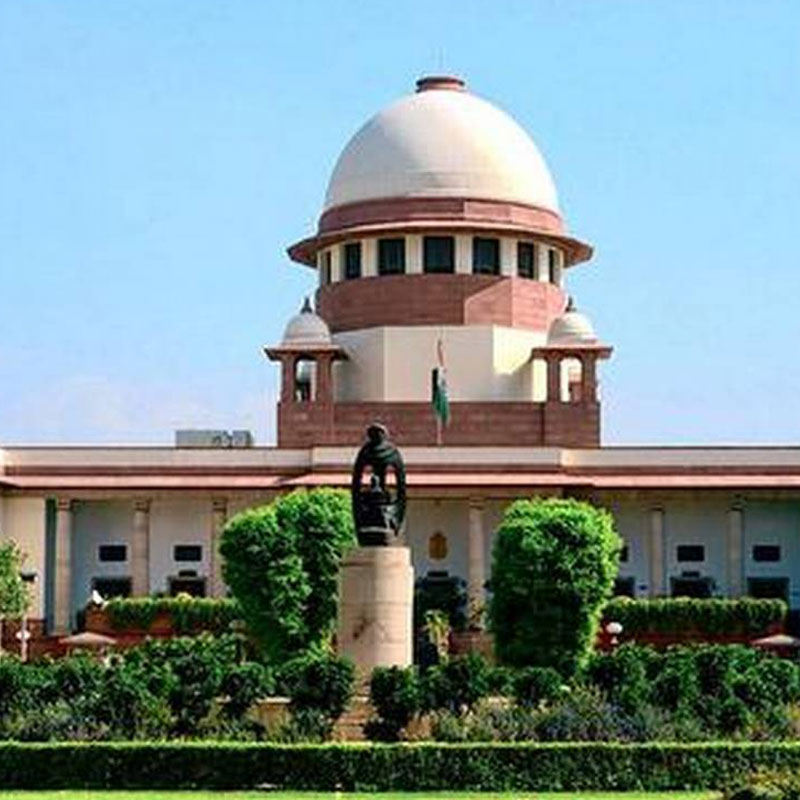
    NEW DELH: The supreme court on Monday ordered five stand-up comics, including YouTuber Samay Raina, to publish public apologies on YouTube and other social platforms for cracking jokes at the expense of persons with disabilities (PwDs).

    A bench of justices Surya Kant and Joymalya Bagchi was hearing a plea by SMA Cure Foundation, represented by senior advocate Aparajita Singh, which flagged offensive remarks by Raina, Vipul Goyal, Balraj Paramjeet Singh Ghai, Sonali Thakkar alias Sonali Aditya Desai and Nishant Jagdish Tanwar.

    The court said it would determine financial penalties later, but made clear that “the degree of repentance should be higher than the degree of offending”. It also allowed the information and broadcasting ministry to join the proceedings, with attorney general R Venkataramani asked to draft guidelines on social media speech, ensuring dignity without imposing a gag.

    Justice Bagchi warned that comedy which commercialises speech by ridiculing communities crosses the line: “Humour is part of life. We laugh at ourselves. But when it targets others and breaches sensibility, it becomes problematic.”

    Justice Kant added that penal consequences under the IT Act should match the harm caused.
    Singh suggested that the comedians use their influence to spread awareness about disability rights, calling it the best form of apology. The judges asked the comics to respond to this proposal, noting that influencers have a duty not to hurt marginalised communities.

    The matter stems from Raina’s alleged jokes about the cost of treatment for spinal muscular atrophy, which the foundation said mocked both patients and their families. The court earlier compelled the comedians’ attendance, though their presence has now been dispensed with, provided they honour their undertakings.

    The bench stressed that free speech under Article 19 cannot override the right to dignity under Article 21. As Justice Kant put it: “Today it is the disabled, tomorrow it could be something else. Where will this end?”

  • Double trouble for broadcasters as Supreme Court green-lights twin tax hit

    Double trouble for broadcasters as Supreme Court green-lights twin tax hit

    MUMBAI: The Supreme Court has delivered a one-two punch to India’s broadcasters, ruling on Thursday that they must cough up both service tax and entertainment tax on their activities. The decision ends years of legal wrangling over whether television companies could dodge the double whammy.

    A bench led by justice B V Nagarathna and justice N K Singh declared that parliament and state legislatures both have the constitutional chops to levy their respective taxes. The 321-page judgment—longer than most television programmes—essentially told broadcasters they cannot have their cake and eat it too.

    “The two taxes target different aspects of the same activity,” the court explained, rather like taxing both the recipe and the meal. Parliament’s service tax under the Finance Act hits the broadcasting service itself, whilst states’ entertainment tax treats television as a luxury under Entry 62 of the Constitution’s List II.

    The judges were having none of the broadcasters’ arguments that they should pay only service tax to the central government. “No entertainment can reach viewers unless broadcasters transmit signals,” justice Nagarathna noted. “There are two aspects: transmitting signals and providing entertainment through set-top boxes that decrypt them.”

    This legal drama began with a clutch of cases from various high courts, with Kerala versus Asianet Satellite Communications taking the starring role. Broadcasters had argued they were merely in the signal-transmission business, not the entertainment game. The Supreme Court was not buying this technicality.

    The ruling overturns a 2012 Kerala high court decision that had favoured cable operators over DTH (direct-to-home) providers, calling such discrimination unconstitutional. The Supreme Court said this earlier judgment got it wrong—both cable and DTH operators are in the entertainment business and should be taxed accordingly.

    For India’s broadcasting industry, already grappling with cord-cutting and streaming competition, this represents yet another headache. The ruling makes clear that technological differences in how entertainment is delivered do not exempt anyone from the taxman’s reach.

    The court’s message is unambiguous: whether you beam signals from satellites or snake cables through neighbourhoods, if you are in the business of keeping Indians glued to their screens, you will pay through the nose for the privilege.

  • Supreme Court puts OTT and social media sleaze on notice

    Supreme Court puts OTT and social media sleaze on notice

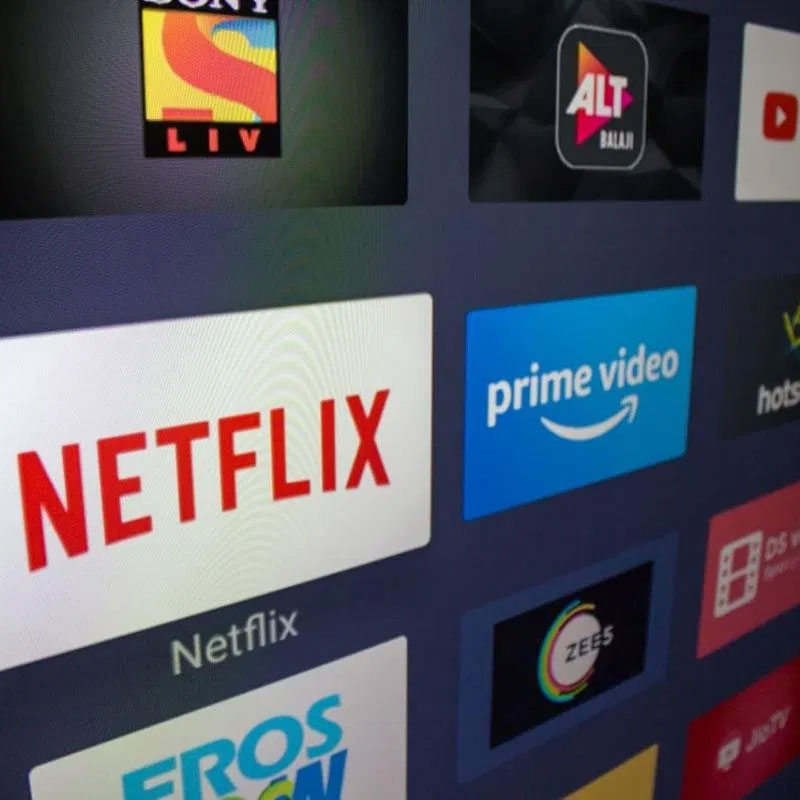
    MUMBAI:  The supreme court on Monday fired a warning shot across the bows of the government, streaming giants, and social media platforms, flagging the unchecked spread of obscene and sexually explicit content online.

    A bench led by justice B R Gavai and justice Augustine George Masih issued notices to the Centre and a who’s who of Big Tech — Netflix, Amazon Prime Video, Meta, X Corp, Google, Apple, Ullu, and ALTT — after a public interest litigation (PIL) filed by journalist Uday Mahurkar and others called for urgent curbs on indecent material floating unchecked across digital platforms.

    “This petition raises an important concern,” said justice Gavai, cautioning that the issue was best left to the executive or legislature lest the court be accused of overreach. Nevertheless, he nudged solicitor general Tushar Mehta, representing the Centre, to act: “Do something… something legislative.”

    Mehta did not dispute the concerns, describing some content as so perverted “that even two respectable people cannot sit together and watch,” but stressed that censorship was not an option. He added that regulations under the Information Technology (Intermediary Guidelines and Digital Media Ethics Code) Rules, 2021, were in place — and more were under contemplation.

    The petitioners, represented by advocate Vishnu Shankar Jain, called for the establishment of a National Content Control Authority to monitor and regulate streaming and social media output until a comprehensive law is enacted. The plea warned that without action, the flood of sexually explicit, paedophilic and perverse material could corrupt young minds, fuel deviant behaviour, and trigger a rise in crimes against women and children.

    “What was once an individual vice has now become a public menace,” the petition thundered, accusing platforms like X, Instagram, Facebook, YouTube, Netflix, and Ullu of promoting explicit content without adequate checks.

    While the Supreme Court has not set a timeline for the next hearing, the Centre’s response will be pivotal in shaping how India reins in its booming but increasingly controversial digital content ecosystem. For India’s streaming giants, the party might just be about to face a reality check.

  • TikTok Bids Farewell to US  users amid ban and uncertainty; Trump throws lifeline

    TikTok Bids Farewell to US users amid ban and uncertainty; Trump throws lifeline

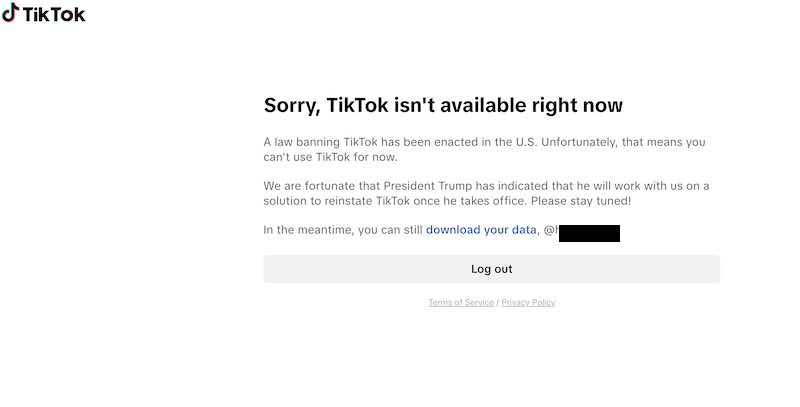
    MUMBAI: The curtains have fallen on TikTok in the United States as the popular short-form video platform voluntarily shut down its service to users ahead of a sweeping legal ban. Upon attempting to log in, users are greeted with a stark message: ” A law banning TikTok has been enacted in the U.S. Unfortunately, that means you can’t use TikTok for now.We are fortunate that President Trump has indicated that he will work with us on a solution to reinstate TikTok once he takes office. Please stay tuned!”

    This abrupt shutdown has left 170 million young users in the US in a state of disarray. TikTok has become a vital part of their daily lives, serving as a platform for creativity, self-expression, and social connection. Users have taken to social media to express their frustration and disbelief as they can no longer upload content or build their online presence on the app.

    The US government has been vocal about its concerns regarding TikTok’s ties to China, citing national security risks due to the app’s ownership by Chinese parent company ByteDance. Lawmakers have long argued that TikTok must either be operated in the US  by an American company or divested from its Chinese stakeholders. Congress set a firm deadline of 19 January, coinciding with the incoming presidency, for TikTok to comply with the law.

    Despite TikTok’s efforts, a last-minute legal challenge to overturn the ban was thwarted when the Supreme Court ruled that the law does not infringe on the First Amendment. This left the company with no legal recourse. The Biden administration has deferred enforcement of the law to the incoming Trump administration, which has signaled a willingness to negotiate a solution.

    President-elect Donald Trump indicated he might take action to extend the ban’s enforcement deadline. In a recent NBC News interview, he mentioned, “The 90-day extension is something that will be most likely done because it’s appropriate. If I decide to do that, I’ll probably announce it on Monday.” Under the law, the president can grant a one-time extension of up to 90 days regarding its implementation.

    As of now, TikTok users who attempt to access the app will find it absent from both the Apple App Store and Google Play Store, and users can only retrieve their data through a specific process. TikTok’s help section remains operational, but with the app effectively disabled, users are left hanging.

    TikTok itself has criticised the Biden administration for its lack of clarity and assurance regarding the continuation of its services. The company remarked, “Unless the Biden Administration immediately provides a definitive statement… TikTok will be forced to go dark on January 19.”

    As uncertainty looms over TikTok’s future in the U.S., millions are left to wonder if they will ever reconnect with their  app, or if this is truly the end of the line. The situation remains fluid, with potential developments hinging on the incoming administration’s actions in the coming days.

    President Donald Trump later in the day thew the management of TikTok a lifeline later in the day saying he would be considering issuing an executive order giving TikTok 90 days to find itself an American partner. This came as a relief to its 170 million users in the US. 

    Said Trump on TruthSocial: “I am asking companies not to let TikTok stay dark! I will issue an executive order on Monday to extend the period of time before the law’s prohibitions take effect, so that we can make a deal to protect our national security. The order will also confirm that there will be no liability for any company that helped keep TikTok from going dark before my order.

    “Americans deserve to see our exciting inauguration on Momday, as well as other events and conversations.

    “I would like the United States to have a 50 per cent stake in the joint venture. By doing this, we save TikTok, keep it in good hands and allow it to say up. Without U.S. approval, there is  no Tik Tok. With our approval, it is worth hundreds of billions of dollars – maybe trillions.”

    (Updated on 19  January 2025 at 10:30 pm)

  • Indian citizens trust defence forces and the PM the most: Ipsos survey

    Indian citizens trust defence forces and the PM the most: Ipsos survey

    MUMBAI : The news is not so good for all of us who are part of the media. Our tribe ranks even below the police in terms of the trust that the general public places in it, if one were to go by the results of the quarterly survey, the Ipsos IndiaBus Trust in Institutions, conducted by global research company’s Ipsos India..

    If the fourth estate is held in such low esteem by its primary customer,  the  Indian citizen, do media owners need to go back to the drawing board and do a rethink about their raison d’etre ? That’s question that begs an answer! An honest answer!

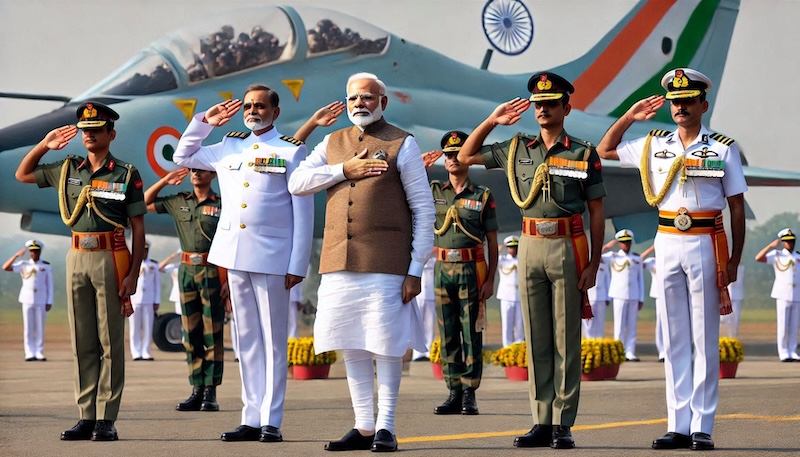
    The Ipsos survey revealed that the defence forces (army, air force and navy) are the most trusted  with a score of 56 pr cent, followed by Indian prime minister Narendra Modi who scored 45 per cent positive responses. The RBI came third with a 44 per cent score, followed by the supreme court. 

    Interestingly, all these institutions have improved their scores over the last quarter (in September) and have shown that the citizens have the highest faith in these institutions, as they continue to serve the nation with exemplary dedication and ethical work practices, says a press release issued by Ipsos India. To be fair even us media folks improved our trust score from 24 per cent in September 2024. But we are a far cry from the 36 per cent we notched up in June  2024.


    Trust list


    Politicians (20 per cent), political parties (21 per cent), community leaders (22 per cent), and religious leaders (24 per cent), have even more reasons to be worried as they continue to lead in the distrust list.

    The survey displayed certain pockets where the most trusted institutions have higher equity among the citizens.

    The defence forces have received higher trust scores among the tier1 citizens (71 per cent), the north zone (69 per cent), the west zone (68 per cent), the employed (67 per cent), tier2 (63 per cent), metros (62 per cent) and males (61 per cent) etc.  

    The PM of the country received highest scores in the north zone (62 per cent), tier1 (57 per cent) and tier 2 (57 per cent) cities, the west zone (52 per  cent), the employed (51 per cent) and males (48 per cent). Whlle the RBI was trusted most by the west zone (61 per cent), tier1 (59 per cent) and tier2 (54 per cent) citizens, the north zone (53 per cent) and the employed (52 per cent). Across these three institutions, they have a common thread of supporters with high trust – though only in the case of the RBI, trust is high in the west zone, Mumbai being the commercial capital of  India.
     

    Parijat chakrabortyIpsos India group service line leader, public affairs, corporate reputation, CSR & ESG Parijat Chakraborty pointed out that the topper  institutions are the backbone of the nation with their word being sacrosanct.  “After all, they have stood the test of time in serving the nation with transparency, equality and justice. All these institutions command respect – whether our defence forces, PM of the country, the RBI, the supreme court of India, the parliament – and their reputation has been built over years of impeccable delivery and service to the nation,” he elaborated.

    According to him politicians, political parties, community leaders, and religious leaders, are institutions that need to win the trust of the masses through greater transparency and fulfilment of their promises to the electorate and patrons on one hand and managing their reputation through visibility around their achievements via communication, not leaving anything to speculation. He highlighted one positive outcome from the survey for them. ”We see recovery in scores to the previous levels, after a dip in September,” he said.

    (For the doubting Thomases who doubt the survey’s authenticity, at least use it as a guide post. Ipsos IndiaBus is a monthly pan India omnibus – which also runs multiple client surveys-  that uses a structured questionnaire and is conducted by Ipsos India on diverse topics among 2200+ respondents from Sec A, B and C households, covering adults of both genders from all four zones in the country. The survey is conducted in metros, tier one, tier two and tier three towns, providing a more robust and representative view of urban Indians. The respondents were polled face to face and online. We have city-level quota for each demographic segments that ensure the waves are identical and no additional sampling error. The data is weighted by demographics and city-class population to arrive at a national average. )

  • Self-certification of ads: A deeper legal perspective

    Self-certification of ads: A deeper legal perspective

    Mumbai: The Indian advertising industry, like any other market of the world, plays a significant role in shaping consumer sentiment towards products and services available in the market. Correspondingly, it is essential to have adequate regulation and supervision of the sector for ensuring that advertisements do not result in manipulation of consumer behaviour based on fallacious claims. The supreme court recently in Indian Medical Association vs Union of India addressed concerns surrounding misleading advertisements in the case where Indian Medical Association (IMA) filed a petition accusing Patanjali Ayurveda of issuing misleading advertisements and passing critical remarks against allopathy. The court highlighted the responsibility of both advertisers and endorsers in instances of misleading advertisements.

    Advertisements, misleading advertisements, related terms and concerns

    Advertisements: An advertisement, under Advertising Standards Council of India (“ASCI”) code for self-regulation of advertising content in India, is defined as a paid-for communication, addressed to the public or a section of it, the purpose of which is to promote, directly or indirectly, the sale or use of goods and services to whom it is addressed. Any communication which in the normal course may or may not be recognised as advertisement by the general public, but is paid for, or owned or authorised by the advertiser or their advertising agency would be included in the definition.

    The Consumer Protection Act, 2019 (“CPA”) defines an advertisement as any audio or visual publicity, representation, endorsement or pronouncement made by means of light, sound, smoke, gas, print, electronic media, internet or website and includes any notice, circular, label, wrapper, invoice or such other documents.

    According to the Central Consumer Protection Authority’s  (“CCPA”) Notification dated June 2022:

    a. “advertiser” means a person who designs, produces and publishes advertisements either by his own effort or by entrusting it to others in order to promote the sale of his goods, products or services and includes a manufacturer and service provider of such goods, products or services.

    b. “advertising agency” means a person or an establishment providing services in designing and production of advertisements or other related services for a commission or fee;

    Misleading advertisements: A ‘misleading advertisement’ is an advertisement that contains false, inaccurate and deceptive claims and representations about the product/service being represented, in a manner that is likely to accord to a potential buyer/consumer incorrect understanding about the product/service, thereby wrongfully influencing their purchase and usage decisions. Section 2(28) of the CPA defines misleading advertisement as any product or service which—

    (i) falsely describes such product or service; or

    (ii) gives a false guarantee to, or is likely to mislead the consumers as to the nature, substance, quantity or quality of such product or service; or

    (iii) conveys an express or implied representation which, if made by the manufacturer or seller or service provider thereof, would constitute an unfair trade practice; or

    (iv) deliberately conceals important information

    Celebrities and endorsers: ASCI defines a celebrity as anyone who (a) gets compensated Rs 40 lakh or equivalent value annually for appearing in advertisements or campaigns on any medium and any format; or (b) has a social media followership of 500,000 or more on any single social media handle. Celebrities or influencers (an individual or a group or an institution) who make endorsement of any goods, product or service can be  defined as endorsers. An endorser has the power to affect/influence their audiences’ purchasing decisions or opinions about a product, service, brand or experience, because of their authority, knowledge, position, or relationship with their audience, and also accord credibility and reliability to the brand in view of their association therewith.

    Under the current legal framework, the penalties for taking part in creation and publication of misleading advertisements are:

    1.  A first offence under the Drug and Magic Remedies (Objectionable Advertisements) Act (DOMA), 1954 could lead to imprisonment for six months and/or a fine. For subsequent offences, the punishment may extend to one year.

    2.  The CPA imposes stricter consequences, with a potential imprisonment term of upto two years and a fine of around Rs 10 lakh for violations. Repeat offences escalate to a five-year imprisonment term and a fine of approximately Rs 50 lakh.

    In view of the alarming rise in misleading advertisements in the market, the supreme court as well as various governmental and private bodies have issued regulations and guidelines directed towards endorsers/influencers, advertisers and advertisement agencies in relation to publication to advertisements. A glimpse of such directions, guidelines and regulations have been provided below.

    A.  Guidelines issued by courts for endorsers concerning misleading advertisements:

    The bench of Justices Hima Kohli and Ahsanuddin Amanullah in the aforementioned Patanjali case stated that “advertisers/advertising agencies and endorsers are equally responsible for issuing false and misleading advertisements. Such endorsements that are routinely made by public figures, influencers, celebrities etc. go a long way in promoting a product. It is imperative for them to act with a sense of responsibility when endorsing any product and take responsibility for the same …”.

    The bench further stated that persons who endorse a product should have adequate information or experience with such specific product to be endorsed, and it must be ensured that it must not be deceptive. Celebrities and social media influencers will be equally liable for misleading advertisements, if they endorse any deceptive product or service.

    Concerning misleading advertisements, the court issued the following directions:

    1  Broadcasters or print media have to file a self-declaration form before carrying any advertisements, assuring that the advertisement to be carried on its platform complies with Cable Network Rules, Advertising Code etc.

    2  Ministries were directed to set up a specific procedure which will encourage the consumer to lodge a complaint and for the said complaint to be taken to a logical conclusion instead of simply being endorsed or marked.

    3  Persons who endorse a product should have adequate information or experience with specific product to be endorsed, and it must be ensured that it is must not be deceptive.

    4  Celebrities and social media influencers will be equally liable for misleading advertisements, if they endorse any deceptive product or service.

    5  The ministry of consumer affairs, was ordered to file a fresh affidavit on action taken by CCPA on false or misleading advertisements,

    B.  Guidelines under various statutes and governmental and private bodies

    1.  ASCI self-regulation guidelines for endorsers and advertisers

    ASCI, established in 1985, is committed to the cause of self-regulation in advertising, ensuring  protection of the interests of consumers. It seeks to ensure that advertisements conform to its code for self-regulation, which requires these to be legal, decent, honest and truthful, and not hazardous or harmful, while observing fairness in competition. Some core tenets of ASCI guidelines with reference to celebrities in advertising are–

    1    Advertisements with celebrities should not violate any guideline of the ASCI code.

    2    It is an obligation of the advertiser to make a celebrity aware of the code.

    3    Representations by a celebrity must be genuine and must be based on adequate information or experience.

    4    Due diligence necessary by the celebrity to ensure that representations made in the advertisements are objectively true and are not misleading or deceptive.

    5    Celebrities should not participate in any advertisement of products that are prohibited for advertising under the law. Examples include products under the Drugs and Cosmetic Act 1940.

    6    A celebrity should not endorse a product for which a health warning is required to be issued.

    7    A celebrity may seek ‘advertising advice’ from ASCI on potential violations by an ad.

    In a bid to address misleading advertisements and safeguard consumers from unfair trade practices, especially arising out of celebrity endorsements, ASCI has laid out certain guidelines for celebrities/ influencers listing out their responsibilities while involving themselves in such marketing campaigns.

    The guidelines (dated July 13th, 2023) lay down the following –

    1  Celebrities endorsing products must adhere to the ASCI codes. Testimonials and endorsements should genuinely reflect the individual’s current opinion, grounded in sufficient knowledge or experience with the advertised product or service.

    2  It’s upon the advertisers and agencies to ensure that celebrities are well-informed about these codes. Celebrities must rigorously verify the accuracy of claims and comparisons in advertisements they endorse, ensuring they’re objectively substantiated and not misleading.

    3  They must abstain from endorsing products prohibited under the Drugs & Magic Remedies Act or requiring health warnings, as mandated by the Drugs & Cosmetics Act.

    4  Celebrities have the option to seek endorser due diligence (EDD) from ASCI to be compliant with the ASCI code and other relevant legal statutes, to protect themselves from any potential violations or litigations down the line.

    However, ASCI being a private self-regulating body, lacks the authority to compel businesses to adhere to the ASCI guidelines in a meaningful manner.

    2.  Central Consumer Protection Authority (CCPA)’s guidelines on false or misleading advertisements

    CCPA, unlike ASCI does have that power to compel businesses to adhere to their guidelines and their guidelines for misleading advertisements and endorsements, 2022 (“guidelines”), state the following-

    1  These guidelines obligated, inter alia, businesses to comply with stringent regulations governing misleading advertisements.

    2  The guidelines require that the endorsement in an ad must reflect the genuine and reasonably current opinion of the endorser, that includes celebrity or influencer, and must be based on adequate information about, or experience with, the identified goods or service and should not be deceptive.

    3  Adherence to the guidelines is essential for celebrities and influencers to maintain transparency and authenticity with their audience. Not only is this supposed to hold the endorsers responsible but also helps the consumers make informed decisions.

    The guidelines state that individuals or groups who have access to an audience and the power to affect their audiences’ purchasing decisions or opinions about a product, service, brand, or experience, because of the influencer’s or celebrity’s authority, knowledge, position, or relationship with their audience must disclose to the audience if the endorsement is a result of benefit or incentive from the advertiser. That is, if the endorser (including celebrities and influencers) is endorsing a product for which they have received some monetary/non-monetary compensation or any other form of sponsorship from the advertiser, the endorsement must clearly and prominently disclose the same. Following are the specific requirements and mandates to be followed by endorsers and influencers:

    i With respect to different formats used for endorsement, the guidelines stipulate the following rules for disclosure:

    1. For images: disclosures should be superimposed over the image enough for viewers to notice. 
    2. For videos: disclosures should be placed in the video and be made in both audio and video format.
    3. For live streams: disclosures should be displayed continuously and prominently during the entire stream.

    ii The disclosure must be made in simple and clear language.

    The disclosure must be made in simple and clear language. Terms such as “advertisement”, “sponsored”, “collaboration” or “paid promotion” can be used. Further, the disclosure should be made in the same language as the endorsement. Also, disclosures should not be mixed with a group of hashtags or links. The Guidelines specify that individuals must not endorse any product or service that they have not personally used or experienced or in which due diligence has not been done by them.

    iii Endorsers are liable for legal action if they do not disclose endorsement.

    The endorsers will be liable for legal consequences if they fail to disclose any material connection and/or upon non-compliance with the CPA and the associated rules. A material connection is any connection between an advertiser and endorser that may affect the weight or credibility of the representation made by the endorser. Material connection could include but is not limited to benefits and incentives, such as monetary or other compensation, free products with or without any conditions attached including those received unsolicited, discounts, gifts, contest and sweepstakes entries, trips or hotel stays, media barters, coverage, awards or any family or employment relationship, etc. According to Section 21 of the Act–

    (2) Notwithstanding the order passed under sub-section (1), if the Central Authority is of the opinion that it is necessary to impose a penalty in respect of such false or misleading advertisement, by a manufacturer or an endorser, it may, by order, impose on manufacturer or endorser a penalty which may extend to ten lakh rupees: Provided that the Central Authority may, for every subsequent contravention by a manufacturer or endorser, impose a penalty, which may extend to fifty lakh rupees.

    (3) Notwithstanding any order under sub-sections (1) and (2), where the Central Authority deems it necessary, it may, by order, prohibit the endorser of a false or misleading advertisement from making endorsement of any product or service for a period which may extend to one year: Provided that the Central Authority may, for every subsequent contravention, prohibit such endorser from making endorsement in respect of any product or service for a period which may extend to three years.

    3. The ministry of consumer affairs’, guidelines – endorsements know-hows!’ for celebrities, influencers and virtual influencers on social media platforms)

    The ministry of consumer affairs on 20 Jan, 2023, issued its guidelines (titled endorsements know-hows!’ for celebrities, influencers and virtual influencers on social media platforms) specifically pertaining to celebrity/ influencer endorsements.

    1  It emphasizes on the requirement of providing clear disclosures of any material connection with advertisers and straightforward language in endorsements; whereby, ‘material connection’ is deemed to be any connection between an advertiser and endorser that may affect the weight or credibility of the representation made by the endorser; and could include without being limited to benefits and incentives, such as monetary or other compensation, free products with or without any conditions attached including those received unsolicited, discounts, gifts, contest and sweepstakes entries, trips or hotel stays, media barters, coverage, awards or any family or employment relationship, etc.

    2  Terms like “advertisement” or “sponsored” should denote paid promotions. Endorsers must avoid promoting products they haven’t personally used.

    3  Aligned with the CPA, the guidelines prohibit misleading advertisements and outlines responsibilities for manufacturers, service providers, advertisers, and agencies.

    4  It reinforces guidelines for valid advertisements and addresses celebrity and endorser responsibilities.

    4.  The ministry of information & broadcasting’s advisory to endorsers on restriction on promoting, advertising, endorsing, even through surrogate marketing, offshore betting and gambling

    The ministry of information and broadcasting, on 21 March, 2024, issued an advisory directed towards endorsers and online influencers, restricting them from promoting, advertising, endorsing, even though surrogate marketing, offshore betting and gambling to the consumers, especially the youth. It states that –

    1  Emphasizing the significant financial and socio-economic implications, particularly on youth, the advisory also warns online advertisement intermediaries against targeting Indian audiences with such content.

    2  Social media platforms are urged to sensitize users and abstain from hosting such promotions.

    3  Non-compliance may result in actions under the CPA, including removal of the impugned post or account as well as penal measures.

    4  While Section 79 of the IT Act, 2000 exempts intermediaries from liability, failure to promptly remove unlawful content upon notification can restrict application of this exemption.

    5  The directive aligns with the CCPA’s previous guidelines, expressing concerns over endorsements of betting/gambling platforms by celebrities and influencers, subjecting such advertisements to stringent scrutiny.

    Not only in recent times, but celebrities have been under the scanner even in the past for being part of misleading advertisements. For instance, in 2015, a resident of Delhi filed a complaint in the District Consumer Disputes Redressal Forum of Central Delhi about the ‘Fair and Handsome Cream’, (world’s number one Fairness Cream for Men) being manufactured by Emami.  

    The complainant contended that he had used the product as per directions for use mentioned on the labelling and packaging of the product, but it had failed to show any results as claimed. He also argued that Emami had been using Shahrukh Khan as its brand ambassador for the promotion of the product and made false claims and promises that the product provides fairness in just three weeks.  The court ruled that the advertisements by Shahrukh Khan were misleading and directed Emami to pay an amount of Rs. 15 lakhs as punitive damages to the consumer welfare fund. It also directed the company to pay the complainant a sum of Rs.10,000 and withdrawal of the advertisement.

    Apart from this, there have also been many media reports of cases filed against celebrities like Amitabh Bachchan, Madhuri Dixit, and Preity Zinta for promoting Nestle’s Maggi Noodles when the product was banned when found to contain taste enhancer MSG and the chemical lead beyond permissible limits, which are harmful to humans.

    A controversy regarding a pan masala advertisement occurred in 2016 when the former James Bond actor, Pierce Brosnan, appeared in an advertisement for Pan Bahar, a pan masala brand popular in India. Pan masala is a mixture of specific kinds of nuts, seeds, and spices, often chewed for its stimulating effects, but it has been associated with health risks, including oral cancer. Pierce Brosnan was severely criticized for endorsing a product that adversely affected health. Brosnan later clarified that he was misled about the nature of the product, believing it to be a breath freshener or tooth whitener rather than a tobacco product. He also stated that his contract specified that he was promoting a “breath freshener/tooth whitener,” and he felt betrayed by the company’s use of his image to promote a pan masala product. The celebrities and media agencies were requested not be a part of surrogate advertisements of tobacco in the name of pan masala, tea, elaichi or other goods as these are prohibited under section 5 of the Cigarettes and Other Tobacco Products Act (COTPA), 2003 (“COPTA”). COPTA bans all kinds of direct and indirect advertisements of tobacco products. The controversy sparked discussions about celebrity endorsements and ethical considerations regarding the endorsement of Indian products that could be harmful to health, irrespective of the nationality of the endorser.

    5  Ministry of information & broadcasting (MIB) mandate to advertisers/advertising agencies to furnish a ‘self-declaration certificate’  before airing or publishing any advertisement

    The Supreme Court, in furtherance to abovementioned guidelines for the endorsers, has issued a directive in its order dated 7 May 2024 whereby all advertisers and advertising agencies are mandated to furnish a ‘self-declaration certificate’ before airing or publishing any advertisement. The MIB has published a press release announcing a new feature facilitating self-declaration by advertisers and advertising agencies from print, broadcast as well as digital media starting 18 June  2024 (“Press Release”).

    This certificate, signed by an authorized representative of the advertiser or advertising agency, must be submitted through designated portals, as stated by MIB in an official recent press release. The supreme court took note of the absence of a “robust mechanism” to oversee whether advertisers are fulfilling the obligations stipulated under the guidelines released by the CCPA. The supreme court further clarified that these directions were to be treated as the law declared under Article 141 of the Constitution of India. The supreme court in Sahara India Real Estate Corp Ltd. v. SEBI stated that the Constitution of India contemplates, that law declared by it, is binding on all courts within the territory of India. It also mandates, that an order made by the supreme court, is enforceable throughout the territory of India.

    Such self-declaration certificate shall be submitted through a designated portal activated on 4 June, 2024. The MIB  has introduced a new feature on the Broadcast Seva Portal of the MIB for TV and Radio Advertisements and on Press Council of India’s portal for print and digital/internet advertisements. The self-declaration certificate is mandatory for all advertisers/advertising agencies for all advertisements going live 18 June 2024 onwards, to be provided before broadcasting/publishing of such advertisement. For sake of clarity, the directive by Supreme Court and the following press release is not retrospective in nature and shall not be applicable on the advertisements that are already live. The salient aspects and observations in relation to the mechanism of self-declaration are provided hereinbelow:

    i Roadmap to Self-Declaration Certificate

    a. An authorized representative of the advertiser/advertising agency must sign and submit the self-declaration certificate, ensuring accountability and authenticity of the certificate.

    b. The authorized representative is required to provide comprehensive information about the advertised product or service, including advertisement title, description, script, and proposed date of first broadcast/publishing.

    c. The said submission of the certificate necessitates a letter of authorization, full advertisement script, video/audio file, and, if available and applicable, GST details and a CBFC certificate. The letter of authorization shall mandatorily be on the company letterhead of the advertiser/advertising agency and should be signed by the head of the company along with company seal.

    d. The certification includes affirmation of compliance with relevant regulatory guidelines, including those in Rule 7 of the Cable Television Networks Rules, 1994, and the Norms of Journalistic Conduct of Press Council of India and aims to ensure that advertisements do not contain any misleading claims.

    e. The Advertisers are required to ensure accuracy and completeness of the details, before uploading the self-declaration certificate.

    f. The successful submission of the details generates an acknowledgment receipt.

    g. Advertiser shall be required to provide proof of uploading the self-declaration certificate to the relevant broadcaster, printer, publisher, or electronic media platform for their records. As per the supreme court’s directive and the press release, no advertisement will be permitted to run on television, print media, or the internet without a valid self-declaration certificate.

    ii Elucidation required by MIB on the Self-Declaration requirement:

    Among several obscurities in the Press Release, listed below are few major concerns:

    a.  Ambiguity on terms used in the press release by MIB:

    No clarity has been given either in the order or the press release, as to who will be considered as an ‘advertiser’ or an ‘advertising agency’. However, in the absence of clarifications, reliance is being laid on the definitions given under the guidelines. Furthermore, MIB requires a self-Declaration certificate to certify that the advertisement does not contain “misleading claims”, but the press release lacks clarity on what is considered as a “misleading claim”. Reference could be drawn from the CPA, and the definition of “misleading advertisement” included therein as mentioned hereinabove. However, based on assumptions, one cannot be certain if avoiding a “misleading advertisement” would fulfil the criteria of not being considered as a “misleading claim”.

    b. Ambiguity on requirement of  separate certificates for uploading one advertisement in different languages:

    There is no clarity on this aspect, however, drawing an analogy with CBFC certification, where a different CBFC certification is required when a movie is to be released in a different language, so that the committee can examine if any translated dialogue would fall foul of its earlier criteria for certification, it would be prudent for advertisers to procure separate self-declaration certificates for different languages of the same advertisement.

    c. Ambit of the MIB press release and question over inclusion of social media

    According to the order and the press release, digital/internet-based advertisements would also require a self-declaration certificate. Digital media is defined as a means of communication that can be transmitted over the internet or digital networks and includes communication received, stored, transmitted, edited or processed by a digital media platform. Digital Media includes but not limited to (i) internet (advergames, sponsored posts, branded content, promotional blogs, paid-for links, gamification, in-game advertising, teasers, viral advertising, augmented reality, native advertising, connected devices, influencers, etc.); (ii) On-demand across platforms including near video on demand, subscription video-on-demand, near movie on-demand, free video. On-demand, transactional video on demand, advertising video on demand, video on demand, pay per view, etc.; (iii) Mobile broadcast, mobile, communications content, websites, blogs, apps, etc. / Digital TV (including digital video broadcasting handheld and terrestrial), etc.; (iv) NSTV (non-standard television); (v) DDHE (digital delivery home entertainment); (vi) DTT (digital terrestrial television)

    Although the MIB press release is not free from ambiguity on its applicability to social media such as Instagram, Facebook, X, YouTube, etc., it would be sagacious to adhere to the directives and the Press Release to avoid potential legal repercussions in future, and ensure that there is no scope for claims to arise, in instances where the content so created and exploited constitutes an advertisement as per the foregoing definitions.

    iii Exclusions and Exceptions to the Self Declaration Requirement

    It was directed by the supreme court that no advertisements would be permitted on relevant channels (assuming channels on TV and radio), print media, or the internet without a self-declaration certificate. However, the MIB carves out exceptions for classifieds, personal advertisements, statutory advertisements, public information notices, tenders, and advertisements related to public functions. However, with respect to classifieds, classified advertisements directly related to consumer products and services will come under the ambit of self-declaration certification. Additionally, the MIB press release is not retrospective in nature and shall not be applicable to ongoing advertisements currently. The new advertisements (which are to be published after 18 June, 2024 whether made prior to 18 June or made after 18 June) would require a self-declaration certificate.

    Conclusion

    Celebrity endorsements offer increased brand visibility, credibility, and influence over consumer behaviour, often affecting sales and revenue of the brand in relation to the product/service advertised. However, legal liabilities arise if endorsements are misleading, as per several guidelines, statutes and judicial precedents. The recent Patanjali judgment highlights the responsibility of both advertisers and endorsers in combating misleading advertisements. The court’s stance on the liability of celebrities and social media influencers for endorsing misleading ads underscores the importance of ethical advertising practices and prioritizes consumer welfare. The order in this case, therefore, may widen the ambit of liability for endorsers such as celebrities or influencers, and thereby, result in greater due diligence required by such endorsers, to avoid falling foul of the law. The supreme court’s directive requiring self-declaration certificates from advertisers and advertising agency before airing advertisements on all modes is a measure to combat misleading advertisements and safeguard consumer interest, however, it shall increase the burden of compliance for various companies and brands engaging in advertisements. Lack of proper monitoring mechanism for such compliance especially for a vast space like digital media, it would be interesting to see how the ministries would ensure adherence of the directives by the advertisers and advertising agencies.

    Mukherjee is a senior associate and Verma is an associate with law firm ANM Global. The views expressed in this article are entirely their own and Indiantelevision.com need not subscribe to them.

  • Patanjali Ayurved apologises to SC over misleading ads

    Patanjali Ayurved apologises to SC over misleading ads

    MUMBAI: So, finally, India’s leading Ayurveda flagbearer has Patanjali Ayurved has bent its knees. The firm has issued an “unqualified apology” to India’s supreme court  about its stance of issuing misleading advertisements and criticism  modern medicines. It has assured the court that it will put a full stop to issuing such ads. 

    The apex court had on 19 March ordered the Swami Ramdevi Acharya Balkrishna owned Patanjali Ayurved to appear before it to clarify the failure to respond to the contempt notice, and misleading advertisements about medicinal cures.

    The supreme court had earlier reprimanded the company from issuing false ads and the counsel for the company had on 21 November 2023 assured it that “henceforth there shall not be any violation of any law(s), especially relating to advertising or branding of products manufactured and marketed by it and, further, that no casual statements claiming medicinal efficacy or against any system of medicine will be released to the media in any form.”

    But Patanjali Ayurved had continued to do so unafraid which led to the court rapping it hard on its knuckles on 27 February banning it from issuing ads for medicines with misleading claims. It had also slapped the central government on its wrists for “sitting with eyes closed” while the entire country was “taken for a ride.”

    The apex court had issued contempt of court notices against both Swami Ramdev and Acharya Balkrishna citing flouting of previous court orders by continuing to peddle misleading claims.

  • Trai issues amendments to the regulatory framework for broadcasting and cable services

    Trai issues amendments to the regulatory framework for broadcasting and cable services

    Mumbai: The Telecom Regulatory Authority of India (Trai) on Tuesday issued the telecommunication services tariff order, 2022 and the telecommunication services interconnection regulations, 2022.

    In consonance with the complete digitisation of the cable TV sector, Trai on 3 March 2017 notified the new regulatory framework for broadcasting and cable services. After passing legal scrutiny in Madras High Court and Supreme Court, the new framework came into effect from 29 December 2018.

    As the new regulatory framework changed quite a few business rules, many positives emerged. However, upon implementation of the new regulatory framework 2017, Trai noticed some inadequacies impacting the consumers. To address certain issues that arose after implementation of the new regulatory framework, after a due consultation process with stakeholders, Trai on 1 January 2020 notified the new regulatory framework 2020.

    Some stakeholders challenged provisions of tariff amendment order 2020, interconnection amendment regulations 2020 and QoS amendment regulations 2020 in various High Courts including in the High Court of Bombay and Kerala. The court upheld the validity of the new regulatory framework 2020 except for a few provisions.

    The provisions related to network capacity fee (NCF), multi-TV homes and long-term subscriptions of new regulatory framework 2020, have already been implemented and due benefits are being passed on to the consumer at large. Every consumer now can get 228 TV channels instead of 100 channels earlier, in a maximum NCF of Rs 130. It has enabled consumers to reduce their NCF for availing a similar number of channels as per 2017 framework, by an estimated cost varying Rs 40 to 50. Additionally, the amended NCF for multi-TV homes has enabled further savings to the consumers to the tune of 60 per cent on second (and more) television sets.

    However, as per RIOs filed by the broadcasters in November 2021, the new tariffs reflected a common trend i.e., the prices of their most popular channels including sports channels were enhanced beyond Rs 19 per month. Complying to the extent provisions, as regards the inclusion of pay channels in a bouquet, all such channels that are priced beyond Rs 12 per month are kept out of the bouquet and are offered only on a-la-carte basis. The revised RIOs as filed indicate a wide-scale changes in composition of almost all the bouquets being offered.

    Immediately after new tariffs were announced, Trai received representations from distribution platform operators (DPOs), associations of local cable operators (LCOs) and consumer organisations. DPOs highlighted difficulties likely to be faced by them in implementing new rates in the system and migrating the consumers to the new tariff regime through the informed exercise of options impacting almost all bouquets, especially due to upward revision in the rates of pay channels and bouquets declared by broadcasters. Therefore, Trai engaged with all the different associations and consumer groups including representatives of LCOs.

    To deliberate on the various issues related to implementation of new regulatory framework 2020 and suggest a way forward, a committee consisting of members from Indian Broadcasting & Digital Foundation (IBDF), All India Digital Cable Federation (AIDCF) & DTH Association was constituted under the aegis of Trai.

    The purpose of the committee was to facilitate discussions among various stakeholders to come out on a common agreed path for smooth implementation of Tariff Amendment Order 2020. Stakeholders were advised to come out with an implementation plan with minimum disruptions and hassles to the consumers while implementing the new regulatory framework 2020.

    The committee listed several issues related to the new regulatory framework 2020 for consideration. The stakeholders, however, requested Trai to immediately address critical issues which could create impediments for smooth implementation of tariff amendment order 2020.

    In order to address the issues as identified by the stakeholders’ committee; Trai issued a consultation paper for seeking stakeholders’ comments on points/issues which are pending for full implementation of the new regulatory framework 2020. The consultation paper sought comments and suggestions from various stakeholders, on issues related to discount given in the formation of the bouquet, ceiling price of channels for inclusion in bouquet, and discount offered by broadcasters to DPOs in addition to distribution fee.

    The authority analysed the comments of the stakeholders and to protect the interests of consumers has notified the amendments to tariff order 2017 and interconnection regulations 2017. The main features of the amendments are as follows:

    a.    Continuance of forbearance on MRP of TV channels

    b.    Only those channels which are having MRP of Rs 19 or less will be permitted to be part of a bouquet.

    c.    A broadcaster can offer a maximum discount of 45 per cent while pricing its bouquet of pay channels over the sum of MRPs of all of the pay channels in that bouquet.

     d.   Discount offered as an incentive by a broadcaster on the maximum retail price of a pay channel shall be based on combined subscription of that channel both in a-la-carte as well as in bouquets.

    All the broadcasters shall report to the authority, any change in name, nature, language, MRP per month of channels, and composition and MRP of bouquets of channels, by 16 December 2022, and simultaneously publish such information on their websites. The broadcasters who have already submitted their RIOs in compliance with the new regulatory framework 2020 may also revise their RIOs by 16 December 2022.

    All the distributors of television channels shall report to the authority, DRP of pay channels and bouquets of pay channels, and composition of bouquets of pay and FTA channels, by 1 January 2023, and simultaneously publish such information on their websites. DPOs who have already submitted their RIOs in compliance with the new regulatory framework 2020 may also revise their RIOs by 1 January 2023.

    All the distributors of television channels shall ensure that services to the subscribers, with effect from 1 February 2023, are provided as per the bouquets or channels opted by them.

    Trai in the present amendments, addressed only those critical issues which were suggested by the stakeholders’ committee to avoid inconvenience to consumers while implementing the tariff amendment order 2020. The stakeholders’ committee also listed other issues for subsequent consideration by Trai. In addition, the authority held multiple meetings with representatives of LCOs including an online meeting which was attended by more than 200 LCOs from across the country. Several issues were put forward during these meetings. Trai has noted the suggestions and may take further suitable measures to address the ensuing issues, if the situation warrants.

  • SC stays centre’s ban on Malayalam news channel MediaOne

    SC stays centre’s ban on Malayalam news channel MediaOne

    Mumbai: The Supreme Court on Tuesday granted interim relief to Malayalam news channel MediaOne, staying the central government’s decision to revoke the channel’s security clearance.

    A bench of justices DY Chandrachud, Surya Kant and Vikram Nath ordered that the channel can resume operations in the same manner in which it was being operated before revocation of security clearance, according to a report by Bar and Bench.

    The apex court also directed the government to file its counter affidavit in the matter.

    On the issue of whether the files containing adverse intelligence inputs can be disclosed to the channel or not, the court said it would keep the issue open for final disposal.

    The appeal by MediaOne had challenged the Kerala high court division bench judgment which had upheld the central government’s ban.

    The channel, owned by Madhyamam Broadcasting, had applied for broadcast permissions to be renewed from 30 September 2021 to 29 September 2022. MediaOne was issued a notice by the I&B ministry on 5 January revoking broadcasting permissions under the uplinking and downlinking guidelines stating that it was denied security clearance by the ministry of home affairs. In response to a show-cause notice by the ministry, the company mentioned that they are “unaware of the grounds of denial of security clearance.”

    When the case was heard by the Kerala high court, the central government told the bench that the decision to revoke the license was based on credible national security concerns, however, it refused to state what the concerns raised by MHA were and contended that a party cannot insist on observing natural justice principles in a situation involving national security.

  • Broadcasters to withdraw petitions challenging Trai on NTO 2.0 in SC

    Broadcasters to withdraw petitions challenging Trai on NTO 2.0 in SC

    Mumbai: The Indian Broadcasting and Digital Foundation (IBDF) and its members are likely to withdraw their petitions challenging the New Tariff Order (NTO) 2.0 in the Supreme Court, sources told indiantelevision.com. The apex court took up broadcasters’ applications for withdrawal of the petition while hearing the matter on Tuesday.

    Earlier this month, The Telecom Regulatory Authority of India (Trai) had extended the deadline for implementation of the new tariff order (NTO) 2.0 to 1 June. The previous deadline was 1 April.

    Trai had then also allowed broadcasters to revise their reference interconnect offers (RIO) by 28 February and publish the same on their websites. Distribution platform operators (DPOs) were directed to report the distributor retail price and composition of the bouquet of pay channels in compliance with the new regulatory framework by 31 March. Those who have already submitted can revise their RIOs by 31 March.

    In response to the earlier deadlines, broadcasters had come out with their new RIOs in October-November last year, preferring to pull their popular channels out of the bouquets instead of reducing the price to or below Rs 12. Though still above the cap, many of these prices were revised down later.

    Pertinent in this regard is Trai’s intention to form a committee with representation from leading pay-TV industry associations to ensure smooth implementation of the New Regulatory Framework 2020. In a letter dated 22 December 2021, the regulator has asked the IBDF, All India Digital Cable Federation (AIDCF), and the DTH association to nominate a maximum of two representatives to be part of the implementation committee.

    Prior to this, Trai had in November 2021, notified stakeholders that NTO 2.0 implementation would be delayed until 1 April. Speculations regarding backroom parleys between the telecom regulator and broadcasters to end the impasse have also been in the news lately. 

    This copy will be updated.