Tag: Sunil Mittal

  • Bharti Airtel prepays Rs 3,626 crores to clear 2016 spectrum liabilities

    Bharti Airtel prepays Rs 3,626 crores to clear 2016 spectrum liabilities

    MUMBAI: Imagine the weight of debt lifting off your shoulders-the sheer relief, the freedom, and the excitement of a stronger financial footing.

    Now, picture that feeling at a corporate scale.

    Bharti Airtel, India’s telecom giant, has just experienced that moment of exhilaration.

    Today, by prepaying Rs 3,626 crore to the Department of Telecom, settling its spectrum dues from 2016, Airtel has hit a major financial milestone. The move isn’t just about clearing debts—it’s a bold stride in optimising its fiscal health and saying goodbye to high-cost liabilities, all while strengthening its financial backbone.

    The company has prepaid a total of Rs 28,320 crores in spectrum liabilities during this calendar year, clearing dues that carried interest rates exceeding 8.65 per cent. The prepayment demonstrates Airtel’s commitment to improving its balance sheet and strengthening its financial flexibility.

    In June, the Sunil Mittal-promoted telecom operator prepaid all its deferred liabilities for spectrum acquired in the 2012 and 2015 auctions, where interest rates were higher at 9.75 per cent and 10 per cent. The prepayment for these auctions amounted to Rs 7,904 crore. Earlier in the year, Airtel had also prepaid Rs 8,325 crore to the government, clearing part of its deferred liabilities for the spectrum acquired in the 2015 auctions. In 2015, Airtel secured 111.6 MHz of spectrum for Rs 29,130.20 crore, with an upfront payment of Rs 7,832.58 crore, as per the auction rules at that time.

  • Bharti Enterprises completes 24.5 per cent stake acquisition in UK’s BT group

    Bharti Enterprises completes 24.5 per cent stake acquisition in UK’s BT group

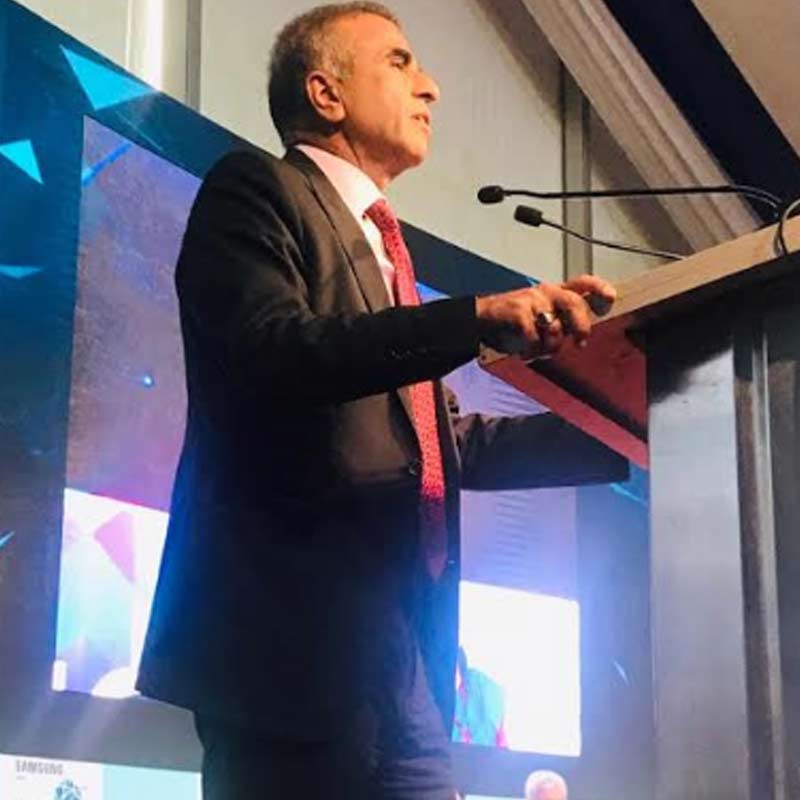
    MUMBAI: Bharti Airtel’s  Sunil Mittal has planted his company’s flag on the Britain’s biggest broadband and mobile company, the BT group. Earlier this week, Bharti Global, the international investment arm of Bharti Enterprises, completed the acquisition of a 24.5 per cent stake in BT from businessman Patrick Drahi. The stake was sold via Altice UK in two parts, the second of which is now completed.

    Mittal had announced in August 2024 that he would be buying a 9.9 per cent stake immediately, and would buy the remainder later after his group gets the necessary regulatory approvals. The purchase of the remainder shareholding makes Bharti Enterprises the single largest shareholder in BT group. The entire transaction cost Bharti 4.32 billion Euros. 

    In a statement Mittal said he was delighted to have “completed our investment into BT. Bharti has long recognised the enormous potential of the business. BT’s renewed focus on optimisation, strengthening networks and driving consumer growth makes it well placed to consolidate its position as a leading global telecom company that delivers long-term value for investors.”

  • Bharti Airtel to get new CEO in Shashwat Sharma come 2026

    Bharti Airtel to get new CEO in Shashwat Sharma come 2026

    MUMBAI: He’s been rated as one of the top Indian CEOs. But now Bharti Airtel’s managing director & CEO Gopal Vittal, along with Sunil Mittal, has put in place a plan wherein he will move out of his current position to executive chairman come 1 January 2026. Replacing him will be chief operations officer Shashwat Sharma who will step into his shoes.

    For now, Shashwat  is being appointed as CEO designate, responsible for the entire end-to-end consumer business.

    In the interim, the telco major has promoted Gopal to vice-chairman along with his existing duties as managing director.  In this role, while continuing to lead the India business, Gopal  will take on broader telecom responsibilities across the group. He is to be appointed to the board of Airtel Africa  as the Bharti nominee director to provide strategic guidance. In addition, he will be responsible for driving group synergies in select areas such as network strategy, digital and  technology, procurement and talent.

    Gopal will be responsible for mentoring and grooming Shashwat to take over as MD & CEO of Bharti Airtel. He will start to spend time between Delhi and Bangalore.

    The company announced changes at the board level too on 28 October. Rakesh Bharti Mittal, having served Airtel for nine years in his current term, will move on to the boards of Indus Towers and Bharti Hexacom. Replacing him is Rajan Bharti Mittal who returns to Airtel to be the Bharti board nominee.

  • Airtel’s Sunil Mittal welcomes Reliance-Viacom-Disney Hotstar merger

    Airtel’s Sunil Mittal welcomes Reliance-Viacom-Disney Hotstar merger

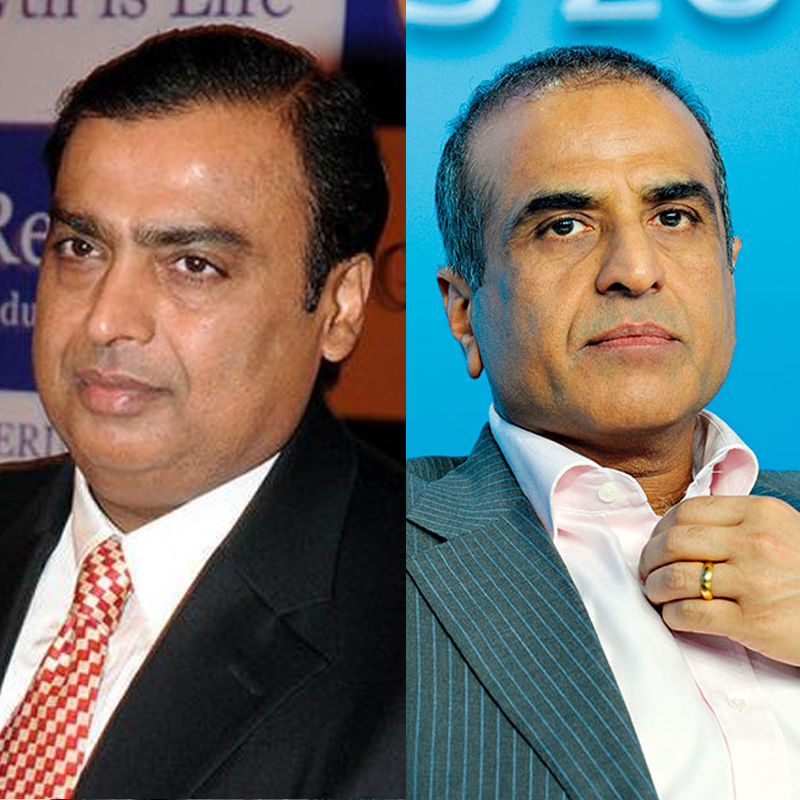
    MUMBAI: The merger between Reliance Jio, Viacom18, and Disney Star India has stunned many in the media and entertainment industry, considering its scale and size, creating a media monolith in its wake.

    But one person who is taking it in its stride is Bharti Enterprises chairman Sunil Mittal. In a conversation with CNBC TV18’s Shereen Bhan early this morning he said: “We are a telecommunications company. We are not in the business of content. We welcome the merger.”

    What this means is that speculation that Bharti Airtel might hare off and make some acquisitions in the content creation space can well be dustbinned following Reliance’s  skilful move of partnering with two global content giants.

    Mittal added that Bharti Airtel has been carrying every OTT and broadcaster – Netflix, Star, Hotstar, Prime Video, Jio, MX Player, Aha – for some time now. “We will continue doing so in a non-discriminatory manner,” he revealed.

    He, however, ended his statement with a note of caution. “We hope that even they will do so in a non-discriminatory manner,” he said.

    Are two Bobs (Iger and Bakish),  Nita Ambani and Uday Shankar listening?

  • Bharti Airtel hikes mobile tariffs effective 26 November

    Bharti Airtel hikes mobile tariffs effective 26 November

    Mumbai: Bharti Airtel has announced its new mobile tariffs that will come into effect from 26 November. The telecom service provider has hiked its tariffs by 20-25 per cent across its offerings.

    The company in a statement said, “Airtel has always maintained that the mobile average revenue per user (ARPU) needs to be at Rs 200 and ultimately at Rs 300, so as to provide a reasonable return on capital that allows for a financially healthy business model.”

    “We also believe that this level of ARPU will enable the substantial investments required in networks and spectrum. Even more important, this will give Airtel the elbow room to roll out 5G in India,” it added.  

    In August, Bharti Airtel chairman Sunil Mittal has expressed his concern that the telco business in India is unsustainable at the current ARPUs. He observed that Indians were consuming on average 16 Gb of wireless data per month yet revenue realisation of telcos per Gb of data remains very low.

  • ARPU target 200; Indian mobile subscribers trudge along at Rs 94.87

    ARPU target 200; Indian mobile subscribers trudge along at Rs 94.87

    Mumbai: Indian mobile subscribers consumed 11.76 Gb of data on average per month and generated an average revenue per user (ARPU) of Rs 94.87 at the end of December 2020, according to Telecom Regulatory Authority of India (TRAI).

    At a press conference earlier this month, Bharti Airtel chairman Sunil Mittal stressed the importance of hiking tariffs and bringing ARPUs to at least Rs 200 by the end of the financial year 2022, for the sustainable growth of the sector.

    ARPU per month has increased from Rs 74.88 in the year 2019 to Rs 94.87 in 2020 and minutes of usage has increased from 701 minutes to 759 minutes in the same period. ARPU for post-paid service customers decreased from Rs 259.02 to Rs 226.83 while for prepaid service customers, it increased from Rs 66.48 to Rs 88.37. The total gross revenue of the telecom sector has increased from Rs 2,43,702 crore to Rs 2,74,208 crore.

    Notably, revenues from data usage and calls have almost doubled. Revenue from data usage has increased from Rs 42.37 to Rs 81.81 whereas revenue from calls has grown from Rs 8.12 to Rs 17.72. Rental revenue has sharply declined from Rs 31.07 to Rs 0.95, as per TRAI.

    Mobile data usage has grown by 35.6 per cent year-on-year (YoY). The total revenue from wireless data usage increased from Rs 59,334 crore to Rs 113,156 crore with a yearly growth rate of 90.71 per cent. The ARPUs for wireless data usage alone increased from Rs 76.59 to Rs 128.61.

    Airtel reported ARPUs of Rs 121 at the end of December 2020 as per the company’s annual report. In their recent quarterly earnings report, the company disclosed that ARPUs had increased to Rs 146. On the other hand, Reliance Jio and Vodafone Idea reported ARPUs of Rs 138 and Rs 104, at the end of the fourth quarter for FY 2021.

    India’s ARPUs are the lowest in the world at $1.8 whereas countries like Brazil, China, EU and the US ARPUs stand at $4.6, $6.7, $12.1, and $37.8, respectively. Indian mobile customers consume more Gb of data than any of these countries (GSMA Intelligence Database, Sept 2020). While consumers get more benefits and value from unlimited voice and daily data allowances, compared to five years ago, India’s ARPUs are actually lower in comparison to historic trends.

    The ARPU erosion is due to telecom operators aggressively defending their subscriber base by selling heavily discounted voice plans with bundled data despite tremendous growth in the volume of voice and data usage in the last few years. There has been an industry-wide call to hike the floor prices which prevents telcos from undercutting each other across various services.

    Recently, the telecom players Jio, Airtel and Vodafone Idea took some solace as the government announced relief measures for the sector including a moratorium of four years on interest rates related to payment of AGR dues. It also announced 100 per cent foreign direct investment (FDI) in the sector and made it easier to get clearance for tower installation.

    India’s wireless internet subscribers grew by 10.52 per cent YoY and wired internet subscribers grew by 14.07 per cent. The number of wireless internet subscribers grew from 696.36 million to 769.64 million, where wired internet subscribers grew from 22.39 million to 25.54 million in December 2020.

    The total number of internet subscribers grew to 795.18 million, with Reliance Jio, Bharti Airtel, Vodafone Idea and BSNL having 51.6 per cent, 25.5 per cent, 17.3 per cent and 4.1 per cent of the market share, respectively.

  • Mobile customer ARPUs to cross Rs 200 by end of the year: Sunil Mittal

    Mobile customer ARPUs to cross Rs 200 by end of the year: Sunil Mittal

    Mumbai: The board of Bharti Airtel on Sunday announced that it would raise Rs 21,000 crore through the issuance of equity shares available on a rights basis to eligible shareholders of the company. “This is the need of the hour for the company to accelerate from business as usual and capture a once-in-a-lifetime opportunity,” noted Bharti Airtel, chairman, Sunil Mittal.

    Mittal acknowledged that the company is loaded with extraordinary debt both from AGR and spectrum dues and they are raising capital not just to pay off the dues but also invest more in building 5G capability, gain market share in mobile services, grow FTTH business and expand data centre business. “In two-three years you will see Airtel become much more comfortable with the debt on its balance sheet,” he remarked.

    Mobile network expansion

    The company will continue to continue to upgrade spectrum which is the lifeline of the telecom industry and requires heavy capital commitment, said Mittal. The existing spectrum licenses need to be renewed in 2023 but their cost is marginal, he noted.

    “15 per cent of devices in India are 5G enabled and price points for 5G devices are coming down,”  he observed, adding that “The government should ensure that pricing of spectrum remains attractive so that the benefits can be passed down to the customer who may enjoy a robust 5G ecosystem.”

    According to Mittal the CapEx required to expand 4G capacity and upgrade existing capacity to 5G would not be very big. “We are largely done with our 4G capacity and only add extra capacity in high connectivity areas to cater to the surge in traffic. 5G capacities are huge and modular and upgrading to 5G in areas where there is higher traffic will be ideal,” he stated. 

    Sustainability in telco business

    While Airtel is positioned to capture the growth in the next two to three years, Mittal advocated that the economic model of the telecom business in the country needs to change and become viable for sustainable growth. 

    “We expect the government to respond with a lighter touch,” he said, noting that out of Rs 100 in revenues Rs 35 goes to the government in the form of levies.

    He said, “Indians are consuming 16 Gb of data on average per user every month and having an appropriate and decent return on capital is vital to the sustainability of the industry. We don’t see data consumption increasing exponentially from 16 Gb which is already a global record.”

    The company’s ARPUs stands at Rs 146 as reported in the last quarter results and “we need to quickly get it to Rs 200 and Rs 300 eventually,” he said.

    “At Rs 100, customers would be able to be on the network and be able to do a small amount of snacking, whereas at Rs 600-800 customers would be able to enjoy all benefits of data under the sun and it still would be the lowest tariffs in the world!” he said.

    In September 2016, when Reliance Jio was launched, the entire telco industry’s ARPUs dropped below Rs 100. “The industry has reached Rs 150 and soon is expected to cross the Rs 200 mark by the end of the year,” he noted.

    Broadband network expansion

    Regarding the growth of FTTH business, he said “millions of new homes and offices are enabled with FTTH broadband services and we have seen a lot of momentum in the last 12 months. Our last quarter results showed that the number of fixed broadband connections are rising exponentially.”

    The company’s home business segment added ~285,000 new customers during the last quarter to reach a 3.35 million customer base. Other than BSNL, Airtel has been in a rising position when it comes to broadband connectivity. Mittal said that CapEx allocation will be towards backhauling existing capacities and rolling out more fibre.

    Data centre business

    Regarding the data centre business, he said, “We have the right to win in this business as we know how to build data centres and have the domain expertise to run them efficiently. We have a significantly higher chance at success in this space than pureplay real estate players.”

    Nxtra Data Ltd, a wholly-owned subsidiary of Bharti Airtel is engaged in the data centre business and runs 10 large data centres and 120 edge data centres. Nxtra is building multiple large data centres across the country in Pune, Chennai, Mumbai and Kolkata to capture the significant growth opportunities in India. In July 2020, Carlyle announced that it would acquire a 25 per cent stake in Airtel’s data centre business at a valuation of $1.2 billion.

    DTH business

    Speaking about buying back its 20 per cent stake in Bharti Telemedia (D2H business) from Warburg Pincus, he said, “As we get wiser in hindsight, we realised that all our customer-facing businesses need to be in complete control of the mothership company Bharti Airtel. While infrastructure businesses like fibre and tower are different, all our go-to-market businesses need to be aligned as one. That’s why we’ve had tremendous success in the rollout of Airtel Black.”

    Digital business

    “It is difficult for companies from traditional backgrounds, even technology companies like ours to pick up on the digital momentum. It has taken Airtel four to five years to get to a point where we have got the right to call ourselves a digital company,” said Mittal. “In the coming quarters, we will talk a lot more about digital and our revenues coming from digital will also be fairly impressive.”

  • Indian broadband subscribers growth down in July 2020

    Indian broadband subscribers growth down in July 2020

    BENGALURU: Indian broadband internet subscribers growth for the month ended 31 July 2020 (Jul-20) was less than half (49.6 per cent) of the growth in Jun-20 as per the latest Telecom Regulatory Authority of India (TRAI) data. The broadband subscriber base grew by just 71.7 lakh in Jul-20 as compared to 1.447 crore in the previous month.

    Overall, in calendar year 2020, the country has seen addition of 4.347 crore broadband internet subcribers or 6.2 per cent growth until Jul-20. Apr-20, the first month of the Covid2019 lockdown, had seen broadband internet subscribers decline by 1.13 crore.

    There were 70.54 crore broadband internet subscribers in India in Jul-20 as compared to 66.194 crore in Jan-20 and 69.823 crore in Jun-20.  

    The top five service providers constituted 98.91 percent market share of the total broadband subscribers at the end of July-20. These service providers were Reliance Jio with 40.196 crore, followed by Airtel with 15.574 crore, Vodafone Idea with 11.527 crore, the public sector BSNL with 2.303 crore, and Atria Convergence Technologies with 16.9 lakh broadband internet subscribers.

    Mobile devices users (Phones and dongles)

    The largest growth driver has been through mobile devices, which include phones and dongles, with addition of 4.254 crore broadband internet subscribers or a 6.2 per cent growth in CY 2020 until Jul-20. Mobile devices are the largest platform for broadband internet in India with a more than 97 per cent share of subscribers. There were 68.464 crore broadband internet subscribers through mobile devices in Jul-20 as compared to 64.219 crore in Jan-20 and 67.779 crore in Jun-20.

    The top five wireless broadband service providers in Jul-20 were Jio with 40.08 crore, Airtel with 15.325 crore, Vodafone Idea with 11.526 crore, BSNL with 1.517 crore, and Tikona Infinet Ltd with 3 lakh subscribers.

    Wired broadband internet subscribers

    The second largest broadband internet services platform with a 28-29 per cent share of broadband internet is the wireline or wired platform. This segment has witnessed a growth of 4.9 per cent in Jul-20 as compared to the beginning of the year, with the addition of 9.9 lakh subscribers, for a total of 2.013 crore subscribers in Jul-20.

    The top five wired broadband service providers in Jul-20 were BSNL with 78.6 lakh subscribers, Airtel with 24.9 lakh, Atria Convergence Technologies with 16.9 lakh, Jio with 11.6 lakh, and Hathway Cable & Datacom at 10.1 lakh subscribers.

    Fixed wireless subscribers (Wi-Fi, Wi-Max, Point-to-Point Radio & VSAT)

    Fixed Wireless platform (Wi-Fi, Wi-Max, point-to-point radio & VSAT) is the smallest of the three with about 0.09 per cent share of the total broadband internet subscribers in the country. This platform has seen growth 0f 4.7 per cent in CY 2020 until Jul-20 to 6.4 lakh subscribers, as compared to 6.1 lakh subscribers in Jan-20.

  • Airtel Digital TV operating revenue up as bottom line dips for first quarter

    Airtel Digital TV operating revenue up as bottom line dips for first quarter

    BENGALURU: The digital TV services segment from Sunil Mittal’s Bharti Airtel Ltd (Airtel), Airtel Digital TV, which provides direct to home (DTH) satellite television services, reported growth of 0.8 percent in operating revenue at Rs 744.8 crore for the quarter ended 30 June 2020 (Q1 2020, quarter or period under review) as compared to Rs 738.9 crore for the corresponding quarter of the previous year Q1 2019 (y-o-y). However, this is not a true oranges-oranges comparison, since as of 1 March 2020, Airtel Digital TV services has implemented new guidelines of NCF (Network Carriage Fees) under the new tariff order (NTO) from Telecom Regulatory Authority of India (TRAI). The company says in a media release that Airtel Digital TV revenue witnessed a growth of 9.3 percent y-o-y on an underlying basis, on the back of strong customer additions.

    Airtel Digital TV operating profit for the quarter under review declined 23.5 percent to Rs 276.2 crore (37.1 percent of operating revenue) as compared to Rs 361.2 crore (48.9 percent of operating revenue) for Q1 2020. Airtel reported 1.3 percent growth in Assets to Rs 3,462 crore for Q1 2021 from Rs 3,417.4 crore in Q1 2020. However, Assets in Q1 2021 were 12.9 percent lower than the Rs 3,794.9 crore in the immediate trailing quarter (Q4 2020). The segment’s liabilities for Q1 2021 grew 11.6 percent to Rs 4000.5 crore from Rs 3,585.2 crore in Q1 2020. Liabilities in the quarter under review were however 3 percent lower than the Rs 4,122.4 crore in the immediate trailing quarter Q4 2020.

    The company reported a 5.1 percent y-o-y increase in net DTH subscribers in Q1 2021 at 1.68 crore as compared to 1.6 crore in the corresponding quarter of the previous year.

    Bharti Airtel’s consolidated revenue for Q1 2021 grew 15.4 percent on an underlying basis to Rs 23,939 crore as compared to the year ago quarter. Consolidated EBIDTA for the quarter under review was Rs 10,639 crore (44.4 percent margin). India revenue at Rs 17,589 crore were up 14.6 percent and up 15.1 percent on an underlying basis y-o-y.

    An earnings media release for Q1 2021 quotes Airtel MD and CEO, India & South Asia Gopal Vittal: “We are going through an unprecedented crisis caused by COVID. Despite this, our teams have served the country well and kept our customers connected. Data traffic growth surged by ~73 percent y-o-y even as 4G net additions slowed down to 2 Million caused by supply chain shocks in the device ecosystem. Revenues grew by 15% Y-o-Y and performance was satisfactory across all segments. Our flagship “War on Waste” program, helped improve EBITDA margin by 1.6 percent over the previous quarter. To serve our customers even better, we have launched a company-wide program to improve our customer experience. We continue to invest in the best of emerging technologies to make our networks future ready. We have made rapid strides in our digital business, with nearly 155 million monthly active users across Airtel Thanks, Wynk, Xstream and our payments platforms. Today, 60 percent of Airtel’s entire business goes through its digital channels. We are most excited about the string of partners we are attracting in order to build greater stickiness and ultimately growth from our digital assets.”

    Follow Tellychakkar for the consumer facing news & entertainment

  • Broadband subscriber growth picks up in October 2019

    Broadband subscriber growth picks up in October 2019

    BENGALURU: Overall broadband internet subscribers in India grew by 1.866 crore or 2.98 per cent  in the month ended 31 October 2019 (Oct-19) from the numbers reported by the Telecom Regulatory Authority of India for the month ended 30 September 2019 (Sep-19). TRAI reported 62.542 crore (625.42 million or 6,254.2 lakh) broadband internet subscribers across all segments for Sep-19. This number grew to 64.408 crore (644.08 million or 6,440.8 lakh) in Oct-19 as per the latest numbers published by Trai.

    Subscriber growth for Oct-19 was the third highest over a 22-month period starting Jan-18 until Oct-19 in absolute numbers. In percentage terms, Oct-19 saw the ninth highest growth during the same period. Over the period under consideration in the paper, broadband internet subscriber growth has been on a decline as is evident from the black trend line the graph below:

    The figure below shows the subscriber growth ranking for the months during the period under consideration in this paper in terms of absolute growth numbers as well as per centage terms.

    Trai data reveals that broadband subscribers grew by 1.857 crore (18.57 million or 185.7 lakh) or 3.06 per cent to 62.441 crore in Oct-19 from 60.584 crore (605.84 million or 6,054.8 lakh) in Sep-19 on the Mobiles (Phones and dongles) segment. Wired broadband internet segment grew by 0.007 crore (0.07 million or 0.07 lakh) or 0.37 per cent in Oct-19 to 1.908 crore(19.08 million or 190.8 lakh) from 1.901 crore (19.01 million or 190.1 lakh) in Sep-19. Fixed wireless – WiFi, WiMax, Point to Pont, Radio, Vsat subscribers grew 0.002 crore (0.02 million or 0.2 lakh) or 4.22 per cent to 0.059 crore (0.59 million or 5.9 lakh) in Oct-19 from 0.057 crore (0.57 million or 5.7 lakh) in the previous month.

    Please refer to the figure below.

    Top 5 Broadband Internet Subscribers

    According to Trai data, the top five broadband internet service providers constituted 98.98 per cent market share of the total broadband subscribers at the end of Oct-19. These service providers were Reliance JioInfocom Ltd 36.512 crore (365.12 million or 3,651.2 lakh), Bharti Airtel 13.286 crore (132.86 million or 1,328.6 lakh), Vodafone Idea 11.580 crore (115.80 million or 1,158 lakh), BSNL 2.27 crore (22.27 million or 2,227 lakh) and Atria Convergence 0.149 crore (1.49 million or 14.9 lakh).

    Top 5 wireless broadband internet subscribers

    As on 31 October, 2019, the top five wireless broadband service providers were Reliance Jio Infocom Ltd with 36.433 crore (364.33 million or 3,643.3 lakh), Bharti Airtel with 13.045 crore (130.45 million or 1,304.5 lakh), Vodafone Idea with 11.578 crore (115.78 million or 1,157.8 lakh), BSNL with 1.364 crore (13.64 million 136.4 lakh) and MTNL with 0.02 crore (0.20 million or 20 lakh) subscribers.

    Top 5 wired broadband internet subscribers

    As on 31 October, 2019, the top five Wired Broadband Service providers were BSNL with 0.862 crore (8.62 million, 86.2 lakh), Bharti Airtel 0.24 crore (2.40 million or 24 lakh), Atria Convergence Technologies with 0.149 crore (1.49 million or 14.9 lakh), Hathway Cable & Datacom with 0.087 crore (0.87 million or 8.7 lakh) and Reliance Jio Infocomm Ltd with 0.079 crore (0.79 million or 7.9 lakh). Reliance Jio Infocomm Limited is a new entrant to the top 5 list in October 2019. It replaced You Broadband which had 0.075 crore (0.75 million or 7.9 lakh) broadband internet subscribers in Sep-19. BSNL and Bharti Airtel Limited both lost wired broadband internet subscribers in Oct-19.

    The top five wired broadband internet service providers lost 80,000 subscribers in Oct-19. Since the wired internet broadband subscriber base grew by 70,000 during the same period, other smaller service providers which include MSOs and LCOs must have added 150,000 subscribers in Oct-19.