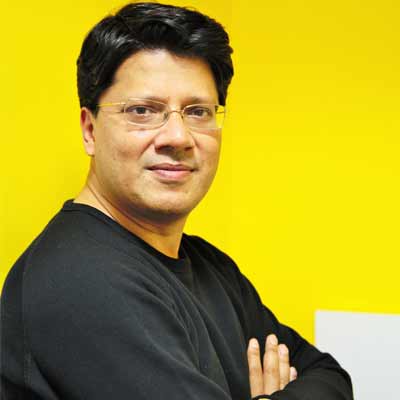
Tag: Sunil Lulla

  • Don’t cover-up imperfections: says Grey’s new campaign for Kamdhenu Paints

    Don’t cover-up imperfections: says Grey’s new campaign for Kamdhenu Paints

    MUMBAI: Grey group India launched a new television commercial for the brand, Kamdhenu Paints.  The campaign comes with the objective of showcasing Kamdhenu as a brand of paints that doesn’t just hide or mask imperfections, but is a concrete solution for them.

    The campaign extends from an inherently Indian insight where most of us indulge in quick-fix cover ups rather than finding proper solutions. If there’s dirt on the floor, we often cover it with a rug. A mark on the wall is often hidden by a portrait. A stain on the couch is often accounted for by flipping the cushions. We’ve all at one point or the other indulged in something similar. Kamdhenu Paints offers customers to make an informed choice to beautify wall surfaces of their homes, offices and other premises through the attractive and wide range of color shades offered by them.

    “In a category obsessed with swirls, mosaics and textures, the campaign re-purposes paints in the minds of the consumers. Paints are not just meant for beautification. They are equally responsible for rectifying and improving the condition of the wall they’re used on,” shared Varun group India ECD Varun Goswami.

    The campaign line, ‘Chupao nahin sudharo’ propagates the message of finding solutions over a superficial cover-up. The campaign features a TVC, supported by press, radio and on-ground & digital activations.

    “In a category where the top three brands have huge ad spends, it is very easy to get drowned by sticking to the category codes. For a challenger brand, it is very important to have a perspective that is differentiated and manages to make its mark with a very limited spend. Chupao Nahin, Sudharo retains why paints are primarily used and links to the larger social context.” added Samir Datar, Vice President and Office Head, GREY group India, Delhi.

  • Don’t cover-up imperfections: says Grey’s new campaign for Kamdhenu Paints

    Don’t cover-up imperfections: says Grey’s new campaign for Kamdhenu Paints

    MUMBAI: Grey group India launched a new television commercial for the brand, Kamdhenu Paints.  The campaign comes with the objective of showcasing Kamdhenu as a brand of paints that doesn’t just hide or mask imperfections, but is a concrete solution for them.

    The campaign extends from an inherently Indian insight where most of us indulge in quick-fix cover ups rather than finding proper solutions. If there’s dirt on the floor, we often cover it with a rug. A mark on the wall is often hidden by a portrait. A stain on the couch is often accounted for by flipping the cushions. We’ve all at one point or the other indulged in something similar. Kamdhenu Paints offers customers to make an informed choice to beautify wall surfaces of their homes, offices and other premises through the attractive and wide range of color shades offered by them.

    “In a category obsessed with swirls, mosaics and textures, the campaign re-purposes paints in the minds of the consumers. Paints are not just meant for beautification. They are equally responsible for rectifying and improving the condition of the wall they’re used on,” shared Varun group India ECD Varun Goswami.

    The campaign line, ‘Chupao nahin sudharo’ propagates the message of finding solutions over a superficial cover-up. The campaign features a TVC, supported by press, radio and on-ground & digital activations.

    “In a category where the top three brands have huge ad spends, it is very easy to get drowned by sticking to the category codes. For a challenger brand, it is very important to have a perspective that is differentiated and manages to make its mark with a very limited spend. Chupao Nahin, Sudharo retains why paints are primarily used and links to the larger social context.” added Samir Datar, Vice President and Office Head, GREY group India, Delhi.

  • Address the advertising challenges in the digital world to convert the non-believers

    Address the advertising challenges in the digital world to convert the non-believers

    MUMBAI: What do you do when you have a discussion to moderate, a ready panel of speakers on stage, but your audience is even less than the number of speakers? Well, you take the mike and charge forward without a care in world – not to put on a show, but because some issues need a serious, straightforward and honest discussion. The audience will definitely follow.

    That’s exactly what the charismatic chairman and MD of Grey Group India Sunil Lulla did when moderating a session on day three at FICCI Frames 2016. The topic was simple and burning — The Advertising Challenge amidst disruptive technology, digital innovations enabling targeted and smartadvertising — and Taboola APAC VP Ran Buck set the tone of the discussion with his key note on the issue. Buck shared his experiences on how the digital world behaved internationally from his experience of working with the brand discovery platform Taboola that helps advertisers find relevant end users.

    Lulla took control of discussion and the first thing he did was to throw a question at the audience – ‘How many believed that the digital medium will be the largest advertising revenue driver in the coming years?’ — to which most of  the audience responded by raising their hands. Next, he relayed an objective to the panellists — to convert all the non-believers in the room to believers by the end of the discussion. What a way to get the audience involved right from the start!

    The quickest way to get the ball rolling was to go through the panel as each one pointed out opportunities or challenges in advertising in the digital world.

    The panellists –  POKKT Video Ads CEO and founder Rohit Sharma, Zapr Media Labs co-founder Sandipan Mondal, Ping Digital Broadcast co-founder Rajeshree Naik, Vidooly founder Subrat Kar, Yahoo India MD and VP Gurmit Singh, and Adsparx CEO Kunal Lagwankar.

    Mondal, seated on the extreme end of the panel, pointed out the obvious and very straightforward reason to believe in the digital advertising boom. “It’s digital where the eyeballs are, and where more eyeballs will shift to. And advertisers follow eyeballs.” Gurmit Singh went into the details when chalking out the opportunities the digital age posed for advertisers and other stakeholders in the business. “If you follow the rate at which digital startups are being acquired by the big players and notice the value at which the deals happen, it gives you the idea how much the market analysts and value setters are betting on the digital platforms.”

    “Going forward,” Singh added, “Mobile will be the biggest traction driver and it is already going big in India. There are several stats and data to showcase the tremendous growth of the smartphone penetration in India. This will be followed by the huge video boom that again poses an awesome opportunity for brands to tap into. The other trend that will have a strong impact onadvertisers and will open up new vistas for them is native advertising.”

    Privacy right, Kar said, was currently a big challenge for digital advertisersand policy makers needed to come together and educate and come up with solutions for advertisers on this front.

    Having worked closely in the video advertising space on digital media, there was no one better than Lagwankar to shortlist the hiccups in the business currently. “Firstly,” he said, “it is a major challenge to retain the TV experience of seamless transition between content and advertising on VOD platforms. It’s not a bandwidth issue, but a design and aesthetics one.”

    “Secondly, ad-blockers take away a major chunk of the advertising revenues from publishers; and thirdly, content providers and distributors need to come up with a way to give seamless streaming of content between all platforms or screens, and address the needs of each screen individually,” Lagwankar stated.

    Being the optimist that she is, Naik stated, “Any barrier is dwarfed by the opportunities the medium offers for advertisers.” As the need of the hour was to state the barriers, Naik listed out a few as well. “We need a clear understanding of the medium. Lack of understanding such as equating views as metrics to measure reach and visibility by advertisers will set the industry crumbling faster than anything.”

    The often abused term ‘digital video measurement’ was tackled by the panel with a fresh perspective.  Advertisers have been heard citing the lack of a standard measurement of eyeballs on the digital platform as an excuse to not spend as much advertising dollars as they do on traditional media. Newspapers have distribution and sales count; TV has got BARC; what has the web got?

    “Perhaps web doesn’t need a ratings system,” came Singh’s head turning answer. “Web metrics at a large work differently, even within the different digital players. Some sites and apps use cookies and adtags to monitor and record consumer behaviour.”

    “There is also SDK code in apps that can be used to track how consumers interact with ads or record other analytics for the brands,” Sharma further accentuated the point. Hence the traditional concept of ratings might not be required for a vibrant medium like the web that has other powerful technological tools to fulfil the same need for advertisers.

    While the discussion on the stage covered everything including whether long form television ads would work on digital platform and content branding, a member from the audience got up and pointed out the ‘Skip button’, which was a problem of mammoth proportions.

    “While we all are banking on digital videos to drive ad revenue, what are we doing about the ‘skip ad’ button that is also the second most clicked button?” the panel was quizzed.

    Agreeing that traditional form of advertising would need some heavy tweaking to survive and coexist with ad blocking, Singh stated that digital medium empowered the end users to skip the ads, and further encouraged people to stay in the medium.

    It ultimately came down to how an ad was relayed to the consumer, whether it was in the viewer’s face, or packaged as good content with a value addition. After all, for a viewer, a good story was a good story, be it an ad or entertainment content.

    By the time the finishing bell rang, Lulla and the panellists had a hard time reaching the exit, as a sea of people hounded them for ‘one last question.’

  • Address the advertising challenges in the digital world to convert the non-believers

    Address the advertising challenges in the digital world to convert the non-believers

    MUMBAI: What do you do when you have a discussion to moderate, a ready panel of speakers on stage, but your audience is even less than the number of speakers? Well, you take the mike and charge forward without a care in world – not to put on a show, but because some issues need a serious, straightforward and honest discussion. The audience will definitely follow.

    That’s exactly what the charismatic chairman and MD of Grey Group India Sunil Lulla did when moderating a session on day three at FICCI Frames 2016. The topic was simple and burning — The Advertising Challenge amidst disruptive technology, digital innovations enabling targeted and smartadvertising — and Taboola APAC VP Ran Buck set the tone of the discussion with his key note on the issue. Buck shared his experiences on how the digital world behaved internationally from his experience of working with the brand discovery platform Taboola that helps advertisers find relevant end users.

    Lulla took control of discussion and the first thing he did was to throw a question at the audience – ‘How many believed that the digital medium will be the largest advertising revenue driver in the coming years?’ — to which most of  the audience responded by raising their hands. Next, he relayed an objective to the panellists — to convert all the non-believers in the room to believers by the end of the discussion. What a way to get the audience involved right from the start!

    The quickest way to get the ball rolling was to go through the panel as each one pointed out opportunities or challenges in advertising in the digital world.

    The panellists –  POKKT Video Ads CEO and founder Rohit Sharma, Zapr Media Labs co-founder Sandipan Mondal, Ping Digital Broadcast co-founder Rajeshree Naik, Vidooly founder Subrat Kar, Yahoo India MD and VP Gurmit Singh, and Adsparx CEO Kunal Lagwankar.

    Mondal, seated on the extreme end of the panel, pointed out the obvious and very straightforward reason to believe in the digital advertising boom. “It’s digital where the eyeballs are, and where more eyeballs will shift to. And advertisers follow eyeballs.” Gurmit Singh went into the details when chalking out the opportunities the digital age posed for advertisers and other stakeholders in the business. “If you follow the rate at which digital startups are being acquired by the big players and notice the value at which the deals happen, it gives you the idea how much the market analysts and value setters are betting on the digital platforms.”

    “Going forward,” Singh added, “Mobile will be the biggest traction driver and it is already going big in India. There are several stats and data to showcase the tremendous growth of the smartphone penetration in India. This will be followed by the huge video boom that again poses an awesome opportunity for brands to tap into. The other trend that will have a strong impact onadvertisers and will open up new vistas for them is native advertising.”

    Privacy right, Kar said, was currently a big challenge for digital advertisersand policy makers needed to come together and educate and come up with solutions for advertisers on this front.

    Having worked closely in the video advertising space on digital media, there was no one better than Lagwankar to shortlist the hiccups in the business currently. “Firstly,” he said, “it is a major challenge to retain the TV experience of seamless transition between content and advertising on VOD platforms. It’s not a bandwidth issue, but a design and aesthetics one.”

    “Secondly, ad-blockers take away a major chunk of the advertising revenues from publishers; and thirdly, content providers and distributors need to come up with a way to give seamless streaming of content between all platforms or screens, and address the needs of each screen individually,” Lagwankar stated.

    Being the optimist that she is, Naik stated, “Any barrier is dwarfed by the opportunities the medium offers for advertisers.” As the need of the hour was to state the barriers, Naik listed out a few as well. “We need a clear understanding of the medium. Lack of understanding such as equating views as metrics to measure reach and visibility by advertisers will set the industry crumbling faster than anything.”

    The often abused term ‘digital video measurement’ was tackled by the panel with a fresh perspective.  Advertisers have been heard citing the lack of a standard measurement of eyeballs on the digital platform as an excuse to not spend as much advertising dollars as they do on traditional media. Newspapers have distribution and sales count; TV has got BARC; what has the web got?

    “Perhaps web doesn’t need a ratings system,” came Singh’s head turning answer. “Web metrics at a large work differently, even within the different digital players. Some sites and apps use cookies and adtags to monitor and record consumer behaviour.”

    “There is also SDK code in apps that can be used to track how consumers interact with ads or record other analytics for the brands,” Sharma further accentuated the point. Hence the traditional concept of ratings might not be required for a vibrant medium like the web that has other powerful technological tools to fulfil the same need for advertisers.

    While the discussion on the stage covered everything including whether long form television ads would work on digital platform and content branding, a member from the audience got up and pointed out the ‘Skip button’, which was a problem of mammoth proportions.

    “While we all are banking on digital videos to drive ad revenue, what are we doing about the ‘skip ad’ button that is also the second most clicked button?” the panel was quizzed.

    Agreeing that traditional form of advertising would need some heavy tweaking to survive and coexist with ad blocking, Singh stated that digital medium empowered the end users to skip the ads, and further encouraged people to stay in the medium.

    It ultimately came down to how an ad was relayed to the consumer, whether it was in the viewer’s face, or packaged as good content with a value addition. After all, for a viewer, a good story was a good story, be it an ad or entertainment content.

    By the time the finishing bell rang, Lulla and the panellists had a hard time reaching the exit, as a sea of people hounded them for ‘one last question.’

  • Ki &Ka…..And not much else!

    Ki &Ka…..And not much else!

    MUMBAI: R Balki is known for bringing films way out of the ordinary formula framework. The good thing about him is his sincerity and dedication because of which he gets popular artistes to work in his films. This is a must for a maker’s film to be noticed, however good his theme may be. This time, Balki decides to trade roles between a man and a woman, both well educated. While the girl is well-placed professionally and has further ambitions, the boy hails from a huge realty developer family and shuns his family business.

    Arjun Kapoor and Kareena Kapoor are on a flight from Chandigarh to Delhi, sharing the same row with the middle seat being vacant. As soon as the flight takes off, Arjun gets emotional and starts crying. He remembers how his late mother used to clutch his hands tightly while flying because she was scared of flying and today happens to be her birthday. Kareena is told the cause. Both start getting familiar.

    Arjun is a topper in IIM as all film heroes are; before the IIM era, they used to stand ‘First Class First’. He is the only son of the biggest builder in Delhi. However, instead of following his father and inheriting his construction empire, he wants to emulate his mother whom he describes as an artist. His mother ran the household, cooked and that was her art.

    Kareena, on the other hand, is an executive on the corporate ladder always aiming at the next rung. Her mother, SwaroopSampat, a widow, is a social worker with an open mind.

    Arjun and Kareena are drawn to each other and realize they are in love. They decide to marry. Arjun’s father is not in favour of the marriage, while Swaroop blesses the couple. A deal is made. While Kareena will continue with pursuing her career, Arjun will manage the household, cooking and looking after both, Kareena and Swaroop.

    This has turned out to be a life changer for all the three concerned. Arjun keeps the house, cooks, cleans, shops and generally does everything a housewife does including attending kitty parties with other housewives. Of course, he is the life of these kitty parties.

    Kareena earns a promotion and as a result, media attention. She is all over the print and electronic media. Here, she is led to talk about her husband, Arjun, and what he does. Media attention turns to Arjun, as a man who runs the household. Overnight, he is a celebrity, on talk shows, on cookery shows, just about everywhere. His TRP rates much above that of Kareena.

    Jealousy replaces love. Kareena feels deceived and assumes that despite being the scion of a billionaire builder, he wants to live off her! Her tirade looks rather forced and unconvincing. Her venting her anger sans logic, looks silly. But, then, the couple’s love has survived by saying sorry multiple times. It is not going to be different on this occasion. Predictably, Arjun’s big-shot father too realizes the value of having a family.

    Meanwhile, Jaya Bachchan has watched Arjun talking on TV and is mighty impressed. She calls him over for dinner with Amitabh Bachchan present. What was this sequence about? It is inconclusive despite both debating Arjun’s way of life.

    Balki may have tried a new story but the content ispredictable. The story lacks twists and turns and efforts are made to make it a light entertainer towards which end it works in parts. Direction is fair to say that it skips melodrama for most part, and sticks to linear treatment. The film finds no slots for music.

    Although just 126 minute in length,the film surely needs some trimming. The cinematography is pleasant. The Arjun and Kareena match does not quite jell despite their age difference having been made clear in thenarration. Arjun is okay while Kareena looks good with no major scenes to steal. Swaroop provides an excellent foil to the two.

    Ki &Ka is a slow opener and carries a very limited appeal for a section of the audience and the compulsive moviegoer types.

    Producers: Sunil Lulla, Rakesh Jhunjhunwala, R K Damani, R Balki.
    Director: R Balki.

    Cast: Arjun Kapoor, Kareena Kapoor, SwaroopSampat, Rajit Kapoor and cameos by Amitabh and Jaya Bachchan.


  • Ki &Ka…..And not much else!

    Ki &Ka…..And not much else!

    MUMBAI: R Balki is known for bringing films way out of the ordinary formula framework. The good thing about him is his sincerity and dedication because of which he gets popular artistes to work in his films. This is a must for a maker’s film to be noticed, however good his theme may be. This time, Balki decides to trade roles between a man and a woman, both well educated. While the girl is well-placed professionally and has further ambitions, the boy hails from a huge realty developer family and shuns his family business.

    Arjun Kapoor and Kareena Kapoor are on a flight from Chandigarh to Delhi, sharing the same row with the middle seat being vacant. As soon as the flight takes off, Arjun gets emotional and starts crying. He remembers how his late mother used to clutch his hands tightly while flying because she was scared of flying and today happens to be her birthday. Kareena is told the cause. Both start getting familiar.

    Arjun is a topper in IIM as all film heroes are; before the IIM era, they used to stand ‘First Class First’. He is the only son of the biggest builder in Delhi. However, instead of following his father and inheriting his construction empire, he wants to emulate his mother whom he describes as an artist. His mother ran the household, cooked and that was her art.

    Kareena, on the other hand, is an executive on the corporate ladder always aiming at the next rung. Her mother, SwaroopSampat, a widow, is a social worker with an open mind.

    Arjun and Kareena are drawn to each other and realize they are in love. They decide to marry. Arjun’s father is not in favour of the marriage, while Swaroop blesses the couple. A deal is made. While Kareena will continue with pursuing her career, Arjun will manage the household, cooking and looking after both, Kareena and Swaroop.

    This has turned out to be a life changer for all the three concerned. Arjun keeps the house, cooks, cleans, shops and generally does everything a housewife does including attending kitty parties with other housewives. Of course, he is the life of these kitty parties.

    Kareena earns a promotion and as a result, media attention. She is all over the print and electronic media. Here, she is led to talk about her husband, Arjun, and what he does. Media attention turns to Arjun, as a man who runs the household. Overnight, he is a celebrity, on talk shows, on cookery shows, just about everywhere. His TRP rates much above that of Kareena.

    Jealousy replaces love. Kareena feels deceived and assumes that despite being the scion of a billionaire builder, he wants to live off her! Her tirade looks rather forced and unconvincing. Her venting her anger sans logic, looks silly. But, then, the couple’s love has survived by saying sorry multiple times. It is not going to be different on this occasion. Predictably, Arjun’s big-shot father too realizes the value of having a family.

    Meanwhile, Jaya Bachchan has watched Arjun talking on TV and is mighty impressed. She calls him over for dinner with Amitabh Bachchan present. What was this sequence about? It is inconclusive despite both debating Arjun’s way of life.

    Balki may have tried a new story but the content ispredictable. The story lacks twists and turns and efforts are made to make it a light entertainer towards which end it works in parts. Direction is fair to say that it skips melodrama for most part, and sticks to linear treatment. The film finds no slots for music.

    Although just 126 minute in length,the film surely needs some trimming. The cinematography is pleasant. The Arjun and Kareena match does not quite jell despite their age difference having been made clear in thenarration. Arjun is okay while Kareena looks good with no major scenes to steal. Swaroop provides an excellent foil to the two.

    Ki &Ka is a slow opener and carries a very limited appeal for a section of the audience and the compulsive moviegoer types.

    Producers: Sunil Lulla, Rakesh Jhunjhunwala, R K Damani, R Balki.
    Director: R Balki.

    Cast: Arjun Kapoor, Kareena Kapoor, SwaroopSampat, Rajit Kapoor and cameos by Amitabh and Jaya Bachchan.


  • Le Eco’s Atul Jain: It’s not just marketing, it’s creating an entire ecosystem

    Le Eco’s Atul Jain: It’s not just marketing, it’s creating an entire ecosystem

    MUMBAI:  A late entrant in the market, Chinese smartphone and screen manufacturer LeEco, previously called LeTv, has already created waves with its aggressive approach for the Indian market, and has given existing players like Xiaomi and Samsung a run for their money. Industry insiders unanimously agree that LeEco has disrupted the entire smartphone business in the country, and perhaps even redefined it. After launching its first product in India in January 2016, the company has already broken all records for online smartphone sales and bagged the ‘online top-selling’ tag for its flagship product Le 1s, having sold over 200,000 Le 1s in just 30 days!

    And why not? The company has set itself a target to be the number one online smartphone player in the next five months. It doesn’t take a scientist to guess that a feat like that would be impossible without a sound and efficient marketing strategy to back the brand with. Ask LeEco India Smart Electronics Devices COO Atul Jain about what the secret is behind the brand’s success and he says “It’s the ecosystem that we create.”

    As per Jain, the ecosystem LeEco strives to create in India works on four different parameters – devices (smartphones and screens), content, cloud and platforms.

    “For now we have introduced our devices in the form of the smartphones that boast of breakthrough technology supported by disruptive pricing. We are also working on building the ecosystem and will be able to provide the same from quarter two (Q2) onwards of coming financial year,” says Jain. The brand also plans to enhance its screen presence by bringing in what it calls a ‘super TV’ by Q2.

    On the content side, LeEco has already partnered with over-the-top content provider YuppTV led by Udaynandan Reddy and the Sunil Lulla led Eros International. “We are striving for many more partnerships with Indian media houses in the upcoming months,” Jain reveals. “We are also looking at building a huge content library, be it through partnerships, acquisition or self-produced content,” he adds. It is to be noted that the company has presence in the media in China through Le Movies, its own production house.

    “From a cloud network perspective, we have already introduced content distribution networks (CDNs) in Delhi and Mumbai, and are looking to expand it to ten more cities. LeEco already has 650 CDN networks through the cloud across the world,” explains Jain. “This is in compliance with LeEco’s Chinese model of strengthening its delivery network to boost the smartphone business and maximise profit.”

    Jain shares that outside China, India and the US are the top two biggest markets in focus for LeEco for this financial year. “We have plans for other APAC countries like Indonesia, Singapore and Malaysia, but our biggest business expansion is going to happen in India and the USA.”

    Entering the market this late and establishing a formidable presence wasn’t an easy task for the Chinese technology giant. “We were quite unknown in India even six months ago. To create the awareness around the brand was the biggest challenge. The go to market strategy, setting up a team here, were some of the initial challenges.” Jain explains that instead of being bullish about a strict marketing plan, they kept their eyes open for what the consumers wanted, understanding their needs and translating that into products. “In our case we looked at bill of materials (BOM) pricing and that was very attractive for the consumers. “That becomes very critical when you market to a new place. Secondly, we paid attention to creating awareness about the brand through all the media available to us, and that was relevant to the product, that is, social, digital, and even offline presence through retail stores,” he says.

    Perhaps the biggest boost to sales was the flagship campaign ‘LeEco Day’, wherein consumers enjoyed extremely lucrative offers and prices on the smartphone. It must be noted that several other smartphone brands, including Freedom 251 also went the ‘disruptive’ prices route to meet a completely different and disappointing end.

    Explaining LeEco’s mass media plans, Jain says, “LeEco is also looking at being present in radio, and television advertising isn’t ruled out either. While a substantial chunk of the company’s marketing spends are directed towards digital, moving forward Le Eco will have good spends in television and print as well. Around 30 to 40 percent of the brand’s marketing spends would be towards digital, and the balance split between print, OOH and television.”

  • Le Eco’s Atul Jain: It’s not just marketing, it’s creating an entire ecosystem

    Le Eco’s Atul Jain: It’s not just marketing, it’s creating an entire ecosystem

    MUMBAI:  A late entrant in the market, Chinese smartphone and screen manufacturer LeEco, previously called LeTv, has already created waves with its aggressive approach for the Indian market, and has given existing players like Xiaomi and Samsung a run for their money. Industry insiders unanimously agree that LeEco has disrupted the entire smartphone business in the country, and perhaps even redefined it. After launching its first product in India in January 2016, the company has already broken all records for online smartphone sales and bagged the ‘online top-selling’ tag for its flagship product Le 1s, having sold over 200,000 Le 1s in just 30 days!

    And why not? The company has set itself a target to be the number one online smartphone player in the next five months. It doesn’t take a scientist to guess that a feat like that would be impossible without a sound and efficient marketing strategy to back the brand with. Ask LeEco India Smart Electronics Devices COO Atul Jain about what the secret is behind the brand’s success and he says “It’s the ecosystem that we create.”

    As per Jain, the ecosystem LeEco strives to create in India works on four different parameters – devices (smartphones and screens), content, cloud and platforms.

    “For now we have introduced our devices in the form of the smartphones that boast of breakthrough technology supported by disruptive pricing. We are also working on building the ecosystem and will be able to provide the same from quarter two (Q2) onwards of coming financial year,” says Jain. The brand also plans to enhance its screen presence by bringing in what it calls a ‘super TV’ by Q2.

    On the content side, LeEco has already partnered with over-the-top content provider YuppTV led by Udaynandan Reddy and the Sunil Lulla led Eros International. “We are striving for many more partnerships with Indian media houses in the upcoming months,” Jain reveals. “We are also looking at building a huge content library, be it through partnerships, acquisition or self-produced content,” he adds. It is to be noted that the company has presence in the media in China through Le Movies, its own production house.

    “From a cloud network perspective, we have already introduced content distribution networks (CDNs) in Delhi and Mumbai, and are looking to expand it to ten more cities. LeEco already has 650 CDN networks through the cloud across the world,” explains Jain. “This is in compliance with LeEco’s Chinese model of strengthening its delivery network to boost the smartphone business and maximise profit.”

    Jain shares that outside China, India and the US are the top two biggest markets in focus for LeEco for this financial year. “We have plans for other APAC countries like Indonesia, Singapore and Malaysia, but our biggest business expansion is going to happen in India and the USA.”

    Entering the market this late and establishing a formidable presence wasn’t an easy task for the Chinese technology giant. “We were quite unknown in India even six months ago. To create the awareness around the brand was the biggest challenge. The go to market strategy, setting up a team here, were some of the initial challenges.” Jain explains that instead of being bullish about a strict marketing plan, they kept their eyes open for what the consumers wanted, understanding their needs and translating that into products. “In our case we looked at bill of materials (BOM) pricing and that was very attractive for the consumers. “That becomes very critical when you market to a new place. Secondly, we paid attention to creating awareness about the brand through all the media available to us, and that was relevant to the product, that is, social, digital, and even offline presence through retail stores,” he says.

    Perhaps the biggest boost to sales was the flagship campaign ‘LeEco Day’, wherein consumers enjoyed extremely lucrative offers and prices on the smartphone. It must be noted that several other smartphone brands, including Freedom 251 also went the ‘disruptive’ prices route to meet a completely different and disappointing end.

    Explaining LeEco’s mass media plans, Jain says, “LeEco is also looking at being present in radio, and television advertising isn’t ruled out either. While a substantial chunk of the company’s marketing spends are directed towards digital, moving forward Le Eco will have good spends in television and print as well. Around 30 to 40 percent of the brand’s marketing spends would be towards digital, and the balance split between print, OOH and television.”

  • Q3-2016: Eros revenue down

    Q3-2016: Eros revenue down

    BENGALURU: The Sunil Lulla led Eros International Media Limited (Eros) reported a 31.7 per cent YoY drop in consolidated Total Income from operations (TIO) at Rs 335.35 crore in the quarter ended 31 December, 2015 (Q3-2016, current quarter). The company had reported TIO of Rs 490.73 crore in the corresponding prior year quarter. Operating revenue in the current quarter declined 33.6 per cent as compared to Rs 504.91 crore in the immediate trailing quarter (quarter on quarter or QoQ).

    Note: 100,00,000 = 100 lakh = 10 million = 1 crore
    All numbers in this are consolidated unless stated otherwise.

    Profit after tax (PAT) in the current quarter declined to almost a third (down 65.5 per cent) year on year (YoY) to Rs 37.77 crore (11.3 per cent margin) as compared to Rs 109.34 crore (22.3 per cent margin) and fell 58.2 per cent as compared to to Rs 90.30 crore (17.9 per cent margin) in the immediate trailing quarter.

    The company says its revenues vary quarter on quarter based on release slate. In Q3-2016, there was only one high budget film compared to three high budget films in Q3-2015 with only partial revenues of Bajirao Mastani.

    In Q3-2016, Eros says that one high budget, four medium and 10 low budget films were released as against three high budget, one medium and eight low budget movies in Q3-2015. During the quarter, 15 movies were released consisting of seven Hindi and five Tamil/Telugu films and three Regional film as compared to 12 films during Q3-2015, which included eight Hindi and four Tamil/Telugu films.

    Eros further informs that apart from the new release slate, a significant part of its revenue is contributed by monetisation of its valuable film library, and generally has a second half skew. Since catalogues revenues have longer payment cycles associated with them the company has decided to defer sales for couple of quarters until its receivables position normalises.

    Receivables

    As on 31 December, 2015, Eros says that its total receivables stood at Rs 6,358 million as compared to Rs 6,300 million as on 30 September, 2015. Receivables not due as of 31 December, 2015 was Rs 339.3 crore as compared to Rs 389.9 crore as on 30 September, 2015. Receivables over 365 days old were Rs 38.8 crore as of 31 December, 2015.

    Between 1 January, 2016 to 7 February, 2016, the company has seen a further collection of Rs 52.5 crore of receivables of the period up to 31 December, 2015. The company says that it remains confident to bring the overall receivables down to Rs 525 crore by the end of FY-2016.

    Company speak

    Eros executive vice chairman and managing director Sunil Lulla said, “I am pleased to announce yet another profitable quarter from Eros International driven by the blockbuster success of Bajirao Mastani and a string of regional releases. Our results for the nine months ended December 2015 reflect the strong performance of our film slate with total domination of the box office charts withBajrangi Bhaijaan, Tanu Weds Manu Returns, Welcome Back, etc.; and strong television, ancillary and overseas revenues to complement the box office. We are very proud that our films have been dominating the Bollywood awards declared for CY2015. We continue to pride our green-lighting process and build on our portfolio strategy of films across varied budgets and languages backed by strong pre-sales to de-risk the business model.

    “We are upbeat about our film slate for FY-2017, which includes a string of high-octane releases such as R. Balki’s Ki & Ka, the hit franchise comedy Housefull 3, the highly anticipated rock musical franchise Rock On 2, the action drama, Shivaay and a host of regional releases amongst others,” continued Lulla.
    “We firmly believe that the company has a conservative capital structure and a well-funded balance sheet and we are proud to bring down our Net Debt/Equity ratio to just 0.11 with a free cash flow of Rs 1,320 million in the 9M FY2016. I am confident that with our clear strategic focus, differentiated revenue streams and regional strategy execution, we will continue to deliver solid results in the future and we thank all our shareholders and associates for their continued support,” added Lulla.

    Eros International Plc Group CEO Jyoti Deshpande added, “Calendar year 2015 has been nothing short of brilliant for Eros International operationally with a higher than average box office success of our entire film slate along with critical acclaim and awards to go with it. This year also marked the beginning of the monetisation of the 30 million plus registered users of Eros now our OTT platform and our foray into what could be potentially ground breaking Indo – China co-productions. We continue to support Eros International Media in every possible way with our strong balance sheet and are thrilled that Eros International Media has achieved a free cash flow (FCF) of Rs 1,320 million in the 9M-2016. We look forward to announcing Q3 results of Eros International Plc later in February with a further update on other related matters. once again we thank our shareholders, business associates, the Indian film industry and other partners who have helped us strengthen our resolve even in tough times.”

    Revenue breakup: Eros breakup of revenue for 9M-2016 (nine month period ended 31 December, 2015): Theatrical Revenue – 44.2 per cent; Overseas Revenue – 29.3 per cent; Television and others 26.5 per cent.

    Total Expenditure in the current quarter declined 21.6 per cent YoY to Rs 270.59 crore (80.7 per cent of TIO) as compared to Rs 345.34 crore (70.4 per cent of TIO) and declined 27.1 per cent QoQ as compared to Rs 370.97 crore (73.5 per cent of TIO).

    The company’s EBIT (Earnings before Interest and Taxes) declined 53.9 per cent YoY to Rs 67.65 crore (20.2 per cent margin) as compared to Rs 146.63 crore (29.9 per cent margin) and declined 51.3 per cent QoQ as compared to Rs 139.01 crore (27.5 per cent margin).

    Employee Benefits Expense (EBE) in the current quarter increased 47.2 per cent YoY to Rs 14.12 crore (4.2 per cent of TIO) as compared to Rs 9.59 crore (two per cent of TIO), but declined 1.2 per cent QoQ from Rs 14.29 crore (2.8 per cent of TIO).

  • Q3-2016: Eros revenue down

    Q3-2016: Eros revenue down

    BENGALURU: The Sunil Lulla led Eros International Media Limited (Eros) reported a 31.7 per cent YoY drop in consolidated Total Income from operations (TIO) at Rs 335.35 crore in the quarter ended 31 December, 2015 (Q3-2016, current quarter). The company had reported TIO of Rs 490.73 crore in the corresponding prior year quarter. Operating revenue in the current quarter declined 33.6 per cent as compared to Rs 504.91 crore in the immediate trailing quarter (quarter on quarter or QoQ).

    Note: 100,00,000 = 100 lakh = 10 million = 1 crore
    All numbers in this are consolidated unless stated otherwise.

    Profit after tax (PAT) in the current quarter declined to almost a third (down 65.5 per cent) year on year (YoY) to Rs 37.77 crore (11.3 per cent margin) as compared to Rs 109.34 crore (22.3 per cent margin) and fell 58.2 per cent as compared to to Rs 90.30 crore (17.9 per cent margin) in the immediate trailing quarter.

    The company says its revenues vary quarter on quarter based on release slate. In Q3-2016, there was only one high budget film compared to three high budget films in Q3-2015 with only partial revenues of Bajirao Mastani.

    In Q3-2016, Eros says that one high budget, four medium and 10 low budget films were released as against three high budget, one medium and eight low budget movies in Q3-2015. During the quarter, 15 movies were released consisting of seven Hindi and five Tamil/Telugu films and three Regional film as compared to 12 films during Q3-2015, which included eight Hindi and four Tamil/Telugu films.

    Eros further informs that apart from the new release slate, a significant part of its revenue is contributed by monetisation of its valuable film library, and generally has a second half skew. Since catalogues revenues have longer payment cycles associated with them the company has decided to defer sales for couple of quarters until its receivables position normalises.

    Receivables

    As on 31 December, 2015, Eros says that its total receivables stood at Rs 6,358 million as compared to Rs 6,300 million as on 30 September, 2015. Receivables not due as of 31 December, 2015 was Rs 339.3 crore as compared to Rs 389.9 crore as on 30 September, 2015. Receivables over 365 days old were Rs 38.8 crore as of 31 December, 2015.

    Between 1 January, 2016 to 7 February, 2016, the company has seen a further collection of Rs 52.5 crore of receivables of the period up to 31 December, 2015. The company says that it remains confident to bring the overall receivables down to Rs 525 crore by the end of FY-2016.

    Company speak

    Eros executive vice chairman and managing director Sunil Lulla said, “I am pleased to announce yet another profitable quarter from Eros International driven by the blockbuster success of Bajirao Mastani and a string of regional releases. Our results for the nine months ended December 2015 reflect the strong performance of our film slate with total domination of the box office charts withBajrangi Bhaijaan, Tanu Weds Manu Returns, Welcome Back, etc.; and strong television, ancillary and overseas revenues to complement the box office. We are very proud that our films have been dominating the Bollywood awards declared for CY2015. We continue to pride our green-lighting process and build on our portfolio strategy of films across varied budgets and languages backed by strong pre-sales to de-risk the business model.

    “We are upbeat about our film slate for FY-2017, which includes a string of high-octane releases such as R. Balki’s Ki & Ka, the hit franchise comedy Housefull 3, the highly anticipated rock musical franchise Rock On 2, the action drama, Shivaay and a host of regional releases amongst others,” continued Lulla.
    “We firmly believe that the company has a conservative capital structure and a well-funded balance sheet and we are proud to bring down our Net Debt/Equity ratio to just 0.11 with a free cash flow of Rs 1,320 million in the 9M FY2016. I am confident that with our clear strategic focus, differentiated revenue streams and regional strategy execution, we will continue to deliver solid results in the future and we thank all our shareholders and associates for their continued support,” added Lulla.

    Eros International Plc Group CEO Jyoti Deshpande added, “Calendar year 2015 has been nothing short of brilliant for Eros International operationally with a higher than average box office success of our entire film slate along with critical acclaim and awards to go with it. This year also marked the beginning of the monetisation of the 30 million plus registered users of Eros now our OTT platform and our foray into what could be potentially ground breaking Indo – China co-productions. We continue to support Eros International Media in every possible way with our strong balance sheet and are thrilled that Eros International Media has achieved a free cash flow (FCF) of Rs 1,320 million in the 9M-2016. We look forward to announcing Q3 results of Eros International Plc later in February with a further update on other related matters. once again we thank our shareholders, business associates, the Indian film industry and other partners who have helped us strengthen our resolve even in tough times.”

    Revenue breakup: Eros breakup of revenue for 9M-2016 (nine month period ended 31 December, 2015): Theatrical Revenue – 44.2 per cent; Overseas Revenue – 29.3 per cent; Television and others 26.5 per cent.

    Total Expenditure in the current quarter declined 21.6 per cent YoY to Rs 270.59 crore (80.7 per cent of TIO) as compared to Rs 345.34 crore (70.4 per cent of TIO) and declined 27.1 per cent QoQ as compared to Rs 370.97 crore (73.5 per cent of TIO).

    The company’s EBIT (Earnings before Interest and Taxes) declined 53.9 per cent YoY to Rs 67.65 crore (20.2 per cent margin) as compared to Rs 146.63 crore (29.9 per cent margin) and declined 51.3 per cent QoQ as compared to Rs 139.01 crore (27.5 per cent margin).

    Employee Benefits Expense (EBE) in the current quarter increased 47.2 per cent YoY to Rs 14.12 crore (4.2 per cent of TIO) as compared to Rs 9.59 crore (two per cent of TIO), but declined 1.2 per cent QoQ from Rs 14.29 crore (2.8 per cent of TIO).