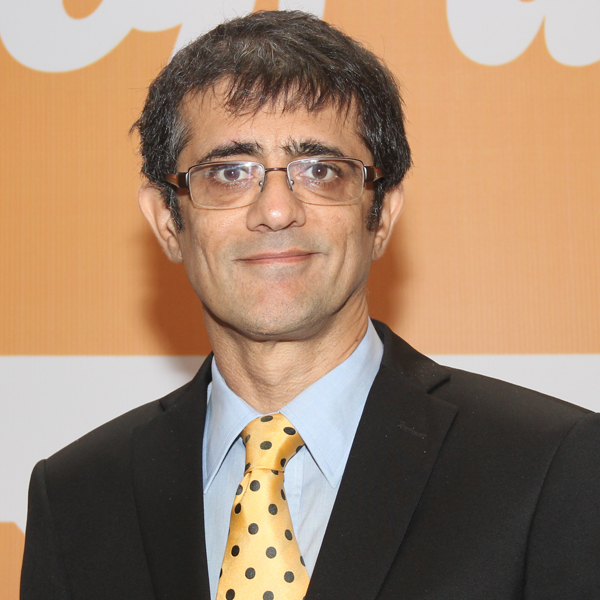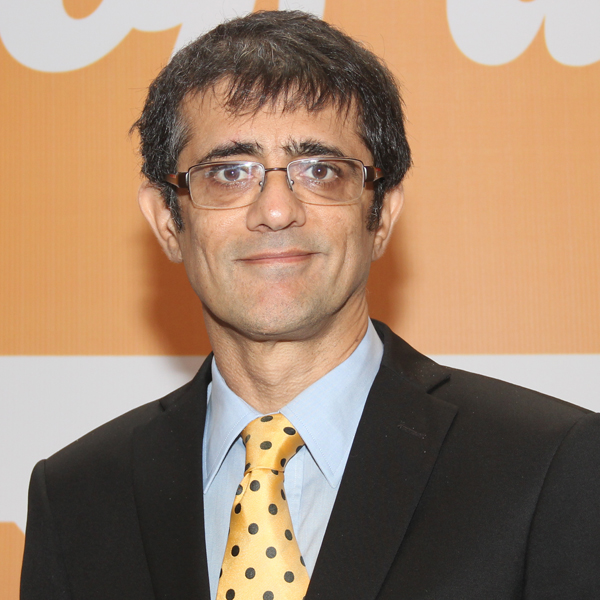
Tag: Sunil Lulla

  • Old controversy, new chaos: The TRP scam and all that jazz

    Old controversy, new chaos: The TRP scam and all that jazz

    NEW DELHI: The broadcasting industry had already been reeling under the impact of the Covid2019 pandemic when the Mumbai police came down on it, hard. On 8 October 2020, Mumbai police commissioner Param Bir Singh addressed a press conference about its investigation into an alleged scam involving the television audience measurement system.

    The matter had come to light when ratings agency Hansa Services Pvt Ltd, a contractor of Broadcast Audience Research Council (BARC), filed a complaint with the authorities, alleging that some TV channels had been manipulating their television rating points (TRPs). This had led to faulty calculations for advertisers and a major loss of revenue for stakeholders.

    Three channels were named in the complaint, namely Fakt Marathi, Box Cinema and Republic TV. According to police, the channels had allegedly bribed people who had bar-o-meters installed in their households. The owners of Fakt Marathi and Box Cinema were subsequently arrested and the directors, promoters of Republic TV were summoned for further questioning. Some of them were thrown in the cooler later.

    Three months down the line, the case has sent the entire industry into a conundrum of sorts. BARC has suspended the TV ratings for news channels till January. As many as 15 people, including several influential persons in the industry, have faced arrests, the latest being BARC’s former chief executive officer Partho Dasgupta. The media veteran was instrumental in setting up the BARC television ratings in 2015.

    Early stirrings of trouble

    It is not the first time a TRP measuring agency has found itself in a tight spot. The earliest instance of the tussle between broadcasters and data measuring agencies dates back to 2001. It began when then CEO of Zee Telefilms, Sandeep Goyal, openly declared his lack of faith in top rating agencies – ORG Marg's INTAM and AC Nielsen's TAM Research. Goyal wrote a letter to ORG Marg CEO Titoo Ahluwalia Goyal calling for an immediate suspension of TAM/INTAM ratings.

    “Zee has reasons to believe the data by the agency is ‘seriously influenced’,” he alleged. This was when Star India’s shows Kyunki Saas Bhi Kabhi Bahu Thi and Kahaani Ghar Ghar Ki had been topping the TRP charts consistently for weeks.

    CNBC carried out its own investigation and released a complete list of peoplemeters’ information which was supposed to be ‘strictly confidential’. The same year in October, a merger was announced between TAM and INTAM and they decided to provide combined TV rating services. But the controversy did not die.

    Doordarshan director-general SY Quraishi wrote a column for a leading English daily, wherein he recalled how he got a whiff of alleged manipulation of TRPs in 2002-03. “DD National’s prime time news share was 92 per cent. But, a private channel which described itself ‘sab se tez’ and had just four per cent share was declared as number one channel by TAM,” he wrote.

    Quraishi said he also got a peoplemeter installed in his office TV to see how it worked. And later found out “how people were being incentivised with pressure cookers and dining sets to get the meters installed and later bribed to keep certain channels running.”

    Shockwaves hit the Parliament 

    In 2008, the issue rocked the Parliament. The standing committee on information technology demanded legislation for an effective oversight or regulation on the TRP system to make it credible and accountable to the choice of viewers. It also cited the 1995 Supreme Court judgement, wherein the court pointed out “that airwaves are public property which needs to be controlled by a public authority.” The government was asked to “fructify a self-enabling, people-friendly and comprehensive legislation on broadcasting services without wasting further time.”

    Stand-off with NDTV

    In 2012, news channel NDTV sued TAM India’s parent companies Nielsen and Kantar Media for $810 million for fraud and $580 million for negligence in a New York court. It accused the companies of deliberately publishing corrupt and tainted data, favouring certain channels over others for kickbacks. The case was later dismissed on account of jurisdiction.

    Back home, NDTV decided to unsubscribe from TAM’s services, but ended up subscribing again, citing lack of alternate sources which provided such data. Not surprisingly, the incident left a bitter taste. 

    The rise of BARC

    TAM was already facing flak for inaccurate ratings. It also came under the direct scrutiny of the I&B ministry which stated that its sample size of around 7,200 peoplemeters is too small to represent a country with over 122 million TV households. The NDTV legal suit hastened its downfall and eventually TAM had to sell its TV measurement business to BARC, which was accredited by the Indian government to measure TV audiences.

    BARC was founded in 2010 by the Indian Broadcasting Foundation (IBF), the Indian Society of Advertisers (ISA), and the Advertising Agencies Association of India (AAAI). In April 2015, it released its first set of data which was derived under the new consumer classification system (NCCS). It brought together the three key stakeholders in television audience measurement – broadcasters, advertisers, and advertising and media agencies. The new ratings included a sample size of 10,000 bar-o-meters, which has now been scaled up to at least 40,000 households.

    Five years since it started releasing data, there are still murmurs of discontent. The broadcasters are still not completely satisfied with the sample size, the division of audience set under the NCCS and the measurement points.

    The genesis of the 2020 controversy

    The current controversy erupted when the deputy general manager of Hansa Research Group Pvt Ltd, Nitin Deokar, made a police complaint stating that Vishal Bhandari, a relationship manager at the firm, had allegedly been manipulating the ratings. In his complaint, he mentioned how he found a bar-O-meter installed at the house of Bhandari’s parents. According to police, Bhandari has confessed that he paid people to watch certain channels on the directions of one Vinay Tripathi. He also identified five homeowners who were reached out by him, including his own parents, it said.

    What do the TV channels say?

    The incident has dealt a severe blow to the TV channels named in the case. Several top executives have been arrested and bailed out, including Republic TV’s editor-in-chief Arnab Goswami. However, the channel has maintained that the allegations are false and baseless, claiming that Republic TV is being targeted for its reporting against the Mumbai police and Maharashtra government in the suicide case of actor Sushant Singh Rajput.

    It is also not the first time that Goswami has gotten into loggerheads with the Mumbai police. In a virtual discussion with Indiantelevision.com’s founder, CEO and editor-in-chief Anil Wanwari in September, Goswami had questioned the police on several matters, including the attack on him in Mumbai when he was returning home from work late at night with his wife. In another incident, Goswami had alleged in a petition that Mumbai police’s investigation in his role in the Palghar lynching case was mala fide. 

    The controversy has also led to a war of words between rival channels. Republic TV alleged that India Today was initially named in the complaint as well as the BARC audit report, but the Mumbai police gave it a clean chit.

    The News Broadcasters Federation (NBF), too, has looked askance at the involvement of Mumbai police in the case, which according to it was “never a criminal offence.” It asserted that the case should have been looked into by either TRAI or the ministry of information and broadcasting instead of the Mumbai law enforcers.

    What’s ahead?

    BARC has stopped releasing TRPs for the news channels since 15 October to review its current process. The government has formed a committee headed by Prasar Bharati CEO Shashi Shekhar Vempati to assess the existing rating system for TV channels.

    The committee would conduct an appraisal of the current system, study the TRAI recommendations notified from time to time, take stock of the overall industry scenario and address the needs of the stakeholders. It will then make recommendations for a robust, transparent and accountable rating system through changes, if any, in the existing guidelines.

    The Mumbai police, on the other hand, is on the warpath. BARC’s former CEO Partho Dasgupta will remain in judicial custody till mid-January, his bail plea is slated for hearing on 1 January.

    In a recent press conference, following the arrest of Dasgupta, Mumbai police also charged that he was the ‘mastermind’ of the alleged multi-crore scam. He has allegedly conspired to boost the ratings of one news channel by reducing the viewership of rivals and taking lakhs of rupees from accused channels to rig the ratings of competitors.

    In its charge sheet filed in November, Mumbai police named 140 people as witnesses, which includes some BARC officials, forensic experts, forensic auditors, advertisers and bar-o-meter users.

    The investigations will continue. The faceoff between Arnab and the cops will not end until one waves a white flag and backs off from the other.

    For the industry, the key question is whether BARC in its current form will be able to withstand the intense scrutiny and glare of the spotlight? 

    Its current CEO Sunil Lulla is a professional with impeccable, unmatchable ethics and credibility, as well as great human management skills. 

    One of the suggestions given by an industry veteran is that the way BARC  is funded will have to change. Most of the funding for its monitoring operations comes from broadcasters which are its subscribers; the other two ecosystem players, advertisers and advertising and media agencies, contribute a minuscule amount to its annual revenues. And amongst the broadcasters, the top five or six national TV networks probably contribute a majority to BARC’s kitty annually.

    In such a scenario, can one truly and honestly, with a hand over one’s heart, affirm that subtly or otherwise no outside influence will come into play? Will advertisers and agencies also start subscribing in large enough numbers so that BARC has the money to expand its peoplemeter sample to iron out any tomfoolery that anyone might attempt in future, especially in the case of channels with smaller and niche audiences? 

    Sure, Shashi Shekhar Vempati and his committee may come up with some improvements and recommendations. Will they be radically different? Maybe. Maybe not. Because the BARC tech committee had got everyone’s buy-in when it went about setting up its monitoring system around six or seven years ago. And that took some doing as the intention was to set up a fool-proof operation by all the partners. It had to represent what India watches; hence the sample had to be statistically sound with all the diverse viewing individuals adequately represented. Yet in time, it too flopped, having similar systemic failures as its predecessor. Some say it was on account of the way it gets its funds. 

    Many may not like what indiantelevision.com is stating here. It is quite likely that after this clean-up, the industry may settle down with the new improved BARC system when it starts chugging out the ratings.  However, it could only be for a while. Will it be not too long before it unwarily strays into another controversy? Will history not repeat itself?

    (With inputs from Srishti Choudhary)

  • There will be a ‘Mahabharat’ between TV & OTT: BARC’s Sunil Lulla

    There will be a ‘Mahabharat’ between TV & OTT: BARC’s Sunil Lulla

    MUMBAI: BARC India CEO Sunil Lulla is in a unique position, being at the helm of a body which is the only industry currency for the 3.5-billion-dollar television advertising market. Needless to say, it comes with a lot of responsibility.

    Lulla brings over 35 years of significant leadership and domain proven knowledge, with ground-up experience in growing brands and building businesses. Having worked across media, brands and advertising, he has occupied leadership roles at MTV, Sony, Times Television Network, SaReGaMa, Diageo, Indya.com, GREY group, JWT and Balaji Telefilms. Sunil maintains active interests in serving industry interests to foster the spirit of self-regulation and collaboration. He is an active long-distance runner, enjoys sailing and evocative conversations.

    During an interaction with Governance Now’s Kailashnath Adhikari, Lulla talked at length about the impact of Covid2019 on the television and broadcast industry, key takeaways during the pandemic, television viewership, technology, advertising, and much more.

    Lulla shared that the peak in television viewership has gone down compared to the pre-Covid2019 level, but it is slowly picking up. Said he: “We are more than 902 million viewing minutes, it picked up to one billion viewing minutes. As people are confined into their homes the lines have blurred between primetime and non-prime time. The prime-time hours of 6 am to 6 pm witnessed a major shift in viewing.”

    With filming being halted during the lockdown, no production of televised content was happening, so the only option left with audiences was to watch news, movies and kids’ content. Hence, the news genre picked up pretty well – it went from seven per cent of viewing to 21 per cent, then back down to 14 per cent. Now it’s holding steady at seven per cent share of the category. Similarly, kids watched a lot of content before schools went online. Movies became big and once original programming started general entertainment channels (GECs) are back with higher viewership than the pre-Covid2019 period.

    TV will continue to remain as the screen of the household, claimed Lulla, but the initial few months into the lockdown were difficult for the industry as a whole. While there was a peak in viewership, advertising went down. The gap has never been as difficult to bridge before. “However, now advertising volumes are higher than what they were last year, so the shortfalls that are present will not be as bad as expected,” he said. A whole new set of advertisers and brands have come in, health and hygiene products, digital, gaming, e-commerce, ed-tech became huge during this time.

    In the middle of the crisis, digital has picked up fairly because of more mobile connections, higher data consumption, digital show launches. Also, despite being a difficult time period, the IPL has performed well both in terms of viewing and advertising.

    Another aspect that Lulla highlighted is the stiff competition between television and OTT. As audiences are now moving towards online content it is believed that digital advertising will outgrow television advertising in the coming years. Lulla quipped that there will be a Mahabharat between TV and OTT.

    “I think in 2020 in the US, digital advertising may overtake TV advertising but that’s unlikely  to be the case in India before 2030. It’s a question of quality service, quality of economy and what happens to the overall economy. It is not about OTT content or mobile screen. It is more about screen time. I think there will be growth in digital advertising. TV is not dropping, it is sustaining. Because if you want to reach the masses of India, TV is still the best medium.”

    In the last few months, the duration of a lot of niche channels like English GECs and infotainment has witnessed a lot of turbulence, courtesy the pandemic and NTO. But the question that begs to be asked is: weren’t they already seeing a slow death?

    Lulla explained that English is a sliver of the content pie, with less than one per cent of Indian audiences watching English programming. Later, the audiences started watching content on other mediums. So, in order to survive English GECs will have to rework their strategies.

    Another challenge before the television is that it is too advertising dependent, which is not the case in the west, where there is a balance between advertising and subscription. But since cable service in the country is cheap, compounded by a price tariff regime, very few channels are going to make profitable money on subscription alone, Lulla concluded.

  • BARC temporarily halts news channel ratings amid TRP row

    BARC temporarily halts news channel ratings amid TRP row

    KOLKATA: In the light of the recent developments, BARC board has proposed that its technical committee (Tech Comm) review and augment the current standards of measuring and reporting the data of niche genres, to improve their statistical robustness and to significantly hamper the  potential attempts of infiltrating the panel homes. This exercise would cover all Hindi, regional, English news and business news channels with immediate effect. 

    Therefore, starting with the ‘news genre,' BARC will cease publishing the weekly individual ratings for all news channels during the exercise. This exercise is expected to take around eight-twelve weeks including validation and testing under the supervision of BARCs TechComm. BARC will continue to release weekly audience estimates for the genre of news by state and language.

    BARC India board chairman Punit Goenka said: “Given the most recent developments, the BARC board was of the opinion that a pause was necessitated to enable the industry and BARC to work closely to review its already stringent protocols and further augment them to enable the industry to focus on collaborating for growth and well-natured competitiveness”.

    BARC India CEO Sunil Lulla said: “We at BARC take our role in truthfully and faithfully reporting ‘what India watches’ with the greatest sense of responsibility and work with integrity to ensure that our audience estimates (ratings) remain true to their purpose." He added: “Besides augmenting current protocols and benchmarking them with global standards, BARC is actively exploring several options to discourage unlawful inducement of its panel home viewers and further strengthening its code of conduct to address viewership malpractice."  

  • Running in life and the marathon, the Sunil Lulla way

    Running in life and the marathon, the Sunil Lulla way

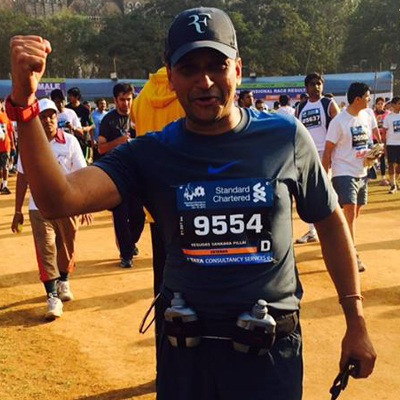
    MUMBAI: Numbers… It has always been about numbers and statistics for Sunil Lulla. This comes as no surprise for someone who has over 35 years of experience in leadership roles across media (TV, internet, and OTT), advertising and marketing and is now CEO at BARC India. But it’s not the data, statistics and viewership numbers that fascinate Lulla the most. It’s the miles he runs that give him akick.

    “Only those who will risk going too far can possibly find out how far one can go.” These words by T.S. Eliot perfectly sum up Lulla’s feisty yet humble personality.

    Anavid long-distance runner, Lulla also enjoys sailing andwitty conversations. In a free-wheeling chat with indiantelevision.com founder, CEO and editor-in-chief Anil Wanvari, Lulla spoke about running marathons locally and internationally, his love of sports and much more.

    Watch the virtual fireside chat with Sunil Lulla 

    Earlier this year, Lulla encountered an unexpected setback – he tested positive for SARS-CoV-2 infection. But he put up a tough fight, beat the virus and emerged the stronger for it. Then, as a responsible citizen, he donated his blood plasma twice. Looking back on his brush with Covid2019, Lulla advises people to live their life normally, observe necessary precautions and to be respectful but unafraid of the SarsCov2 virus.

    Runner’s high

    As long as a person’s legs function, they should run, says Lulla. He considers running not only a great physical workout but also a mental stimulant.

    “I think running the distance gives you the courage, stamina and inspiration. It helps me to think of new things. It’s because of the adrenaline that runs and pumps through your body,” he said.

    Read more news on Sunil Lulla

    Like many of us who try to keep our middle and weight in check, Lulla started running with the desire to lose a little flab. Eventually he started enjoying it, and also made some friends along the way.

    Lulla advocates running, for it helps a person stay healthy and productive. He believes what you do with your health and body allows you to do what you want with your life.

    “It’s the desire to be on the road, to try and push yourself and to do better that keeps me going. Long-distance runs are not easy. In the end, it’s about your own aspiration. I don’t look at running from a benchmark point of view,” he added.

    For Lulla, it’s about setting goals – and surpassing them. The sheer zeal to overtake life’s challenges and doing what you envision is not everybody’s cup of tea. Lulla seems to have mastered this art.

    He recalls a marathon he ran in New York last year. He completed the 42 km run in just four hours and 13 minutes. Ecstatic about this experience, Lulla shares: “Running in six degree temperature was not easy. We are not used to running in such weather here in India. New York was a tough road. It starts with the runners having to climb uphill on a 2 km long bridge. I think the most amazing part about New York is its crowd. Brooklyn is a deafening, especially the last stretch, it’s like Eden Gardens where the last ball is going to be bowled and the match is heading towards a tie. Then there are dark patches of absolutely death-like silence. But it’s a great crowd and great run. It was my dream and I am glad I could do it.”

    He’s full of admiration for peers like Sudhanshu Vats as well as businessman Anil Ambani who run the marathon distance in super quick time. Says he: “Those guys are pros, all respect for them.”

    Unfortunately, there are no races this year due toCovid2019 pandemic. Lulla nevertheless pounds the pavements, pretending he’s running a race. He’s hopeful that once things return to normal, he’ll be able to take part in the Berlin marathon.

    Winning a race is a cocktail of tears and sweat. Yet one persists, spurred on by their ambitions to excel and emerge triumphant. Lulla is definitely an inspiration for anybody who is apprehensive of the challenges life throws atus.

  • BARC is not keen to take part in industry rivalry: Sunil Lulla

    BARC is not keen to take part in industry rivalry: Sunil Lulla

    MUMBAI: Eight years ago India’s viewership monitoring agency Broadcast Audience Research Council (BARC) was born. Its conception was the result of an unhappy industry and several Telecom Regulatory Authority of India (TRAI) interventions that resulted in the  shutting down of viewership ratings as an industry currency by Tam Media Research. 

    Since its launch, BARC has done a commendable job of building the world’s largest audience measurement system in one of the most fragmented markets. Last year, the affable veteran media industry executive Sunil Lulla was brought in to lead the organisation after the departure of its CEO Partho Dasgupta.

    Lulla,a well-rounded professional, has had around three decades of work experience in advertising, music, the internet, youth and news broadcasting, production and OTT companies.  He could not have come in at a more challenging time: TRAI has been making noises about bringing in another viewership monitoring agency. Then some member or the other from time to time has been raising a stink about his channel’s viewership. Also, hardly six months of his joining, the pandemic hit, and Sunil and team BARC had to turn to working from home.

    Lulla got into a fireside chat with indiantelevision.com founder, CEO and editor-in-chief Anil Wanvari on all things related to the organisation he heads. He spoke at length about his vision for BARC 2.0, challenges faced during pandemic, controversies revolving around the company and much more insightful details. Excerpts from the interview as written by Shikha Singh.

    Watch our fireside chat with Sunil Lulla

    How are you guys working now?

    At the start of the epidemic, we were not equipped to do work from home. We got ready when we had to. We pick up people and drop them. We had to resize our company in terms of cost structure because we knew revenues were going to fall, and I was successful at doing that. I think the team has done a brilliant job of making sure BARC delivers output and stays relevant. We made sure that we ran at a commercial value that the industry warrants us to. I think it's all about how you approach things.

    We have got back to the office.  We are working with 83 employees across locations. Our productivity has gone up. People enjoy coming to the office. For a lot of people work from home is not easy in India, because of space or other constraints. Work from office is a professional space. There is enough social distancing. We have field operations in every state. In some places, they can’t travel in every city, because there may be a containment zone. But in many places they are. If I remember correctly, the stats for this week are that 97 per cent of people are on the road.

    Was there any impact on people who were having meters at their home?

    There is a people meter box in a particular home, and then there's a people meter box in a retail outlets, restaurants, bars and cafes. So the HoReCa (hotel, restaurant and café) business is shut because there is no out of home consumption of food, spirit beverages or any kind, no restaurant is open no coffee shop. We have access to those places but we are not utilising them as there is nobody there to measure television content.

    The home panel, as we closed in March, is continuing at the same pace. We have not added new homes until now, because in many places there were restrictions. But we will add new homes in the next few months as the restrictions open up. Some of the homes did move out,  some came back. We had to do routine maintenance of the box. During May and June some of the homes did not recharge their SIM cards, cable bills, DTH. But right now, relatively speaking, we are much better off and almost as good as before the lockdown happened. 

    The good part is that most of the people have watched television and TV viewing went up by 43 per cent. January 2020 is what we call the pre-Covid2019 period. We are now 15 percent higher in viewing, six per cent higher in daily reach,  nine  per cent higher in daily viewing, and 18 per cent higher in ad volumes as compared to January. July and August 2020 have done better than July and August of 2019. In September we are trending higher. All parameters of engagement are on the positive side.

    Read more news on BARC

    Was it an individual decision to invite you or was it a collective decision to have you onboard?

    A large part of my life has been representing the audiovisual industry directly or indirectly. TV networks have taken a large part of my professional existence. BARC represents the stakeholders of advertising, marketing, and audiences. It basically is a currency of  where the audience is and marketers and sellers, that is broadcasters, exchange that value. It is a big privilege for me to represent the stakeholder body. We help provide the information, for them to understand what India watches

    It was a board-based decision, the chairman of the company then and even now is Punit Goenka. Many people have known  me because I was involved in the TV and advertising business. So, they reached out to me and it was a good opportunity to build what we are building. It has lived upto the expectation and  I have set myself a calendar, and an agenda for all of us to build BARC 2.0. We are stretching and pushing harder with some constraints in this particular environment. But I think we will build a much stronger measurement system.

    What BARC 2.0 is going to look like?

    Measurement science is the heart of the company.  We have been able to build or reinforce that in terms of processes of measurement as well as in processes of validation. We have invested very heavily in terms of validation of  what we do. And there is that every day correction. It is not something that you dial up or down, but something you statistically wade in and out of. Because when we say that this is what India watches, we better be sure of that statement. Yes, it is a sample, it’s an extrapolation of that sample within a reasonable range that you can look from an estimate point of view. So there will always be those statistical errors, which are statistically validated. For us, it will be some amount of expansion that we will do in sample homes, the continuous corrections that we do, the processes we bring in, the volume of data that we generate is humungous and people tend to think of it in terms of audience measurement. But it is also picking up and hauling that data, storing it and being secure about it. It’s the ethics of the organisation that are really important – the standards that we set out over there.

    Also, if there is one big takeaway from this pandemic it is that there has been a huge adoption of digital consumption. We are working very closely with the industry to build something which can offer a ‘one video view.’ You may watch TV, you may watch the TV show on your telephone or you may watch an OTT content which is not coming on TV. We would like to bring that measure to bear and that’s what we are working towards. We will begin that process next year of being able to share that data in 2021.

    BARC’s previous attempts to monitor digital video consumption were ambitious. What you need to understand is that the currency starts with advertising. Television was estimated to be a Rs 32,000 crore industry. It is going to be a little less this year because of the pandemic. It’s going to bounce back pretty much. What is going to accelerate it is the advertising investment happening in digital.

    So you start from where the marketing money is being spent, because marketing drives consumption, consumption drives the economy.

    That’s where I see BARC’s role playing out in benchmarking, measuring, projecting or stating out on how the consumption is happening and how that economy is being driven. We already have had conversations with the stakeholders. We will now to have to build proof of concept, build pilots, though it could take a year. Everybody need not participate.  On TV all channels get watermarked, all channels want to get measured. In digital many players may or may not participate. But we will navigate this as we go along. I do believe that if we have a good successful commercial model, then there is one neutral entity called BARC that measures television and if we can bring other components that bring digital, give it time, then we should be able to deliver on both accounts. We are open to partnerships. At the end of the day, it is not about a number. Any independent streaming platform can give you a number. It's a demographic relationship that you need which comes from the audience. And that information is not easily available. That information is available at the TV end. We can link in those two and that’s a conversation for 2021. The right tool will come in place. We will all work together, learn together – both locally and globally how to build it.

    Read more news on BARC

    What about expanding the sample of TV?

    We are at 44,000 boxes today. We will get to 50,000. Expansion is a moot point given what’s happened within the industry. These things cost money. The industry pays for it. And we have to also be allowed to do the processes and measures we can do. So we have to wait for a little more unlock, a little less scare and then be able to progress this. Our repair centre has been working two shifts a day and we have started replacing repaired boxes.

    You took over BARC in end of 2019, what have you been doing since then?

    The big part of the exercise that we did was to report the data as is where is. And consistency is not a simple act. You need to sort that data and be consistent with your processes. You need to make sure you have all the safeguards in place, it’s not an easy act. The pandemic made it a lot more difficult as we were not able to move out, getting the data around, and getting the boxes going, not being able in expand in May, June and July.

    Installations were not happening as you are dealing with fear – both at the sample end and at the organisation end. We  made very big steps in data validation. The board appointed an oversight committee that validates every single thing we do. We brought back trust into the industry.

    I spent a lot of time from December to March, going from city to city and town to town talking to our stakeholders over there and explaining to them about what we were trying to do. The algorithm we were trying to do. One of the big demands which was coming in from the industry was to address the inflated viewership that sometimes comes due to the forced viewing due to landing pages. We took a long time to address that. It is a large scale technological and statistical project.

    We have got our company far more ingrained in deep processes, and the culture of measurement. For me that has been the changeover, that we have made within the company. I think the industry recognises it, the board too does, the stakeholder body too. We have continued to run our techcom measurement, oversight meetings in the same rigour that we did. The data goes out there. The same time every Thursday.

    Despite all this there was News Broadcast Association (NBA) writing to you about TV9 Networks' spiking viewership?

    The best part of doing something is to know that somebody is always  unhappy in the world. They are unhappy because everybody wants to be number one. Our job is for the marketing industry to give them credible evidence, that those people who are watching TV, we can report on that with accuracy.That’s what we do.  Which channel people choose to watch or how much time they want to spend is their choice. We have to make sure the sampling and representation of that sample is accurate. Competitive rivalry is part of the industry, we don't  partake   in that. There has been a shift in people's choices. Men have started watching a lot more television in non-prime time. Similarly kids got exposed to a lot of news. There was no original content for the first few months. A lot of habits changed over there. If you look today and compare it to a year back, there are significant changes in preference. And there are always changes, channel preferences change from year to year. There is a resettling back to where we were in January now. Some consumers may have started watching digital content. We are going to have live with these changes. 

    There have been departures in the past few months. Have we seen the last of that?

    BARC's functioning organisation is eight years old. The operations and release of data started five years back in 2015. On an average, over the last many years our average attrition of 10 per cent, and it is not a surprising number in this market. People who have worked for seven to eight years want to do other things and are justified. I am grateful for their contribution. Also I don't think you need to replace senior people with other experienced people, we have given a lot of younger people an opportunity to grow and redesign the organisation a bit so there is greater participation.We have given a lot more people a lot more say in the management of BARC. It’s not as pyramidic  as it used to be. When you start a company you start with a pyramid, then it starts expanding. We are at that part where we have started expanding. The natural evolution of BARC has been good. Apart from that the functioning of the company remains the same.

    Measurement science team has got stronger, more robust. Dr. Derrick Gray runs that.  Data and product team sit together. This was not as aligned over the last five years but because of I believe that data measurement is at the heart of the business and it will be consolidated. Technology which is a very important aspect of securing the data and churning the data as well as transporting that data has a very strong role to play in the day to day management of the company. Our commercial function is centric within our CFO. We have given other functions like HR, legal a lot of new leaders. I think the management is more robust, it is wider, it is less centric and more participative of the company.

    I would also like to have many more advertisers buying our products and services. We have a lot of broadcasters and agencies buying; we would like to have a lot more advertisers. Some have really shown confidence and faith, our large customers, and I would like to grow that pie. Because I would also like to have many more advertisers buying our products and services. We have a lot of broadcasters and agencies currently. We would like to have a lot more advertisers. Our large customers have really shown confidence and faith and I would like to grow that pie. there is a lot in the TV data that many marketers can benefit from and it's just not ratings. It’s the habit of buying; the way you plan your spots. There are some agencies who are doing a phenomenal job of planning. Advertisers have started spending a lot of money on TV and they are challenged to spend a lot of money on digital. I believe they can understand the TV data better. And as the economy starts unlocking and marketers will want to bring back their volumes, their market shares, their numbers back on the table. They will start spending more both on TV and now digital. Marketers can participate in that data pool and then use the expert partners – the agencies – to build a better proposition for their advertising.  I think there is a great opportunity in terms of the tools we are developing – both for broadcasters as well as marketers. 

  • BARC announces intent to initiate ‘one video view’ measurement

    BARC announces intent to initiate ‘one video view’ measurement

    MUMBAI: Media planners and buyers and marketers have repeatedly expressed their desire to have a way of tracking how much video is being watched, on TV, on the mobile handset and on OTTs as linear or video on demand. BARC India CEO Sunil Lulla says the monitoring agency may have a solution by 2021.

    In a virtual fireside chat  with  indiantelevision.com founder, CEO and editor-in-chief Anil Wanvari, Lulla said that if there is one big takeaway from this pandemic it Is that there has been a huge adoption of digital consumption. Lulla is working very closely with the industry to build something which can offer a  ‘one video view’.

    "You may watch TV, you may watch the TV show on your telephone or you may watch an OTT content which is not coming on TV,” he said. “We would like to bring that measure to bear and that’s what we are working towards. We will begin that process next year of being able to share that data in 2021.”

    Lulla explained BARC’s previous attempts to monitor digital video consumption were ambitious.

    “The industry has been impacted by the pandemic. It’s going to bounce back quickly. What is going to accelerate it is the advertising on digital. That’s where I see BARC’s role playing out in benchmarking, measuring, projecting or stating out on how the consumption is happening and how it is driven," he said. 

    Lulla further added that the BARC teams have had conversations with the stakeholders, and the idea is now to have a proof  of concept, build pilots, though it could take a year.

  • Virtual Fireside Series: Watch BARC India CEO Sunil Lulla live on 25 September

    Virtual Fireside Series: Watch BARC India CEO Sunil Lulla live on 25 September

    MUMBAI: Taking ahead its virtual fireside series with leading professionals spearheading the broadcast industry in India, Indiantelevision.com will be hosting BARC India CEO Sunil Lulla on 25 September 2020. The session will be helmed by our founder, CEO, and editor-in-chief Anil Wanvari.

    During this chat, Lulla will be sharing the impact of pandemic on the television and broadcast industry, television viewership, technology, advertising, and much more. 

    Read more news on BARC

    With over 35 years of industry experience, Lulla has worked in leadership roles across media (TV, Digital), brands (marketing) and advertising (agencies). He has worked at J. Walter Thompson, Balaji Telefilms, HMV Saregama, MTV India, Diageo, Indya.com, Sony Entertainment Television, Grey Group, Times Television Network, and others. Lulla's longest stint was at J. Walter Thompson as director of client services for India, China and Taiwan between 1985 to 1996. He was also part of the which helped turn around Sa Re Ga Ma (HMV). Lulla played a key role in starting, shaping and developing the Times Television Network (owned by the Times Group) which comprises successful and leading TV channels: ET NOW, MOVIES NOW, ROMEDY NOW, TIMES NOW and zoom. 

    He is associated with several industry bodies and associations and drives policy and agenda setting for the advertising, media and entertainment industry. Simultaneously, he continues to be on the boards of multiple companies.

    Watch our previous virtual fireside chats with industry veterans

    The virtual fireside series in its previous sessions has hosted eminent industry professionals such as Zee Entertainment Enterprise Ltd chief growth officer – advertisement revenue Ashish Sehgal; Sri Adhikari Brothers Group MD Markand Adhikari; Applause Entertainment CEO Sameer Nair; Republic Media Network founder Arnab Goswami and several others.

    Keep watching this space to know more.

  • BARC India to mitigate impact of landing page on TV viewership

    BARC India to mitigate impact of landing page on TV viewership

    MUMBAI:  As a part of its ongoing ‘data validation quality initiative’ aimed at improving measurement science and mitigating impact on viewership of extraneous factors, BARC India is introducing algorithms into its data validation method to mitigate the impact of landing page on viewership data across all genres of channels. Data release for Week 34, 2020, data starting 22 August 2020, release date 03 September 2020 will reflect the new initiative.

    “The results of hundreds of hours of research and several months of rigorous development and testing are very promising. BARC India will now be able to mitigate any landing page anomaly to better reflect viewer’s choice.” says, BARC India measurement science and business analytics chief Dr Derrick Gray. He adds, “the existing method was based on symptomatic statistics and we have improved upon it with a method that directly uses inferential statistics to deliver better results across all genres.”

    Complimenting the efforts of Dr Gray and his team, BARC India CEO Sunil Lulla says, “Considering that the data provided by BARC India builds the currency of the advertising trade, we consistently strive to ensure that our data capture, representation, and reporting be as scientific and accurate as possible. This new validation rule will further strengthen the rating currency and provide a level playing field to small and large broadcasters.”

    “The ‘Data Validation Quality Initiative’ instituted by BARC India in June 2019 under the supervision of the Oversight Committee involves ongoing industry stakeholder consultations and internal reviews to identify dynamic improvement needed to continue strengthening the robustness of its ratings”, says Oversight Committee & BARC India board member Nakul Chopra, about the ‘Data Validation Quality Initiative’.

  • Market sentiments, ad volumes to go up with Onam

    Market sentiments, ad volumes to go up with Onam

    NEW DELHI:  Indiantelevision.com’s marquee virtual conclave exploring the scope of growth in Kerala ad market during the upcoming festive season, starting Onam, “The Comeback of Kerala: Onam Returns” wrapped up Wednesday noon with an impressive lineup of speakers sharing their deep insights into the market. The show expressed great hopes and positivity towards markets across the country picking up post-Onam but with a certain air of caution in people’s minds. 

    The virtual event kickstarted with a riveting address by Indiantelevision.com Group founder, CEO, and editor in chief Anil Wanvari following which BARC India CEO Sunil Lulla presented exclusive data on the market highlighting some of the key pre-Covid2019 and Covid2019 trends and an overview of the previous three Onams in the state. 

    He indicated that as Kerala has already started witnessing a growth in ad volumes, going 10 per cent up in the month of July’20 as compared to Jan’20, the trend will continue to be so if the production-supply chains keep picking up. However, for ad revenues to grow, it will take some more time, probably the market will reach pre-Covid2019 levels in 2021. 

    After Lulla’s insightful presentation, next in agenda was a panel discussion on “Unlock 3.0: The National Perspective–Are Brands And Consumers Ready ” moderated by TAM Media Research Pvt Ltd CEO LV Krishnan. Sitting on the panel were ITC Ltd head media and PR Jaikishin Chhaproo, Godrej Consumer Products Ltd head of media Subha Sreenivasan, Initiative CEO Vaishali Verma, Wavemaker India VP Kishan Kumar Shymalan and Zenith India CEO Jai Lala. 

    Chhaproo shared that despite Onam being just around the corner, there hasn’t been any noticeable spike in sales and the market is still dealing with logistical issues. Sreenivasan, however, showed positivity indicating that things will slowly pick up. 

    Lala opined, “The need of the hour is to work together ever before. We need to get information at the ground level. The engagement has to be very deep; TV and newspapers have been impacted which need to get back to their pace."

    The panel agreed that digital is set for double-digit growth this year while for other sectors it is going to be a slow trail in the coming months. 

    Kumar Shyamalan said, “The H2 impact will be far lesser, and the next three months will be extremely critical to see how many opportunities we have while working together.”

    The next panel discussed the retail and local perspective within the Kerala market as Unlock 3.0 begins. The session was moderated by Star Regional Business EVP ad sales Dev Shenoy and had Popular Motor World Pvt Ltd CEO Sujith Chandran, LG Electronics GM Sheebu David, Seematti CEO Beena Kannan, Maitri Advertising Works (P) Ltd director-operations Raju Menon, Mplan Media CEO and founder Parag Masteh, and Pittappillil Agencies MD Peter Paul Pittappillil. 

    Addressing the challenges faced by various industries in terms of consumer behaviour, the panel noted that the biggest issue is restricted mobility, to address which they are investing in digital solutions. Masteh shared that this has led to a boom in e-commerce, especially in apparel and consumer electronics. 

    Pittappillil shared that while the overall sentiment around Onam is positive, he is not expecting performance similar to previous years. Kannan said that they are expecting 20-30 per cent growth. According to Menon, real estate is also showing positive movement in the middle-level. 

    The final panel “Unlock 3.0: Understanding the Overall Brand Sentiments” delved into the greater local and national insights into the shifts expected to happen in the marketing and advertising markets in the coming few months. The panel was made interesting by some thought-provoking inputs shared by Blue Star Ltd VP–sales and marketing for cooling and purification products division C Haridas, Mathrubhumi Group national cluster head Sunil Nambiar, Lodestar UM IPG Mediabrands EVP Laya Menon, Asianet News Network Pvt Ltd VP Unnikrishnan BK, Malayala Manorama VP–marketing Varghese Chandy, and Zee Entertainment Enterprises Ltd south cluster head Siju Prabhakaran, moderated by Kalyan Jewellers independent director and L&K Saatchi and Saatchi former CEO and managing partner Anil S Nair. 

    Haridas noted that though there is an air of caution, people will surely start spending from Onam but they will need the right kind of value and motivation.

    Speaking about sentiments felt in the rest of the country and Kerala cluster Prabhakaran said, “Kerala showed the way to the rest of the country in terms of how to handle this crisis. Brand Kerala is in a very strong position. It has always managed to be in the national limelight. TV was only the choice so viewership was on the rise, but it couldn’t be monetised. Kerala was first to start the production, but I think we have seen a lot of resilience shown by us.”

    You can catch up on the whole conclave here: 

  • Indiantelevision.com’s virtual Onam conclave: BARC India CEO Sunil Lulla on Kerala ad market

    Indiantelevision.com’s virtual Onam conclave: BARC India CEO Sunil Lulla on Kerala ad market

    NEW DELHI: Starting the first-ever virtual conclave by Indiantelevision.com, “The Comeback of Kerala: Onam Returns” focuses exclusively on Kerala’s ad market and predictions for its supposed uptake in the upcoming festive season. BARC India CEO Sunil Lulla shared some interesting insights into the market and ongoing advertising trends. 

    He shared that the TV universe in Kerala represents 3.7 per cent of the overall domestic market and Malayalam channels contribute to 86 per cent of the overall TV viewership in Kerala. 


    The state spent 12-16 per cent less time watching non-primetime television vis-a-vis other southern states over the last three years, primarily due to low GEC and movie viewership during non-primetime hours. 


    The Covid2019 period led to unprecedented growth in TV viewership in Kerala, interestingly, driven by non-primetime. Additionally, film-based content rose significantly on Malayalam channels while serials fell sharply because of the lockdown. News channels became the prime choice for viewers recording 1.04 hours average time, amounting to 19 per cent of overall viewership. 


    When it came to advertising trends, affluence levels in the state led to increased purchasing power. After Unlock 2.0, ad volumes surpassed pre-Covid2019 levels across India, including Kerala. There has been a recorded 10 per cent hike in ad volumes in July 2020 as compared to January. Ad volumes for Malayalam genres have picked up significantly from the troughs observed during Covid2019 lockdown. 


    The share of top 10 advertisers, which include HUL, ITC Ltd, Cadburys India Ltd, RB Group, WIPRO, P&G, among others, is stable at 50 per cent with next 40 showing minor variations. Most of the categories have also shown a hike in ad volumes. However, it may not have resulted in a growth in ad revenues, quipped Lulla. 


    He also showed great positivity towards the Kerala ad market picking up during Onam season, which is at the end of this month. Sharing some numbers from the past three years, Lulla noted that even while the overall non-primetime viewership was low in the state, festive viewership was driven by the slot. Film-based programming also witnessed the highest growth. 


    In terms of advertising, daily ad volumes (AVG) have shown a steady increase over the years during the festival. 


    In terms of categories, the top advertisers during Onam usually are electronics and auto. 


    Lulla noted that ad volumes are a function of production-supply chains and if they keep the pace, people will surely spend during the season. The ad volumes naturally will go up if that happens. However, for the ad revenues to reach the pre-Covid2019 times, it might still take some time and Lulla sees the silver lining in 2021.