Tag: Sunil Gupta

  • KP Group powers Delhi Capitals’ innings with a green energy partnership

    KP Group powers Delhi Capitals’ innings with a green energy partnership

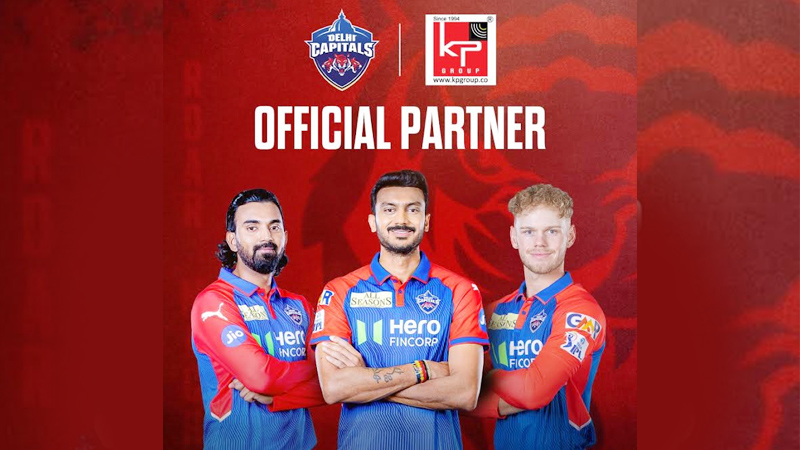
    MUMBAI: KP Group has stepped up to the crease, not with a bat, but with big green energy. On 29 March 2025, the renewable energy titan announced its partnership with Delhi Capitals as the official renewable energy partner for the ongoing T20 League season. It’s not just cricket and contracts—it’s climate goals wrapped in a cricket jersey.

    KP Group chairman & MD Faruk G Patel put it straight, “We are proud to associate with Delhi Capitals as their renewable energy partner. Cricket is a religion in India and the T20 League is one of the most popular sporting leagues in the world featuring the best cricketers. The association not only brings KP Group to the spotlight but also emphasises the crucial role of renewable energy in conserving the planet. Together, we aim to inspire crores of cricket fans and other people around the world to adopt clean energy solutions.”

    This partnership isn’t a one-hit wonder. KP Group has a long track record of supporting sporting events and athletes across disciplines. Patel added, “At KP Group, we have always believed in the power of sports to bring people together and inspire change. Over the years, we have supported various sporting events and athletes across disciplines, showcasing our commitment to supporting talent and promoting a healthier world. This association with Delhi Capitals is another milestone in our journey of empowering sports.”

    Delhi Capitals CEO Sunil Gupta echoed the sentiment, “We are happy to welcome KP Group as our renewable energy partner for the ongoing season. This association aims to promote positive change to inspire sustainability through sport as the vehicle. We look forward to their support and a meaningful partnership.”

    There’s a cricketing twist to the tale too. Former Indian pacer and 2011 World Cup winner Munaf Patel—now bowling coach of Delhi Capitals—is also a brand ambassador for KP Group. Call it a match made in sporting sustainability.

    With over 1.4 GW of renewable projects energised and another 3.8 GW in progress, KP Group is no small player. From solar and hybrid energy through KPI Green Energy, to wind energy via KP Energy, and engineering expertise from KP Green Engineering—the company has covered its green bases. Plus, its bold new venture into green hydrogen under KP Green Hydrogen & Ammonia Pvt. Ltd. shows it’s not just talking clean, but walking the green walk.

    Delhi Capitals, co-owned by GMR Group and JSW Sports, led by all-rounder Axar Patel, are set to play their second match of the T20 League 2025 season against Hyderabad in Visakhapatnam on 30 March.

  • Sunil Gupta lectures AI’s transformative role at IAA Conversations

    Sunil Gupta lectures AI’s transformative role at IAA Conversations

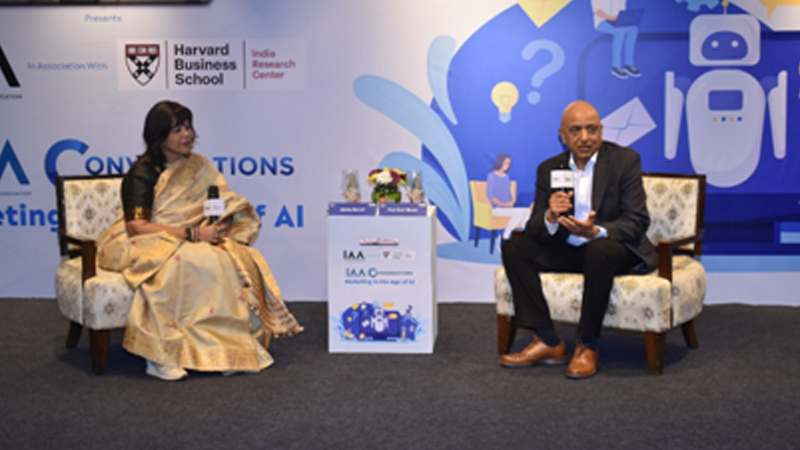
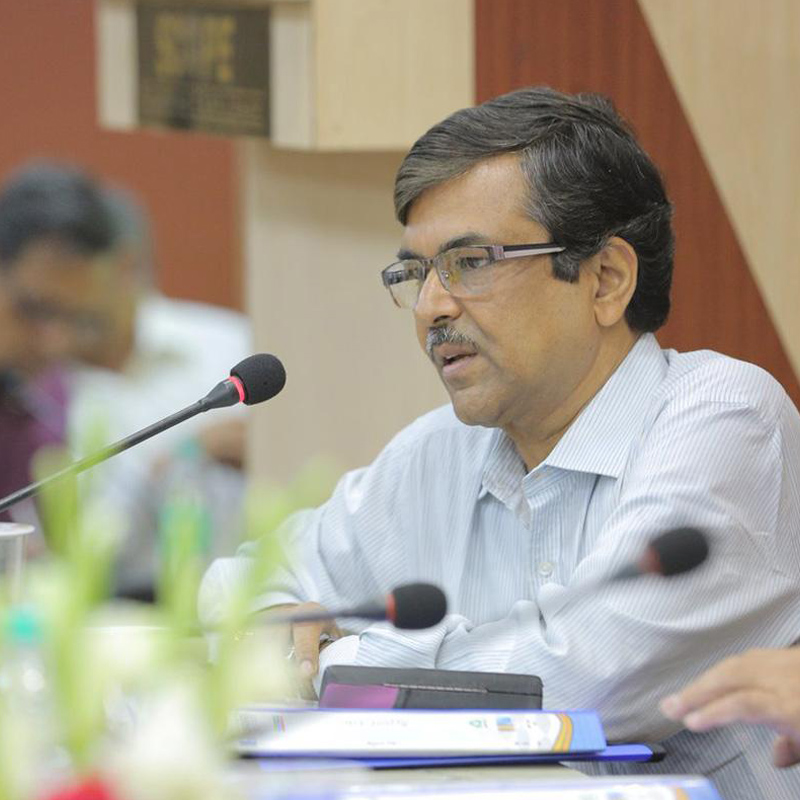
    MUMBAI: Artificial intelligence isn’t just a buzzword anymore—it’s shaping the way industries think, act, and innovate. At the recent IAA Conversations in Mumbai, Harvard Business School Edward W. Carter professor of business administration, Sunil Gupta delved into AI’s transformative power in marketing, branding, and beyond. The event, titled ‘Marketing in the Age of AI’, was moderated by VML India CEO and an IAA Mancom member, Babita Baruah and organised in association with Harvard Business School.

    The session kicked off with Gupta highlighting the disruptive nature of AI and how businesses across sectors are adapting to leverage it. “Almost every business, not just advertising, is thinking about AI and how it will affect their operations,” he noted.

    He outlined three ways AI is transforming industries:

    1    Augmenting and automating tasks to increase efficiency.

    2    Expanding and growing capabilities with innovative tools.

    3    Disrupting and experimenting, encouraging businesses to push creative boundaries.

    Gupta cited tech giants like Facebook and Google, explaining their use of AI to automate ad creation, audience targeting, and budget allocation.

    Gupta emphasised the unprecedented access to consumer data in today’s digital age. “It’s not just about what they buy or search for. It’s also about what they do on social media or why they contact a call centre,” he observed.

    AI, he argued, offers the ability to synthesise qualitative and quantitative data to create a 360-degree view of consumers. It enables brands to map customer journeys, uncover pain points, and even predict behaviours. “AI can act as a smart research assistant, helping brands connect the dots across vast datasets,” he added.

    Gupta also introduced the concept of synthetic consumers, personas created using past data to simulate market research scenarios. This approach offers quick insights at early product development stages.

    Gupta didn’t shy away from discussing the hurdles of AI adoption. “The use of AI will increase competition as it lowers entry barriers, making it easier for anyone to experiment and innovate,” he said.

    However, he flagged the risk of short-term thinking in advertising. “With AI’s ability to experiment and fine-tune ROI, there’s a danger that brands might focus too much on immediate results and lose sight of long-term brand building. And advertising is all about building brands,” he cautioned.

    Addressing how organisations should approach AI, Gupta urged companies to embrace the technology actively. “You can’t learn to swim by watching someone else. You need to dive into the pool yourself,” he remarked.

    He recommended dedicating time to understanding AI’s potential and limitations, noting that no technology has ever reduced workload—it has only shifted it. “Jobs don’t go away, tasks do. AI will eliminate non-value-added tasks, allowing professionals to focus on more impactful work,” he asserted.

    On a closing note, Gupta reminded attendees of the importance of starting with the problem, not the technology. “Sometimes, we get so caught up in the technology that we forget the problem we’re trying to solve,” he said, adding that copyright and IP protection will remain critical concerns in an AI-driven world.

    IAA India Chapter president, Abhishek Karnani underscored the event’s relevance, “At the India Chapter of the International Advertising Association (IAA), we take pride in being the only body in the industry that brings together creative agencies, media agencies, and media under one roof. This year, our focus is clear—Conversations, Skilling, and Artificial Intelligence—all aimed at preparing us for the opportunities and challenges ahead.”

    Organised with support from Free Press Journal as the presenting partner, the IAA Conversations event highlighted the intersection of technology, creativity, and strategy, offering a forward-looking perspective on how AI is reshaping industries.

  • CMO Sunil Gupta scores CEO role at Delhi Capitals

    CMO Sunil Gupta scores CEO role at Delhi Capitals

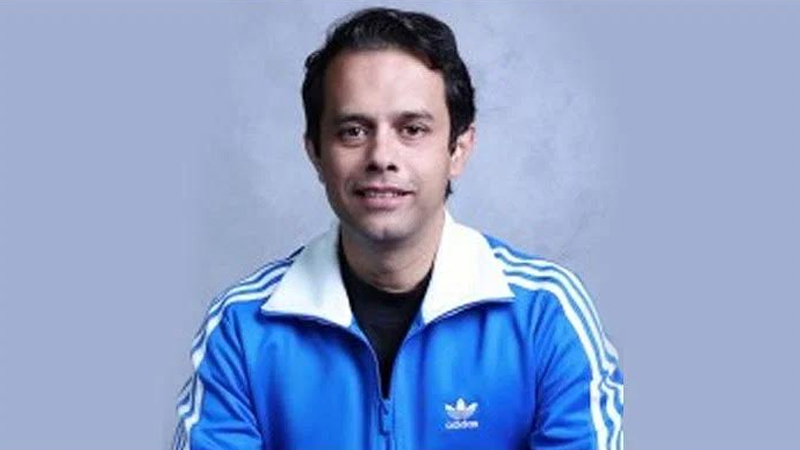
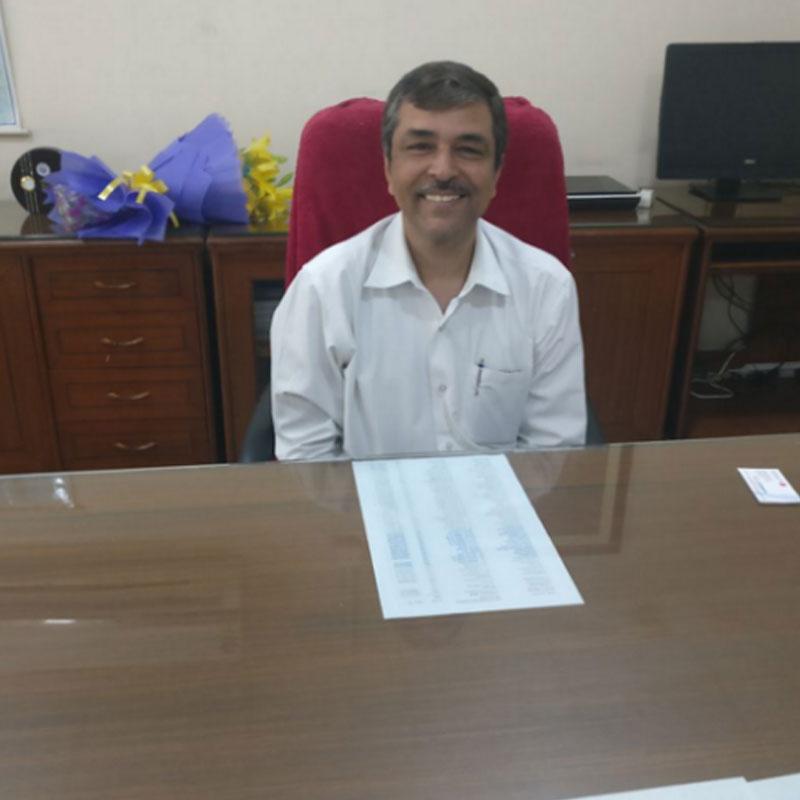
    Mumbai: Sunil Gupta, the former chief marketing officer of adidas India, has recently assumed the position of chief executive officer at Delhi Capitals. After a tenure of over seven years with adidas India, Gupta decided to embark on this new professional journey. His association with adidas began in 2016 when he took on the role of business unit head for adidas running.

    In a LinkedIn post, Sunil Gupta announced his transition, expressing appreciation for the chance to indulge in his love for cricket daily in his new role. Notably, before his time at adidas, Gupta gained valuable experience through his roles at Coca-Cola India, Marico, and GSK.

  • Immerso AI and Yotta announce strategic partnership for generative media

    Immerso AI and Yotta announce strategic partnership for generative media

    Mumbai: Immerso AI, part of the Eros Investments Group, a leading Generative AI company with intellectual property and licensed data, has announced their strategic partnership with Yotta at Vibrant Gujarat 2024. With this partnership, Immerso AI will leverage the Omniverse platform by NVIDIA and high-fidelity custom development to develop high-quality movie characters from the Eros Now library and Conversational AI and as Avatars and Characters for Gaming and other use cases. This development will leverage the NVIDIA-powered reference architecture with NVIDIA Infiband Networking infrastructure as being deployed by Yotta in Q1 2024. The companies will leverage the recent partnership announcement between the Govt. of Gujarat, GIFT City and Immerso AI Parks to engage local talent for research, development, and deployment.

    “India has the rich talent, vast scale, and deep pools of data to harness Generative AI to help solve the nation’s and the world’s greatest challenges,” said NVIDIA, South Asia MD Vishal Dhupar. “To help achieve this potential, NVIDIA is working with leading Indian businesses, as well as the larger ecosystem, to create cloud-based sovereign AI accelerated computing infrastructure.”

    Government of Gujarat principal secretary, IAS department at science and technology Mona Khandhar mentioned “Gujarat will play a pivotal role in the future of Deep Technology for Digital India and we are very pleased with this collaboration from leading companies like NVIDIA, Yotta and Immerso AI in the Generative AI space developing in Gujarat.

    Immerso AI CEO Ali Hussein mentioned “2024 is going to be the year of Generative Media, unlike other digital business infrastructure and performance will play a key role in generative Media and Gaming. Our core vision to develop India’s largest AIIP company is augmented with this partnership.”

    Yotta co-founder & CEO Sunil Gupta shared “Yotta is dedicated to harnessing AI’s power to transform various industries throughout India. Our collaboration with NVIDIA signifies a notable advancement in this endeavor, reinforcing our dedication to offering top-tier services to both existing and future clients. Through Immerso AI’s capabilities, we believe we can significantly enhance the M&E sector, greatly boosting our abilities in movie production and gaming development.

    As of May 2023, the Indian Generative AI landscape had more than 60 startups dedicated to offering solutions and services to their customers spread across various industry verticals. More than $590 million in funding has already flown into this space, with 2022 being the year with the heaviest funding inflow. 2024 will be a pivotal year in the development of the Generative AI eco-system in India and the native technology will cut across industry verticals.

  • adidas India launches its mobile application

    adidas India launches its mobile application

    Mumbai: Sportswear brand adidas India has launched its mobile shopping application to offer an elevated digital shopping experience to its customers across the country. To celebrate the launch of the adidas app, the brand is offering a discount of 20 per cent for all shoppers. 

    The mobile app designed to offer a personalised shopping experience to customers is powered with AI technology, understanding of user preferences with their new and improved wish-list, live chat option, and AR try-on. It also provides simple and secure checkout for consumers with access to special offers, rewards, gifts and exclusive events, said the brand in a statement.

    The app will act as the home of the global membership programme – Creators Club. The program enables members to shop, review, participate, run and train to earn points, unlock rewards and experience the world of adidas. Rewards include member-only product launches, ‘Member Extras’ in the form of vouchers, discounts and priority service, and ‘Hype Access’ to limited edition shoes and apparel, among others exclusives. The Creators Club membership program connects across stores, the website, and all adidas apps.

    “With the launch of adidas app and the Creators Club membership programme we are bringing a personalised, secure and smooth digital shopping experience to our consumers,” said Brand adidas India senior director Sunil Gupta. “Creators Club is an exclusive connection to the best of sport and style and with it we are offering our consumers a chance to experience the best products, experiences and services from adidas.”

    The app will become the home of hype with majority of the future drops being app first. These would include the likes of Yeezy, Pharrell Williams and exclusive collaborations with Lego and Disney. Joining Creators Club will enable consumers to get immediate access to hype drops, discounts and more, said the statement.

  • adidas launches its first flagship store in India

    adidas launches its first flagship store in India

    Mumbai: Sportswear brand adidas has unveiled its first flagship store in India at Connaught Place (CP), Delhi. 

    The brand’s first LEED-certified store in the country called ‘The Home of Possibilities’, is a blend of multiple digital touchpoints and sustainability zone, embodying the future of retail experience for consumers, adidas said in a statement. “The store’s concept is inspired by the brand’s ‘Own the Game’ philosophy which focuses on the three important aspects of experience, sustainability, and credibility,” it added.

    With its 32 digital touchpoints powered by green energy, the outlet offers consumers an innovative technological experience. immersive screens, digital plinths and ceiling screens further add to the digital shopping experience. Upcycled carbon tiles are used in the flooring. In line with the brand’s long-term vision and commitment towards sustainability, there’s also a dedicated ‘sustainability zone’ featuring the best sustainable collection.

    “‘The Home of Possibilities’ is the very best of our brand in an unrivalled way that brings a global shopping experience under one roof,” said adidas India senior director Sunil Gupta. “Our aim is to reimagine the phygital experience through innovation, creativity and design which further offers our consumers a unique shopping experience. We have also brought in local flavours and elements, through the artwork in the store, the zones featuring our national athletes, and quirky local prints in the customisation zone.”

    Bringing forward the essence of India, the flagship store has a devoted section for personalisation and localisation. The Delhi Print Shop offers consumers a bespoke digital DIY experience where they can get their tees done in real-time, stated the brand.

  • adidas, Mirabai Chanu inspire more women to join weightlifting

    adidas, Mirabai Chanu inspire more women to join weightlifting

    Mumbai: With her latest win at Tokyo Olympics 2020, India’s star weightlifter Mirabai Chanu has emerged as an inspiration for countless women who shy away from sports such as weightlifting that are perceived as being male-dominated. Breaking the norm, Chanu chose to go with her strength and passion and took it as a challenge to overcome this bias.

    The sports superstar recently visited the adidas store at Vasant Kunj Promenade mall in Delhi, where she met four aspiring women weightlifters to share with them her narrative of ‘Impossible Is Nothing’. During the interaction, Chanu spent time hearing out their aspirations, the challenges they face and what inspired them to take up weightlifting as a sport.

    Sharing her journey and experiences to motivate them, the Olympics medalist said, “My journey from a remote village to representing our country at an international sporting event clearly showcases that sport doesn’t care about gender or stereotypes. In our society, weightlifting has always been perceived as a male-dominated sport. It took a lot of courage and hard work to break such stereotypes. I want women to dream and believe in themselves to be able to see possibilities.”

    Commenting on Chanu’s victory at the Games, adidas India – senior director, Sunil Gupta added, “We are extremely proud of Mirabai’s success, and it gives us immense pleasure to be a part of her incredible journey. Our aim is to enable all athletes including our partners to achieve their ‘impossible’ by providing them with the best products in training and competition. I hope her success inspires young girls to believe in their dreams and see possibilities of fulfilling them.”

  • Avis India resumes self-drive and chauffeur-driven car services in 19 cities

    Avis India resumes self-drive and chauffeur-driven car services in 19 cities

    MUMBAI: Car rental service provider Avis India has announced the resumption of its self-driving as well as chauffeur-driven car services across 19 cities, as lockdown restrictions have been eased and travelling is allowed again. For the self-drive car segment, the operations will resume in eight cities including Bangalore, Chennai, Delhi, Gurgaon and Noida. In addition to the self-drive cars, the chauffeur-driven vehicles will also hit the roads in 19 cities including Agra, Ahmedabad, Bangalore, Bhubaneshwar, Chandigarh, Jaipur, Kochi, Kolkata, Mumbai and Pune.   

    Avis India resuming its self-drive and chauffeur-driven vehicle operations is in line with the brand’s commitment to provide a safe and best possible customer experience.

    Avis India MD-CEO Sunil Gupta commented, “The current COVID-19 pandemic has certainly affected travel. People will now prefer travelling in smaller groups as compared to before. Hence, we expect to see a significant spike in demand for personal mobility post lockdown, and resuming our self-drive car and chauffeur-driven vehicle services will empower our customers for ‘safe travel experience’. In the wake of Covid2019, we have enhanced our already robust cleaning protocols, including utilizing disinfectants that protect our customers and employees against pathogens. Our primary focus has always been and remains the health and well-being of our employees, chauffeurs, and customers.”

    Avis India is conducting daily sanitization of all of its vehicles. A special emphasis is given to high-contact surfaces, both inside and outside of the car, such as seats, steering wheels, and door handles. It is mandatory for all of the chauffeurs to wear face masks at all times. The employees, chauffeurs, and customers are scanned with infrared thermometers at the main gate itself. Anyone with potential symptoms is barred from entering the compound, thereby ensuring maximum security for our both employees and customers.

  • TRAI’s SK Gupta on Independent TV troubles, BARC overhaul, landing page controversy & tariff order

    TRAI’s SK Gupta on Independent TV troubles, BARC overhaul, landing page controversy & tariff order

    MUMBAI: Top Telecom Regulatory Authority of India (TRAI) functionaries were in Mumbai on Wednesday for the second leg of the open house discussion (OHD) to review the television audience measurement and ratings system in India. In the audience were industry stakeholders spanning across broadcasters, advertisers, distribution platform operators (DPOs) and BARC representatives among others.

    “Ratings have to be unbiased, correct representation of the feelings of the people and should not be impacted by various methodologies being used to influence them,” said TRAI secretary Sunil K Gupta as he set the agenda.

    TRAI had received multiple comments and counter-comments from industry to its consultation paper, which featured a list of questions. In order to further deepen the engagement, Gupta recommended three additional topics be taken up for discussion.

    “What are the concerns and problems when it comes to return path data with set top boxes? Let us analyse and understand how we can increase the sample size of meters so that influencing data becomes difficult. Secondly, many broadcasters said in the Delhi OHD that data collected through such meters is filtered or manipulated to delete the outliers. They feel that the level of transparency in doing so is not there and in some cases they feel it is one of the tools to manipulate the TRP of a channel. Thirdly, is there any other alternative that can be adopted to make ratings more effective or more representative of viewership?” the secretary asked.

    However, despite the officials’ best efforts to initiate a conversation to highlight problems and suggest solutions, those present were rather conservative in their approach, side-stepping critical issues that continue to plague the broadcasting sector from a TV audience measurement standpoint. While regional broadcasters did argue in favour of a more representative sample to take into account multiple socio-cultural regions, major broadcasters failed to approach the discussion with their usual vigour.

    From BARC’s perspective, COO Romil Ramgarhia and chairman of its technical committee Shashi Sinha were rather frank and forthright, articulating their respective positions on all issues at hand quite candidly.

    In order to gain a better understanding of the regulator's viewpoint, Indiantelevision.com’s Dattaraj Thaly engaged the TRAI secretary in a quick chat on the sidelines of the OHD. 

    Edited excerpts follow.

    What compelled you to float a consultation paper on review of television audience measurement and ratings in India?

    We recommended the formation of an entity to rate the audience measurement for the TV sector and as per that recommendation, MIB came up with guidelines and then BARC was registered. Having said that, (BARC) working for the last three years, we just wanted to see how good the work is being done and there are different concerns of different stakeholders to improve the transparency of BARC rating. So, what are the concerns of stakeholders and how can we improve its functions was our objective.

    What are the specific functions you want improved? Is it credibility of the ratings, transparency of the system? What are the benchmarks for improvement?

    In fact it includes all the things. It is credibility, accuracy of the system and also to make it broad-based so that any attempt to tamper any information etc., should have minimum impact on rating given by the BARC.

    We know what the broadcasters’ concerns with BARC are. Can you tell us what the regulator’s view on the TV audience measurement body is?

    TRAI does not have any view of its own. We raise various issues to the stakeholders. We take oral as well as written comments of the stakeholders. We also analyse the international experiences, the issues raised by different people on what needs to be addressed and ultimately firmly take a view what should be done. So, one thing is very clear TRAI does not have its own view.

    You’ve now held two open house discussions (Delhi and Mumbai) to review our current TV audience measurement system. Have any key themes emerged from these consultations?

    One is that everybody wants BARC to give the ratings that are credible, transparent, not influenced by any of the stakeholders. They also want a broad-based rating pattern, so that chances of getting it influenced by few meters is reduced. Thirdly, they want to improve the transparency of the system.

    BARC’s data validation and outlier policy post the TDSAT order on landing pages has created quite a stir in the industry. What’s your view on this issue?

    You would have heard BARC clearly stating today that they do not have a method to identify landing page and therefore effectively address the issue.

    So, what is the way forward?

    You have yourself very clearly pointed out that there is a decision by TDSAT and we will look into it further and see what can be done. Also today you have heard that this is a call to be taken by the industry also.

    Are you satisfied with what you’ve accomplished in terms of the new tariff order roll-out?

    If you look at the preamble of the regulations and the tariff order issues, the objective raised over there were met to a great extent. So, we are satisfied.

    Two fundamental issues – consumer choice and transparency – were emphasised on by TRAI during the implementation of the new tariff order. Has the new regime addressed these two tenets?

    We have introduced giving the price of each channel in EPG, which has been appreciated by all of the stakeholders. As far as giving choice is concerned, we have checked different platforms and most of the platforms are complying and giving choice. What we have found is that there is a need to educate the consumers. Because consumers from the beginning have been given bouquets. Now awareness has been generated that options have been enabled to choose channels on a-la-carte basis. On this front, I think some more work is required.

    Has the broadcasting and cable services landscape settled down post the new tariff order implementation?

    The choice of customer is a dynamic situation and it will change from time to time and that is what we precisely feel like. The market will work once the consumer has got the options to exercise and it will depend on many things such as the type of programmes you are showing in your TV channel, the language, the awareness, etc. So, this is working very well on the ground and naturally it will take some time to settle. Saying that it has already settled may not be accurate, but yes it is going in the right direction.

    What’s your take on the Independent TV situation?

    Independent TV has been very recently given their license for DTH. The matter has been taken up with MIB and with the other enforcement arms of MIB, which is spread in the state and districts. We are looking into that.

    Is TRAI committed to light-touch regulation across the broadcasting and distribution sector?

    New tariff order is the right example of light-touch regulation (https://www.indiantelevision.com/regulators/trai/broadcasters-split-over-trai-s-directive-to-barc-on-tv-viewership-data-190226). We have given complete freedom to broadcasters to price their channels. We have given freedom to DPOs to carry out their business and get a certain committed revenue so that quality of the network can be upgraded and quality of the services can be given to the consumers. We are only prescribing the broad architecture and not micro-managing.

  • Adidas gets women up and running

    Adidas gets women up and running

    MUMBAI: Adidas has launched a digital campaign with its digital agency Isobar. Titled #ItsOnYou, the core objective is to expand the brand’s community of runners, especially targeting women non-runners. While most brands are striving to garner new audience through strong communication, which is driven by motivation and persuasion; Adidas came up with a digital film with a counterintuitive concept. Instead of giving reasons to women to run, the brand rode on the belief that no one can make someone run unless they want to.

    <iframe width=”560″ height=”315″ src=”https://www.youtube.com/embed/8UG_07cgrRU” frameborder=”0″ gesture=”media” allow=”encrypted-media” allowfullscreen></iframe>

    The goal of the film was to make women realise that no external motivation can drive them, nor can any excuse hold them back.

    The campaign will be further propelled via a 360 degree initiative, digital and on-ground branding.

    Adidas business unit head Sunil Gupta says, “The campaign echoes an urban dilemma of the clash between the excuse and the tiny voice within, that knows the hollowness of the excuse. Through the film, we set out to showcase some of the thoughts people might have at the moment of truth, that metaphorical wake-up call which may spur us into action or lull us into accepting another excuse. Through real people and their very real stories, we hope the message reaches women across strata, geographies and professions that their run, their energy is in their own hands. The team at Isobar captured this thought beautifully,” he adds.  

    Isobar India national creative director Anish Varghese mentions, “In today’s busy lifestyle, it’s getting easier for people to find excuses whether it’s to run or not to run. This is an attempt to make people realise that no matter what excuse you choose, nothing in the world can make you run. There will be many things which will pull you back, but in the end, the onus is on you to get up and go for that run.”