Tag: Sunil Arora

  • Prasar advisor Sunil Arora new IICA DG & CEO

    Prasar advisor Sunil Arora new IICA DG & CEO

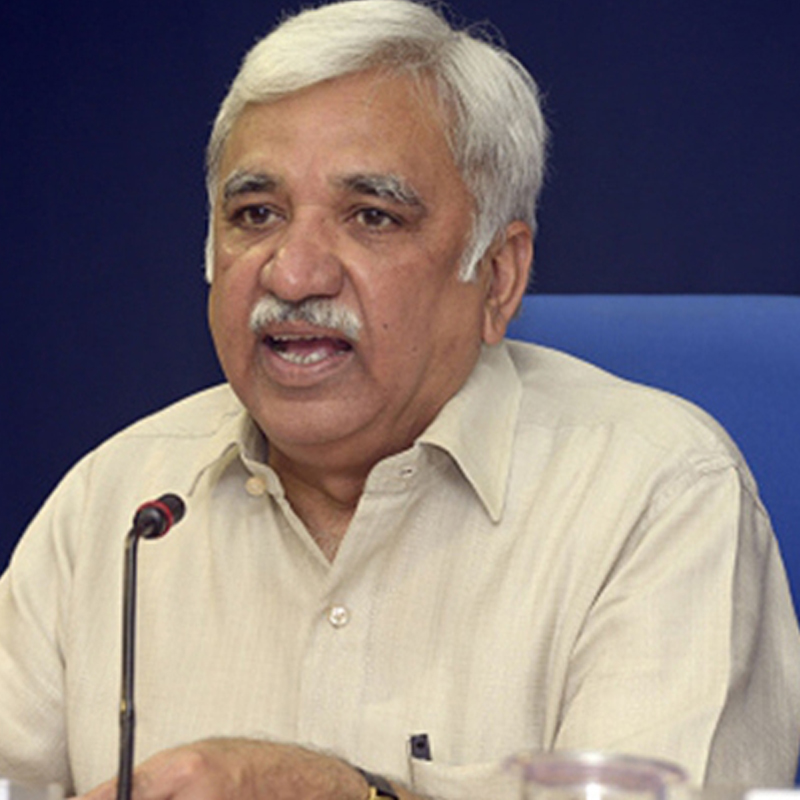
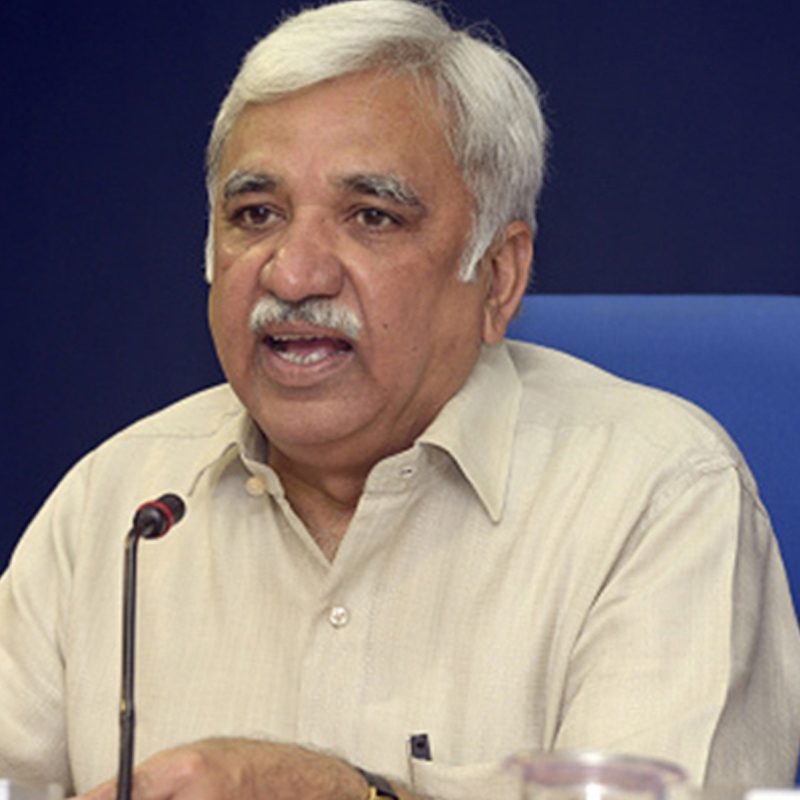
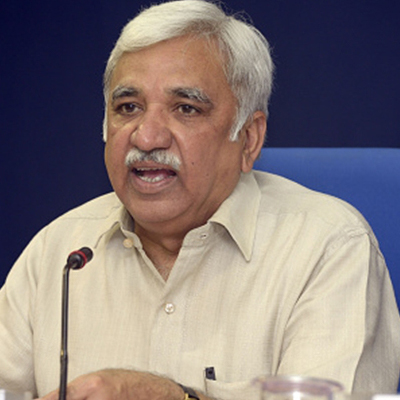
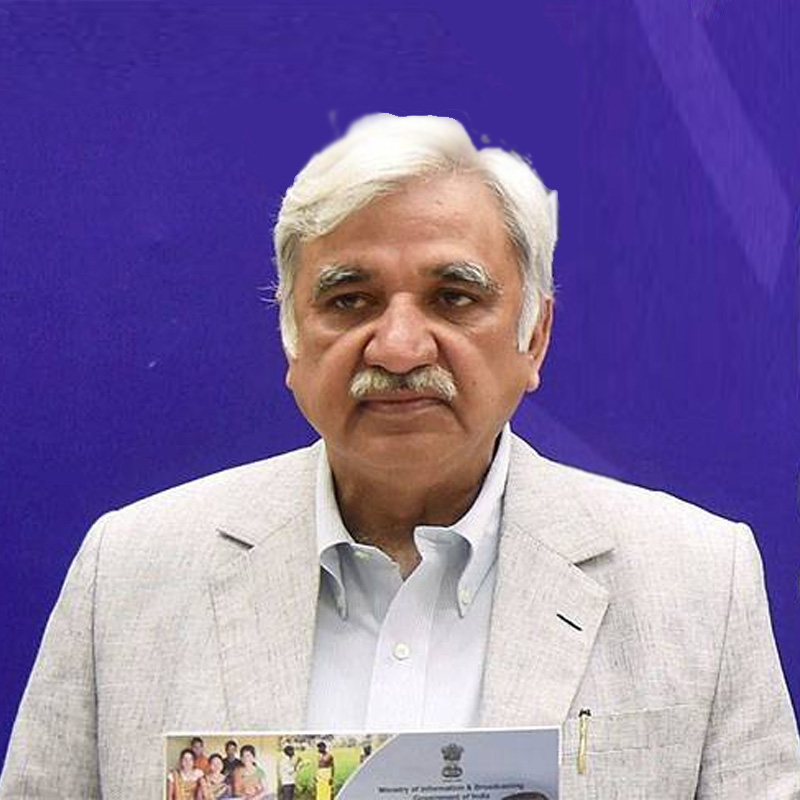
    NEW DELHI: Information & broadcasting ministry’s former secretary Sunil Arora has reportedly been appointed as the director-general and CEO of the Indian Institute of Corporate Affairs (IICA), the corporate affairs ministry’s think tank. The IAS officer of the 1980 batch of Rajasthan cadre, Arora retired as the secretary earlier this year, and was serving as an advisor at Prasar Bharati.

    IICA generally focuses on matters concerning functioning of corporates and strives towards capacity building with various stakeholders including professionals and regulators.

    The government’s Appointments Committee of the Cabinet (ACC) approved the appointment of Arora as the IICA CEO and D-G via an order issued by the Department of Personnel and Training (DoPT) said. He has been appointed in the top scale of Rs 80,000=00 for a period of five years or till attaining the age of 65 years or until further orders, whichever is the earliest, it added.

    Also read:

    Prasar Bharati advisor reviews DD marketing and policies

    Sunil Arora to step in Sircar’s place as Prasar Bharati CEO?

  • Prasar advisor Sunil Arora new IICA DG & CEO

    Prasar advisor Sunil Arora new IICA DG & CEO

    NEW DELHI: Information & broadcasting ministry’s former secretary Sunil Arora has reportedly been appointed as the director-general and CEO of the Indian Institute of Corporate Affairs (IICA), the corporate affairs ministry’s think tank. The IAS officer of the 1980 batch of Rajasthan cadre, Arora retired as the secretary earlier this year, and was serving as an advisor at Prasar Bharati.

    IICA generally focuses on matters concerning functioning of corporates and strives towards capacity building with various stakeholders including professionals and regulators.

    The government’s Appointments Committee of the Cabinet (ACC) approved the appointment of Arora as the IICA CEO and D-G via an order issued by the Department of Personnel and Training (DoPT) said. He has been appointed in the top scale of Rs 80,000=00 for a period of five years or till attaining the age of 65 years or until further orders, whichever is the earliest, it added.

    Also read:

    Prasar Bharati advisor reviews DD marketing and policies

    Sunil Arora to step in Sircar’s place as Prasar Bharati CEO?

  • Prasar Bharati advisor reviews DD marketing and policies

    Prasar Bharati advisor reviews DD marketing and policies

    NEW DELHI: Former Ministry of Information and Broadcasting (MIB) Secretary and now Prasar Bharati advisor Sunil Arora yesterday asked Doordarshan to adopt the best policies of the industry, even as he approved the planned auction of slots on DD National.

    During a review meeting with Doordarshan where the director-general Supriya Sahu and other senior officials were present, Arora was apprised of the content mix, methodology of audience research and slotting process of the programmes.

    Arora also reviewed the marketing strategies and efforts being made to augment revenues for Doordarshan. He emphasised that DD should leverage the flagship schemes of the government to showcase the developmental initiatives.

    Arora is considered as one of the favourites to succeed Jawhar Sircar as the chief executive officer of Prasar Bharati who demits office in first week of November 2016. In the interim, member (personnel) Suresh Panda has been asked to hold interim charge by the Board, subject to the final approval of MIB.

    Under the Prasar Bharati Act, a new CEO will be selected by a three-member high-level committee headed by the Vice-President of India.

  • Prasar Bharati advisor reviews DD marketing and policies

    Prasar Bharati advisor reviews DD marketing and policies

    NEW DELHI: Former Ministry of Information and Broadcasting (MIB) Secretary and now Prasar Bharati advisor Sunil Arora yesterday asked Doordarshan to adopt the best policies of the industry, even as he approved the planned auction of slots on DD National.

    During a review meeting with Doordarshan where the director-general Supriya Sahu and other senior officials were present, Arora was apprised of the content mix, methodology of audience research and slotting process of the programmes.

    Arora also reviewed the marketing strategies and efforts being made to augment revenues for Doordarshan. He emphasised that DD should leverage the flagship schemes of the government to showcase the developmental initiatives.

    Arora is considered as one of the favourites to succeed Jawhar Sircar as the chief executive officer of Prasar Bharati who demits office in first week of November 2016. In the interim, member (personnel) Suresh Panda has been asked to hold interim charge by the Board, subject to the final approval of MIB.

    Under the Prasar Bharati Act, a new CEO will be selected by a three-member high-level committee headed by the Vice-President of India.

  • Sunil Arora to step in Sircar’s place as Prasar Bharati CEO?

    Sunil Arora to step in Sircar’s place as Prasar Bharati CEO?

    MUMBAI: With the resignation of Prasar Bharati CEO Jawhar Sircar, the punters are betting on who is going to come in as his replacement. Among the names being talked about is the former I&B secretary Sunil Arora. He currently serves as an advisor to Prasar Bharati, a post he was given in August after retiring from the MIB.

    Arora is a 1980-batch IAS officer of the Rajasthan cadre. Sources indicate that Arora’s candidature as Prasar Bharati CEO has been recommended by the former information and broadcasting minister Arun Jaitely.

    However, observers don’t expect Arora’s candidature to be a shoo-in. Reason: it is not clear who the current I&B minister Venkaiah Naidu will back. “For all you know, he might want somebody from his state of Andhra Pradesh,” says a Prasar Bharati source. “Finally, the PM will decide.”

    Sircar submitted his resignation on 4 October, and has sought to be relieved by 4 November 2016 after which he will return to Kolkata.

  • Sunil Arora to step in Sircar’s place as Prasar Bharati CEO?

    Sunil Arora to step in Sircar’s place as Prasar Bharati CEO?

    MUMBAI: With the resignation of Prasar Bharati CEO Jawhar Sircar, the punters are betting on who is going to come in as his replacement. Among the names being talked about is the former I&B secretary Sunil Arora. He currently serves as an advisor to Prasar Bharati, a post he was given in August after retiring from the MIB.

    Arora is a 1980-batch IAS officer of the Rajasthan cadre. Sources indicate that Arora’s candidature as Prasar Bharati CEO has been recommended by the former information and broadcasting minister Arun Jaitely.

    However, observers don’t expect Arora’s candidature to be a shoo-in. Reason: it is not clear who the current I&B minister Venkaiah Naidu will back. “For all you know, he might want somebody from his state of Andhra Pradesh,” says a Prasar Bharati source. “Finally, the PM will decide.”

    Sircar submitted his resignation on 4 October, and has sought to be relieved by 4 November 2016 after which he will return to Kolkata.

  • Jawhar Sircar sets 12-point action plan before early retirement

    Jawhar Sircar sets 12-point action plan before early retirement

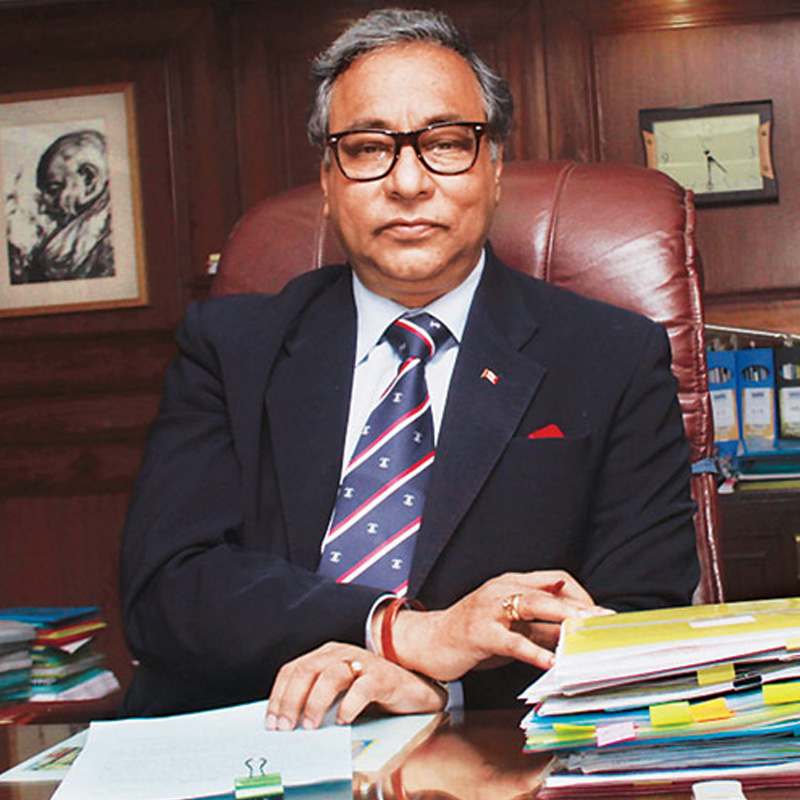
    NEW DELHI: Prasar Bharati Chief Executive Officer Jawhar Sircar wants to ride into the sunset slightly before his tenure ends officially first quarter 2017, but in his trademark  style — feisty, frank and fearless — has started a raging debate in media and political circles nevertheless.

    “No, I have not threatened to quit (but) have just expressed a desire to relinquish (duties) a few months before tenure (ends). I do not see any controversy in that,” Sircar told indiantelevision.com.

    Sources in Ministry of Information and Broadcasting (MIB) confirmed on Sunday that Sircar has not resigned yet, but has informally expressed desire to leave Prasar Bharati few months before his five-year tenure ends officially early 2017.

    A source in Prasar Bharati, while agreeing with the MIB line, informed this website that Sircar has drawn a 12-point list of things he would like to accomplish before relinquishing office. The source, however, declined to spell out the action points.

    Interestingly, in a Facebook post on his timeline Saturday, Sircar did say that he wants to go from Prasar Bharat, also alluding to the time-frame. “Since news is out today: I will clarify. I hope to be back in Kolkata by NOV. After 41+ years (of) service, I want to retire: just to read, write and relate,” he wrote. One presumes by NOV, he mean November of 2016.
    Sircar, who took office in mid-February 2012 and has been at odds at times with MIB and even the Prasar Bharati Board, told  indiantelevision.com, “The Information and Broadcasting Ministry and Prasar Bharati Board are in sync and supportive…. No issues there.”

    public://ScreenShot of Jawhar Sircar FB Post.jpg

    Pointing out that the present MIB Secretary Ajay Mittal had been “supportive” as also his immediate predecessor, Sunil Arora, who’s now an advisor to Prasar Bharati, Sircar described the speculation regarding his quitting the pubcaster as “playing in non-troubled waters”.

    According to the feisty former bureaucrat, relationship with MIB “improved dramatically” after Arora took over as Secretary in 2014.

    On being asked about the media reports and resultant debate on his quitting Prasar Bharati as he was “tired”, Sircar cryptically said he had not wanted to speak to anyone but was compelled to reply to some “charged SMS from some newspersons” when he was in Benaras or Varanasi recently. He refused to elaborate any further.

    A go-getter bureaucrat who took retirement from active government service to take up the top, but challenging, job at India’s pubcaster, managing Doordarshan and All India Radio (AIR), Sircar had told indiantelevision.com few months back in an interview that Prasar Bharti’s “monopolistic-era mind-set had to change” if it has to make itself relevant in today’s vastly changed India broadcasting scenario or come anywhere near BBC’s standards.

    Not only critical of his own Board of Directors, Sircar had, from time to time, taken on the political establishment too in India, accusing it of using Prasar Bharati as a fiefdom for government propaganda.

    In recent times, he has been criticised within Prasar Bharati for proposing to auction time-slots on DD to gain good programming and additional revenue. However, due to bureaucracy and vested interests at play, the scheme failed to get the desired results, failing to take off in the first place.

    Still, Sircar has been able to break new grounds and introduce digital technologies and cut down obsolescence at Prasar Bharat. He has also given a new push to digitization of the huge archives of AIR and DD and has received three awards for this in three years.

    He has also been elected as Vice-President of the world’s largest public broadcasting service TV and radio organization, Asia Pacific Broadcasting Union, on which 67 nations are represented.

    Sircar’s name had been cleared after a three-member selection panel in 2012, headed by Vice-President Hamid Ansari and comprising the Press Council of India Chairman and MIB Secretary, recommended his name for the CEO’s post at Prasar Bharati. The appointment of the CEO is done by the President of India on the recommendation of the selection panel, which will, probably, have to start deliberations soon.

    Born on 22 March 1952, Sircar belongs to the 1975 batch of Indian Administrative Service from West Bengal. After the retirement of MIB Secretary Raghu Menon in September 2011, Sircar had been asked to hold additional charge of the ministry as a stop-gap measure, apart from his Secretary’s responsibilities at the Culture Ministry.

    Sircar holds two post-graduate degrees in Ancient Indian History and Culture and in Sociology with Social Anthropology. He has served at various senior positions in the Central and State Governments.

    Sircar is actively associated with several cultural and academic bodies like the Asiatic Society, Victoria Memorial, Centre for Archaeological Studies, Kolkata Museum of Modern Art and the Indian Anthropological Society. He took the lead in establishing the annual Kolkata Film Festival as an international event and has published several articles and research papers on history, culture and society. In the last decade, he has focused his research on specific aspects of popular culture, folk religion and on the development of socio-religious identities.

    Sircar studied at St Xavier’s School, Presidency College and Calcutta University in Kolkata and at the Universities of Cambridge and Sussex.

    ALSO READ:

    Prasar Bharati’s monopolistic-era mind-set has to change: CEO Jawhar Sircar


  • Jawhar Sircar sets 12-point action plan before early retirement

    Jawhar Sircar sets 12-point action plan before early retirement

    NEW DELHI: Prasar Bharati Chief Executive Officer Jawhar Sircar wants to ride into the sunset slightly before his tenure ends officially first quarter 2017, but in his trademark  style — feisty, frank and fearless — has started a raging debate in media and political circles nevertheless.

    “No, I have not threatened to quit (but) have just expressed a desire to relinquish (duties) a few months before tenure (ends). I do not see any controversy in that,” Sircar told indiantelevision.com.

    Sources in Ministry of Information and Broadcasting (MIB) confirmed on Sunday that Sircar has not resigned yet, but has informally expressed desire to leave Prasar Bharati few months before his five-year tenure ends officially early 2017.

    A source in Prasar Bharati, while agreeing with the MIB line, informed this website that Sircar has drawn a 12-point list of things he would like to accomplish before relinquishing office. The source, however, declined to spell out the action points.

    Interestingly, in a Facebook post on his timeline Saturday, Sircar did say that he wants to go from Prasar Bharat, also alluding to the time-frame. “Since news is out today: I will clarify. I hope to be back in Kolkata by NOV. After 41+ years (of) service, I want to retire: just to read, write and relate,” he wrote. One presumes by NOV, he mean November of 2016.
    Sircar, who took office in mid-February 2012 and has been at odds at times with MIB and even the Prasar Bharati Board, told  indiantelevision.com, “The Information and Broadcasting Ministry and Prasar Bharati Board are in sync and supportive…. No issues there.”

    public://ScreenShot of Jawhar Sircar FB Post.jpg

    Pointing out that the present MIB Secretary Ajay Mittal had been “supportive” as also his immediate predecessor, Sunil Arora, who’s now an advisor to Prasar Bharati, Sircar described the speculation regarding his quitting the pubcaster as “playing in non-troubled waters”.

    According to the feisty former bureaucrat, relationship with MIB “improved dramatically” after Arora took over as Secretary in 2014.

    On being asked about the media reports and resultant debate on his quitting Prasar Bharati as he was “tired”, Sircar cryptically said he had not wanted to speak to anyone but was compelled to reply to some “charged SMS from some newspersons” when he was in Benaras or Varanasi recently. He refused to elaborate any further.

    A go-getter bureaucrat who took retirement from active government service to take up the top, but challenging, job at India’s pubcaster, managing Doordarshan and All India Radio (AIR), Sircar had told indiantelevision.com few months back in an interview that Prasar Bharti’s “monopolistic-era mind-set had to change” if it has to make itself relevant in today’s vastly changed India broadcasting scenario or come anywhere near BBC’s standards.

    Not only critical of his own Board of Directors, Sircar had, from time to time, taken on the political establishment too in India, accusing it of using Prasar Bharati as a fiefdom for government propaganda.

    In recent times, he has been criticised within Prasar Bharati for proposing to auction time-slots on DD to gain good programming and additional revenue. However, due to bureaucracy and vested interests at play, the scheme failed to get the desired results, failing to take off in the first place.

    Still, Sircar has been able to break new grounds and introduce digital technologies and cut down obsolescence at Prasar Bharat. He has also given a new push to digitization of the huge archives of AIR and DD and has received three awards for this in three years.

    He has also been elected as Vice-President of the world’s largest public broadcasting service TV and radio organization, Asia Pacific Broadcasting Union, on which 67 nations are represented.

    Sircar’s name had been cleared after a three-member selection panel in 2012, headed by Vice-President Hamid Ansari and comprising the Press Council of India Chairman and MIB Secretary, recommended his name for the CEO’s post at Prasar Bharati. The appointment of the CEO is done by the President of India on the recommendation of the selection panel, which will, probably, have to start deliberations soon.

    Born on 22 March 1952, Sircar belongs to the 1975 batch of Indian Administrative Service from West Bengal. After the retirement of MIB Secretary Raghu Menon in September 2011, Sircar had been asked to hold additional charge of the ministry as a stop-gap measure, apart from his Secretary’s responsibilities at the Culture Ministry.

    Sircar holds two post-graduate degrees in Ancient Indian History and Culture and in Sociology with Social Anthropology. He has served at various senior positions in the Central and State Governments.

    Sircar is actively associated with several cultural and academic bodies like the Asiatic Society, Victoria Memorial, Centre for Archaeological Studies, Kolkata Museum of Modern Art and the Indian Anthropological Society. He took the lead in establishing the annual Kolkata Film Festival as an international event and has published several articles and research papers on history, culture and society. In the last decade, he has focused his research on specific aspects of popular culture, folk religion and on the development of socio-religious identities.

    Sircar studied at St Xavier’s School, Presidency College and Calcutta University in Kolkata and at the Universities of Cambridge and Sussex.

    ALSO READ:

    Prasar Bharati’s monopolistic-era mind-set has to change: CEO Jawhar Sircar


  • Political, bureaucratic wrangles likely road-blocks for the new I&B secretary

    Political, bureaucratic wrangles likely road-blocks for the new I&B secretary

    NEW DELHI: The biggest challenges for the bureaucrats in the country can be summed up in just a few words: being unprepared, and forced to make compromises.

    Thus, a person taking charge as the head of the bureaucracy in any ministry has to put aside his or her own personal views and get down to translating the decisions of the government and the minister/ministers into action, apart from the fact that he or she may be completely new to the field. And this task becomes even more onerous when there are deadlines to be met in short periods of time.

    Ajay Mittal is taking over the reins of the administrative machinery in the Information and Broadcasting ministry from Sunil Arora who had barely eight months to grapple with problems. Arora joined the Ministry on 31 August last year just as the ministry was making preparations for the Digital Addressable System Phase III and was in the midst of the Phase III auctions of FM radio.

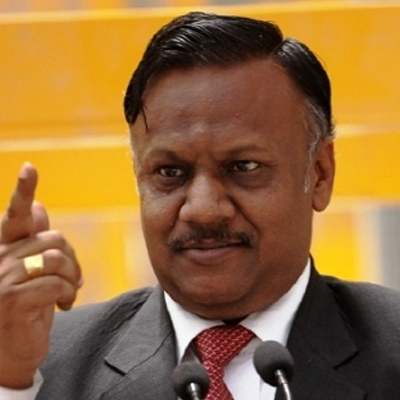
    Mittal, is a senior Indian administrative service (IAS) officer of the 1982 batch from the Himachal Pradesh cadre. Born on 24 February 1958, Mittal is a law graduate and also has a Masters degree in rural development. His first posting was as principal secretary to the then chief minister of Himachal Pradesh and in the information and public relations wing in the state. Mittal was empanelled as secretary in December last year when he was additional chief secretary at Transport, Social Justice & Empowerment Department, Shimla.

    Now, Mittal has to deal with not only the onerous task of overseeing the implementation of the last phase in DAS which will cover all remaining urban and all rural areas of the country by December-end, but bringing the government out of the morass of legal cases which stayed the implementation of DAS Phase III in many states and have now been transferred to the Delhi high court.

    DAS Phase III

    Even though the deadlines for the last two phases of DAS were changed, the stakeholders were clearly unprepared as they all claimed shortage of compatible set top boxes – a claim which even the ministry could not deny. Expectedly, several high courts stayed implementation for varying periods  
    And although the ministry has succeeded in getting all the cases transferred to the Delhi high court, the fact remains that the ministry had itself admitted in a letter to its counsel in Chandigarh that it understood the stay to be pan-India, until the Supreme Court said nothing in the directive of the Bombay high court implied this.

    With the shortage of compatible set top boxes and little headway despite the incentives offered under the Make in India scheme, the ministry has to find ways to encourage indigenous production. Even at present, a large number of LCOs work with poor quality STBs made in China or other countries.

    Added to that is the fact that a large number of broadcasters, multi system operators, and local cable operators have still to work out their agreements – an issue further complicated by the directives of the Telecom Disputes Settlement and Arbitration Tribunal which wants the tariffs to looked at anew.
     
    In fact, many MSOs or LCOs have also not been able to get the Consumer Application Forms from their clients despite major publicity by the broadcasters.

    It is also a fact that analogue transmission continues in many parts of cities and towns that have gone digital and the government has failed to get the stay of DAS in Chennai vacated.

    The Home ministry had many months earlier made it clear that it was prepared to do away with security clearance for Indian-owned multi-system operators, the I and B Ministry has not yet got the go-ahead, with the result that MSOs are only getting provisional licences and the number of those with ten-year permanent licences remains at 231. The new secretary will have to push the Home ministry if he wants DAS to succeed.

    TRAI

    Although these are issues that the Telecom Regulatory Authority of India is dealing with, all decisions relating to the broadcasting sector can only be effective if there is proper coordination between the regulator and the ministry. This effectively means there has to be a quick response to any issues that either of the two raises to the other, if deadlines have to be met.

    Other issues pending before TRAI relating to broadcasting include the need to reconsider the foreign direct investment norms for media, shortage of spectrum, a growing demand by states seeking permissions to start their own television channels despite the TRAI having opined against it twice since 2008, and the imperative to work on the tariff issues for commercial and non-commercial set-ups following directives of the Telecom Disputes Settlement and Appellate Tribunal.

    Although broadcasting duties were handed over to TRAI just over a decade earlier, it is also clear that the ministry will have to consider whether there is need to form a broadcasting-specific body since TRAI is primarily a body set up for the telecom sector. If the Government decides to continue with TRAI handling both portfolios, the regulator will be under pressure from the I and B Ministry to strengthen its broadcasting team and also ensure greater coordination among officers in both broadcasting and telecom.    

    With convergence of technologies becoming a reality, and with issues of spectrum already bringing telecom and broadcasting together, the National Democratic Alliance Government has again begun to talk about convergence and this is bound to gather pace over the next two years.

    Spectrum

    The Defence Ministry has in principle agreed to hand over some spectrum and swap some other spectrum, and TRAI has also worked on the process of auctioning the available spectrum and given out reserve prices, the whole process is caught up in bureaucratic wrangles as it involves the Telecom ministry. If the I and B ministry wants to continue with its policy of ensuring there are no caps on the number of television, FM radio channels, or direct-to-home (DTH) Headed in the sky (HITS) platforms in the country, the issue of spectrum will need early solution.

    FM Radio Auctions

    When the last secretary Sunil Arora took over, the government was in the midst of the first stage of auctions of the FM Radio e-auction which only covered cities which already have FM but there were some vacancies. Learning from the experiences where there were no bids in 13 of the 69 cities, the government has now decided to revise the guidelines for the e-auction. The new secretary may have to find ways of either lowering the reserve price for those cities or finding other incentives before the next stage of e-auction.

    The fact that the cumulative winnings from the channels auctioned so far has exceeded the reserve price by more 100 per cent is undoubtedly a matter of great satisfaction, but some cities failing to attract bidders is an irritant.

    Ad Cap

    The Cable Television Networks (Regulation) Act 1995 was clear that the advertising cap should be twelve minutes an hour, but television channels went to court because many – particularly the news channels most of which are free to air – said they had no other source of income unlike the pay channels. But the ministry is already doing a rethink as admitted by the ministry as well as the News Broadcasters Association.

    This rethink is probably because the I and B minister had said early this last year that he was opposed to ad caps on the print or electronic media, and because the free-to-air channels (most of which are news channels) have already expressed their opposition to this. TRAI had failed to get permission to take action against television channels violating its diktat of a total of 12 minutes of commercial and promotional advertisements every hour, though all broadcasters were asked to keep records of this by the Delhi High Court.

    Spread of FM Radio vs DRM

    The Digital Radio Mondiale Consortium feels that All India Radio has done the most in terms of digitization of radio. AIR has in fact spent crores of rupees on the digitized Digital Radio Mondiale. But Prasar Bharati feels that Frequency Modulation which is an analogue technology should be promoted until the nation is ready for digital radio sets.

    The ministry can resolve this issue only if it can ensure adequate manufacture at affordable process of DRM sets under the Make in India programme. Until then, this continues to be a thorn in the already dicey relations between the public service broadcaster and the ministry. The fact remains that there are just one or two manufacturers of DRM sets and these have also been successfully demonstrated in moving cars, but they remain unaffordable.

    Community Radio

    More than a decade has elapsed since the introduction of community radio, but the number of operational stations is still very low. To boost this sector, the government introduced a new scheme last year for funding community radio and has also been giving away awards, but bureaucratic wrangles continue to hold up the smooth implementation of this scheme.

    Prasar Bharati and the Ministry

    On paper, the Prasar Bharati (Broadcasting Corporation of India) Act 1990 is clear that the pubcaster is autonomous. However, in reality this appears to the contrary.

    On the one hand, a group of ministers had decided as a measure to help the pubcaster that persons employed as on 5 October 2007 will get the salary and pension from government funds. For employees who joined after that date, Prasar Bharati was left to fend for itself.

    In any case, Prasar Bharati is listed as an autonomous company under the ministry.

    This means – and it appears so even from the manner in which questions relating to the pubcaster are answered in parliament – that there is dispute on what real autonomy is. Prasar Bharati CEO Jawhar Sircar – a former bureaucrat himself – feels the government does not give him full freedom and there is interference at every level and has said so either in speeches or in articles by him or others in the pubcaster.

    Journalists on the parliamentary beat are often flabbergasted by the fact that when it suits the government, a reply will say that the pubcaster is an autonomous body, and yet there has been the intervention of the government even in appointments in Prasar Bharati.

    While there is generally full autonomy as far as content goes, there are allegedly checks and balances placed by the government in administrative matters.

    In a new development that has in principle been accepted by the government, Prasar Bharati, which has been losing revenue and viewership, has decided to auction prime time slots – perhaps inspired by the success of the e-auctions of slots on the country’s only free-to-air direct-to-home platform DD Freedish, or the FM auctions.

    Freedish

    Even though the auctions have been extremely successful and the pubcaster not only got two or three times the reserve price per slot, but even managed to get at least two pay channels to come as FTA, it has still not been able to switch over from MPEG2 to MPEG4 to enable it to increase the number to 112 as promised over the last three to four years.

    Foreign Direct Investment

    The TRAI had given its recommendations for an increased FDI in many sectors of the media in a report in July 2013. Although there was some change by the government earlier this year, it has still not implemented the FDI report of TRAI in full.

    Security Clearance

    While the Home ministry has decided it is doing away with security clearance for MSOs, it has not taken a decision as far television channels are concerned. And while the issue relating to foreign ownership can be understood, the denial of security clearance to Sun TV and its affiliated MSOs continues to flummox everyone in the media. It is generally felt that an accused is not guilty till proved, but the Home ministry – and the I and B ministry – appear to have decided that the Maran brothers should be denied security clearance despite the fact that the cases against them have no relation to the security of the country, and are in fact an incursion n the freedom of the media. Even the Supreme Court while permitting Sun group companies to take part in the FM auction said so.

    Paid News

    It is now almost five years since the issue of paid news became the talk of the town. The Press Council of India set up a committee which even gave recommendations, and a Parliamentary Panel and the Election Commission also wanted some steps to be taken to stop this. But there has been no tangible action so far.

    Film Industry

    The film industry has been raising similar issues year after year. As far as taxation issues were concerned, it was hoped that the Goods and Services Tax when implemented will help. But the way the matter is stuck in parliament forces the industry to just wait and watch.

    Entertainment tax is another issue on which there has been no unanimity and states have different taxes. A proposal about a decade earlier for bringing cinema into the Concurrent List of the Constitution might have solved the problem, but most states opposed the idea. Perhaps the only positive move has been that service tax or cess on entertainment tax has been done away with.

    In a country producing around one thousand feature films every year apart from the large number of films from overseas, the country still suffers from an acute shortage of theatres, with the number less than 11,000. With the high rates of ticketing charged by the multiplexes, the average cinegoer is denied of the pleasure of seeing a film in a cinema hall.

    All attempts to curb video piracy appear to have failed because the film industry and the government have failed to work together to curb the menace, which means huge losses for the makers of bold films unless there are big stars to lure the audiences.

    The Film Museum has been in the planning and making for more than a decade, but it does not appear that the Museum planned for 2013 to coincide with a centenary of cinema will seek the light of day for at least a couple of more years.

    The Centre of Excellence in Animation and Visual Effects

    For almost ten years, minister after minister has promised to set up a Centre of Excellence in Animation and Visual Effects, and Hyderabad and Bangalore have even claimed that they have the right ambience for such a centre.

    But indications are coming that it will be established in the Film City in Goregaon in Mumbai, a decision that may not be digestible to studios of animation and VFX in cities like Hyderabad and Bangalore.

    Clearly, the new secretary has a difficult task ahead, moving on a road that is not without political or bureaucratic potholes that can hold up even his best intentions.


  • Political, bureaucratic wrangles likely road-blocks for the new I&B secretary

    Political, bureaucratic wrangles likely road-blocks for the new I&B secretary

    NEW DELHI: The biggest challenges for the bureaucrats in the country can be summed up in just a few words: being unprepared, and forced to make compromises.

    Thus, a person taking charge as the head of the bureaucracy in any ministry has to put aside his or her own personal views and get down to translating the decisions of the government and the minister/ministers into action, apart from the fact that he or she may be completely new to the field. And this task becomes even more onerous when there are deadlines to be met in short periods of time.

    Ajay Mittal is taking over the reins of the administrative machinery in the Information and Broadcasting ministry from Sunil Arora who had barely eight months to grapple with problems. Arora joined the Ministry on 31 August last year just as the ministry was making preparations for the Digital Addressable System Phase III and was in the midst of the Phase III auctions of FM radio.

    Mittal, is a senior Indian administrative service (IAS) officer of the 1982 batch from the Himachal Pradesh cadre. Born on 24 February 1958, Mittal is a law graduate and also has a Masters degree in rural development. His first posting was as principal secretary to the then chief minister of Himachal Pradesh and in the information and public relations wing in the state. Mittal was empanelled as secretary in December last year when he was additional chief secretary at Transport, Social Justice & Empowerment Department, Shimla.

    Now, Mittal has to deal with not only the onerous task of overseeing the implementation of the last phase in DAS which will cover all remaining urban and all rural areas of the country by December-end, but bringing the government out of the morass of legal cases which stayed the implementation of DAS Phase III in many states and have now been transferred to the Delhi high court.

    DAS Phase III

    Even though the deadlines for the last two phases of DAS were changed, the stakeholders were clearly unprepared as they all claimed shortage of compatible set top boxes – a claim which even the ministry could not deny. Expectedly, several high courts stayed implementation for varying periods  
    And although the ministry has succeeded in getting all the cases transferred to the Delhi high court, the fact remains that the ministry had itself admitted in a letter to its counsel in Chandigarh that it understood the stay to be pan-India, until the Supreme Court said nothing in the directive of the Bombay high court implied this.

    With the shortage of compatible set top boxes and little headway despite the incentives offered under the Make in India scheme, the ministry has to find ways to encourage indigenous production. Even at present, a large number of LCOs work with poor quality STBs made in China or other countries.

    Added to that is the fact that a large number of broadcasters, multi system operators, and local cable operators have still to work out their agreements – an issue further complicated by the directives of the Telecom Disputes Settlement and Arbitration Tribunal which wants the tariffs to looked at anew.
     
    In fact, many MSOs or LCOs have also not been able to get the Consumer Application Forms from their clients despite major publicity by the broadcasters.

    It is also a fact that analogue transmission continues in many parts of cities and towns that have gone digital and the government has failed to get the stay of DAS in Chennai vacated.

    The Home ministry had many months earlier made it clear that it was prepared to do away with security clearance for Indian-owned multi-system operators, the I and B Ministry has not yet got the go-ahead, with the result that MSOs are only getting provisional licences and the number of those with ten-year permanent licences remains at 231. The new secretary will have to push the Home ministry if he wants DAS to succeed.

    TRAI

    Although these are issues that the Telecom Regulatory Authority of India is dealing with, all decisions relating to the broadcasting sector can only be effective if there is proper coordination between the regulator and the ministry. This effectively means there has to be a quick response to any issues that either of the two raises to the other, if deadlines have to be met.

    Other issues pending before TRAI relating to broadcasting include the need to reconsider the foreign direct investment norms for media, shortage of spectrum, a growing demand by states seeking permissions to start their own television channels despite the TRAI having opined against it twice since 2008, and the imperative to work on the tariff issues for commercial and non-commercial set-ups following directives of the Telecom Disputes Settlement and Appellate Tribunal.

    Although broadcasting duties were handed over to TRAI just over a decade earlier, it is also clear that the ministry will have to consider whether there is need to form a broadcasting-specific body since TRAI is primarily a body set up for the telecom sector. If the Government decides to continue with TRAI handling both portfolios, the regulator will be under pressure from the I and B Ministry to strengthen its broadcasting team and also ensure greater coordination among officers in both broadcasting and telecom.    

    With convergence of technologies becoming a reality, and with issues of spectrum already bringing telecom and broadcasting together, the National Democratic Alliance Government has again begun to talk about convergence and this is bound to gather pace over the next two years.

    Spectrum

    The Defence Ministry has in principle agreed to hand over some spectrum and swap some other spectrum, and TRAI has also worked on the process of auctioning the available spectrum and given out reserve prices, the whole process is caught up in bureaucratic wrangles as it involves the Telecom ministry. If the I and B ministry wants to continue with its policy of ensuring there are no caps on the number of television, FM radio channels, or direct-to-home (DTH) Headed in the sky (HITS) platforms in the country, the issue of spectrum will need early solution.

    FM Radio Auctions

    When the last secretary Sunil Arora took over, the government was in the midst of the first stage of auctions of the FM Radio e-auction which only covered cities which already have FM but there were some vacancies. Learning from the experiences where there were no bids in 13 of the 69 cities, the government has now decided to revise the guidelines for the e-auction. The new secretary may have to find ways of either lowering the reserve price for those cities or finding other incentives before the next stage of e-auction.

    The fact that the cumulative winnings from the channels auctioned so far has exceeded the reserve price by more 100 per cent is undoubtedly a matter of great satisfaction, but some cities failing to attract bidders is an irritant.

    Ad Cap

    The Cable Television Networks (Regulation) Act 1995 was clear that the advertising cap should be twelve minutes an hour, but television channels went to court because many – particularly the news channels most of which are free to air – said they had no other source of income unlike the pay channels. But the ministry is already doing a rethink as admitted by the ministry as well as the News Broadcasters Association.

    This rethink is probably because the I and B minister had said early this last year that he was opposed to ad caps on the print or electronic media, and because the free-to-air channels (most of which are news channels) have already expressed their opposition to this. TRAI had failed to get permission to take action against television channels violating its diktat of a total of 12 minutes of commercial and promotional advertisements every hour, though all broadcasters were asked to keep records of this by the Delhi High Court.

    Spread of FM Radio vs DRM

    The Digital Radio Mondiale Consortium feels that All India Radio has done the most in terms of digitization of radio. AIR has in fact spent crores of rupees on the digitized Digital Radio Mondiale. But Prasar Bharati feels that Frequency Modulation which is an analogue technology should be promoted until the nation is ready for digital radio sets.

    The ministry can resolve this issue only if it can ensure adequate manufacture at affordable process of DRM sets under the Make in India programme. Until then, this continues to be a thorn in the already dicey relations between the public service broadcaster and the ministry. The fact remains that there are just one or two manufacturers of DRM sets and these have also been successfully demonstrated in moving cars, but they remain unaffordable.

    Community Radio

    More than a decade has elapsed since the introduction of community radio, but the number of operational stations is still very low. To boost this sector, the government introduced a new scheme last year for funding community radio and has also been giving away awards, but bureaucratic wrangles continue to hold up the smooth implementation of this scheme.

    Prasar Bharati and the Ministry

    On paper, the Prasar Bharati (Broadcasting Corporation of India) Act 1990 is clear that the pubcaster is autonomous. However, in reality this appears to the contrary.

    On the one hand, a group of ministers had decided as a measure to help the pubcaster that persons employed as on 5 October 2007 will get the salary and pension from government funds. For employees who joined after that date, Prasar Bharati was left to fend for itself.

    In any case, Prasar Bharati is listed as an autonomous company under the ministry.

    This means – and it appears so even from the manner in which questions relating to the pubcaster are answered in parliament – that there is dispute on what real autonomy is. Prasar Bharati CEO Jawhar Sircar – a former bureaucrat himself – feels the government does not give him full freedom and there is interference at every level and has said so either in speeches or in articles by him or others in the pubcaster.

    Journalists on the parliamentary beat are often flabbergasted by the fact that when it suits the government, a reply will say that the pubcaster is an autonomous body, and yet there has been the intervention of the government even in appointments in Prasar Bharati.

    While there is generally full autonomy as far as content goes, there are allegedly checks and balances placed by the government in administrative matters.

    In a new development that has in principle been accepted by the government, Prasar Bharati, which has been losing revenue and viewership, has decided to auction prime time slots – perhaps inspired by the success of the e-auctions of slots on the country’s only free-to-air direct-to-home platform DD Freedish, or the FM auctions.

    Freedish

    Even though the auctions have been extremely successful and the pubcaster not only got two or three times the reserve price per slot, but even managed to get at least two pay channels to come as FTA, it has still not been able to switch over from MPEG2 to MPEG4 to enable it to increase the number to 112 as promised over the last three to four years.

    Foreign Direct Investment

    The TRAI had given its recommendations for an increased FDI in many sectors of the media in a report in July 2013. Although there was some change by the government earlier this year, it has still not implemented the FDI report of TRAI in full.

    Security Clearance

    While the Home ministry has decided it is doing away with security clearance for MSOs, it has not taken a decision as far television channels are concerned. And while the issue relating to foreign ownership can be understood, the denial of security clearance to Sun TV and its affiliated MSOs continues to flummox everyone in the media. It is generally felt that an accused is not guilty till proved, but the Home ministry – and the I and B ministry – appear to have decided that the Maran brothers should be denied security clearance despite the fact that the cases against them have no relation to the security of the country, and are in fact an incursion n the freedom of the media. Even the Supreme Court while permitting Sun group companies to take part in the FM auction said so.

    Paid News

    It is now almost five years since the issue of paid news became the talk of the town. The Press Council of India set up a committee which even gave recommendations, and a Parliamentary Panel and the Election Commission also wanted some steps to be taken to stop this. But there has been no tangible action so far.

    Film Industry

    The film industry has been raising similar issues year after year. As far as taxation issues were concerned, it was hoped that the Goods and Services Tax when implemented will help. But the way the matter is stuck in parliament forces the industry to just wait and watch.

    Entertainment tax is another issue on which there has been no unanimity and states have different taxes. A proposal about a decade earlier for bringing cinema into the Concurrent List of the Constitution might have solved the problem, but most states opposed the idea. Perhaps the only positive move has been that service tax or cess on entertainment tax has been done away with.

    In a country producing around one thousand feature films every year apart from the large number of films from overseas, the country still suffers from an acute shortage of theatres, with the number less than 11,000. With the high rates of ticketing charged by the multiplexes, the average cinegoer is denied of the pleasure of seeing a film in a cinema hall.

    All attempts to curb video piracy appear to have failed because the film industry and the government have failed to work together to curb the menace, which means huge losses for the makers of bold films unless there are big stars to lure the audiences.

    The Film Museum has been in the planning and making for more than a decade, but it does not appear that the Museum planned for 2013 to coincide with a centenary of cinema will seek the light of day for at least a couple of more years.

    The Centre of Excellence in Animation and Visual Effects

    For almost ten years, minister after minister has promised to set up a Centre of Excellence in Animation and Visual Effects, and Hyderabad and Bangalore have even claimed that they have the right ambience for such a centre.

    But indications are coming that it will be established in the Film City in Goregaon in Mumbai, a decision that may not be digestible to studios of animation and VFX in cities like Hyderabad and Bangalore.

    Clearly, the new secretary has a difficult task ahead, moving on a road that is not without political or bureaucratic potholes that can hold up even his best intentions.