Tag: Sunder Aaron

  • Q India hits goal of 100 Million TV homes

    Q India hits goal of 100 Million TV homes

    MUMBAI: QYOU Media Inc., (TSXV: QYOU; OTCQB: QYOUF) has announced that The Q India, the company’s Hindi language youth oriented channel available in and on over 700 million homes and devices in India, has reached its 2021 goal of distribution to 100 Million TV Households as a result of launching on both DD Free Dish & Dish TV in April. The Q India has now gone live to 50 million additional TV homes in the month of April placing it in a position to challenge leading youth oriented channels and brands in the country that previously had significantly higher numbers of homes reached. The company issued a press release on 1 March 2021 in connection with the new DD Free Dish (Channel 34) agreement. The new distribution relationship with DISH TV (Channel 128) has not been previously disclosed.

    QYOU Media India co-founder & general manager Sunder Aaron said, “2021 continues to be a year where The Q India is accelerating the depth and breadth of our foundation for becoming a mainstream brand and media company in India.  We have stated our goal of being a leading youth brand in India and distribution agreements like these are a key to making that happen. In addition, these are critically important building blocks as we pursue growing ratings and the ensuing revenue that will occur”.

    The Q India is an advertiser and influencer marketing supported Hindi language content brand, channel and VOD provider delivering hit digital programming from social media stars and leading digital video creators targeting Young Indian audiences.  The channel has recently become one of India’s fastest growing youth entertainment brands reaching 4.4 Gross Rating Points (GRP) on BARC (Broadcast Audience Research Council) in February 2021. With a growing library of over 850 programs, and beginning in April with the addition of DD Free Dish, the channel will reach an audience of over 712 million via 100 million television homes with partners including DD Free Dish, TATA Sky, DISH TV and SitiNetworks; 380 million OTT users via platforms including ShemarooMe, MX Player, ZEE5, and Dish Watcho; and 232 million users on mobile and digital platforms including Snap, JioTV, Airtel Xstream, Amazon Fire TV, Chingari and Samsung TV Plus.

  • Locomotive Global’s Sunder Aaron on “Seeker” & upcoming projects

    Locomotive Global’s Sunder Aaron on “Seeker” & upcoming projects

    MUMBAI: Sunder Aaron’s Locomotive Global develops, produces and distributes Indian-themed TV projects for both the local and international markets. The company has now partnered with Sameer Nair’s Applause Entertainment and Gurinder Chaddha’s Bend It Films & TV for an international drama series named Seeker. Meanwhile the company is focussed on creating IPs and acquiring content.

    Elaborating more on this co-production and the series, Locomotive Global co-founder and principal Sunder Aaron tells indiantelevision.com that the story ideas and characters were created by him and Chaddha a couple of years ago. It was only recently that they approached Sameer Nair’s Applause Entertainment for the project. “Sameer has some terrific ambition for his company and the projects that they are doing and they are going to be doing going forward. So, it’s a really terrific firm,” he adds.

    The story is at the initial stage where the writers are busy in drafting the script. According to Sunder they will be ready to roll the camera by around the first quarter of 2021.

    Sunder also mentions that the shooting will happen in India as well as abroad. He says, “The story is based on the background of India. However, internationally, audiences and viewers are interested in authentic storytelling no matter where it comes from. First and foremost we want the viewers in India to enjoy this show, but I am sure we will find global audiences as well. We will get the primary idea of shooting location once the script is completed. Post that we can finalise the locations and do the recce. In season three we will take the story abroad. We have thought about creating multiple seasons of this show.”

    As far as direction is concerned, Chaddha will direct the pilot episode. Post that, depending upon the requirement, she may direct other episodes as well.  Typically, in a premium scripted television there is not one director. So in the case of Seeker, Chaddha will be the lead director who will make sure the tone and quality that she sets in the pilot episode gets followed by the other directors.

    The production house is in talks with multiple Indian and international directors. It is a hour-long ten-episode series. No production will happen overseas. As Applause Entertainment is the main studio, they will hire the line producers and simultaneously look after production work in India.

    He further adds, “Sameer has a very creative team at Applause, Gurinder and my company, the three of us will be looking at hiring key people. It is a joint production effort; we are producing it together. Casting will be done when things are finalised as there are many characters and we need to go a little deeper into things.”

    According to Aaron, funding will be done by Applause Entertainment.

    “We will put our series on a premium broadcast channel platform. We are also talking to several OTT platforms," he adds.

    By the first half of 2021 Locomotive Global will be ready with close to four premium television series that ilwill be taken to production. He says, “There are a number of shows which are under development. We are constantly acquiring IPs. We have acquired the rights of American series named Ray Donovan from CBS Studios International that will be remade in India. It will be mostly done by 2021.”

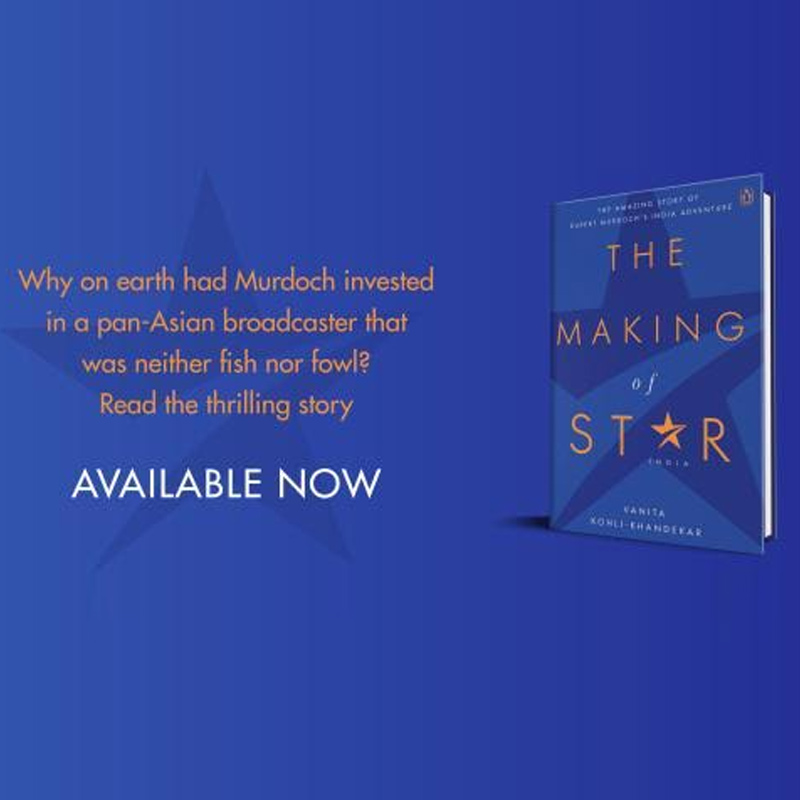
    The Making of Star India, was acquired by Locomotive Global Inc. in partnership with Sidharth Jain's company Story Ink. Sidharth Jain and Sunder Aaron  are producing the project together.  He is using the book as a primary source material for another scripted drama series set in the late 90s and early 2000s. He thinks that a lot has happened at the beginning when Star TV came to India. At the launch of the industry a lot of stories and shows were made on Silicon Valley and the internet boom but nothing on Indian television.

    He says, “I think the Indian television is an extraordinary story waiting to be told. We are adapting it in a way that will fictionalise that era and period. It will be something like Succession and Mad Men. We have started the development and we are working with writers but it will take some time.”

    Addressing the challenges that he foresees in the coming future, he notes that the most obvious challenge is production getting back up and accessing key talent.

    “Presumably, people will begin full-fledged shooting by the start of new year, but then it will be difficult to get technical talent. A lot of actors will be unavailable because they will be booked. Another important thing is to find another shooting location apart from Mumbai. We will have to look at other places where we can shoot like Hyderabad and Goa. I am doing a film project in Goa.”

    Aaron’s Hindi general entertainment channel Q India has also been severely impacted by the pandemic caused by Covid2019. Q India is completely advertising supported and it faced many challenges in terms of viewership and advertisement.

    He concludes, “We do not charge a subscription fee for the channel. We were on the verge of a lot of good projects but that got stalled due to pandemic. We are constantly working to evolve the channel under challenging circumstances. Despite the pandemic and the set back, I am sure I will get out of this situation. We were planning to create vernacular channels but that has got pushed now.”

  • Applause Entertainment partners with Gurinder Chadha and Sunder Aaron

    Applause Entertainment partners with Gurinder Chadha and Sunder Aaron

    MUMBAI: With a strong focus on building an exciting and ambitious content slate that serves a diverse set of audiences, Applause Entertainment has rapidly emerged as one of the leading studios in India. An Aditya Birla Group venture, the content studio led by media veteran Sameer Nair has announced its first International partnership with the highly acclaimed Gurinder Chadha’s Bend It Films & TV and Sunder Aaron's Locomotive Global, to expand its global footprint.

    Under this partnership the companies are developing an original, multi-season, drama series chronicling the life of an Indian Guru. This show titled Seeker witnesses the journey of a man who starts with noble intentions, his incredible rise to global fame and following even as he evolves into a grey mystic. The simple ashram gradually turns into an empire, soon too complicated for him to handle. With a colourful cast of characters and dark, complex layers, the series is currently under development and a multi-national writers room has been set up for it. It will feature an International Indian cast and be shot at various locations within and outside of India.

     Applause Entertainment CEO Sameer Nair said, “We are thrilled to announce our collaboration with Gurinder Chadha and Sunder Aaron. Gurinder’s passion for telling stories and the global expertise of Locomotive Global aligns well with our philosophy and strength for investing in and creating outstanding premium content. This is an incredible time to tell this particular story, about the faith of the human race in a higher power, and in the telling, to cater to a universal, global sensibility.”

    Award-winning filmmaker and Bend It Films & TV chairperson Gurinder Chadha said, “As an International Director and Producer, I have been inspired to witness the strong appetite that both Indian and global audiences have for original, ambitious, border-crossing drama series. I am excited about this creative collaboration with Sameer Nair and his team at Applause along with Sunder Aaron. "   

    Locomotive Global co-founder and principal Sunder Aaron said, "Applause Entertainment in a short time has already made waves in India. We are excited to be part of their mission to tell stories that also make waves around the world. We are thrilled to partner with a special talent in Gurinder Chadha and are extremely pleased to work with Bend It Films & TV and Applause Entertainment on this compelling and unique narrative project. Together, we are already working to bring together a brilliant team of writers and creators who will help us develop high quality scripts and present this fascinating story to a global audience."  

    Over the years, Gurinder Chadha has made her mark as one of the most reputed and notable content producers. She and her team are the minds behind the award winning – Bend it Like Beckham, Bride and Prejudice, Blinded By The Night, Viceroy’s House, Angus, Thongs and Perfect Snogging and the recently released drama series, Beecham House on Netflix India.

    Also partnering on the series is Locomotive Global Inc, a global media company led by Sunder Aaron, who has in the past worked on building channels for Sony Entertainment Television India, and has also cofounded Hindi language television network, The Q India. Aaron is a leading media professional focused on the creation and distribution of original premium content across the globe.

    Applause Entertainment is the first of its kind, Indian content and IP creation studio, creating premium content, and working with platform partners to entertain and delight their customers. It has created over 19 diverse shows across languages which are a combination of international format adaptations, book adaptations and originals.

    The studio introduced the Indian audiences to the official adaptations of popular international shows like Criminal Justice, Hostages, The Office and Your Honor, and is presently developing Indian versions of hit shows like Fauda and  Luther. Applause Entertainment has also created rich original content with shows like Rasbhari, City of Dreams, Bhaukaal and Hasmukh. All these drama series have found homes on leading global video streaming services like Disney+Hotstar, Amazon Prime Video, MX Player, Netflix and others. Recently, Applause Entertainment announced its latest multi-show deal with the refreshed SonyLIV 2.0.

    Follow Tellychakkar for the consumer facing news & entertainment

  • Story Ink, Locomotive Global Inc acquire screen adaptation rights for ‘The Making of Star India’

    Story Ink, Locomotive Global Inc acquire screen adaptation rights for ‘The Making of Star India’

    MUMBAI: India is getting its very own version of Mad Men on the life and times of the broadcasting world. The meteoric rise of Rupert Murdoch’s Star India during the satellite boom of the 1990’s will now be the base for an upcoming digital drama series. Locomotive Global and The Story Ink have acquired the screen adaptations for Vanita Kohli-Khandekar’s book ‘The Making of Star India’.

    The book takes the reader through the fascinating journey of Star: how Rupert Murdoch bought Star TV, then a pan-Asian broadcaster, from Hong Kong businessman Richard Li, and its transformation over the years into one of the three largest media companies in India.

    Story Ink founder Sidharth Jain and Locomotive Global co-founder Sunder Aaron will produce a 10-episode, multi-season, scripted drama series using the book as a base. The fictional series will be based on the heady days of Indian television, during the 90’s and 2000’s, rather than a literal translation of the book.

    Jain stated, “Our aim is to create a global quality scripted series. A ground-breaking new show that will be akin to Mad Men meets Succession, and set in the roaring rah-rah early days of the Indian television industry of the late 1990’s and early 2000’s.”

    The on-screen adaptation will carry the audience on a journey through the meteoric rise and revolution of the Indian television industry. Jain and Aaron’s objective is to produce a premium drama series that will be made available to viewers via a global streaming platform partner. 

    Aaron commented, “We aim to pull the curtains back and present the story of Indian television in an unconventional and groundbreaking way that people around the world will find compelling to watch. Today more than ever before, viewers of premium drama series want to lose themselves in an authentic world they find fascinating and yet never knew existed.”

    “As a teenager, I won awards for fiction; I found my profession in non-fiction. Now over two decades later a piece of non-fiction I have written is being used to create a drama series. Life comes full circle,” shared Kohli-Khandekar in a LinkedIn post.

    One such show that has been previously attempted was TVF’s Thinkistan that explored the advertising industry in the 1990s.

  • The Q India hopes to cross 75 million Pay TV households, plans to launch regional version in 2020

    The Q India hopes to cross 75 million Pay TV households, plans to launch regional version in 2020

    MUMBAI: Even as most new media entrepreneurs are going the digital way, The Q India is taking a different approach. The Q India’s first focus is traditional pay TV where it feels this audience is still underserved.

    As the completely owned subsidiary of QYOU Media, the channel has been targeting the Hindi speaking audience in the age group of 20-30 years. To address this need gap, not only has it ramped up distribution but is also going to extend the channel with regional languages by 2020.

    The Q India co-founder, MD and Locomotive Global Inc (LGI) co-founder and partner Sunder Aaron in an interaction with Indiantelevision.com’s Gargi Sarkar spoke on the network’s content strategy, expansion plans outside India and future goals.

    Edited excerpts:

    Please elaborate on The Q India’s content strategy and partnership deals.

    The Q India was launched a couple years ago, and has become a fully Hindi language channel in the course of the past year. The content strategy is simple: we want to work with the best digital content creators in India who are also social media stars and media influencers, and create a channel that is relevant for young Indians. We've fashioned the channel to appeal directly to Hindi-speaking young Indians, 20-30 years old, who, we feel, are under-served in the Indian pay TV landscape. Of course, The Q India is available across platforms. So while pay TV is our immediate focus, we are also widely distributed on OTT and mobile platforms. These digital platforms are of vital importance to us, and will only grow in value and primacy over time. It may take a few years, so until that time, we are going to make sure that the linear TV channel continues to grow and improve. Since the channel is a Hindi language general entertainment channel, we apply to our FPC some basic principles for programming broadcast channels. As we get more and more info and data about our audience and their viewership patterns, we are able to tweak and refine the programming offering and schedule. We've seen rapid growth in our audience and viewership over the past year, so we seem to be doing something right! 

    We have a number of partnerships with leading distribution platforms including Tata Sky and Airtel Digital for Pay TV, and MX Player, Zee 5, Sony LIV, Dish Watcho, and Jio for mobile and OTT. 

    We have got terrific content partnerships as well, including with Pocket Aces, Culture Machine, Miss Malini, Nirvana Digital, Arre, Spot Boye and AajTak, to name a few. 

    What is the target audience you are looking at?

    Young Indians, 20-30 years old. While our flagship channel, The Q India, is Hindi language, we are aiming to launch regional versions of The Q starting in 2020. 

    What do you want to achieve by the end of 2019?

    We have started distribution of The Q with cable operators, so we hope to cross a reach of 75 million pay TV households as we enter the new year. We have just started our ad sales efforts in earnest, so would also love to start adding some blue chip advertising partners going into 2020. Of course, our expectations and objectives for 2020 are expansive, so finishing 2019 on a high note will give us the platform we need from which we can really take off as a business and brand!

    Are you looking at expanding The Q India outside India?

    Yes, in fact, our strategy in India for The Q is the same approach that we expect to take as we enter other Asian and European markets. We have been eying local versions of The Q in Indonesia, Philippines, Thailand, Vietnam as well as Germany and the United Kingdom. 

    You have partnered with a few OTT platforms. What has been the content consumption trend from the feedback you received from the platforms?

    We are still newly-launched on most of our partners' OTT platforms. The early feedback has been positive, and it's clear that we are a good fit, since we share the same target audience as our OTT platform partners.

    What are the major challenges right now is the ecosystem which may impact you as well?

    It would be great to have an independent ratings service (equivalent to BARC for TV) for digital viewership. Once we have a trusted currency for this space, it will help really grow the market adoption of advertising on digital platforms. While digital advertising continues to grow every year, it's still dominated by Facebook and Google. It will be a challenge but a big step forward when agencies, advertisers and companies begin to widen and diversify their media plans. 

    The economy has also been a challenge for advertising-supported businesses. While India is generally fine, the market has been a little slower and festive period less robust than expected. While all the signs seem to indicate that the summer will see a more robust market, we will have to wait and see. 

    Meanwhile, marketing costs continue to be high. It's difficult and costly to build a brand in India (especially in the metros). We expect to start investing more resources into brand building and activations (e.g. Q FEST) so that The Q will grow and expand across India's young people. Fortunately, we own a television channel ourselves, which is the best possible vehicle to rely upon to create profile and familiarity for a new brand! 

  • Krishna Menon appointed chief revenue officer at The Q India

    Krishna Menon appointed chief revenue officer at The Q India

    MUMBAI: QYOU Media has announced that it has appointed Krishna Menon as chief revenue officer of The Q India.

    Menon comes experienced in sales and marketing in the Indian media and entertainment industry. Before joining The Q India, he served as chief marketing officer at Sakal Media Group and general manager at Network 18 Media. He will be responsible for increasing advertising sales and boosting digital, channel and mobile platform revenues by creating new opportunities for monetization. With that he will also oversee The Q’s expansion into influencer marketing initiatives.

    Sunder Aaron, general manager at The Q said, “The Q India business is growing quickly, and we’re excited to build on this momentum by bringing Krishna onto our executive management team. Krishna has a proven track record of growing media and mobile businesses in the region. He’s also someone who knows how to fashion and cultivate a brand and will serve as a key player as we further grow The Q into the leading channel and programming brand for young Indians aged 20-30 years old.”

    Krishna Menon on his new journey said, “I am thrilled to be joining The Q India team. I look forward to helping build The Q into a premier entertainment brand for young Indians and capitalizing on new opportunities to maximize revenue potential through ad sales, channel distribution and influencer campaigns with partners.”

  • Year of flux and expansion for English movie channels : Pix business head Sunder Aaron

    Year of flux and expansion for English movie channels : Pix business head Sunder Aaron

    The past year has been a great step forward for the entire English Movie Channel category which has gained both in size and viewership.

    2011 – Looking Back before Seeing Forward:

    The overall viewership for the category increased by a whopping 50 per cent. Channels have also realised the importance of creating brand extension programmes for their viewers to gain viewer loyalty and top of mind recall. Many new brand extension programmes have been launched by many channels to build a close relationship with their viewers.

    The Pix Movie Club is a great example of connecting with viewers beyond their television screens. The club is college-based community for students which allows them to watch new Hollywood theatrical releases for free. The main link between the channel and the club is Hollywood and not the content on the channel. Many sponsors and advertisers are also very keen to be associated with such properties since it establishes a direct and personal connection with prospective consumers.

    Distribution fees and carriage did not abate in 2011, and it was amazing in some circumstances to see new channels that address limited audiences launching and paying a high price just to make a splash in the market.

    Looking at the ratings pattern for the genre over last year you will see that the English movie category is competing as fiercely as the GEC channels. The channels are putting forth tight scheduling and great content to garner maximum eyeballs.

    There is fierce competition among the top four channels for the top spot. No channel remains at the same position for too long unlike the year of 2010.

    Pix has its own interesting trends worth quickly highlighting. 2011 has been a great year for us in many ways. The year began with Pix introducing major blockbuster films which we acquired through our exclusive output deal for all films under the SPE banner. It gave me immense joy to crack this deal since this was a foundation for a brand new Pix!

    The channel transitioned from a storyteller to a one stop destination for latest Hollywood blockbusters with current titles. The evolution is a continuous process for us and the channel is going from strength to strength. This is a very exciting time for us and even more so for our viewers who took a keen interest in the channel and its new content.

    Trends in 2012

    Content: Competition for content in 2012 will be more aggressive than ever. When it comes to the English movies category, fans of Hollywood films couldn’t be happier given they now have so many channels to choose from.

    Most of the popular titles come from studios and, therefore, scarcity cannot be avoided. Economics teaches us that with high demand and limited product prices will escalate. This trend started in 2011 and will only mount further in 2012. I expect high pricing to remain for the next year at least.

    Digitisation: Digitisation means channels must become more relevant for its viewers, since consumers will themselves hand select channels they want on their television set top box. This also marks a change in the television landscape which has been long overdue in India.

    Digitisation should also lead to greater transparency and rationalisation for all the stakeholders involved in the industry including consumers, operators and broadcasters. Indian cable systems that offer multi channel TV in India are technologically outdated and need to catch up with the rest of the world. The economics of multi channel television are better for operators as well as broadcasters.

    When you consider the great variety of channels that consumers have to choose from at low subscription prices, India may arguably have the greatest television market in the world. Keep in mind, our industry here is still very young; it’s less than 20 years old whereas private TV started in the 1950’s in the US. The evolution of television, the “Televolution”, will continue for some time.

    Digitisation is just the next stage of growth for all of those concerned. While we can look at the other markets around the world for lessons and guidance, we should also be careful not to believe that they are offering us lessons on the right or wrong way of doing things.

    The Indian television market is its own vast, and unique creature. Our own methods of packaging, pricing etc. will develop naturally as digitisation proliferates.

    Distribution: While we can expect digitisation to have an effect on the carriage fees and cost of placements, it’s hard to anticipate what exactly will happen and na?ve to expect carriage fees to go away entirely.

    Many of the channels and networks that launched with big carriage budgets meant to attain clear and immediate success are playing a valuation game rather than making their P/L a priority. At some point this will catch up with them.

    Perhaps 2012 will see some shake outs of these channels, and should digitisation be immediately successful, we might see several of them convert their business models. Hopefully in 2012, we will see lots more services being launched by cable operators including VOD, SVOD, PPV, broadband and data services, Internet radio and, perhaps, even telephony.

    Marketing: Marketing will play a more important role in a digitised environment than ever before. Marketers will need to utilise new and unique means to differentiate their brand from competition, while remaining cost efficient.

    In the highly competitive English Movie Channel category, the top 4 channels have similar programming and brand offerings. This makes it essential for the channels to market and promote themselves distinctly.

    For example, if I were to take a hoarding at Marine Drive to promote the Pix Super Movie of the Month, it may be successful in a typical (and costly) way, but it won’t create any differentiation for the brand (all movie channels have advertised themselves on prominent hoardings at one point or another). But if my communication has a differentiated message and/or is delivered via a distinct and innovative media vehicle, then the marketing communication would create a ‘differentiating’ factor for the brand as well as driving viewers to the channel.

    At Pix we try to conduct as much ‘Differential Marketing’ as possible, to really distinguish Pix from the rest of the category. It’s not always easy, and it’s certainly not always cheap. In fact, it often requires experimentation which can prove to be expensive. However, given the changing television landscape, the brands which don’t run work on their Differential Marketing will run the risk of losing out.

  • Pix eyes 20% revenue growth in FY’12

    Pix eyes 20% revenue growth in FY’12

    MUMBAI: English movie channel Pix is eyeing a 20 per cent in fiscal 2011-12, despite a looming slowdown.

    Pix business head Sunder Aaron says that the effects of the economic slowdown are not yet visible for the channel.

    “The first quarter of next year will give us a good idea of how 2012 will fare. You could have some caution among clients who have business interests in Europe like Volkswagen and HUL,” Aaron explains.

    However, he adds that even in time of slowdown, TV viewership doesn‘t go down. “When there is a slowdown, television viewership is not affected as it is an inexpensive form an entertainment. For this fiscal we expect revenue growth of over 20 per cent,” Aaron says.

    Meanwhile, the channel has taken its local movie review initiative ‘Chicks on Flicks‘ online on Facebook.

    Now one can see the reviews of Ira Dubey and Neha Sareen online, in two to three minute bytes, as opposed to the half an hour show earlier.

    Aaron says that in India exhibitors and distributors do not allow film critics to see a film two weeks in advance. They could only see it on the day of its release or just before that. So by the time the episode went on air the film was already well into its run.

    Aaron adds that the channel has 300,000 fans on Facebook. “In an age where youngsters are constantly hooked on to social networking Chicks On Flicks could not have a better platform. The show will also be current since the reviews will appear on the same day as the theatrical release of the film.”

  • ‘Pix’s growth has upset the balance in the English movie genre’ : Pix business head Sunder Aaron

    ‘Pix’s growth has upset the balance in the English movie genre’ : Pix business head Sunder Aaron

    The English movie channel space has seen a shake-up. The power centre has been upset with the growth of Pix and the onslaught of new entrant Movies Now. From being a two-horse race, now there are four – Star Movies, HBO, Movies Now and Pix.


    Having acquired the library of its parent Sony Pictures Entertainment, Pix is making a bigger push in a market that is getting more competitive.


    In an interview with Indiantelevision.com‘s Ashwin Pinto, Pix business head Sunder Aaron talks about the rise of the channel, the challenges the genre faces and the opportunities to grow the market.


    Excerpts:

    What have been the focus areas of Pix this year?
    To capture moré and more good content, given the competitive nature of the market; to ensure that the channel is distributed on the right networks and in the right position; and to create an environment for viewer stickiness.

    How far has Pix gained from the output deal with parent Sony Pictures Entertainment?
    The perception about Pix among viewers and advertisers has changed as we have moved from a library to a contemporary movie channel. It is easier to change attitudes and perceptions of younger audiences as they do not have an inherent commitment to another channel like HBO or Star Movies.


    Among our target audience, we have beaten HBO since January. The aim is to become No. 1 eventually. We will continue to focus on getting the right content and building distribution.

    Could you talk about how Pix has evolved since launching five years back?
    The appearance has really evolved since we launched the channel with library content. The channel went through a massive packaging overhaul in May-end. Our promos look a lot more younger. We are playing bugs; we also give trivia information for some of our key titles.

    What are the changes you have brought on the programming front?
    We were the first ones to create a single ad break movie slot. We also realised that the afternoons and late nights are the non primetime hours where the viewership is growing.


    Younger audiences come in during the 12:30 pm-4 pm time band. Our programming is geared towards addressing that audience who are mainly college going.


    In the last few weeks, two new things have happened. One is ‘Awesome Saturdays‘ where we have lined up the evening with popular movies. And on Sundays we focus on the 12 pm-4 pm time slot with an initiative called ‘Sunday Breakout‘. This is how we are pushing the weekends.


    We are doing the Dynamite Diwali festival, which takes place on weeknights at 11 pm. In November, we will have an even bigger stunt. It will probably be called ‘Big Guns of Hollywood’.

    ‘The perception about Pix among viewers and advertisers has changed as we moved from a library to a contemporary movie channel. The output deal with Sony Pictures Entertainment has helped in this‘

    What about thematic blocks?
    We had started this when we launched five years back, but have moved away from this as we evolved. When your channel does not have a strong identity or presence, you need to build points which can draw in viewers. However, we continue to do festivals.

    When Pix launched, it skewed towards 25+ audiences. Now where do they come from?
    We focus on 15-34 SEC A,B, across six metros. But from a programming perspective, we are inclusive in nature. Older viewers also watch us. We continue with properties like ‘Hand Picked‘which consist of movies that have a strong drama quotient.

    Is this genre seeing more of appointment viewing than say two years back?
    My suspicion is that it is not there. When HBO had groundbreaking series like ‘Sex And The City‘, this was there. Also, when Star Movies had ‘Avatar’ people probably made a point to come in, but they have shown it 30 or 40 times. So you don’t have to make an appointment to view it. I don’t think that it is possible to build it any longer.


    People watch movies in different ways – DVDs, online, on their ipad. So why would you have to make an appointment at 9 pm to sit in front of a channel to watch a film? I don’t think that channels compete on this basis anymore. Competition is on the basis of content, perception and profile.

    Is channel loyalty falling?
    Yes, but this is the case across television and is not something specific to the English movie genre. There is more programme than channel loyalty. There is a residual brand presence in the consumers mind at the same time.

    Has the market dynamics for the genre changed dramatically?
    HBO and Star Movies were the leaders. Pix has grown, which has obviously upset the balance. Then Movies Now came in and upset the balance even more.

    Movies Now has made an impact by focussing on popular films. Does that mean that premieres have lost a bit of their value?
    I think that Movies Now has been clever and there have been elements to their success. One is that they selected films that are widely known and recognizable. Another big factor is that they got the distribution right; they invested a lot in positioning themselves properly. The third factor is that you cannot underestimate the value of the Times support.


    But I wouldn‘t say that it diminishes the value of premieres. It does show that Indian audiences still have an appetite for movies that are familiar to them. But when Pix showed ‘The Karate Kid‘, it was a premiere and propelled us to the No. 1 spot.

    Is there going to be more focus on original shows like ‘Gateway’?
    Yes! But there is a challenge as it is costly. We are talking to sponsors about bringing back ‘Gateway’ in a different form that will be even more exciting. Currently, we do specials from time to time. ‘Chicks on Flicks’ does things on premieres. We will do new series in a couple of months.

    How is the deal with the NBA working out?
    It is working out well. The big challenge, though, is that the NBA is in a lockout; they have not started the season. The players’ union has not come to an agreement with the owners to start the season. The season will get delayed.
    Are you looking at more sports properties to build reach?
    We are careful. The NBA is enough; if we put more, it will look like a sports channel.

    How are you pushing distribution?
    We are attempting to go beyond the six metros. DTH has shown how we are consumed in other markets as well. We are looking forward to cable digitisation.


    I don‘t want to rely so much on ad revenue. But we don‘t get our due in terms of subscription income. Carriage fees rise every year while subscription revenue is not keeping pace with it.

    Between the different mediums, how is your spend split?
    It is defined by the film and not by the city or medium. Flexibility is needed in planning. For instance, if we use radio this month, then next month we may or may not use it at all.


    I would say that online is a very effective medium. It is highly flexible.

    Could you give me a couple of examples of innovative campaigns that have been done this year?
    We did the ‘Hollywood is Here‘ campaign where we used clustered outdoor. In Chowpatty (in Mumbai), we took six to seven hoardings together. In Delhi, we used a cluster of 10 mobile vans standing in one line. We showcased our positioning and the new titles that were coming up.


    For ‘The Social Network‘, we could not use Facebook as a medium. So we used radio and hoardings. People knew Mark Zuckerberg but not the film’s star Jesse Eisenberg. The thought for the campaign was the sexiest man alive; this created an intrigue.

    How are you growing consumer contact initiatives like the Pix Movie Club?
    We have touched 10,000 members. We are in Mumbai, Delhi and Bangalore and we want to take it further down next year. We haven‘t decided on whether or not to rope in advertisers for this.
    Are you looking at more marketing initiatives?
    We are looking at doing something online. We are working on the details. For me, online marketing is about an idea and not just taking out a bunch of banners across sites.
  • ‘Our goal is to increase our audience share to 25 per cent’ : Pix business head Sunder Aaron

    ‘Our goal is to increase our audience share to 25 per cent’ : Pix business head Sunder Aaron

    When Pix launched four years back, it had to be content with library movies. Now the English movie channel has evolved into a stage where it can air current titles to draw in younger audiences and nurture ambitions of competing successfully with Star Movies and HBO.

    A focus area for Pix will be to aggressively get into the action genre.


    An important mix on the channel is also non-film content including football.


    In an interview with Indiantelevision.com‘s Ashwin Pinto, Pix business head Sunder Aaron talks about the channel‘s progress over four years.


    Excerpts:


    What factors prompted Pix to change its positioning to a blockbuster channel?

    Our positioning as a premium Hollywood movie channel has not changed. We are still about telling good stories. It is just that our programming strategy has evolved. Our game plan in 2006 was to transform Pix into a current film channel. We are following the path that we had laid out for ourselves when we launched the channel.

     
    What was the plan in 2006?

    When we launched the channel, we mainly had library movies from Sony and MGM. We also had all time favourites like Jerry Maguire. We still have those but they do not dominate our primetime as much as they used to. We knew that four years down the line we would add current movies and be as current as HBO and Star Movies.

     
    So new films have to be part of the recipe for a successful English movie channel?

    We have learnt that brand new current films are the prized assets in this genre. At the end of the day, that drives spikes in viewership. As long as there are enough spikes, the overall welfare of the channel and its profile will rise. You will see the movie channels that have current films – HBO and Star Movies – excel.


    You can have other kinds of films but it is these big, current films that will drive the channel. Within these current films, it is the action genre that is the most valuable and the most attractive. This is what our focus will rest on.


    Any other lessons that you learnt from the last four years of Pix‘s operations?

    Yes, subtitling. To widen the reach, this is an important tool. We avoided it for a while but our viewers asked us for it. This led to an increase in reach. Shadows of Time, for instance, did well in the six metros. It is a Bengali film with subtitles. Subtitles make it easier for viewers to understand the film.

     
    Is it fair to say that older movies do not have much traction due to the niche nature of this genre?

    You have raised two points. The English film genre is not niche anymore. If you look at it from a cable operator‘s point of view, they must have English movie channels. It is as essential as a sports channel.


    One reason why older films do not as work as well is that the audience likes films that are current and sexy. The newer films appeal to the younger generation. Library films have less action and special effects. The style of cutting and editing is different from the way it is now.


    ‘We will have more current films. Our audience will also be more youthful and we will have a wider reach across the country‘

     
     There are already two channels that showcase blockbusters and aim at becoming bigger and better. How will Pix differentiate itself?

    We operate from India. Star Movies is operated out of Hong Kong, while HBO is based out of Singapore. The fact that we operate out of Mumbai allows us to be more hands on.


    We actually do local programming like Chicks on Flicks. We also have sports properties like the FA Cup. Thanks to the World Cup, the soccer fans have grown.


    What goals have been set for the year?

    Our ultimate goal is to increase our share to 25 per cent and be on the same level as Star Movies and HBO. Right now our share is around 20 per cent. We want more youth tuning in. The current films are aimed at broad basing our reach.
     

     Pix went for a design and look makeover. What was the aim of this?

    We want to draw in younger audiences. It is not that older audiences are not useful but the fact is that the youth are the demographic that advertisers target.


    The channel looks slicker and is more attractive visually. Earlier the look we had was too static and flat, colour-wise. Now there is more dynamism.

     
    Is Pix going to create time slots that appeal to different TGs?

    We already have slots like Super Movie of the Month and programming tailored for the afternoon. Our share and time spent has grown though the category as a whole has fallen.

     
    Does the English film genre face fresh challenges this year?

    Scarcity of product is a natural issue. The increase in prices and fragmentation are other issues. We are clever about how we deal with suppliers and where we find our movies. We track viewer feedback regularly. If somebody sends us an email, we read it and even respond sometimes.


    Attention spans are changing. People are flipping channels a lot more. Luckily at Pix the time spent has been increasing. This shows that our films and promotions are better.

     
    How much library content is on the channel and what are the big properties coming up?

    Our ratio is the same as our competition. We are airing The Hurt Locker which is a big one. So for two years in a row, we will be airing the Oscar winner for best picture. The other movies include Hot Tub Time Machine, District 9 (science fiction) and New York I love You.


    The aim is to have at least one blockbuster each month. Then we have films that are not big blockbusters but are also premiers. If it is really good, it goes into the handpicked movie slot.


    Have you changed how the weekend is programmed?

    No! We still promote the 9 pm movie. We had the properties Cheap Thrills and Damn Good Drama, but we got rid of those.


    How tough will it be to get current films given the fact that major studios already have output deals?

    It is a challenge. We have to be resourceful in terms of finding films that make the channel look good and elevate our level of programming. 

     
    Do Sony‘s films come to Pix first now?

    No! Their films go to HBO first. That output deal is still on.

    Is local content like shows going to be more important going forward?

    It is a distinguishing factor. We have Chicks on Flicks. And we are looking at a couple of other concepts. Gateway (the show done with Ashok Amritraj) will return eventually. It is a complex series that takes planning and it will come back with a new judge. The celebrities on the show have to commit to four to six weeks of shooting.
    We are looking at Hollywood-based film shows. They are useful as interstitial programming.


    Are you looking at expanding your base into smaller towns?

    It is costly to do marketing there. The focus has to be on the primary target market – which is metros. Beyond that, we do tie ups to reduce costs in secondary and tertiary towns.
    This Is It was an interesting experiment. Since it is a musical and it transcends language barriers and has Michael Jackson, we did promotions in regional languages.

     
    What marketing activities will Pix do this year?

    We will do a brand campaign when we air The Hurt Locker. This will reinforce the new content on our channel. The Hurt Locker is the kind of film that will pull in a wider, more mass audience.

     
    Are out of home activities important?

    Yes! It is important for a channel that is local to behave in a local manner. The Pix Movie club was launched a couple of months back and the response has been strong in places like Mumbai. PVR is our partner and they are also happy with the outcome. You need events to connect with viewers directly on a regular basis.
    We had Hollywood Pix Your Brain last year. This was a trivia quiz. It will return. With This Is It, we did activities in malls like flash mobs. We also did a four-city legendary Michael Jackson tribute. Music groups paid tribute to the late pop star.

     
    What role does digital play?

    It is important given that this is where the youth spend a lot of time. On our site, you can get mobile reminders. We do online promotions. Certain films lend themselves to online promotions like This Is It and Slumdog Millionaire. The budgets are not big and so online is a better way to go about as it is a targeted promotional activity.


    Is Pix planning to launch more channels?

    Eventually, we will. We will start with digital platforms, but you will not see another Pix channel for a year. There are channels that launched but fell by the wayside. We do not want that to happen.
     

    Where do you see Pix a year from now?

    We will have more new, current films. Our audience will also be more youthful and we will have a wider reach across the country. The aim is to also have better viewership in secondary and tertiary towns.