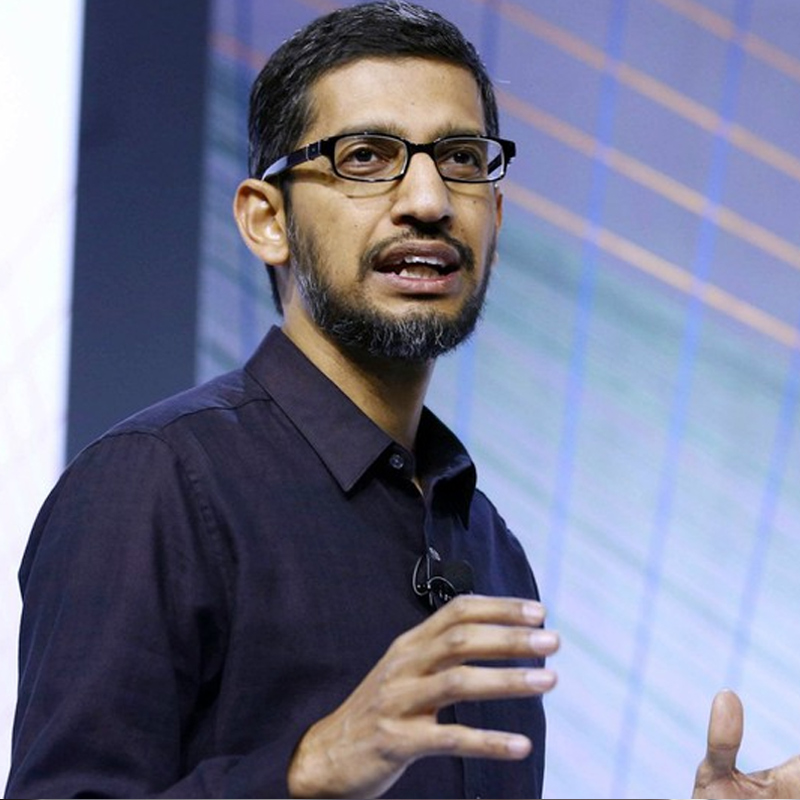
Tag: Sundar Pichai

  • Reliance joins hands with Google Cloud to put India’s AI future on steroids

    Reliance joins hands with Google Cloud to put India’s AI future on steroids

    MUMBAI: Reliance Industries has never done things by halves. On 29 August, India’s largest private company unfurled its latest grand project: a sweeping expansion of its alliance with Google Cloud, centred on a new, dedicated AI-first cloud region in Jamnagar, Gujarat. The ambition is as audacious as it is familiar. Having once upended India’s telecoms industry with Reliance Jio and cheap data, Mukesh Ambani is now training his firepower on artificial intelligence, promising to democratise access to computing muscle for the world’s most populous country.

    The project is being pitched as India’s “AI leapfrog moment.” Reliance will design, build, and power state-of-the-art cloud facilities, all running on renewable energy and plugged into Jio’s sprawling fibre and digital network. Google will provide the brains: its AI hyper computer, a secure and integrated generative AI stack, and the know-how to run workloads of breath taking intensity. The facility, Reliance says, will meet global service-level standards and support the most demanding AI use cases—from training large models to building next-generation applications for consumers and enterprises.

    Why Jamnagar? The coastal city is already the beating heart of Reliance’s refining and petrochemicals empire. It is also becoming a symbol of the company’s reinvention: its green energy giga factory is rising there, and now the AI cloud campus will sit alongside it. Running on renewable power, the project ticks boxes for sustainability even as it scales to hyper speed. Jio, meanwhile, will string high-capacity fibre links connecting Jamnagar to metros like Mumbai and Delhi, effectively wiring India’s AI ambitions to its business and political capitals.

    Mukesh Ambani cast the partnership in almost civilisational terms: “Just as Jio and Google came together to democratise the internet for every Indian, we will now democratise intelligence for every Indian,” he declared. The subtext was clear: Reliance does not want to merely be a customer of AI; it wants to be the platform on which India builds its AI future.

    For Google, the tie-up is equally strategic. The American giant has long struggled to monetise India at scale, despite Android’s dominance. Its alliance with Reliance, first forged through a $4.5bn investment in Jio Platforms in 2020, has been its best bet. Sundar Pichai, Google’s boss, was almost wistful: “Our work together over the last decade has helped bring affordable internet access to millions. And now, we are building on this to help shape the next leap with AI. This is only the beginning.”

    The beginning it may be, but the context is fiercer. Microsoft has partnered with the Adani group to push Azure into Indian enterprises. Amazon Web Services (AWS) has invested heavily in local data centres. By anchoring Google Cloud in Reliance’s infrastructure, Ambani is offering it the biggest distribution muscle in the country—from India’s biggest retailer to its mightiest mobile operator.

    Reliance has always built moats around scale and integration. Hydrocarbons fed petrochemicals; petrochemicals funded telecoms; telecoms birthed digital platforms; retail wrapped around them. Now AI is being woven into every strand. Reliance’s retail arm, one of the world’s fastest-growing, will be powered by predictive analytics and AI-first services. Its digital platforms can churn out generative-AI-powered customer tools. Even its energy and refining business can tap AI for predictive maintenance, efficiency, and emissions management.

    The bet is as much about geopolitics as economics. AI compute has become a strategic resource, akin to oil in the 20th century. By hosting a dedicated, hyperscale AI cloud region in India, Reliance and Google are hedging against global bottlenecks in semiconductors and compute availability. They are also offering Indian enterprises and the government a “sovereign-flavoured” cloud alternative to relying wholly on Western or Chinese platforms.

    The entire project will be underpinned by Reliance’s push into renewable power. The AI data centres, notorious for their energy hunger, will be fed through Reliance’s green energy parks and hydrogen initiatives. Jio’s high-capacity fibre, spanning metros and regions, adds the digital sinew to match the green muscle. The combination allows Reliance to brand the initiative not merely as profitable, but as sustainable—a key card to play with regulators, policymakers, and global investors.

    For India, the stakes are towering. Domestic enterprises, startups, and public sector organisations often face prohibitive costs in accessing cutting-edge AI compute. By pooling Reliance’s infrastructure with Google’s stack, the hope is to lower barriers and accelerate adoption. Small businesses may soon have access to AI tools that were once the preserve of Silicon Valley. Universities and research institutes could run high-performance AI models without prohibitive cost. And the government could scale citizen-facing AI services in health, education, and agriculture.

    But challenges remain. Building AI facilities is one thing; ensuring India has the talent, regulation, and guardrails to use them responsibly is another. AI also raises thorny issues of bias, surveillance, and security. Reliance’s ambition to become India’s AI backbone will inevitably attract scrutiny—whether from privacy hawks, antitrust watchdogs, or foreign competitors.

    Yet, if history is a guide, Reliance has a knack for bending markets to its will. When Jio entered telecoms in 2016, it offered free calls and dirt-cheap data, triggering a brutal price war that wiped out rivals and left India with the world’s cheapest mobile internet. Now, Ambani appears ready to repeat the trick with AI: offer access at scale, bundle services across Reliance’s ecosystem, and set the floor so low that competitors struggle to keep up.

    The Jamnagar AI cloud, then, is not just about servers and software. It is about a new architecture of power: technological, economic, and political. If it works, Reliance and Google may indeed make India a global leader in artificial intelligence. If it fails, it could end up as another white elephant in the deserts of Jamnagar.
    For now, though, one thing is certain. India’s AI race has just been given a jolt of steroids—and Mukesh Ambani is holding the syringe.

    (The picture featured above is representational of two businessmen joining hands and there is no intention to insinuate that it  resembles either Mukesh Ambani or Sunder Pichai. It is an AI generated image)

  • Google puts pedal to the metal on AI at I/O 2025

    Google puts pedal to the metal on AI at I/O 2025

    MUMBAI: Forget slow-burn product cycles and hush-hush unveilings. At Google I/O 2025, Google parent Alphabet CEO Sundar Pichai made one thing very clear: in the Gemini era, Google isn’t waiting for the stage — it’s shipping on Tuesdays.

    “We’re moving faster than ever,” Pichai told the crowd, revealing a dizzying array of AI-powered updates, model breakthroughs, and bleeding-edge products — all underpinned by Google’s latest powerhouse: Gemini 2.5 Pro. The model has surged 300 Elo points since its first generation and now sweeps the LMArena leaderboard. The driving force? Ironwood, Google’s seventh-gen TPU, serving up a brain-melting 42.5 exaflops per pod.

    The pace of adoption is just as staggering. Over the past year, Pichai explained that:

    * Token usage exploded from 9.7 trillion to 480 trillion a month.

    * More than seven million developers are building with Gemini — up five times.

    * The Gemini app has clocked 400 million monthly users, with a 45 per cent spike among 2.5 Pro users.

    With scale like that, Pichai says, “we’re in a new phase of the AI platform shift — turning decades of research into daily reality.”

    Say hello to Google Beam — the spiritual sequel to Project Starline. The new AI-first video chat platform uses six cameras, advanced head-tracking and 3D lightfield displays to create a shockingly lifelike experience. In short: Zoom calls, eat your heart out. With HP on board, Beam hardware hits early testers later this year.

    Also in the mix: real-time speech translation for Google Meet, matching tone, voice and facial expressions. English and Spanish are live in beta now; more tongues to come.

    Google’s AI assistant ambitions are now tangible. Agent Mode, based on Project Mariner, is headed to the Gemini app. Think digital butler with brains: it browses listings, tweaks filters, and can even schedule a house tour — all while chatting like a pro.

    Sundar Pichai

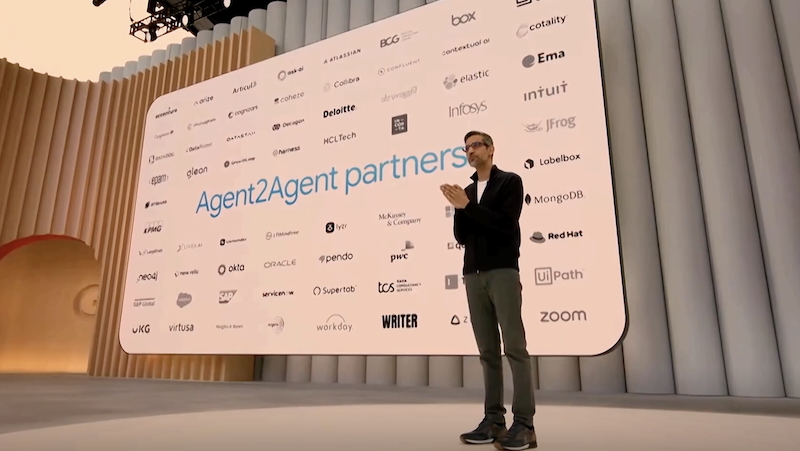
    Expect agents to be everywhere soon: Search, Chrome, Workspace — even chatting with each other using the new Agent2Agent protocol. Google also confirmed Gemini API and SDK support for Anthropic’s Model Context Protocol.

    On the personalisation front, Smart Replies in Gmail are getting a glow-up. With permission, Gemini will mine your emails and files to craft eerily you-like responses, complete with tone and pet phrases. Yes, your AI is about to start writing better emails than you.

    AI is now baked right into Google Search. The newly announced AI Mode allows for longer, more complex queries and natural follow-ups — already available in the US. With Gemini 2.5 Pro now powering it, Search just got a serious IQ boost. AI Overviews are already live in 200 countries and growing fast, especially in the US and India., revealed Pichai. 

    Developers, meet your new best friend: Gemini 2.5 Flash, a lightning-fast, low-cost version built for speed and scale. But the headline act is Deep Think, a new reasoning mode for Pro users that layers in parallel thinking and long-context analysis. Consider it AI with a PhD.

    Creatives, your time has come. Google dropped Veo 3, its most advanced video model yet — now with native audio generation. It also rolled out Imagen 4 for image generation, and Flow, a slick tool for building cinematic clips on the fly.

    Throw in Canvas integration, support for quizzes, infographics and multilingual podcasts, and the Gemini app is shaping up to be a Swiss Army knife for creators.

    Pichai closed with a personal anecdote: a Waymo ride in San Francisco with his 80-something father. “He was amazed,” Pichai said. “It reminded me just how powerful technology can be — not just to dazzle, but to bring people along.”

    The message was clear: AI at Google is no longer a moonshot — it’s now a movement.

  • Sundar Pichai talks Google and Alphabet financial performance with analysts for Q4 meet

    Sundar Pichai talks Google and Alphabet financial performance with analysts for Q4 meet

    MUMBAI: Alphabet & Google CEO  Sundar Pichai addressed investors and analysts, highlighting a strong performance in Q4, largely attributed to the company’s advancements in artificial intelligence (AI) and a unique full-stack approach.

    “Q4 showcased our rapid progress in computing capabilities and efficiencies,” Pichai said. He noted significant improvements in product utilisation, consumer engagement, and revenue growth as a result of innovations in AI, including the launch of AI Overviews in over 100 countries and Circle to Search on more than 200 million android devices.

    Notably, Pichai announced that Google cloud and YouTube reached a combined annual revenue run rate of $110 billion at the close of 2024, exceeding their target of $100 billion.

    Focusing on AI, Pichai outlined three key areas of innovation: leading AI infrastructure, world-class research, and product integration. The company has invested in eleven new cloud regions and seven subsea cable projects aimed at enhancing global connectivity. Pichai revealed the launch of the Gemini 2.0 AI model, designed to improve user interactions and drive a more multifaceted search experience.

    In addition, YouTube continues to thrive, maintaining its position as the leading platform for streaming watchtime in the US with over 45 million viewers engaging with election-related content on a single day. The recent integration of podcasts has proved successful, further solidifying its dominant market position.

    Moving to financials, Alphabet’s revenue surged to $350 billion in 2024, a 14 per cent increase year-on-year. Expenditures increased, primarily due to content acquisition costs associated with YouTube and depreciation related to technical investments. Despite rising costs, operating income rose 31 per cent to $31 billion.

    With an optimistic outlook, Pichai stated, “We are well-positioned for continued growth in 2025,” as plans to enhance AI capabilities and expand cloud services take shape. 

    Following Pichai, Philipp Schindler, SVP  and CBO, highlighted the strong performance across Google services, with revenues reaching $84 billion, driven by a significant increase in advertising revenue. 

    Anat Ashkenazi, SVP and CFO, reaffirmed the positive momentum, indicating that the company is prepared for ongoing growth amid anticipated challenges. 

    The market did not believe their posturing totally as Alphabet shares crashed by seven per cent on Wednesday. Investors reacted badly to Pichai’s  plans to spend $75 billion on capital expenditures over  2025 and $16-18 billion in the first quarter  as it builds out its AI offerings and races against megacap rivals to build out data centers and new infrastructure. 

  • Google CEO Sundar announced Pichai Bard Advanced AI chatbot

    Google CEO Sundar announced Pichai Bard Advanced AI chatbot

    Mumbai: In a much-anticipated move, finally Sundar Pichai announced the powerful AI chatbot tool ‘ Google Bard Advanced ‘. The tech world is considering this move to challenge Microsoft Copilot Pro.

    The CEO also confirmed a subscription-based model for a powerful AI chatbot. It will be available to consumers on a subscription basis.

    While speaking on the development, Google CEO Sundar Pichai said, ‘ Bard is now powered by Gemini Pro, and it’s much more capable at things like understanding, summarising, reasoning, coding, planning. It is now in over 40 languages and over 230 countries around the world. Looking ahead we will be rolling out a more advanced version for subscribers powered by Gemini Ultra.’


  • JioPhone Next smartphone to hit shelves this Diwali

    JioPhone Next smartphone to hit shelves this Diwali

    Mumbai: Jio and Google have announced that the JioPhone Next smartphone will be available in stores from Diwali. The JioPhone Next will be the most affordable smartphone in the world with an entry price of Rs 1,999.

    The smartphone will be made available across the country at Reliance Retail’s extensive network of JioMart Digital retail locations. The network of 30,000 retail partners will provide the JioPhone Next with a paperless digital financing option.

    “I am delighted that Google and Jio teams have succeeded in bringing this breakthrough device to Indian consumers in time for the festival season, in spite of the current global supply chain challenges caused by the Covid pandemic,” said Reliance Industries chairman and managing director Mukesh D Ambani. “I have always been a firm believer in the power of the digital revolution to enrich, enable and empower the lives of 1.35 billion Indians. We have done it in the past with connectivity. Now we are enabling it again with a smartphone device.”

    He added, “I heartily congratulate Sundar Pichai and his team at Google, and everyone in Jio who partnered for offering this wonderful Diwali Gift to our countrymen.”

    The JioPhone Next runs on Pragati OS, an optimised version of Android developed by Google and Jio to address the unique needs of millions of smartphone users across the country. It is powered by a Qualcomm processor and has embedded voice-first features that will enable Indians to consume content and navigate the phone in their language of choice. The smartphone will have access to millions of apps via the Google Play Store.

    “The JioPhone Next is an affordable smartphone designed for India, inspired by the belief that everyone in India should benefit from the opportunities the internet creates,” said Alphabet Inc and Google chief executive officer Sundar Pichai. “To build it, our teams had to work together to solve complex engineering and design challenges, and I am excited to see how millions of people will use these devices to better their lives and communities.”

  • Apple and Vivo pledge to aid India in Covid relief efforts

    Apple and Vivo pledge to aid India in Covid relief efforts

    NEW DELHI: As India is battling the deadly second wave of Covid2019, smartphone manufacturers Vivo India and Apple have pledged to aid the country in Covid relief efforts. Vivo India has announced that they will donate Rs 2 crore and also help to acquire oxygen concentrators. 

    Last year, Vivo India had donated masks, PPE kits, and 50,000 litres of sanitisers to India’s Covid efforts. The company also expressed its gratitude to frontline healthcare workers who are fighting to curb the spread of the Covid pandemic. The smartphone maker has also urged people to follow strict Covid restrictions to combat the challenge posed by the virus sweeping through the country.

    “In the fight against Covid2019, @Vivo_India stands united with the nation and pledges to donate Rs 2 crores to aid relief efforts and acquiring oxygen concentrators. Together, we can and will get through this,” said Vivo India senior executive Nipun Marya. 

    Apple has also extended support to India during this critical time. Apple CEO Tim Cook took to Twitter to announce that the company will provide help to its Apple family and everyone who is fighting the pandemic. 

    “Amid a devastating rise of Covid cases in India, our thoughts are with the medical workers, our Apple family, and everyone there who is fighting through this awful stage of the pandemic. Apple will be donating to support and relief efforts on the ground,” tweeted Cook. 

    Yesterday, Xiaomi stepped up to donate 1,000 oxygen concentrators worth Rs 3 crore to tackle the Covid crisis in India.

    Microsoft CEO Satya Nadella has pledged that the company will “continue to use its voice, resources, and technology to aid relief efforts, and support the purchase of critical oxygen concentration devices.” 

    Google CEO Sundar Pichai revealed that the search engine giant will give Rs 135 crore for medical supplies, organisations supporting high-risk communities, and grants to help spread critical information. 

    Over the last few weeks, India has been devastated by a record surge in Covid2019 cases. The country’s health infrastructure has been stretched to the breaking point, with shortages reported in medical oxygen cylinders, hospitals beds and critical drugs for Covid treatment. The number of reported cases declined slightly on Tuesday, to 323,144 from the peak of 352,991 the day before, bringing the total cases to nearly 17 million with 192,000 deaths.

  • Google, Microsoft pledge aid to India in fight against Covid2019

    Google, Microsoft pledge aid to India in fight against Covid2019

    NEW DELHI: Google CEO Sundar Pichai and his Microsoft counterpart Satya Nadella have extended their support to India amid a record surge in Covid2019 cases.

    Pichai tweeted, “Devastated to see the worsening Covid crisis in India. Google & Googlers are providing Rs 135 crore in funding to @GiveIndia, @UNICEF for medical supplies, orgs supporting high-risk communities, and grants to help spread critical information.”

    Taking to Twitter, Nadella said, “I am heartbroken by the current situation in India. I’m grateful the US government is mobilising to help. Microsoft will continue to use its voice, resources, and technology to aid relief efforts, and support the purchase of critical oxygen concentration devices.”

    Amidst the devastating second wave of the Covid pandemic, India reported 3.52 lakh fresh coronavirus cases in the last 24 hours. This is the highest single-day spike registered since the onset of the pandemic.

    Pichai’s tweet also had a link to a blog where Google detailed ways to help with their efforts to fight the worsening situation.

    On the blog, Google India country head and vice president Sanjay Gupta detailed how the 135 crore grant from the search giant would work. “This includes two grants from Google.org, Google’s philanthropic arm, totalling Rs 20 crore ($2.6 million). The first is to GiveIndia to provide cash assistance to families hit hardest by the crisis to help with their everyday expenses. The second will go to UNICEF to help get urgent medical supplies, including oxygen and testing equipment, to where it’s needed most in India. It also includes donations from our ongoing employee giving campaign — so far more than 900 Googlers have contributed Rs 3.7 crore ($500,000) for organisations supporting high-risk and marginalised communities.”

    Moreover, Gupta also informed about increased Ad Grant support for public health information campaigns.

    “Since last year, we’ve helped MyGov and the World Health Organization reach audiences with messages focused on how to stay safe and facts about vaccines. We’re increasing our support today with an additional Rs 112 crore ($15 million) in Ad Grants to local health authorities and non-profits for more language coverage options,” he said.

    Google is already helping India with its core information products like Search and Maps, YouTube and Ads. Covid features on Search are available in India, in English and eight Indian languages, that continue to improve localisation and highlight authoritative information.

    This includes information on where to get testing and vaccines. Maps and Search surface thousands of vaccine sites. Google is also collaborating closely with the ministry of health & family welfare, and with organisations like the Bill & Melinda Gates Foundation, to support vaccine awareness initiatives, wrote Gupta.

    On YouTube, Google is supporting the Indian government in their vaccine communication strategy. It ran a workshop for 200+ health officials to learn how they can use YouTube to reach audiences across Indian languages with vaccine information.

    Indian conglomerates have also pitched in the efforts to increase production and supply of medical oxygen in the country for the treatment of Covid-positive people.

    The Tata Group announced that it would be importing 24 cryogenic containers to transport liquid oxygen to help overcome its shortage. Reliance Group has also committed to increase supply of oxygen to states where Covid cases are rising; its philanthropic arm Reliance Foundation has scaled up its operations to provide 875 hospital beds to Coronavirus patients in Mumbai, which is one of the worst-affected urban centres in the country.

  • YouTube’s ad revenue growth slows down in Q2, subscription revenue sees good growth

    YouTube’s ad revenue growth slows down in Q2, subscription revenue sees good growth

    KOLKATA: In the pandemic-hit period, Google-owned YouTube’s advertising revenue declined in the Q2 of 2020 compared to the previous quarter. It has raked $3.81 billion for the quarter up from $3.60 billion in the year-ago period but lower than $4.04 billion in Q1. 

    “For YouTube, we ended March with a year-on-year growth rate in the high single digits, and that's reflecting a substantial headwind from brand. The headwind from brand moderated modestly at the end of the second quarter, and then we saw a further improvement in July. Direct response has been consistently strong,” Google and Alphabet CFO Ruth Porat said.

    Google and Alphabet CEO Sundar Pichai also mentioned strong growth in non-ads revenues particularly from Cloud, Google Play and YouTube subscriptions. Nevertheless, content acquisition costs of the company were primarily driven by content costs for YouTube TV and paid YouTube Music and premium subscription services. 

    He also added that YouTube Premium Music and TV subscriptions performed well during the quarter. “This, in turn, is helping our partners, developers and creators earn revenue and deliver valuable services to people. We are focused on the steps to build long-term value with these opportunities,” Pichai said.

    However, while the ad market saw a bump since March, the headwind from brand moderated modestly at the end of the second quarter seeing further improvement in July. Moreover, the company added features in the quarter to make video ads more easily shoppable and browsable on YouTube as more businesses are shifting to online to offset physical store closures. 

  • Google pledges Rs 75,000 cr for Indian digital economy

    Google pledges Rs 75,000 cr for Indian digital economy

    NEW DELHI: Google has announced that it will invest around Rs 75,000 crore ($10 billion) in India over the next five to seven years. The announcement was made by Google and Alphabet CEO Sundar Pichai.

    “Google will do this as a mix of equity investments, partnerships and operational infrastructure in the ecosystem investments. Investments will focus on four areas: enabling affordable access to information to every Indian in their own language, building products and services that cater to India's needs, empower businesses to transform digitally and lastly leveraging technology and AI for social good in health, agriculture and education,” Pichai announced.

    “This is a reflection of our confidence in the future of India and its digital economy," Pichai said during the annual 'Google for India' event.

    The CEO thanked prime minister Modi for the Digital India vision. He said, “Low-cost smartphones, affordable data, and world-class telecom infrastructure has helped digital India become a reality.”

    Pichai shared, “India is setting the global standards on how to digitise payments and now it’s helping us to build the global product. Our AI-powered Bolo app is another example of technology build specifically for Indian users. Today, Indians do not have to wait to use the latest technology any longer.”

    He also mentioned that the digitisation of small business has been a success story. Just four years ago, one-third of small businesses in India had an online presence, but today 26 million SMBs in India are searchable on Google platforms. 

    “Digitisation of SMBs has increased greatly in India; small businesses are now joining the formal economy by using digital payments. India’s digital economy is far from complete. There is still more work to do in order to make the internet affordable and useful for billions of Indians,” Pichai added.

    In the last year's summit, Google unveiled tokenised cards, an artificial intelligence lab in Bengaluru, BSNL partnership, Google Pay for Business app for merchants and expanded Indian language support across its products such as Google Assistant, Discover, Lens and Bolo. 

  • Google’s Sundar Pichai bats for free flow of cross-border data

    Google’s Sundar Pichai bats for free flow of cross-border data

    MUMBAI: At a time when the Indian government is highly focussed on data localisation, Google CEO Sundar Pichai has advocated free flow of cross-border data. The Google exec wrote a letter to Union Minister of Electronics and Information Technology Ravi Shankar Prasad where he said such a step would encourage global companies to contribute to India’s digital economy. However, he also mentioned the importance of data privacy and security.

    “Free flow of data across borders – with a focus on user privacy and security – will encourage startups to innovate and expand globally and encourage global companies to contribute to India’s digital economy,” he said.

    Thanking Prasad for his visit to Google’s Mountain View campus last month Pichai said the company shares the vision of creating a truly ‘Digital India’ and remains firmly committed to being part of the India growth story.

    Recently, the Justice BN Srikrishna Committee recommended in a report that every data fiduciary in India shall ensure the storage of at least one serving copy of personal data on a server or data centre located in India. Along with that, it also stated that the government can notify some categories of personal data as critical personal data that have to be stored in a server or data centre located only in India. The government has extended the date to submit public feedback on the draft bill to 30 September.