Tag: Sun TV Network

  • Sun TV Network revenue at Rs 810.10 crore in Q1 FY22

    Sun TV Network revenue at Rs 810.10 crore in Q1 FY22

    Mumbai: Sun TV Network Ltd, reported revenue growth of 34 per cent (including IPL) at Rs 810.10 crore for the quarter ending 30 June compared to the corresponding quarter last year. The media company reported 93 per cent growth in advertising revenues at Rs 243.66 crore and profit after tax of 389.76 crore up by 38 per cent. EBITDA for the quarter stood at 484.97 crore up by 19 per cent.

    The company reported 23.5 million paid subscribers for its OTT platform Sun NXT at the end of the quarter, mostly driven by its telecom distribution partnerships.

    Sun TV is one of the largest television broadcasters in India. It operates satellite television channels across five languages of Tamil, Telugu, Kannada, Malayalam and Bangla, airs FM radio stations across India, owns the SunRisers Hyderabad cricket franchise of the Indian Premier League and the digital OTT platform Sun NXT.

    “The most important change that has happened in the current quarter ended 30 June is the change in the estimation of the useful life of our movies. As you know, we’ve been amortising it in full in the past. Now, beginning this year, we would amortise them over a useful life of four years, whereby 30 per cent reach will be written off in the first two years and 20 per cent reach in the last two years. As a result, our depreciation and amortisation chart are lower by Rs 70 crore. Though, it will have an effect for the first year, it will normalise over time. This is in line with the global best practice. Almost all the media companies which have huge investments in content and which content is used over foreseeable future, adopt time periods which are comparable to what we have implemented with an accelerated charge happening in the first half and a normal charge in the second half” Sun TV Network Ltd, managing director, R Maheshkumar said.

  • Sun TV Network’s outlook for FY22 remains positive despite short-term headwinds

    KOLKATA: Sun TV Network has navigated the pandemic well through the FY21 despite initial setbacks as it ended q4 with Rs 449.88 crore profit, 80 per cent up year-on-year. While there could be short-term headwinds in ad revenue due to the second wave of the pandemic, the company remains positive that the performance would be much better than the last lockdown.

    The broadcaster saw its ad revenue bounce back in the January to March quarter. However, the second wave hit the performance in the first quarter of FY22. It is still not known if a third wave would be more fatal. Hence, the company has not given any definite guidance for the coming year but its endeavour for the year is to at least reach the levels of FY20, a company spokesperson said in an earnings call.

    In FY 21, the company’s subscription revenue grew by about 11 per cent in FY21. The company is confident to maintain double-digit growth in FY22 as well, especially as it hopes to see a higher purchase of set-top boxes by a related party distribution company. Despite uncertainty around NTO 2.0, the company sees enough visibility on the subscription side.

    The company has improved primetime viewership in the Tamil market from 37 per cent to 42 per cent. As it is eying to come close to 50 per cent, it is taking steps to improve content quality, the overall narrative of storytelling. On the other hand, its overall fiction share has gone up by 36 per cent in the Kannada market as compared to the last two, three quarters. Hence, Sun TV wants to stay focused on gaining market share in these two markets.

    Additionally, it has lined up “some huge launches” in Telugu and Malayalam market in the next one-two months.

    However, its plans for Sun NXT, the over-the-top arm, have been pushed back again, albeit it has seen 40-50 per cent growth in the last six months. Although the company is in talks with a lot of potential producers for OTT originals, it is not going to start anything on that front at least before Q2. But the company can continue with small-medium movie digital premiers on the platform. Whenever the platform uploads a new movie on the platform, the subscription goes up immediately.

    For this financial year, the company has ambitious plans for movie production. It is looking at eight movies, costing nearly Rs 1200 crore. Four movies are under production as shooting has started and in multiple stages and one among those is almost nearing completion, a company spokesperson said. Because of the delay in the first four movies being completed, the remaining might be taken up in the second half of the year.

    Despite the strong performance in q4, the company’s dividend payout policy has attracted sharp criticism from investors in the conference call. For FY 21, the dividend payout dropped to Rs 5 per share from Rs 25 per share in FY20. The investors raised the question around management taking regular commission but not looking at shareholders’ interest. Sun TV Network management has not been able to give any forward-looking statement but has assured that it would share the concern with the board.

  • Sun TV Network donates Rs 30 crores towards Covid relief efforts

    Sun TV Network donates Rs 30 crores towards Covid relief efforts

    NEW DELHI: Sun TV Network is donating a sum of Rs 30 crores to provide relief to those affected by the second wave of the Covid2019 pandemic. 

    The donated amount will be spent on several initiatives currently underway in various states of India including, proceeds to the various programmes initiated by the Centre and state governments. The network is also partnering with NGOs that are providing oxygen cylinders, medicines etc to those in need.

    In addition, the company will leverage its resources, including all its media assets, to spread awareness about the pandemic among TV viewers across India and the rest of the world.

  • Sun TV Network posts Rs 345.91 crore profit in Q2

    Sun TV Network posts Rs 345.91 crore profit in Q2

    KOLKATA: Despite growth in subscription revenue, Sun TV Network’s profit for the second quarter declined 5.62 per cent to Rs 345.91 crore, from Rs.366.51 crore in the corresponding quarter last year.

    The revenues for the quarter stood at Rs 756.16 crore as against Rs 773 .93 crore for the corresponding quarter previous year. The total income for the quarter was at Rs 807.71 crore as against Rs 846.07 crore in Q2 FY19.

    However, it has reported a good growth in subscription revenue that is up by 14 per cent year-on-year Rs 427.04 crore compared to Rs 375.65 crore in the same quarter last year. EBITDA for the quarter is up by 7.10 per cent year over year standing at Rs 502.03 crore.

    “The stock is currently trading at 12.5x FY22E and 12x FY23E PER, which still appears to be reasonable given the strong balance sheet position, healthy cash reserves and potential buyback/dividend (current dividend yield of 6.25 per cent) which will augur well for investors, and provides upside potential despite weak ad revenues. We maintain accumulate with same TP of Rs 525 on 14.5x (unchanged) one-year forward P/E,” said Elara Capital VP research analyst (media) Karan Taurani.

    Taurani added that in terms of weekly viewership share data by BARC, the network has been losing viewership share for three consecutive months, slipping below 40 per cent mark on the back of relaxation of lockdown and resumption of new shows on rival channels in Tamil genre post July 2020. However, he said that the share of flagship channel Sun TV is expected to stabilize and largely move back to pre-Covid levels of over 40 per cent backed by the recently launched three new programs within the GEC genre.

  • Sun TV Network to donate Rs 10 crore for COVID-19 relief

    Sun TV Network to donate Rs 10 crore for COVID-19 relief

    MUMBAI: Sun TV Network and its group companies will donate Rs 10 crore to provide relief for those affected by the outbreak of COVID-19, joining a slew of broadcasters in providing assistance.

    Sun TV Group announced that as an expression of solidarity with the nation's collective fight against the dreaded virus, all 6000 employees will donate one days' salary for the cause.

    The money will be donated for several initiatives currently under way at various states in India including the following:

    1.    Donations to the various programmes initiated by the government of India and state governments
    2. Partnering with NGOs that are providing succour to migrant labour displaced from their livelihoods and other initiatives related to COVID-19 relief work.

    2.    Financial assistance to daily wage earners, working either directly or indirectly associated with TV, the movie industry and other allied activities.

    In addition, the group is actively exploring other options to leverage its resources, including all its media assets so that greater awareness can be spread among millions of viewers across India and rest of the world, informed Avinash Naik.

    Earlier, leading broadcasters like Zeel and Sony announced financial assistance in this regard.

  • Sun TV Network focusing on achieving pre-NTO viewership in every single market

    Sun TV Network focusing on achieving pre-NTO viewership in every single market

    MUMBAI: While new tariff order (NTO) had brought down viewership of several pay channels initially across the country, Sun TV Network channels are bouncing back from the initial effect in key markets. As the channels are coming close to the pre-NTO regime viewership, the largest broadcaster is now focusing on every single market to get back to the reach percentage it was providing prior to the NTO implementation.

    “We are making all efforts in terms of ensuring that the channels are carried by all DTH and cable operators and it is placed in the appropriate MCM so it is accessible to a majority of the subscriber universe. So, that is why you are also seeing a good improvement in the rating numbers,” Sun TV Network CEO R Mahesh Kumar commented in an earnings call after its Q1 results.

    Kumar also added while inquired about a-la-carte adoption that very few subscribers have opted for a-la-carte. He noted that the majority of service providers and the customers have opted for the entire bouquet of channels. Notably, many broadcasters and DPOs have highlighted this trend of subscribers going for bundled packages after NTO implementation rather than selecting individual channels.

    While the group also has a large DTH business, Kumar is optimistic about the growth rate of DTH. He added that he witnessed a huge growth in private MSOs in the marketplace at a time when churn is happening from state-run Arasu Cable to other operators. Moreover, there is a significant portion of analogue which is also incrementally getting digitised.

    “In our estimate, upwards of 35 per cent is still analogue in this market. And in terms of seeding of STBs, it's being pushed both by private cable operators and DTH. Like even our own group company, Sun Direct has been extremely well in Tamil Nadu. Their numbers have grown from an average of 1,000, 2,000 to 5,000, and 6,000 a day,” Sun TV Network group CFO SL Narayanan commented.

    He also added that everything is happening across the system in Tamil Nadu based on NTO only. According to him, the only issue has been the difficulty of getting the reports from some of the smaller players because of their own inability to have new programs. He added that it's only a transitional phase and there would be lesser problems once things get streamlined and good software is available. While he added that most of them are adapting it also, the reporting levels have increased considerably in June or July.

  • Sun TV Network cautious about FY20 growth expectation due to economic slowdown

    Sun TV Network cautious about FY20 growth expectation due to economic slowdown

    MUMBAI: The current slowdown in the Indian economy has stunned the expected growth of major companies, and media conglomerates are not an exception. South India’s largest broadcaster Sun TV Network is being cautious about the growth expectation for the rest of the year especially due to a headwind in the advertising sector. Due to this, the Marathi channel launch has been put on hold.

    “We are seeing a lot of deceleration in sectors like auto and real estate and because of that, there is some multiplier effect which is pulling down the momentum in the economy. So, if you look at all the numbers that have come out from FMCG companies, barring some notable exceptions, like Asian Paints, everybody is painting a very down outlook. So, in that context, we shouldn't expect anything spectacular for the remaining calendar year at least. People are saying that if the monsoons are good, things will pick up because of better spending power coming into the rural economy. But all that is still a guesstimate,”  Sun TV Network group CFO SL Narayanan commented in an earnings call with analysts after the 1st quarter of FY 20.

    Explaining the current situation, he noted that the outlook for advertising this year is pretty challenging. Narayanan also added that the company is unable to give any guidance on advertising as well and need to set expectations very reasonably. According to him, even ending up with a mid-single-digit growth would be lucky this year.

    For the first quarter of FY 2020, advertisement revenues stood at Rs 368 crore, broadcast at Rs 10 crore, international subscriptions around Rs 41 crore, revenue from pay channels including digital was about Rs 169 crore and DTH Rs 228 crore. Along with these segments, movie production helped to garner around Rs 41 crore and IPL Rs 244 crore.

    Along with the slowdown in the national market, the situation in Tamil Nadu’s regional market has not also been very rosy. The spending of local and regional advertisers has also shrunk because of a lack of liquidity in the system. Narayanan also added that people are not seeing any ROI in advertising.

    “We have seen 2-3 per cent growth in the market share which we have gained over the past couple of weeks. So, our endeavour is to further keep growing the market share. And ultimately, it leads to the level where we were a couple of years back. So, I think the desire is to go to 50 per cent and we are working towards it,” Narayanan commented on Tamil Nadu market share expectations.

    Sun TV Network MD R Mahesh Kumar also added that some of the competitors are losing substantial share in the Tamil Nadu market. However, a series of launches happening in the market is making them confident about  gain in further market share eventually leading to better monetisation. He also added optimistically that the company will also improve the revenues accordingly.

    While the broadcaster forayed into the Bangla market at a time when the new tariff order changed the entire scenario, it left an impact on the newly launched Sun Bangla as well. Sun TV's CFO is still optimistic about the revenue of its Bangla GEC. He also added that the channel needs to be given some time as it launched only five months back. According to him,  the company’s strategy to venture into Bangla market is a well thought out expansion strategy.

    “I think it’s a step in the right direction because we think that there is a lot of potential there. It is a market where there is not much of TRPs available for trading and there are 2 well-entrenched competitors. And I think that our content strategy also has been very well thought. All those series have been very well made, slickly made. But it will take some time. Rome wasn’t built in a day. And so we are doing all the right things. And I’m sure we will see an uptick pretty soon,” Narayan explained.

    “I don’t think we can sit back and say that we shouldn’t have done this. We’ve actually applied a lot of thought and we identified that this is the place to go because to go into the regular Hindi market would have called for enormous amounts of capital. So even assuming but not admitting at some stage this [Sun Bangla] turns out to be a damp squib, it is not something that will wreck the balance sheet of Sun TV,” Narayanan added.

  • Tamil TV faces the challenge of attracting younger audiences

    Tamil TV faces the challenge of attracting younger audiences

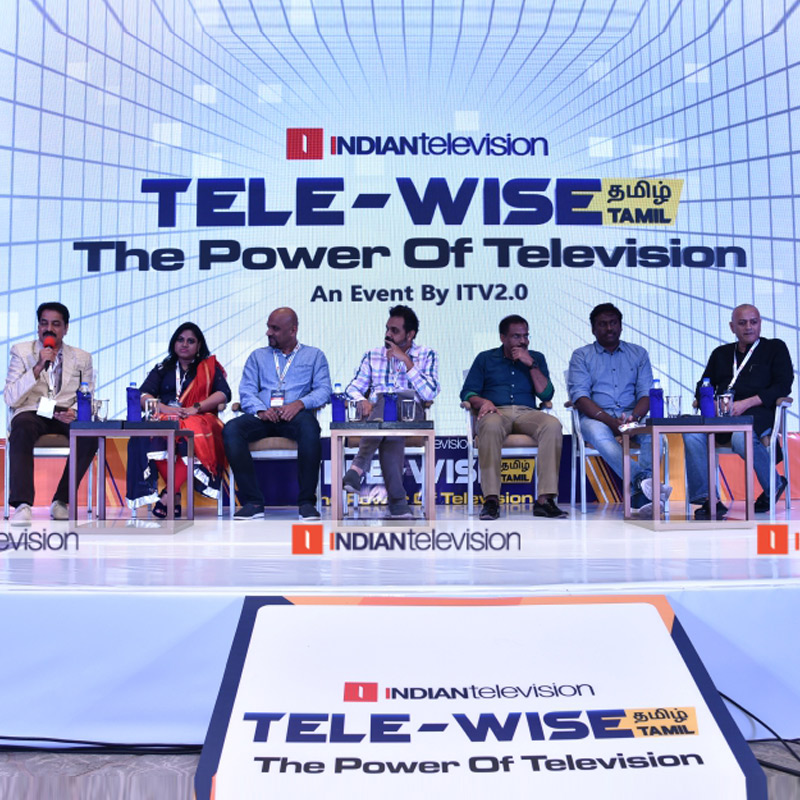
    MUMBAI: TV viewership is growing in the regional market and TV broadcasters do not fear the OTT threat. Instead, regional players are looking at attracting younger audiences to television. Tele-Wise Tamil 2019, which was organised by Indiatelevision.com on 6 August 2019, gave the industry a platform to discuss the issues faced in the regional market.

    The event witnessed a panel discussion on ‘Changing face of TV’ moderated by Horse Pictures partner and YuppTV former head Vijay Adhiraj with the panel as Colors Tamil business head Anup Chandrasekharan, Sun Life content acquisition and Sun TV Network Ltd Kids Entertainment Kavitha Jaubin, Trend Loud CEO Chidambaram Natesan, Star Network deputy business head for Vijay TV Balachandran Ratnavel, Bodhitree Multimedia Pvt Ltd co-founder and director Mautik Tolia, and Polimer TV strategic advisor and consultant Suresh Iyer were the panelists.

    The panelists discussed evolving content trends and challenges faced by the industry in attracting younger audiences in the regional space and the importance of weekly ratings in creating content.

    Adhiraj began the discussion by understanding how content creators decide what kind of content will work. To which Natesan replied, “Content has always being a priority to us. What makes us decide what kind of content work well for us is basically to understand what the need of the hour is. We go by the data and data makes us change our decision every day. We decide content based on the power of engagement.”

    On understanding the audience's need, Tolia commented, “Over the last one and a half years, especially with my company, we have broken our company into three verticals, one with Hindi GEC content, another with digital web content and one with regional content. That’s what makes the job of a content creator more complex. The digital market itself has very different kind of audiences; there is Netlfix audience, catch-up TV audience. There is a different scale of digital model which has started operating. We need to be very clear about who is our audience.”

    Ratnavel believes that TV and OTT share same universe so there is no need to come up with separate kind of content for both the platform. He said, “BARC data gives very different picture on television. TV is growing and in Tamil Nadu TV viewership has grown 10 to 15 per cent Y-o-Y. The time spent has substantially grown, it is beyond the national average which means there is a huge appetite for TV in Tamil Nadu. There is no need to change the kind of content for digital and television because the people on both the platforms are same.”

    “I would say 80 per cent of the content has succeeded by default not by design. For a content to succeed, there are three key stakeholders- content creator, marketer and advertiser. They are all inter-linked with each other,” Iyer opined.

    Sharing his view on whether metric defines the content, Chandrasekharan said, “In our business we are not governed by the metrics that keep popping-up every week. We focus on trying to create a clutter breaker, how do we make it relatable and how do we ensure that every day people come and consumer our content.”

    He further said, “There is a great amount of experimentation that happens with content in Tamil Nadu and content keeps evolving. There are three stages in which the content is designed i.e. to get a content that will attract the audiences; second is liking the content and third is addiction which makes one to follow the content.”

    Speaking about Sun Life, Jaubin said, “I strongly believe that today the viewers are no more massive viewers instead they are the co-creators through their feedback. They want to be active and social media is highly interactive because of the fact that they have been given the space to be active 24/7. So we thought of creating something for a younger demographic but it is not out of the box, it includes family audiences as well.”

    “We need to be continuously in touch with them. When we know to meet our consumer then we understand better about the exact filter that we need to apply to our content. Staying in constant touch with our audiences, speaking to them and understand their life and daily routine actually helps us to create most of the contents especially on TV,” said Ratnavel.

    Chandrasekharan said, “If we specifically take Tamil Nadu into consideration, if we decode the kind of content Sun TV was offering was largely family drama, Vijay TV was largely into romantic kind of content, Zee Tamil brought in romance and family. The content offering in Tamil Nadu has evolved from within the family to the outer circle of the family. In the next two years, the kind of content offering would be not just around the mother and daughter but around the outer world of the family like neighbours and society. The average consumer is also getting exposed to different kinds of content, so their expectations are also pretty high.”

    Jaubin also expressed the need to take technology like AI and augmented reality into account so that the broadcasters start producing some of the best formats on TV.

    Speaking on the challenges, Tolia said, “Nowadays Facebook and Hotstar have become our competitors as the women are spending more time on social media platforms. That is the major challenge for Hindi GEC and regional market has still not faced it because we are growing but the challenge is going to be on how to attract the younger audiences to TV who are engaging themselves in very different kinds of entertainment. That is something we really need to look into.”

  • Sun Network’s R Mahesh Kumar says TRAI tariff order will have positive impact on subscription revenue

    Sun Network’s R Mahesh Kumar says TRAI tariff order will have positive impact on subscription revenue

    MUMBAI: With the new tariff order of the Telecom Regulatory Authority of India (TRAI) coming into effect from 1 February 2019, Sun TV Network president R Mahesh Kumar believes subscription revenue will be positively impacted with the radical change.

    "We have to wait and see how it pans out. I think it will have a positive impact on subscription revenue," news agency PTI quoted him as saying.

    Mahesh Kumar is also of the opinion that the distribution landscape in south India will witness major impact due to the new norms.

    “Analog connection in Tamil Nadu, one of our major market, is still at 35-40 percent," he further added.

    The behemoth network is set to roll out it's latest offering – Sun Bangla – on 3 February. The network is expected to invest close to Rs 150 crore into the GEC channel in the first year.

    "Sun Bangla will start airing from February 3 and we hope to garner sizeable market in the Rs 1200 crore Bengali general entertainment category channels," Sun Group CFO S L Narayanan had said during a post-earnings conference call.

    The Sun Network also has a Marathi channel in the pipeline.

  • 2018’s most watch South Indian channels

    2018’s most watch South Indian channels

    BENGALURU: The South Indian television market is huge with a television penetration of about 95 percent. This paper is based on performance in terms of viewership –  and refers mainly to weekly impressions of top 5 channels in each of the four South Indian languages as per Broadcast Audience Research Council of India (BARC) data.

    The four major South India languages are (in order of populations of the major territories they are spoken in) Telugu in Andhra Pradesh/Telangana, Tamil in Tamil Nadu and Pondicherry, Kannada in Karnataka and Malayalam in Kerala. In terms of television households, Tamil Nadu leads because of its higher television penetration, followed by Andhra Pradesh/Telangana, Karnataka and Kerala in that order.

    Among the major networks, Star India, Sun TV Network, Viacom18/ETV and Zee Entertainment Enterprises Ltd (Zeel) have channels that cater to the viewership pleasure of speakers of at least three of the four languages.

    Here below is the performance of the top channels for each of the four languages.

    Kannada Channels

    There were four Kannada channels – three Kannada GECs and one Kannada movie channel that featured in BARC’s weekly list of top 5 Kannada channels for all the 52 weeks of 2018. Two channels were from the Sun TV Network and there was one channel each from Viacom18/ETV Network and Zeel. In alphabetical order, they were: Colors Kannada (Viacom18/ETV), Udaya Movies and Udaya TV (Sun TV Network) and Zee Kannada (Zeel).

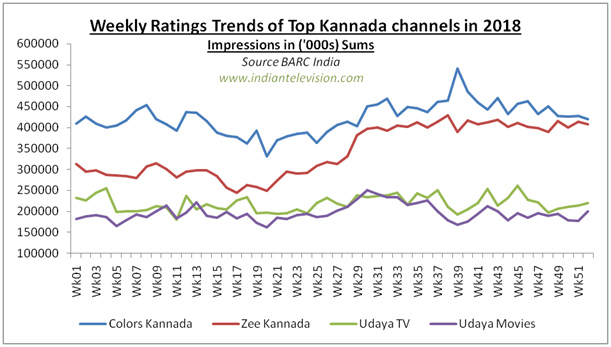
    The most watched Kannada channels in terms of the sum of weekly impressions for all the 52 weeks of 2018 were – Colors Kannada, Zee Kannada, Udaya TV and Udaya Movies in that order.

    Colors Kannada was ranked no 1 in BARC’s list of top 5 Kannada channels during all the 52 weeks of 2018. The channel garnered a total of 21.997 billion impressions (Average weekly impressions 423.011 million) during the 52 weeks of 2018. At second place for each of the 52 weeks of 2018 was Zee Kannada. Zee Kannada scored a total of 17.825 billion impressions (average weekly impressions 342.787 million) during the 52 weeks of 2018. 

    The third-most watched channel in terms for total impressions was Udaya TV which had 11.362773 billion impressions Average weekly impressions 218.515 million) during the 52 weeks of 2018. Udaya TV was ranked third for 46 weeks and fourth for 6 weeks in BARC’s weekly list of top 5 Kannada channels during the 52 BARC weeks of 2018. The fourth most watched channel was Udaya Movies – the channel was ranked fourth for 44 weeks, third for six weeks and fifth for two weeks of 2018. Udaya Movies scored 10.164323 billion impressions Average weekly impressions195.468 million) during the 52 BARC weeks of 2018.

    Two other channels that featured in BARC’s weekly lists of five most watched Kannada channels were Star India’s Kannada GEC Star Suvarna and Viacom18/ETV’s HD channel – Colors Kannada HD. Star Suvarna was present in BARC’s Kannada channels list for 46 of the 52 week of 2018 and Colors Kannada was present for 6 of 52 weeks of 2018. Please refer to the figure below:
    Malayalam Channels

    Four Malayalam GECs made it consistently to BARC’s weekly lists of top 5 Malayalam channels during all the 52 weeks of 2018. These channels were from Star India, Insight Media City and Malayala Manorama (MM) TV and Sun TV. In alphabetical order they were: Asianet (Star India), Flowers TV, Mazhavil Manorama (Malayala Manorama (MM) TV) and Surya TV (Sun TV).

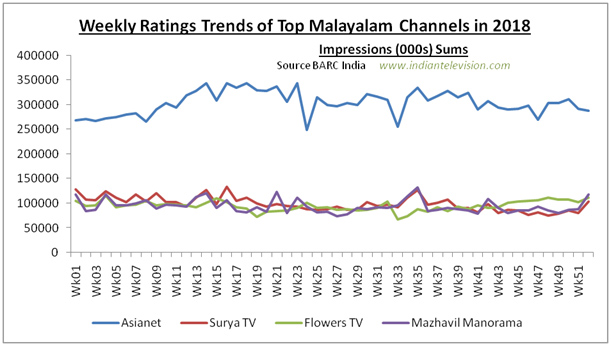
    In order of total impressions for all the 52 weeks of 2018, the channels are ranked as Asianet, Surya TV, Flowers TV and Mazhavil Manorama. 

    Asianet was ahead of the pack by far – it garnered 15.766 billion impressions during the year with a weekly average of 303.186 million impressions. It was always ranked 1 during all the 52 weeks of 2108. Surya TV was second with 5.134 billion impressions during the year and a weekly average of 98.73740385 million impressions. Flowers Media was ranked third with 4.919 billion impressions during the 52 weeks of 2018 and a weekly average of 94.587 million impressions. At fourth rank was Mazhavil Manorama which had 4.891 billion impressions for the year at a weekly average of 94.062 million impressions. 

    Please refer to the figure below for weekly trends for these channels.
    Tamil channels

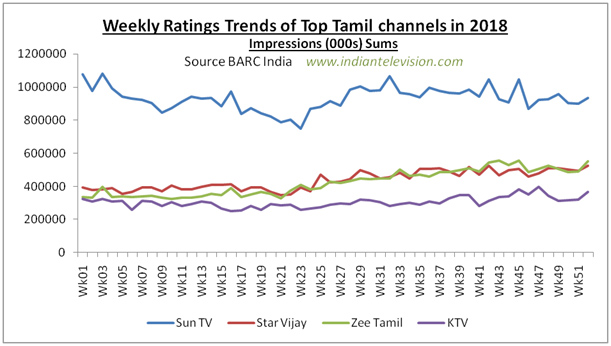
    As in the case of Kannada and Malayalam, there were four Tamil channels that appeared in BARC’s weekly list of top 5 Tamil channels during all the 52 weeks of 2018. Three channels were GEC, while one was a Tamil movie channel. Two channels were from the Sun TV Network and there was one channel each from Star India and Zeel. The four channels, alphabetical order, were KTV, Star Vijay, Sun TV and Zee Tamil.

    Sun TV was by far the most watched Tamil GEC in 2018. The channel clocked a massive 48.490 billion impressions during 2018 with weekly average impressions of 932.508 million during the period. At second rank was Star India’s flagship Tamil GEC Star Vijay with 22.697 billion impressions during the 52 weeks of 2018 and a weekly average of 436.477 million. 

    At third rank was Zeel’s flagship Tamil GEC Zee Tamil with 21.948 billion impressions during the year and a weekly average of 422.080 million impressions. At fourth rank was the Sun TV Network’s Tamil movies channel KTV with 15.896 billion impressions during the year and a weekly average of 305.696 million impressions during the 52 BARC weeks of 2018. Please refer to the figure below.
    Telugu Channels

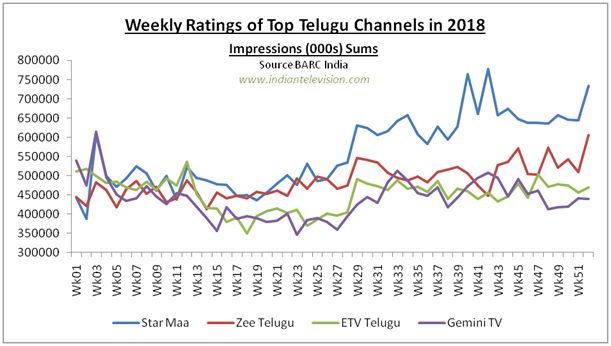
    Like the other three South Indian languages markets, there were 4 channels that were present consistently in BARC’s weekly list of top 5 Telugu channels during all the 52 weeks of 2018. All four were GECs spread over four different networks – Viacom18/ETV, Star India, Sun TV Network and Zeel.

    In alphabetical order, these channels were ETV Telugu (Viacom18/ETV), Gemini (Sun TV Network), Star Maa (Star India) and Zee Telugu (Zeel).

    Star Maa was the most watched Telugu channel in 2018 with 29.184 billion impressions during the year at a weekly average of 561.236 million. Zee Telugu was ranked second with 25.274 billion weekly impressions at a weekly average of 486.029 million. At third place was ETV Telugu with 23.435 billion impressions during the year at a weekly average of 450.682 million impressions during BARC’s 52 weeks of 2018. At fourth place was Gemini TV with 22.818 billion impressions at a weekly average of 438.804 million impressions.
    South India is an exciting place for television viewers today as broadcasters vie for attracting more and more sticky eyeballs to their fares. There are about 225 channels spread across the four South Indian languages that beam into India, besides many more that beam South Indian language content into other geographies. New channel launches, HD channel launches were the name of the game in 2018. Viacom18/ETV lunched its Tamil GEC – Colors Tamil in 2018, Zeel lunched a Malayalam channel in 2018 – both the pan-India networks wanted to mark their presence in these markets.

    Besides, Star India has been wooing sports viewers in South India -it now has 3 sports channels in South Indian languages – the last one to be launched near the end of 2018 – Star Sports 1 Kannada. Earlier, on 7 December, the network had launched Star Sports 1 Telugu to join Star Sports 1 Tamil. The launch of Star Sports 1 Kannada took the Star Sports channel count to 15 with 10 standard definition and five high definition channels.

    As many as nine HD channels were launched by two pan India networks in South India. Seven of the new HD channels were Telugu– five GEC and two movies and one each GEC HD channel was launched in Kannada and Malayalam. Network18 through Viacom18 and ETV launched five, while Zeel launched four HD channels. Zee Kannada HD was launched on 3 November 2018, while Zee Telugu HD and Zee Cinemalu HD were launched on 1 January 2018. Zee Keralam HD was launched on 5 December 2018.

    As is obvious from above, among the 4 languages, it was Sun TV that topped BARC’s weekly ratings in Tamil, Star Maa that generally topped the weekly ratings in Telugu, Colors Kannada that topped the ratings in Karnataka and Asianet that topped the ratings in Malayalam during 2018.

    BARC data for top10 channels across genres NCCS All India 2+ reveals that the Sun TV Networks flagship Tamil GEC Sun TV is the most watched channel in the country. In 2018, Sun TV headed BARC’s list of top 10 channels across genres for 48 of the 52 weeks of 2018.It was only during some weeks of the eleventh edition of the Indian cricketing bonanza IPL that channel lost its prime position in BARC’s list of top 10 channels across genres for four of the seven IPL weeks. Sun TV, one of the earliest players in the Indian television industry, has continued to dominate the Tamil television market despite the entry of national level big networks in the Tamil market. However, the Sun TV Network channels in the Kannada and Telugu markets had to concede numero uno status to national level players.

    With the entry of strong players such as Viacom18/ETV and Zeel, ratings could have a shakeup, especially in the Tamil and Malayalam language space. Over the next few years time will tell which player will top the ratings. In the meantime viewers will be spoiled for choice with quality content being beamed into their televisions.