Tag: Sun DTH

  • BARC India in talks with DTH ops, MSOs for RPD to boost robustness

    NEW DELHI: India’s incumbent audience measurement organization Broadcast Audience Research Council of India (BARC) is in talks with DTH operators and MSOs for return path data (RPD) via their respective digital set-top boxes at customer premises to augment the robustness of viewership vital stats it dishes out.

    What does this mean?  It entails capturing passive data collection of household viewership from digital cable and DTH homes via existing set-top-boxes (STBs). This would therefore enable measurement based on a larger sample.

    Broadcast industry sources while confirming that talks are on between BARC India and various DTH operators for additional data that can be generated from non-BARC meters, added that the findings can help almost all stakeholders in the media to further fine-tune their strategies regarding consumer targeting. According to the buzz, talks are on with the likes of Airtel DTH, Sun DTH, Hathway, Tata Sky and DEN among others.

    The proposal on RPD is in addition to moves that BARC India has been making over the last six months to give more credibility and robustness to its data as also insulate itself from allegations of hacking and other malpractices. The organization, in this regard, is also proposing to revamp its Ethics Committee into a Disciplinary Committee that will have semi-judicial powers under a retired court judge.

    TV viewership in India is monitored and measured on the basis of 20,000 BARC India panel homes — that is, homes where it has its BAR-o-Meters installed. BARC is committed to raise that number every year by 10K to reach a total panel of 50,000 homes. However, Indian media industry sources also highlighted the issue whether Indian the eco-system can support an audience panel size larger than what has been planned for as any additional data generated via BARC India and non-BARC boxes would entail a financial cost, which would have to be borne, at the end of the day, by the industry players.

    RPD would substantially increase the sampled base for BARC India, helping further improve accuracy of its data. A larger sample will also minimize effect of any skews in sampling and make tampering difficult. Additional data would also help in reporting viewership of niche channels, apart from helping the measurement organization in reporting VoD, OTT, time shifted viewing and HD channels. Stats regarding smaller geographic regions and split beams of TV channels too would become possible.
    Such tie-ups will also help BARC India’s DTH/cable partners gain insights into TV viewing within their subscriber base in terms of linear TV, VoD and interactive services. Such data also likely to help them understand utilization of content packs and guide the pricing and packaging of services of platform operators.

    Meanwhile, RPD has been employed by data collectors in more developed and matured TV markets like the US, the UK, Australia and also in some parts of Asia for quite some time now. “The ubiquity of digital set-top boxes means that many cable and satellite operators can collect subscriber behaviours as a by-product of their subscriber management processes. Specifically, return path data can provide an economical way for the cable and satellite businesses to enhance the currency TV audience measurement in a manner dedicated to the needs of the multi-channel television industry,” Hong Kong-headquartered Asian media industry organization CASBAA had stated in one of its recent reports on multi-channel advertising in APAC.

    The FCC’s proposal to open cable set-top boxes to competition had thrust them into the spotlight. In 2016 when the Obama-government nominated FCC chief had proposed to throw open the STBs to competition and third-party manufacturers, Multichannel News had reported that “the role that STBs play not as content portals, but as providers of return-path data (RPD)” too is important.

    ALSO READ:

    Total TV universe up to 183 mn; rate of rural growth higher

    BARC separates urban and rural viewership data


  • Vijaykant’s Captain News to launch 29 August

    Vijaykant’s Captain News to launch 29 August

    MUMBAI: Captain Media, the media venture of Tamil actor and politician Vijaykant, will start a 24-hour news channel named Captain News.

    The channel is set to go on air beginning 29 August.

    “We are happy to inform you that Captain Media Private Limited will launch its 24-hour news channel ‘Captain News’ from 29 August,” Captain Media managing director LK Sudheesh said.

    “The channel would air unbiased and quality news,” he added.

    Captain Media, which has entered third year of its operations, runs a bilingual family entertainment channel Captain TV which has programmes in Tamil and English.

    Captain is available on Sun DTH, Dish TV, and Airtel Digital TV, besides a host of other cable operators.

  • Insat-4C satellite launch fails; Sun’s DTH plans hit

    Insat-4C satellite launch fails; Sun’s DTH plans hit

    MUMBAI: India’s attempt to enter the elite “space club” has received a setback. The launch of the country’s first commercial communications satellite from home soil has ended in failure. The GSLV-F02, carrying the state-of-the-art communication satellite Insat-4C, crashed into the Bay of Bengal a short while after lift-off at 5:38 pm from its launch pad at the Satish Dhawan Space Centre (SDSC) SHAR, Sriharikota.

    The launch of the completely indigenous Insat-4C communications satellite on the Geosynchronous Satellite Launch Vehicle (GSLV) was delayed twice before its final failed attempt due to unspecified technical reasons. The launch was originally scheduled for 4:30 pm this evening. 

    The three-stage 414-tonne launch vehicle of the Indian Space Research Organisation (Isro), started under-performing right from the start and veered off its path after travelling a few kilometers into the sky.

    Isro chairman Madhavan Nair admitted the failure of the satellite. “The mishap happened in the first stage of the separation. We have activated and analysed the data and we will get to the bottom of it,” Nair said, adding, “today’s happening is a setback, especially after we had 11 continuous successful launches.”

    Insat-4C, which cost Rs 4 billion, was the second satellite in the Insat-4 series. The first, Insat-4A, was launched in December last year, from the spaceport of Kourou in French Guiana by an Ariane5 vehicle.

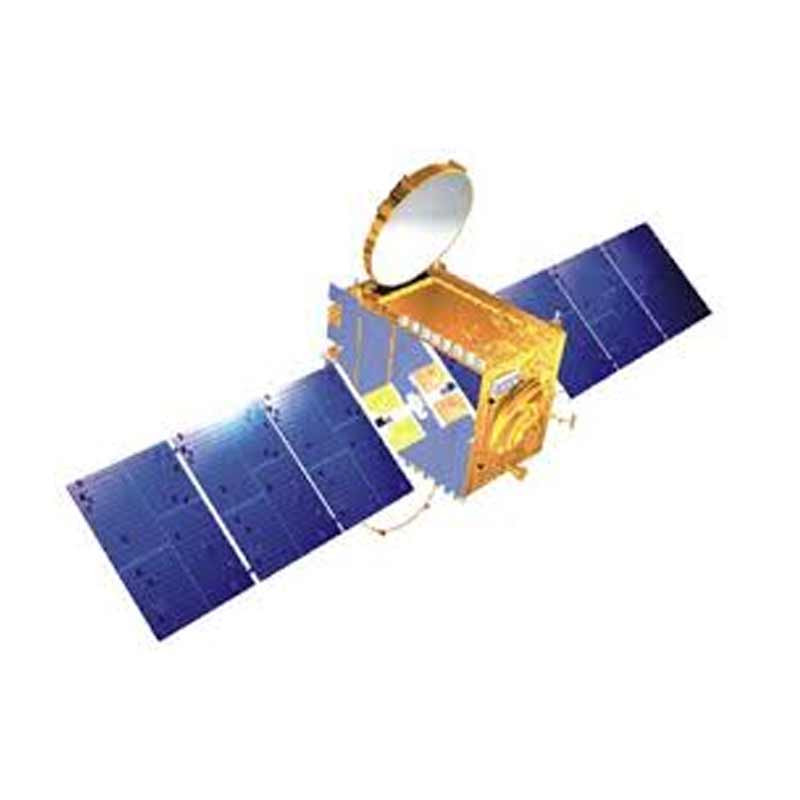
    It was for the first time that India’s space agency was putting into orbit a two-tonne class satellite. Equipped with 12 high-powered Ku band transponders (like the earlier Insat-4A), the 2,180 kg spacecraft is designed for a mission life of 10 years. Insat-4C was designed with the capability to broadcast 150 TV channels through the DTH platform.

    If succesful, this mission would have taken India to being one of the five major satellite launch countries in the world. With this failure, Isro’s strategy of taking satellite contracts from other countries has also received a setback.

    As regards the Insat-4 mission, Isro will now have to look ahead to the launch of the third satellite in the series – Insat-4B. The GSLV’s failure will in no way influence that launch however, because Isro will be using the services of Arianespace to launch Insat-4B from Kouru next year.

    The failure of this mission is not just about the challenge it throws up to India’s space ambitions though. Immediately hit will also be Kalanithi Maran’s Sun Group, which had booked space on Insat 4C for its DTH venture Sun Direct.

    At present, DD Direct Plus managed by the pubcaster Prasar Bharati and the Subhash Chandra owned Dish TV are the two operators offering DTH services in the country.

    All the Ku-band transponders on the Insat 4A satellite, meanwhile, have been leased to the Tata-Star consortium, which will soon be launching the Tata Sky DTH service.

    Other than Tata Sky and Sun Direct, there is also Anil Ambani’s DTH venture Reliance Bluemagic, which will be rolling out in due course.