Tag: Sun Direct

  • TDSAT to hear all six DTH ops plea on licence fee on 6 May

    TDSAT to hear all six DTH ops plea on licence fee on 6 May

    NEW DELHI: The government has assured the Telecom Disputes Settlement and Appellate Tribunal (TDSAT) that it will not pressurise the private direct-to-home (DTH) operators with regard to its demand for payment of licence fee until the next date of hearing, which is on 6 May.


    This assurance was given to the Tribunal, which had yesterday morning given directions to the government to respond to petitions by Tata Sky, Reliance Big TV and Sun Direct to respond within three weeks,


    However, the Tribunal decided to hear the matter again today when the other private DTH operators – Dish TV, Videocon d2h and Airtel Digital TV – mentioned the issue before the Tribunal yesterday afternoon and also pointed out that Clause 3.1.1 in Reliance’s licence was different from the corresponding clause in the licence granted to Tata Sky. 


    Following this, the Tribunal had recalled its order with regard to Reliance and said ‘we regret this material difference was not pointed out to us when the case was taken up for preliminary hearing.’


    But counsel for Reliance Big TV today assured the Tribunal that the relevant clause had been subsequently changed and that the DTH operator stood on the same footing as other operators.  


    Although the government opposed the petitions when they came up for hearing, the Tribunal stood by its earlier order of hearing the matter on 6 May and said the private operators could file rejoinders, if any, within one week of the government’s reply.


    Even as the petitioners have alleged that the demand by the Information and Broadcasting Ministry is contempt of court as a matter in this regard is pending in the Supreme Court, I and B Secretary Bimal Julka had told indiantelevision.com that the apex court had not issued any stay order.


    However, conscious that the TDSAT or the Supreme Court may be moved in the matter, a caveat had been filed by the Ministry in this regard.


    The Ministry had recently sent a notice to the six private DTH Operators with regard to licence fee dues amounting to Rs 2,066 crore. 


    According to the notice sent early last week, the six private operators have been asked to pay the amount within fifteen days. 


    However, most of the operators contacted by indiantelevision.com said they had cleared the dues of licence fee. 


    The operators say the licence fee as demanded under the rules is on gross revenue (GR) whereas they have been asked to pay the fee on the basis of Actual Gross Revenue (AGR). The operators have said the fee should be only on subscription revenue and not on allied earnings such as dividend and interest income. 

  • Videocon d2h expands its business in the south

    Videocon d2h expands its business in the south

    MUMBAI: It may have entered the market when all its competitors had successfully established themselves in the segment, but the direct-to-home (DTH) player Videocon d2h within five years have made its own space. It recently crossed the 10 million subscribers mark and now it is entering the south India market.


    The company aims to consolidate its leadership position in the DTH market with this move. Thus, it has rejigged its south silver pack that comprises the Tamil, Telugu, Malayalam and Kannada language channels at just Rs 176 per month. With more than 50 new channels, the pack now has 306 channels in total including Sun Life, Gemini Life, Reporter TV, Udaya News, Gemini News, Colors, Life OK, CNBC TV 18, ET Now, Zee Khana Khazana, Zee Q, Bloomberg TV, CNN, History and Animal Planet.


    Videocon group Director Saurabh Dhoot saidWe always strive to provide the best to our consumers and in this endeavor we have been continuously adding new channels and services. With growing demand from consumers for their own language channels, we are definitely on the right track.”


    Videocon d2h CEO Anil Khera further added, “The inclusion of more than 50 channels in our base pack, South Silver will definitely give us an edge over other DTH players in the highly competitive South market. Viewing preferences are very important for us and we ensure every effort to provide more content for customers suiting their needs. We believe that this new packaging strategy will definitely work for us.”


    The south market is currently dominated by the Sun group’s DTH service Sun Direct. Sun Direct offers its base pack with about 100 south channels for Rs 155.


    Videocon d2h now has 489 channels & services on its platform including 27 HD Channels and services with 4 Sun Network HD channels like Sun TV HD, KTV HD, Sun Music HD & Gemini TV HD.

  • Sun Direct provides enhanced web experience

    Sun Direct provides enhanced web experience

    MUMBAI: Sun Direct, the leading DTH player in the South has been at the forefront in delivering value for money services. Adding to their plethora of services, Sun Direct has re-designed their website which provides ease of usage. Customers can log on to www.sundirect.in to get updates about on-going offers, new connections and recharge options.

    With the revamped website, Sun Direct goes a step closer to users by offering them quick and intuitive access to all the packages. The redesigned website alsoenables users to skim through the range of packages available and helps them to select best packages for their taste. Not stopping at this, the website alsofeatures the content available on HD channels.

    Sun Direct has enhanced the look and feel of the new website. Now subscribers can also use the ‘My Account’ page to add any channels of their interest which is available in Sun Direct in just few clicks. The website has more intuitive user-focused design that presents the important information in one place.

    Commenting on this initiative Mr. Mahesh Kumar, Managing Director of Sun Direct, said “The revamped website is a part of our on-going effort to make TV viewing, a truly personal and enhancing experience. We are on a constant drive to provide better services and achieve higher level of customer satisfaction”.

     
    About Sun Direct: Sun Direct is one of the leading DTH players in the country with a current subscriber base over 9 million.  Sun Direct has the best offering of south regional channels and provides best value for money with world class entertainment. Sun Direct, now also offers the best of Movies & Sports with the new  Cinema + Sports packs which boasts of 4 popular sports channels and  nonstop movie services in the 4 south Indian languages .   Furthermore, Sun Direct offers unlimited video recording on all its SD + and HD connections at no extra cost. Sun Direct value for money pricing, attractive bundling of products and services that appeal to every segment of the customer chain makes it a category leader in the DTH industry. The Brand Equity, Most Trusted Brands Survey, has also named Sun Direct as one of the top 50 service brands in India.


  • Sun Direct to add remaining DD channels within 72 hours

    Sun Direct to add remaining DD channels within 72 hours

    MUMBAI: A week after notices were sent by the ministry of information and broadcasting (MIB) to three DTH operators for not carrying the mandatory 24 Doordarshan channels, one of the three  has decided that it will be adding the remaining six channels to its packages within the next 72 hours.


    “Even before the notice was issued, we had initiated a technical upgrade that will facilitate to add more channels on the same transponder. We took steps nearly three months ago to import equipments and to upgrade our software,” says Sun Direct CEO Mahesh Kumar.


    As far as the reply to the MIB notice is concerned Kumar says that he will be writing to the ministry post the addition stating that it is complying with the rules. He also mentioned that currently Sun Direct is carrying 18 DD channels and within the next three days, all 24 will be carried by it.


    Last week Tata Sky had decided to respond to the MIB’s notice expressing his company’s inability to carry any more DD channels as it lacked the bandwidth on its existing transponders, and stating that new capacity it had signed up for on GSAT-10 has not been delivered to it despite several pleas to all the departments in  ISRO, the MIB, department of space, WPC, and what have you.  This leaves only Reliance Digital to decide a course of action regarding the notice given to it.


    According to the MIB directive all DTH operators have to provide 24 DD channels irrespective of whether they provide them a-la-carte or in packages to their subscribers.

    The channels which cable operators must show are DD National, DD News, DD Bharati, DD Urdu, DD Sports, DD India, DD Kashir, DD Punjabi, DD Girnar, DD Sahyadri, DD Saptagiri, DD Malayalam, DD Podhigai, DD Chandana, DD Bangla, DD North East, DD Bihar, DD Uttar Pradesh, DD Rajasthan, DD Madhya Pradesh, DD Oriya, Gyan Darshan, Lok Sabha TV and Rajya Sabha TV. 

  • Tata Sky, Reliance, Sun Direct issued notices by I&B

    Tata Sky, Reliance, Sun Direct issued notices by I&B

    NEW DELHI: Earlier today, PTI reported that the Information and Broadcasting Ministry (I&B) had issued showcause notices to three private direct to home (DTH) operators for not showing all the 24 mandatory Doordarshan channels to their subscribers.


    When Indiantelevision.com contacted the ministry, a source in the ministry confirmed that the three DTH operators are Tata Sky, Reliance Big TV, and Sun Direct.


    According to the rules relating to mandatory telecast, all DTH operators are expected to provide the 24 DD channels to their subscribers, irrespective of any bouquets or a la-carte channels being subscribed by them. 

    A ministry source, revealing the names of the operators, said it had come to the notice of the ministry that some DTH operators were either not showing all the mandatory channels or were not showing them as primary channels. The operators have therefore been told to showcause why action should not be taken against them.

    It was noticed that while one of the DTH service providers was beaming only eight of the mandatory 24 channels, another was showing 17 channels, a source said. The third company which has been given the showcause notice was carrying only 18 channels. 

    According to the norms, DTH operators should show the mandatory 24 channels alongside other private channels of the same genre. 


    The channels which cable operators must show are DD National, DD News, DD Bharati, DD Urdu, DD Sports, DD India, DD Kashir, DD Punjabi, DD Girnar, DD Sahyadri, DD Saptagiri, DD Malayalam, DD Podhigai, DD Chandana, DD Bangla, DD North East, DD Bihar, DD Uttar Pradesh, DD Rajasthan, DD Madhya Pradesh, DD Oriya, Gyan Darshan, Lok Sabha TV and Rajya Sabha TV. 

  • Sun Direct Introduces Cinema + Sports Pack at an Unbelievable Price

    Sun Direct Introduces Cinema + Sports Pack at an Unbelievable Price

    Bringing more joy to the festival of Onam, Sun Direct, gifts Kerala viewers utmost entertainment with its exciting Onam offers.  Sun Direct has over 12 lakh subscribers in Kerala and is the single largest DTH player in Kerala.  This Onam Season, Sun Direct targets to add 1, 00,000 new subscribers with their special offers.   


    New customers can avail an extra month’s free viewing on select packs:


    *Malayalam Cinema plus for 1 + 1 month at Rs. 1890, 4 +1 month at 2290, 8 +1 months at 2890.


    *Malayalam Super value for 1 +1 month at Rs.1990, 6 +1 months at 2890.


    This Onam, with a new 24 hour Malayalam music channel – Surya Music, non-stop Malayalam comedy with Chirithira, exclusive Malayalam cinema club along with 4 popular Sports channels, ESPN, Star Sports, Star Cricket, Star Sports 2, and Sun Direct gives its customers a great value proposition. All this is available on the Cinema + Sports pack at a monthly renewal subscription of just Rs. 185. What’s more, customers can now record their favorite channels with video recording on SD+ and HD+ boxes   at no additional cost.
    Commenting on this festive offer, Mr. Mahesh Kumar, MD, Sun Direct, said “Sun Direct aims to add spirit and joy to the festival of Onam by providing optimum entertainment at a very affordable   price point. This Onam, we intend to value every need of our customer and offer maximum entertainment packages. We expect our customized offers for the festival to add more joy to our customers bringing them the best packages to choose from. “

  • Sun Direct launches freedom offer @1947

    Sun Direct launches freedom offer @1947

    Chennai, 13th August, 2013: On the eve of the Independence Day (August 15th), Sun Direct announces a limited period special offer priced at Rs.1947 for the Cinema + Sports pack valid from 14th to 18th August 2013. This subscription comes with 2 months subscription free.

    Cinema + sports pack comes at a great value of just Rs. 185 per month with 130+ channels and cheapest Cinema + sports offering among the DTH Players. This includes a range of sports and entertainment channels, with nonstop movies round the clock. The freedom offer delivers non-stop entertainment value at a very affordable price point. This new pack is sure to address the complete entertainment needs of the entire family with the addition of 4 new popular sports channels ESPN, Star Sports, Star Sports 2 and Star Cricket- at an amazing price point. Sun Direct has also added ESPN HD and Star Cricket HD as part of their HD offering. What's more, customers can now record their favorite serials and movies with Sun Direct offering video recording at no extra cost on all its SD + and HD + boxes. With introduction of this offer, Sun Direct wishes all its viewers a very happy Independence Day!

  • Sun Direct launches SD Digital Recorder box service

    Sun Direct launches SD Digital Recorder box service

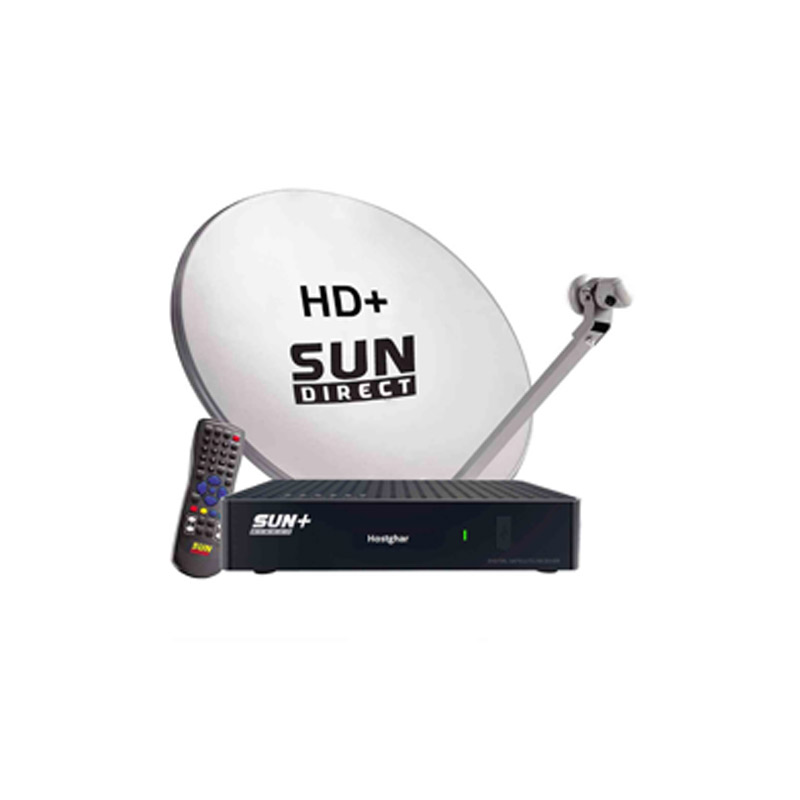
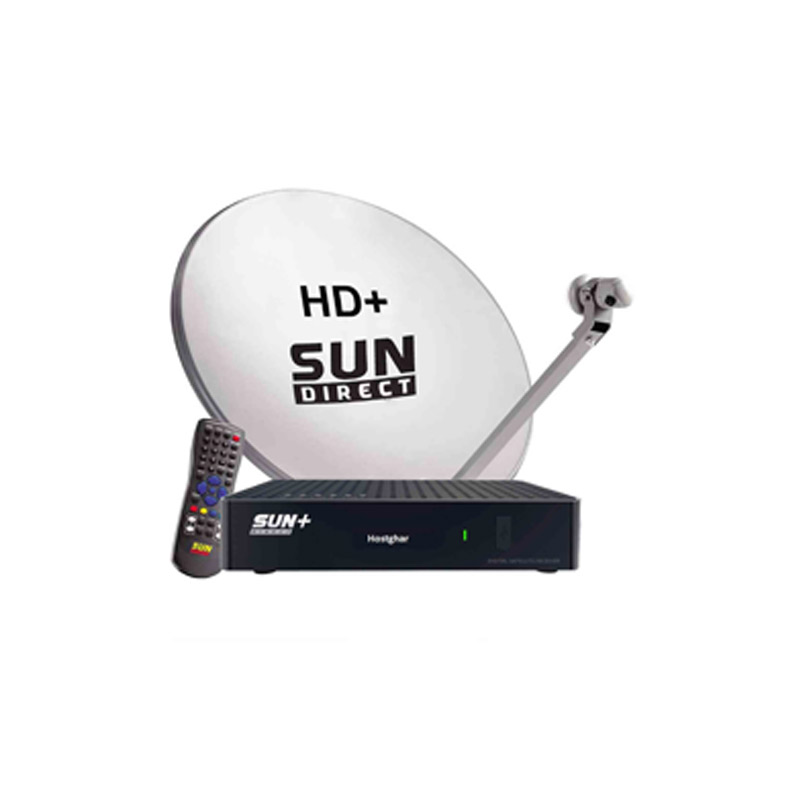
    MUMBAI: Sun Direct, South India‘s leading DTH player, has launched a Standard Definition Digital Video Recorder box service, Sun Direct+, with unlimited recording facility that brings the features of pause, record and rewind at virtually the same price as the regular SD set-top box (STB).

    The new Sun Direct+ boxes will allow customers to attach external storage devices like a USB drive and gain full control of their TV viewing through functions like ‘Pause’ live TV, ‘Record’ programs for later viewing and ‘Rewind’ for reviewing any program.

    Features of Sun Direct+: recording programs you like from a channel as you watch it, schedule recordings up to a week in advance, pause any program on live TV and resume where you left and rewind and watch your favourite episodes or movies any number of times.

    Consumers opting for Sun Direct+ for Rs 1590 pack can avail of three months of super value pack free, while those selecting Sun Direct+ for Rs 1990 pack will get seven month of Super value pack free.

    Sun Direct+ is available with free subscription to the newly launched Super Value Pack four regional languages. Over and above the Tamil content and exclusive Cinema Club services, this pack also offers the best of Hindi language channels like Star Plus, Zee, Sony, Max, Star Gold, Zee Cinema and many others at Rs. 189 per month.

    Speaking on the new launch, Sun Direct MD Mahesh Kumar said, “We, at Sun Direct, strive to put great content and services within the reach of the widest cross-section of consumers. The contemporary, world-class features of pause, record and rewind will now be within reach of every consumer. True to our claim of being the best value DTH brand, Sun Direct + will bring these features at virtually no extra cost."

  • ‘Collecting subscriber numbers is not enough’ : Tata Sky MD & CEO Vikram Kaushik

    ‘Collecting subscriber numbers is not enough’ : Tata Sky MD & CEO Vikram Kaushik

    When Star floated a company for DTH, there were several issues raised on shareholding and other related matters. Was that a ghost that initially haunted you when you joined Tata Sky?

    When on its own, Star made no progress and the DTH venture couldn‘t kick off due to reasons outside their control. Then they floated a joint venture company with the Tatas and I joined to head that. The past never bothered the venture. We developed a blueprint from the first day itself, but the project was delayed as we chased for licence approval.

    The delays were not entirely due to the government; competitors wanted to delay the project. The bad thing that happened is that several retrograde steps were introduced which should have never been there in the first place. Interoperability, no exclusive content and foreign direct investment (FDI) cap of 49 per cent, for instance. There is still a lot of nervousness regarding foreign ownership.

    But isn‘t the government more comfortable with DTH now?

    The government has started understanding that without digitalisation, the media and entertainment industry can‘t grow; you won‘t get transparency and addressability in the distribution chain.


    Has the government then become supportive?

    The government needs to do much more. Across the world, the government has provided subsidies for digitalisation. In India, the private sector has entirely taken up this responsibility – and this investment is coming at a very high cost.

    The DTH sector is heavily taxed. There is also a distortion because of the under-declaration of subscribers by the cable operators. This leads to the inevitable need of regulatory intervention to correct these anomalies.


    Despite these anomalies, the DTH sector is on a fast growth track. When you first outlined the business plan, did you foresee such an exponential growth in DTH subscribers? 

    We are somewhat surprised by the volume growth. But nobody expected that India would have six players and with deep pockets. The marketing activity stimulated the sector‘s growth. Also, the digital cable initiatives could not match up to the DTH challenge; cable has not been able to upgrade.


    How did you strike a balance between volume chase and maintaining a premium brand positioning?

    When we started out, we decided that we won‘t go to small towns and villages and chase low lying fruits. Our strategy was to first capture the top 50 towns and then spread out. Dish TV, on the other hand, tapped the cable dry areas and expanded outside.

    We feel ours has been the right approach. We have a better quality subscriber base. And while Dish TV has more subscribers, we are the biggest Indian DTH company when it comes to revenues.

    The dilemma continues even today: Should we go largely for value or look at volumes. It is easy to chase volumes. In the longer run, the correct strategy is not to lose sight of volumes but focus on value. We never panicked when our competitors mopped up more subscribers in a month. What matters in the long term is higher ARPUs and sticky customers.

    ‘Given the cable ARPUs and lack of exclusive content, it is difficult to independently drive them up beyond a point. The content cost is also high, while the hardware prices are not low enough. It is a tough game to play‘

    What other hard decisions did you have to take at the start?

    We had to decide whether the STBs should be given free or sold. We believed the free model, in vogue in matured ARPU markets, wouldn‘t work in India. That turned out to be the right decision.


    Why did you soon have to revise your investment plan from Rs 30 billion to Rs 40 billion?

    We were initially looking at an investment of Rs 12 billion and then came up with a realistic estimate of Rs 30 billion. Subsequently, we revisited that plan and estimated our funding requirement to be Rs 40 billion. There are too many DTH operators and the price war came at an early stage of the game.


    Has that business projection gone through further changes?

    Our fund requirement will be over Rs 40 billion. We have already spent more than Rs 35 billion and have mopped up over six million customers. We are on course for operational break even. Broadly, this takes 5-7 years.


    Aren‘t you disappointed that Tata Sky still lags behind Dish TV in subscriber numbers?

    They may have more subscribers because of their first mover advantage, but we have beaten them in revenues. Though ARPUs (average revenue per user) for the sector are still pretty bad (Rs 135-150), ours is the highest in the industry (Rs 195).

    What we have learnt in this business is that collecting subscriber numbers is not enough. This is a sector where subscriber acquisition costs are high and ARPUs low. If you have a faster churn, then you have a real problem. Sun Direct and Videocon d2h run a danger in that.


    Can ARPUs rise to a comfortable level?

    Given the cable ARPUs and lack of exclusive content, it is difficult to independently drive them up beyond a point. The content cost is also high, while the hardware prices are not low enough. It is a tough game to play.

    The hyper competition among the DTH players has not been healthy. Everybody has bled heavily on account of the price war.


    And still in this clutter, Tata Sky has stood out as a brand. How did you manage that?

    Building a brand in this sector is a unique challenge. We build a pedigree brand with our high quality and performance focus. When you have the ‘Tata‘ and ‘Sky‘ names behind the product, the challenge is to weave a double-barrelled branding. The fact is that we have stood up against Airtel and the others.

    We have also extended the brand to franchises like Tata Sky Plus. The satisfying part is that in a highly cluttered environment, we have spent less for many years than our competitors, but used the medium much more effectively. We have also used celebrity advertising in a manner that was never done before.


    How has Sky been an advantage?

    We could have the best and world class knowhow from them. There were 30 expatriates working in Tata Sky before we even started our service. That resource is continually available to us.

    The Tata brand, in turn, brought in credibility with the government, trade, consumers and potential employees.


    Q. Star has upped its effective stake in Tata Sky to 29.8 per cent. The additional 9.8 per cent stake for Rs 3.24 billion pegs the valuation of Tata Sky at Rs 33.06 billion. The market cap of dish TV is Rs 74.73 billion. Are you happy with this valuation?

    Star will hold close to 30 per cent in Tata Sky. The Tatas will have around 60 per cent and Temasek 10 per cent.

    As for Tata Sky‘s valuation, this won‘t be the right way to look at it. The stake acquisition is done by one of the promoter partners. This is an internal and not an external valuation.


    Q. What are the technological advantages that Tata Sky has brought to the sector?

    We continue to lead the way in terms of technology, customer service or innovations relating to packaging. We are the leading platform to promote education – be it to small children or to housewives learning English. We pioneered the concept of pre-paid customers in DTH. We are clearly at the forefront when it comes to PVR, VOD and other interactive services.

    We have played a significant role in bringing the hardware costs down. Interestingly, the set-top box (STB) cost is cheaper from China to India than in China itself. We have also set some global benchmarks in productivity, growth and value creation.

    We have used consumer research very effectively. TruChoice, for instance, recognises viewership habits and makes that content available. People tend to buy genres and that is related to the nature of the family. For those families having children, it is important to have kids programming and knowledge in the menu. Families with older people will tend to look at movie packs.


    Q. How do you approach the South India market?

    We don‘t compete on price. The market is too unremunerative.


    Q. On the content cost front, do you see the Trai tariff order (channels to give to DTH at rates 35 per cent of analogue cable) as the right formula for DTH companies?

    This is a step in the right direction, though we feel it should have been closer to 20 per cent. Broadcasters shouldn‘t have moved the court. Addressability is in the interest of the broadcasters; and yet they are resisting any kind of tariff regulation. I see short term perspectives prevailing in the entire media industry.

    Q. Do you see the telecom companies having an advantage in the DTH space?

    The telecom players feel that there will ultimately be convergence and they will stand to gain. They are, perhaps, driven by some fancy strategists. The truth is that there is need for domain expertise in each of these businesses. And each of these businesses are unique.


    Q. Why is private equity reluctant to invest in the DTH companies?

    I do not see too much private equity coming into the DTH sector. There will be a selective and long term approach. Fundamentally, the business model is saddled with high taxation, low ARPUs, and too many players. Profitability is an issue. In many cases, by piling up customers, you are not building assets but liabilities.

    We could, perhaps, see consolidation in the next few years. There will be space for three players and maybe a regional operator.


    Q. How much of capital will be required by the time the DTH sector reaches 50 million subscribers?

    The industry will need Rs 200-250 billion for 45-50 million subscribers. There is already an investment of Rs 120-150 billion. But there won‘t be shortage of capital to fund the sector‘s growth.
  • ‘Pricing and creation of bouquets is our big differentiator’ Tony D’silva – Sun Direct COO

    ‘Pricing and creation of bouquets is our big differentiator’ Tony D’silva – Sun Direct COO

    Kalanithi Maran is building his DTH empire on one key proposition: pricing. Mopping up two million subscribers in his home turf, Maran expects to taste success in the northern pockets of the country with the very same recipe.

    Armed recently with Hindi content and sports channels, Sun Direct has launched in Mumbai and will be quickly moving to other markets as a pan India direct-to-home service. The target: six million subscribers by FY’10.

    Sun Direct plans to invest Rs 35 billion in the venture over two years, out of which Rs 20 billion will have been consumed by the end of this fiscal. A large chunk of this will be towards providing set-top boxes (STBs) free.

    Malaysia-based Astro has taken a 20 per cent stake in the company for Rs 5.90 billion. Sun Direct is a zero-debt company and there are no plans to raise further money through dilution of equity.

    Sun Direct’s ARPU (average revenue per user) is the lowest among all the DTH operators, ranging between Rs 85-90. But the costs are tightly controlled and the company hopes to break even in six years.

    In an interview with Indiantelevision.com’s Sibabrata Das, Sun Direct COO Tony D’Silva speaks about the company’s ambitious growth plans.

    Excerpts:

    How much is Sun Direct investing in the DTH venture?
    We have an investment plan of Rs 35 billion over two years. We would have consumed Rs 20 billion by the end of this fiscal. We are pumping in the balance Rs 15 billion by FY’10.

    How much has Astro put in so far?
    Astro had made a commitment of putting in Rs 5.90 billion for a 20 per cent stake in Sun Direct. The full amount has already come in. The promoters have invested the rest of the amount. We are a zero debt company.

    Is there a plan to raise further money through equity?
    We have no such plan. We are considering whether it would make sense for us to raise debt and sit in excess liquidity at a time when the money market is tight. No decision has been taken in this regard. The promoters are ready to pump in whatever it takes to grow the business.

    Since Sun Direct is offering STBs free, wouldn’t the company have to absorb huge losses?
    The loss for this fiscal would be in the region of Rs 4.50 billion. This is very much a part of our business plan. For anybody who wants to build scale, the only way forward is to acquire customers with high subsidy offers. We have already mopped up two million subscribers and are looking at ending FY’09 with a base of three million. High volumes will help us reach break even as our costs are not as high as the others.

    Even when Sun Direct’s ARPU is the lowest among all the DTH operators?
    We have grown in the southern region and our current ARPUs are at Rs 85-90. We don’t see them going up significantly even after our launch in Mumbai and the rest of India. In the volumes game, the margins will improve once you reach a particular threshhold of numbers. Our infrastructure cost is also less than the other DTH operators. We will break even in six years.

    Astro has put in Rs 5.90 billion. We are a zero debt company and expect to break even in six years

    Is your content cost also lower than many of the other DTH operators?
    Our content cost is 45-50 per cent, one of the lowest in the industry. We have not done MG (minimum guarantee) deals with broadcasters. Our main strategy is a la carte pricing.

    What is your customer acquisition cost?
    When we made our initial purchases, the STBs were costing us $55. But the economic meltdown is driving down the prices and our STBs currently cost $45.

    The advertising budget for this fiscal is Rs 1.5 billion. We aim to spend a similar amount in the next fiscal unless the market dynamics changes drastically.

    Our customer acquisition cost is Rs 4500. But with our pricing strategy, we expect to garner six million subscribers by FY’10.

    The pricing strategy can attract wrong customers. Isn’t it a dangerous model to have if your churn rate is high while the customer acquisition cost is steep?
    We have a five per cent churn rate. We realise that it is important to have a lower churn.

    What is the strategy Sun Direct has adopted to repeat its success model outside its home turf?
    While 99 per cent of our current two million subscriber base comes from the south, we have an aggressive pricing policy which will help us garner subscribers from the other pockets of the country. Our regional package, “My Pack,” will create hype in the market and drive our growth everywhere. Our bouquet of packages are value for money as we have custom designed packages for every state and region. We spent considerable amount of time since our launch last December.

    We have also introduced a Hindi package. The ‘Shine Pack’ is available at Rs 499 and Rs 999 for five and 10 months respectively.

    We have the highest number of add-on packages, ranging from Rs 6 to Rs 195. And the sports channels are available on a la carte rates.

    Doesn’t it make sense to offer sports channels in packages?
    The rates are too high for us to offer the sports channels in basic tiers or in bundles. We recently added the three ESPN Star Sports channels into our offerings. They are available on a la carte rates – ESPN and Star Sports are priced at Rs 38 each per month while Star Cricket costs Rs 32. Ten Sports is priced at Rs 20 while Zee Sports costs Rs 15. We are in negotiations with Neo.

    Why was your launch in Mumbai delayed?
    Adding Hindi and sports channels in the bouquet took time and the launch in Mumbai was delayed by a shortage of supply in STBs. There has been heavy snowfall in China and Beijing Olympics also delayed the supply of boxes. So during the festival season of Diwali, we did not have STBs to sell. Now the supply is comfortable and we are in a position to launch in other parts of the country.

    Have you added more STB manufacturers into your list of vendors?
    Our STB suppliers are China-based Coship and Korean firm Homecast. We have just added Samsung into our list.

    Have you launched high-end STBs?
    We have, but only in the southern market. They are priced at Rs 10,000 and are made by Homecast. Only a couple of hundreds have moved and we are just testing the waters.
    Are you lining up premium content?
    We feel the market is too early for premium and interactive content. Our first task is to be successful as a pan India operator. The creation of bouquets and pricing has to be a big differrentiator.
    Some DTH service providers are advertising their Hindi movie offerings. Is Sun Direct going to create such content to grab viewers outside the south?
    We don’t have any such plan at this stage. We are examining whether we should do that or go for HD. We have space for 5 HD channels. This will be for the top-end of the market and give us higher ARPUs.
    Has Sun Direct approached Isro for more Ku-band transponders?
    We have asked Isro for two more transponders. We offer 200 channels including 23 radio channels and video-on-demand. We are fortunate that we are co-located on the same satellite used by DD Direct Plus and so can get their channels without consuming our own bandwidth.